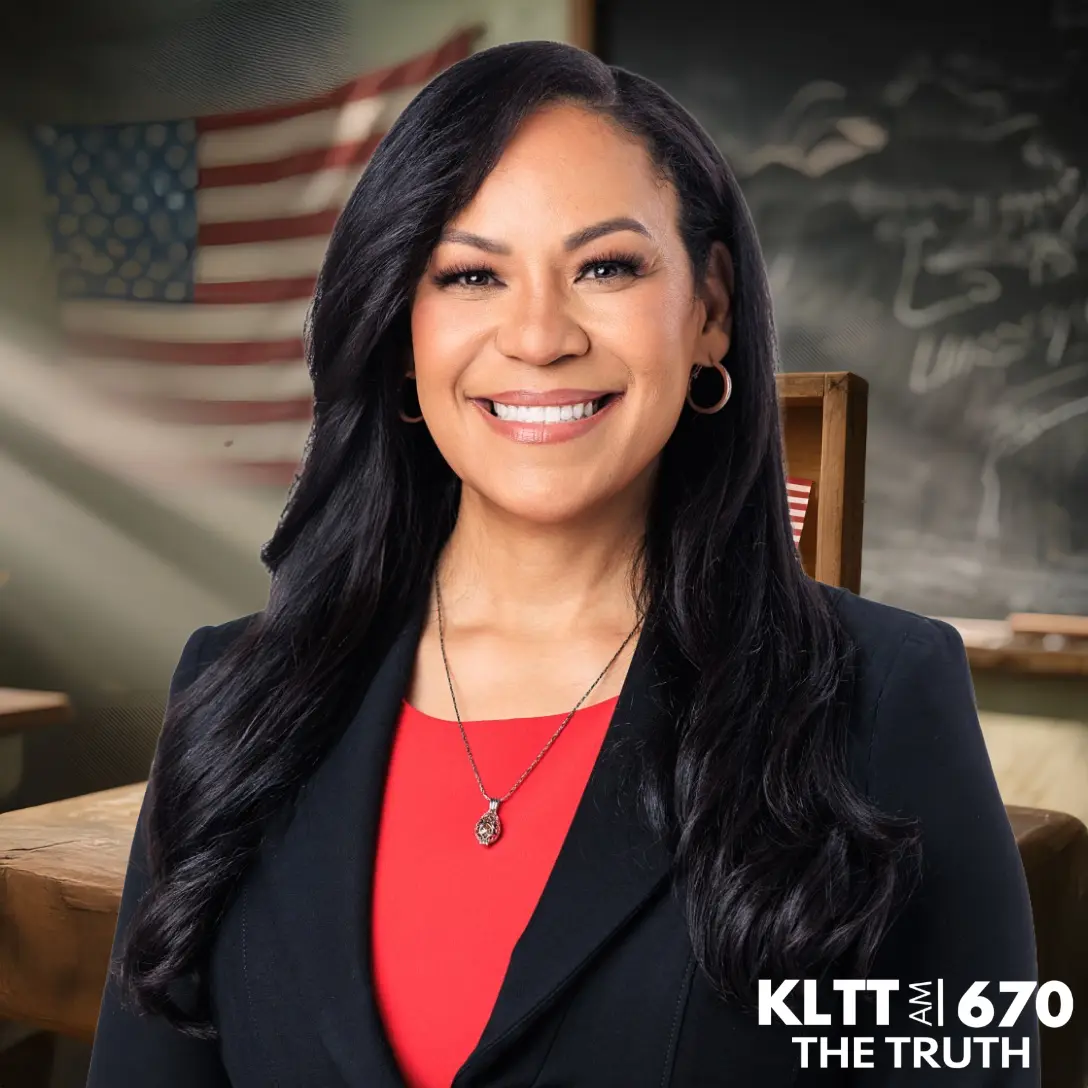
Join host Priscilla Ron as she sits down with Teddy Lamb, an extraordinary civics and history teacher on a mission to restore the joy of learning. With 29 years of educational expertise, Teddy shares his unique approach to teaching history through immersive experiences and primary sources. Discover how his strategies transform the conventional classroom into an engaging adventure back in time. In the conversation, Teddy discusses the founding principles of education that drive his passion and dedication to helping students become critical thinkers. His emphasis on understanding primary sources provides students with a direct portal to the past and
SPEAKER 02 :
Welcome to Restoring Education in America with Priscilla Ron. She’s a master educator and author, leading the conversation to restore the American mind through wisdom, virtue, and truth.
SPEAKER 01 :
Hello, everybody. Welcome to Restoring Education in America. I’m Priscilla Ron, your host. I’m so glad you decided to join me today in the conversation. I have a very special guest, my very good friend, Mr. Teddy Lamb. Welcome to the show, Ted.
SPEAKER 03 :
Thank you. And thank you for inviting me.
SPEAKER 01 :
So Ted and I met this past summer in D.C. at the Teacher Freedom Alliance. And before we get into the conversation, let me tell our guests a little bit more about you. Ted has been a dedicated career educator for 29 years and public servant based in Portsmouth, Virginia. Lam earned a Bachelor of Science in Education in Social Studies from Oklahoma Christian University of Science and Arts, followed by a master’s degree in special education from Bowling Green State University. His professional journey includes teaching conversational English to students in Europe and Asia, as well as serving children with special needs. Since 2016, Teddy has served as an at-large representative on the Portsmouth Public Schools School Board. He has championed policies to enhance student outcomes and resource allocation amid challenges like the post-pandemic recovery and budget constraints. His tenure reflects a commitment to fostering environments where all students can thrive. And I’m gonna give you a big applause here. I saw that eye roll. Are you sure you’re not a middle school teacher?
SPEAKER 03 :
Because… Not a middle school teacher, but I’ve never been good with the whole… talking about myself that I’ll say like, so that’s what the eye will. It wasn’t.
SPEAKER 01 :
You’re so humble, but look at all of the accomplishments you’ve had as an educator, school board member, public servant.
SPEAKER 03 :
Oh, I think I, I think I just stumbled into them. So again, that’s me just being me, right. Kind of a thing.
SPEAKER 01 :
Well, your story is really inspiring. I should also add in your bio, you are a book study. self-learner, because now you’re also taking my book study for Restoring Education in America.
SPEAKER 03 :
That I am. And that’s because of the teacher conference, you know, of course. The thing about, and I guess now it’s kind of confession time, right? A little bit. So hopefully this isn’t too embarrassing. Yes, I’m taking the book study. I was looking forward to it. But, you know, just like a lot of things, I saw the title, right? Restoring Education in America. And there was a part of me that was like, oh, great. Here we go. One more reformer. Oh, great. You know, I’m going to be sitting through like study after study says this kind of a thing. Right. But I remember reading the first chapter and I thought, oh, goodness. You know, the fact of you just hit right out of the box of. going to hard truths that no one wants to talk about, but actually showing and not afraid to actually show biblical principles in the public school system. And I thought, oh my gosh, and where is she from again? And how did she get here? And then as I kept reading, I’m like, how did she even stay in the classroom for as long? So it’s been a good, interesting study for sure. I think for myself saying, I keep coming back to you and saying, I wish more people would speak like this. Whereas others probably reads the book and some are gonna be natural haters. And some are going to be just confused because we’ve gone so far away from those truths and those principles that it’s very hard to see in our modern day context.
SPEAKER 01 :
Yeah, I think when I was sitting down and writing the book, I thought about all of the books I was forced to read and all of the professional development I was forced to sit through and how I felt like this was not meeting my personal needs. So I designed it in a way that was a short read. I thought maybe someone could read this on their computer. you know, 20 or 30 minute lunch break, get through a chapter and get some nuggets and let’s just have a conversation. Teachers do better just talking. And I know I’ve learned a lot from you in the conversations. I look forward to every time that we have a conversation about education, which is why you’re a special guest on my show today, because I can’t wait to share you with the listeners and how awesome you are. So let’s go into this. the talking about you and what inspired you to become a history teacher?
SPEAKER 03 :
Oh goodness. Um, well back during the old stone age, because of how old I am. No. Um, so it just like, it was interesting. Um, and it happened very subtle. I can still remember it fifth grade. Um, you know, I was up to no good. Um, The whole class was out of control and so forth. And I’m sitting there and I start to flip through the history book and I start flipping through the pages and I see these really cool red uniforms. and they’re soldier uniforms, and you flip over a couple more, and you find out that that was the British uniforms, and then you flip over a couple more, and you see these blue uniforms, and they were called the Continentals, and they were just poor farmers taking on the red uniforms, and And that was the beginning, that was the start. And from there, I learned about the American Revolution and it’s still my favorite era. There’s so much to it. But then I just started reading, would go to library, grab autobiographies or biographies about different people like Andrew Jackson. I fell in love with the Marquis de Lafayette. And then it just turned into so many other heroes that no one knows about. And then it just expanded into all kinds of history, world history and American history. And so it’s never left. I mean, I’m 53 years old and I’m still in fact, I make I argue with myself and I see that I’m more passionate about it today than I was even at eight years old. So.
SPEAKER 01 :
Well, you teach in Virginia, a place with rich American history. How has teaching in a place that has this type of rich history influenced the way that you bring history to life to your students?
SPEAKER 03 :
I am… I think the big thing, because I’ve always been one about role-playing things out in primary sources. My kids don’t even know what a textbook looks like. We do so much primary source work. um and i’ve always dressed up uh believe it or not and not to offend any anyone listening but uh i’ve come into school as pocahontas over to an east border uh german border guard uniform to a colonial to whatever so what has really uh to answer your question i think actually being able to go to these sites like for example yorktown and being able to walk among the battlefield. And I have one of those minds that If I know about it, I can see it. I can see it happening. My wife, best friend of 30 years, she thinks I’m nuts because I can just stay there kind of a thing. But I think that’s really been the biggest thing of being able to go to these different places and then kind of sharing that with the kids from a perspective of now just being there. I’ve always wanted and I’ve always tried to do what I call the time machine approach. I want my kids to get as close to being able to get there as we can, you know, so.
SPEAKER 01 :
Yeah, I remember looking at the breakout sessions at the Teacher Freedom Alliance conference this summer. And I thought, oh, it sounds like an interesting title. And then I walked in and you were all dressed up in history. And I thought, oh, man, did I just walk into a drama class and You know, I wasn’t sure what I was going to get, but I was a little skeptical. But I sat down and you were so fun. And I thought, man, if I had a history teacher or civics teacher who, like you said, brought the classroom to life and brought history to life in this way. I might have caught the bug and been so interested and understood more about our history. And this is what makes you stand out, that you bring history to life. Like, how did that idea get started? And what kind of reaction do you get from your students when you dress up?
SPEAKER 03 :
So let’s go back to that now seventh grade. I had a teacher who used to be a CIA agent during the Cold War. He would tell us stories, but then he would also say, there’s a lot I can’t tell you. And I kind of believed him, right? His name was WC Blair, still remembering to this day. he did the whole role play aspect of things. So that’s kind of where I kind of caught that a little bit. And then when as I got older and into my own classrooms about 12 years ago, I just started thinking something’s wrong. You know, my kids are getting incrementally worse and worse and worse. There’s no resiliency skills. There’s just what is going on. And I started doing like what any teacher would have done. I started thinking it was me. I was the problem kind of a thing. then when i started um looking around researching uh what was going on i came across this what was called the principal approach to education which is part of what my um the forum at the teacher conference the presentation that’s what it was and it really showed me that what i was doing was a lot of the things that was correct it’s how we educated students in this nation from 1620 to the 19 before the progressive components started kicking in. And so from that, I mean, that’s just how I do it. So the progressive approach teaches it’s not the quantity of work. But the thing about learning is we’ve lost the love to learn. We don’t love learning. We’ve turned it into a state mandated test exercise to rote memorization of ABC and D or multiple choice. There is no concept of the love of learning to learn. And so for me, under the principal approach, the teacher is the curriculum. We call it the living curriculum. We are the unit. We are the thing. So we’re all the time learning. I have learned more in the last six months about American history than what I’ve known before, which is pretty amazing when you think you’re coming to the end of your career and yet you’re still learning. i mean i’m coming out some primary sources that’s just blowing uh my mind away um which um i will be sharing through my uh history moments with ted um or where i’ll put stuff on line for this and so forth because there’s a lot of things that we don’t know that we should know but if we did know um i think you would see a less division and you’d see a lot more um Things. Oh, well, if we knew more than what we did, there wouldn’t be a lot of the things that we’re seeing today going on in the nation. I’ll say it like that.
SPEAKER 01 :
Yeah. Like if you’re turning tuning in to 670 KLTT, you are listening to Restoring Education in America. I’m Priscilla Ron, your host. And my special guest today is Mr. Teddy Lamb. He is a history teacher, a civics teacher extraordinaire from Virginia. And you mentioned primary sources and you emphasize this. I remember you emphasizing this in your breakout session. Why is it so important for students to understand how to use primary sources? Explain what primary sources are and why it’s so important.
SPEAKER 03 :
Okay. So what we have, there’s two kinds of sources. There’s primary and secondary sources. And a primary source is original intent, the original source. So if you have a journal or a diary, then that diary is an original source. Now, let’s say you’re in a car accident, right? And you’re giving your account, that’s a primary source. But a reporter, you know, taking what you said in that accident and then putting in a story, that’s a secondary source. So really, primary sources is going back to the original authors. So can I give an example? For example, one of the big issues, and this ties into why students should learn this. One of the big conversations that we have going on in our nation today is about natural born citizenship. And, you know, people refers over to the 14th amendment. And so because of being trained as a principal approach teacher, you know, three years ago, you automatically start asking questions when you’ve been trained this way. So I’m like, huh, I taught the 14th Amendment for, what, 25 years? But what does it actually say? So I went to it, and I caught section one, where it says, you know, you are a natural-born citizen, if born here, and your parents’ loyalty is to here. I thought, now that’s an interesting statement. way to put this, okay? So then I started digging and I found out who wrote that first section, Senator John Bingman of Ohio. And I was able to go back to the debates in Congress of that time, and that question came up to him. What is a natural born citizen? So the thing is, anyone that comes up with something creates something. Of course, they’re going to know what the intent of something is, right? And he says right in the congressional record, he says, a natural born citizen, according to section one of the 14th Amendment, is exactly this. and it is a person that is born here, and if their parents are loyal to the United States, meaning if they are citizens, then the person born on the shores is a citizen. That is very different from our understanding of what natural born citizen is. And hence, that’s why it’s important for students and adults now even to go back to and relearn what our primary sources say.
SPEAKER 01 :
Well, that’s been a big debate recently in government when we’re talking about immigrants that are coming in or babies that are birthed here whose parents are not citizens. And then it opened up the whole conversation about freed slaves. And what that meant for for those who were born here, who were brought here against their will. I mean, it’s just a big conversation, but it’s really critical to understand what the founding fathers meant and what the intent was. And I appreciate that perspective. Now, you do have we’re talking with my friend, Teddy Lamb. He’s a history and social studies and civics teacher out of Virginia. You have your Facebook page. History Moments with Ted. What inspired you to create it and what kind of community are you building?
SPEAKER 03 :
So History Moments with Ted, I first started it because I just love history. And but then looking around at different history groups and authors and so forth, I would not have been able to fit in all that well. What you sometimes find, well, no, what you find many times on social media is a lot of. if you don’t agree with certain groups or so forth, then there’s a lot of hate and discourse and so forth, right? And history now is becoming one of those topics that it seems to be the platform for exactly that. And so I just thought, well, why not? Why not come up with something that you love history, but why not present real history, the primary sources of things? So I created it, and I only had a simple rule. And the rule was, you know, on this group, you respect everyone that’s here. You may not agree with them. That’s okay. And I even said, I love and enjoy a lively debate, but a debate, not disrespect. And we had one rule, and that is, you know, if you violate this, you’re gone, because this is your warning, you know, right here. I’ve only had to get rid of two or three people in the last five years, and it’s grown over 2300 members. Now, what really took off from it was Every year we have this thing called Black History Month in the United States, right? African American or Black History Month or so forth. But in school, I got tired of every single year. Again, remember, 29 years, right? You’re going over the same five to eight people every year. And so that’s it. And many times it’s one or two out of the 1800s. And then it’s on the 1900s. And it’s the ones that you could probably guess five of the eight right now. You know, anyone probably could. And I thought, no, there’s so much more to this. So I thought, well, how much more and who and why and how? Went to the primary sources. I found some amazing individuals that has played such a role in our history all the way back to colonial times that goes completely against the dialogue of today. So for like three or four years, I started doing Black Patriots Month. And I was posting like some years it was like three or four or six posts a day on the hour. And other times it was like one a day or so forth. And it talked about these heroes that we don’t know anymore. But Washington and Jefferson and Adams, they all knew them. And they recognize them for who and what they did. And we knew them at one time, and we don’t. And it’s such an amazing history that if we did, jeez, if people could just catch fire of what’s there, they would, I just think, we could be a different people for sure.
SPEAKER 01 :
Yeah. Ted, I love how on your page you say all history events are allowable. And the fact that you have done your research and I know as an adult, I’ve done more self-study on history, especially around Black Americans in America. And I thought, why didn’t I learn about these amazing individuals just woven into everyday U.S. history and all the wonderful things that they’ve done? But now that I know more about folks in history. I love our country even more. I’m even more patriotic because I think, wow, all of these amazing folks were part of the fabric of making us who we are. We’re not a perfect country. No one claims that we are. We have an ugly history. We acknowledge that, but we work to do better. And it’s because of that, that you and I can have this wonderful conversation. We’re colleagues and we’re
SPEAKER 03 :
And yeah, and in the group, I said, you know, all history is welcomed here. Even like today, you know, we don’t want to talk about the Civil War. If we do, we want to slant. So, you know, the Confederates are bad. The unions are good. And therefore, don’t put any Confederate history on or this or that. But no, that you can’t do that. That’s not the study of history. As I tell my students at school, I say, look, you’re going to read primary sources that you are not going to like. But it’s not for you to like or dislike. It’s there because it happened. It’s what it is. And I gave an example. The first time I read, it’s called the Cornerstone Speech by Alexander Stevenson. He was the vice president of the Confederacy. And he gave a speech down in, I want to say, Alabama or Georgia. about the cornerstone of the confederacy and oh goodness i was so shocked that a human being was saying the things that he was saying in a speech you know and um but and that’s okay i i can feel that way but as long as i take it with the proper content you know, not try to see things through, uh, a lens of a political outcome or, or, or something, you know? Um, so.
SPEAKER 01 :
Well, you and I met at Teacher Freedom Alliance. It’s a really great title for this organization. So I want to ask you, what does teacher freedom mean to you?
SPEAKER 03 :
Well, it definitely means anything that we’re not seeing today. That, that is, uh, that is for sure. Um, But teacher freedom to me is to be able to teach in the classroom in a way that you have leeway with the curriculum, to expound upon it, to deepen it, to bring things out. And let’s be clear. When I say that, I’m also talking about worldviews, you know, and that’s the scary part too with what we see out here. I am a history teacher. Therefore, I don’t need to be talking about family life. I don’t need to be talking about home economics. That’s not what I’m to be doing. And if I’m being honest, I need to present all of the history of what happened, the good, the bad, and the ugly, but present it through the primary sources and that freedom means that I go deeper than what any state mandated curriculum would say or encourage. There ends the problem. If I was a student and I don’t think I would like history at all because we’re on timelines and if you don’t teach to that state curriculum, then you get yourself in trouble and that’s not freedom. It’s what we would usually call a tyranny or indoctrination, and that’s exactly what it is.
SPEAKER 01 :
Yeah, I know we’ve gotten a really bad reputation as a public education system of indoctrinating kids. And I know you’ve seen a lot in 29 years of what’s going on in our schools. And, you know, I hear this all the time, Priscilla, we need more teachers who are just going to teach our kids the content and not indoctrinate and not tell our kids what to think, but teach them how to be independent thinkers and creators and So we have about a minute left. I can’t believe, or I always say, I know we have these conversations and I can talk to you for hours, but what is something that you would want your students to remember you by, you know, in years to come? I know you have to talk about yourself, Ted.
SPEAKER 03 :
Well, it’s funny because some, some actually comes back and they’ll say, you know, stuff. I think I would want them to, I would want them to remember the fact that they learned something, that they did learn something about history. I don’t want them to come out loving it as much as I do, but I want them to learn something. And I want them to love learning in and of itself. And if anything, I want them more than anything else, and I tell them this all the time, anytime you have the opportunity to find a primary source on any topic or any issue, go there first before you listen to the sound bites of the media and so forth. That’s what I want them to remember. And I do remember things about the role plays and also.
SPEAKER 01 :
Well, thank you, Ted. This is Teddy Lamb, a teacher extraordinaire from Virginia. And to my listeners, thank you for tuning in. Catch me next time. And remember that educating the mind without the heart is no education. So seek wisdom, cultivate virtue, and speak truth.
SPEAKER 02 :
Thanks for tuning in to Restoring Education in America with Priscilla Ron. Visit PriscillaRon.com to connect or learn how you can sponsor future episodes to keep this message of faith, freedom, and education on the air.