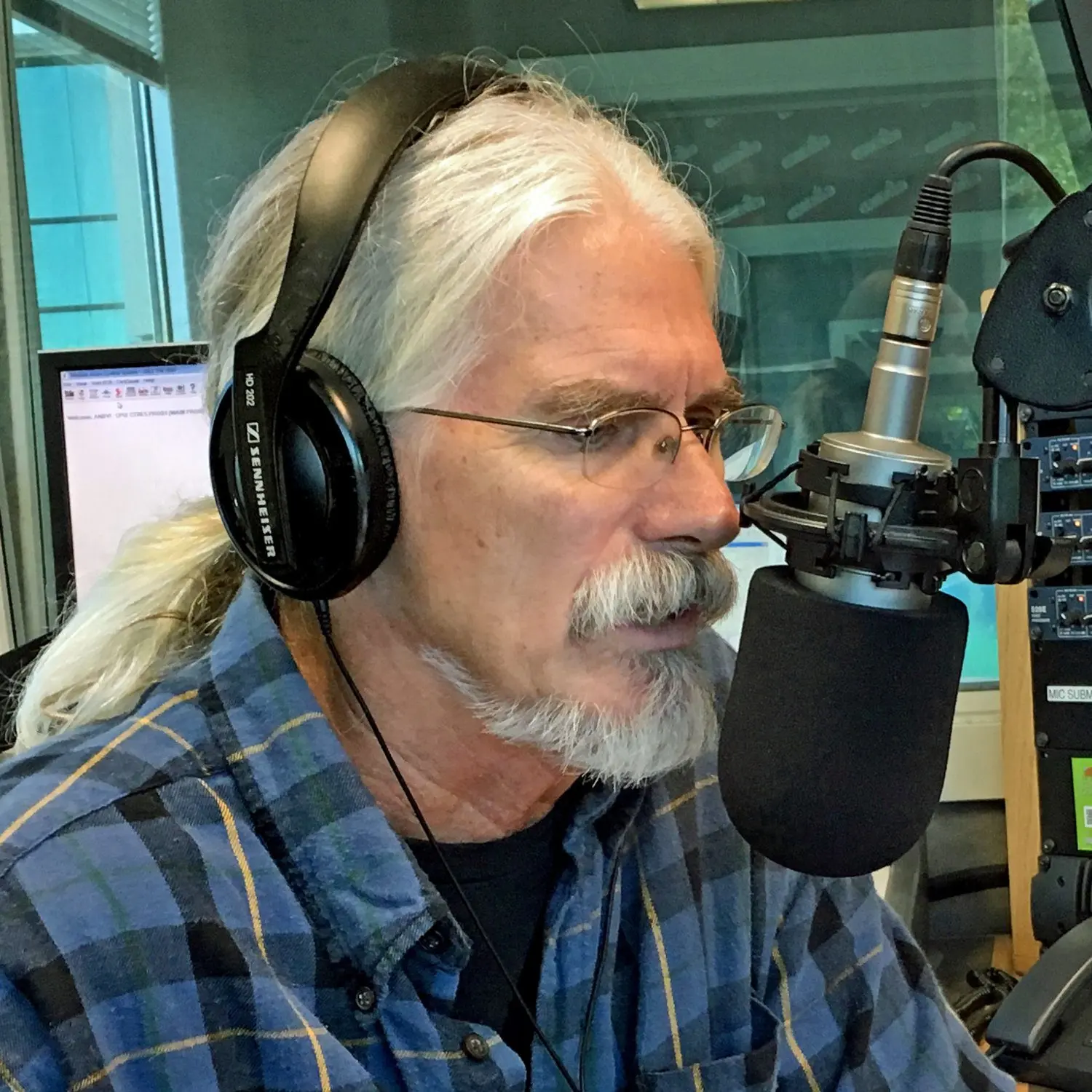


Does God determine everything that happens, or do human beings have free will? And should Christians be trying to calculate the date of Christ’s return? On this edition of The Narrow Path, Bible teacher Steve Gregg answers listener questions about Scripture, theology, and practical Christian living.
The Jerusalem Council and Applying Scripture Today
Steve begins with a question about the Jerusalem Council in Acts 15:19-21. Why were Gentile converts instructed to abstain from blood, meat from strangled animals, food associated with idols, and sexual immorality?
Steve explains his understanding of the council’s concern for maintaining fellowship between Jewish and Gentile believers without
SPEAKER 1 :
Thank you.
SPEAKER 01 :
Good afternoon, and welcome to the Narrow Path radio broadcast. My name is Steve Gregg, and we’re live for an hour each weekday afternoon, taking your calls if you have questions about the Bible or the Christian faith. And if you have a difference of opinion from the host, you’re welcome to call about that as well. If you want to join us, we have a couple of lines open on our switchboard right now, so you can call us at 844-844-9222. Again, that’s 844-484-5737. A couple of announcements about this week in Southern California. Tomorrow night I’ll be speaking at a church in Dana Point, California, on the coast. It’s the Capo Beach Church there. I was asked if I would speak… about heaven and hell and the afterlife and new earth, those kinds of things. I guess basically stuff related to, you know, the last day and beyond. And so that’s what I’m going to speak about there. That’s tomorrow night. I believe the meeting is, I think, 630. And information about it is at our website, thenarrowpath.com. Now, by the way, this Saturday is our monthly men’s Bible study in Temecula. It’s a morning study for men at 8 o’clock, the third Saturday of every month. And if you want to join us there, you can again get the details at our website, thenarrowpath.com, under the tab that says Announcements. All right, and now we’re going to go to the phones. Our lines appear to be full. Our first caller today is Carol in Point Blank, Texas. Carol, welcome to The Narrow Path. Thanks for calling.
SPEAKER 02 :
Thank you, Steve. Thank you. Thank you for all the stuff you’ve got. I’m taking really good advantage of it. However, I have two questions about Acts 15, the Jerusalem Council decision. They had four things that they were going to write to churches and let them know. I get the fornication. That’s really important not to do. But what about the strangulation? What’s the point of that?
SPEAKER 01 :
Yeah. Well, you’ll see that the reason they give for the four things they want to restrict them from, namely from fornication, from eating things strangled, from blood, and from meat sacrifice to idols, these are all things that Gentiles did which offended Jewish people. Now, strangling an animal, presumably to butcher it afterwards, keeps the blood in it. once it’s dead, the heart stops beating. Therefore, when you cut it open, it doesn’t bleed out. Where, of course, animals had to be bled out for kosher diet. You had to slit their throat and drain all the blood out while the heart was beating because the Jews were not allowed to eat blood. So if somebody would strangle an animal and then it’d have all its blood in it, no doubt that would make the meat different, perhaps superior tasting, I don’t know. In any case, Gentiles did that kind of thing, but that offended Jews. Now, when it says in chapter 15 of Acts, verse 20, I suggest that we write to them to abstain from things polluted by idols, from sexual immorality, from things strangled, and from blood. It says, for, this is the reason for naming these things, for Moses has had throughout many generations those who preach him in every city, meaning every Gentile city has a lot of Jews. being read in the synagogues every Sabbath. So he’s saying that wherever the Gentiles are, and remember the purpose of this council is to decide whether Paul’s Gentile converts in these various Gentile lands that he evangelized, whether they needed to become circumcised and become proselytized to Judaism. The answer was no, they don’t have to. But in telling them they don’t have to do that, we would like to request them to avoid certain things that Gentiles apparently were notorious for, which offended Jewish people. And this is not because all of these things were something God would forbid, but fornication certainly was. And Paul had to point that out to the Corinthians after he delivered this letter to the Corinthians. They figured it’s okay to do everything because he didn’t have strict concerns about what they ate. But he did have concerns with the fornication thing, that they shouldn’t do that. But the things that three of those things have to do with what you can’t eat, blood, meat sacrifice titles, and things strangled. Now, those are the kinds of things, as well as fornication, that Gentiles were very involved in. and all those things very much offended Jews. And James, who’s speaking here in this passage, says, listen, in every one of these Gentile cities, there are synagogues, and there’s generations of Jews who have been brought up under Moses’ teaching there. And by implication, these people are going to be sensitized about those things. And even though there really may be nothing wrong, with a Gentile eating blood or eating meat sacrifice titles, and Paul actually indicates that when he writes to the Corinthians. There may be nothing wrong in the sight of God with reference to those things, but they definitely are offensive to people who’ve been listening to Moses for generations and who James, of course, has his principal outreach is to Jews, and he doesn’t want the Jews to be put off from Christianity by… by that kind of behavior of Gentile Christians. So they’re saying, please ask them to behave themselves in ways that are non-offensive to the Jews in your town.
SPEAKER 02 :
Okay, my second question is, do you think it just refers to the food, to the idols, polluted by the idols, or is it talking about idols in general, having any or might extending it too far?
SPEAKER 01 :
Well, it says pollutions of idols. I mean, obviously, I think Christians would know that they can’t worship idols. And this is talking about Gentile Christians. The very conversion to Christianity means a renouncing of all idols. But it wouldn’t in itself intuitively let them know that they should avoid meat sacrificed to idols. Because after all, most of the meat in their town, that was for sale. was the remnants of animals, at least in some of the towns where there were big temples, where they sacrificed a lot of animals to the pagan idols. The remnants of the meat was sold in the marketplace. And a Jewish person, for example, would not eat a remnant of meat that had been sacrificed to idols. But Paul told the Corinthians it didn’t really matter. God doesn’t care if you do or not. But Paul did say, if you have that liberty, don’t take it so far as to go into the temple feasts and eat there. because that’s really compromising. So, you know, I think there was some ambiguity in the mind of the Gentile Christians. I mean, not whether they can worship idols or not. They knew they could not do that. But whether they could eat the meat that was remnants of sacrifices to the idols.
SPEAKER 02 :
It was really all about not offending the Jews.
SPEAKER 01 :
Very largely in that case, yeah.
SPEAKER 02 :
Yeah.
SPEAKER 01 :
Okay.
SPEAKER 02 :
All right, I got it. Thank you.
SPEAKER 01 :
Okay, Carol. God bless you. Thanks for your call. All right. Tommy in North Webster, Indiana. Welcome to the Narrow Path. Thanks for calling.
SPEAKER 09 :
Yeah. Hi, Steve. Hey, this question to do with the scripture interpretation for us today, I certainly recognize that all scripture is profitable for teaching correction. But being profitable for us is not necessarily the same as being written directly to us. So my fundamental question is, Scripture, should we understand that historically and covenantly, to its original audience, should we interpret as directly applicable to us as Christians living today, two thousand years later, given a number of these have already come true, and there are things I’m certainly not saying that it’s not wisdom, but it’s not a book that really walks
SPEAKER 01 :
Your voice is cutting out. You’re cutting out very badly. But it sounds like you’re wondering, are we supposed to apply scriptures that were written to other people, like the Jews or to various churches in the first century, to our own lives? And if so, how? Is that what you’re asking?
SPEAKER 09 :
Yeah, the interpretation. How am I interpreting it? I mean, there’s hurt. There’s all these other things.
SPEAKER 01 :
Yeah, your voice is cutting out, so it’s kind of annoying, but I think I got your idea, so I’m going to put you on hold and try to give you an answer, if I may. Well, yes, I mean, the purpose of reading the scripture is not to become legalistically a book Christian, per se, where you just kind of find what the Bible says and just follow it straight across like Torah observant people do. There are Torah-observant Christians who will look in the Old Testament about things that God told Israel to do, and they’ll just say, well, we need to do those. Now, you know, there is such a thing as understanding how any given passage of Scripture applies or does not apply to us. For example, we want to follow the teachings of Jesus. But Jesus told his disciples in Matthew chapter 5, when you bring your gift to the altar, meaning when you bring an animal to the temple to offer it as a sacrifice, if you there remember… that your brother has something against you, leave your gift there by the altar, go make peace with your brother, then come and offer your sacrifice. Well, we don’t do that. We don’t offer animal sacrifices. And we recognize that Jesus was talking to Jewish people who did. Now, how would we interpret that? Well, it shouldn’t be too difficult for them. Offering sacrifices was the way they worshiped God. And he’s saying, you know, worshiping God is important, but not if you’re neglecting. to keep your relationships proper with your fellow man, which is of great concern to God. If you’re neglecting what God is concerned with, and yet you’re doing religious things in worship, you’re missing the point. Now, I mean, you’re taking the principle. You’re not assuming that you’re supposed to go to the temple and offer an animal sacrifice, which, by the way, would be impossible since there is no temple in Jerusalem and the sacrificial system is over. And the same thing goes with an awful lot of Old Testament things. You can tell, you know, when people are told to be circumcised or to keep festivals or whatever, new moons and Sabbaths and dietary laws, those are all things that were addressed to people living under the old covenant. And the Bible makes a very clear distinction between the old covenant and the new covenant. The new one making the old one obsolete, the Bible says. And so, you know, the New Testament tells us an update on what God is requiring in the new covenant in following Christ. And many of those things that are commanded in the Old Testament are not on the list. They’re simply not part of the new covenant. So, I mean, when we read the Bible… We don’t just read it without discernment or without thought. We need to know something of who the instructions are given to and, you know, and why and whether we live in the same circumstances as they are. Or if our circumstances are different, what was in the mind of God? as the prevailing principle that he was trying to teach them to observe. It may be that if we’re not in the same circumstances they are, yet the principle… may apply very immediately to some of the circumstances we are in. So, you know, when Paul tells people in Corinth, you know, to stop being disorderly, he gives specific instructions. Okay, three, maybe two or three people speak in tongues if there’s an interpretation, one at a time, maybe two or three prophets speak. I mean, these are specific instructions, which we know are addressed to redress a a problem of disorderliness and confusion in the church. Now, what may be causing confusion in our church might not be anything to do with how many people are speaking in tongues or how many people are prophesying, but we may have people who are disruptive nonetheless. We realize that Paul’s concluding remark about that is let everything be done decently and in order. So, likewise, when he talks about taking communion, we know that they took communion at a meal. I don’t think that’s a wrong, I don’t think that’s a bad idea for us to do, too, but most churches don’t. And Paul tells them, you know, to eat a meal before they come to church for communion. Not because that’s something God requires, but because they are not restraining their appetites. And he tells them, okay, well, if you can’t restrain your appetite at the communion meal, then eat at home first, so you’ll have some possibility of restraint. Now, obviously, what they were doing wrong and what was addressed by those instructions was that some of them were taking too much of the food at the table and not leaving enough for others, Paul said. Now, that obviously has to do with looking out for your brother and not being selfish and not putting your own desires ahead of other people. Now, that’s a principle. We don’t have, in most churches, the same kind of ritual. That is, we don’t conduct the Lord’s Supper exactly the way they did, as far as we know, because we don’t know exactly how they did it. But certainly the principle is there. So, I mean, applying Scripture to our lives requires a certain amount of intelligence. I mean, you don’t have to be a genius, but you have to think about it. You have to think about why, what was God concerned about here? Maybe we don’t have that circumstance in our church or in our lives, but are there things in our lives that God’s concern would be activated about based on what we know about him and his instructions here? That would be how things are applied. Now, a lot of people just want to apply things across the board. In 1 Corinthians, Paul tells women that they shouldn’t pray or prophesy without their heads covered, and that men should not pray or prophesy with their head covered. But he does say at the end of that in verse 16, which is 1 Corinthians 11, 16, he says, if anyone seems to be contentious about these things, we don’t have any such customs, nor do the churches of Christ, which seems to be saying these are customs locally in Corinth that don’t exist in all the churches. Certainly the Jewish people like Paul didn’t have those customs because the Jewish men do cover their head when they pray, which the Corinthians were told not to, but The Corinthians were told for a man to have long hair to shame him, but Paul took a Nazarite vow, which means he didn’t cut his hair for a long time or a period of time. So, you know, it’s clear that the customs of Corinth were not universal, and Paul said they’re not universal. But they have some meaning. They have some purpose. Now, there are churches today that just do the thing that Paul said, make the women wear a covering. Though the interesting thing is Paul doesn’t tell us, nor do we know for sure, exactly what a covering looks like. Did they wrap a burka around their face, or did they, or whatever, did they, what did they do? Did they wear a little cap? Well, people who want to obey to the letter, this custom, don’t even know what the custom was. So they just do something instead. Whether it looks very much like what the Corinthians were told to do, we don’t know. But the idea here is that there’s something more at the root of this that God has considered. So when we read what Jesus said, what Paul said to the churches, the seven churches in Revelation, we have certainly in our churches some of the same problems we find there. Well, when it applies to us, we should apply it to us. And if it doesn’t apply directly, just in a literal sense to us, it may be that there’s always reasons for the instructions. We should discover what the reasons are, what the concern was that lies behind the instructions and see whether that concern might be used to adjust some of our behavior. to comply more with what God’s interested in us doing. That’s how I would address that point of how do we apply the Scripture to modern times, the instructions there. Let’s talk to Daniel in New Rochelle, New York. Hi, Daniel.
SPEAKER 08 :
Steve, hello.
SPEAKER 01 :
Hi.
SPEAKER 08 :
Yes, Steve. I think I’ve answered a similar question before, but But I want to ask you again, that Jesus, right? Jesus? Yeah. You know, people, a lot of Christians believe he was born on Christmas, on December 25th. But I read an article, I Googled it, and it said that he was probably, he wasn’t born in December. He was born in October, because in that month, the shepherds, they tend to their flock. And December’s too cold, so they don’t tend to their flock in December. He was born in October.
SPEAKER 01 :
Well, I mean, is there some reason that would matter? Say it again? Does that matter in some way? I mean, do we need to know when Jesus was born?
SPEAKER 08 :
Not really.
SPEAKER 01 :
I don’t think so either. I don’t think so either. By the way, I’ve heard what you’ve said all my life, that it was too cold in December. But Israel’s climate. It’s very much like Southern California. It’s a Mediterranean climate. There certainly are some nights in December in Southern California that you could sleep outside. And I don’t think the sheep have much trouble sleeping outside. They’ve got pretty thick wool sweaters on. So, I mean, I don’t know. I mean, people said, well, they wouldn’t be out there in the winter. I don’t know. Maybe not when it’s snowing or raining, but there’s plenty of nights in winter or in December when you could sleep outside. So that might have been one of those nights. I’m not saying it is or isn’t. I don’t care when Jesus was born. The Bible doesn’t tell us to celebrate his birth. It’s not something that’s a Christian duty or anything like that. And really, the fact that he was born… is the important thing. The date that he was born is, to my mind, zero consequence. But I used to say kind of what you said, but somebody, I think it was last year or two years ago, sent me a link to an article I hadn’t read that basically argued that there’s a case to be made, that Jesus was born in December, on December 25th, in fact. I don’t remember what the argument was because I don’t care about it. But I was surprised. I was surprised there was a pretty good argument for him being born in December. So I don’t know if it’s true or not. Once again, if I cared more about it, I would probably remember what I read on it. But it’s not one of those things that I can see any to be concerned about. Yeah. Thanks for your call. Let’s see. Mackenzie in Mansfield, Texas. Mansfield, Texas. Hi, Mackenzie. Welcome. Hello. Hello.
SPEAKER 07 :
And I want to ask you a question.
SPEAKER 01 :
Do.
SPEAKER 07 :
Okay, well, it’s not necessarily a question. It’s just a little theory that I have, and I would like to hear your opinion about it.
SPEAKER 01 :
Well, let me say this. If it’s a theory, please state it very briefly. We’re mainly here for questions. Go ahead.
SPEAKER 07 :
Okay. I was born May 25, 2000, and I believe, my theory, I believe, is 2000 is when I was born. And 2000 years ago, And Jesus died in 33 AD. I was born 2,000 years. So 2,000 years ago is zero. And then so 2033, that’s 2033. Jesus died at 33. What I believe is that at 2033, that is when the end times will be. That is what I believe. I was born May 25, 2000. That is what I believe.
SPEAKER 01 :
So what do you want me to do about that?
SPEAKER 07 :
I would like to hear your opinion. It seems like the end times are right now.
SPEAKER 01 :
Well, you’re certainly not the first person or living in the first century for someone to say that. I would say probably every century and many generations have all thought that they were living in end times, and they each had their own way of calculating that. Some of them were numeric. Some of them were trying to calculate dates from some starting point using some kind of algorithm of some kind. I’ve certainly seen lots of dates over my lifetime, people who’ve given really a lot of different dates as possible for the Lord to come back. They’ve all been wrong. So, you know, if you’re right, it’ll turn out you’re the first person out of very many that I’ve heard who thought that we were there. You’ll be the first to have been right. And that’s fine. I would like very much for that to be true. I don’t know what it would matter. It’s sort of like my answer to the previous caller. I don’t know what it matters when Jesus was born. It’s a matter of curiosity only, and I’m not that curious. Likewise, when Jesus comes back, it hardly matters when that is because you’ve got to live the same way, whether he’s coming back tomorrow or in a thousand years from now. it’s not like there’s one way for Christians to live when Jesus is coming soon and a different way for them to live when he’s not coming soon. There’s only one way for Christians to live. And Jesus said, blessed is that servant if when his master comes, he finds him so doing. That is, Jesus said there’s duties and responsibilities that Christ’s servants have, and they should be doing them. And if they do them consistently, they will definitely still be doing them when Jesus appears, unless they die first. And that’s fine. Now, if they’re not doing them and they’re hoping to say, well, let me know. Give me a 10-minute warning and then I’ll get ready to meet Jesus. I don’t think they’re Christians anyway because Christians want to serve Christ. I mean, that’s their nature. We have a new nature. The Bible says we’ve been partaking of the divine nature. People who are born again are, you know, inclined to live like Christ and for Christ. And those who do so don’t really have to be concerned about when he’s coming. Because whenever he comes, they’ll be doing the right thing. And, you know, if you’re not going to do the right thing until you have a strong opinion that he’s coming right away, well, that’s not really what I call being a Christian. That’s called being an opportunist. But I don’t really see any basis for saying Jesus is going to come… Real soon, I would love it if he does, and he might. I certainly am not arguing that he won’t. I’ve felt this way all my life, and I’m old. I’m 73 years old, and from my early life until the present, I thought, come, Lord Jesus. I desire it. But I also think, well, Lord, come when you want to. You’ll catch me doing what I’m supposed to be doing, whether you come soon or late, if you come in my lifetime. Otherwise, I’ll just die, and I don’t know when that’s going to happen, but when it does, death will also find me doing what he wants me to do, because that’s my determination. That’s my life. And it should be yours and everyone’s. So less important to find out when Jesus is coming, or even speculate, than to be actually living the way you would want to be living at the time when he does call you. Thanks for your call. We have a break coming up. And then we have another half hour of calls to take. By the way, we have some lines open, a couple of them. If you want to be on for the next half hour, we’ll be taking all the calls, hopefully, on our screen in the next half hour. The number is 844-484. 5737. That’s 844-484-5737. I want to remind you, if you’re in Orange County, I’ll be speaking in Dana Point tomorrow night at the Capitol Beach Church. They’ve asked me to speak on heaven, hell, the new earth, the afterlife, and Basically the final eschatological stuff. Not, you know, when is Jesus coming, but what happens when we die or when we go see the Lord. So that’s going to be tomorrow night. And if you want to check it out, you can go to our website, thenarrowpath.com. Look under Announcements. You’ll see the time and place of that gathering at Capo Beach Church tomorrow night. I believe it’s at 6.30pm. If you want to go to our website to donate or just use any of our resources, go to thenarrowpath.com. Everything there is free, although we are listener-supported if you want to help us out. We appreciate it. I’ll be back in 30 seconds. Don’t go away. We have another half hour.
SPEAKER 05 :
If you’ve been listening to The Narrow Path for very long, You know how much it has enhanced your study and understanding of Scripture and possibly your whole Christian life. Don’t you think all your friends should benefit from the program as you have? You help to partner with us in impacting the body of Christ when you tell all your friends to listen to The Narrow Path. If you have not done so, visit the website thenarrowpath.com and discover all that is available for your learning pleasure.
SPEAKER 01 :
Welcome back to the Narrow Path radio broadcast. My name is Steve Gregg, and we’re live for another half hour taking your calls. If you’d like to be on the program, our lines are full right now, so don’t call right now, but take this number down. Call a little later. We may be able to get you in. The number is 844-484-57. Our next caller is Priscilla from Vancouver, British Columbia. Hi, Priscilla. Hi, Steve. How are you?
SPEAKER 04 :
I’m fine, thanks. Good. I had a funeral to go to on Thursday. Going to the cemetery, there is no replay button. There was no reverse button there. There was no U-Haul. For any of the hearse there, I’m just putting context in like everybody else does.
SPEAKER 01 :
I’d like to know your question because I don’t know what this context means. Go ahead and get to your question.
SPEAKER 04 :
Sure, if you may listen. So there’s no you all for the back of your hearse. There was no reverse button.
SPEAKER 01 :
That’s not a question. I need your question. From the date of your birth, also to the
SPEAKER 10 :
date of your death what do we do as a christian man or woman in between that time hopefully we serve christ all right let’s let’s talk to rich in everett washington rich welcome to the narrow path um hi steve can you hear me okay sure go ahead yeah hey thank you so much for taking my call and thanks for all you do you make it look easy but i’m sure it’s a lot of work for you and your staff to prepare this show. So thanks.
SPEAKER 01 :
Well, I appreciate you thinking so. We don’t really do much to prepare. I took 55 years to prepare for every day that I’m on the air, but I don’t do any preparation per day.
SPEAKER 10 :
I guess that’s the only thing. Yeah, I think a straightforward question. In 2 Corinthians 12, Paul talks about, hey, I know a man who 14 years ago was caught up into the third heavens, whether in the body or out of the body, I don’t know. And so as I understand it, he’s referring to the story in the book of Acts where he’s confronted by Christ on the road in that comment. But my specific question is, well, okay, so God is in the third heavens. What is the first and second heavens? Where are we? Are we in the second heavens, Steve, and the prince of the air is between us and third heavens or in the Old Testament? Yeah. The underworld was the place where evil dwelled, which would be below us, and that would put us in the second heavens. Is there an opinion on that?
SPEAKER 01 :
Well, you might be overthinking it. I don’t think that he’s saying the underworld is the first heavens, since the underworld wouldn’t be heavens at all. By definition, the heavens are above the earth, the Bible says. So the underworld would be something other than any of the heavens. we don’t know what Paul meant by third heaven. It’s a term that is used only in 2 Corinthians 12 when Paul mentions it there. It’s not found anywhere else in Scripture. There’s no teaching in the Bible about three heavens. And so one assumption, probably the main assumption that I think Bible scholars have made, whether correctly or not, is that Paul is referring to the fact that there are three things in the Bible called heavens. One of them is the atmosphere around the earth. The Bible talks about the birds flying in the heavens, you know, or the clouds in the heavens. So the near heavens or the atmosphere. The second would be further out, you know, outer space, where the stars and the moon and the sun are. They’re also in heaven. But that’s a different heaven. That’s out further. That’s the second heaven. The third heaven, then, would be, no doubt, where God dwells, which is not further out, but a different dimension altogether. God is spirit, and no doubt the heaven where he lives is a spiritual realm. Now, we don’t know this to be true. This is an educated guess only, because we don’t really have any explanation from Paul or any other biblical writer about three heavens. But it’s a commonplace, and I tend to accept it at least tentatively until I hear a better explanation, that Paul is simply referring to the fact that there are various things called heaven. And he’s not talking about being caught up into the atmosphere and the clouds. He’s not talking about being caught up to outer space, you know, to other planets. He’s caught up into the presence of God, which is a third place. use of the word heaven in Scripture, where God dwells. And I don’t know of any other possible explanation. Now, I don’t think Paul would say we are in the second heavens or even in the first heavens. We’re on earth, and the Bible always distinguishes heaven from earth. It says in Scripture, as far as the heaven is above the earth, so high are his thoughts above our thoughts and so forth, and his ways above our ways. Heaven and earth are distinguished from each other. So we’re not in heaven. We’re on earth and the heavens are always above. But once again, some are near, some are distant, and some are a very different kind of a realm where God dwells. In him, we live and move and have our being. He’s It doesn’t seem to be very far away at all, though he’s in the highest heaven. And I think that’s what Paul’s talking about. I think he was caught into the spiritual realm where God dwells and the angels and so forth. Now, again, if somebody disagrees with that, they’re welcome to do so. I don’t have any vested interest in it. But that would be the most, I guess, the most intelligent answer I would know how to give to that particular question.
SPEAKER 10 :
Heavens that he met. Pardon? I’m sorry. I was wondering if he meant by the word heavens, if he was talking about some sort of cosmic dimensional worldview where, hey, we live in one cosmic dimension, the demons, the evil spirits live in another one because he uses the term prince of the air. I hear you.
SPEAKER 01 :
I hear you, but I don’t know any particular reason to take it that way. I mean, we do know that the word heaven is used of three different places or three different things in the Bible. So the third would be the word God loves. Okay, good to know. All right. Perfect.
SPEAKER 10 :
Thanks, Steve. I really appreciate that.
SPEAKER 01 :
Okay, Rich. God bless. Bye now. All right. Let’s talk to Jeff from Calhoun, Georgia. Hi, Jeff. Welcome.
SPEAKER 06 :
Hey, I have a couple questions. Have you ever experienced deja vu? And what’s your viewpoint on that? Is there anything in Scripture that relates to the subject?
SPEAKER 01 :
No, there isn’t. I may have. I may have experienced it. I mean, I’m not unfamiliar with it. I mean, sometimes you see something or you hear someone say something, and you’re like, whoa, I think I heard them say that earlier. You know, or this looks familiar. That’s what deja vu refers to. You know, we’ve heard this before or seen it before or been through it before. The Bible doesn’t explain that at all. I’m not sure if science has an explanation. But if there is an explanation, it’s going to be probably a psychological or neuroscience kind of explanation. It won’t be a biblical one. So I appreciate your call, but I can’t help you on that. Let’s see. Austin in Lincoln, California. Welcome to the Narrow Path. Hi, Austin.
SPEAKER 06 :
Hi. Thanks for taking my call. I wanted to ask, I have a friend who really started getting into Christianity and is diving deep into it, and then he decided to take a class in college that was all about all religions, and now he kind of… believes in a little bit of everything, if that makes sense. And specifically my question is, I’ve been a Christian my whole life, and I find myself decently well-versed. He was asking me about my view on whether there is any kind of free will or not, and whether it’s like the perfect life that we think we might live in heaven is what we’re living now, because what if this is perfect? And I was curious if you could help me with the idea of whether we have free will or not and what I could refer to in this argument with him.
SPEAKER 01 :
Well, whether we have free will or not is not really a matter of difference of opinion between Christianity and other religions so much as it’s a difference of opinion among Christians. The Calvinist view would diminish human free will and would say virtually everything that happens, everything that ever occurs was preordained by God sovereignly and no man can change it. So I mean, they might talk about us having free will, but if they really believe God sovereignly ordains everything that would happen, and such ordination took place before we were born, then we’re not really, I mean, we may appear to have free will, but we’re not free. We have to do what was foreordained. And that would be an Augustinian-slash-Calvinist opinion. Arminians take the view, as I do, that humans do have free will, that not everything is foreordained. The Bible doesn’t say everything is foreordained, and if it was, God could hardly judge the world. I mean, how could he judge the world if everything that happened was what he wanted to happen? How could he punish people who did the wrong things if he ordained that they inevitably would do them and they had no choice? So I believe free will is an essential part of biblical theology. And by the way, the Augustinian Calvinist position on this didn’t arise in the church until about 400 AD. Before that, all the church fathers… believed in human free will and responsibility. So, yeah, it’s a Christian view. Now, it often happens that when people who are raised Christians or who have some Christian convictions study in college or world religions, the professors make every effort to indicate that there’s not much difference in the basis for believing Christianity than other religions. They’re just… You get the impression if you’ve been born in India, you’d be a Hindu, obviously. And if you were born in Pakistan, you’d be a Muslim. And if you’re born in, you know, wherever, Tibet, you’d be a Buddhist. If you’re born in Israel, you’d be a Jew. And you’re just a Christian because you’re born in a Christian part of the world. And, I mean, they may say that or not. I’ve had lots of people say that to me. But the professors give that impression. They say, okay, Christians believe such and such things. Jews believe such and such things. Muslims believe such and such things. And they make it sound as if, you know, it’s kind of a potpourri. Just take your pick of whatever you want, as if there isn’t any evidence for one of these views over another. And it’s a shame that people could go through a comparative religions class and not be exposed to the fact that there is historical evidence for Jesus Christ, for his death, for his resurrection. and therefore for the validity of the faith that is based on those things. And there is no evidence for the other things. There’s no evidence, you know, of Muhammad going up into heaven on a winged horse. No one saw that. In fact, there’s no evidence for the angel Gabriel appearing to Muhammad and giving him the Koran. No one ever saw that either. I mean, there’s no testimony that can support it. You just have to accept it or reject it if you’d like to. Same thing with Buddhism and Hinduism and the other religions. If you like them, you can believe them. But when it comes to Christ, it’s not that simple. He’s different than the rest. You may not like him, but you still have to believe him because he’s true. He really happened. He really came to earth. He really did the things recorded. We have many eyewitnesses of that. He rose from the dead as he said he would, proving that he is who he said he was. You might not like it, but It’s true, and that’s the thing about Christianity or being a follower of Christ that differs from embracing any other religion. You embrace the other religions because they appeal to you, because you like them, because that’s the way you’d like to see things, and so you adopt it. Christianity… If you accept it for valid reasons, it’s because it’s historically factual and provable. And at least there’s all the evidences in favor of it and none against it. Whereas the other religions, there’s no testable evidence for or against any of them. They’re just philosophical systems. So Christianity is about a real person that came to earth from God and said and taught certain things and proved who he was by what he did. And there are plenty of witnesses. This is not something where someone received a secret book from some angel in a tent somewhere that no one was around. Everything Jesus did, or most of it, was public. And certainly his resurrection was seen by many. So anyone who would be an honest teacher in a college of comparative religions should make that distinction. But of course they won’t, unless they’re Christians themselves, because that suddenly prejudices people in favor of Christianity. And it should. Christianity is true. We should be prejudiced toward what can be proven to be true, as opposed to what cannot be. So anyway, I’m sorry that he’s had that experience. He’s not a very strong believer, I guess. But free will is not contrary to Christianity. Free will is a Christian doctrine.
SPEAKER 06 :
Yeah. We have good conversations, and we have very calm conversations. It’s nice that we don’t really argue about it. It’s just hard that he’s completely got away from it. But I guess I just really wanted some concrete evidence to look at him and try to get him to understand what free world truly is, because he always talks about, well, what if this is all already ordained? What if this is perfect heaven? Because what is the idea of perfect without free will?
SPEAKER 01 :
Well, it’s very obvious that we’re not living in a perfect heaven right now. We’re not even in heaven. And where we are living is far from perfect. So, I mean, that’s almost like, I mean, I don’t mean to be insulting, but it’s kind of a stupid position to take. Anyone who looks at the present world and says this is perfect is kind of not, they need to check their brain on and open their eyes. So, you know, I have a lecture at our website called Why I Am Still a Christian, which goes through the evidence and the reasons for being a Christian. I believe it’s found, if you go to thenarrowpath.com, under the tab that says topical lectures, there’s a bunch of topical sets of lectures, series, and then there’s over 100 or more individual lectures. In that second category, there’s one called Why I’m Still a Christian, and you might want to listen to that or see if he’ll listen to it.
SPEAKER 06 :
Okay, thank you. I appreciate that.
SPEAKER 01 :
Okay, Austin, thanks for your call. All right. Let’s see. We’re going to talk next to Robert in Pinole, California. Hi, Robert. Welcome. Hi, Steve.
SPEAKER 11 :
Yeah, my question is, it was more like advice. My wife and I recently started attending a new church, and it’s the Southern Baptist Church. And the last couple of months… Did you say Pilgrim Baptist? Southern Baptist.
SPEAKER 01 :
Southern? Okay, go ahead.
SPEAKER 11 :
Yeah, Southern Baptist. And then the last couple of months, my wife and I have been attending the morning Bible study. And… they lean more towards Calvinism. And I don’t believe in Calvinism. I don’t believe that’s the type of God that’s in Scripture.
SPEAKER 03 :
And I’ve challenged them on it, but I’m really struggling.
SPEAKER 11 :
In the church service, you don’t really hear much of that. It’s kind of like John MacArthur teaching. But when you go to the Bible studies, they’re heavy on that. And I’m really struggling. Is there anything for this Calvinism? And another question or advice would be, should I leave that church? You know, my wife really likes the teaching. She’s growing. It’s just the Bible study that is really messing with me.
SPEAKER 01 :
Right.
SPEAKER 11 :
Well, I have to know your thoughts.
SPEAKER 01 :
Okay. I agree with you that Calvinism presents God in a light that the Bible does not. And it’s actually a light that seems, I have to say, seems almost slanderous of God. But Calvinists don’t think so. They think they’re glorifying God. Their emphasis is on the sovereignty of God. And they feel that they exalt his sovereignty the best by saying that he ordains and controls every thought and every… thing people do, including whether they become Christians or not. And that if he doesn’t ordain for you to become a Christian and make you do it, you never will and never can. This, they feel, is exalting God’s prerogatives and his sovereignty. Well, God certainly has prerogatives, but they don’t realize that God can exercise his prerogatives to give free will to people, for him to not ordain everything. He doesn’t have to ordain everything because he’s sovereign. He doesn’t have to do anything. Calvinists almost say he has to. He has to ordain everything because that’s what being a sovereign means. No, that’s not what a sovereign is. A sovereign is not someone who ordains everything. A sovereign is someone who might have the right to do so, but he might not have the will to do so. He might not wish to do so. A man who’s sovereign in his home may give his children a very rigid, micromanaged schedule daily, or he might give them some free time and some responsibility to make their own decisions about some things. The man’s sovereign in either case. He’s just sovereignly choosing one way of governing his home over another. The Bible teaches that God sovereignly decided to give people free will and to hold them responsible for the decisions they make. But that, you know, the Calvinist thinks, well, no, God has to ordain because he’s sovereign. But see, they don’t know what the word sovereign means, apparently, because that’s not what the word sovereign means. Sovereign doesn’t mean micromanaging. Sovereign means he has the right to do he wants. But if God has chosen to use his sovereignty to basically fix the fates of people without them having any choice in the matter, and some of those faiths, maybe the majority, end up in hell, tormented forever and ever, as the Calvinists believe, then that’s not a very good God, frankly. I mean, they say, well, you can’t answer against God. God can do what he wants. Right. God can do what he wants. And if that’s what he does, if he wants to do that, then I’d say he’s not a very good God, based on the ideas of goodness that the Bible itself gives. Now, some say, well, God’s ways are not ours. Right. Right, but he reveals what his ways are. His ways are not the ways of the wicked, but his ways are the ways of the righteous, because he’s righteous. And he’s told us what righteousness looks like. For us to have favoritism toward one person over another, for us to act unjustly towards somebody by condemning them for something they had no choice in the matter of. You know, if we do that, we’d be considered to be unjust. We’d be considered to be sinning. God can do whatever he wants to. If he wants to do the things that he doesn’t let us do, that’s fine. But the Bible doesn’t say that. The Bible says he is the model for us. It says in Ephesians 5.1, be imitators of God as dear children. So if God judges people on things they have no choices in the matter, then we should do that. It’s not that God has one standard of justice and we know of another. No, there’s only one. Justice is one thing. God… observes justice and he expects us to do so too and it’s not a different thing than his it’s the same as his so uh you know if if we would be unjust in doing a certain thing and god does exactly the same thing well then it raises questions what kind of god is he uh now you know calvinism therefore thinks they glorify god by emphasizing god’s prerogatives uh arminianism uh They glorify God by exalting God’s love and character. God’s love and character is exalted when we say God wants all people to be saved. He makes great sacrifices to allow for all people to be saved. If anyone is not saved, that’s their fault because they could have been, and they didn’t. In other words, God is good. It’s people that are bad. Like Paul said, let God be true and every man a liar. It’s people who are bad, not God. So I think that Calvinism… with the best of intentions, slanders God’s character, honestly. Now, should you go to that church? I would say you could. I mean, your wife likes it. I would say, see, I could easily go to a church where the pastor teaches something I don’t agree with as long as he’s not, you know, leading people to hell. I don’t know if you’ve heard my lectures on this, but I have a series of lectures on Calvinism. In depth, I go into the Calvinists. I quote the Calvinists themselves on all their points. I look at the scriptures they give. We exegete the scriptures in context. We show scriptures to the other side. It’s a very thorough treatment of all the points of Calvinism. The series at our website is called God’s Sovereignty and Man’s Salvation. It’s actually 12 lectures, but they’re free. Our website is free. So let me suggest that you, if you haven’t, listen to those lectures. And I could send you the notes if you email me. I think they’re available at Matthew713.com. But God’s Sovereignty and Man’s Salvation is the series at our website, thenarrowpath.com. it’ll basically let you know everything that Calvinists say, everything they base their statements on, what scriptures they use, and what’s wrong with their interpretation and their exegesis. Anyway, if you know why Calvinism is wrong, you shouldn’t be vulnerable to hearing Calvinists speak. I’d have no problem going to a church where… And occasionally, as a teacher at the Bible says, expresses a Calvinist view as long as I don’t have to hold it. And so, I mean, if your wife is being led astray by it, then that’s another issue. But if you and she would listen to those lectures, I think you guys could be well immunized and could still be edified going to a church where there’s good fellowship and where people love the Lord. Because Calvinists often do love the Lord. I’m not saying they can’t be good Christians. I’m just saying their theology is deficient, in my opinion. And all the early church fathers for the first 400 years would say Calvinist theology was deficient, too, if they’d ever heard of it. They knew of it, but they believed it was Manichaeanism. The views that Augustine introduced were well-known in the early church, but they called it a heresy. They called it Manichaeanism. And Augustine, before he was a Christian, was a Manichaean. He was a Manichean Greek philosopher, and he became a Christian, and eventually blended ideas for Manicheanism into his theology. They never were taught before. And all the church fathers before him who were familiar with those views called him Manicheanism. So it’s interesting that somehow Augustine became so influential in the Western church, despite his promoting what earlier Christians would all call heresy. Anyway, and Calvinism, of course, is Augustine’s doctrines, as Calvin himself acknowledged. All right. Yeah, but I mean, I tolerate. I’d go to a church if they don’t agree with everything I believe. I have to, because I don’t know of any group that believes everything I believe. But Christians don’t have to believe everything I like.
SPEAKER 10 :
Okay. Thank you. I appreciate it.
SPEAKER 01 :
Okay, Robert. God bless you. I don’t know how much time, but Paul from Auburn has been waiting a long time. Can you get it in in about a minute or two?
SPEAKER 03 :
Yes. Would you say it’s pretty obvious back in the time when Jesus was walking the earth with the Pharisees and the Sadducees that it wasn’t as evident as we are today? Because weren’t they mainly memorizing the… The Torah versus, you know, the book, the other books, whether it be Micah or Isaiah or Malachi.
SPEAKER 01 :
So you’re saying when they walked there, was it as what as it is today?
SPEAKER 03 :
Was it as obvious that the coming of the Messiah, all the… Oh.
SPEAKER 01 :
Oh, well, they had the prophets too. Um… But they did misunderstand their prophets. Paul said in 2 Corinthians 3 that there was a veil over the minds of the Jews when they read the Old Testament. And he actually said there still is a veil over their minds when they read it until they turn to Jesus. He said when they turn to the Lord, the veil is taken away. So they knew the prophets and they knew the law and they knew the Psalms. And when Jesus opened the understanding of his disciples so that they could understand the scriptures according to Luke 24, 45, or 44 one of those verses when Jesus opened their understanding they saw what the Pharisees and the rabbis didn’t see because the Pharisees and rabbis didn’t believe in the Messiah didn’t believe in Jesus that is and therefore they couldn’t see the scriptures clearly because of the veil that was over their mind according to Paul and I agree with him because I can now when you follow Christ you can see it in there anyway Yeah, I don’t think it was as obvious to them back then. But, you know, if they turned to Christ, it could have been. I’m out of time, I’m sorry to say. You’ve been listening to The Narrow Path. We’re listener supported. Our address is The Narrow Path, P.O. Box 1730, Temecula, California, 92593. Our website, thenarrowpath.com. Thanks for joining us.