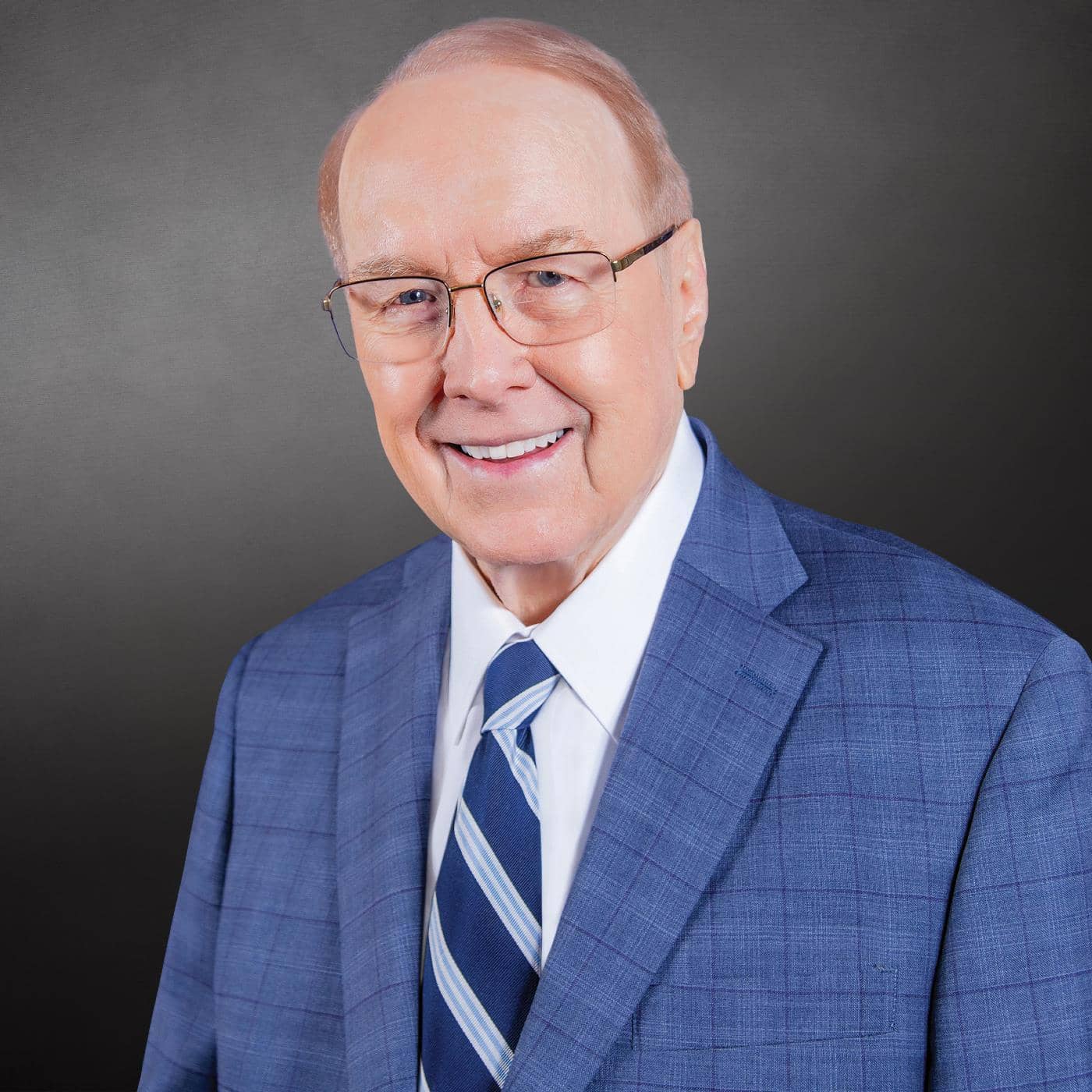


No one knows your kids better than you do, so who better to teach them? Maybe you don’t think of yourself as a teacher and the thought of homeschooling sounds too difficult. Today on Family Talk, Dr. James Dobson talks with Jay and Heidi St. John, who homeschooled their seven kids and founded Firmly Planted Homeschool Resource Center. They share three keys to a successful schooling model: flexibility, the one-on-one tutorial model, and a vision of Christian discipleship. The results? On average, kids who are homeschooled test three grade levels higher than their public school peers.
To support this ministry
Dr. James Dobson: Well, welcome to Family Talk, everyone. I’m your host, Dr. James Dobson. And today, we’re going to take another look at homeschooling, which many parents are either doing now or they’re attracted to. They are motivated, frankly, by two cultural developments. The first is the COVID pandemic, which changed public education dramatically. When my generation grew up, our moms packed little lunches for us and we were scurried off to get on a yellow bus, or as, in my case, we walked to a neighborhood school where we spent the next seven hours. Parents trusted teachers in those days because they usually knew them and they felt comfortable with what was going on in the classroom. Then, came the pandemic and education became virtual. So, that, more or less, forced parents into the teaching process, and they began to see the advantages of spending each day with their much-loved kids. This is the first reason homeschooling has grown so rapidly. It’s just exponentially, in fact, in the last couple of years. It introduced a new experience for children and their parents. Now, the second force driving, homeschooling is what I call the radicalization of curricula. Many Christian parents and even some of those who don’t share our faith, are deeply-concerned about critical race theory, among other things, which continues to spread across the nation, and they oppose what passes for sex education and a leftist ideology such as LGBT curricula that, often, begins in kindergarten, which takes my breath away. It’s a form of indoctrination that, in worst cases, warps the young minds of boys and girls and contradicts what moms and dads are trying to teach at home, including, biblical concepts of right and wrong. I want to tell you that, if our children, speaking of Shirley and me, were young today, we would either put them in Christian schools, which, we did anyway, or we would do the job at home. It hadn’t been considered when our children were young. One more time, I would like to tell those of you who haven’t heard the story of how the modern homeschools movement came to be. I had never heard of it either when our 1 kids were young, until a man came along named Dr. Raymond Moore, who is legendary today. And he wrote a book, along with his wife, Dorothy, in the late ’70s. It was called School Can Wait. It completely revolutionized my thinking. Now, Ray and Dorothy Moore have gone on to Heaven, but I wish that they could see the relevance today of what they started. The thesis of Dr. Moore’s book was that enrolling young children in formal education is not always the best choice. One of the reasons is, because young children are very vulnerable to social pressure. They get pushed around, bullied, they get laughed at, they get called names, and they don’t deal with that well, and it’s better to delay that process. And they tend to catch up once they have been put in their grade level. You don’t have to start with kindergarten, you start where they are and good things happen to them. They’re also given the freedom to learn the fundamentals of reading, writing, and arithmetic at their own pace. So, if you’ve been thinking about homeschooling for your children or grandchildren, stay tuned, because we’re going to let you hear a recorded interview with Jay and Heidi St. John on this edition of Family Talk. It was recorded, I believe, in 2010 here at the ministry, and I want to go back to that pre-pandemic era and let a homeschool family tell you why they’re doing this and why it’s important. Jay and Heidi are founders and executive directors of Firmly Planted Family Ministries. That’s a parachurch organization that is dedicated to training and equipping parents to disciple their children. It has a strongly spiritual foundation. And to teach children the way God intended. The St. Johns travel and speak together throughout the year, encouraging couples in their marriages and parenting journeys, using God’s Word as their primary source for spiritual growth and discussion. I think you’re going to enjoy this interview. With that, let’s hear part one of that interview, and we’ll hear the balance of it tomorrow. Heidi St. John: Dr. James Dobson: Jay St. John: Savannah, our oldest, started in school, and we pulled her out in second grade. So, she went through traditional school through the second grade, but none of the other children have ever been to regular school. And Jay, you have been a pastor and you left that responsibility to help found the homeschools organization. Explain the title of it. That’s right. First Class Homeschool Ministries, and we started our first co-op in 2000 in Mount Vernon, Washington. And then, as we moved to Vancouver, 2 Washington, started a co-op there and then another one and was growing and blossoming. Actually, around the country, people were asking, calling and emailing, “How do we do what you are doing in Vancouver?” So, we realized God’s wanting something of us, and so, we packaged it up and started helping other people do it, helping churches have a ministry to the homeschooling community. Heidi St. John: Dr. James Dobson: Heidi St. John: Jay St. John: Dr. James Dobson: Heidi St. John: Dr. James Dobson: Heidi St. John: Jay St. John: Heidi St. John: Dr. James Dobson: Heidi St. John: It was amazing. And you’re really serious about this? We’re very serious about it. Oh, yeah. Yeah. And we’re a little not serious, sometimes, because we have to laugh a lot when you’re homeschooling, but definitely, serious about homeschooling. Yeah. Well, you have written a book called Romance: Nurturing Your Marriage Through the Homeschool Years. You’re really honest about the challenges of homeschooling. It’s not an unmixed blessing, is it? No, it isn’t. And in fact, Jay and I were talking about this morning, I loved Parenting Isn’t for Cowards, and I said to Jay, “Homeschooling isn’t for cowards either,” That’s right. You better know why you’re doing it. And so, the book is really aimed at helping moms remember why they’re homeschooling, so that when it gets hard… like anything else, it’s worth doing, it has its difficult moments. I always tell people, there have been many times when I’ve watched the school bus go down around the corner and I’ll think to myself, I wonder if I just ran out there and just asked the guy, I’ll give you five bucks if you’ll just put all my kids on your bus and take them on your route so I can get a shower. You know? Yeah. Little things like that that… I want to encourage moms, it’s so worth it if you can hang on for the ride. Now that we’ve graduated our oldest from homeschooling, I can speak with much more authority and confidence, seeing her becomes beautiful young woman, it’s been absolutely the hardest, best thing we’ve ever done. 3 Dr. James Dobson: Yet, you’re about ready to start with a new baby. Heidi St. John: Jay St. John: Heidi St. John: Dr. James Dobson: Heidi St. John: It’s diapers to diploma. That’s what we’re doing. We say that about our program, is diapers to diploma. And so, we’ve taken that on as our family. That’s our family’s a slogan as well. I always tell people, I couldn’t call myself an accidental homeschooler, because we were really not fans of the homeschool movement. We didn’t really understand it. When we were younger and first married, a lot of people that we knew that were homeschooling seemed… It seemed like an unattainable goal for us. Either really, really conservative or academically, I just felt like how could I spend the time with my kids all day long? I was used to a traditional school. My grandparents put us through… Me and my siblings, through a private Christian school, kindergarten through 12th grade, and that’s the experience you take into your adult life is what you know. That’s what I knew. And it was really the Lord who did a work in my heart, and He started because our second daughter, Sierra, missed the cutoff to go to school with her sister by just a few days, because her birthday fell outside of the parameters that they needed. And so, in order to keep her happy, I said, “Well, I’ll teach you. I’ll work with you at home”. I sort of took it on that way, and I realized I could teach her to read. And Jay would come home from work, and I would say, “Honey, look what I can do. I mean, look what Sierra can do”. She would read a basic word to him, cat, or whatever. And at that moment, I realized how much joy I was getting from spending this time with her and teaching her to read and watching her blossom. I mean, she was passing her sister who was two grades ahead of her in a public school. So, we started off kind of cautiously, but once we realized this is amazing and committed to it, that’s when our real journey began. Speaking of differences, there are different approaches to homeschooling, too. Describe some of the options that are there. Well, this is a little bit like trying to take a drink from a fire hydrant, because there are so many different approaches, but there are some main ones that are sort of mainstream. And I think, probably, one of the biggest one is traditional, people call it school at home. And a lot of people, when they first start homeschooling, this is what you do, because remember I was saying earlier, you kind of take what you know with you into homeschooling. And so, it’s a good way to start. That’d be more like a traditional approach like workbooks and traditional textbooks that you can get from a company like Abeka or Alpha Omega- 4 Dr. James Dobson: Sitting again. Heidi St. John: Dr. James Dobson: Heidi St. John: Dr. James Dobson: Heidi St. John: Yeah, and you’re sitting again. And it takes time to figure out what works for you. People call that school at home, because you’re basically bringing a classroom home. A lot of people, when they start homeschooling, do what I did. I got desks at a garage sale. I set up my little classroom, but before long, where do you think we ended up? We’re at the kitchen table, and Jay was like, “Well, that’s a lot of wasted space down there in the basement”. So, we converted it back into a family room again. But my point is, is that that’s how we started, also, was that schooling at home. And then, eventually, we transitioned into something that’s called unit studies. And unit study is, basically, taking a subject, like let’s say you’re going to study… Instead of studying whales in the fourth grade and in the sixth grade, you’re studying- Western movement. Absolutely. Maybe, you’re going to study oceans. And while you’re studying the ocean, you’re going to talk about Jacques Cousteau, and you’re going to learn about different types of vocabulary words that he would’ve introduced as he was studying the ocean. You’re going to learn about whales, you’re going to learn about the environment. And you take all kinds of different academic angles, and you study the ocean. That is generally what we do in our home, because we have so many children, it makes sense for me to take one topic. Like I tend to write my own unit studies. I like to base them off of missionary stories. So, we have studied Corrie Ten Boom. We have studied so many amazing people who have done amazing things for the Lord. And so, when we studied Hudson Taylor, for example, we studied China, and we studied what was happening during that time period that Hudson Taylor was serving the Lord. And we learned about indigenous people and God’s heart for the people of China. And that just sprouts all kinds of conversations with the kids. When we studied Corrie ten Boom, we learned about the Holocaust. We studied the Netherlands and Holland and Hitler. And the kids were so fascinated by this, because they could relate to a story. If you tell a child a story… They get it. … they get it, and all of a sudden, they’re emotionally attached to this particular time period that we’re studying. 5 And we actually quit the rest of the thing that I was planning on doing with them, and we just did Corrie Ten Boom for about three months, and we studied… It was amazing. We made a huge timeline put it up on our wall, they never forget. It’s amazing. Dr. James Dobson: Heidi St. John: Dr. James Dobson: Heidi St. John: Dr. James Dobson: Heidi St. John: Dr. James Dobson: Jay St. John: Dr. James Dobson: Jay St. John: Heidi St. John: Dr. Ray Moore put great emphasis on working with your child. I’m not talking about reading books together. I’m talking about taking the child to a grocery store with you to do the shopping. That’s right. And you learn from that about measurements, and you learn… Budgeting. Yeah, budgeting. Absolutely. All sorts of things. I mean, there’s so many things that we do every day that have so many other applications that we can teach our children. They can see, helping them to understand how we need to follow through with things that we do. Just, character building things, as well as, academic things. All that stuff starts fitting together, and it’s just so much more powerful. Jay, what is your role in homeschooling? Well, Heidi is the main educator with the children. Now that I am… I don’t have a full-time job at the church anymore, so I am more flexible. I help more with homeschooling. But I like to encourage dads, which, so many dads ask, “What can I do? I have a full-time job. I’m not there. I don’t even understand all this academic stuff, and how could I contribute to it?” And I always encourage dads, “Look, you can be a support to your wife. You don’t have to know all the answers of what to do or how it’s done, but you can sit down with your wife and say, “Look, we want to follow God’s leading in raising our kids”. So, I tell the dads, “Ask your wife what she thinks should be done. And then, pray about those things together. Discuss them. If you can, go with your wife to a curriculum store and look at all that’s out there. Talk about what your kids’ strengths and weaknesses, what fits with them,” and that is huge. And then, telling your wife every day, “You’re doing amazing”. I can see the progress- Don’t quit. 6 Jay St. John: Because just like your kid’s growing, you don’t see your child growing every day, you don’t physically see it, but they are. And when you’re going to work every day and coming home, you see that better than your wife does when they’re educating your child. Dr. James Dobson: Heidi St. John: Dr. James Dobson: Heidi St. John: Dr. James Dobson: Heidi St. John: How do you account for the fact that these kids come out so academically-gifted frequently? There are kids that have problems with home schools, too, but it is amazing how well they do in college, how well they do on standardized tests. If you don’t take the classical approach to education, how do they come out with those skills? That’s a great question. I honestly think it’s because they’re being tutored, basically. You’re going from a child who’d maybe be one of 23 to 30 students, to being tutored one-on-one by their mom or their dad. And I think that’s the environment in which they’re flourishing. And also, you’re teaching them to become an independent learner. If we don’t know what the answer to something, we find it. And while we’re looking for that answer as a parent, we’re teaching our children how to look for it also. So, our kids are very proficient on the internet. If they don’t know something… Like our son was trying to figure out the history of model airplanes, and he just said, “Mom, do you mind if I get on Google and find out who made the first model airplane?” No, I think… And it’s wonderful opportunity. He selfdirected then. And I think we’re teaching these kids, by the time they get out of high school, they are self-motivated, self-directed, they understand the importance of education. They get it. You’re not a credentialed teacher? No. No. Did that scare you in the beginning? Absolutely. Oh, yeah, it scared me. And I realized I didn’t need to be scared. After Savannah took her very first standardized test in Washington State… you are required by law to have your kids tested, like the IOS standardized test or the CAT/5 or something every year. When the first year that our kids had to take that test, I knew we were going to be okay. They tested, on average, three grade levels above where they were supposed to be. But I’ll tell you, I very rarely hear about a child who’s not flourishing in a homeschool environment. Because if the mom doesn’t feel comfortable, or she’s not sure how to do it, she can find help. There are so many resources out there now. 7 The ministry that Jay and I run is just one of them. So, it’s an incredible opportunity… Dr. James Dobson: Heidi St. John: Dr. James Dobson: Heidi St. John: Jay St. John: Heidi St. John: Dr. James Dobson…: Heidi St. John: Jay St. John: Heidi St. John: Jay St. John: Dr. James Dobson: Jay St. John: Heidi St. John: Dr. James Dobson: Heidi St. John: Dr. James Dobson: Heidi St. John: Give us the name of it again. … to find… It’s First Class Homeschool Ministries, www.firstclasshomeschool.org, and we have about 50 locations now around the United States, homeschool co-ops that function as ministries of their local church. Just like a MOPS program would function as a parachurch ministry or a- Can they ask you questions? Absolutely. Absolutely. Oh, absolutely. We would love to make- Do they call you? Yeah. Absolutely. Yeah. We give each church, for these co-ops, a website and a database system so they can manage all their classes and the people, the parents and the kids. And so, you work largely through the local church? Absolutely. That’s right. Heidi, what do you do when you get a call from a mother who says, “I can’t do this. I’m exhausted. I never have a minute to myself. And I’ve got these kids around my knees all day every day”? I might cry with her. Yeah? I might. I love those calls, because I’ve been there so many times myself, and I always tell them, “If you need to be talked down out of your tree… Here’s my phone number, you can call me”. 8 And I think it’s a wonderful opportunity for me to be real with that mom, and say, “Hey, what you’re going through, totally normal. It’s totally normal. There’s nothing in this life that’s worth doing that isn’t difficult. And the Lord’s going to give you the grace that you need”. And then, it’s just a matter of listening to her, because most of the time, there are fears that just are very easily calmed, and it’s just a matter of her needing some time for herself, or maybe, she needs a little bit of extra encouragement in how to organize her day. A lot of it is just found in being… That encouragement is found in being real and just saying, you know what, it’s totally okay to feel like you don’t want to do this anymore. I get it, I’ve been there. When I was younger, homeschool mom, Diana Waring, who’s a friend of mine and has written an amazing history curriculum that’s now published by Answers in Genesis, she came to speak at an event that I coordinated. And at the end of it, she said, “Does anyone have any questions?” And here I am, relatively new homeschool mom, but I’m leading this huge group, and I raised my hand, and before I could even get the rest of my sentence, I just started crying. “I can’t do it anymore. We don’t ever finish our whole math assignment”. I mean, I was blubbering. And she walked right up to me, and I’ll never forget this as long as I live. She put her hand on my shoulder and she said, “Woman, be loose”. And I thought, well, that’s embarrassing. But she went on to tell me, “You’re expecting too much. You’re missing the blessing of homeschooling by expecting all of this of your children. This isn’t a classroom. This is your home. And integrate your children into it”. And that was the beginning. Savannah was in fourth grade at that point. That was the beginning of me realizing, this is a lifestyle. I need to change the way that I’m looking at this. And I went home and I told Jay, “I think I’ve got a little bit more of the piece to the puzzle now”. Dr. James Dobson: Heidi St. John: Dr. James Dobson: Heidi St. John: Dr. James Dobson: You don’t have to be that rigid. That’s right. And in fact, a blessing is found. And your kids will be okay… That’s right. … and probably better if you’re not. 9 Heidi St. John: That’s exactly right. One other thing that the Lord really used to show me the amazing opportunity of homeschooling was when I was pregnant with our fourth child, a little boy. I had a rough pregnancy and a very difficult delivery, and I couldn’t do the things I wanted to do that year. I had this big plan and this big schedule, the master calendar was on the wall. And I was forced into bed rest. And so, the kids sat on the bed with me and they brought their math workbooks, but I read to them, we read the classics, we read missionary stories. We did a lot of reading, and a little bit of math. And at the end of the year, when they took their standardized tests, they tested better that year than they had any year before and any year since. And I think the Lord was just trying to tell me, My grace is sufficient and when you can’t do it, I can do it. I take over. It was amazing. Dr. James Dobson: Heidi St. John: Dr. James Dobson: Heidi St. John: How long were you bedridden? How long did it- It was probably five months, which is a long time in a school year- Five months with kids sitting around the bed? Yeah. Yep. And they flourished, they did great. And it taught me, I need to rely on the Lord and I needed to… And that let me… Because I’ll tell you what, after that year, I have never been as stressed as I was before going into that. Because I know, that whenever I feel like I have a gap in the kids’ education, the Lord is going to cover that for me. And He does beautifully every time. So, there’s not so much to be worried. We’re so worried because we bring in these things from the world, and it’s the enemy who comes in and says, “You’re not good enough. You’re not doing a good enough job. You’re messing up your kids”. And it takes those experiences to realize, oh, it’s not me who’s doing this anyway, it’s the Lord doing it through me. And when He does that, the results are phenomenal. When we rely on ourselves and… I always tell moms, “You don’t want to be the mom who’s running around with your hair on fire. Your kids don’t want to remember that. Relax and enjoy what God’s doing. And the learning comes when these kids are in an environment that they are thriving in”. I always tell parents, “When you start out homeschooling, stick to the core subjects. You want to do reading, read with your kids, and teach them some… Anybody can do second grade math, right? Pick up a math workbook at Walmart, and you’ll see what I’m talking about. It’s not that difficult. What I discovered, when I talk about Roman studies is, instead of teaching each one our kids history separately, science separately, math separately, I realized I 10 can take a history book and sit down and read to them like it’s a story. And we’ll sit around for, probably, three hours and we’re reading and they’re absorbing this information. And when that’s done, they’re taking off into kind of different places in the house and they’re writing about what they’ve learned and we’re learning together. I’ve grown into homeschooling. I didn’t start out doing it that way. I was terrified of homeschooling when I started. And I had to go in a little bit at a time. And when it was difficult, I was honest enough with the moms around me who were seasoned, to say, “I don’t think I can do this anymore. I feel like I’m in over my head”. And the Lord, in His mercy, every single time, has brought someone along who said, “No, no… Dr. James Dobson: Heidi St. John: Dr. James Dobson: Heidi St. John: You’re good at it. … you can do it”. I tell you what… Your kids love it? They do. They do. Although… I love to teach moms who have reluctant writers, because I have reluctant writers in my house, especially the boys. It’s not a piece of cake to teach a boy to write, or teach them grammar. And my son… This is how I learned. He was a kinesthetic learner. I was trying to get him to write a paper on something that we’ve been reading. And the older girls, I was like, “Hey, just give me a few sentences on Thomas Jefferson”. Amazing. We’ve been studying, we’ve read about Monticello. Let’s do it. Let’s write. And they’re like, fine. So, they went to write, but they weren’t super excited, but my son, immediately, started crying. His wrist went limp. “I can’t write. It hurts my hand”. And I started crying, because he was crying, I’m crying, I’m thinking, I’m never going to get through this. And finally, in absolute desperation, I put my hands up and I said, fine. You don’t like Thomas Jefferson. What do you like? And he kind of perked up, and he said, “I like Legos”. Of course, like every nine-year-old boy, I like Legos. And still, I’m feeling desperate, and I said, “That’s fine. How about this? Instead of writing about Thomas Jefferson… Because the goal wasn’t to get him to understand Thomas Jefferson, remember, the goal was to get him to write. So, I said, “Let’s write about Legos”. And that kid lit up like a Christmas tree. He wrote for me two pages. He was downloading pictures of Legos. You know the history of this Lego? We found out that the guy who started Legos actually started out building miniature houses, and Skyler was fascinated. And that, because he was interested, it brought out the learner in him and the writer in him. 11 And that was… I mean, these are light bulb moments for me, because I’m realizing I don’t have to stick to a set curriculum. I can find out what’s interesting to my children, and then, bounce off of that into the next thing. And that’s what makes it doable. When you’re trying to force a curriculum down a child, or let’s say, you bought a curriculum that’s just not working for you. You don’t like it. I always tell moms, “I don’t care if you spent money on it. Shelve it. Don’t continue using it”. One of the benefits of homeschooling is that you can work with something until you find something that works for you. You want it to work for you. What works for me may not work for you, and vice versa. So, we have tremendous freedom to figure out what it is that our kids are really fascinated by, and what it is that we like to teach. So, you find out what you’re… Like I’ve learned that I am an auditory learner, because I’m homeschooling. I love to listen to things. Well, my daughter, Savannah, is a visual learner. She likes to read. And so, if she reads and Sierra listens, they’re happy. It took me a while to figure that out. And that’s the benefit. I think if you cannot get scared and overwhelmed by looking ahead, just look where you are. Dr. James Dobson: Heidi St. John: Jay St. John: Dr. James Dobson: Heidi St. John: Dr. James Dobson: Heidi St. John: Jay St. John: Well, Heidi and Jay, this has been so enlightening and so inspirational, Heidi, particularly, but both of you are not just talking theoretically, you’ve been there, you’ve done it. And you have answers to the questions that people ask, because you’ve heard them a thousand times. And I’ve got about a thousand more. And so, will you come back? Absolutely. Absolutely. Tomorrow and tomorrow and tomorrow and tomorrow. Okay. The name of the book that you’ve written, which we didn’t talk about today, is The Busy Homeschool Mom’s Guide to Romance: Nurturing Your Marriage Through the Homeschool Years. A lot of practical stuff here. Absolutely. And we will, sooner or later, talk about that here on Family Talk. Thanks for being with us. Thank you. Thank you. 12 Roger Marsh: Children, certainly, learn in different ways, don’t they? If you want to learn more about Jay and Heidi St. John and their homeschooling ministry, and also, Heidi’s ministry to moms called Faith that Speaks, you can find links on our broadcast page at drjamesdobson.org/familytalk. And be sure to join Dr. Dobson again tomorrow for part two of this conversation with Jay and Heidi St. John. Now, if you enjoy listening to Family Talk every day, and we know you do, be sure to sign up for Dr. Dobson’s free monthly newsletter. You could sign up at the bottom of our homepage when you go to drjamesdobson.org, and be sure to check out the other free resources that are available there as well. Well, I’m Roger Marsh. Thanks so much for listening today to Family Talk, the voice you trust for the family you love. Announcer: This has been a presentation of the Dr. James Dobson Family Institute.