

by Stefan J. Bos, Worthy News Chief International Correspondent
PANTAI BUAYA, INDONESIA (Worthy News) – The stench of death is never far away. Yet a Christian community on Sumatra island, overlooked by Muslim authorities, found reasons to “praise God” over the weekend as they received food, medicines, and other goods to cope with the aftermath of Indonesia’s deadliest flooding in years.
Some 30 Christian families in the hard-hit coastal village of Pantai Buaya, about 92 kilometres (57 miles) northeast of Medan, Sumatra’s central city, were overwhelmed as Christian aid workers managed to reach them after nearly a week.
Pentecostal Pastor Joshua Hendra Cipta Barus, whose home was flooded, assisted the volunteers in reaching members of his Gereja Bethel Indonesia (GBI) congregation. “I know their pain as I narrowly survived myself. For days, I could not come down from the second floor of my home. Finally, I took the risk. I had to swim to the street as the water came to my chest,” he recalled in an interview with Worthy News.
However, “Praise God, we are very grateful to God for still being able to provide assistance through His children, whose hearts are moved by God to help those affected by the floods who have not yet received aid,” he and other residents said.
Asked whether they were angry, Christian residents wondered, “Who to be angry with?”
SURVIVORS EXPRESS GRATITUDE DESPITE LOSING EVERYTHING
Christian aid worker Annie, who declined to give her full name due to security concerns, noticed that people living in the village “can only cry, look up, pray, and give thanks, saying, ‘God has wiped everything out, except our lives.’”
Annie, whose own home in Medan was flooded, stressed to Worthy News that amid flooding and landslides, “We are reminded of His Word,” including Bible verse 1 Thessalonians 5:18: “Give thanks in everything; for this is the will of Jesus in Christ Jesus for you.”
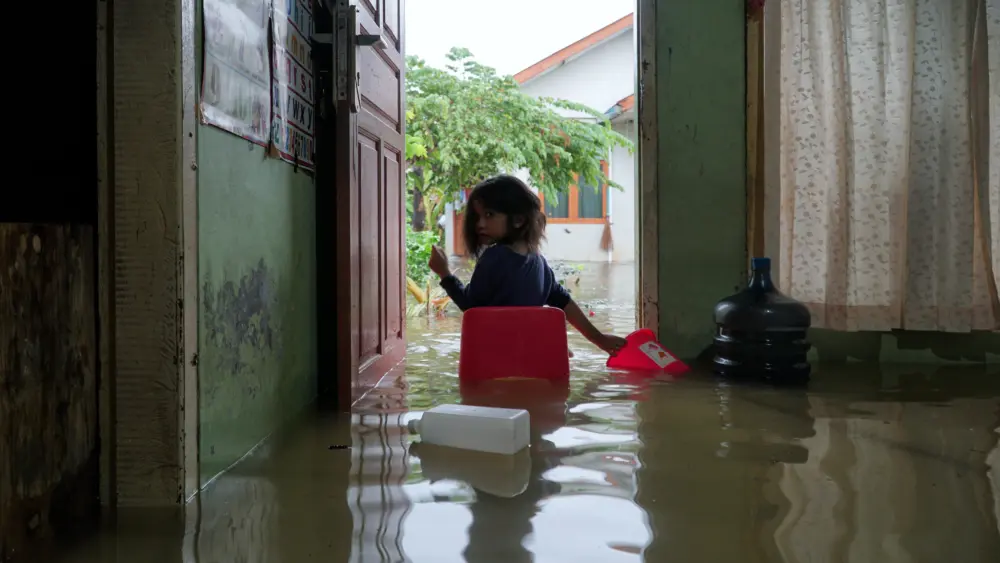
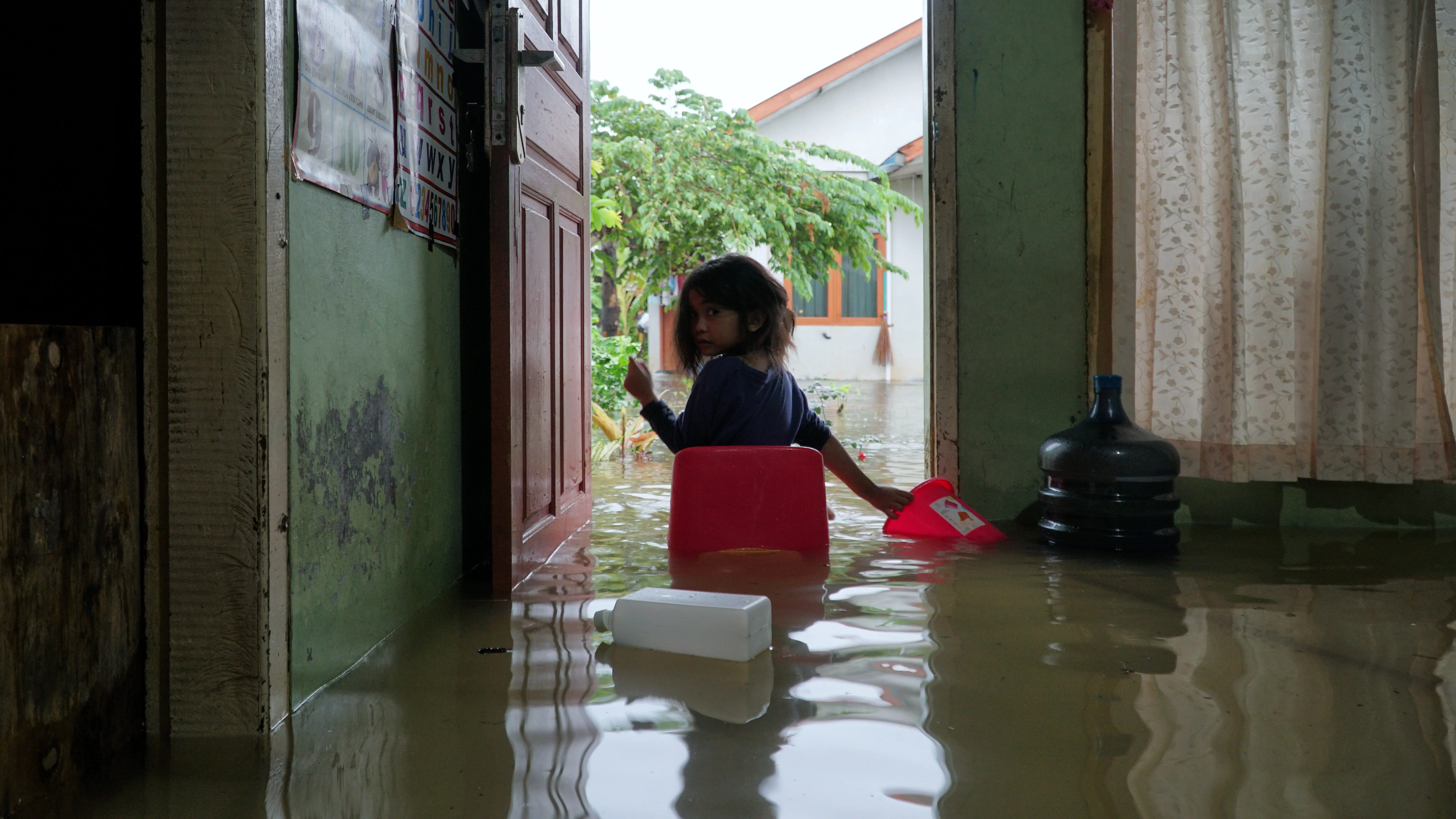
Villagers told Worthy News that they “remain grateful to the Lord Jesus” despite losing their “homes, clothes, household furniture, cooking utensils, food ingredients, and books in water and strong currents of up to 2.5 meters (8.3 feet) high.”
Christians added that “there was no water to wash, mud was everywhere, and the lights were out.” They tried to turn on a generator, but fuel had become very “difficult to get and very expensive.”
Yet as they looked at their destroyed homes among the palm trees, villagers said they learned a spiritual lesson about seeking wealth in this world.
FLOOD SURVIVORS RECALL LOSS AND HOPE
Worthy witnesses recalled that a man saw the money that he had saved washed away. He was finally swept away by the rising floodwater with his money. “He died while chasing his money.”
Annie, the aid worker, added that a woman in Medan had told her with tears in her eyes: “We were so tired working day and night to collect wealth and build a house, but God wiped it all out in one day.”
Her team also met “a woman from an elite and wealthy housing complex who told us that during this flood disaster, money has no value. No matter how rich we are, money is no longer useful because there is nothing to buy, because no one sells food.”
The woman told the aid workers that she is now “very grateful for even a plate of rice without anything else.”
The once-rich woman explained “how she had to leave her flooded house and even her expensive car to save her life,” Annie remembered. “From this, we learn many lessons: ‘Appreciate the goodness and opportunities given by God, be grateful for the breath that God still gives, and remain compassionate to those in difficulty.’”
HOSPITALS COLLAPSE AS DISEASE SPREADS
She spoke as Indonesians in the region around Aceh Tamiang were grappling with worsening diseases and a lack of medical care. “The stench of death is everywhere,” said Annie, who has contacts in Aceh, a region ruled by Sharia, or Islamic law.
Induced floods and landslides devastated three provinces on Sumatra — Aceh, North Sumatra, and West Sumatra — killing at least 940 people, with an additional 276 listed as missing, according to government data.
Residents who lost their homes now face outbreaks of diarrhoea, fever, and muscle pain, the health ministry warned, as “environment and places of stay have not recovered post-disaster.” At the only hospital in Aceh Tamiang, medical equipment was covered in mud, syringes were scattered on the floor, and medicines were swept away.
“These workers do not know what tired means,” said Ayu Wahyuni Putri, who gave birth days before the floods hit. Nurse Nurhayati, 42, said the hospital was nearly paralysed due to a lack of medicine. Workers tried to save ventilators in the intensive care unit for babies, but rising water covered them. One baby died; six survived.
Ruined bridges made it nearly impossible for medical workers to travel. Dr. Chik M. Iqbal reached Aceh Tamiang by boat, saying that emergency rooms might reopen only on Monday.
AUTHORITIES CALL FOR NATIONAL EMERGENCY
Some 31 hospitals and 156 smaller health centres across the three provinces were damaged.
On Sunday, President Prabowo Subianto visited Aceh, ordering repairs to bridges and dams and cancelling state-backed microloans for farmers.
However, he appears far removed from reality,” Annie complained. “What we need is real help, not slow aid and regulations.”
Local authorities urged the government in Jakarta to declare a national emergency to release more funds for rescue and relief operations.
The disaster on Sumatra is part of a wider Asian flooding emergency, with deadly storms and landslides also striking Sri Lanka and Thailand.
REGIONAL DEATH TOLL SURPASSES 1,700
Authorities in Colombo said more than 300 people were killed after Cyclone Ditwah triggered massive flooding and a dam failure, while Thailand and Malaysia also reported casualties as extreme monsoon rains swept across the region.
The combined regional death toll has surpassed 1,700 people, making it one of Southeast Asia’s worst multi-nation disasters in recent years.
The floods in Indonesia began in late November 2025, when days of torrential monsoon rains pounded Aceh, North Sumatra, and West Sumatra before intensifying under the influence of a rare tropical cyclone.
Around the same time, Cyclone Ditwah made landfall in Sri Lanka, triggering additional devastation across South Asia.
The overlapping storms created a chain of record-breaking floods and landslides, overwhelming communities across the region.
SEASONS IN LIVES GIVE EXPERIENCES
However, amid the misery, Annie acknowledged: “There are seasons in our lives when we are more discouraged than encouraged. It’s inevitable that all of us will experience those moments, and it’s often in the face of insurmountable grief or negative experiences that this happens.”
She added that believers can know that “Romans 15:5 reminds us that there are three things that God gives to those who believe in Jesus.”
Annie said, “The first thing is: God gives endurance, secondly God gives us encouragement, and thirdly we can pray for God to give us unity of mind toward each other.”
However, “This means that we consider others as Jesus would consider them. Instead of seeing their flaws or mistakes, we see them as people loved and cared for by God. We should work towards unity with each other rather than division.”
She hopes the message will also inspire the Indonesian government to help everyone affected by flooding in the world’s largest Muslim nation.
The post Christians ‘Praise God’ Amid Indonesia’s Deadliest Flooding In Years (Worthy News In-Depth) appeared first on Worthy Christian News.