


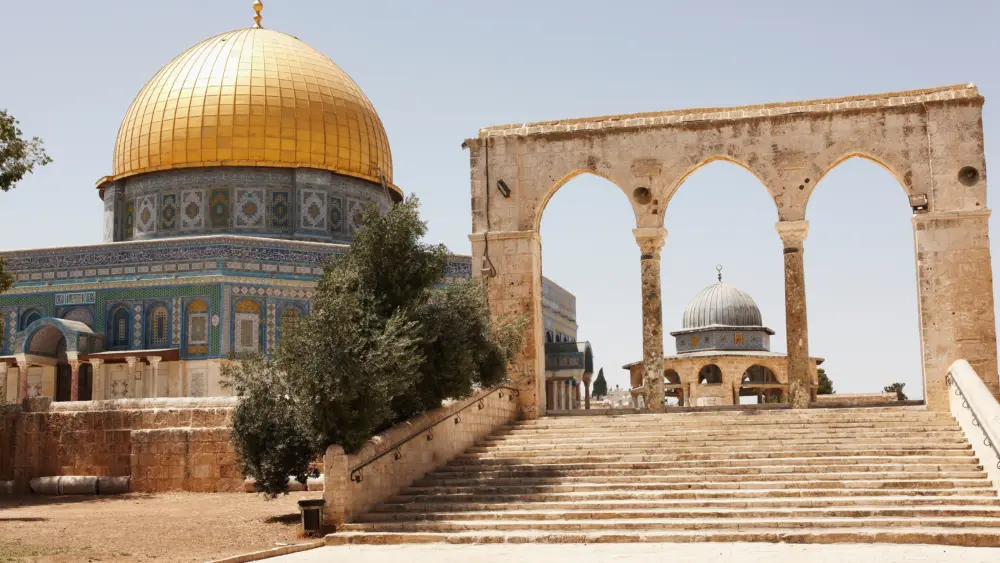
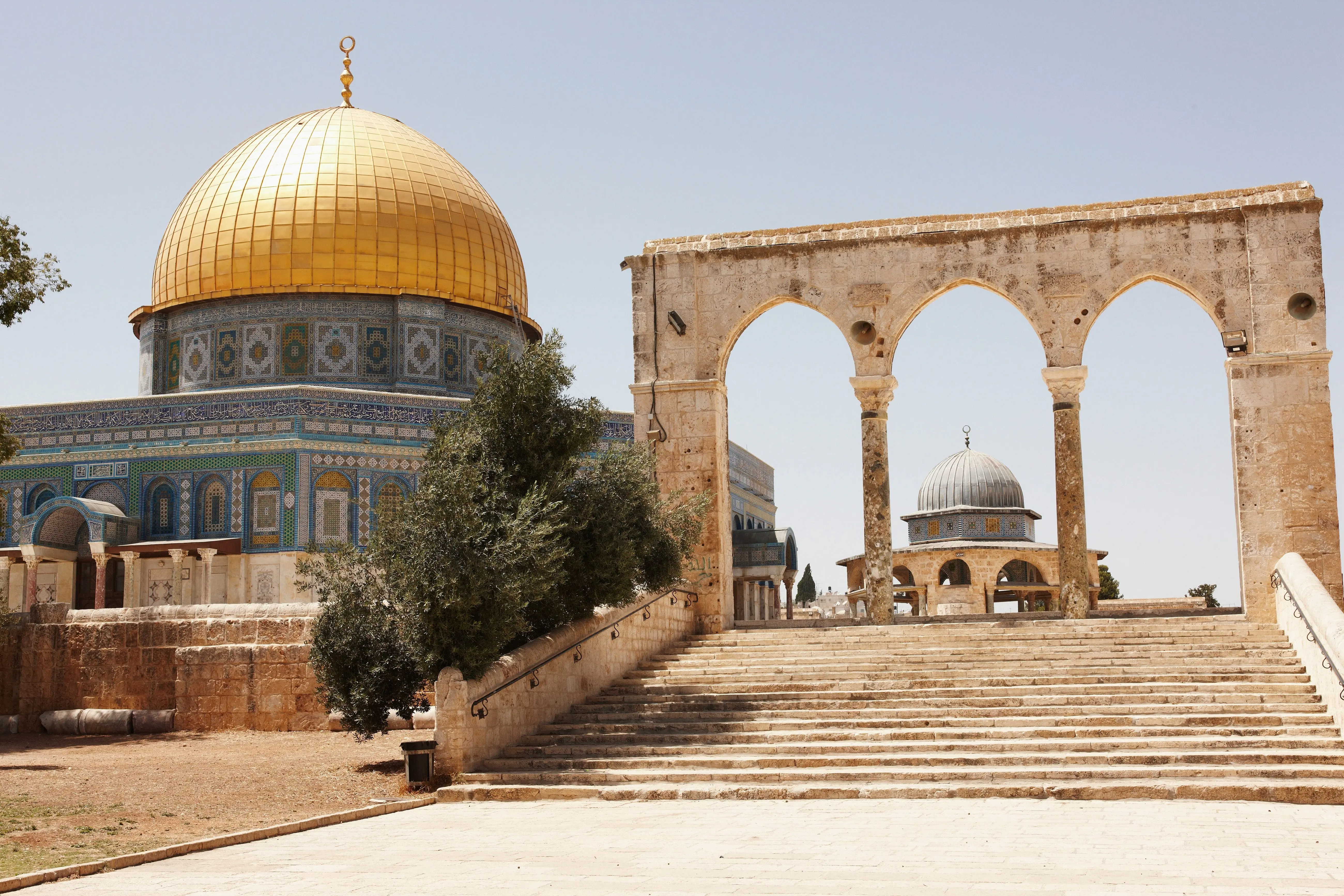
The Dome of the Rock, now administrated by muslims as Al Aqsa mosque, is the location of the "Two Loaves" sacrfice / Envato Market
by Emmitt Barry, with reporting from Worthy News Jerusalem Bureau Staff
JERUSALEM (Worthy News) – Archaeologists have uncovered one of the longest and best-preserved sections of Jerusalem’s Hasmonean-period city wall, a massive fortification dating to the Maccabean era, the Israel Antiquities Authority announced Monday.
The newly exposed structure, discovered in the Kishle complex beside the Tower of David, stretches more than 40 meters (130 feet) and is five meters (16 feet) wide, constructed of large stones bearing the distinctive Hasmonean chiseled finish. Originally over ten meters high, only its foundation survives.
Excavation directors Dr. Amit Re’im and Dr. Marion Zindel said the wall was intentionally dismantled, not eroded or destroyed in battle. Two main explanations fit the historical record:
• John Hyrcanus I may have dismantled Jerusalem’s fortifications around 134–132 BCE as part of a peace deal with Antiochus VII Sidetes, who besieged the city. Hundreds of catapult stones and arrowheads previously found nearby support this scenario.
• King Herod may have later removed the wall to erase Hasmonean authority and build his palace directly over the site—a political statement marking the rise of his own rule.
The excavation also revealed part of an older First Temple-period wall beneath the Hasmonean structure.
The discovery comes as the Tower of David Jerusalem Museum prepares to open its new Schulich Wing, where visitors will stand above the exposed fortifications on a transparent floor.
Heritage Minister Rabbi Amichai Eliyahu praised the find as “tangible evidence of Jerusalem’s might during the Hasmonean period,” noting its special resonance during the Hanukkah season.
The post Major Maccabean-Era City Wall Unearthed at Tower of David appeared first on Worthy Christian News.