

by Stefan J. Bos, Worthy News Chief International Correspondent
WASHINGTON/CAPE CANAVERAL, Fla. (Worthy News) – Four astronauts are on their way to the Moon after the U.S. space agency NASA launched the Artemis II mission, marking the first crewed lunar flight in more than five decades.
“Booster ignition and liftoff. The crew of Artemis II now bound for the Moon. Humanity’s next great voyage begins,” a NASA commentator said at Wednesday ‘s launch.
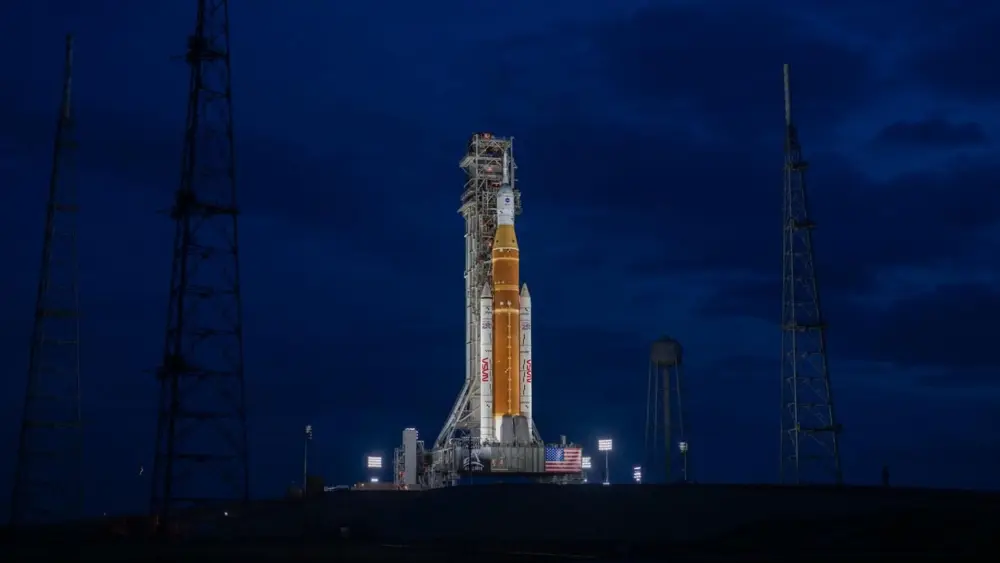
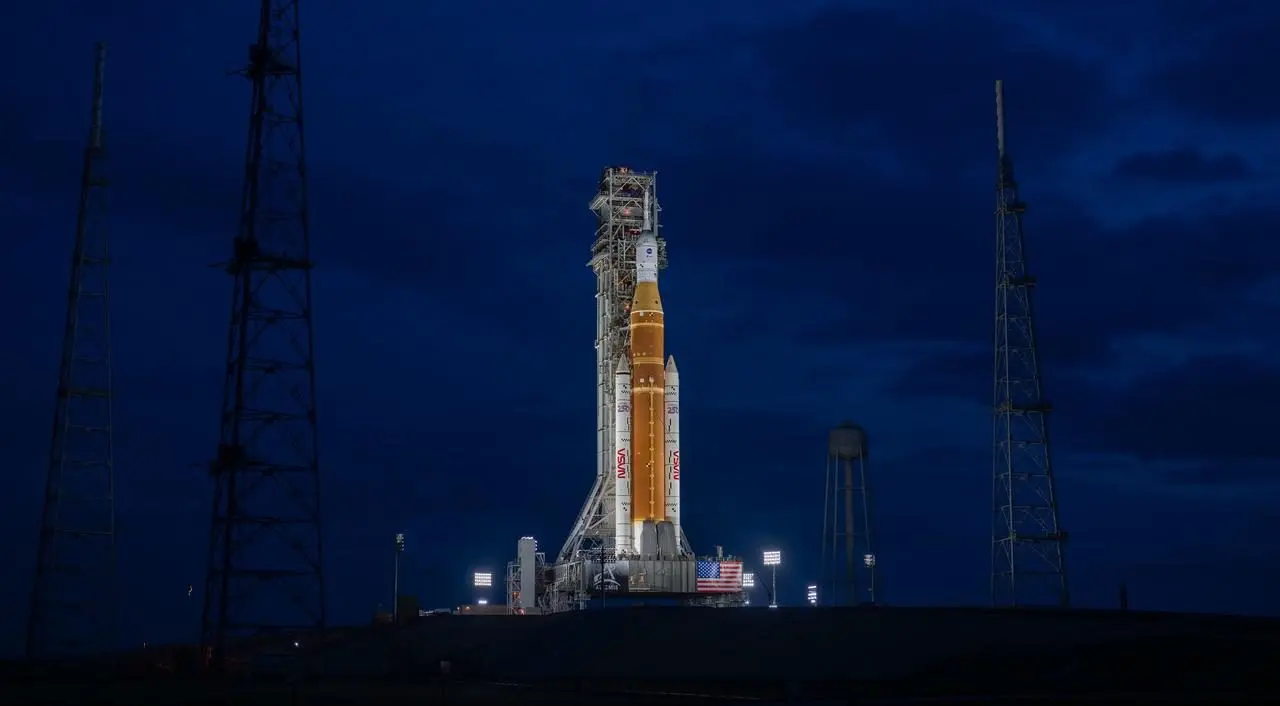
The mission lifted off from Kennedy Space Center on Cape Canaveral in Florida atop the powerful Space Launch System rocket, which carried the Orion spacecraft — a capsule designed to transport astronauts to and from the Moon.
Soon after launch, the rocket’s two solid boosters separated and fell back into the Atlantic Ocean for recovery, while Orion continued into Earth orbit with the crew on board.
RETURNING HUMANS TO DEEP SPACE
Mission control confirmed the milestone moment, declaring: “We have liftoff of Artemis II—returning humans to deep space.”
The crew will remain in Earth orbit until Thursday, when a precisely timed engine burn will send the Orion spacecraft on a roughly 240,000-mile (386,000 kilometers) journey toward the Moon before looping around it and returning to Earth.
The Artemis II crew includes Victor Glover, set to become the first Black astronaut to travel to the Moon’s vicinity, and Christina Koch, the first woman assigned to a lunar mission.
They are joined by NASA astronaut Reid Wiseman and Canadian astronaut Jeremy Hansen, representing the Canadian Space Agency, highlighting the international nature of the Artemis program.
FURTHER FROM EARTH
NASA says the Orion spacecraft could carry the crew farther from Earth than any humans have traveled since the Apollo era, when astronauts last journeyed to the Moon in 1972.
That era refers to the Apollo program, which brought humans to the Moon between 1961 and 1972, including the historic Apollo 11 landing in 1969.
Since the final Apollo mission, astronauts have remained in orbit close to Earth, making Artemis II the first mission in more than 50 years to venture into deep space.
Unlike Apollo, Artemis II will not land on the Moon but will test systems needed for future missions, including life support, navigation, and performance far from Earth.
MORE COMMUNICATION TESTS
The mission will also evaluate communication and crew operations at distances never tested in modern spaceflight.
NASA describes Artemis II as a key step toward returning humans to the lunar surface later this decade through Artemis III and establishing a sustained presence on and around the Moon.
Plans include building a lunar-orbiting station known as Gateway and eventually using the Moon as a stepping stone for human missions to Mars. Officials view Artemis as the beginning of a new era of exploration, combining science, technology, and international cooperation.
The Artemis program is among the most expensive space initiatives in history, with total costs expected to exceed $90 billion and each mission costing several billion dollars, according to estimates.
The Apollo program of the 1960s and 1970s likewise required massive investment—costing the equivalent of roughly $280 billion in today’s terms—reflecting the enormous expense of sending humans to the Moon.
The post Four Astronauts On Way To Moon In Historic Artemis II Mission appeared first on Worthy Christian News.