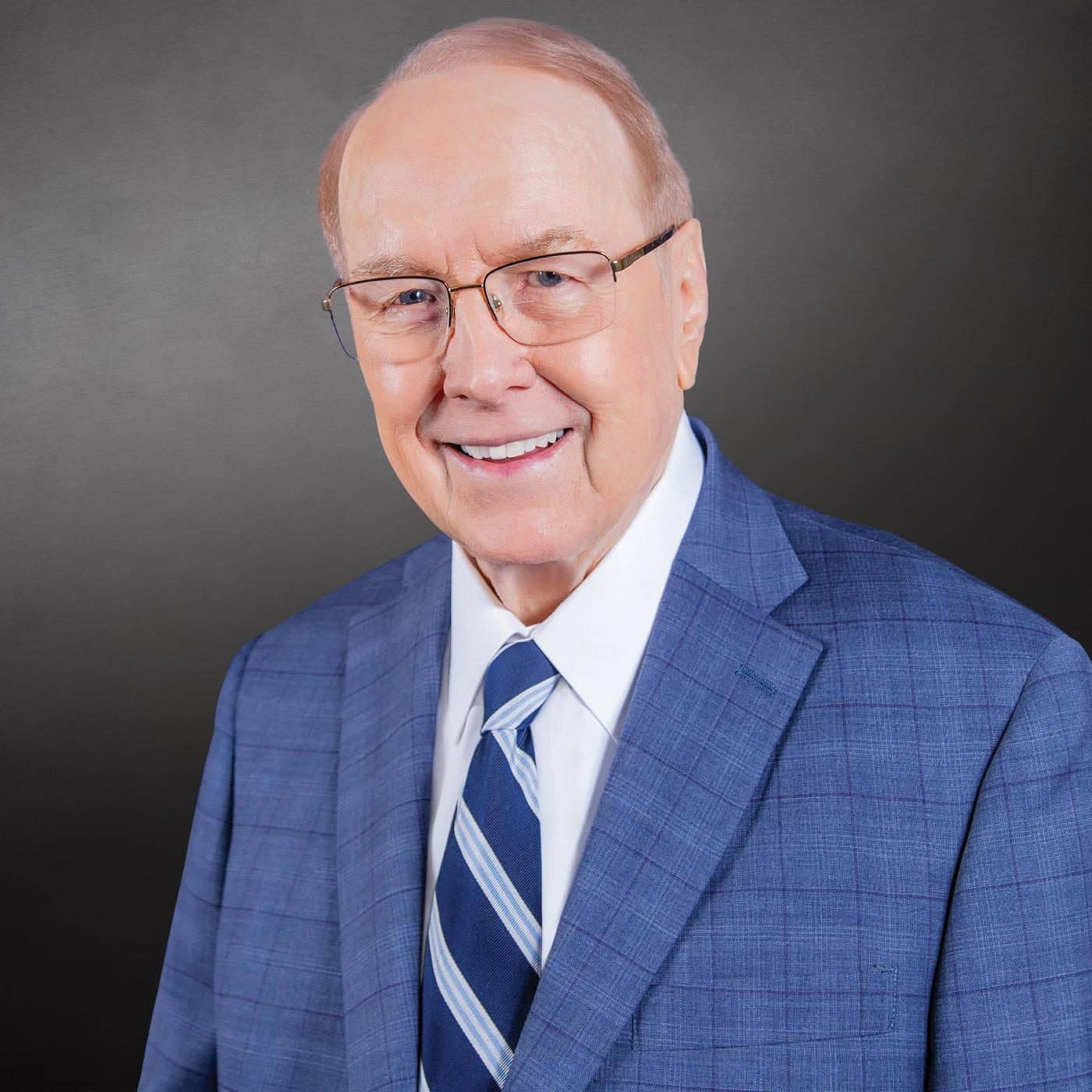
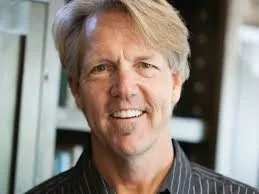

In this heartfelt dialogue, Dr. James Dobson and the late Chuck Colson discuss the trials and triumphs that come with a life dedicated to faith. From the corridors of power near the Oval Office to moments of solitary reflection behind bars, Colson’s testimony is a testament to the redemptive power of belief. The conversation delves into topics such as the role of skepticism, the essence of genuine conversion, and the contemporary challenges faced by the church. This episode is an essential listen for anyone seeking to understand the influence of a personal encounter with faith and the profound impact
SPEAKER 03 :
Welcome everyone to Family Talk. It’s a ministry of the James Dobson Family Institute, supported by listeners just like you. I’m Dr. James Dobson, and I’m thrilled that you’ve joined us.
SPEAKER 01 :
Welcome to another edition of Dr. James Dobson’s Family Talk. I’m Roger Marsh, and today we are reaching into our audio archives to bring you a classic conversation with one of Dr. Dobson’s closest friends, the late Chuck Colson. Now, Chuck went home to be with the Lord in 2012, but many of us remember Chuck’s name from the infamous Watergate scandal during the Richard Nixon presidential administration. But you know, there’s a far more powerful story to be told. One, how God radically transformed this former White House hatchet man into one of the most influential Christian voices of our generation. Now, in this powerful conversation, Chuck will share his journey from political power to prison and how he found true freedom through a personal encounter with Jesus Christ. Let’s join Dr. James Dobson now as he welcomes his friend Chuck Colson to today’s edition of Family Talk.
SPEAKER 03 :
I don’t know of anyone that I enjoy talking to more than this man. And that’s why the doors are just always open here in the studio anytime Chuck Colson can come visit us. He’s an attorney. He’s a former special counsel to President Richard Nixon at the time of the Watergate scandal. He spent seven months in prison for his involvement with that. And from that experience, he had a personal encounter with Jesus Christ that changed his life forever. He’s been chairman of the board of Prison Fellowship Ministries since 1984 and has been my friend for about that long.
SPEAKER 02 :
Thank you, Jim, and I really appreciate that warm welcome. I always feel at home here, kindred spirits, and our time goes by too fast is my only problem with it.
SPEAKER 03 :
Did I ever tell you how much I appreciate your integrity and your continued walk with the Lord in a world where others seem to be falling on the right and left? I just really do love and appreciate you, Chuck. Well, I thank you, Jim, and those feelings are mutual, as you well know. I mentioned the Watergate scandal. I suppose that’ll follow you the rest of your life and what took place there. You know, I remember that right after you got out of prison, you announced that you had had this personal encounter with Jesus Christ in there. There was a lot of cynicism about that in the press. Nobody believed it. At least the press claimed not to believe it. And they acted like you were doing that for an effect. That you were really playing games. Does anybody ever come back to you now and say, by George, you were telling the truth about that?
SPEAKER 02 :
No, except once in a while I run into someone who says, you really were serious about this, weren’t you? I mean, 20 years later. Occasionally even run into skeptics today. You have to realize that if a person hasn’t had an experience with Christ, then they have to believe that I’m a phony. Because if I am for real, it convicts them deeply. Mm-hmm. But I still run into some of that, not so much now.
SPEAKER 03 :
What did that do to you after going through all of that turmoil of the Watergate era and then to have people not believe the most important decision you’d made in your life?
SPEAKER 02 :
Well, I understood fully why they couldn’t believe it. If the tables had been turned and I’d watched some guy, White House president, rascal come out and go to prison and then talk about being born again, I’d have been equally cynical and skeptical. And I didn’t really mind it because that skepticism and cynicism drew many people to Christ. They were absolutely convicted by me. I’ll never forget one guy I met at the National Prayer Breakfast in Washington. He was walking across the lobby after the breakfast and I saw him coming at me and all of a sudden he got these beady eyes and he came up to me and said he was a state senator from Maryland. He hated me and he started calling me every name in the book. About four years later, I was in exactly the same place after the National Prayer Breakfast, walking across the lobby. Here came the same fellow. And I thought, oh, no, here he comes again. And this time he came up, and as he got close to me, his eyes started to water. And he reached out, and he grabbed me, and he hugged me. And he said, I hated you because you convicted me. He said, because of you, come to Jesus Christ. He said, my life has been transformed. He stood there in the lobby of the hotel crying on my shoulder. Now, I know that happened so many thousands of times that – You can live with that cynicism because you know God’s using it for his purposes.
SPEAKER 03 :
The first time you were here, you told us how you came to Christ. That’s been a number of years ago. Remind us, how did that occur?
SPEAKER 02 :
Was it in prison? No, it was actually before I went to prison. Before you went to prison. It was about a year before I went to prison. And I had gone back to be once again the general counsel of the Raytheon Company when I left the White House. I was feeling a real period of deadness in my life. Something was missing, but I didn’t know what it was. And met a man who was the chairman of the board, then the president of Raytheon, Tom Phillips, who in 15 minutes in the conversation, I knew he’d changed. I hadn’t seen him in four years. I said, Tom, what’s happened to you? And he said, I have accepted Jesus Christ and committed my life to him. Now, I didn’t grow up in the Midwest and in the Bible Belt like you did, Jim. I grew up in the vast Unitarian wasteland of the Northeast. I’d never heard anybody talk that way. Just little old ladies in tennis shoes standing on street corners handing out tracks. I mean, here’s a businessman talking about Jesus Christ. But I watched him over those next months, and there was something very different about him. And I went back to his home one night, August 1973, and he witnessed to me. And he wanted to pray with me, but I never prayed except in church. I left his house that night. I took a little book he’d given me called Mere Christianity, from which he’d read a chapter that really touched my life. And got in the car that night, and I have to tell you that the guy that was the toughest of the Nixon tough guys and the White House hatchet man and the ex-Marine Corps captain, I could not drive the automobile out of the driveway. I was crying too hard, calling out to God. I sat in that driveway a long time that night crying. along with the Lord for the first time in my life. I knew the reality of Christ. And the next day, I woke up thinking I’d be ashamed because I would never cry. I was macho. And I felt a wonderful relief. And that’s been almost 20 years ago. And I can only say to the skeptics, I’m more convinced of the reality of Jesus Christ today than I am of my own reality.
SPEAKER 03 :
You had a reputation of being about the toughest guy in the White House, Chuck. How did a guy who who took on all comers and was known for his ability to let you have it if you crossed him. How did such a man have a soft spot inside like that for Jesus Christ?
SPEAKER 02 :
I think every human being does. I think the truth is in us. I don’t believe there’s any such thing as an atheist. I believe there are no atheists in the world. If anybody’s listening to this broadcast who believes they’re an atheist, they are simply deluding themselves. The truth of God is in every one of us. The image of God is impressed into us. as Romans 1 says. And we rebel and we run away and we try to fill it with other things. And one of the things I tried to fill it with was pride, masculinity, tough. I wanted to be the guy that could get anything done. And then suddenly I was pierced to the heart because I saw a man who was changed. And I saw love, which I had not known. And I knew deep in my own soul that I needed that. That’s why I went back and spent an evening with them. And the moment I discovered what it was, all those calluses I’d built up over the years, protecting myself, protecting my pride, they were gone. And then the inner person comes out. And I’ve lived the most joyous 20 years. I mean, if I were to leave now and go home with the Lord, I… I would be grateful for every single day I had and wouldn’t trade the worst day of the last 20 years for the best day of the 40 years that preceded that.
SPEAKER 03 :
You had stomach cancer a few years ago, and you had an opportunity, as I did, to lie in the hospital and look at the ceiling and ask, you know, what is it all about and what comes after this life? Do you draw any conclusions from that?
SPEAKER 02 :
Yeah, I had a very poignant moment in the hospital when the stomach tube that was draining my stomach i’d been operated on uh clogged and the serious problems i mean very serious problems kind of code blue stuff they called in my family and my temperature went to 105 and i really thought i was dying and i thought in one sense sadness i’ll be leaving my family but i was certain that if i walked across that line at that moment i would meet jesus absolutely certain and i felt a total peace that i can’t describe And only one thought went through my mind. I thought, how in the world could anybody go through life and get to this point, as we all will, and not know Jesus Christ? How empty life would be. And as it turned out, I got through that night and got through 30 days in the hospital and made it and had to go back a couple of other times. But I’ve never been closer to that moment when I knew I would see Jesus face to face.
SPEAKER 03 :
It really does put a different perspective on it. It puts a different perspective on every day you live thereafter. You know, I hadn’t planned for this conversation to go in this direction, but I feel it’s right. And this is what makes it all meaningful.
SPEAKER 02 :
This is where those values come from. The foundation of it is Jesus Christ, who died on the cross to take my sins upon himself. And if I didn’t really believe, Jim, that Jesus Christ died on the cross for my sins, if I didn’t believe that the stuff I know that has been in my heart over the years, not the things you read about in Watergate, but the hatred and the envy and the pride and the bitterness and the covetousness, if I didn’t know for certain… that Jesus died for those sins on the cross, I could not live with myself today. And anybody who’s listening who does not know for certain that Christ died for them on the cross and that their sins can be forgiven, stop whatever you’re doing right now. How can they know it? Stop and turn to the Lord in prayer and ask him, just reveal yourself to me. Are you real? Forgive me my sins. Come into my life. Make me the person you want me to be. I cried out in the driveway. I didn’t know the words. I just cried out and said, Jesus, take me. I want to know you. I want to know you, God. I want you in my life. And my life was changed because the Holy Spirit will touch you at that moment. He wants you just the way you are right now. And as a matter of fact, a lot of people I know, intellectuals that I argue with frequently, will say, well, I’m trying to get my act together, and I’ll get in shape to meet God sometime. Well, you can never get in shape because you can’t do it because we’re – fallen creatures. We live in sin. That’s not a nice word in today’s environment, but it’s true. We are sinners. And the only way that can be changed is the regenerating power of Jesus Christ, of God transforming our lives. We can’t do it ourselves. I’d have been, probably have cirrhosis of the liver by now, be angry with the whole world, and I don’t think I could live with myself. I mean, I wouldn’t trade places for anything in the world with the people who came out or are back in politics or back practicing law, I mean, the joy that I have is inexpressible.
SPEAKER 03 :
Now, wait a minute, Chuck. Is that Christian propaganda?
SPEAKER 02 :
No, it’s not Christian propaganda.
SPEAKER 03 :
Here you were, 10 feet away from the President of the United States. You were right down the hall from the Oval Office. I know right where you were. And you could pick up the phone and you could call for a Marine helicopter to come pick you up, take you anyplace.
SPEAKER 02 :
Air Force jets waiting at Andrews Air Force Base, limousines.
SPEAKER 03 :
You were in on all the important issues of state, and you had as much money as you needed, at least you did prior to going into government. At one point, I think you had a yacht, did you not?
SPEAKER 02 :
Oh, sure, a big yacht.
SPEAKER 03 :
All that stuff.
SPEAKER 02 :
Overtoys.
SPEAKER 03 :
In a prison in Argentina or someplace, and the smell of the excrement and so on is throughout the prison, and you’re dealing with broken down-and-outers who can offer nothing in return but affection and love. Does that really compete with where you came from? There’s no competition.
SPEAKER 02 :
I look back on those years in the White House, and they were very important to me in the years of power. And it was part of learning what life is all about. And there were some things that were done in government that were significant. Although, as I look at them today, almost none of them have survived these 20 years. We used to think we were changing the course of history. We really weren’t. I mean, you’re playing power battles. And the lack of spirit of camaraderie in the White House, I mean, it was awful. You’d walk with your back to the wall all the time. That was the advice I was given when I went to the White House, and good advice. Kissinger always plotting to get even with Haldeman or Ehrlichman. Who gets to see the president? I mean, it really is a totally different world.
SPEAKER 03 :
You told me privately a number of years ago that if you could have actually presented all the evidence that you had at your disposal, you would never have been convicted. You would not have gone to prison. And in order to keep a state secret, you accepted that seven months. It was actually a two-year sentence, wasn’t it? I got a three-year sentence of which I ended up serving seven months.
SPEAKER 02 :
Tell a story of what you could not tell at that time. Well, the problem was that I didn’t go to prison for Watergate. I went to prison for the Ellsberg break-in at the psychiatrist’s office. And the reason that they broke in was they were very concerned about the papers that he had stolen from the government and was ruled at Pentagon Papers and others, National Security Study Memorandum. And was disseminating to the media. And one of them turned up at the Russian delegation in the United Nations. Several of them turned up on the desks of U.S. senators. Many of them made their way to the newspapers. But we didn’t know all the papers he had. Now, breaking into a psychiatrist’s office was a stupid, dumb thing. And I did not know about it in advance. But I was part of a conspiracy to defame Ellsberg. And that’s what I pleaded guilty to. If, however, the court had allowed or if we had been willing to testify what was in the Pentagon Papers sequestered during the trials and protected, never released, but that we were fearful would be released, I think it would have been exculpatory, possibly even exonerating of what we did to attempt to expose Ellsberg because in the Pentagon Papers, were the names of CIA agents operating abroad at that moment. So lives would have been in an instant jeopardy. We had names of people who were CIA cover agents operating in the Soviet Union. They were in those papers that Ellsberg had. We had reason to be alarmed for lives. Not only that, but in there was intelligence of conversations taking place, recorded conversations taking place among Soviet officials from their limousines while they were driving around in the Kremlin. We had such sophisticated listening devices in our satellites that we could actually monitor and listen to their phone conversations. But those transcripts, if they had been released, would have let the Russians know, the Soviets know, that we were actually listening to their radio communications in their limousines in Moscow and would have been devastating to our national security effort. So we all discussed it at the time and agreed that – regardless of the consequences to our case, we would never disclose that. We went before the judge and told him these things. And he said, all of those things have to be protected and can’t be used. But of course, if they had been used, would have largely helped us, I think, certainly with a jury, would have helped us greatly. And yet, as you just said, it was God’s will that you went to prison.
SPEAKER 03 :
He used that in your life.
SPEAKER 02 :
I look back on it now and realize that had I fought the case, I would have won. And because the one other fellow who was charged with the exact same thing I did, uh, was charged with was ultimately exonerated on appeal. I only had two counts against me in the Watergate. Most people had 20 and more. And we never should have been tried together. So on technical grounds, I would have been thrown out. But no, God had a plan for my life. And today we have 46,000 volunteers. We have, thanks to your help with Angel Tree, 250,000 kids being visited at Christmas with gifts, being given the gospel. We have lives being transformed all around the world and the 80 countries we’re working in. My goodness, if it would take seven months in prison to bring that about, I’d go do it again. Talk about your radio program. That’s actually come out of it, too. Well, it has. And I have you to thank for that, Jim, because over the years you were prodding me saying, stop traveling so much. Why don’t you go on the radio? And so we started in 1991, started a broadcast four minutes a day called Breakpoint. And it’s been absolutely marvelous because in the first year we had over 30,000 calls of people calling, asking for transcripts. The thrust of it is to try to equip the believer to think Christianly about issues, to look at what is happening in our society, and to give them the ammunition. I mean, I think the job of all of us in parachurch ministries and in the church, the primary task is to equip the believer to live out his faith, something I talk about in my new book. And feel passionately about. And this is what I do on the radio. I give a four-minute commentary on current events, talking about issues from a Christian perspective to equip people. The thing that’s been fun for me as I travel around the country now, people come up to me and they used to say, I read your book, Born Again. I read this. I read that. Now, fully 50 percent of them come up and say, I listen to your radio program regularly. It helps me. Isn’t that exciting? Oh, it’s wonderful. I get the transcripts and I pass them out in our Sunday school class. And that’s what I love to see is the multiplying effect that radio has. I never understood it until you coaxed me into it. Funny that you should mention your book. You were here.
SPEAKER 03 :
You were invited here to talk about that today. It’s called The Body Being Light and Darkness by Charles Coulson with Ellen Santilli Vaughan. Did I pronounce her name correctly?
SPEAKER 02 :
Yes, you did.
SPEAKER 03 :
That’s right. And this book is just recently released about the church. You’re really commenting on the status of the church, the larger body of Christian believers around the world.
SPEAKER 02 :
This book, I have to tell you, Jim, this book represents a real passion of mine. I’ve worked on this for three years. And I don’t think any book since Loving God have I felt the inspiration of the Holy Spirit as I wrote it, nor have I felt deeper convictions about it. There’s a lot in here that will be controversial to people. But I think we have had a scandalously casual view of the church. We have been sucked into the consumer mentality. By and large, and this applies across the board, evangelicals as well as mainline churches, we drop into the church on Sunday morning where we feel like going, like you might choose a Wendy’s one day and a McDonald’s the next, to see where we’re going to get a message that makes us feel good. And we measure church by its growth. Now, what this has done is to blunt the church’s effectiveness in our culture to the point that George Gallup discovered, and this goes to the very reason why we’re in trouble in American culture today. George Gallup discovered that there’s no difference in the behavior of people who are churched from people who are unchurched. If the church is just a place you go, like you might choose a Wendy’s or a McDonald’s, then of course it isn’t going to affect your behavior. The church is not a building. It isn’t a place you go for therapy. It isn’t measured by its growth. The church is the place of the holy community where the people come together, people of God, where somebody sees, where the world can see a look at the kingdom to come. of the invisible kingdom of God made visible. It’s the people of God living their faith out. And we’ve got to regain that view of what the body is in the world and what the body is when we come together in our local confessing congregations. And that’s what this book attempts to do.
SPEAKER 03 :
So people see the church as a filling station. It’s time to come in and especially be touched emotionally, if you can, and kind of get charged up and go back out to live like you were going to live anyway. What a sad commentary. Does that really assess where we are today?
SPEAKER 02 :
Unfortunately, to a very large extent, it does. And what happens, of course, when the marketing model takes over is that the elders and deacons put pressure on the pastors. I feel sorriest for the pastors in this. The elders and deacons put pressure on. They say, we want to grow. Well, if you want to grow, you’ve got to have enticing messages and a warm feeling to bring people in. And people do choose churches today on the basis of fellowship, music programs, convenience, location, preaching, in just about that order, according to most of the surveys that I’ve looked at. What they ought to be choosing it on is where am I going to get solid meat and where am I going to be equipped for service in the world because it’s the function. You know, when I was in the Marines, we went through basic training, and it was the Korean War, and people were coming back in pine boxes. And so when I went to basic training, you worked 16 hours a day. You went over the obstacle course morning, noon, and night. You went out on 20-mile marches. You took your – rifle apart, blindfolded, and put it back together blindfolded. You learn the Marine manual by heart. You were studying because you were going into combat. We should look at our churches exactly the way you look at Marine Corps training for combat because that’s what it is. It’s the church, the body of believers who meet together for worship and study, for the proclamation of the word, for the administration of the sacraments, and for the equipping of the believers in the world. That is how we are preparing people today for the spiritual combat in which we live, and we should take it every bit as seriously as soldiers or Marines prepare to go to war.
SPEAKER 03 :
We’re going to have to spend another day on this, Chuck, obviously. And we have time for one more question and answer. Let’s make it this. Give me an overview of the health of the church and the Christian community and the body today. Just if you look at all the different dimensions, all the things that are going on in the small towns and the big cities, how do you assess that?
SPEAKER 02 :
Well, I would say that there are many good churches where the Word is being faithfully proclaimed and taught and people are being discipled. But on the whole, the body has really not done its job in our culture. The terrible problem we have is that while we have been experiencing a movement of spirituality that has impacted our churches, and while more people are going to church and many more people profess to be born again, we’ve lost the culture. Now, there are a lot of reasons for that, which I deal with in the book. And there’s serious reasons, and we’ve got to take a hard look at it. But it seems to me that the great challenge is to begin to root people back into the church, to strengthen the church, the local communions where people go to be trained and equipped, and the body at large. If you look around the world, you will see that in America and in much of the Western society, we are losing ground. We’ve certainly lost Europe. Europe is a post-Christian culture.
SPEAKER 03 :
You said in here we’re a post-Christian culture.
SPEAKER 02 :
I believe America today is a post-Christian culture. But if you go, for example, to Korea and you ask any pastor about the church, they don’t answer, I’m building a new education wing or I’ve gotten a new organ or we’ve had 32 baptisms last month. They talk about winning the world for Christ. And there you see it exploding. They have a whole vision for the world in Korea. And I think the gospel has moved from Europe to the United States. I think we’ve trivialized our worship and I think it’s moving at this point towards the Far East.
SPEAKER 03 :
We must talk more about this, Chuck. And let’s do that next time. The title of the book is The Body Being Light in Darkness by Chuck Colson with Ellen Santilli Vaughan. And it’s published by Word Publishers. Again, Chuck, I appreciate you. And we’ll get right into the meat of it next time. But I just appreciate the things you said about how you came to know the Lord. Because, again, there are husbands and wives. There are single people out there. There are even some children. who have been in and around the church but have never really had a personal encounter with Jesus Christ.
SPEAKER 02 :
And if that has not occurred, all the rest of it is just game playing, isn’t it? This is all meaningless if you don’t go to square one, to the root, to the basic, and that is the personal relationship with the living God, the one who rose from the dead and who lives today at the right hand of the Father. And if you don’t know him, then all the rest of this is nothing but talk. I’ll see you tomorrow. Thank you, Jim.
SPEAKER 01 :
Well, you’ve been listening to Dr. James Dobson’s Family Talk, and we’ve been revisiting a classic conversation featuring Dr. Dobson and his dear friend, Chuck Colson, who went home to be with the Lord back in 2012. Now, if you’d like to revisit today’s broadcast, go to drjamesdobson.org forward slash family talk. Or remember, you can always find all of our audio material on the Family Talk app. When you’re online with us, be sure you also look for a link to request Dr. Dobson’s popular devotional, Nightlight for Parents, co-authored with his wife, Shirley. This encouraging resource is filled with practical wisdom and biblical insights to help you navigate the challenges of raising children in today’s world. Timeless biblical principles that are perfectly applicable today. We’ll be happy to send you a copy as our way of thanking you for your gift of any amount in support of Family Talk today. So go to drjamesdobson.org and click the link on our landing page. That’s drjamesdobson.org. Or give us a call. Our customer care team is standing by when you dial 877-732-6825. That’s 877-732-6825. I’m Roger Marsh, inviting you to join us again next time for the conclusion of Dr. Dobson’s powerful conversation with his good friend, Chuck Colson. That’s coming up right here on the next edition of Dr. James Dobson’s Family Talk, the voice you trust for the family you love. This has been a presentation of the Dr. James Dobson Family Institute.