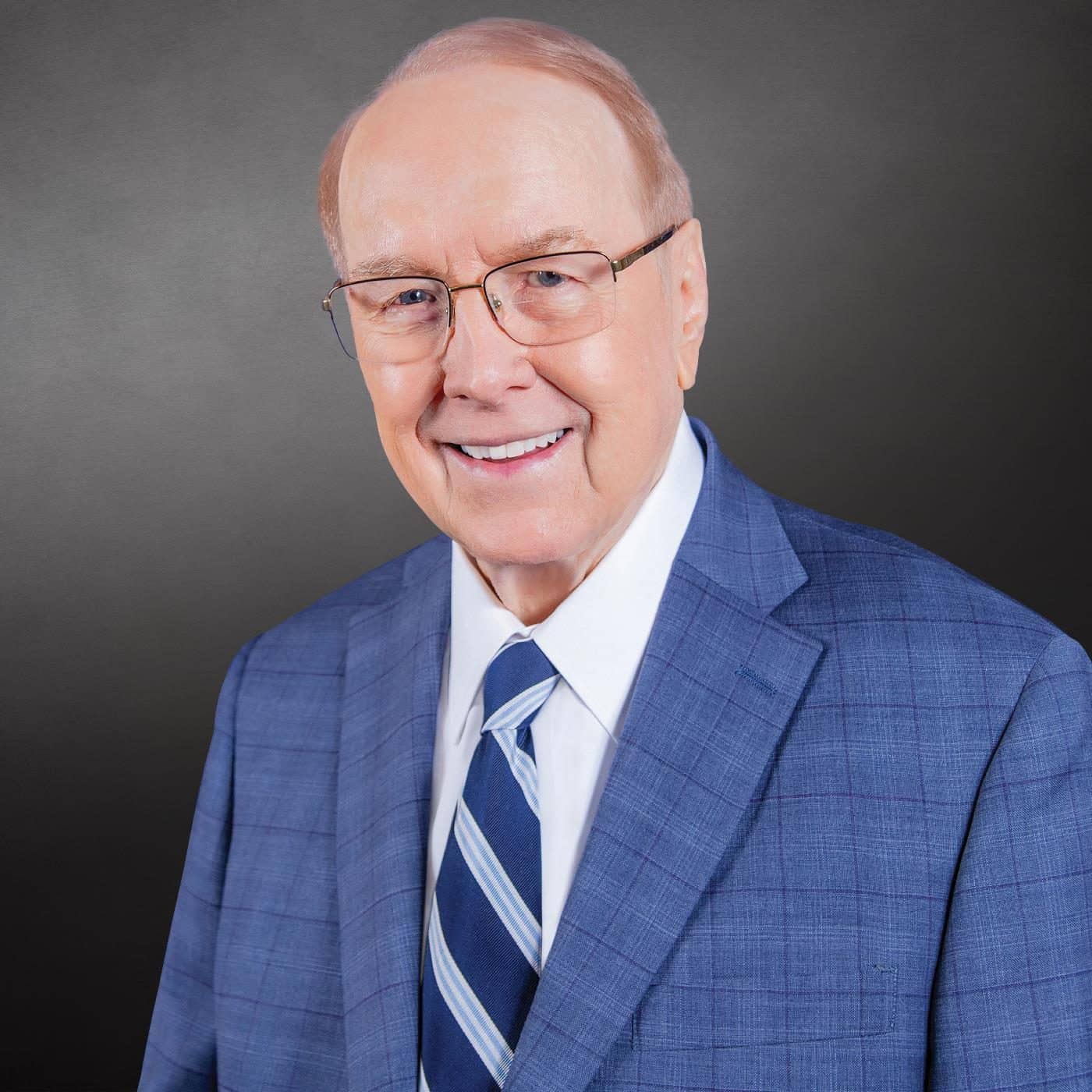

Join us on Family Talk as Dr. James Dobson discusses the perennial challenge of managing holiday debt with guest Mary Hunt. Dive deep into the tales of overspending that many encounter and learn from Mary’s journey of transforming from a compulsive spender to a savvy budgeter. Hear her personal testimony that offers encouragement to those buried under financial burdens, presenting a realistic pathway to financial freedom.
SPEAKER 05 :
Well, hello, everyone. I’m James Dobson, and you’re listening to Family Talk, a listener-supported ministry. In fact, thank you so much for being part of that support for James Dobson Family Institute.
SPEAKER 07 :
Well, welcome to Family Talk, the broadcast ministry of the Dr. James Dobson Family Institute. Your host is psychologist and bestselling author Dr. James Dobson, and I’m Roger Marsh. Now, you know, we are right smack dab in the middle of May, but in just a few months, we’re going to start seeing holiday decorations popping up in stores. You know, in fact, I’ve seen some retailers start putting out Christmas merchandise as early as August or I know that’s crazy, especially for us here in May to be talking about Christmas. But it seems like every year the holiday shopping season starts earlier and earlier. And that encourages people to spend more and more money over a longer period of time. Now, be honest with yourself. If you look at your credit card statements today, do you still have charges on there here in May that you put there in November of December of last year? See, you know what I’m talking about. For our credit card usage, Christmas literally is a holiday that lasts all year around. And it’s very easy for family budgets to get stretched thin or even maxed out in the process. Well, today here on Family Talk, we’re going to get into a conversation about how we can move from spendaholic to cheapskate with a very special guest, Mary Hunt. You know, Doctor, I was thinking about this fact that Christmas kind of goes on all year long now, at least as far as spending goes. There used to be a Christmas season. Remember the good old days when the Christmas shopping season used to start right after Thanksgiving?
SPEAKER 05 :
That’s the way it was when I was a kid. That was kind of the kickoff for the Christmas season. Right. Now it seems to get into full swing earlier and earlier every year. And it’s a time when millions of people pile up hundreds or even thousands of dollars in debt for gifts and travel and parties and other events this time of the year. There’s a thousand things we can spend money on. And it seems to mostly happen in November and December. Mm-hmm. Then in January, we’re faced with a mountain of debt that can lead to all kind of problems in the home. Too many of us are spending too freely. We’re overspending, and we find ourselves stressed out by it.
SPEAKER 07 :
Well, that is very, very true. And Dr. Dobson, our guest today here on the Family Talk program, does know something about that kind of stress. Mary Hunt started overspending when she was in college, and she eventually ended up with thousands of dollars of consumer debt. And this was before the days of online shopping, where you can spend huge amounts of money without even leaving the house. We’re going to hear Mary’s testimony now. And, Doctor, I think that people will find her advice most valuable.
SPEAKER 05 :
I had the opportunity to interview Mary. This was back in May of 1994. And the principles that she shared then are even older than that. They go all the way back to the Bible. You know, Roger, people may not know this, but Jesus spoke more about money than than any other topic. And there’s something else about Mary’s words and her perception. She talks openly about her emotional struggle with overspending and how she was finally able to overcome that trap. Too often, overspending isn’t just about getting a new possession or the other things we spend money on. It’s about significance and self-worth. And Mary explores that in her conversation that we’re about to hear. We call this program From Spendaholic to Cheapskate because that’s the road Mary Hunt traveled. She offers many tips that, again, I think people will find helpful. for getting out of the habit of overspending and developing a habit of living below your means. In fact, she says her mission is to get back the dignity of living beneath your means. Now, what Mary has told us is that it was not easy for her to do this. She’s not a natural penny pincher, so she had to learn to be a professional cheapskate, and that’s how she describes herself. So if you’re struggling with the problem of overspending, stick around for this program. If she can learn to control it, so can you. Roger, why don’t you pick it up there and introduce our guest, and then we’ll get right into the program.
SPEAKER 07 :
Sure thing, Dr. Dobson. Mary Hunt is the award-winning and best-selling author of more than 23 books. She’s also a sought-after motivational speaker who helps men and women battle debt. She is founder and publisher of Debt Proof Living, which is a highly regarded and popular consumer organization consisting of an interactive website, a monthly newsletter, and personal finance tools. Here now is her classic interview with Dr. James Dobson on Family Talk.
SPEAKER 06 :
Well, let’s listen to you, Mary. Tell us about your story. I’ve implied already that you were in quite a hole. Explain it.
SPEAKER 04 :
Well, as a very, very young child, I made two life-changing decisions. And they were as real as could be. The first was to accept Jesus Christ as my Savior, which has changed my life. That is the most important thing in my life. The second was not such a bright decision. And that was that I promised myself that when I grew up, I was going to be rich. Period. Period. I left home to come to California to go to college. And of course, it was time to start fulfilling my promise to myself. But my first problem was that I learned about a checking account and I learned how to write checks. And I learned that taking my checkbook with the friends from college to the wonderful California malls. allowed me all of a sudden to become the person that I had been planning I was going to become because I could spend, I could buy things. The salespeople never asked if I had money to cover. Sometimes I did. Sometimes I didn’t.
SPEAKER 06 :
And over those years, you started acting rich before you got rich.
SPEAKER 04 :
Absolutely. And it felt good.
SPEAKER 06 :
Did anybody ever point out the scripture to you that says he who would be rich falls into many a temptation and a snare?
SPEAKER 04 :
Oh, they never did. But boy, I wish I would have known that. And I would have hoped that I would have listened to that. But while some young people, when they leave home, have their different forms of rebellion, mine was very acceptable. Having a checkbook and eventually having credit cards and all.
SPEAKER 06 :
So this started when you were in college?
SPEAKER 04 :
Yes, absolutely.
SPEAKER 06 :
And you were just spending more money than you had.
SPEAKER 04 :
Spending more money and never realizing I needed to cut out the spending. I was always trying to find new ways to come up with income to cover the checks. And I’d teach piano lessons and I’d work hard and I had all these different jobs. But I would always spend more than I had. Always. Always.
SPEAKER 06 :
Always. Well, now, there’s a very obvious downside to cashing checks when you don’t have money in the bank.
SPEAKER 04 :
Oh, big time.
SPEAKER 06 :
Were they coming after you?
SPEAKER 04 :
I learned a whole new vocabulary, like NSF and bounce check. And I also learned how to close out accounts when they got too messed up and go across town and do something else. I never got into the kind of trouble where I was threatened with arrest. But it was a seed that started being planted in my life. And it started to be an addiction because it felt good. I could change my mood. I could breathe. be someone that I didn’t feel like I was inside. I could fool people and try to fool myself, and I did fool myself. I did graduate from college. I didn’t ever go to jail. I guess I got everything covered, and I went on to marry a wonderful man who had no idea this part of my life. So we were married in 1970, and within about five hours of the vows, I suggested in my very, very sweet way that it was time that maybe we should apply for a credit card because… All families have them. So we applied for a gasoline credit card. It sounds very benign, very harmless.
SPEAKER 06 :
Practical.
SPEAKER 04 :
Very practical. Everyone should have one. And I got it. And that was my very first credit card. And something clicked inside of me. And I truly believed. in some way, that I was entitled now to gas. I was entitled to a full tank, where before I would only be able to come up with enough money to, you know, put a few dollars in. And this just elevated me. I felt wonderful. I carried the right card and could get gasoline. So that was the start. And from there, it came more gasoline credit cards. And then the first one was canceled because… Those companies expect that you should pay this off every month. So much money, you know, it was hard to imagine. But we had several more. And to me, I really thought it was. It was part of our income. We had this card and we had this credit limit. Well, that was the beginning of the end for me because now I was entitled to things at any store.
SPEAKER 06 :
So you would use the word compulsive as a description of the kind of spending that you were doing. I do because… You were driven by it.
SPEAKER 04 :
Yeah. Compulsive to me is wanting to repeat a favorable feeling, a pleasurable feeling. And that is what happened. And I didn’t feel the pain until the end of the month or when the bills came in or when Harold went to pay the house payment. There wasn’t any money to pay it. Oh, that pain was terrible.
SPEAKER 06 :
How big a hole were you in? How large was the debt?
SPEAKER 04 :
I was well over $100,000 in unsecured consumer credit debt.
SPEAKER 06 :
That’s just incredible.
SPEAKER 04 :
Is that? Yeah.
SPEAKER 06 :
That somebody didn’t blow the whistle and you were still spending.
SPEAKER 04 :
Still spending. Because not seeing that the spending was the problem, I always felt that we didn’t have enough income.
SPEAKER 06 :
Well, you obviously came to your senses, Mary. How did it happen?
SPEAKER 04 :
Well, it was a specific day in September of 1982 when this happened. And I was terrified. I was terrified of losing our home, of having to claim bankruptcy, of losing my husband. And I was sure if those three things happened, of course I’d lose the children because I would be seen as an unfit mother. And I went into a pit and I fell on my face. I really did. My mother-in-law’s kitchen, I remembered as clear as anything. And I just poured out my heart to God. It was the first time in those 12 years that I had ever realized and looked at myself for what I was doing. I saw the dishonesty. I just had to ask for forgiveness. Please, God, please let me keep my family. I will do anything. I’ll do whatever it takes to get out of this. I don’t care if I have no more dignity. See, I found my dignity in credit cards. Without them, I was no one.
SPEAKER 06 :
I said, you know what you’re really doing is try to spend your way into significance. That’s really the bottom line. Some people think if I buy enough, if I look a certain way, if my kids look a certain way, if we live in a certain place, if we drive a certain car, then I’ll be significant. That’s what I was talking about earlier. Usually comes out of feelings of inadequacy in adolescence. And this looks like to be the solution to it. But it is a deadly trap.
SPEAKER 04 :
I think, too, that I really was trying to fix my childhood and relive my childhood through my children, getting them things, doing things for them, throwing birthday parties that I would have probably wanted as a child myself that I didn’t have. And that’s just I see now the folly of that. But it was a little late when this all happened.
SPEAKER 06 :
Well, you had this encounter with the Lord and you made some promises to him.
SPEAKER 04 :
I did. I did.
SPEAKER 06 :
What happened?
SPEAKER 04 :
You know, God is so faithful. I think He just sits there and waits for us to see that we can’t do it on our own. And within two weeks, I was contacted by a person that I had known in the real estate industry, asked if I would be willing and interested in coming to work for their family in a capacity where I would earn real estate commissions as well as manage their industrial parks. Well, in the early 80s, mid-80s, California real estate was pretty hot, especially in the industrial end of it. So here I was faced with this challenging job. I told the Lord I will do anything. God had it in mind that Harold and I would change roles. So he became Mr. Mom. He stayed home, took care of the home, took care of the kids. We completely changed roles for a good year, maybe a little bit more than a year. And during that time, God was wonderful. I’ve never worked so hard in my life. I wish I could say that the way that he answered my prayer was to have all the credit card companies lose our accounts and just start with a clean slate.
SPEAKER 06 :
You could have declared bankruptcy.
SPEAKER 04 :
We could have. And I have a feeling had we gone to seek counsel, we might have been advised to do that. So over the next… Ten years. Boy, did I learn a lot about cutting down, about living on far, far, far less. I never dreamed we could cut the way we did. And people didn’t notice. What I was so concerned about that people might think badly of me or look down upon my children was just complete fallacy. We violated every financial principle in God’s word. We didn’t save for the future. We were not good stewards of what we had. And we spent what belonged to God. I mean, it’s just a recipe for a disaster.
SPEAKER 06 :
Mary, you paid off that entire $100,000 debt. We have, we have.
SPEAKER 04 :
But it didn’t happen until 1991, nearly 10 years later, after we had been going and getting out of this hole. I was getting real tired of this debt hanging over. I wanted some way that we could get it paid off more quickly. And I had been asking the Lord to help me think of a side business I could start. I didn’t tell anybody. I really asked God, God, I really want to make a difference. Let me shine the light somewhere into the dark world of humanity. Within just a few days, I was listening to the radio, listening to an interview of someone who was writing a newsletter. And all of a sudden, I hear this word, writing a newsletter. It just went off in my head. That’s it. That’s what I’m going to do. Well, this is crazy because I don’t have a journalism background. I barely remember my English classes, you know. But to write a newsletter, I knew I could do the business end of it. It was something we could get started with very little capital. And Cheapskate Monthly was born within about a 60-day period. Cheapskate Monthly is a newsletter dedicated to bringing dignity to the art of living within one’s means. And I chose that because I had a feeling there might be a lot of other people like myself who were unwilling to change their lifestyle for fear they might lose their dignity. And I wanted to be able to show people that’s not necessarily true. It is possible to keep your dignity and to live within your means for many people that I know are pretty much of a lost art.
SPEAKER 06 :
Give us just some ideas. Some flavor of the newsletter. Yeah, the kind of things that you suggest.
SPEAKER 04 :
Now remember that I asked God to let me shine the light into the world. So the newsletter is full of biblical principles because all truth is God’s truth. But it’s not quoting scripture all the time and it’s not a preachy kind of thing. The newsletter is… The way I see it is that I want people to know how much I care about them, and then perhaps they will be wanting to know how much I know. And so the newsletter, every month, it’s dedicated to showing people the benefits of getting out of debt, how to get out of debt, how to live within their means, encouraging them to do that. And then there’s all kinds of practical tips for ways to do that, all the way from your grocery shopping to home mortgages to everything, every area that we spend our money on.
SPEAKER 06 :
Well, we have a whole list of people, Mary, that want to ask you questions. They’re lined up behind the microphone. And we’ll take this first question from a lady.
SPEAKER 01 :
Hi, Mary. My name is Christina, and I work here in Teleservices. I just want to share with you my experience at the mall the other day and ask you if this is a current trend that they have a sale, and then they say, and if you sign up for our department store credit card, you get an additional 20%, 30%, 50% off of what you buy. And if you already have a credit card, you’re instantly improved. What do you have to say about that, handling that kind of a situation? You think, well, is it better to save the money and pay that off or, you know?
SPEAKER 04 :
Christy, I would say that there are two kinds of people. There’s people like me who see that and can justify doing it, then have that credit card and can’t handle it. It’s like playing with fire. So I know my limitations, and it’s not worth 15%, 20%, 30%, 40% that I would save. But I have to also admit that there are very, very responsible people, and there are some of them sitting out there in that audience there because I know them. And they would know how to handle this, that they could make the purchase, get the new credit card, get their 50% off, and never, ever use that credit card again. That takes a very strong person. Basically, I would say that you have to look at that as a fishing line by that department store. They’ve put some really fancy bait on the end of that hook. If you can nibble the bait off without getting hooked, that’s wonderful, and you’re going to save some money. The problem is, someone like myself, I swallow it, hook, line, sinker, the whole thing, and then I’m just setting myself up because Christmas comes, some other purchasing opportunity comes, I’ve got the credit card, and I can justify to myself to use it. So you’ve got to look deep within yourself and see how strong of a person you are. Basically, if I had to… Make an overall recommendation. Keep walking, girl. You’ll find a better bargain somewhere else. Thank you.
SPEAKER 03 :
Okay, next question. Hi, my name is Sandy Hollenbeck, and I’m from Pittsburgh, California, and I have two questions. My first question is, do you and your husband have a budget, and how do you work with that if you do?
SPEAKER 04 :
Well, first of all, you have to know something about me. I hate the word budget because that was something that I feared all of those years. And to me, budget is just a nasty word. We have a spending plan. Doesn’t that sound good? But you have to remember also that we are self-employed. So I say that we have mystery means. We never know what’s coming in each month. But we have reduced our living expenses. Of course, the debt getting out of that has really helped. But we have a spending plan and we’re not rigid. We have completely different personalities. So we have learned how to manage our finances. But I have to say that we are so happy because we’re experiencing what I call financial ease. We haven’t made it. We’re not wealthy. We make less money now than we used to when we were in much worse trouble. But money has ceased to become such an issue in our lives that if we have a lot, we’re happy. If we don’t have very much, we’re sad. Those two things don’t happen anymore.
SPEAKER 06 :
Mary, whether you have a budget or a spending plan, the key issue is that you spend less than you take in.
SPEAKER 04 :
Oh, yes, yes. And you save consistently and you give generously.
SPEAKER 06 :
You recommend 10 and 10.
SPEAKER 04 :
I do.
SPEAKER 06 :
You save 10% and that you give 10% of it.
SPEAKER 04 :
Right. And you live on 80%. It’s a wonderful formula. If you’re not used to that, you can’t start with that. You’ll fail for sure. But it’s the goal.
SPEAKER 03 :
My second question is, we just had our second son, and we’re growing out of our car. And so we’re about to purchase a new, larger car. And I wondered if you had any suggestions about that.
SPEAKER 04 :
Oh, do I ever. Never buy new. If used, we’ll do. This is what I would recommend. Of course, I don’t know all of your situations, so this is kind of general information. But I would say that you find the cheapest car that will possibly do for you for a period of time, say for a year, a year and a half, two years. And then the payment that you’re willing to make, if you were to go out and take on a car payment right now, whatever that is, $100, $200 a month, start making that payment to yourself. While you’re driving the junker, you know, you’re embarrassed, who cares, you’re making payments to yourself. At the end of the year, two years, whatever, then you’ve got the money to go out cash and buy a little bit better used car. But I would hate to see you go now and get a brand-new minivan. It’s wonderful for a few months, but I’ll tell you, that payment, if you’re not used to it, that’s going to be the rope that might hang you. So that’s what I would suggest. Okay, thank you very much.
SPEAKER 06 :
Thank you. Next question.
SPEAKER 02 :
My question to you would be… Credit cards a lot of times are 17% to 21%. A lot of times you see advertisements today, advertising like the GM card, offering to pay yourself back to consolidate your debts for like 12%. Do you recommend something like this? Or do you recommend going through your local bank, credit union, whatever?
SPEAKER 04 :
Well, first of all, let me tell you something about these credit cards that have the lower interest rate and they’re wanting you to switch over. If you read the very, very fine print, that interest rate does not apply to a cash advance. And what they want you to do is open the new card, take a big cash advance to pay off your smaller cards or your higher interest rate cards. You possibly are going to find yourself in a worse situation because when you read the fine print, that interest rate on the advance is much, much higher than the purchasing. However, if you find that it is lower and you see this as a way to consolidate your debts, let me warn you, first of all, you’re playing with fire. Because what’s going to happen? You’ve got the new GM card. You’ve got these over here with a zero balance unless you get rid of them. Close the account out. Write to the company. Say, I don’t want this anymore. You might be tempted to start running these up. And I know about this kind of stuff. These debt consolidation loans can be the thing that finally just pushes you right off the cliff.
SPEAKER 06 :
Mary, when you have more debts than you can pay, more obligations than your money will stretch around to, where do you start?
SPEAKER 04 :
The first thing that I recommend to people, and you’ve got to realize that when a person gets to this point, their credit report is pretty shot anyway. Because what I’m going to recommend is not going to help the credit report any. But I believe that what you need to do is to go to the creditors in person if possible. And you need to convince them that you have entered into a financial recovery program. Ask them to take a smaller payment for a very short period of time. until you can get on your feet. You have to show them that you have cut up those credit cards, that there’s no way that you can incur any new debt. And you need to actually seek their mercy. And then you need to get yourself into what I call a rapid debt reduction program immediately. And it is possible. And this is where the hope is.
SPEAKER 06 :
If you tell your creditors that the alternative is bankruptcy, but you don’t want to do that, you want to pay them, but it’s going to take longer, I think they’ll work with you.
SPEAKER 04 :
Many times they will.
SPEAKER 06 :
It’s a delight to have you here, Mary, and we’ll stay in touch with you.
SPEAKER 04 :
Oh, thank you so much.
SPEAKER 06 :
Thanks for being with us, Mary.
SPEAKER 04 :
Thank you, Dr. Dobson.
SPEAKER 05 :
Well, you’ve been listening to Mary Hunt on Family Talk. And if you are one of those people who has been struggling with debt, I hope you’ve been inspired to make a plan and free yourself. The Bible says that if you have debt, you should free yourself like a gazelle from the hand of the hunter, like a bird from the snare of the fowler. No matter how much you owe, do whatever it takes to pay it off. It’ll be hard sometimes. But it’ll be worth it. And it will, I think, remove so much stress from your family life.
SPEAKER 07 :
Well, today here on Dr. James Dobson’s Family Talk, we’ve been listening to a practical discussion about navigating debt during the holiday season and beyond. And Dr. Dobson’s guest has been Mary Hunt. Her journey from compulsive spender to financial freedom reminds us that it’s never too late to make positive changes in our financial habits. Now, if today’s conversation really resonated with you, or maybe you know someone who’s struggling with financial challenges right now, I encourage you to go to drjamesdobson.org forward slash family talk. There you’ll find access to the complete broadcast, along with links to Mary Hunt’s ministry, Debt Proof Living, and her blog, everydaycheapskate.com. Again, you’ll find all that information at drjamesdobson.org forward slash family talk. Here at the Dr. James Dobson Family Institute, we are committed to providing biblically-based guidance for every aspect of family life, including your finances. These broadcasts, speaking of money, are made possible through friends like you who understand the importance of supporting families through life challenges. When you partner with us financially, you are helping countless others receive the encouragement and practical tools they need to build stronger families. So why not consider making a tax deductible donation today that will multiply in impact as it touches homes all across America. You can go online with your secure donation at drjamesdobson.org. You can also write to us. Our ministry mailing address is Dr. James Dobson’s Family Talk, P.O. Box 39000, Colorado Springs, Colorado, the zip code 80949. Again, that’s JDFI or Family Talk if you prefer, P.O. Box 39000, Colorado Springs, Colorado, the zip code 80949. Thanks in advance for your prayers and your faithful financial support. Every gift, no matter the size, truly makes a difference. Well, I’m Roger Marsh, and from all of us here at the Dr. James Dobson Family Institute, thanks so much for joining us today. Hope you’ll tune in again next time for another edition of Dr. James Dobson’s Family Talk, the voice you trust for the family you love. This has been a presentation of the Dr. James Dobson Family Institute.