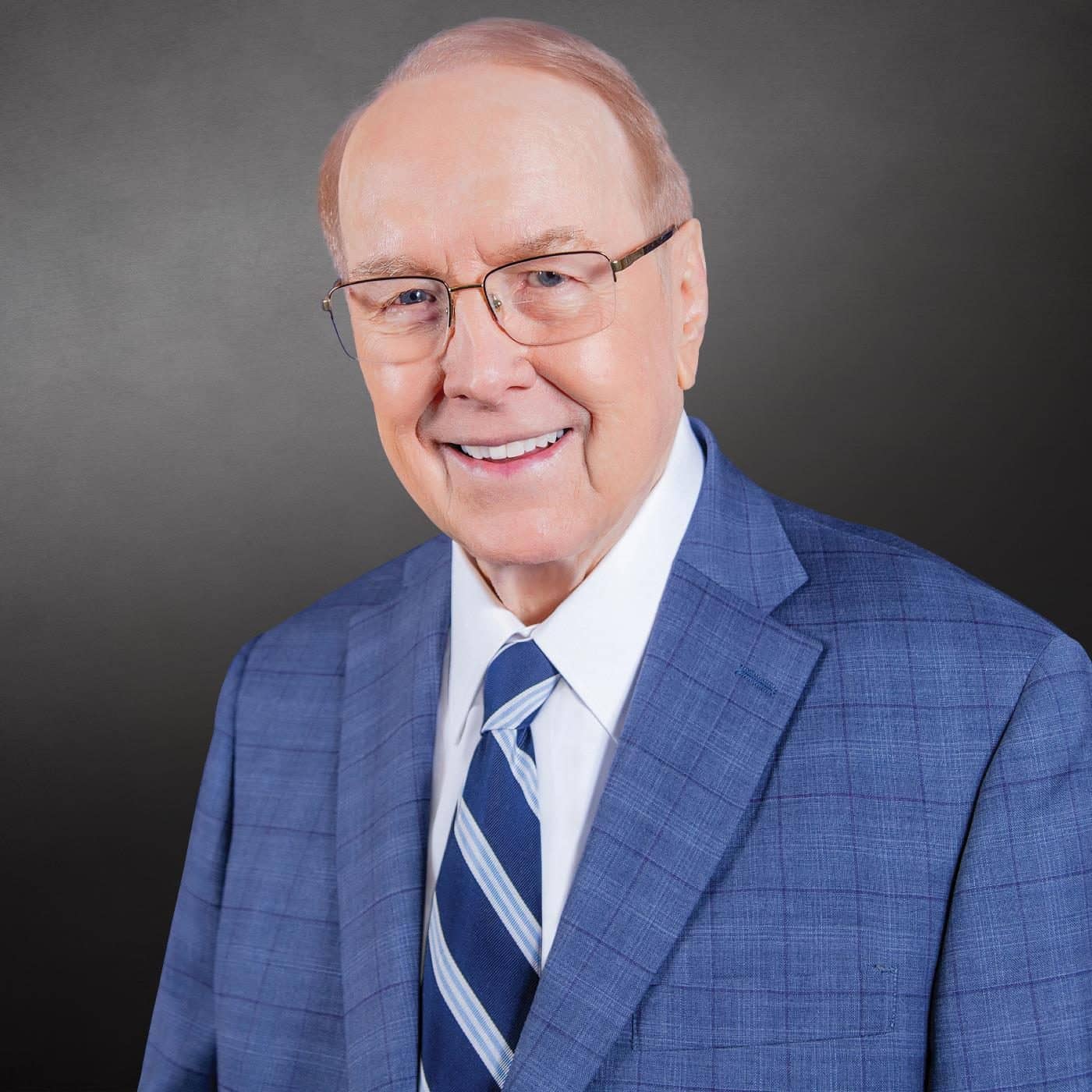


Are you and your spouse speaking the same language? When it comes to communication in marriage, understanding is everything. On today’s edition of Family Talk, Dr. James Dobson welcomes relationship experts Drs. Les and Leslie Parrott to share insights from their book, Love Talk. Tune in for practical tips on speaking the language of love with your spouse. To support this ministry financially, visit: https://www.oneplace.com/donate/707/29
SPEAKER 07 :
Welcome everyone to Family Talk. It’s a ministry of the James Dobson Family Institute, supported by listeners just like you. I’m Dr. James Dobson, and I’m thrilled that you’ve joined us.
SPEAKER 02 :
Marriage is a beautiful gift from God, and yet one of the most common challenges couples face is ineffective communication. While it’s often easy to speak to friends or other family members, why does talking with our spouse sometimes feel so difficult? Well, on today’s edition of Family Talk, psychologist and bestselling author Dr. James Dobson is going to tackle this very important issue with relationship experts Dr. Les and Leslie Parrott. They’re joining us here in studio today. His husband and wife team brings unique credentials to our conversation. Both hold doctoral degrees, and together they co-founded the Center for Relationship Development at Seattle Pacific University. The Parrots have authored numerous best-selling books, including Love Talk, speak each other’s language like you never have before, which is the focus of our discussion on today’s program. They’ll also share practical insights they’ve gained through their professional work with thousands of couples, as well as their own multi-year marriage journey as well, more than 20 plus years and still going and growing strong. If you’ve ever found yourself frustrated by communication breakdowns with your spouse, well, today’s program offers hope and practical guidance as well. You’ll discover why many couples struggle to connect deeply and what you can do to create meaningful conversations that truly bring you together as a couple. Well, here now is Dr. James Dobson to welcome our guests for today’s edition of Family Talk.
SPEAKER 07 :
Listen, Leslie, you are very, very busy people. Just going over this bio, we’ve spent half the program already.
SPEAKER 05 :
I’m kind of tired just listening to you.
SPEAKER 07 :
We had to tag team it in order to get it covered, and you’re raising two boys. How do you have time to love talk? Right.
SPEAKER 01 :
Well, you know, you raise a good issue because we don’t think we’re the only couple that struggles with how do you capture time? And when you have time together, how do you really connect? And I think we wrote this book for ourselves more than anyone we work. We work with, you know, I don’t know, thousands of couples a year. And yet we’re the ones who felt the need for this.
SPEAKER 05 :
Yeah, in fact, I would say this, that we knew that there was no need for another book on communication. There’s lots of great stuff out there on communication. And yet, why was it that in our own relationship, two people that specialize in this, that teach about it, that are doing all kinds of work involving this, are still struggling with our own level of communication?
SPEAKER 01 :
Yeah, we can be brilliant at communicating with other people, but when it comes to our own spouse, things break down.
SPEAKER 07 :
So you still have to work on it.
SPEAKER 05 :
Well, what we’re saying is we think we’ve found the key, at least for us. And we set off on a quest at least, I suppose, nearly 10 years ago to find something that would transform our relationship deep down, soul to soul, that would bring us closer together, that would allow us a sense of intimacy that we had not yet experienced.
SPEAKER 01 :
Yeah, not a technique or a sort of a skill, but something that would really make a difference in helping us understand each other. Yeah.
SPEAKER 07 :
Well, let’s start with the barriers to that communication. Right. What makes it so hard? What’s so tough? It may be just us. Yeah, it’s simply a matter of talking together.
SPEAKER 05 :
Why is that so hard? You know, the funny thing is we didn’t even have pre-marriage counseling. In fact, the very first sentence of one of our books says we never had pre-marriage counseling, but we spent the first year of our marriage in therapy. Which is great. That’s the truth. So we have a passion for what we do because we’ve lived this out. But I think it’s been a challenge for us because we would do the things that others were teaching us to do. And yeah, it would work, but not consistently and not in a way that really connected us so that we felt like we were joined.
SPEAKER 01 :
Yeah, and I think part of it are just, you know, men and women are different. They approach conversations differently, and we experience that more together than we did, you know.
SPEAKER 05 :
Yeah, and we were looking not just for a few golden nuggets, not a new tip or a technique. We were looking for the mother load. I mean, we wanted something foundational that would help us communicate differently.
SPEAKER 07 :
All right, what’s the common mistake? that particularly young couples make in learning to talk to each other, to communicate with each other heart to heart.
SPEAKER 01 :
Well, I think one of the most common mistakes is assuming that your spouse comes at the conversation with the same goal that you have out of that conversation, that a great conversation looks the same for you as it does for them.
SPEAKER 05 :
Yeah. And we know this from research that most men approach a conversation to gather information. You know, we want to be in the know. We don’t need all the fluff. You hear guys say, you know, give me the bottom line. You know, what do I get to the point? Yeah. Not that I’ve ever said that. Right. Yeah. Just not since this morning.
SPEAKER 07 :
I wonder if you all have ever had the experience that we’ve had where. We have been in a restaurant someplace enjoying one another because after all these years, I still just enjoy taking her out to eat and sitting and talking. But looking over at another table and you have a couple sitting there. that don’t have one thing to say to each other. They’re both bored. They’re both looking out the window. And it’s obvious that they’re not into one another’s worlds at all. Now, there are times when every couple goes through that where you feel like you’ve said it all. But if that’s a consistent pattern, you’ve got problems. And my heart goes out to these people when I see this. I want to go over and say, is there really nothing in the depths of your relationship that you feel you haven’t yet said and that hasn’t been understood, but apparently not.
SPEAKER 01 :
Well, you know what? The loneliest people in the world are people who are married and have a spouse and don’t know how to share their lives. And you really do ache for that. You know, there’s a comfortable silence where you don’t have to be anxious and always fill it up with words. But what you’re talking about happens to so many couples. They don’t know how to stay connected. They just have lost that sense.
SPEAKER 07 :
What happens when you lose it, Les? Where does it go? That sense of connection? Yeah, because in the dating relationship, you can’t shut up. You talk on the phone for four hours at a time. And then you get married and you’ve got nothing to say.
SPEAKER 05 :
Yeah, and we will meet with several hundred engaged couples in Seattle for our annual Saving Your Marriage Before It Starts event. And these couples will get to the session on communication. Right. And we’ll see some of them almost roll their eyes. Why would we need to learn about communication? All we ever do is talk. You know, that’s why we’re getting married. And yet it is the case that somewhere down the line, they begin to struggle with that issue. And they struggle with it because, like Leslie said, you’re expecting something from it that you’re not getting. And I think that that’s what we found. We knew the fundamentals. You know, it’s so important to review the fundamentals in communication. Right. I think that, in fact, I spoke in Green Bay, Wisconsin a little while ago. And when I left, the folks that I spoke to gave me two items to remember them by. They gave me one of those big cheese heads. I put that in my suitcase. I thought my son would enjoy that. And then they gave me a football. And on the football, I’m walking on the plane. I have a suit on, my briefcase, and I’m carrying this football. The guy next to me says, what’s up with the football? And we start talking a little bit about that. And then he notices Vince Lombardi’s signature, an imprint of his signature. And he reminded me of something that Vince used to do at halftime. I’m sure you know this. When he’d come into that locker room, he wants to get back to the fundamentals. And he’d say to those guys, he’d hold up a football. Remember what he’d say? This is a football. Well, no duh, right? I mean, these guys giving their lives to this game. But it was his way of saying, let’s get back to the fundamentals and play this game. And in the same sense, we’re kind of saying in the very first chapter of this book, We’re holding up, you know, as it were, that football and saying, hey, folks, this is it. Let’s get back to the basics and play this game we know how to play in communication. So many couples lose sight of that fact. And by the way, as a quick aside, I had lunch with Vince Lombardi Jr., the son of this famous coach. He’s an attorney in Seattle. I said, is that true? Does your dad really hold up that football and say that to these guys? He said, oh, yeah. He said, I remember being a kid in the locker room. He’d do that. He said, I remember dad holding that football up and saying, man, this is a football game. And he said one of the linebackers in the back row said, slow down, coach, slow down. So sometimes it’s hard to get to those fundamentals.
SPEAKER 07 :
I think his most often quoted comment was that fatigue makes cowards of us all. And fatigue also interferes with communication, doesn’t it? When you’re too worn out to talk to each other, you’re too tired. And that is so common in this culture, in this society.
SPEAKER 01 :
You know, I can think of a recent incident we had. So I’m up all night with a little guy with a fever. And Les has a plane to catch the next day. So we’re headed to the airport.
SPEAKER 03 :
I think I know where this story is going. This is not a good story.
SPEAKER 01 :
But I’m just being honest. This is what happens for every couple. And so we had one of our only snow days for the year in Seattle. And so it slows everything down. We’re running late for the school bus for our older kid. So I promised to take Les to the airport. He’s got to catch a flight. I’m exhausted. And we hop in the car and realize there’s no gas in the tank. And Les says, instead of taking time to do this, let’s just get me to my flight on time. And then you can fill that tank up. You’ve got the day. So we head to the airport and I get him in there. And you know how we have those indicators on our cars that say, you know, miles to empty. Right as I pull out of the terminal, it drops suddenly from 10 miles to zero to empty. You know how they do that at the end. And as I’m pulling out, I’m tired and I’m cranky. And this is one of the pressures for communication in marriage because I’m so tired. So I start calling him on my cell phone and saying, you know, he can’t reach me. He’s checking into his flight. But I’m saying, do you realize I’m at zero miles to empty? I feel so unprotected. You’ve left town, and I have no gas. So I’ve got the sick child in the back, and I pull into the gas station. I make it, and I think, okay, it’s a good story. But I get there, and then I pull out, and my person realizes, oh, he left so fast. I didn’t get the money. And see, these are the kinds of things couples are dealing with. No cash, no gas. We haven’t had time to process it. And then I think, that’s fine. I’ll use the credit card. I pop in the credit card, and then I realize… it’s declined and I can’t figure it out. And so I call him, I reach him this time, thank goodness, and I’m very cranky because I’m fatigued. And I say, you know, what’s happened? And he says, oh, I bought a bunch of computer equipment and they’re going to need you to get that verified before, you know, you can charge anything new. So I’m in the cold snow. I’m alone. My husband’s flown out of town. I’ve got a sick child and no money. And he gives me the special code. You have to have your mother’s maiden name and you have to have your social security number. Less you can.
SPEAKER 06 :
You can. I told you this isn’t a good story. It gets worse.
SPEAKER 01 :
Because Les can sense I’m exhausted and I’m at the end of my rope. And he’s thinking, like any man would, my wife needs some motivation. I’m going to help her out in this moment. And so here’s what he says to me. He says, Leslie, buck up. You can handle this. And so not what it wasn’t exactly. I hung up. I took care of it. But all the way home from the airport.
SPEAKER 07 :
And I was thinking that’s what I would need to hear. That is true. And in fact, I’d like to kind of paint a word picture for you all because speaking to the to the parents, because you work on a college campus and you’ve seen young couples just getting married. And it is so typical at that age to jam the bag full to where there is nothing, absolutely nothing left. You have people going to school, trying to study for tests and grades, and they’ve got a living in their spare time. And a baby comes along. And then they often – I don’t know. I can’t explain this, but they often find themselves with a house to either make over or rebuild or doing all that stuff. And they get to the point that they’re ready to kill each other. Right. And this is at a time when they most need to learn – Love talk, right?
SPEAKER 05 :
Right, exactly. Let me tell you the fundamentals where we say, let’s go to communication 101. This is communication. Number one, you’ve got to learn to clarify content. You know, this is so fundamental. You want to say, well, no, duh. It’s like holding up a football. But, you know, clarify content. Do you know that for the words that we use in the English language, there are on average 3.5 different meanings, right? for each of those words that we use most frequently. So we jump to conclusions all the time and we assume we know what the other person is talking about when we really need to clarify that content. And then the second thing we say you’ve got to do if you master the communication fundamentals is reflect feelings. To listen not just to the verbiage, but to dip down underneath that into that river of emotions that flows between the two of us when we talk and lift out that little feeling and say, hey, is this how you feel?
SPEAKER 07 :
Leslie, let’s go back to your illustration because it is, again, so typical. I’m glad you shared it. But what did you need from him? I’d like you to tell our listeners what he should have said.
SPEAKER 01 :
Well, I’m so glad you asked because it really goes back to this. You know, Les is talking about clarifying content, reflecting feelings. That is so fundamental, that need for him to have reflected my feeling in the moment. You didn’t need a solution. I didn’t need him to solve it. You know what I needed, even though I was a little cranky that he’d help create the situation. What I really wanted was for him just to say, you must be completely overwhelmed right now. You didn’t get any sleep. You’ve got a sick baby and you feel like you’ve got all this extra work. You didn’t count it, you know. Anything he could have said, thank you for caring for our family. You’re overwhelmed. Whatever the feeling was, oh, if he could have just stayed in that moment with me and acknowledged it.
SPEAKER 07 :
Let me role play with you, okay?
SPEAKER 01 :
Oh, I’d love that.
SPEAKER 07 :
I’d be less, all right? This should be good. Okay. Oh, Leslie, you know what? I just got up a little bit late and I didn’t have time to do everything I wanted to do. I am so sorry. I’ve left you in a mess. I mean, I ask you to forgive me.
SPEAKER 01 :
You know what? It’s OK. Thank you for saying that. And as long as I know that you’re aware of what I’m doing, I’m happy to do it.
SPEAKER 07 :
Is there anything I can do to help from this distance? I don’t know what it is, but if there is, is there anybody I can call to help you? Is there any way I can make this easier for you?
SPEAKER 01 :
You know, I think we’re going to be OK, but just be sure and call and check in when you land and I’ll keep you posted on how Jackson’s doing.
SPEAKER 07 :
Do you think you’re going to be able to get through this time till I get back?
SPEAKER 01 :
I think we’re going to do it. We’re going to be okay.
SPEAKER 07 :
I mean, because if necessary, I’ll get on a plane and come home.
SPEAKER 01 :
Oh, you don’t need to do that.
SPEAKER 07 :
Easy for you to say.
SPEAKER 04 :
I’m calling you the next time this happens.
SPEAKER 01 :
I’ll tell you what’s so powerful. I mean, I think, you know, the reason—first of all, the reason guys don’t do that in general is because it’s not necessarily what they would need if they had a problem, to be honest. You know, I think— And truthfully, Les was giving me what he would have wanted from me. And I don’t give him that at all. But what they don’t know is we’re not going to demand a lot in return. If you just validate our feeling, it almost evaporates.
SPEAKER 05 :
And that’s really what Love Talk, what we discovered in Love Talk, was a way to really build a space into your conversations. And like Leslie said at the top, we did this for ourselves, and now we’ve begun to teach it to other couples. But to build a space in your conversations where you feel completely safe, where you don’t have to edit your words, you can speak your mind and know you’ll be understood. Can you imagine if we had an architect that could put an addition onto your home and build a room in your house where you could have a conversation, where you were guaranteed to have a great conversation?
SPEAKER 01 :
Can you imagine that? It wouldn’t be misunderstood. Yeah.
SPEAKER 05 :
Yeah. You’d come home at the end of the day, and you’d say, hey, meet me in the room. Let’s talk. Let’s eat in here tonight. There’s a few things I want to talk to you about. Well, that’s what we feel like we’ve discovered, and that’s what we’ve written about in this book, Love Talk, is how to create that space, that emotional space between us where we feel safe.
SPEAKER 07 :
And Love Talk is dependent upon understanding how your spouse is different from you. Would that be an accurate – Yes. You can’t communicate properly if you have no clue as to what the other person is thinking and feeling.
SPEAKER 05 :
And everybody’s unique. It’s not just gender differences, but it’s how you’re hardwired for a conversation and what makes you feel most emotionally safe in the context of a conversation. Because what makes me feel safe is not what makes Leslie feel safe. Right. Vice versa. When we got a hold of that and understood what we call your personal fear factors or your safety needs, once we understood that between each other, all of a sudden, man, we began to empathize. We began to have more grace, more patience, more understanding, and life got a whole lot easier for us.
SPEAKER 01 :
We had a funny moment between us that kind of illustrated this for us. One night, it was a busy weeknight. A lot of couples have these. I was on the church board. Les had a meeting. I had a board meeting. And so we hired a babysitter to come and take care of the boys. But we didn’t want to be gone. We just felt like we wanted to be home. So I was lamenting that as I left, and I needed to borrow the babysitter’s car that night. We had one car, Les took off in his car, and I borrowed the college student’s car that was at our house. Went to my board meeting. It was a long meeting. We were in a pastoral search. It was a late night. So when I was headed home, I was just missing Les. I was missing our boys, and… Sure enough, I look up and there is our car on the freeway in front of me. And I’m thinking, oh, there he is. I’ve just been thinking about him. And I speed up to catch up to him because I just want to feel close to him. And he speeds away. And I’m thinking, where’d he go? So I speed up again, try to get right behind him. And he speeds away.
SPEAKER 05 :
And then all of a sudden, he honks her horn a little bit, flashes her lights. And I’m thinking, who’s this nut behind me on the freeway? Because I don’t recognize the car. Yeah.
SPEAKER 01 :
Yeah, I remember. Oh, yeah, I’m in a college student’s car. He has no idea. So, you know, I’m following him. He’s getting away from me. He finally zips off the freeway and starts going on all these back roads that are shortcut to our house. Well, I fully know them, so I zip off behind him. Now I’m kind of having fun with this. I’ve stopped trying hard for him to know who I am. I’m just kind of following him, and I can tell he’s kind of trying to get away from me, and he’s a little bit afraid. I was just playing with him a little bit. So we do this, and then we get to a point where we’re almost to our house. We live on the edge of the university campus where we teach. And now I’m surprised because he makes an unexpected turn away from our house, and I’m thinking, where is he going? I just follow him. At this point, I’m committed. He pulls into the police station on our campus.
SPEAKER 05 :
And I’m thinking, there’s no way this nut is going to follow me into the police station, having no idea that it’s Leslie.
SPEAKER 07 :
Hey, you know, Leslie, that’s really kind of a very commendable thing that he was doing. A beautiful girl comes up alongside him. I couldn’t even see her, though.
SPEAKER 04 :
He ran from her. That ought to give you some comfort. I actually thought it was a student that I flunked and was going to do some damage.
SPEAKER 01 :
Yeah, sure. The funny thing is I zip right in that part. I’m not afraid. You know, I’m laughing. I’m having fun with this. And I know he’s afraid. He does. And he pulls so many tricks on me. It’s good. I’m feeling like I’m finally getting one on him.
SPEAKER 05 :
And I hop out of the car and I’m thinking, okay, who is this? You know, if this guy wants a piece of me, let’s go. You know, I’m getting out of the car. Oh, you didn’t know it was a girl.
SPEAKER 01 :
No, he didn’t. I had no idea.
SPEAKER 05 :
Oh, well, that’s not quite as impressive. Yeah.
SPEAKER 01 :
He comes at me. He’s got this big steel flashlight in case of emergencies in the car. And he’s got it, you know, and I don’t get out of the car because I don’t know what’s going to happen. And he comes right around to the driver’s window and he sees me and he just just shakes his head, gets right in the car.
SPEAKER 05 :
She’s dying laughing. She’s just laughing. And I get home. She’s still laughing, you know, and I haven’t found the humor in it yet. And finally. Finally, I did. You did.
SPEAKER 01 :
I got home. We started talking. I said, here’s the funny thing about that moment. I said, you know, that was funny for me. But I said, it reminded me too often of what happens to us in a conversation because I’m feeling playful. I’m happy. I’m missing you. I want to connect. And I go to connect in whatever I say, unbeknownst to me. does something that causes you to be afraid and you start backing off. You start withdrawing or you get you get aggressive. I don’t know what I did. I can’t. All I wanted to do is connect. And, you know, and he said, yeah, you do the same thing. You might break down and cry, you know, whatever it is. And you don’t know why. But you just know when when you touch in, when you tap into a fear factor, your spouse starts behaving crazy. It’s different.
SPEAKER 07 :
Yeah. Well, we’re coming to the end of this broadcast, and I want to pick up right there with the next one, identifying those fear factors, as you call them. You talk about something in the beginning of this book called the secret code of communication. Maybe that’s kind of a wrap-up question to help us end this first program. What’s so secret? What is the secret code?
SPEAKER 05 :
Well, it has to do with how you’re hardwired. It has to do with this idea of your talk style. Once you understand kind of, and in our next program, we’re going to talk about these four fear factors, because all of us are hardwired in combination with one of these four. Once you understand that combination for you and your partner, in the dance of marriage, you no longer step on each other’s toes.
SPEAKER 01 :
Yeah, it really helps you crack that code to great communication.
SPEAKER 05 :
And most couples don’t understand that.
SPEAKER 07 :
And some of them that have been married for 20 years, like you guys, still don’t know.
SPEAKER 05 :
We feel like we’ve finally discovered it. And like I said, we are enjoying conversations at a level like we never dreamed possible in the first half of our marriage. And so we’re feeling, as you can tell, we’re very passionate about this. We believe in it.
SPEAKER 07 :
Well, Shirley and I, we are both talkers, which is an advantage because some guys in particular just don’t like to talk much. And it’s very hard for them. They have to force themselves to say more than fine and good and it was all right. And that’s not going to get it done.
SPEAKER 05 :
Well, we have a whole chapter in this book on the silent partner for that very reason, because there are some that just tend to clam up.
SPEAKER 07 :
You’ve got a chapter in here on when not to talk, which is interesting.
SPEAKER 01 :
Yeah, you don’t expect to find that in a communication book.
SPEAKER 07 :
Yeah. Well, if we don’t get off the air, we’re not going to need to know when to not talk because nobody will hear us. So, hey, thank you all for being with us. Doctors Les and Leslie Parrott. Very unusual for a husband and wife team to both have doctoral degrees. Yours, Les, is a Ph.D. Yours is an Ed.D. And your specialty, Leslie, is marriage and family.
SPEAKER 06 :
Yeah.
SPEAKER 05 :
Well, not only to both be doctors, but then to both be Leslie. That’s when life gets really confusing. That is a little confusing. That’s why our son’s name is John. John Leslie.
SPEAKER 02 :
You’re listening to Dr. James Dobson’s Family Talk, a heartfelt conversation that reminds us that marriage isn’t about perfection, but connection. You’ve been listening to Dr. James Dobson, joined by his special guests, Dr. Les and Leslie Parrott, who reveal how understanding your spouse’s unique communication style can actually transform difficult moments into deeper intimacy. Now, if you missed any portion of today’s broadcast, or if you’d like to share these practical insights with a friend or family member, go to drjamesdobson.org forward slash family talk. There you’ll find the audio for today’s program, along with information about the Parrot’s book called Love Talk. Speak each other’s language like you never have before. Again, you’ll find all that information at drjamesdobson.org forward slash family talk. Here at the Dr. James Dobson Family Institute, we’re dedicated to preserving the institution of the family through biblical principles that strengthen marriages just like yours. Every day we receive messages from couples who found renewed hope and practical wisdom through these broadcasts. Your gift today of any amount helps us continue reaching families across America with hope and biblical truth. So if your marriage has benefited from the wisdom of Dr. James Dobson and the JDFI, why not go online to drjamesdobson.org today to make a secure donation? That’s drjamesdobson.org. If you prefer, if it’s easier, just pick up the phone and call 877-732-8255. That’s 877-732-6825. Or write to us. Our ministry mailing address is Well, I’m Roger Marsh. Be sure to join us again next time for part two of this enlightening conversation featuring Dr. Dobson and Drs. Less and Leslie Parent, as they will reveal four fear factors that might be sabotaging your communication. That’s coming up next time right here on the next edition of Dr. James Dobson’s Family Talk, the voice you trust for the family you love. This has been a presentation of the Dr. James Dobson Family Institute.