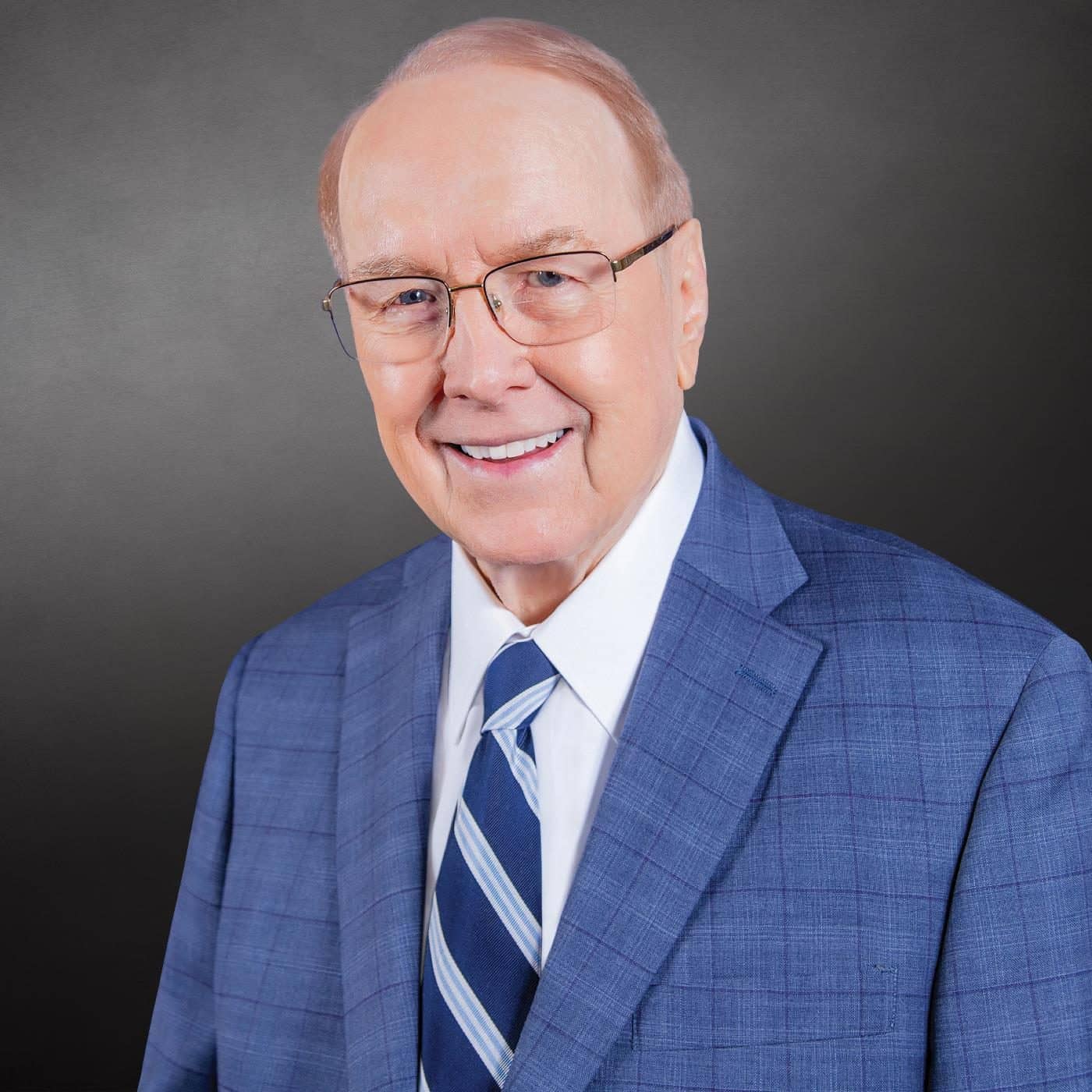
In this engaging episode, Dr. Dobson and Dr. Bennett discuss the intrinsic values and formidable spirit that make America a beacon of hope for many. With stories of influential figures like George Washington and Frederick Douglass, this dialogue sheds light on the importance of cultural resolve and moral courage in preserving the nation’s heritage. As they tackle contemporary issues and historical insights, listeners are reminded of the ongoing quest to sustain liberty and justice.
SPEAKER 02 :
You’re listening to Family Talk, the radio broadcasting division of the James Dobson Family Institute. I am that James Dobson, and I’m so pleased that you’ve joined us today.
SPEAKER 01 :
Well, welcome to Family Talk, the broadcast division of the Dr. James Dobson Family Institute. I’m Roger Marsh. As we observe Memorial Day today and honor those who paid the ultimate sacrifice for our nation, it’s fitting to reflect on America’s unique place in world history. Our founding was indeed providential, and throughout our history, brave Americans have defended liberty both at home and abroad. On today’s edition of Family Talk, Dr. Dobson welcomes author and speaker Dr. William Bennett, who served as Secretary of Education under President Ronald Reagan and later as Director of the Office of National Drug Control Policy under President George H.W. Bush. Dr. Bennett is also a prolific author whose books include The Book of Virtues, Tried by Fire, and the focus of today’s discussion, America, the Last Best Hope. During this fascinating conversation, Dr. Dobson and Dr. Bennett will explore America’s remarkable founding, the character of leaders like George Washington and Abraham Lincoln, and why our country continues to be a beacon of hope for millions all around the world. They’ll also discuss the challenges facing our republic and why preserving our heritage matters so deeply. On this day of remembrance, we reflect not only on those who gave their lives in service, but also on the enduring ideals they protected. Let’s listen in now for this inspiring discussion on America’s enduring legacy of hope here on Dr. James Dobson’s Family Talk.
SPEAKER 02 :
I don’t ever remember starting an interview with an author by saying, what’s the significance of that title? But in this case, I want you to express it.
SPEAKER 03 :
It’s Lincoln’s words, of course, as so many of our words about our country are Lincoln’s or Washington’s. He said in a speech, a talk, and a message he sent to Congress, he said, we shall nobly save or meanly lose this last best hope of earth. The words are beautiful, as they often are with Lincoln. What perhaps is more interesting is when he said it. He said we were the last best hope of Earth after the Battle of Antietam Sometimes called the Battle of Sharpsburg. Yes the bloodiest day in American history still 21,000 casualties 22,000 casualties at that battle in Maryland not far from where I live I drive out there sometimes on early morning and look at the battle scene and It was touch and go. It wasn’t clear whether this nation would survive. It wasn’t clear whether the Union would prevail. Lincoln was assailed on many, many sides. I’ve sent a number of messages to the White House along with the book about reading about Lincoln during his time. His cabinet was not with him. The man who was running the war for him, General McClellan, people thought he might try to take control of the government and military.
SPEAKER 02 :
In fact, if the North had lost that battle, Lincoln would have probably been thrown out of office.
SPEAKER 03 :
They were very close to Washington. And there was that chance. There was the chance at Gettysburg. You’re exactly right. And I mean, it was touch and go. It was not at all clear that we would survive. But Lincoln said at the time, we are the last best hope of earth. And it struck me. in writing this book at this time, that it’s right to say it again. If you are sitting in some God-forsaken place in the world, if you have no hope, if there is a military coming over the hill with a flag, what flag do you want it to be? Despite what our critics say, people all over the world want it to be the United States, the flag of the United States.
SPEAKER 02 :
It means deliverance. I came to Washington to hear you speak when you were Secretary of Education, and you used a phrase then that you’ve referenced in this book again. You called it the Gates Test.
SPEAKER 03 :
Gates Test, yeah.
SPEAKER 02 :
Remember that day that you spoke for us?
SPEAKER 03 :
Explain what the Gates Test is. I refer to it in the book. You’re absolutely right. When I was Secretary of Education, I taught at 120 schools around the country, and a young woman in San Diego – Said, you obviously love the country. Said, I’m not so sure about it, but why do you think it’s such a great place? I said, well, it would take, you know, I’ll give you a reading list. But I said, I’ll give you a short answer. I said, every country has its gates. I said, and when a country raises its gates… You want to find out about the country, you look to see which way people run. Do they run in or do they run out? I said, when we raise our gates, people run in. When we don’t raise our gates, people run in, which is why we’re talking about this immigration issue. Other nations raise their gates and people run out. I said, that’s a very good test of what a country is. And from the beginning, people have fled to this country, have looked to this country.
SPEAKER 02 :
Given that historical fact and the way it is today, isn’t it amazing that there’s such a sizable number of people in the media and in the liberal community that despise this country and its freedoms and are doing everything they can to undermine it?
SPEAKER 03 :
It’s never been this bad in terms of the media. I wouldn’t say that presidents haven’t had it this hard. They have. Lincoln was one. But in terms of the media, it has never been like this. David McCullough says that if Washington or Lincoln had had to face the press and the press reports that you have now, these things wouldn’t have been won. If the reports of the battles, Washington lost more battles than any general in modern history. Luckily, he won some big ones and he pulled some very good surprises off. But if it had been reported, the discouragement would have been so great.
SPEAKER 02 :
You made reference a minute ago to the fact that this great experiment in liberty that Lincoln spoke about is not a foregone conclusion. We could lose it. And it’s probably in as much danger right now as it has ever been, including the Revolutionary War. I think it’s a very serious time.
SPEAKER 03 :
And the question I have is whether we have the cultural resolve, the moral resolve. No doubt about our soldiers. No doubt about our military, their ability to get the job done and the kind of people we have. But whether we have it culturally, whether we will call things by their right name, whether we will endure. The founders, and I talk about this in the book. hope that we could survive for 100, 150 years. That was their hope. Because places of this size, democracies, republics, just don’t have a history of surviving very long. So we’ve set a record. But the question is, Jim, as you say, whether we will endure. I do think, I don’t want to just hit the thing again, the cliche about those who don’t study history are condemned to repeat it. But One of the parts of the book that people have picked up on is our war with the Barbary pirates in 1800. That’s with Muslims. It was our first war with Muslims. You know what they were doing? They were kidnapping people, holding them for ransom. And at the time this was going on, there were about a million and a half Christians being held as slaves by Muslims, Muslim warlords. And they were taking our ships and then making us pay ransom. And Jefferson, and I’m kind of on and off Jefferson, you know, yes, no. I got to tell you, on this one, he said, we’re not going to take this. We’re not going to let these people get away with this. And John Adams, he said, I’m not sure you can fight these people. Why? He said, I think if you fight these people, you will be fighting them forever. This is 1800.
SPEAKER 1 :
1800.
SPEAKER 02 :
Well, 200 years later, the fight’s still going on. Because of the religious fanaticism that values death. Yeah. Now, I’m not implying that all Muslims are violent. I’m sure of what I’ve been told, that the vast majority are peace-loving people who would do us no harm. But a small percentage of a big number is still a very big number. And there are, I’m told, 1.2 billion Muslims on the face of the earth. And if 10 percent of them believe the Koran instructs them to kill infidels, which would include us, that is 120 million people who would give their lives to destroy us. But let’s assume that figure is grossly overstated. If only 4% are fighting the jihad or the holy war, that still means 48 million people want to kill us. You know, that’s a threat of enormous proportions when you start talking about nuclear bombs and other weapons of mass destruction. You’re exactly right. That’s 48 million.
SPEAKER 03 :
We saw what 19 could do on 9-11. Bernard Lewis, who is the great scholar of Islam, retired professor at Princeton, I was with him not long ago. I asked him the exact question. I said, of the 1.2 billion, he said 10 to 15%. That gets it up to 200 million. I mean, it’s a… Whatever, whether it’s 50 or 200.
SPEAKER 02 :
Well, that explains why you say our national life is threatened.
SPEAKER 03 :
And then we look at the numbers out of Great Britain where they did those polls after the July 7th killings in London. And 13% of Muslims in London said they supported the suicide bombers. 13% of 2.2 million. That’s a significant number of people.
SPEAKER 02 :
Now, you know what? I hadn’t planned for us to talk about all this on this program because your book is not just on the threat to this nation. It’s the great heritage of this nation and the stories. And we’ve got a whole lot more to talk about here.
SPEAKER 01 :
You’re listening to Dr. James Dobson’s Family Talk in an interview featuring Dr. Dobson and author and speaker Dr. William Bennett. They’ve been discussing America’s rich heritage and storied legacy. Since its founding, the United States has been a symbol against oppression and a bastion of hope for the oppressed. But our nation is not without its flaws. Let’s join Dr. Dobson and his friend Bill Bennett once again as they tackle a few of the darker parts of our nation’s history.
SPEAKER 02 :
Of course we’re imperfect. We have some very embarrassing components to our history. Slavery and some of what we did to Native Americans. That was evil. That was wrong. Right. But there’s also an awful lot that’s good here. It’s less than perfect, but find me a better one.
SPEAKER 03 :
That’s right. And the amazing thing about America is… And I tell the story. I mean, I tell the stories of the wicked things, the atrocities, in an unblinking way. But the amazing thing about this country is the capacity to recognize a problem and to deal with it. Sometimes it takes us too long, as it did with slavery and emancipation. But we get there. But this capacity to set it right, self-renewal… One of the figures in the book… A giant figure for me. Frederick Douglass.
SPEAKER 02 :
I knew you were going to say that.
SPEAKER 03 :
He just is just larger than life. And I love his quotes. You know, he meets Lincoln and someone says, you met the president. You know, this black man goes in and meets the president. He says, yes. He says, what did you think of the president? He said, well, he’s intelligent, but he’s got some growing to do. I guess if you are a slave and you gain your freedom one day by, you know, when you’re the man they had on the plantation there in Eastern Maryland, who was there as the slave breaker, this is the guy who’s to break the will of a slave, anybody who shows any gum. And when Douglas turns on him and pins him, he realizes, with the help of a couple other people too, he realizes then that there’s only one way he can go and that’s all out and strong. And so then he goes, he goes to Boston, he goes north. But he remains a very strong supporter of Lincoln, a very strong Republican. This is just historical fact, I’m not advocating. This is not a political editorial. No, I understand, not a political editorial. And again, his way of presenting things and his impatience for justice. And his talk with a number of his friends were very active to get the vote for women. And he said, fine, important, but us first. They’re not lynching you, they’re lynching us. We’re first, you’re second. They wanted him to put things on equal.
SPEAKER 02 :
Didn’t he say something about the Constitution had not one word in it that authorized slavery. That’s exactly. But it had the foundations within it that ended slavery.
SPEAKER 03 :
Exactly right. He said that. And in saying that, he he said something which was then later picked up on by Martin Luther King. who goes back, as Douglass did and as Lincoln did, to the founding documents, to the Constitution. But even more, and of course, you know, this is a big debate among the scholars, which is the documents, Constitution, the Declaration. I’m a Declaration man for a couple of reasons. We hold these truths to be self-evident that all men are created equal and endowed by their creator with certain inalienable rights. And Douglass goes back and says, that’s the foundation. That’s the foundation of our freedom. But he is a fabulous, fabulous character.
SPEAKER 02 :
And all these all these wonderful stories. We are jumping around chronologically here, Bill, just because that’s the way the conversation has unfolded. But you spent a lot of time talking about George Washington here. He was not just the father of our country and the first president. But the character of that man comes through. Explain why. My favorite story.
SPEAKER 03 :
It’s a commonplace, but I love the story. It’s about character. At the end of the war, a lot of the soldiers wanted to march on Philadelphia to get their money. And Washington was trying to discourage them. Not a good way to start the government, which is to hold the Congress at bay at that point. I understand the temptation. I’ve been there a couple of times, but it’s not a good idea. So he’s trying to persuade them. Another one of his things is he was not a great public speaker. But he remembered something that someone had given him, a slip of paper. So he pulled it out of one pocket. The other pocket, he pulled his glasses out. And his men had never seen him with his spectacles. And he noticed that. He heard the crowd go silent. And he said, I see that you notice that I wear glasses. He said, well, it was to be. I have not only grown old and gray, I have become almost blind in the service of my country. Wow. that simple unrehearsed spontaneous statement and everyone started to cry. They were reminded of who this man was and what he had done for the country. The respect for him, that’s one of the ironies I talk about, was so great. that several of the founders pointed out that we almost blew it we almost went back to monarchy because the regard for him was so great the first proposal for his title you know they had to we had to rename things we had to rename who our commander-in-chief would be the first title john adams came up with it was his glorious highness the president of the united states and glorious protector of the liberties of our liberties and william mcclay from pennsylvania said What’s with Adams? Doesn’t he understand what we fought this thing for? It’s to get rid of all that stuff. But such was the regard for Washington.
SPEAKER 02 :
The reason that I consider him to be such a hero is right along this point that almost no one in human experience gives up power willingly. That’s right. It is intoxicating. And once you have it, you don’t want to let it go. And he could have been king. But he served two terms as president and would not accept even a third term. And you talk about greatness. That really speaks to me.
SPEAKER 03 :
The world was watching. And King George said – it was this moment whether he would give up his power – said if he gives up his power, as he said he will, he will be the greatest man in the world. Did he say that? And he did it without a moment’s hesitation.
SPEAKER 02 :
Another of your heroes in this book. This is just one story right after another that give you a sense of pride and dignity. Not arrogant pride, but thankfulness and gratefulness for the leaders that the Lord gave us. And especially when we consider what was going on in the rest of the world at that time. I mean, the Fridge Revolution resulted in all this drama. The killing in the streets. And then, of course, the British had had their civil war. And here, right in the middle of that, is this ultimate statement of a representative form of government, a government of the people, by the people, and for the people. That makes me want to cheer. You bet. And it makes me want to defend this country. And it makes me angry when I hear the media assaulting what we have stood for. I know. Well, let’s press on. Bill, let’s turn our attention now to our 26th president, Theodore Roosevelt, who really had just about everything going for him when he was younger.
SPEAKER 03 :
Yes, had the silver spoon, had all that Harvard, but didn’t let it hold him back. a guy just full of energy and drive for his country, full of patriotism. When he was police commissioner in New York, he walked the beat at night. He walked in the middle of the night to find out if everybody was doing their job. He was an extraordinary human being who had a deep and just pervasive sense of right and wrong. When he went west out into the Dakotas where he developed his great love of America, these two guys had stolen something from him. He went out and he captured them, brought them back, both of them back.
SPEAKER 02 :
His style was to speak softly and carry a big stick. It sure was. It still kind of makes sense, doesn’t it?
SPEAKER 03 :
Yes. We have an American, Pertikaris, who was kidnapped by Rasouli, who’s this chieftain, a Barbary chieftain. And he has some question about whether he was an American citizen. Roosevelt assumed he was an American citizen. And this chieftain over there in Morocco kidnaps him, and Roosevelt gets a wire back, and he sends a wire back immediately. He said, Pertikaris alive or Rasooli dead? No, don’t mess with the American citizen. I want my citizen back or you’re dead. I will send the U.S. military with all its might. And I come back to what I was saying, how impressive our entrance into Afghanistan was and the beginnings of Iraq and where American military power is used when it’s presented. It needs to be unambiguously powerful.
SPEAKER 02 :
It should not be sparing. If you’re going to go in there, get it over with and get out.
SPEAKER 03 :
And I think our willingness to exercise military power in a way that is unambiguous is in some ways a measure of our internal confidence. Now, if I’m sounding bloodthirsty to the audience, I just want to point out and remind people. The last seven times that the United States military has been deployed, it has been deployed to save Muslims, to save Muslims. Just go through it. Iraq.
SPEAKER 02 :
Kosovo.
SPEAKER 03 :
Kosovo. Somalia. Afghanistan, Somalia. Exactly right. I mean, you just keep going. And we have done this and done it and have liberated in the last seven deployments 50 million or more Muslims.
SPEAKER 02 :
Wow. I am proud of the work that you’ve done with this book, Bill. I do hope. that our listeners and especially their older kids will read this book.
SPEAKER 03 :
It’s not a heavy tome. It’s the great story of America. I mean, and the story is full of romance and drama and comedy and humor and characters like you wouldn’t believe. This is a place not only where people have dreams, but the dreams actually come true. They really do come true.
SPEAKER 02 :
You have called it, in fact, the second greatest story ever told. Absolutely. That’s right. After the great story of Christ’s coming. That’s correct. This is the greatest political story.
SPEAKER 03 :
It is the greatest story. And people come here in hope. And, you know, one of the reasons I wrote this book was to correct the revisionist stuff. I told you the last time I was here, there was a history book. They now changed it that defined the Puritans as people of the 17th century who took long trips. People from England who took long trips. Because they didn’t want to get into the religion thing, you know, because that’s not appropriate to talk about in schools, don’t you understand? Baloney.
SPEAKER 02 :
The title of the book is America, the Last Best Hope, Volume 1, From the Age of Discovery to a World at War by Dr. William J. Bennett. Have the best days gone forever for this nation?
SPEAKER 03 :
I don’t think so. I think our greatest days are still ahead of us because the influence now on the world that we have had. I mean, the founders hoped we’d last 150 years. We’ve beaten that record by a bunch, and now we move on. But this is the challenge. The challenge that is before us is as great as anything we’ve ever faced.
SPEAKER 01 :
Liberty is never guaranteed. It must be cherished, defended, and passed on to future generations. You’re listening to a special edition of Dr. James Dobson’s Family Talk and a thought-provoking journey through America’s heritage featuring Dr. Dobson and his special guest, Dr. William Bennett. Now, if today’s program sparked your interest to learn more about American history, I encourage you to visit drjamesdobson.org forward slash family talk. There you can listen again to the program. You can also share this conversation with friends and family. And that’s also where you’ll find a link for Dr. Bennett’s book called America, The Last Best Hope. It’s the perfect resource for anyone who wants to better understand the exceptional journey of the American experiment. Again, you’ll find all this information and more when you go to drjamesdobson.org forward slash Family Talk or when you access this information on the Family Talk app. Here at the Dr. James Dobson Family Institute, we are committed to upholding the principles upon which America was founded. Part of our mission is promoting religious freedom, respect for our American founding and righteousness in our culture. In a time when many seek to rewrite or diminish our nation’s exceptional story, we stand firm in defending the values and ideals that have made America a beacon of hope. Thank you. You can make a secure donation online when you go to drjamesdobson.org. You can also give a gift over the phone when you call 877-732-6825. That’s 877-732-6825. Or if you prefer to send your donation through the mail, our ministry mailing address is drjamesdobsonsfamilytalk.org. Post Office Box 39000, Colorado Springs, Colorado, the zip code 80949. Once again, our ministry mailing address is Dr. James Dobson’s Family Talk, or you can just write JDFI for short. P.O. Box 39000, Colorado Springs, Colorado, 80949. Well, I’m Roger Marsh, and on behalf of Dr. Dobson and all of us here at the JDFI, thanks so much for making us a part of your day. Be sure to join us again next time right here for another edition of Dr. James Dobson’s Family Talk, the voice you trust for the family you love. This has been a presentation of the Dr. James Dobson Family Institute.