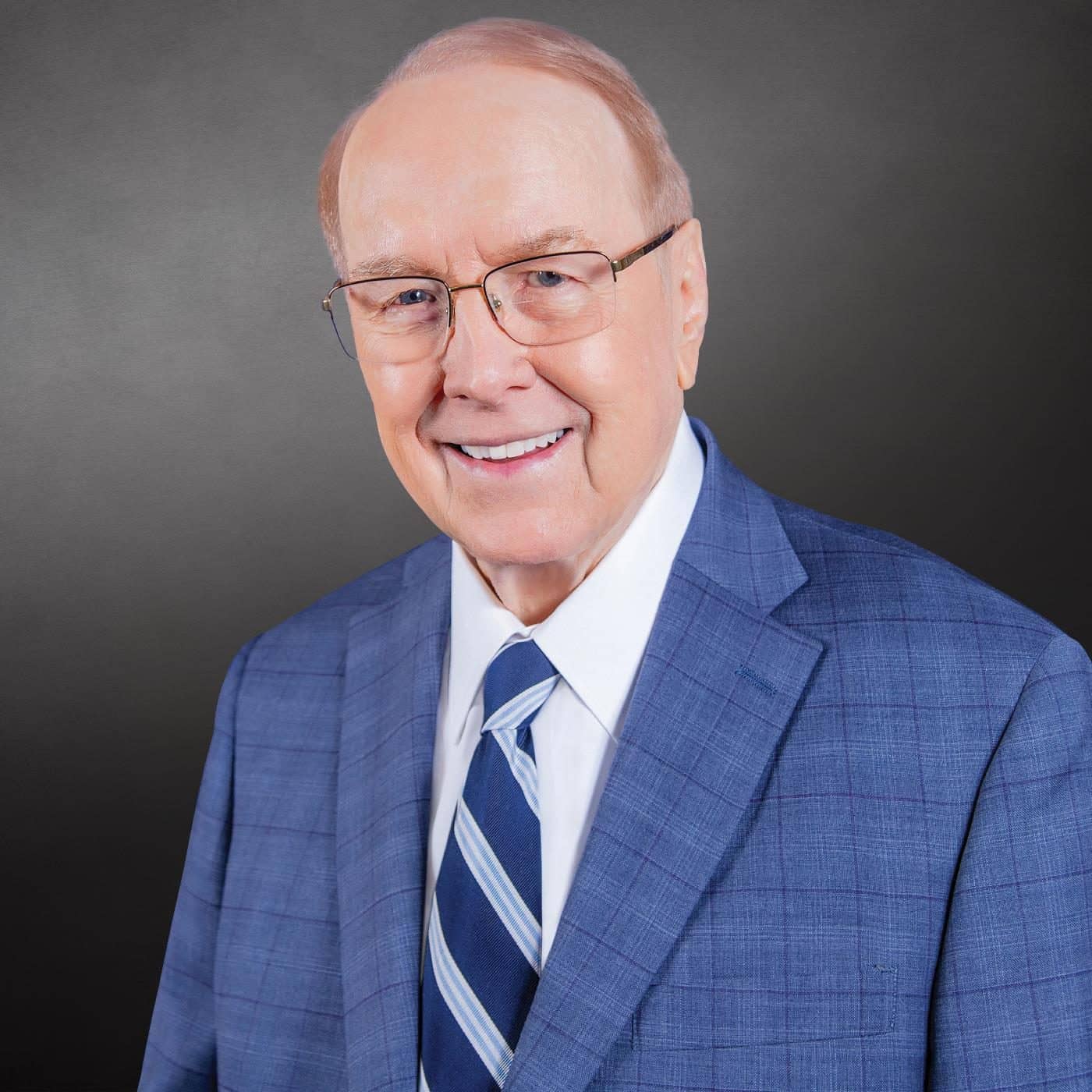

In this special Father’s Day edition of Family Talk, Dr. James Dobson shares deeply personal insights about the influence of godly men in the family structure. From tales of his own father’s steadfast devotion to the essential roles that fathers play in the growth and development of their children, Dr. Dobson emphasizes the need for committed, loving fathers. Listen in to discover how a father’s spiritual leadership can bolster family unity and create a lasting legacy of faith and love.
SPEAKER 02 :
Well, hello, everyone. I’m James Dobson, and you’re listening to Family Talk, a listener-supported ministry. In fact, thank you so much for being part of that support for James Dobson Family Institute.
SPEAKER 01 :
Well, welcome to Family Talk, the broadcast ministry of the Dr. James Dobson Family Institute. I’m Roger Marsh, and with Father’s Day just around the corner, as a matter of fact, it’s coming up this Sunday, we’re taking time this week to honor the incredible influence that godly fathers have had on their children. Now, you know, countless times on this broadcast, you’ve heard Dr. James Dobson emphasize the importance of godly men in our society, and for good reason. Fathers and husbands play such a critical role in preserving the institution of the family. Well, today on Family Talk, Dr. Dobson will share some deeply personal memories of his own father, a man whose faith and devotion shaped not only his life, but also his entire ministry to families. Now before we begin, I want to remind you of a special opportunity to partner with us here at the Dr. James Dobson Family Institute. Thanks to some generous ministry friends, we have a matching grant in place for the month of June. It’s a dollar-for-dollar matching grant. That means every dollar you donate will be doubled for greater ministry impact. To make your gift and to have it matched dollar-for-dollar, visit drjamesdobson.org. Now, I’ll say more about the match later in the broadcast, but first, let’s turn our attention now to today’s special program. Years ago at a private event, Dr. Dobson delivered a powerful message about the critical roles fathers play in shaping the next generation. So let’s listen in right now to Dr. James Dobson on this special edition of Family Talk.
SPEAKER 02 :
Back before the Focus on the Family film series was recorded and released, I was on my way to Children’s Hospital, just a normal work day, and I was driving along in my little Volkswagen, and I knew that this was coming, and I knew there was going to be a huge number of people that would hear what I had to say. And I was praying that day, and I said, Lord, Why should I depend on my flimsy little talent to decide what I ought to talk about when I can ask you to tell me what I ought to talk about? I ask you to give me your message for the family. And in a beautiful way, the voice of the Lord was not in my Volkswagen, but it was in my heart. And he said to me without words that if America is going to survive with all the pressures that are on it, it will be specifically because husbands and fathers begin exercising their leadership and their responsibility to the Lord and to their families to give priority to them and to lead them in the paths of righteousness. It’s men. If men will make that commitment and that decision, then women will usually go along with it because women care about that anyway. And it’s the renegade males, which is what I talked about, renegade males who are not, you know, they’re overcommitted, they’re doing all kinds of other things and have not carried that responsibility. And certainly within the minority community, it is a disaster what’s taking place where 75% or more of black babies are born into a home with no father. Those who are born illegitimate are the father’s takeoff. And what do you have left? You have these young children who are growing up without the male leadership that’s there. I got a phone call a couple of years ago from a NFL coach saying, who reports to Pete Carroll, who is the coach for the Seattle Seahawks. And this coach is a Christian, and he said, Pete Carroll has asked me to invite you to come and be at the team meeting the night before their first game, which was with Denver. And he said, we would just love to have you. And Pete Carroll, who, by the way, is not a believer as far as I know, he wants to talk to you. And I said, what a great opportunity. So I went. And before I talked to Pete, they had three coaches meetings with different team, you know, the quarterbacks, the offense, the defense, and so on. And I noticed there was a theme throughout. to stir up the passions of the players. All of them said things like, we’re brothers here. We’re pulling for one another. When somebody makes a good play, you get off the bench and you go over there and congratulate them. You put an arm around them. You care for them. And we work together. Well, I heard that from the three meetings. It was obviously coordinated. And then they invited me to come in and talk to Pete Carroll. He was sitting eating at a table alone. And I came in and I sat down. I knew he wanted something for me, but I wasn’t sure what. And I didn’t want to just volunteer to go off telling him what he needed to know about football and decided that I would just ask him questions. And so I did begin to ask him questions. I said, Coach, I’d like to know something. I watched those players and I heard what you were teaching them. And I want to ask you something. Is there a difference between the men who were raised in intact homes and and families, and those that were raised without fathers. You see any generic difference between, he said, oh, it’s night and day. And I said, tell me how, and you’re going to be surprised by this. I was. He said, the men, the big, burly, 250-pound, muscular men, When you talk to them, you have to treat them like women. I said, what? I mean, here are these big, burly, masculine guys who said they’ve been raised without men. They don’t know how men think. They don’t know how men are operated. They don’t know what they’re supposed to be like men. They spent their lives, not only with their mothers, but their grandmothers and their school teachers and others who are women, And they don’t know what a man is like. Therefore, if you want the best out of them, you’ve got to love them. You’ve got to be aware of their sensitivities. You can’t do what Newt Rockne did in the years, the early days of Notre Dame, where he browbeat them and streamed at them. And that’s really how coaches usually handle their teams today. And so you can’t threaten them. You can’t embarrass them. You can’t threaten to you. You got to let them know you’re for them. You are on their side. You are here to make them succeed. You do that and they’ll break their backs for you. And it’s the difference between men and women. And I said, what does that mean? I said, do you base your… team spirit on that he said absolutely and that’s what you heard in the three meetings that you attended it was a fascinating discussion i’ve never heard any masculine world where they said that you have to get a lot of the emotional characteristics of women uh All right. I want to get back to what the Lord said to me on that trip into Children’s Hospital. And I want to talk about fathers and the role that they play. It’s such an important point that dad’s. need to have an understanding of what it means to be a man. Girls need their fathers as much as boys do, and maybe more, because girls are sensitive, and their self-esteem often hangs on the relationship between dad and mom. And the daughters, because he’s the first male to say, I love you. I believe in you. You’re beautiful. I have confidence in you. I can’t wait to see what God’s going to do with you. So a man has this responsibility to his kids. And when they don’t fulfill that and they’re gone or overworked or don’t care or abusive or, you know, any number, they’re alcoholics or druggies or whatever they are, the culture starts to unravel. Now, OK, leave all that as background. I want to tell you about a topic. It is memories of my father. I had a great father, an absolutely wonderful dad who understood these principles. And even though he was an evangelist, for most of my life. When he came home, he was mine, and we did things together. And we hunted together and fished together. And then he was off for two or three weeks. But let me take you to the relationship between my dad and my mother long before I was born, before they were married. And that’s what I want to read to you now. was something that he handed to me on a walk. We would take these walks together. I cherished them. And our relationship was that he talked and I took notes. And he reached in his pocket one day and he pulled out this crumpled piece of paper. And he said, you might find this interesting. I said, what is it? He said, this is what I said to your mom before we were married. And I want to read it to you. This is his statement about marriage to my mother. I want you to understand and be fully aware of my feelings concerning the marriage covenant which we’re about to enter. I have been taught at my mother’s knee and in harmony with the word of God. that the marriage vows are inviolable and that by entering into this I’m binding myself absolutely and for life. The idea of estrangement from you through divorce for any reason at all, though God allows one in fidelity, will never at any time be allowed to enter into my thinking. Now, I’m not naive in this. On the contrary, I’m fully aware of the possibility, unlikely as it now appears, that mutual incompatibility or other unforeseen circumstances could result in extreme mental suffering. If such becomes the case, I am resolved for my part to accept it as a consequence of the commitment that I’m now making and to bear it if necessary to the end of our lives together. I have loved you dearly as a sweetheart, and I will continue to love you as my wife. But over and above that love and apart from it, I love you with a Christian love that demands that I never react in any way towards you that would jeopardize our prospects of entering heaven. or threaten the souls of our children, which is the supreme objective of both our lives. And I pray that God himself will make our affection for one another perfect and eternal. Now, how could a young man, these are my words, how could a young man only 23 years of age make such a mature pledge? How could he make a lifelong commitment with so much certainty when you didn’t know the facts? Obviously, these words would amount to an empty promise if he were really just relying on his own wisdom and hopes. The answer lies in the fact that he was basing his marriage relationship on the principles authored by God himself. It lasted 43 years until death temporarily came between them. That was his commitment. Man, don’t you wish fathers would come into marriage with that kind of understanding. I followed his model. And though I didn’t write it like that, I said it to Shirley from the beginning. This is a lifetime commitment. We have never allowed the word divorce to ever even come into our conversations. As it relates to each other. Or separation or anything else. This is a commitment we made at marriage. And it has not wavered. And nor will it ever. Because I believe my dad was accurate on this. Now they got married. And very soon they had some of the pain issues. that he referred to here because my mother went to her doctor. His name was Dr. Rigby. And Dr. Rigby told her that she would never be able to bear children. Dr. Stringfellow has told me it probably related to bone structure where she could not deliver a baby. But this doctor told her that she just absolutely could not have a baby. And if she tried, she would probably die. So they struggled with that. They prayed about it. Being unable to bear children is… Something many parents go through and women especially suffer tremendously from it. And both my mom and dad did. My dad was a man of prayer. Some have heard me say that my dad spent so much time in prayer on his knees. He was known in the little town where he was a pastor as the man who had no leather on the toes of his shoes. Because he spent so much time praying. And he began praying about this. He was out of town. And I don’t know, he was in a revival meeting somewhere. And he wrote my mother a letter. And he said, I’ve been praying about this. And the Lord has assured me, you are going to get pregnant. And you are going to have a baby. And it’s going to be a boy. And she got pregnant. and had an early, early C-section. That was a dangerous thing. I don’t think they even had penicillin or antibiotics back in those days. It was a real danger. You can see why the doctor didn’t want her to go that route. But she also, in those days, C-sections was done vertically, which weakened the uterus. instead of it being transverse. And that’s why he told her after I was born that she had better not try this again or it would kill her. And she never did, and that’s why I was an only child. But I was loved and given everything that two parents can give. My relationship with my father was intense from early on, but my dad had to remind me of this, and then I vaguely recall it. Well, first of all, they lived in a very small parsonage because my dad was a pastor of a little Nazarene church in East Texas, and his salary sometimes was 50 cents or a dollar a a week and so my little bed was in the bedroom with my parents and it was so tight that my bed was right up next to them when i was two years of age and my dad said that it was not unusual at that time to awaken in the middle of night and hear a little voice that said daddy And he would say, what, Jimmy? And I would say, hold my hand. And I would put my hand out, and he would search for it through the darkness until he found my little hand. And he said the moment he found my hand, my arm became limp, and I had obviously gone back to sleep because he only wanted to know that I was there. And that is true. And I always look for him that way and thought of him as just wanting to know that he was there because I found security in him. I remember at three walking along beside him. He was 6’4″, and his hand was huge. And I remember walking along and being proud to walk with him and have him as my father. And that was built into me from a very young age, and I modeled myself after him. I’ll tell you this, that I learned to pray before I learned to talk. And the reason is because I mimicked the sounds my parents made in their devotions and in their prayers. So I grew up with that. And when I was four on a Sunday night, my dad was a preacher. and when he had finished preaching, he said, anybody like to come and pray? And in our tradition, we had an altar, and everybody was coming. A large number of people were coming to that altar. My dad was a wonderful pastor, and I looked around, and I saw them. I didn’t ask my mother, and I came to the altar on this side. I remember this vividly, and I I began praying and asking the Lord Jesus to come into my life. And I don’t know what repentance was. I didn’t know it then. I certainly didn’t base my prayer on it except that I just wanted him to come into my heart. And he did. My dad came off the platform and came and knelt beside me. and put his arm around me and prayed for me. My mother was on the bench praying for me right here. And it was a night that I will never forget. It was the most significant night of my life. Don’t tell me a child is not able to make contact with God. Don’t tell me that didn’t happen for me. because it was very, very intense. Now, coming on through childhood, when I reached about 10, I began hunting with my dad. I didn’t have a gun, of course, but I followed along after him. And about 12, I got my first .22. And when I was 13, I got a .410. And I never felt like a man like I did when I got that .412, that shotgun. And I want to tell you that the happiest days of my life, or some of them anyway, were spent out in the woods with him. We’d get up in the morning, crisp and cold, and put on our hunting clothes, our hunting boots, and get out in the car. The sun hadn’t even come up, and we would drive out to the place where I called it the big woods. We’d go over a fence and follow a little creek back into the trees that were there my dad would get me situated under a limb that had fallen and then he would go around the bin and i we’d sit there and wait for the sun to come up and all these little animals began to show up the squirrels and the birds and then we would have lunch out there he was mine out there he was different with me there than he was anyplace else because he was relating to me, his son. And it made me want to be like that man. It made me want his values for my values and his thoughts for my thoughts and his God for my God. And I learned it at the feet of my father. And he was that kind of man for me.
SPEAKER 01 :
You’re listening to a special edition of Dr. James Dobson’s Family Talk and a special presentation from Dr. Dobson centering on his father. Now, if you missed any part of today’s program, remember you can listen again or share it with a friend when you go to drjamesdobson.org forward slash family talk. And speaking of fatherhood, I want to invite every dad listening today to sign up for our new Strong Dads email series. You know, in today’s culture, your children are looking to you for guidance, strength and godly leadership. This series provides practical tips and timeless biblical wisdom to help you lead your family with purpose and confidence. To sign up for the Strong Dads email series, simply visit drjamesdobson.org. That’s drjamesdobson.org. And you can click the link on the landing page. The Strong Dads email series, by the way, is available without cost. You know, as we enter the summer season, I want to share how your partnership helps the Dr. James Dobson Family Institute continue its mission to strengthen families all across the nation. Every day, we are working to preserve the biblical foundations of marriage and family, to introduce people to the saving grace of Jesus Christ, and to promote righteousness in our culture. Right now through June 30th, we have an extraordinary opportunity before us. Some generous ministry partners have provided a matching grant, which means that every dollar you donate to the James Dobson Family Institute today will be doubled in impact. Whatever amount God places on your heart, whether it be $100 or $1,000, maybe $10,000 or more, know that it will go twice as far in ministering to families who desperately need biblical wisdom and encouragement. Now, to make your contribution online and have it matched dollar for dollar, simply visit drjamesdobson.org. That’s drjamesdobson.org. You can also call in your donation at 877-732-6825. And as our way of thanking you for your support of the Dr. James Dobson Family Institute, we will send you a copy of Dr. Dobson’s powerful book, Your Legacy, along with the companion DVD. This resource will equip you to leave a spiritual heritage for your children and grandchildren. So make your best donation online at drjamesdobson.org and we’ll thank you for your tax-deductible contribution by sending you a copy of Dr. Dobson’s book, Your Legacy, along with the companion DVD. That’s drjamesdobson.org. You can give a gift over the phone when you call 877-732-6825. or to send your tax-deductible donation through the U.S. mail, our ministry mailing address is Dr. James Dobson’s Family Talk, P.O. Box 39000, Colorado Springs, Colorado, the zip code 80949. Well, I’m Roger Marsh, and I hope you’ll join us again next time for the conclusion of Dr. Dobson’s powerful reflections about his own father. That’s coming up right here on the next edition of Dr. James Dobson’s Family Talk, the voice you trust for the family you love. This has been a presentation of the Dr. James Dobson Family Institute.