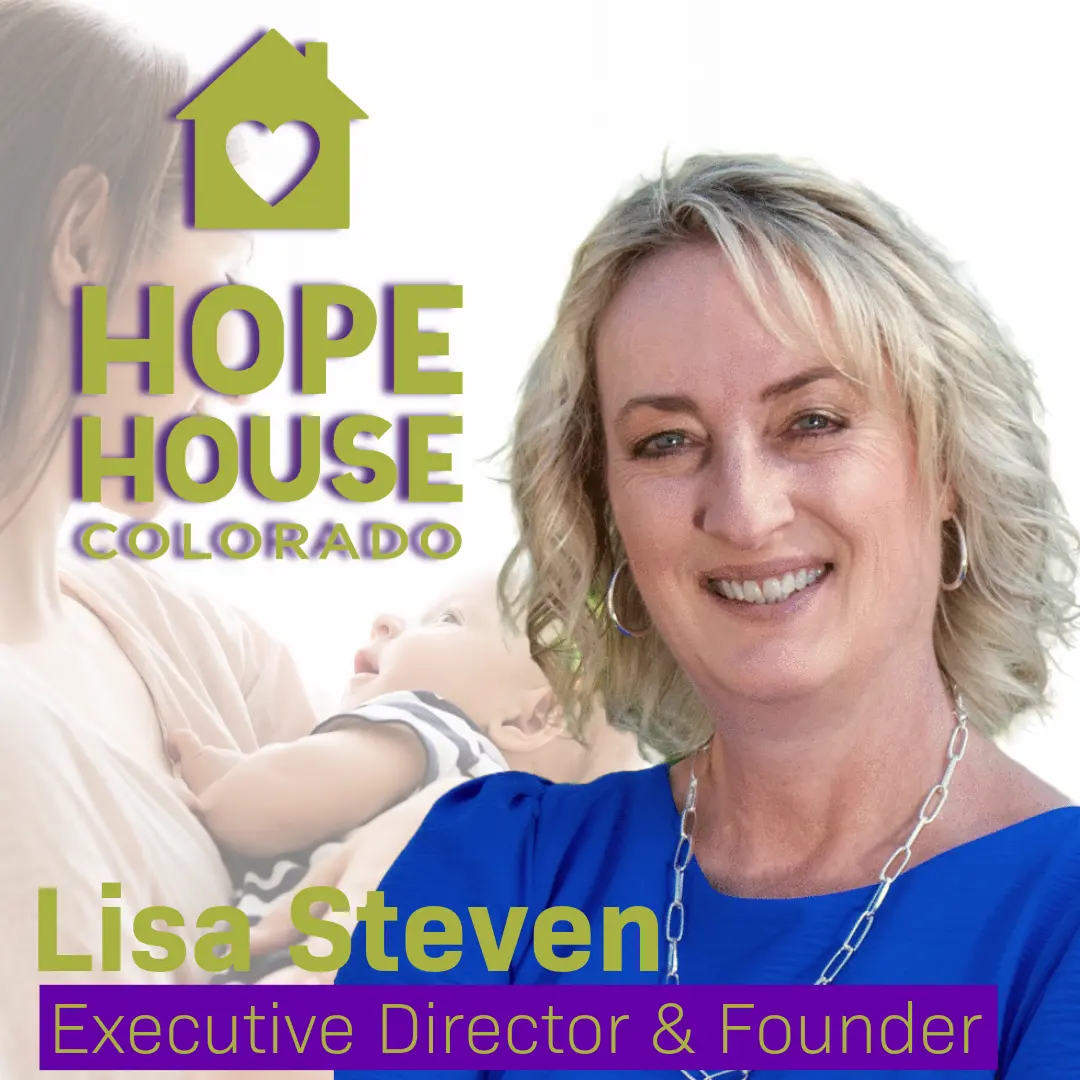

What if your darkest moments became the foundation for healing and joy for hundreds of teen mothers? In this powerful episode of Talking Truth, TJ sits down with Lisa Steven, Executive Director of Hope House Colorado—a beacon of light for teen moms facing insurmountable tasks with no path to success. Lisa shares her own journey as a teenage parent and the miraculous, God-ordained path that led her to build one of Colorado’s most impactful ministries. From housing to high school diplomas, financial literacy to full-time childcare, Hope House wraps young mothers in support that most of us take for
SPEAKER 01 :
Hello, KLTT listeners. This is TJ coming at you. I have a special treat for you today. I’m here with Lisa Steven of Hope House, Colorado. And Lisa has more than 28 years of experience working with teen moms. And in 2003, she co-founded a place called Hope House, Colorado. Served as founder and executive director ever since. Lisa, welcome to Talking Truth. How are you today?
SPEAKER 02 :
I am awesome. Thank you so much for having me.
SPEAKER 01 :
Yeah, we’re happy to have you. A little background information. Lisa came and spoke at our church, and I was so moved by the story of Hope House and what they provide for Coloradans. I wanted to get her on and share her with the KLTT listeners. So, Lisa, let’s just start with Hope House. What is it, and what’s the service you provide to Coloradans?
SPEAKER 02 :
Yeah, so our mission at Hope House Colorado is to empower parenting teenage moms to become self-sufficient. And our heart is that they also come to know just how much Jesus loves them and that there’s nothing that they’ve ever done or that’s ever happened to them that’s so bad that God would stop loving them or stop having a plan for their life. So, we do this self-sufficiency work in a number of ways. We have three primary programs. We have what we call our Empower program, which is sort of an umbrella over all of the educational programming we do. We’ll serve about 280 teenage moms and their kiddos this year, and under the Empower program, offer a GED and high school program, college and career program, financial literacy, what we call economic navigation, which is all things adulting. So oftentimes our teen moms are, for instance, driving without a driver’s license because they have to, they get to work. And they didn’t grow up in a home where somebody had 60 hours of drive time to spend with them to teach them to drive. So they just, they drive illegally because they’re forced to. So if we can help them get a license, then that removes one barrier to self-sufficiency. Our second big program is our housing support program. So we started out as a residential program, which I’ll share a little bit more about, but we still have that residential home on our campus. It’s group living essentially in a 5,000 square foot home. So we have 12 bedrooms and can serve six or seven mamas at a time. But the vast majority of the work we do in the housing support program is what we call housing navigation. We’ll assist probably 160 teenage moms this year with either finding somewhere to live that’s safe in a partner program or just navigating a lease. Maybe I have a landlord who won’t fix the bug problem or I don’t even understand my lease or I don’t understand the importance of not getting evicted and how do we avoid that. Sometimes it’s just my home is in such disrepair and I need some help. And then our third major program is our early childhood education program. So inside of our, on our campus, we have three buildings. We have the residential home and then our resource center, which is a 15,000 square foot building where we do all of our educational programming. And inside of that building, we have what we call our early learning and school age program. God’s a program where kiddos can be in care for up to three hours at a time while their mama is studying, working on GED, going to parenting classes, whatever she might be doing here on site in the resource center. And then we just built and opened in October an early learning center, a licensed early learning center so that we could provide full-time childcare for mamas to be able to go to school or work full-time.
SPEAKER 01 :
That’s amazing. Wow, how comprehensive and practical. That’s what I’m hearing you say. Like all of the things that, even things that teen moms just wouldn’t even consider or think about doing, you do for them. What are the requirements? So if there’s a new mom out there, she’s a teenager, she’s not sure what to do, uh she reaches out to you is there availability and um and what are the the i don’t know i don’t want to say qualifications but um age all that kind of stuff
SPEAKER 02 :
The mamas qualify for our program simply by being a parenting teenage mom. So teen moms can come into our program between the ages of 15 and 21, having had their child as a teenager. If they’re pregnant in their first pregnancy, they’re welcome to come in for a tour, just get to know us, but they would start programming with us after they gave birth. And then we serve our moms until they turn 25. So self-sufficiency is a long journey. It’s really… The hardest part about becoming self-sufficient is not all of the educational pieces. It’s the personal pieces. It’s learning how to have healthy relationships and build boundaries with people that are difficult in our life. Oftentimes, you know, your own mom. So many times we’ll have a teen mom who is in the position of caring for younger siblings and caring for an addicted parent. And so they’ll… Come to Hope House, and they’ll start their GED, and they start making progress, and maybe even they start dreaming about college, and then their mom relapses, and they have to go home and care for younger siblings, or they’re paying mom’s rent, and then they can’t pay their own rent, and so then they… what we call kind of just falling backwards on the self-sufficiency cycle, one thing like not making your rent for one month can cause you to kind of fall all the way backwards. So we’re oftentimes just removing those, trying to remove those barriers, like maybe assistance with rent for a month, but then in addition to assisting you with your rent for a month, how do we get to the point where we start thinking about those boundaries with family members where I guess I still obviously my mom’s my mom. I’m always going to love my mom. But what can I do without impacting my own little family and my progress forward? So it’s a journey to get to the point where you’re really, truly self-sufficient. And we measure kind of the one proprietary thing that we do is We work with a consultant to build a self-sufficiency rubric, essentially. So we measure self-sufficiency in seven different domains. Four of those are economic domains and three of those are what we call personal domains. That’s more healthy relationship and personal growth and faith and business. the things that are much more like emotional intelligence um and we measure on a scale of from crisis to vulnerable to stable to safe so what that might look like in housing is if i’m in crisis i’m literally like in crisis, I might be sleeping on the street. If I’m vulnerable, I’m moving around all the time. This is like such a common story. So mom, our teen mom is living with her own mother. Her mother gets a new boyfriend. New boyfriend doesn’t like teen mom living there. So teen mom gets kicked out. So now our mama is, you know, moving from family member to family member or friend to friend. And maybe she’s, you know, one place for a month and another place for a week. And she’s just what we call couch surfing. So that would be in a very vulnerable state. in the beginning stages of stable, maybe I’ve got a roof over my head, but I can barely afford my rent. I’m struggling in all other financial areas. And as we kind of progress through stable, we’re able to more easily afford our rent and still have enough money money left over for the things that I also need to pay for, like my phone or my car insurance. And then safe would look like having choice. And almost always being in the kind of measuring in a safe zone means I have choice. I have choice over where I live. I can pay market rate rent. Maybe I’m a homeowner, but I can choose the neighborhood. I can choose the school that I want my kids to go to. And we don’t think about it sometimes, you know, those of us who are so blessed to be in the middle class, but for those who are really trying to break the cycle of poverty, they have so many places in their life where they just don’t have choice.
SPEAKER 01 :
How did you come up with the idea, or you and your group of folks, and how was God working in that experience?
SPEAKER 02 :
yeah oh my gosh such an amazing god story it’s been such an adventure and a privilege um so my husband and i were teenage parents we got pregnant when we were 17 and got married we had a lot of support on my husband’s side of the family which was a game changer for us i grew up in a home that was pretty unstable but it wasn’t a home where We probably don’t have enough time to get into the difference between generational poverty and situational poverty. But I grew up in essentially a middle class home that was in situational poverty. So my dad was an alcoholic. He kind of could never hold down a job. So we had a lot of domestic violence and just kind of chaos in our home and run services like food stamps. They called it back in the day. Now it’s called SNAP. So we had poverty in our life, but we grew up in essentially a middle-class home where you value things like education and going to school, going to college. So unlike my mamas who have grown up in a home where they’ve had generations of domestic violence and homelessness and addiction and just kind of living within and on the system. So when my husband and I got pregnant, it was… I mean, it was kind of never a question that we would get married and raise this little boy. Our son was born right after we turned 18 years old. And we now have three adult children and three granddaughters. My oldest now has three little girls. But when you’re a teenage parent, one of the things that just is kind of ubiquitous across the table is that you face a lot of stigma and a lot of judgment. So even as a, you know, A young mom who had a lot of family support, there was just a lot of judgment everywhere you went, whether it was the doctor’s appointment or the grocery store, someone saying something to you. I had a doctor one time that reported me for child abuse. I’d gone to a clinic for my son’s shots because I couldn’t afford—we didn’t have good insurance at that point, and she very clearly was— frustrated that I was a teenage mom and made a report and I ended up with a social worker at my house to check out injuries that didn’t exist on my son and for me as an 18 year old with a six-month-old child like you have very little agency in in your own life as a teenage mom yeah whether it was actually true or not, my thought was that woman could have taken my son and walked out the door and I would have had to fought to get him back. And that it doesn’t work exactly that way, but that is what I thought in my 18 year old head. And so I experienced a lot of the, similar things that our teenage moms experience today and just always had such a heart for someday being able to help teen moms in some way and had become a kind of a regular attender of MOPS, Mothers of Preschoolers, which has now been rebranded to MomCo. And back in the late 90s, MomCo decided to start groups for teenage moms. And so I was super excited to be a part of that and got engaged with team mom group and just started learning these girls stories and falling in love with them and they worked so hard to be a good mama but they literally had no one to show them how um no model of what healthy family life looked like um no opportunity and uh eventually they started asking if they could come live with someone on the leadership team and we were like oh no we I can’t start taking them in personally. So it actually wasn’t even my idea. Someone in the leadership group had the idea to start a home for teen moms. And I got super excited about it and talked with my husband about it. And he very famously said, maybe this is a calling because my husband’s a very quiet man and has never really used the word calling in his life. But he got pretty excited about this idea. and we’ve been doing it together ever since. So started out as a residential home serving just two teenage moms that first year and now today serving almost 300.
SPEAKER 01 :
You’ve got a couple of events coming up. Why don’t you tell us about your backpack drive and the teachers you’re trying to reach for sure.
SPEAKER 02 :
Yes, thank you so much. We have a backpack drive in full swing. It’s on our website, HopeHouseColorado.org. and write a banner right up there at the top. So we collect backpacks for not only our children who are starting preschool or starting kindergarten, but also our teenage moms who are starting college. And I’m sure you’ve heard it before, but it’s so empowering to be just regular, like a normal kiddo starting school with a Spider-Man backpack or a frost, you know, a frozen backpack or whatever it is. I feel like the other kids have got all my school supplies. That’s so critical to their empowerment. And the other thing that we’re looking for, I’ll give a huge shout out. We are struggling to hire teachers for our early learning center. Finding early learning teachers who love Jesus and love little ones and want to be a part of the self-sufficiency work that our teen moms are doing has been a challenge. So if anyone out there listening is an early learning teacher looking for a job, we would love to see you. There’s a place on our website where you can go that says hiring and you’ll be able to learn all about it.
SPEAKER 01 :
Excellent. And of course, you can always find that at 670KLTT.com. The Backpack Drive will be on our event site. So if you’re looking to do something for that, check it out. We’re going to have all of Lisa’s information there. And if you get a chance to, go to HopeHouseColorado.org and find all the information about the great work that Lisa’s doing. Lisa, thanks so much for taking the time with us today.
SPEAKER 02 :
You are so welcome. And if I can make one more quick shout out, I wrote a book about all of the miracles that God did in creating Hope House that I didn’t have time to share with our amazing audience today. So if you’re interested in hearing just some crazy, crazy, amazing miracle stories, the book is called A Place to Belong, and you can find it on our website or on Amazon.
SPEAKER 01 :
You got it. And we’ll make sure that makes the cut as well. Lisa, have a great day. And thank you so much for sharing with KLTT today.
SPEAKER 02 :
Thank you. God bless.