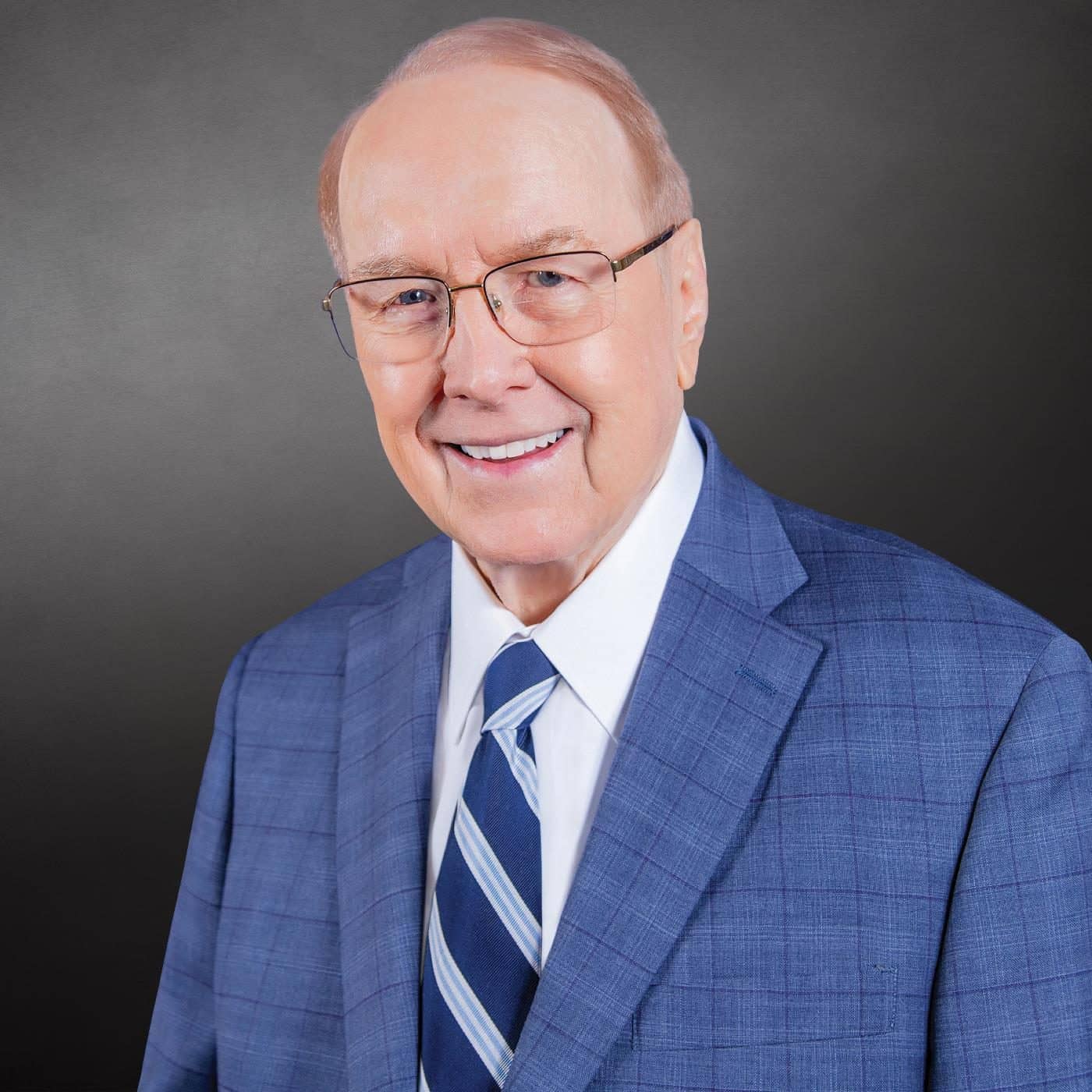


In this deeply insightful episode of Family Talk, Dr. James Dobson engages in a compelling dialogue with Sharon Hirsch, exploring the emotional struggles of teenagers. As they delve into issues such as eating disorders and the desire to belong, Sharon provides practical advice for parents yearning to reconnect with their children. Tune in for guidance on how to support your daughter through her adolescence and build resilient family bonds that withstand life’s upheavals.
SPEAKER 03 :
Hello, everyone. You’re listening to Family Talk, a radio broadcasting ministry of the James Dobson Family Institute. I’m Dr. James Dobson, and thank you for joining us for this program.
SPEAKER 02 :
Well, welcome to Family Talk, the broadcast ministry of the Dr. James Dobson Family Institute. I’m Roger Marsh, and if you’re the parent of a teenage daughter, you’ve probably heard those heart-stopping words, Mom, I hate my life. Well, maybe you’ve even heard the even more painful version that ends with, and I hate you, too. These emotional outbursts can leave parents feeling helpless and confused, wondering, where did they go wrong? Well, on today’s edition of Family Talk, Dr. Dobson continues his conversation with counselor and author Sharon Hirsch about navigating the turbulent waters of adolescence. Sharon has spent years helping families rebuild relationships that seem to be beyond repair. Her book, Mom, I Hate My Life, offers both hope and practical guidance for parents struggling to connect with their teenage daughters. On today’s program, Sharon will tackle some of the most challenging issues facing families today, eating disorders, depression, self-harm, even thoughts of suicide. These are not easy topics to discuss, and if you have young children with you, you’ll want to go to drjamesdobson.org forward slash family talk and listen to the program at your own discretion. Now, these aren’t easy topics to discuss, but they’re conversations that we simply can’t afford to avoid. So here now is Dr. James Dobson to begin part two of his discussion with author Sharon Hirsch on today’s edition of Family Talk.
SPEAKER 03 :
Sharon, let’s get right into it. Your book, Mom, I Hate My Life, has such practical information in it, and it was written specifically to help strengthen the mother-daughter relationship. Now, I don’t want to go back to all the things we said yesterday, or we wouldn’t get onto the new material, but you have counseled many teenage girls who are going through this kind of difficult time of life. And that title for your book came from your own experience and observation, didn’t it? There are those moments when teenage girls especially will say to their mom, I do hate my life. And they imply that it’s probably your fault.
SPEAKER 01 :
I suspect many moms listening yesterday heard the title and thought, my daughter has said that and she hasn’t known what to say in response. I mean, whoever dreamed that that little baby that we brought home from the hospital or even for those adoptive moms out there who’ve adopted would think that that little sweet.
SPEAKER 02 :
Yeah.
SPEAKER 01 :
precious baby girl would grow up to say, I hate my life. And mom is thinking, well, I’ve tried so hard to give you a good life.
SPEAKER 03 :
And I hate you. That’s even more hurtful.
SPEAKER 01 :
It is hurtful.
SPEAKER 03 :
And it is very common for kids to say that to their parents.
SPEAKER 01 :
Especially to moms who, as we said yesterday, often become the target. for all of this emotional upheaval that goes on in a girl’s world.
SPEAKER 03 :
Yeah, I think of the typical experiences in a loving home where mom has given a birthday party for the child every year, invited friends in, there’s been a cake and there’s been laughter and games and so much love and all of this kind of thing going on through the years. And suddenly that individual, that child, turns 13 and says, I hate you.
SPEAKER 01 :
It makes no sense at all. It doesn’t make sense. And it sticks in the heart, doesn’t it? And there is so much about the adolescent girl’s world that doesn’t make sense unless moms will take a minute in the midst of the emotional chaos to remember what it was like to be female. And sometimes that can be helpful for moms to go back and remember what they felt like when they wanted to belong. And they maybe were coming to a new school or they had a boy that they were interested in. And how they dealt with their own emotional life sometimes can be powerful in connecting them with their daughters.
SPEAKER 03 :
Okay, at the end of the program last time, we promised to talk about specifics and get some advice from you on how parents can deal with these circumstances that unfortunately are very, very common today. The first one I want to talk about is the high incidence of eating disorders that are out there. It is a national epidemic today.
SPEAKER 01 :
It is. And I would say further that if a girl is not struggling with a specific eating disorder, that to be growing up female in America today is to struggle with body image. And so every teenage girl at times feels fat, does not like the way that she looks or was designed or that her body is structured. And that becomes the fertile ground. when you combine it with all this emotional angst that we’re talking about for eating disorders to develop. And so moms who are listening, take a deep breath. As we talk about some of the specific warning signs for these disorders, you don’t have to close your eyes and look the other way in fear. In fact, that anxiety will immobilize you. And so when our daughters say, Mom, I hate my life. Mom, I feel fat. Mom, I hate myself. And we’re tempted to roll our eyes and to think, oh, brother, you have everything. You have nothing to complain about. We miss an opportunity to get at what is beneath the surface.
SPEAKER 03 :
What’s usually down there.
SPEAKER 01 :
And what’s usually down there is two things. First of all, I want to belong. especially as females. I believe we were made, designed with a design to connect. And we were born into relationship, created for relationship. And teenage girls, when they come to see me and they begin to read their poetry to me and talk about their angst, almost immediately I begin to hear these themes of, I don’t fit in, I don’t belong, I’m I’m not with the popular kids. I don’t have a boyfriend. What they don’t know is that every teenage girl feels the exact same thing. So letting our daughters express that, though, without telling them, well, of course you belong. You have this friend and you have youth group and you’re a part of this soccer team. Letting them express how they feel. we can affirm their need to belong and let them talk about it and get those emotions out. You see, eating disorders develop when emotions go underground. And that’s the second component. It is that girls somehow feel ashamed or shut down or unable to express themselves. And so food becomes a soother, a companion, a medicator.
SPEAKER 03 :
A weapon.
SPEAKER 01 :
Or a weapon sometimes. I’m not going to eat. I’m going to be in control. I’m not going to feel things. All along the spectrum of the eating disorders, eating disorders have to do with emotional expression.
SPEAKER 03 :
All right, help parents recognize the symptoms of it because it can happen right around you. It’s always a shock. And it shouldn’t be really because there are certain characteristics and there are certain physical changes and things that people should recognize but talk about.
SPEAKER 01 :
And depending on which eating disorder you’re talking about, if you’re talking about bulimia or anorexia, anorexia is where you starve yourself and bulimia is a disorder where you may binge and then purge.
SPEAKER 03 :
Vomiting deliberately.
SPEAKER 01 :
This is where it can all go haywire, where she can begin to think, you know, maybe if I don’t eat anything, then I’ll really get skinny. And she discovers when she doesn’t eat anything or she begins to push aside food on her plate or maybe she’ll only eat certain foods or she won’t eat but one meal a day. Or you’ll notice that she’s drinking a lot of water or exercising a lot. You’re dealing with more anorexic behaviors. Yes. And the time to intervene in an eating disorder is when you first start to see something. I hear moms say, well, I didn’t want to say, I was afraid to say something because I didn’t want to plant the idea in her head. If your daughter is in the culture today, the idea is already in her head. And she is talking about it. She’s talking about it with her peers. Teenage girls bond over talking about their diets and their bodies and their exercise. how far better for them to be able to talk about it with their moms. And I encourage moms to say, I’ve noticed something. I’ve noticed that you’re not eating, or I’ve noticed that you’re going to the bathroom after every meal. If I suspect there’s an eating disorder going on here, because mom is saying, I know about eating disorders. If I suspect something, then you need to know that I’m going to be finding us a counselor to talk about, and we’re going to be talking about these things. I will not turn my head the other way while you get a full-blown eating disorder.
SPEAKER 03 :
Leave me alone, Mom. It’s my life. It’s none of your business. I’ll eat what I want to, and I’m not going to listen to you. So get off my case.
SPEAKER 01 :
And let me talk back to you and say, in some ways, you can eat what you want. But I am not going to look the other way. I love you too much to ignore things that I know could be potentially dangerous. And this is where moms once again have a power because really to be female in America is to struggle with body image. And so we can say to our daughters, listen, I know what it’s like.
SPEAKER 03 :
I resent that, by the way. Yeah, I really do. I resent a culture that takes these vulnerable kids. As you said, the girls are born into relationship. That is extremely important to them. And at that time of great vulnerability to have the culture, just throw that stuff at them and twist and warp them. I do resent that. I resent what Hollywood is doing.
SPEAKER 01 :
And it breaks my heart for teenage girls because I see these wonderful, amazing girls come into my office who should be excited about playing volleyball or writing poetry or playing music or sharing their faith, they’re concentrating on their thighs or how big their stomach is or what size they wear. And it has saddened me and made me passionate for teenage girls that they were made for so much more than this. And Even my own dear daughter, when she’ll say to me, now, Mom, remind me. Remind me why God made me this way or remind me why I’m not just going to quit eating tomorrow because I feel so fat tonight. I will say to her, because Kristen, you were made for so much more than just to obsess about a dress size or a number on the scales. And as moms, we can most powerfully do this when we say to our daughters, I understand. I’ve been on a diet. I’ve thought I was fat. I can see how you would get obsessed. And I can also see how it can take you down destructive paths. I’m not going to turn the other way while this happens.
SPEAKER 03 :
Now, if you have this continuing conflict over food, you see it coming, the child will not respond to you. You do seek out help. Where do you go to find it?
SPEAKER 01 :
Especially in this field of eating disorders, it’s so important, Dr. Dobson, to talk to a counselor who involves, if not the family, at least the mother in the counseling. I have seen so many teenage girls in my practice who have gone through some eating disorder counseling, and they maybe leave the counseling without the eating disorder, but they hate their parents. And their mom has become the blame for everything. And what’s unfortunate about that is the counselor is not there when it’s her birthday or when she needs help with her homework or when her heart is broken over a boy. It’s mom who’s there. And that relationship needs to be healed and restored. So look for a counselor that works with mother-daughter.
SPEAKER 03 :
You’re one of them.
SPEAKER 01 :
I am. And I have seen powerful healing, especially in the realm of eating disorders, as that relationship is healed. And then you can also talk to other people in your church, in your school, whose daughters have maybe gone through similar things. This means, moms, we have to be able to be courageous, tell the truth about some of our struggles. That’s a hard one.
SPEAKER 03 :
They don’t want to admit it. I mean, people will hide this when they won’t hide anything else. If their kids are going through this kind of adolescent rebellion, every impulse is to keep quiet about it.
SPEAKER 01 :
It is, and I think that’s because we have maybe taken things too personally or believe we’re too responsible for the outcome of our children’s lives. But we suffer, and our children suffer as well. It is a wonderful model to our children that when we are struggling, we get help. And so I encourage moms whose daughters may yell like you did in our little role play and who may want nothing to do with counseling to say, we need help. Make it about the two of you and say, even some moms I’ve heard say to their daughters, okay, I’m going to go even if you don’t go. I’m going to find out some things so that we can begin to make some changes in our family.
SPEAKER 03 :
On some occasions, you need to seek out a physician, don’t you?
SPEAKER 01 :
Absolutely. Depending where you are on the continuum of eating disorders, and this can maybe lead us into the next subject of talking about depression. Studies have really confirmed that often when girls are treated for depression, their eating disorders go away. And so seeking a good physician who understands adolescence and understands eating disorders or a psychiatrist who specializes in adolescent girls can sometimes help get to the root of some of these emotional issues that we’ve been talking about. And that can help with some of the acting out that our girls do with eating disorders or self-mutilation, cutting themselves.
SPEAKER 03 :
All right. I want to make sure we cover some of those other topics. I mentioned last time that I wanted to talk to you about conflict between mothers and daughters with regard to clothing. Yes. Kids tend to want to be very suggestive today. They want to show as much skin as possible, and that’s what their friends are doing. And it drives the mother crazy because she knows that’s not only wrong, but that it leads to behavior that’s harmful. And she just says, you know, you think you’re going to tell me everything to do in my life? You’re trying to tell me even what to wear? You know, this is my life. This is not your life. You’ve heard all this before.
SPEAKER 01 :
I have, and I think of moms out there who are – really well-meaning and trying to control the situation. And so they go into their daughter’s room and they look through everything and they pull out everything they don’t like. Or they look through her backpack and discover that she’s taking one outfit to school to wear and she’s wearing something else at home. And I understand that this is disturbing behavior. And that especially sometimes when we as parents are maybe too focused on the outward appearance as well. Because we… Parents have peer pressure too. Sure do. We get so entangled in some of our daughter’s fads of the moment that we create a power struggle in which most adolescent power struggles, the parents lose. And so I encourage moms with regard to the clothing. Obviously, you’re going to have standards in your home and you have to understand your child’s because every girl is different, the reasons why she’s attracted to a certain behavior. I encourage moms, I know this is hard, and this is where you need other moms to talk to. If you can develop a sense of humor about some of this as well, it does not come down as such swooping control. Because when moms are calling and telling me they’re so distressed because their daughter wants to wear a low-cut shirt, I know their distress is real. But if they make this the battle that they want to bleed and die in, there are going to be battles down the road. And so to show your daughter that you can be an ally, I remember when the whole belly-bearing craze began. And my daughter was certainly interested in showing off her belly button. And I remember saying to her, we went and looked through a magazine, and I said, let’s count all of the bellies that we see in this magazine. And we probably counted 36 in one magazine. And I said, what is the big deal with this? I don’t understand it. And my daughter just said, well, I guess, Mom, if you look good, you want everybody to know it. And so I said, well, let’s go into my closet. And I said, I think maybe I’m going to start dressing this way. She was about 13, and her eyes got really big. Don’t you dare, Mom. And we both decided that I would not look good in that style. But I think it kind of lightened the moment and allowed her to know, I am going to give you some guidance and direction here with regard to dress. But you know what you do when you get to school, I don’t have control over. And I would rather us have a relationship in which we can talk about these things.
SPEAKER 03 :
You have discussed that in your… In your book.
SPEAKER 01 :
Yes.
SPEAKER 03 :
Mom, I Hate My Life is the name of it. It’s published by Shaw. And we’re talking to Sharon Hirsch. Say what you’re about to say.
SPEAKER 01 :
And for moms who are thinking, does my daughter have bulimia? Does she have anorexia? Is she depressed? A lot of girls who struggle with emotional angst, there is a growing trend. They will cut themselves with pieces of a mirror or a pocket knife or pieces of glass. And, of course, this shocks and scares mothers to death. Get the book. It gives you all the indicators, things to look for.
SPEAKER 03 :
This is one we really need to focus on because it makes absolutely no sense to anybody. Why would a kid who wants to be accepted, why would a teenager – want to do something to permanently disfigure herself in the way that’s occurring. I mean, putting a tongue ring in the middle of the tongue where every word you say is affected by. That is absolutely irrational. Kids are doing this kind of stuff today.
SPEAKER 01 :
And the cutting, really, I will say to moms who call me desperate, it’s the most desperate phone call I get, just about. I’ve discovered that my daughter is cutting. She has scars on her arm. She’s carved a word or a design into her arm or her thigh. And, of course, mothers are scared to death. Just as eating disorders are about emotional expression, cutting is totally about emotional expression. It’s a girl saying, sometimes what you just said, I don’t belong. I don’t fit in. And because I cannot find a way to be accepted in this culture of appearance obsession, I’m going to go ahead and show my anger and frustration with this culture and with my peers who are so harsh and cruel by cutting myself. Oftentimes, it’s a girl who feels like she has no outlet for emotional expression. Some of these girls have told me they’re in their bedroom by 8 o’clock at night. Their parents are watching TV. They may be like most of the families of adolescents in America where there are eight minutes of meaningful interaction a day. Well, girls need a lot more interaction than that. We have a lot of words inside of us.
SPEAKER 03 :
Where do you start as a counselor to reach a kid like that?
SPEAKER 01 :
I get her to talk about what’s going on in her inner world. And I will say to her, go home and write down everything that you’re angry about, everything that you feel like has been taken from you that you’re upset about. And mom sometimes will look at me and say, you want her to focus on her negative feelings? We want her to get out of them. But what she needs is someone to hear them and to say, of course you feel that way. It is a hard, cold world out there. Yeah.
SPEAKER 03 :
Sharon, you call that the hieroglyphics of hurt. Yes. What a great phrase. I mean, that really does describe it. Talk about suicide and especially the warning signs.
SPEAKER 01 :
And that is the scariest time for a mom. When a daughter begins to withdraw, to exhibit for more than certainly two to three weeks problems with sleeping, eating. She’s dropped out of her activities. She seems joyless. Maybe she is saying things like, I wish I could die. Moms, if your daughter is in angst and says that, you need to ask her, be brave. Ask her, have you thought about how you would do something like that? That gives you an indication as to whether she’s really formulating a plan in her brain. And if she is, you need to get her in to help immediately. Absolutely. And you say to her, I understand you are hurting. We need to go see someone. I understand you don’t want to. I will take us. And I promise you that I will be there for you and support you. But this is going to be something we are going to walk through together.
SPEAKER 03 :
Big, big problem. One in five teens… considers suicide. Fortunately, most don’t do it, but one in five does. That’s 20%. That is scary. And four out of five individuals that succeed in killing themselves are boys. So it’s an even bigger problem there. The girls are more likely to
SPEAKER 01 :
Talk about it.
SPEAKER 03 :
Talk about it and even to try it. The boys are more likely to do it.
SPEAKER 01 :
And because girls are talking about it, once again, we have this great opening into their lives.
SPEAKER 03 :
You’ve got to be tuned in. During these teen years, you have got to listen. You’ve got to pay attention. Your daughter, Kristen, we said this last time, your daughter, Kristen, has just gone off to college. We’ve got 30 seconds left. Tell us what you learned from her.
SPEAKER 01 :
Well, I tell her often that she is my hero because what I learned from her is that it’s possible to be in the midst of this culture which assaults you and bombards you. There were days that I would pick her up and she would get in the car and she would just sob. Kristen was very active in high school life. She was a cheerleader, an athlete, and yet she held on to her values. And, you know, I think she would tell you if she were here that part of that came through hours of conversations where sometimes I thought I am too tired to talk about this again. And yet now as she’s on her way. I would take a thousand more hours for those conversations if I had them.
SPEAKER 03 :
And you couldn’t get one more of them. You couldn’t retrieve anything from childhood. Your record’s in the books, and apparently you did the job very, very well. Our guest is Sharon A. Hirsch. She is the author of the book, Mom, I Hate My Life, Becoming Your Daughter’s Ally Through the Emotional Ups and Downs of Adolescence. This is a good book for the parents of teens, and I do recommend it. And Sharon, thank you for two wonderful programs. You did a great job. Thank you for having me. Appreciate you being here today. It’s a pleasure to get acquainted with you. And I’m sure we’ll talk to you again when you write your next book. Thanks, Dr. Thompson. God bless you, friend. You love the Lord, don’t you? Yes. Yeah, and that got you through too.
SPEAKER 01 :
It did. Oh, nothing more than that.
SPEAKER 03 :
Well, it’s a pleasure to have you here.
SPEAKER 01 :
Thank you.
SPEAKER 02 :
You know, sometimes the deepest wounds become the most meaningful scars, reminders of our battles fought and won and the love that carried us through. You’ve been listening to Family Talk and a candid conversation between Dr. James Dobson and counselor and author Sharon Hirsch about the serious challenges facing today’s teenagers. If you missed any portion of today’s broadcast, or if you want to go back to listen to part one, you’ll find both parts one and two at drjamesdobson.org forward slash family talk. And remember to check out Sharon Hirsch’s book, Mom, I Hate My Life, Becoming Your Daughter’s Ally Through the Emotional Ups and Downs of Adolescence. You’ll find information about the book and the broadcast when you go to drjamesdobson.org forward slash family talk. Remember, you can also connect with us on social media as well at for daily inspiration and family encouragement. You can follow us on X, Instagram, YouTube, and Facebook for ministry updates, program highlights, and practical tips for strengthening your family. Just search for the Dr. James Dobson Family Institute when you search any of these platforms. Here at the James Dobson Family Institute, we’re committed to strengthening families through biblical truth and practical guidance. Our mission is very simple. It’s to help preserve the institution of the family while sharing the gospel with as many people as possible. Programs like the one you heard today are part of our ongoing work to support parents facing difficult seasons with their kids. These broadcasts are made possible through the generous support of friends like you and also because of your prayers as well. If today’s conversation about navigating the challenges of raising teenagers has been helpful to you, please consider partnering with us. You can make a donation over the phone when you call 877-732-6825. You can also make your donation through the U.S. Postal Service. Our ministry mailing address is Dr. James Dobson’s Family Talk, PO Box 39000, Colorado Springs, Colorado, 80949. Or you can give a gift online. Our website is absolutely secure to receive your donation when you go to drjamesdobson.org. Well, I’m Roger Marsh, so glad to have had you with us today. Be sure to join us again next time for another edition of Dr. James Dobson’s Family Talk. This has been a presentation of the Dr. James Dobson Family Institute.