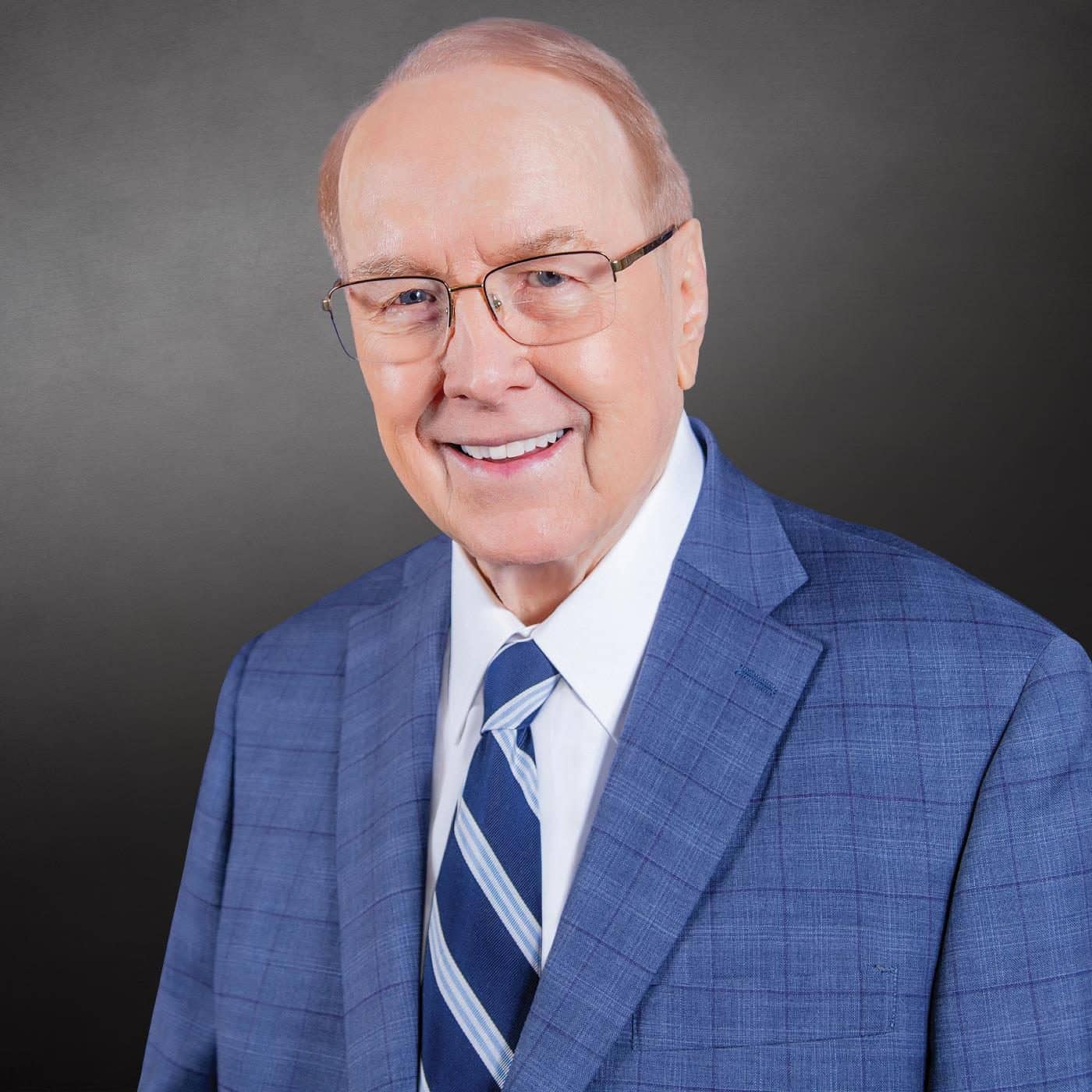


Join us on a profound exploration of encouragement’s impact, featuring Florence Littauer’s inspiring presentation from Dr. James Dobson’s Family Talk. Florence offers personal anecdotes and biblical wisdom to illustrate how uplifting words can unleash dreams and nurture growth, even long after they are spoken. Delve into stories of personal triumph and reflection in the face of discouragement, and learn the timeless value of offering others a season of singing with your words. This episode is a heartfelt reminder of the enduring influence of kindness.
SPEAKER 01 :
Welcome everyone to Family Talk. It’s a ministry of the James Dobson Family Institute supported by listeners just like you. I’m Dr. James Dobson and I’m thrilled that you’ve joined us.
SPEAKER 03 :
Well, welcome to Family Talk, the broadcast division of the Dr. James Dobson Family Institute. I’m Roger Marsh. Have you ever noticed how certain words can completely change the direction of someone’s day? A simple, you can do this, to a nervous child before a school presentation, or an unexpected, I’m proud of you, from a parent. Even a genuine thank you to a grocery store clerk who’s been on her feet all day long. You know, words do carry extraordinary power. They can lift spirits that have been crushed by disappointment. They can breathe courage into hearts paralyzed by fear. Or sadly, they can also tear down in seconds what took years to build up. In Proverbs 18.21, we read that life and death is in the tongue. and those who love it will eat its fruit. Today on Dr. James Dobson’s Family Talk, we’re sharing a timeless message from the late Florence Littauer about the incredible gift of encouragement. Florence grew up during the Great Depression in just three rooms behind her father’s general store. And yet from these humble beginnings, she became a best-selling author. She wrote 40 books, including the classic Personality Plus, which sold more than 1.5 million copies. Now, in July of 2020, Florence Littauer passed away at the age of 92, but the wisdom she shared continues to transform lives even today. In the presentation you’re about to hear, you’ll hear her talk about her book called Silver Boxes, The Gift of Encouragement. Florence will challenge us to think of every word we speak as if it were a beautifully wrapped gift, a silver box with a bow on top that we’re presenting to the person who’s listening to us. Through deeply personal stories from her own childhood and family, Florence will show us how encouraging words can unlock potential we never knew existed, while discouraging words can bury dreams for decades. Whether you’re a parent, grandparent, teacher, or friend, this message will forever change how you view the simple act of speaking. So now, let’s listen in to a message that Dr. Dobson says is one of his favorites. Florence Littauer, reminding us why our words matter more than we ever imagined, right here on today’s edition of Dr. James Dobson’s Family Talk.
SPEAKER 04 :
I was sitting in a church and I was just one of the people in the congregation. And as I was sitting there, the pastor looked down at me and he said, I see that Florence Latour is in our audience this morning. He said, I think it would be nice if we had her come up front and say a few words. So I got out of my seat and started up the aisle. As I started up the aisle, he looked down and he said, in fact, why don’t we have Florence do the children’s sermon this morning? And as I was coming, trying to figure out what I was going to do with this situation, I noticed that little children were coming out of all the aisles. I mean, he had little children coming up front. They were used to this. They knew what happened every week. And all of the children came up front so that by the time I got to the front, there was this whole group of children in front of me. So as I looked at this little group, I thought to myself, what am I going to say to them? I’ll teach them a verse. The verse that came to my mind immediately was a verse that we had used with our children. And the verse is Ephesians 4.29. Let no corrupt communication proceed out of your mouth. but that which is good to the use of edifying, that it may minister grace unto the hearer. And they all looked wide-eyed, and they said, like, oh. And I said, do you think you can understand that? Oh, they didn’t know if they could understand that or not. I said, well, let’s start it right at the beginning. It says, let no corrupt communication. I said, now what is corrupt communication? One little boy spoke up and he said, being nasty to your mother. I said, that’s right. Don’t do that. That’s bad. And they all agreed that was bad to do. We shouldn’t try that one. And we went on and they pulled out little things, what it meant, all kinds of bad things to say. Then I said, all right, that’s what the verse says we are not to do. Now let’s look and see what should we do. So it says that we should let no corrupt communication proceed out of our mouths, but that which is good to the use of edifying. What does edifying mean? Well, they look kind of wide about that. That’s a big word. And then one of the boys said, build up. I said, that’s right, build up. That our words are supposed to build up other people. Then I went on to the next part of it. It says, not only is it good to the use of edifying, but it is to minister grace. That’s heavy stuff for little children, Minister Grace. So what does it mean, Minister Grace? Somebody had taken a class somewhere that said that grace was God’s unmerited favor. So this little child spoke up, God’s unmerited favor. I was amazed at the size of this child that they knew that little phrase. They didn’t have any idea what it meant, but they knew the words. Somebody taught it to them. So I said, all right, that’s good. That’s wonderful. That that means that God has given us a favor. That’s what grace is. So if I’m to give you grace, I’m to do you a favor. So now how could I do you a favor? Well, we went from favor into present into gift. And then we came up with, yes, every word that comes out of my mouth should be like a present. I should give you a present with my words. And I went on with that for a while with them. And as I did, one little girl, and I’ll never forget this little precious child. She stood up at the end of the row. She turned to all the people and she said to them, what she means is. Amazing how a little child shall interpret it so the adults can understand. And she said, what she means is that our words should be like a little silver box with a bow on top. I looked at her and I said, that’s right. And I’ll never forget, even though I have no idea what that little child’s name was, but I’ll never forget her saying, what she means is… Your words should be like a little silver box with a bow on top. Just the last year and a half that I’ve been working with this little concept off and on, it’s made a difference to me. It’s made me measure my words in a different way. I began to think back, and I said to myself, how have you spoken to your children? And as I thought about it, I realized that it was easy for me to give silver boxes to my daughter, Marita. She and I have always agreed on everything. It was not hard for me to give silver boxes to Lauren. She always did everything right. Now you might say, isn’t that wonderful? She’s had these two perfect children. But now I have an adopted son. Adopted son Fred is nothing like me at all. He and I have never had two thoughts in our entire lifetime that coordinated. And I began to think about what had I said to him. And I remembered one day when he came home and he said to me, Mrs. Johnson said that I have a charming personality. Now, I don’t know what you parents would have said, but before I even had a hesitation for a moment, I shot out with the comment, I’d sure like to see some of that charm around here. Now, when you put that in the context of the silver box, Mrs. Johnson had given Fred a silver box. And what had I done? I, as the mother, had taken away the praise he’d received. I look back at my childhood and I wondered, Where did I get the affirmation? How did I go from being a child in three rooms behind a store without a ghost of a chance to amount to anything, remembering the lady that looked at my two brothers and me during the depression as we stood in the store, and as she looked at us, she said to my mother, it’s a shame there’s no hope for those children because they appear so bright. And that wasn’t a silver box. And I remember that, and I remember saying to myself, Florence, you’ll show that lady. And I worked to get there, but I thought back, I thought, how did you do it? Who encouraged you? And as soon as I began to think about it, as you might begin to think about your childhood, I realized that even though my mother never gave me a lot of affirmation, and when I asked her why she didn’t compliment me, she said, you never know when you’re going to have to eat your words. Mother was always afraid she’d have to eat a few words. She felt it was better not to say any than to have to eat them. So I thought about it. I thought, well, where did I get my affirmation? And I realized I had a father who was affirming. I had a father who was constantly giving us positive words, who was positive every single day, who was lifting people up, who during the depression in our little store, people would come to our store just to hear my father’s encouraging words. I remember back to my senior year in college, and I came home, he said to me one day, right after Christmas, Florence, come in the back room, I want to show you something. So I went into the back room with him, he never took me there, he never left out of the store, and we went back into this little tiny den, which was the only little haven we had, a little den with two pieces of furniture, a piano on one wall, and a couch on the other that opened up, and when you opened it up, you could sit on the end of the couch and play the piano. That’s the size of the room. So here it was, you had wall-to-wall bed. And we went in there that day, and my father reached behind that piano. You know those upright pianos that have all the little holes in them? My father reached behind the piano, brought out this little box, little cigar box, and he opened it up. And I looked at it, and I said, what’s that? He said, it’s a box that I had, and I hid it away. And he said, somehow today I felt like showing you this box. And I looked in there because I’m a curious person. If I’d known there was a box tucked away, I would have been looking at it. But I didn’t know it was there. And he showed it to me. It was full of clippings. And I looked in there. They were newspaper clippings. And I said, what are these? He said, these are articles that I’ve written. I said, you can write? I said, why didn’t you tell me you could write? It was almost like I deserved to know I had a smart father. Why hadn’t he told me before? And I said, why didn’t you tell me that? And he said, because your mother always said, because you don’t have an education, you shouldn’t try to write. What if you tried and it wasn’t any good? We’d all be humiliated. My mother was always afraid we’d be humiliated. So she never encouraged us to do anything, to take any risks or any chances. So my father, he said, I knew I could write. He said, I knew inside of me there was an ability to write. So he said, I would write when your mother was out and I would write and I would send it into newspapers and I’d watch the newspaper until it came out and then I’d cut it out and I’d put them all in this box. And he said, somehow today I wanted to give you the box. And I took that box and I looked through it. I couldn’t believe all these things my father had written, important things. And as I got to the bottom, there was a letter in there from the United States Senate. I always have been interested in politics. I’ve always been interested in personalities. And it was from Henry Cabot Lodge, Sr. And I opened up this letter and it was to my father. And I said, what did Henry Cabot Lodge write you for? And he said, well, I wrote him a letter telling him how he should run his campaign better. And he said, because of that, he wrote me back a letter. And it was a personal letter, two pages typed. And it said, dear Walter Chapman. And then it went down. This idea was very good. I will implement that in my next campaign. This idea I cannot use for this reason. And he enumerated everything, two pages, answering my father’s letter, sharing with him what he liked about what he’d said and how he thanked him and appreciated what he’d done for him. As we left that little room to go back into the store, my father put his hand on my shoulder and he looked at me and he said, Florence, I think I tried for something too big this time. And I said, what’s that? He said, well, I wrote into our denominational magazine and I told them how they ought to change the way they chose the nominating committee for the national convention. And he said, it’s been three months now and they haven’t published it yet. And then he looked at me again and he said, Florence, I guess I’ve tried for something too big this time. Those were the last words my father ever said to me because the next day my mother and he took the first day off they’d had in 20 years. I stayed home and took care of the store with my two brothers. My mother and father went into Boston at four o’clock in the afternoon, walking through the subway station in Park Street in Boston. My father dropped to the pavement. At the morning of the funeral, I was sitting in the store opening up. the cards that had come. For those days, many cards had come because, you see, everyone loved my father because he gave them encouraging words. And as I opened up these cards of sympathy from all the people that came into our store, I noticed the magazine, our denominational magazine. I never would have looked at it at such a time except my father told me. I opened up that magazine and looked through it, and inside, there was my father’s article. I’m so grateful today that my father showed me that box because, you see, I have those clippings. And I have framed on my wall at home, I have the article from that magazine and a picture of my father. And I also have the letter from Henry Cabot Lodge Sr. And I went back to Boston and I got a picture of him. And I have Henry Cabot Lodge and his letter and my father and his article. And I have those framed on the wall in my study so that every day as I pass by, I’ll remember the value of an encouraging word. Because, you see, my father had a box of broken dreams. Things he could have been if only someone had encouraged him.
SPEAKER 03 :
You’re listening to Dr. James Dobson’s Family Talk, and I’m Roger Marsh. And if you just joined us, we’re sharing a timeless message from the late Florence Littauer on the power of encouraging words. Florence was a bestselling author of more than 40 books and is best known for her work, Personality Plus, which has helped millions of people better understand themselves and others. Her message today comes from her book called Silver Boxes, The Gift of Encouragement, where she challenges us to think of our words as gifts we give to others. Here once again with the conclusion of today’s presentation is Florence Littauer on this edition of Dr. James Dobson’s Family Talk.
SPEAKER 04 :
One time I sat down with my husband’s mother. We’d never had anything much to say to each other. She seemed to be a superior being. She seemed to be above everybody else. She was elegant and beautiful, said the right things, did the right things, had the big home, knew how to pour tea out of silver pots, all the things I’d never learned. I looked at her with envy all my life. I was afraid of her because she was so put together. So I never really had a one-to-one conversation with her until this one night just a number of years ago when I sat with her in her living room and I didn’t know what to say to her and I asked one of those trite questions. I said, mother, what was it like when you were young? not knowing what I’d get for an answer, and she said, oh, immediately she said, oh, I remember when I was in college, I had this boyfriend, and I was so in love with him, we were going to get married, and she went on telling me about this, and I looked at her wide-eyed, I’d never thought of my mother-in-law having a boyfriend, somehow it just didn’t seem to make sense, and as I looked at her, and so I said to her, well, tell me about it, mother, and she told me that she and he were going to get married, and when they graduated from college, we went two separate directions for the summer, he was going to call me in the fall, and we were going to get married. I said, well, what happened? She said, well, when the fall came, he never called. I never heard from him again. I said, well, what did you do? She said, well, I cried a lot. Tears came down her cheeks. I’d never seen my mother-in-law relaxed. I’d never seen her real. But as I talked to her, she cried and she said, he never called me. My mother didn’t like him anyway because he didn’t come from a rich enough family. And her mother’s theory always was you could marry and fall in love with a rich man as well as a poor man. That was her family motto. She said my mother didn’t like him anyway. She said after a while my mother introduced me to Fred Littauer and she said I married him on the rebound. Then she looked at me and she said I never was in love with him. This is Fred’s father. And I looked at her and I said, you weren’t? She said, no, I did the right things. I played my role. And she said, I had the five children and I was the good wife. And as she said this, she is crying. And she said, but I never was in love with him. What did that make me feel about my mother-in-law that I’d been judgmental and negative about? That I thought this is a cold lady? I never knew she’d had a problem like that before. And I looked at her with a different feeling. And then she said, but that’s not the end. She said, a couple of years ago, I went to a party. She’s in her 70s then. She said, I went to this party. She says, I looked across the room and there was this man standing there. And she says, I looked at him and she says, he looked like that young man that I’d been so in love with. She says, I walked across the room to get a view so I could look at him. And she says, when I got near him, he turned and he looked at me and he said, you’re Marita. And she said, I looked up at him and said, you’re John. And she said, I started to talk with him as I looked at him and I said, would you answer me one question? Why did you never call? She said, he looked at me and he said, oh, I called many times. And each time I got your mother, And each time your mother said she doesn’t love you, she doesn’t want to hear from you again, please don’t call. And he said the last time I called, your mother said she’s engaged to marry someone else. Don’t ever call again. She looked up at me and she said in tears, my mother’s words ruined my life. What a different feeling I had about my mother-in-law that day. How bad I felt for the judgment that I had put upon that lady in years past. How aloof I’d felt she was. How artificial. And all the time she was hiding a broken heart. I said to her, mother, what would you have been if you could have been anything you wanted to be in your life? She said, oh, I would have been an opera singer. I said, an opera singer? I didn’t even know you could sing. She said, that’s because I’ve never sung since I got out of college. I said, did you sing before? She said, I majored in music. I’d never known that. Of course, I’d never asked her. She said, I majored in music. And she said, I wanted to be an opera star. I said, why didn’t you go and do it? She said, because my mother said, there’s no money in that. You’ll never make it. You don’t have enough talent. Come into the family business, and that way you’ll be secure. That way you’ll have money. And she said, so I gave up singing. And she said, but inside, I’ve always wanted to be an opera singer. I never knew that about her. I didn’t know she had any hidden desires. And then she got up from the chair and she went down the hall. She came back with a box. She pulled out some pictures. And in it was this picture. She said, I want you to see this picture. She said, this is a stage set. She said, because I want you to know that I did once have the lead in an opera. She says, it was my senior year in college. She says, here I am, right here in the center. She said, I’m that one in the wing chair. And she said, these are all the cast around me. She said, I had the lead in the opera. Now she gave it to me. She said, here, you take this picture. Your daughter’s named after me. Give this to Marita. I want her to have it. I want her to know that her grandmother could have been something if she’d ever had the chance. If she’d ever had an encouraging word. If someone had given her a silver box. Oliver Wendell Holmes once said, many of us die with the music still in us. Fred’s mother died with the music still in her. My father died with the music still in him. Each one of them had a box of broken dreams, a box of clippings, a box of pictures, memories of what they’d done that no one knew about, that had never become fulfilled. Both of them died with the music still in them. During Fred’s mother’s latter years, when Fred and I went to visit her, her mind had totally left her. She could not communicate. She couldn’t say a word. We had no idea whether she could hear what we were saying or not, whether she understood anything. She was unable to articulate a word. I asked the nurse one day when I was down visiting her in Miami here in Florida, and I said, does mother ever talk? She said, no, she never says a word. And then she looked at me, she said, but that’s the strangest thing, that every once in a while, she’ll stand up and she’ll sing opera. Oh, isn’t it amazing what’s still in our minds? Many times our minds have forgotten what our heart still remembers. Her heart still wanted to be an opera singer. And the last night before she died, she stood up at the dinner table and the nurse told us that she stood there and she sang opera. And she said when she’d finished, I clapped for her and she held her hands and she bowed and she bowed. You see, the opera was still in her. And she said, when I went in the next morning, she was asleep with her hands like this and a smile on her face. She died with the music still in her. In the Song of Solomon, it says, yes, the winter has passed. The rains are over and done. The flowers appear on the earth. The season of singing has come. Is there someone at home waiting for you to give them a season of singing? Who’s waiting for a word of encouragement from you? Yes, there may be somebody you know who has a song waiting to be sung. Perhaps who has a race waiting to be rung. Maybe a piece waiting to be played. Perhaps a scene waiting to be staged. A tale waiting to be told. Or a book waiting to be sold.
SPEAKER 03 :
Florence Litzauer’s father kept a hidden box of newspaper clippings for years, proof of dreams he was afraid to share with the world. How many of us are doing the same? We’re carrying our own version of that secret box, waiting for someone to believe in us enough to say, yes, you can do this. You’ve been listening to Family Talk and a classic presentation featuring the late Florence Littauer, author of the book Silver Boxes, The Gift of Encouragement. Her reminder that our words should be like beautifully wrapped gifts, silver boxes with bows on top, challenges each of us to become more intentional about the encouragement we offer to others. Now, if you missed any portion of today’s broadcast, or if you’d like to share Florence’s powerful message with a friend or a family member who needs that encouragement, go to drjamesdobson.org forward slash family talk. And remember to connect with us on social media as well for daily encouragement and updates. You can follow us on Instagram. X, YouTube, even Facebook to join our growing community of families standing strong together in faith. You’ll find inspiring quotes, helpful resources, and behind-the-scenes content that will certainly brighten your day. And we hope you’ve been touched and encouraged by Florence Littauer’s testimony on today’s edition of Family Talk. Programs like the one you heard just now are made possible through the generous hearts of listeners like you who believe families deserve biblical truth and practical wisdom. Now, if you want more hope-filled content for yourself, a stronger foundation for your family, and gospel truth reaching your community, we invite you to pray for us and partner with us. Your financial contribution of any amount helps us continue sharing God’s design for marriage and family with families all across America and literally all over the world. To make a secure donation online, go to drjamesdobson.org. That’s drjamesdobson.org. To make a secure donation over the phone, call 877-732-6825. That’s 877-732-6825. Or to make that secure contribution online, go to drjamesdobson.org. And I’m excited to share with you that we recently updated that drjamesdobson.org website. Now it’s even easier for you to find exactly what you need for your family. Whether you’re looking for past broadcasts like today’s program, in-depth articles on marriage and parenting or practical resources to help you navigate life’s challenges. Everything is organized and accessible right at your fingertips. You’ll discover a treasure trove of Dr. Dobson’s wisdom spanning decades, along with fresh content from trusted voices in Christian ministry. Plus, don’t miss the opportunity to sign up for our monthly newsletter while you’re online with us. This newsletter brings biblical insights and family resources directly to your inbox each month, helping you stay connected to the practical wisdom that transforms your relationships. Visit drjamesdobson.org today and explore all we have to offer you and your family. You can also sign up for the newsletter while you’re there. Well, I’m Roger Marsh, and on behalf of Dr. James Dobson and all of us here at the JDFI, thanks so much for listening today. Be sure to join us again next time right here for another edition of Dr. James Dobson’s Family Talk, the voice you trust for the family you love.
SPEAKER 02 :
This has been a presentation of the Dr. James Dobson Family Institute.
SPEAKER 01 :
Hello, everyone. This is James Dobson inviting you to join us for our next edition of Family Talk. Every day we come to these microphones with someone in mind, whether it’s a busy mom looking for tips on discipline or a husband who wants to learn more about connecting with his wife. We want to put an arm around your family in any way that we can. So join us next time for Family Talk, won’t you?