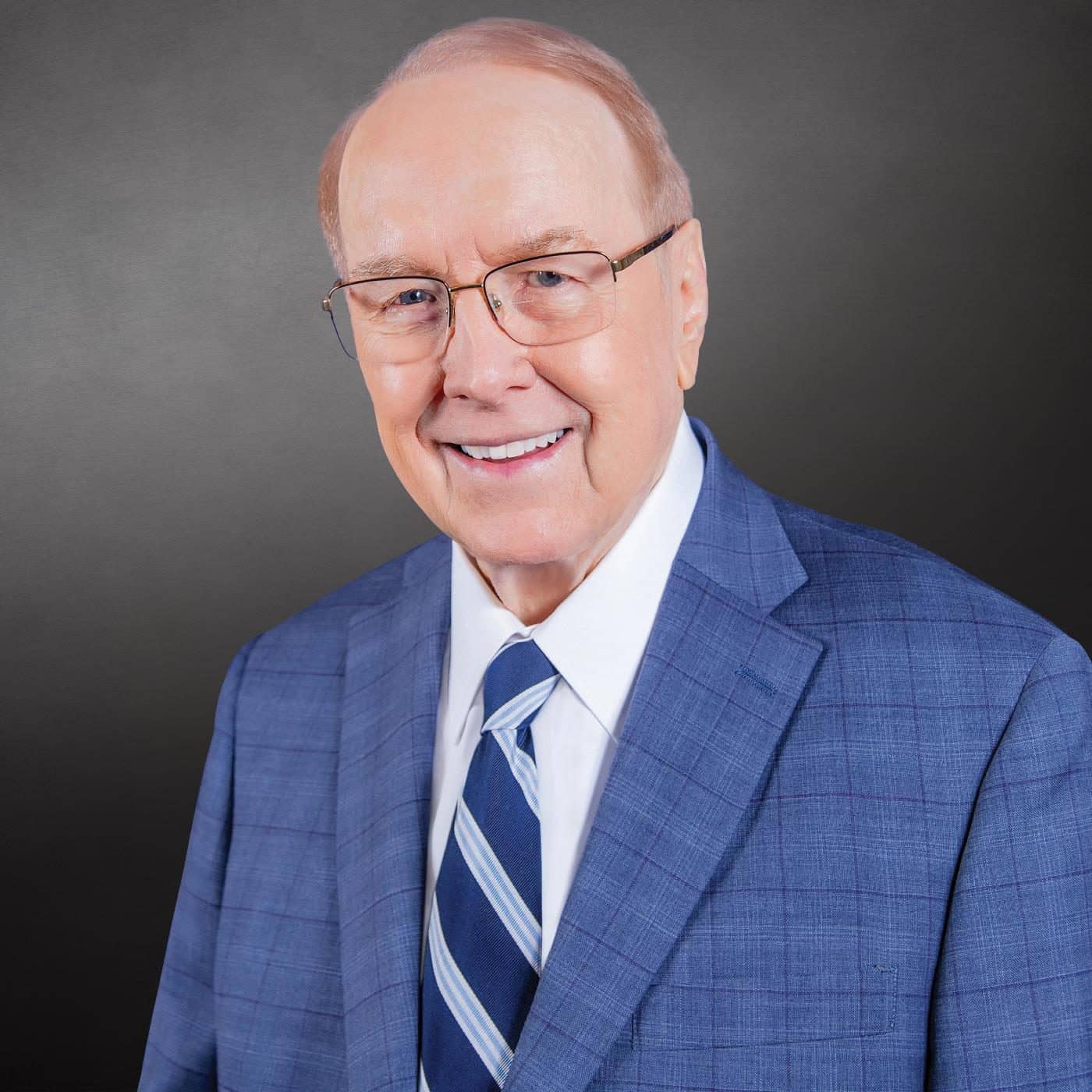


Rachel Denhollander joins Dr. James Dobson in a compelling episode that explores the pervasive issue of sexual abuse within institutions meant to protect the vulnerable. From her painful childhood experiences to confronting one of the most notorious abusers in sports history, Rachel’s testimony is both heartbreaking and inspiring. She candidly discusses the institutional failures that shielded perpetrators, emphasizing the urgent need for reform and accountability. This episode not only sheds light on the challenges survivors face but also celebrates the triumph of the human spirit. It’s a reminder of the power of truth and the crucial efforts needed by
SPEAKER 03 :
Well, welcome everyone to Family Talk, which if you listen to this program every day, you know is a production of the James Dobson Family Institute. I am Dr. James Dobson, and I really appreciate you joining us for this program, particularly today, because it means a lot to me personally. Before we get started, I want to let you know that the topic we’re going to be talking about is very troubling. to me personally and will be to you also. So it is intended for mature audiences. If there are those among you who have children around you who could be listening, I strongly recommend that you occupy them elsewhere. Today we’re going to be addressing the disturbing subject of sexual abuse, which has permeated every aspect of our society. I think many people have no idea just how ubiquitous it is. Some of those in positions of political power or social influence have stood by while innocent victims suffer irreparable damage at the hands of pedophiles. Whether that person is a man or a woman, a politician or an athlete, or a person of high social standing, or a well-liked coach, or a neighbor, or a university professor, we’re seeing abuse everywhere. And the assault on children and teens is just breathtaking. You know, when I served on the Pornography Commission some years ago, We heard testimony that indicated pedophiles typically abuse more than 300 children in the course of a lifetime. Why? How do they get away with it? Because the children don’t report it. They’re terrified by what they’ve been through, and they frequently do not even tell their parents. It’s a very sad thing. Of course, we’re all too familiar with the failings of the Catholic Church to report and stop sexual abuse of children in its care. So it’s a far-reaching problem in its impact. As Christians generally, we have to crush this evil. I have no language strong enough to express how I feel about it because it is being perpetrated on the most innocent members of society, those who cannot protect themselves. And my guest today is a prominent advocate and voice for those who have been victimized by sexual predators. Her name is Rachel Denhollander, and she is a survivor of sexual abuse herself. So she not only writes about it and is an advocate for changing the law in this regard, but she’s been through it herself. We’re going to talk to her today about her book, which is entitled, What is a Girl Worth? My story of breaking the silence and exposing the truth about former Dr. Larry Nassar and USA Gymnastics. She has a law degree and she’s a highly intelligent woman. And I’m delighted to have her here. Rachel, welcome to our program today.
SPEAKER 01 :
Thank you so much for having me on.
SPEAKER 03 :
Well, it’s an honor to have you with us on the program because of your courage and your willingness to confront evil, even at a personal cost. And we’re going to hear about that. Sadly, you were a victim of abuse first when you were a little girl, many years before you met Dr. Larry Nassar.
SPEAKER 01 :
I was actually first by a perpetrator in our local church and then again by Larry Nassar. So I very much fit the statistics.
SPEAKER 03 :
Did that first experience, that first assault, take place on church property?
SPEAKER 01 :
You know, that’s actually part of the misconceptions that a lot of people have with abuse is that things typically happen in classrooms and that if you just have good church policy, you’re going to be fine. Most abuse, including abuse in church, does not happen during class time. And in my case, it didn’t either. It happened on an off-church site Bible study, but the connections were through the church and the way that the church handled it and the way that they understood and counseled abuse was deeply problematic. And we saw those ramifications in my case and actually numerous other cases of abuse that the church handled.
SPEAKER 03 :
Well, how did the church handle it?
SPEAKER 01 :
Well, in my case, I had not disclosed the abuse, but there were trained sexual assault counselors in the church who saw the warning signs of just the grooming and just had deep concerns about what they were witnessing. And they brought those to my parents, and my parents responded immediately by taking steps to protect me and to put up good, healthy boundaries. And it really confirmed concerns that they had in their heart about this person’s behavior. But unfortunately, many people in the church, including some of the leaders of the church, really saw that as making a false accusation. And so the ultimate response was that many of our closest friends really had the perspective, if this is what you’re going to do, we’re not going to be able to be around your kids anymore. And so we ended up losing our church and all of the adults that had formed my concept of church and church family for me at a very young age. And what we found out years later was that the church actually had a consistent pattern of covering up and mishandling instances of sexual abuse in the church, including by some of their own staff members and their own former pastors. And so, you know, you see those ramifications play out over and over again. And I was one of those victims, not just of the abuser, but of the church’s misunderstanding and improperly applied theology.
SPEAKER 03 :
Rachel, it’s sad to hear how poorly the body of Christ reacted and continues to react in some cases to sexual abuse within the walls of the church or within its influence. And we’re going to get into that discussion in a few minutes. Tell us about your childhood. Were you raised in a loving Christian home?
SPEAKER 01 :
I was. I was raised in just an incredible family. My parents were very grace-based. They really understood the concepts of grace. They understood how to put up healthy boundaries in a way that is reaching your child’s heart. And so I am deeply grateful for the childhood that I have. And again, I think that’s something that, you know, as a parent, I wrestle with as I look back on it. And there’s nothing I would have my parents do differently. Again, I think we have a lot of misconceptions. Well, if we just do the right things, if we just parent correctly, you know, we can protect our kids. We can keep this from happening. And that’s not really always accurate, unfortunately.
SPEAKER 03 :
Obviously, you didn’t tell your parents what happened to you, did you, especially early on?
SPEAKER 01 :
I did not. It took about five years before I disclosed to my parents what had happened.
SPEAKER 03 :
While you were alone in this thing, how did you process what had happened to you?
SPEAKER 01 :
There was a wide range of thought, you know, because of this person, of course, used a lot of the typical grooming procedures, seeming very caring, very affectionate, you know, wanting to be a friend, you know. And so there was an element where I felt guilty for feeling like something was wrong. You know, what kind of child becomes uncomfortable with someone who’s supposed to be a good friend? You know, I wasn’t being a good friend because I felt unsafe with him and he had been so nice to me. You know, and then particularly when I got older, because of what I had been through with my church and just watching the way our society treats abuse, as I did begin to realize who Larry was and what he was doing, there was the reality of how hard it is to get someone to believe you when you come forward about abuse.
SPEAKER 03 :
Well, tell us what happened in your gymnastic experience and who was Dr. Nassar?
SPEAKER 01 :
Larry was kind of the gold standard, I guess is a good way to put it. He was the best of the best. He was the Olympic team physician and the medical coordinator for our elite gymnastics programs. So that meant he traveled internationally with our teams. He was there at the Olympics. He’s actually one of the doctors helping Carrie Strug off the mat in 1996 when she finished her iconic vault in the 1996 Olympics. He was a professor at Michigan State University and also practiced medicine, of course, out of their sports medicine clinic. He was the medical coordinator for one of the biggest and most competitive gyms in Michigan and also for a local high school. He had patents. He had written books. He treated elite gymnasts across the world at times when he traveled. And so Larry was really looked up to as the best of the best. This is the best option for a gymnast or really for any athlete. If you have an injury, Larry is who you go to.
SPEAKER 03 :
So you had an injury and that’s why you were his patient.
SPEAKER 01 :
Yep, that’s correct. And he began abusing me right away at the very first visit. And, you know, I had a very specific thought process. You know, this is clearly something he does regularly. There’s no way that other little children, that other kids and women haven’t described what Larry’s doing in the exam room. And then I thought, surely… If other people, if other authority figures heard what was going on in here, of course they would make sure that this is a legitimate medical procedure. So the fact that he’s in here treating girls every day and has been for years means that this must be a thoroughly vetted medical procedure. And so, you know, it wasn’t just Larry that I trusted. It was the community of authority figures around him that I trusted. What we now know is that I was right on those first two points. Larry was abusing girls every day. He was doing this, you know, quote unquote procedure every day. And people actually had spoken up. Many children and women had raised the alarm and described exactly what he was doing and said, I’ve been sexually assaulted under the guise of medical treatment. But I was wrong in thinking that the authority figures who heard those reports of abuse would do the right thing.
SPEAKER 03 :
So you were more or less on your own in dealing with this situation. Rachel, how grieved were you when you began to realize that you were being taken advantage of? What effect did that have on you?
SPEAKER 01 :
Well, it took a couple of years after seeing Larry that I began to really understand what he had done and a lot of years of medical research to put the pieces together. But, of course, that realization is heartbreaking, not just for me, but realizing that he has to have abused many, many before me. And until he stopped, he’s going to continue abusing. And then the reality, of course, of looking at that and realizing, oh, the problem isn’t that people haven’t spoken up. the problem is that they’re not being listened to they’re being silenced and so as as um you know when i began to come to that realization i said to my mom this is you know this is not going to be able to be done quietly somebody’s going i’m going to have to have media pressure somebody’s going to have to come forward very publicly because somebody had to be able to rest control from the organizations that were surrounding larry that were keeping him in power and take control of that narrative to be able to shine a light on what was going on. Doing it quietly wasn’t an option.
SPEAKER 03 :
Well, what did your parents do once they knew what was going on?
SPEAKER 01 :
Well, we really didn’t understand the full extent of what was going on. There came a point a couple of years after I had seen Larry where we understood that some of it was abuse, but it took years and years of medical research to realize how deep the abuse went, how extensive it was. But it was at that point that we started having those conversations. What do we do with this information? How do you get someone to believe you? And at that point in time, that’s when I said to my mom, you know, we have to have media pressure. And so we actually talked about going to a news station and seeing if we could get someone to publish the story so that we could reach other survivors and take control. But unfortunately, something like that just wasn’t an option.
SPEAKER 03 :
Explain that in more detail. Why was it not an option?
SPEAKER 01 :
Well, at that point in time, media didn’t typically cover sexual abuse cases very often. It was right around the time that the spotlight investigation had been done, and that was really a groundbreaking type of reporting. Most reporters were not trained how to report on sexual assault allegations and the other dynamic that you often face. is the difficulty, of course, of newspaper agencies being able to print stories without running afoul of concerns of defamation if you haven’t been able to prove a case. And so oftentimes media would not publish allegations until an arrest was made or there was at least a trial going forward. But in Larry’s case, we couldn’t get to that point without publicity. And so it was a very different thought process and playing fields back then with media.
SPEAKER 03 :
Hmm. How fearful were you at that time?
SPEAKER 01 :
Now, I can honestly say I was not afraid of the fallout for it. Of course, I had no desire for my abuse to become an international news story, which is what I knew would happen if I came forward publicly. But I was very willing to go through that if I had a chance at stopping him. But at that time in that culture, without media pressure, without the ability to take control from the organizations that were surrounding him, there really just wasn’t that option. And that’s a question I get all the time is, well, how do we get victims to speak up more? How do you get them to speak up more? And that’s really the wrong question to ask. The right question to ask is how do we make it safe for victims to speak up? How do we create a society and a culture where their voices can be heard and make it possible for them to speak up?
SPEAKER 03 :
Well, this is a very important question for us to consider. Was there pushback against you before? For coming forward, did those in authority turn a blind eye to you?
SPEAKER 01 :
When I did come forward 16 years later, absolutely. It was an incredible uphill battle. In fact, what we now know is exactly what I suspected was going on at that point in time. Not only had Michigan State University repeatedly silenced victims and quash reports of abuse. USAG had done so. USAG had United States of America Gymnastics, our national governing body for elite gymnastics and the Olympic gymnastics team. They actually had a corporate policy of not responding to complaints of sexual abuse in most cases. And so it wasn’t just Larry they were shielding. There are dozens and dozens and dozens of sexually abusive coaches that USAG has also shielded. What we now know is that there were at least four different law enforcement agencies that were involved in helping cover this up. either by mishandling and botching police investigations, drastically mishandling police investigations, or in the case of the FBI and the Indianapolis Metropolitan Police Department, actually refusing to investigate. The head of the FBI department that Larry was reported to almost two years before I came forward, rather than launching an investigation, even though they knew that Larry was a pedophile, he went out and had drinks with Steve Penny and entertained a job offer. He was essentially bribed for silence.
SPEAKER 03 :
Tell us again who Steve Penny is. It sounds like he played a major role in this story.
SPEAKER 01 :
Steve Penny was the president of USAG at the time that USAG received multiple disclosures of the sexual abuse that Larry was perpetrating. And Steve did not report it right away. He waited several weeks before he reported it. And then when he did report it, he wined and dined the head of the FBI division that it was reported to and recommended him for a cushy job at the United States Olympic Committee. And Larry never got investigated. We also know that Steve Penny texted the head of the Indianapolis Metropolitan Police Department and asked the head of their child sex abuse unit for help, quote unquote, body slamming the sources for that news story. And so we have multiple police agencies who botched investigations, at least two who botched investigations. We have a botched Title IX investigation and we have two separate law enforcement agencies in addition that actually maliciously covered up for Larry.
SPEAKER 03 :
And their failure to protect you really allowed Nassar to continue to abuse other girls.
SPEAKER 01 :
Children as young as eight were abused for years after they had these reports.
SPEAKER 03 :
That takes my breath away as a father. How many girls do you know of that were abused during that time?
SPEAKER 01 :
Dozens. There were dozens that came after those reports.
SPEAKER 03 :
And it’s my understanding that many more girls have come forward since then because of your courage.
SPEAKER 01 :
And I’m very grateful that so many have found their voice and that there’s a group working together for change. But change is very slow in coming, and there are many who still don’t want it.
SPEAKER 03 :
How could that be?
SPEAKER 01 :
You know, I think it really boils down to is ultimately what we see in every organization or individual who does this. Every time we have a decision to make, regardless of what that decision is, we are pulling out a scale. And on one scale, we are putting the interests that we have, whether that’s a political interest, a theologic interest, a sports interest, the desire to avoid liability. the fear of harm to someone’s reputation. On one side of the scale, we put a set of interests that we’re prioritizing. And on the other side of the scale, we put people, the people who are going to pay the price for the choice that we make. And we are deciding which one matters more. Do people who pay the price for the choice we make matter more than this set of competing interests? And over and over and over again, we in society typically choose those competing interests, that political interest, that religious motivation, the desire to avoid liability. In the case of the USRC, it was very much a money and medals situation. They wanted to win and win at all costs.
SPEAKER 03 :
You mentioned the role of Michigan State. Did they push back against you?
SPEAKER 01 :
very hard. They pushed back very hard. In fact, they hired private investigators to try to dig up dirt on one of the other survivors who came forward, and I have good evidence that they were following me as well. They hired social media people to monitor our social media accounts. They They actually exchanged emails multiple times mocking my video testimony. The dean of the medical school, actually Larry’s boss, the dean of the entire program, sent emails around mocking my video testimony. We’ve been called ambulance chasers. We’ve been accused of enjoying the limelight. The typical thing that sexual assault victims go through, you’re making it up, you’re in it for money, you’re in it for fame. We’ve received all of those and more.
SPEAKER 03 :
You know, Rachel, one of the most regrettable aspects of this situation is that those who so desperately needed someone to come alongside and protect them and to prosecute those who were guilty of abusing them were themselves often part of the problem. Right.
SPEAKER 01 :
That is one of the aspects of legislative change that I have been working on is oftentimes we do have not failing to report mandatory reporting violations are usually criminal. Frequently they’re felonies or they’re at least high level misdemeanors. Oftentimes jail time can result. But many times we have loopholes in mandatory reporting laws. For instance, in Michigan, coaches are not mandatory reporters. So the number of coaches who knew of Larry’s abuse and did not report, they can’t be prosecuted for that. In addition to that, we typically have a very short statute of limitations on failure to report, only one or two years. So by the time a survivor has— Are you kidding me?
SPEAKER 03 :
Is that really true?
SPEAKER 01 :
Yeah, one or two years. So by the time a survivor has spoken up and you have figured out that abuse has been covered up and covered up and covered up, it’s far too late to prosecute for it. There’s no accountability. And because there’s no accountability, there’s no motivation for institutions to change and to do anything right.
SPEAKER 03 :
So those who are in a position of administering justice are, as you said, Rachel, often enablers themselves, right?
SPEAKER 01 :
I think that is accurate. And the refusal of many state legislators to address these pitfalls, to address archaic statute of limitation schemes, both for civil and criminal courts, to address loopholes in mandatory reporting laws, to address loopholes in evidentiary provisions, the refusal to do those things is allowing institutions to continue covering up for abusers over and over and over again with no fear of repercussion. Yeah.
SPEAKER 03 :
Well, tell us where you are today, Rachel. Are you still wounded by the abuse that you experienced?
SPEAKER 01 :
Yeah, you know, abuse really does change everything because abuse takes every concept that you need for normal human interaction, concepts of trust, concepts of safety, concepts where, you know, you would look at a person and most of the things that would normally assure you that someone is a good person, their kindness, their kindness, Their charitable work, the way they portray themselves to people, most of the things that would assure you that someone is trustworthy have actually been taken and weaponized. And so all of the normal interactions that we need just to be able to function in society relationally have been twisted and actually weaponized and kind of turned on their head to perpetrate deep violation. And so the result of that is very extensive. One of the things that we know about sexual abuse now after years of research is that out of every crime committed on a victim who survives, sexual abuse has by far the longest reaching implications for someone’s mental and emotional health. The rates of PTSD for sexual abuse victims are second only to combat veterans. The rates of substance abuse and alcohol abuse and suicidal ideations and self-harm are extremely high for sexual abuse survivors. The statistics are just overwhelming. And so the effects are long term. I am grateful that I have not suffered from the vast majority of those types of things. I did not struggle with substance abuse and suicidal ideations, but the vast majority of survivors do. know and there there is definitely an aspect where as much as we would like healing to mean that you become like you were before you were abused so that you can tie up that little package and put a pretty bow on it that’s not really what healing means yeah any more than a physical injury a catastrophic physical injury completely heals there are always going to be scars there’s always going to be pain and tender spots and consequences for what you have been through And that’s part of the reason that how we respond to abuse and the steps that we take to prevent abuse are so absolutely critical, because this really does alter the course of a person’s life.
SPEAKER 03 :
Well, I want to say to our listeners who are out there, especially mothers and fathers, that we at James Dobson Family Institute want to do more to make people understand the scope of this problem, the evil, the wickedness of it. And Rachel, you’ve helped to bring it forward. There are other aspects to your story, however, and I would really like to continue to talk to you about it. Can you be with us again tomorrow? I would love that. Well, I want to talk to you some more next time about your book, What Is a Girl Worth?, where you tell your story and some of the things we talked about today. You also have a book for children called How Much Is a Little Girl Worth?, and we need to talk about that, too. In your book for adults, you talk about your own spiritual walk and how it was affected by what you went through. We definitely want to talk about those things next time.
SPEAKER 01 :
Absolutely. Thank you so much.
SPEAKER 02 :
Today’s conversation here on Family Talk reminds us that evil thrives in darkness, but courage like Rachel’s brings truth into light. Her willingness to speak out despite enormous personal cost has given countless other survivors a voice and a path toward justice. You’ve been listening to a special edition of Dr. James Dobson’s Family Talk, a profoundly impactful conversation featuring Dr. Dobson and Rachel Den Hollander. Now, if you missed any part of today’s broadcast or if you’d like to share this message with someone who really needs to hear it, go to drjamesdobson.org forward slash family talk. And when you’re there, you’ll also find information about Rachel’s powerful book, What is a Girl Worth?, which chronicles her journey from victim to advocate. Again, you’ll find all that information and more at drjamesdobson.org forward slash family talk. These important conversations about difficult topics are made possible because of friends like you who believe in the mission of the James Dobson Family Institute to strengthen families through biblical truth and practical wisdom. Your generous financial support right now, especially during these summer months, helps us continue broadcasting messages that equip parents, strengthen marriages, and provide hope to families facing life’s toughest challenges. You can make a secure donation when you go to drjamesdobson.org. That’s drjamesdobson.org. You can also give a gift over the phone when you call 877-732-6825. Well, I’m Roger Marsh, and from all of us here at the James Dobson Family Institute, thanks so much for joining us today. Be sure to tune in again next time when Rachel Denhollander continues sharing her powerful story with Dr. James Dobson. It’s coming up on the next edition of Dr. James Dobson’s Family Talk, the voice you trust for the family you love. This has been a presentation of the Dr. James Dobson Family Institute.