
In this insightful episode, Liz Franzel talks with Paul Batura, Focus on the Family’s Vice President of Communications, about a groundbreaking IRS ruling that allows pastors to preach politics from the pulpit. Discover how this decision empowers churches to address hot-button social issues without fear of losing their 501c3 status, and explore the historical context of church and state separation. Learn about the significant role pastors can play in informing and guiding their congregants on moral and political matters.
SPEAKER 02 :
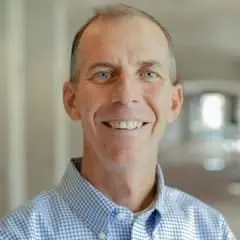
This is Liz Franzel with Crawford Media Group, and today our guest is Paul Batura, Focus on the Family’s Vice President of Communications. We’ll be talking about how now pastors are being allowed to preach politics from the pulpit. Welcome to our program, Paul.
SPEAKER 01 :
Hi, Liz. Good to be with you.
SPEAKER 02 :
Paul, tell us about this new ruling and why it’s so good for churches and pastors.
SPEAKER 01 :
Yeah, this really took us by surprise. I within the Trump administration. And with the new administration, of course, comes new leadership at all the different agencies, including the IRS. But it was a few weeks ago now, the IRS basically settled a lawsuit that was brought about by our friends at the National Religious Broadcasters Convention in several churches that basically said, you know, neither pastors nor politicians lose their First Amendment rights by stepping into the pulpit or stepping into a church. And they said, look, the Johnson Amendment, which kind of started this whole thing, has been unevenly applied over the years, unevenly enforced. And it’s not illegal for a pastor or a politician to speak from the pulpit, especially when they’re talking about matters and issues of a moral nature that may cross over by public opinion into the political realm. And we’re celebrating that decision.
SPEAKER 02 :
Yeah, I love that. As far as what you said about we don’t lose our First Amendment rights, and it seems like that was the biggest issue. Like, where did they go? And a lot of these churches are 501c3s. I think there might have been the fear of losing funding if they were to speak out.
SPEAKER 01 :
Yeah, the Johnson Amendment has had a chilling effect on free speech, specifically in churches, specifically for 501c3 organizations. And, you know, entities that for their very existence are trying to defend the right of the preborn or defend and promote the idea of one man, one woman marriage or religious liberty to tell the churches, to tell pastors that they can’t possibly touch those topics. It’s offensive. It’s unconstitutional. And finally, the IRS ruling makes clear that this is no longer going to be an obstacle for pastors to talk out and speak out and hopefully encourage their people to have a better understanding about what’s going on.
SPEAKER 02 :
Yeah, I think I was telling you earlier that this has been a soapbox of mine because I’ve been involved in getting some signatures to get on some ballots to get some things signed. And, you know, I’ve approached we’ve we’ve approached churches and they don’t want to have anything to do with it. They don’t want us to have a table outside of their church to get these signatures or these petitions. And I just feel like pastors have done wrong by their congregants for years by not leading their flock, so to speak, in these righteous topics that really need to be addressed.
SPEAKER 01 :
Well, and to some degree, I forgive them because of the lies in some ways, the misinformation that they’ve been peddled and been given. But at the same time, you know, a pastor has an obligation, has a responsibility. to speak up and to use the pulpit as a platform to inform, to educate, to help people develop a Christian worldview. And it boggles my mind, it sounds like it boggles your mind too, that a pastor who steps into the pulpit on a Sunday morning will sometimes completely ignore the the cultural firestorm that’s happening outside the doors of the church, whether it’s a local ballot initiative about abortion like we have in Colorado or any other issue. You know, we’re not separate people. We live all in the mix of the world, and we have to make sense of what’s going on, and we make sense by filtering the news through our scriptural understanding. And I think pastors here are now handed a wonderful opportunity to educate and encourage, inspire. And I am praying, along with you and your listeners, I’m sure, that our pastors will grab hold of this and use it for the good.
SPEAKER 02 :
Yeah, because, you know, we go to church and I think for most of us, we we see our pastors as leading us, you know, in a way. And if we’re not led and really told about what’s biblical and try and get these things changed in our nation, that’s a hard thing, you know, not to have.
SPEAKER 01 :
It is. And, you know, the other thing to just consider, Liz, is that you and I were informed. We read about, we live and breathe a lot of this information and a lot of this news every day. But the vast majority of people do not. I mean, we know from studies, we know from having conversations with people in our congregations that a lot of people don’t pay attention to the news. They’ve deliberately blocked it out. And, you know, when it comes to Election Day, maybe they vote the way their parents voted, or maybe they don’t even really know what’s going on. We need to educate them, and we need to realize and not expect them to fully be up to speed on what’s happening. And this is an opportunity for churches to play a critical role in the cultural conversation.
SPEAKER 02 :
Exactly. I wanted you to talk about church and state and explain the concept and what they meant by that.
SPEAKER 01 :
Yeah, well, of course, that phrase about the wall of separation between church and state is not constitutional. As you know, that was simply a phrase. that came about in a letter from Thomas Jefferson talking about basically, and really he was saying that churches and faith are not separate entities, that you don’t have to shove your faith down when you step into the pulpit or when you become a member of a church. So this idea, this has been a boogeyman that’s been set up to suggest that there is this high, high wall, and it’s just not true. And I think pastors have, in some cases, they have very hard jobs. They have difficult jobs to navigate, sometimes a very diverse congregation with political histories and certainly strong opinions. But they also, I think, have an obligation to be informed historically and theologically about And so to recognize that separation of church and state does not apply to keeping basically government out or faith out of government. It’s really to keep the government out of the church.
SPEAKER 02 :
Yeah, so well said. I mean, I kept saying this, but the church and state, that’s to protect us. That’s to keep the state out of the church. And I think that’s been lost by the wayside for many years.
SPEAKER 01 :
It has, and we see it over and over again. And again, this is the type of mantra that so many have bought into. And seminaries that our pastors go to, probably many of them don’t talk about this. I mean, they don’t talk about cultural issues. They might suggest using illustrations of topical illustrations, but are pastors trained and are they informed? A lot of them are scared. They’re scared to bring these issues up. They think their church is going to lose their nonprofit status. They think congregants are going to storm out. Our experience has been that when a pastor does speak up, the congregation cheers because they’re sitting there hungry for guidance. They’re hungry for encouragement. They’re hungry for information, and I think the pastor does his congregation a great service by going there and wading into those, albeit and admittedly, deep waters.
SPEAKER 02 :
Exactly. And, you know, it’s not like they are going to try and promote politicians that are not biblically based. I think that there’s a lot of people running for office, whatever seat, and that they’re going to promote or they should promote the ones that are standing for biblical values, pro-life type of things. Okay.
SPEAKER 01 :
Right, and I’m glad you drew that distinction because I think it’s important to draw a distinction between politics and policies, partisan politics and policies. What we’re talking about here is not to have a church become an arm of a specific political party. But what we’re talking about is to have them jump into issues. Now, from where I come from and my perspective, the issues of the sanctity of life and, again, the sanctity of marriage, religious freedom, those should not. They never were political issues. They were politicized. And so they get pulled into the mix and the milieu because of ballot initiatives and the need to rein in rogue judges who are tyrannical and all of that. And yet, again, when we talk about talking politics from the pulpit, a lot of people immediately think you’re talking about endorsing politics. Well, the IRS suggested a pastor could do that. I think most pastors won’t. I think they simply want to be able to even tell their people, let’s talk about what these candidates believe. Let’s talk about issues. Let’s attach names to them. And then you can make your decision based on a biblically believing Christian.
SPEAKER 02 :
Yeah, that’s so good. And you’re right that they haven’t been addressing those issues. And I think it’s important because so many times, myself included, you get the ballot and there’s so many names on it and you really don’t know what they stand for.
SPEAKER 01 :
Yeah, it takes work, right, to investigate and to do your research. And the typical ballot now seems to be, not to sound all cynical and all that, but it’s almost like become… The art of obfuscation. How can we thoroughly confuse you, whether it’s how we word a particular initiative or whether it’s certainly in local elections, conceal candidates party and the buzzwords that are used in all of this legislation? I mean, it’s really become an art and not always in a good way. And, you know, we’re trying to develop, I think, what you’re doing with your show and what we’re doing at Focus on the Family and The Daily Citizen is we’re trying to cultivate a spirit of discernment so that our people are better informed, who know what kind of questions to ask, and know how to sift through and see through the lies and, in many cases, the deliberate confusion that they’re subjected to on every election cycle.
SPEAKER 02 :
Yes. And I think it’d be, you know, they would do their congregation such a big service by being able to break that down for us.
SPEAKER 01 :
Yeah. I mean, to do a voter guide of sorts. And, you know, we know constitutionally those are allowed, specifically if you’re dealing with issues that are germane. to what your organization represents or what your church represents. This ruling from the IRS is good, but it’s not codified into law, which is why the Free Speech Fairness Act, which is going through Congress, would codify into law much of this. So we’re supporting that. We hope Congress can get it through, and we’ll go through the Senate, of course, and the President. But it gives the freedom for pastors to talk about these issues so long as they are germane, again, to the mission of the organization or the church, and that they don’t spend, it’s a little bit discretionary here or subjective, but it’s an over percentage of their budget. on that particular issue. So if you’re, for example, you know, if you’re talking about a ballot initiative, you don’t spend 90% of your church’s yearly budget to talk about that issue. But it’s very, you know, it’s geared towards freedom, and that’s a good thing.
SPEAKER 02 :
We’ve been visiting with Paul Batura, Focus on the Family’s Vice President of Communications, and we’ve been talking about how pastors can now preach politics from the pulpit. Paul, tell us where our listeners can go to find out more about Focus on the Family and the biblical resources that you offer.
SPEAKER 01 :
Focusonthefamily.com is a tremendous resource for all ages and stages of family life, and we encourage you to go there. The Daily Citizen is a organization or entity within Focus on the Family. We provide daily analysis, morning emails, weekly emails to help folks. So we encourage you to go to FocusOnTheFamily.com. You can follow us on all the different social media platforms, and we certainly welcome that partnership.
SPEAKER 02 :
Paul, thank you so much for joining us today.
SPEAKER 01 :
Thank you, Liz.