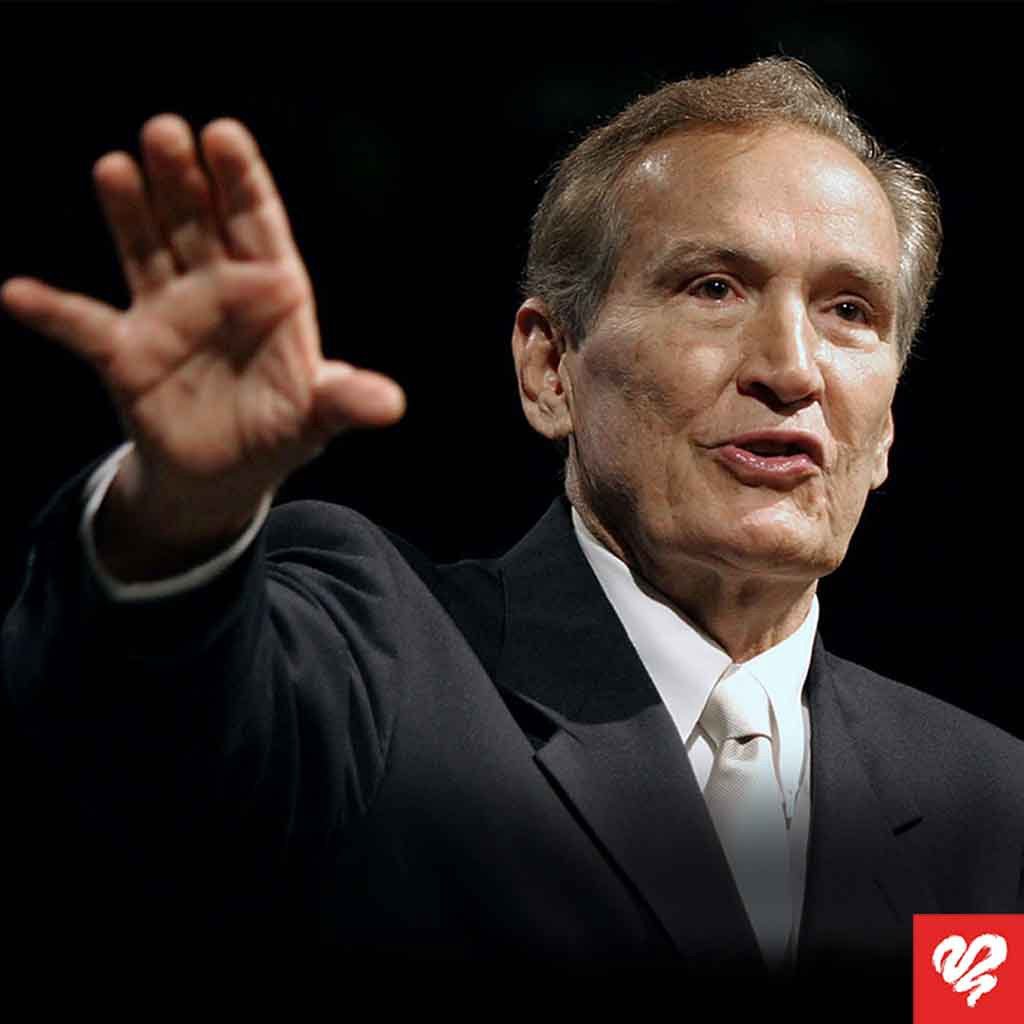
Learn the compelling reasons for forgiveness and how it liberates both the giver and the recipient. Pastor Rogers eloquently illustrates the grace factor in forgiveness, the dangers of an unforgiving heart, and the divine assistance that God provides to help us extend forgiveness against our human instincts. This episode offers a detailed guide to understanding the true essence of forgiveness through the lens of faith.
SPEAKER 01 :
Pastor, teacher, and author Adrian Rogers has introduced people all over the world to the love of Jesus Christ and has impacted untold numbers of lives by presenting profound truth simply stated. Thanks for joining us for this message. Here’s Adrian Rogers.
SPEAKER 02 :
There was an evangelist of yesteryear who was the counterpart of Billy Graham today, a greatly used and anointed man of God, and this is what he said. He said there’s one sin that Christians have more difficulty with than any other. And there’s one sin that is holding back the power of God more than any other sin in the life of Christians. Now he was a wise and an intelligent man and a man gifted of God. Would you like to know what that sin is? He said it is the sin of an unforgiving spirit. WE’RE TALKING TODAY ON THIS SUBJECT, THE FREEDOM OF FORGIVENESS. VERSE 9, AND AFTER THIS MANNER THEREFORE PRAY YE, OUR FATHER WHICH ART IN HEAVEN, HALLELUJAH BE THY NAME, THY KINGDOM COME, Thy will be done in earth as it is in heaven. Give us this day our daily bread. And now we come to our text. Look at it. And forgive us our debts. as in the same manner like we forgive our debtors, and lead us not into temptation, but deliver us from evil. For thine is the kingdom and the power and the glory forever.” And now notice verse 14, “‘For if ye forgive men their trespasses, your heavenly Father will also forgive you. But if ye forgive not men their trespasses, NEITHER WILL YOUR FATHER FORGIVE YOUR TRESPASSES.” WHEN YOU FORGIVE, YOU SET A PRISONER FREE, AND THEN YOU DISCOVER THAT PRISONER IS YOU. THE FREEDOM OF FORGIVENESS. THERE ARE TWO GREAT ENEMIES THAT COME AGAINST THE HUMAN SOUL, THE HUMAN SPIRIT, OUR PSYCHE, One enemy is guilt and the other is bitterness. Do you have it? Guilt and bitterness. So many people in this world are absolutely driven into the ground spiritually, psychologically, and physically by guilt and bitterness. They’re kept in a prison. A PRISON CALLED GUILT AND A PRISON CALLED BITTERNESS. NOW THE VERSE OF SCRIPTURE THAT WE’RE DEALING WITH TODAY DEALS WITH THOSE TWO THINGS. IT DEALS WITH GUILT AND FORGIVE US OUR DEBTS. AND IT DEALS WITH BITTERNESS AS WE FORGIVE OUR DEBTORS. BOTH OF THOSE PROBLEMS ARE DEALT WITH RIGHT HERE. WHEN WE’RE FORGIVEN, We are set free from the prison of guilt. He breaks the power of cancel sin. He sets the prisoner free. And when we forgive others, Then we’re freed from the prison of bitterness. One of God’s greatest gifts to you and to me is forgiveness. Because you see, the Bible calls our sins a debt. A debt. Look at the verse of Scripture and see how it delineates our sins. Verse 12, And forgive us our debts. Our sins have put us in debt to God our Creator. We’ve been created to serve Him, to love Him, and we’ve not done it. We’ve been brought into Heaven’s court. And we have been sued for damages. And we cannot pay. And we’re cast into a debtor’s prison. The only way we’ll be set free is to be forgiven. And then not only that, but friend, we must also then forgive. Now, when you forgive anybody, you cancel the debt. That’s what forgiveness is. Sin is a debt. Forgiveness is the canceling of the debt. Actually, the word forgive here means to bear the burden. Now, if you owed me $1,000, and you had nothing to pay, and could not pay, and I said, very well, then I forgive the debt, that cost me $1,000. It costs to forgive. Sin is a debt. When the debt is forgiven, The forgiver pays. Now salvation may be free to you, but it costs the Lord Jesus. Just jot in your margin, for example, this text, Ephesians chapter 1 and verse 7. The Bible speaks of Jesus in whom we have redemption through His blood, the forgiveness of sins according to the riches of His grace. OUR LORD PAID THROUGH GRACE OUT OF HIS RICHES FOR MY FORGIVENESS. THAT’S THE REASON WE SAY GRACE IS WHAT? GOD’S RICHES AT CHRIST’S EXPENSE. G-R-A-C-E. THAT’S HOW I’M FORGIVEN. GOD DOESN’T OVERLOOK MY SIN. GOD HIMSELF PAYS THE DEBT OF MY SIN. And on the cross, the Lord Jesus with His blood paid the debt of my sin. God never overlooks it. Somebody must pay. Forgiveness is the paying of the debt that another cannot pay. Forgive us our debts. Now, when God forgives me, then God says I must forgive others as I have been forgiven. And according to this verse, if I withhold forgiveness to someone else after having been forgiven, THEN I DAM UP THE STREAM OF GOD’S FORGIVENESS, AND THAT STREAM STOPS UNTIL I AM WILLING TO FORGIVE THOSE WHO HAVE SINNED AGAINST ME. NOW WITH ALL OF THAT AS AN INTRODUCTION, LET ME TALK TO YOU FIRST OF ALL ABOUT THE COMPELLING REASONS FOR FORGIVING. THE COMPELLING REASONS FOR FORGIVING. I’M NOT TALKING ABOUT BEING FORGIVEN NOW. BUT IF YOU HAVE BEEN FORGIVEN, LOOK AGAIN AT OUR VERSE OF SCRIPTURE. THE BIBLE SAYS THIS, AFTER THIS MANNER WE’RE TO PRAY. VERSE 90 SAYS THAT. AND THEN VERSE 12, FORGIVE US OUR DEBTS AS IN THE SAME MANNER AS WE FORGIVE OTHER PEOPLE. MAY I GIVE YOU FOUR REASONS WHY YOU OUGHT TO FORGIVE? NOW IF THERE’S SOMEBODY WHO’S DONE YOU WRONG, PERHAPS IT’S YOUR PARENTS, PERHAPS YOUR HUSBAND, PERHAPS YOUR WIFE, PERHAPS YOUR EMPLOYER, PERHAPS SOME EMPLOYEE, perhaps a brother, a sister, perhaps a neighbor, somebody who’s done you wrong, and our Lord has taught you to pray, God, forgive me as I forgive them. You ask yourself this question, why should I forgive? Four reasons. Here they are. The first is what I want to call the grace factor. The grace factor. You should forgive because you have been forgiven. YOU SHOULD FORGIVE BECAUSE GOD HAS SO WILLINGLY FORGIVEN YOU. HERE’S OUR VERSE, EPHESIANS CHAPTER 4 AND VERSE 32, AND BE YE KIND ONE TO ANOTHER, TENDERHEARTED, FORGIVING ONE ANOTHER, EVEN AS GOD FOR CHRIST’S SAKE HATH FORGIVEN YOU. GOD HAS FORGIVEN YOU. God has shown grace to you, and therefore you must show grace to one another. Sam Jones, another evangelist of yesteryear said, and I quote, I had a hard time forgiving people until I made up my mind I wasn’t going to fall out with anyone until he treated me worse than I treated Jesus. WE CRUCIFIED THE LORD JESUS CHRIST. AND SO REASON NUMBER ONE THAT WE NEED TO BE FORGIVING IS THAT WE HAVE BEEN FORGIVEN. WE HAVE EXPERIENCED THE GRACE OF GOD, AND WE’RE TO BE KIND, TENDERHEARTED, FORGIVING ONE ANOTHER, AS GOD FOR CHRIST’S SAKE HATH FORGIVEN US. REASON NUMBER TWO, NOT ONLY THE GRACE FACTOR, BUT THE GUILT FACTOR. AND THE GUILT FACTOR MEANS THIS, THAT IF WE DO NOT FORGIVE, then no longer can we be forgiven. We should be forgiving because unforgiveness shuts out the forgiveness of God. Verse 12 teaches us that an unforgiving spirit is unforgivable. And the person who will not forgive destroys the bridge over which he himself must travel. Have you ever thought of this prayer? How dangerous it is? Have you ever thought that this is a dangerous prayer? It is. What you have said is, God, treat me like I treat other people. Forgive me as I forgive others. Do you forgive others? If you don’t, you’ve asked God to deal with you the same way. Forgive me the way I forgive others. Well, you say, well, I’ll forgive her, but I’ll never have any more to do with her. God says, all right, I’ll forgive you and never have any more to do with you. You say, well, I’ll forgive. But I can’t forget. God says, all right, I’ll forgive, but I won’t forget. You see what you’re praying? You’re saying to God, God, I want you to deal with me the way I deal with other people. WHY SHOULD YOU FORGIVE THE GRACE FACTOR? YOU’VE RECEIVED GRACE. WHY SHOULD YOU FORGIVE THE GUILT FACTOR? IF YOU DON’T, YOUR GUILT WILL REMAIN. AND THEN THERE’S A THIRD REASON THAT YOU OUGHT TO FORGIVE, FRIEND, AND THAT’S THE GRIEF FACTOR. THE GRIEF FACTOR. YOU SEE, YOU SHOULD FORGIVE OTHERS BECAUSE IF YOU DO NOT, YOU WILL HAVE PERSONAL HARM AND GRIEF THAT WILL COME TO YOU. An unforgiving spirit keeps you in prison. You say, well, I’m not going to let them off the hook. Our sense of justice cries out and says, we dare not forgive. I will not let them get by with this. I’ll keep them on the hook. They’re not the only one kept on the hook. You yourself, by an unforgiving spirit, are hooked with them. Why should you forgive them? Well, number one, for Jesus’ sake. God for Christ’s sake forgave you. Can you not for Christ’s sake forgive them? But not only for Christ’s sake, but for their sake. You see, forgiveness is not giving to a person what they deserve. Forgiveness is giving to a person what they need. But not only to do it, listen, for Christ’s sake and for their sake, do it for your sake. Did you hear that? For your sake, an unforgiving spirit, bitterness will keep you in a prison of your own making. And when you refuse to let them off the hook, I remind you that you stay on the hook with them. You say, well, I’ll just get even. Will you get even? Here you are up here. Here’s somebody wicked down here and they have done you wrong. You’re going to get even, are you? Do you see where you are? When you get even, you come down to where they are. When you forgive, you bring them to where you are. Where you say, well then I’ll not just get even, I’ll continue to hate. I won’t take revenge, I’ll just continue to hate. Do you know what you do? You take an acid into your system when you continue to hate. And bitterness is an acid that destroys its container. Again, there are few forms of dissipation that will do more to you than resentment and bitterness. Resentment is slow suicide. Why should you forgive? The grace factor, you’ve been forgiven. Why should you forgive? The guilt factor. If you don’t forgive, you dam up the stream of continuing forgiveness. And if you don’t forgive, the grief factor. You will continue to have grief and the hurt that hurts you will continue to hurt you until you release it and let it go. The fourth reason you ought to forgive, the gain factor. Not only do you lose those things that have wounded you, you let them go, you release them, but you gain your brother. The person who has wounded you is either a brother or a potential brother, a sister or a potential sister. Matthew chapter 18 and verse 15, Moreover, if thy brother shall trespass against thee, go and tell him his fault between thee and him alone. And if he will hear thee, thou hast gained thy brother. A brother is a precious thing. You’re in Matthew chapter 5, look in verse 24. Leave there thy gift before the altar, and go thy way. First be reconciled to thy brother. Matthew 5, 24. Be reconciled to thy brother. When you forgive another, then you gain a brother. How sad it is when brothers and sisters fail to forgive. Do you know what that does? It disgraces the Father. When my children do not love one another, it is a disgrace to me. Not only does it disgrace the Father, it discourages the saints. The few things that hurt a church worse than an unforgiving spirit. It also disgusts the lost. Unsaved people are quick to see when there is a rift in a family, when there’s a rift in a church, When there is a tear in the fellowship, they’re quick to point it out. And many of them are not saved because of the sin in our hearts and in our lives, and that sin is so often the sin of an unforgiving spirit. What does it do? It disgraces the Father. It discourages the saints. It disgusts the lost. It delights the devil. The devil more than anybody else loves to see brethren with an unforgiving spirit. The Bible says, behold how good and how pleasant it is for brethren to dwell together in unity. The Bible says that God hates that one that sows discord among brethren. You say, well pastor, he’s not a brother. The person who has sinned against me is an unbeliever. Well then he’s all the more the object of your pity. Because if he’s an unbeliever, not only has he done wrong, but he’s blind. And he does not have the grace and the power that you have. If he is a brother, you’re in the same body. And when you harm him, you harm you. And he’s to be the object of your love. If he’s not a brother, he’s lost and on his way to hell. And you don’t need to drive him further that way. He needs more of your love. What I’m saying is there’s the gain factor. We have everything to gain, nothing to lose by forgiving someone else. And I have given you four reasons why you ought to forgive. You see, the person that you forgive is more than a person who has hurt you. He is a person who needs you. And grace is not giving to people what they deserve. It is giving to people what they need. Those are the compelling reasons. Secondly, I want to talk to you not only about the compelling reasons, but I want to talk to you about the costly requirements for forgiving. When I talk to you about forgiving someone else, I’m talking to you about something that is extremely costly. Remember what we said, somebody pays. Somebody pays. Forgiveness is the canceling of a debt. And when you forgive your debtor, then you pay up. What are the costly requirements for forgiving? Well, the model for forgiving is Jesus. Remember again Ephesians 4.32, And be ye kind one to another, tenderhearted, FORGIVING ONE ANOTHER AS GOD, FOR CHRIST’S SAKE, HATH FORGIVEN YOU. THAT’S THE MODEL. NOW TAKE THAT AS A MODEL, HOW YOU GOT FORGIVEN. AND THAT’S THE WAY THAT YOU ARE TO FORGIVE. THE KIND OF PRICE THAT HEAVEN PAID IS THE KIND OF PRICE THAT YOU ARE TO PAY. THEREFORE, NUMBER ONE, AS WE TALK ABOUT THE COSTLY REQUIREMENT, YOU ARE TO FORGIVE FREELY. FREELY. The Bible says, freely ye have received, freely give. Now some people forgive after they’ve collected their revenge. They’re wronged. They want the individual to know that they’ve been wronged. They want the individual to know how badly he has hurt them. Therefore, they criticize, they castigate, they scold, they They freeze out. They do everything that they can do to cause that individual to squirm like a worm in hot ashes. They roast them. They pummel them. They excoriate them. They do all they can do. And then finally after they’ve had their pound of flesh, they say, well, I forgive. And the forgivee feels like saying, never mind, I’ve already paid. You are to forgive freely, not after you extract your pound of flesh. And because you forgive freely, you’re to be quick to do it. The Bible says, let all bitterness be put away from you. Be in a hurry to forgive. If you’re not in a hurry to forgive, that bitterness will become an infection and will become much more difficult to heal. When Jesus Christ was on the cross, While they were crucifying Him, He was praying, Father, forgive them. While they were nailing Him to the cross. The Bible teaches that we’re to be so anxious to forgive a brother, a sister, that we are to seek them out to forgive them. We’re to run them down to forgive them. Matthew chapter 18 and verse 15, the Lord Jesus said, Moreover, if thy brother trespass against thee, go and tell him his fault. You say, he’s the one who did wrong. let him come to me. If he wants forgiveness, let him come and ask for it. But Jesus said, no, you go to him. Again, he said the same thing when you bring your gift to the altar. Remember there that a brother hath ought against thee, you go to him. Whether you’re in the right or whether you’re in the wrong, whether you have ought against your brother, or whether you know that your brother has ought against you, you are to take the offensive and You are to go to that individual. Isn’t that what God did in the very Garden of Eden? Adam and Eve sinned against God. And the Bible says that God came in the midst of the Garden, and God cried out, Adam, where art thou? And that was not the voice of a detective. That was the voice of a brokenhearted God. What are the costly requirements for forgiveness? Number one, you’re to forgive freely. Freely you have received. Freely give. Secondly, not only are you to forgive freely, but you are to forgive fully. Fully. Now you know what our pride does many times when a person asks us for forgiveness? We say, oh, don’t worry about it. It’s all right. Don’t worry about it. It doesn’t matter. That is not forgiveness. You know what causes you to say that? Forget it. Doesn’t matter. Do you know what causes you to say that? Your pride. It did matter. You were hurt. But you don’t want them to know you’ve been hurt. And so when you say, oh, it’s all right, forget it. It doesn’t matter. No, friend, you have not forgiven that individual fully as you ought. Forgiveness is not politeness. It is not acting magnanimous about it. It is not acting big. It is not taking it light and making out like it really didn’t matter. When you come to God for forgiveness, God says, oh, don’t worry about it. Do you think that’s what God does? Oh, no. Forgiveness is not politeness. Forgiveness is not merely accepting an apology. Oh, forgiveness is not forgetting. Adrian, I have wronged you. I’m sorry. Oh, forget it. FORGET IT. THAT’S NOT FORGIVENESS. AS A MATTER OF FACT, HE CAN’T FORGET IT AND YOU CAN’T FORGET IT IN THE TRUE SENSE OF THE WORD UNTIL IT IS FORGIVEN. AND FORGETTING IS NEVER THE MEANS OF FORGIVENESS. IT IS THE RESULT OF FORGIVENESS. NOW, GOD REMEMBERS OUR TRESPASSES AGAINST US NO MORE ONLY BECAUSE THEY HAVE BEEN FORGIVEN. AND INCIDENTALLY, IF YOU ARE GOING TO AN INDIVIDUAL AND ASKING THAT INDIVIDUAL TO FORGIVE YOU, MAKE CERTAIN THAT IT IS FORGIVENESS THAT YOU GET. Many times we’re too proud to ask for forgiveness. And so we go and say, you know, if I’m wrong, if I did you wrong, I’m sorry. Well, in the first place, that’s not a confession, if I did. If you know you did, say you did. And then they say, on the other hand, well, don’t worry about it, forget it. You’re both wrong. You’re wrong for the way you came to that brother, and he’s wrong for the way he dealt with you. You come to him and say, I was wrong. I did you wrong. Will you forgive me? And he’ll say, don’t worry about it. No, say, I am worried about it. I am concerned. Will you look at me and tell me that you forgive me? Make certain that it is forgiveness that you get, not merely a glossing over. When you forgive, forgive freely, not after that individual has paid his price. Seek them out to forgive them. When you forgive, forgive fully. And don’t just say it didn’t matter, or accept an apology rather than forgiveness. Thirdly, when you forgive, forgive finally. That is, what you forgive is buried in the grave of God’s forgetfulness, never to be brought up again. God, when God forgives, God forgets. Now that doesn’t mean that God forgets intellectually. God can never learn anything or forget anything in that realm. He knows everything and He always knows everything. And if He ever forgot in the sense that He couldn’t remember, then He would have changed. He cannot change. He would no longer be omniscient. When the Bible says, God forgets our sins, what does it mean? It means, as He says in the Bible, He remembers them against us no more. He remembers them against us no more. Doesn’t mean that intellectually He cannot remember. He just, there’s no grudge there. He does not remember that. in the sense of remembering it against us, holding any hostility. And somebody has done you wrong, and you say, when I forgive, I forget. Does that mean that your mind goes blank? Oh, no. It just means that you remember it against them no more. And it costs to forgive freely. It costs to forgive fully. It costs to forgive finally. That’s probably the biggest test as to whether or not you truly did forgive, as to whether or not you keep bringing it up again. I may have told you about the businessman who had everything filed in his office. He was meticulous for keeping records of everything. His secretary came to him and said, Sir, we need to clean out these files. These files are so loaded, we’ve got to get this stuff out of our files. There’s a lot of stuff in here we need to take out and shred. How about letting us clean the files? Well, he said, I guess you’re right. We’ve got all this stuff. We can’t just keep saving it. All right, go through it, clean out the files, shred and burn. But he said, before you do, make a copy of everything. That’s the way we do. We say, well, we’re going to clean the files mentally. But somehow we do not truly forget in the sense that God wants us to forget. Now, when God forgives me, first of all, God does something for me. He forgives me. And then He does something through me. He teaches me to forgive others. And that costs. It costs Jesus. When God forgave you, do you think God just forgave you? Do you think God was just acting magnanimous? And God said, oh, that’s all right. Go to Calvary and see if you think God was just acting magnanimous. See the Lord Jesus writhing in agony and blood, blessed Redeemer, precious Redeemer. Seems now I see Him on Calvary’s tree, wounded and bleeding for sinners pleading. It cost Jesus, but He paid the price And why did he pay the price? The Bible said, for the joy that was set before him. He said it’s worth it. It is worth it. I will shed my blood for the joy of seeing Adrian Rogers saved. For that joy, the joy that was set before him, forgiveness costs nothing. but it is worth the price. You say, all right, pastor, that was Jesus. I don’t have what it takes. If you knew the man who raped my daughter, if you knew the way my husband has squandered everything that we have and is now running around with another woman, if you knew what my boss did to me, you wouldn’t stand up there and say, forgive, forgive. I can’t do it. And you’re right. You really can’t. But you really can. Let me show you how. Turn, if you will, to Philippians chapter 2. Just turn to it. Look with me in verse 12. Wherefore, my beloved, as ye have always obeyed, and that’s what we need is obedience. NOT AS IN MY PRESENCE ONLY, BUT NOW MUCH MORE IN MY ABSENCE. WORK OUT YOUR OWN SALVATION WITH FEAR AND TREMBLING. HE DOESN’T SAY WORK FOR YOUR SALVATION. YOU CANNOT WORK FOR YOUR SALVATION. SALVATION IS THE GIFT OF GOD. I CANNOT WORK MY SOUL TO SAVE. THAT WORK MY LORD HAS DONE. BUT I WILL WORK LIKE ANY SLAVE FOR THE LOVE of God’s dear Son. Work out your salvation with fear and trembling. Well, how do I do it? Look in verse 13. For it is God which worketh in you to do what? Both to will and to do of His good pleasure. So don’t say you can’t. Don’t say you can’t. It is God that does two things in you. Number one, God gives you the desire. And number two, God gives you the dynamic. It is God that works in you, first of all, to will, and then to do. When you say, when there’s somebody and you say, God, I cannot forgive them. My sense of justice cries out. Well, friend, God is just also. Vengeance is mine. I will repay, saith the Lord. God will do a better job on them than you will to begin with. Turn it over to God and don’t take that which is God’s and begin to work out your salvation and say, God, help me to love and love that person through me. And God’s love will begin to flow. And that love is supernatural. It’s God that works in you both to will and to do of His good pleasure. Have you ever finished this proverb? To err is human, to forgive is divine. That’s exactly it. To err is human. To forgive is divine. We are to forgive one another even as God for Christ’s sake hath forgiven us. Corrie ten Boom, the beautiful Dutch girl. World War II, her family hid some Jews in Holland, hid the Jews from the Nazis. Finally, the ten Boom family was arrested. Corrie and her sister were carried away to a concentration camp. They were brutalized by the Nazi prison guards at Ravensbruck. They were treated to all kinds of indignities. One of the indignities was so often they were stripped down naked, young girls, put in the showers to be deloused. The German guards would stand there and make obscene remarks and leer at them and, as it were, to rape them with their eyes. absolutely, totally humiliated, all modesty gone. Later, Corrie ten Boom survived. Her sister died, but she survived. She became a radiant Christian, was lecturing on forgiveness. And at the close of that service, a person came forward with a smile on his face, and she looked at him And it was a face that had been chiseled into her memory, a face that had been indelibly stamped upon her soul. It was the face of the most cruel and wicked and obscene of those guards. And he was now in a Christian meeting. And he came up to her with a smile on his face. And he said, Corrie, I want you to forgive me. And put out his hand. She said, I froze. She said, a chill went over me. And when I saw that man that I knew to be the very mirror of evil, she said, I knew that I did not have the power to forgive him and I did not want to forgive him. And she said, I breathed a prayer and said, oh God, help me to forgive. AND SHE SAID, AS AN ACT OF OBEDIENCE, I PUT OUT MY HAND, AND WHEN HIS HAND TOUCHED MINE, LIQUID LOVE BEGAN TO FLOW THROUGH ME, AND I FOUND OUT THAT GOD’S GRACE WAS SUFFICIENT, AND I FORGAVE. HOW DID SHE DO THAT? WAS THAT CORY? NO. NO. IT WAS GOD WORKING IN HER BOTH TO WILL AND TO DO OF HIS GOOD PLEASURE. Well, that brings up a real question. You say, Pastor Rogers, that prison guard evidently had repented of his sin. He’d given his heart to Christ. What about those who continue to sin against us? What about people who are still living in sin? Are we just to forgive them? While they’re stabbing us, are we to be forgiving them? While they’re kicking us, are we to be forgiving them? While they are stealing from us, are we to be forgiving them? No. No. What is forgiveness? You see, there are times when people refuse forgiveness. And in order for there to be forgiveness, there must be repentance. God does not forgive you without repentance. Neither can you forgive someone else without repentance. There’s a lot of soft thinking here, so let me just give you a verse of Scripture to make it very clear. Luke 17, verses 3 and 4, Jesus said, and He’s talking to me, He’s talking to you, take heed to yourselves. If thy brother trespass against thee, rebuke him. Now the word rebuke doesn’t mean scold him, it means tell him you’ve done wrong. And if he repent, forgive him. Do you see it? And if he repent, Forgive him. Verse 4, And if he trespass against thee seven times in a day, and seven times in a day turn again, saying, I repent, thou shalt forgive him. Now, it’s very important that you understand that repentance is necessary for forgiveness. God does not forgive unless you repent. You cannot forgive unless another repents. So what if they refuse repentance? What if they see no need for forgiveness? What do you do? You do exactly the same thing that God has done. You forgive them in your heart. You store up forgiveness for them. When Jesus Christ died on the cross, He died for every man, those who would repent and those who would not. And Christ died for all, and He is the propitiation for our sins, and not for ours only, but for the sins of the whole world. And on Calvary, potentially, was that forgiveness. In the heart of God is that forgiveness. It is already there. And so for the brother who will not repent. The sister who sees no need of forgiveness, still in your heart it must be there. Stored up, already there for them to receive. You cannot forgive them without their repentance. But your forgiveness is already given. All they need to do is receive it. Do you understand what I’m saying? You must make very certain that you have this forgiveness in your heart. I’ve talked to you about the compelling reasons and the costly requirements. What are the certain results? When you forgive, what are they? There will be three. I’ll only mention them. First of all, there will be release. Friend, you will set a prisoner free and find out that prisoner is you. There will be a release. You will unhook yourself from the past and God will free you up And no longer will you bear this burden of an unforgiving spirit and this corrosive acid that is destroying your soul. There will be release. And if he will receive that forgiveness, there will be reconciliation. And a brother is a precious thing. And then there will be, and I thank God for this, there will be revival. Do you know what revival is? May I tell you what revival is? Revival is not just getting the roof off, getting right with God. Revival is getting the walls down, getting right with one another. That, my friend, is revival. Forgive us, get the roof off. As we forgive one another, get the walls down. And when we begin to do that, there will be release, there will be reconciliation, there will be revival. It all begins with your getting saved. Do you know the Lord Jesus? Lord God, I pray that many in this building today will come to Jesus and be saved. In his wonderful name, amen.
SPEAKER 01 :
If you would like to learn more about how you can know Jesus or deepen your relationship with Him, simply click the Discover Jesus link on our website, lwf.org. For a copy of this message or additional resources, visit our online store at lwf.org or call 1-800-274-5683. Thank you.