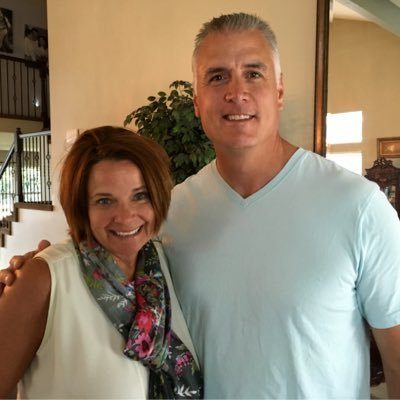

In this engaging episode, Rachel Maines talks with Jeff Hutchin about his unique journey from being a high-profile sports official to becoming a catalyst for change in the lives of influential leaders. Explore Jeff’s profound experiences that took him from a Fortune 500 vice president role to a fearless faith leader, inspired by a pivotal encounter at Auschwitz-Birkenau. Dive into the essence of The Remnant ministry as Jeff unravels the impactful ways he coaches leaders to live intentionally with faith, service, and purpose.
SPEAKER 01 :
Hi, I’m Rachel Maines with Crawford Media Group, and today I have with me Jeff Hutchin. He is an NFL referee and also the executive director of The Remnant. And thank you so much, Jeff, for coming in studio. It’s great to meet you.
SPEAKER 04 :
It’s good to be here. Thanks, Rachel.
SPEAKER 01 :
You have quite the story in just your life working in the NFL as a ref. Real quick, how did you get started doing that?
SPEAKER 04 :
Yeah, it’s a crazy story. Real quick, I’ll give you the Cliff Notes version. We had a gentleman that we were helping out. He was going through a divorce, and he needed a place to stay. He was living in our basement, and he came home one day, and he said, Hey, Jeff, I’m going to go sign up for this class to become certified in officiating, start with junior high and high school games. Do you want to do it with me? And I said, i’ve always been a big sports fan and love football i said sure i’ll do it with you and when is it it’s on this saturday so i show up and he didn’t which is kind of which is kind of funny and so i go through the training and the next thing you know i’m doing high school games and then it progressed into college and then college just moving up the ranks and it literally is a god story but ended up getting hired in the nfl two years ago and it’s been it’s been a fun challenging journey that’s for sure
SPEAKER 01 :
Wow. God kind of tricked you right there with your friend.
SPEAKER 04 :
He absolutely did trick me.
SPEAKER 01 :
That’s funny. Did you play football as well? You’re so tall. You’re like 6’8″.
SPEAKER 04 :
I played football in high school. I went to a small school in Gunnison over on the Western Slope.
SPEAKER 01 :
Beautiful area.
SPEAKER 04 :
Yeah, it’s beautiful. Great place to grow up. My class had a total of 85 people, so all the guys had to play all the sports or we wouldn’t be able to field the team. So I played everything, but ended up, I’m built for basketball, so I ended up playing basketball through college. But I’ve always had a love for football, so it’s a passion.
SPEAKER 01 :
Well, that’s wonderful. That’s a dream job for many. So praise God for opening up that door. And you’ve had this ministry called The Remnant, so we want to learn about that. How did that get started?
SPEAKER 04 :
So a little bit about my background after I graduated from college. I went to work for primarily in pro sports. So I was with Learfield communications for a few years. And then I graduated from that and moved on and went to work for what was called home sports entertainment, regional cable network, which then was purchased by Fox sports. So I got to be a part of the Fox sports umbrella for a while. And, Thought I wanted to get in to be a general manager of a professional team and went down that path. Was in the front office for the Houston Rockets for a while and found out pretty quickly that’s not what I was cut out for. And like a joke, I finally got a real job because those are all kind of fantasy jobs. And so I got a real job. Again, by the grace of God, I was working for a Fortune 500 company down in Houston. I was their vice president of marketing, research, and development and was the youngest vice president in this company by a long ways. By God’s grace, I should never have been placed in that position, should never have had what I was given. But God just put me there like he has in so many areas of my life. And so the story is here I am probably five years away. I’m 35. My goal is kind of funny now. My goal is I’m going to retire when I’m 40. Wow. I’m going to cash in.
SPEAKER 02 :
Yeah.
SPEAKER 04 :
I’m going to play golf and travel the rest of my life. And that was kind of my goal, which is kind of hilarious now looking back on it. It’s so shallow, right, and so hollow. But anyway. I joke that I made a mistake and agreed to go on a mission trip with our little local Baptist church there in Kingwood, Texas. And we went to Poland of all places. Have you ever been to that part of the world before?
SPEAKER 02 :
Fascinating. Yeah.
SPEAKER 04 :
Fascinating. The Eastern block is a fascinating part of the world. And so I’m there with a group. My wife wasn’t with me on this trip. And we went and visited one of the concentration camps there in Poland, Auschwitz-Birkenau, which is one of the larger work-slash-death camps in all of Poland. And we did the tour, and I’m by myself at this time, and I’m standing inside the main gates of Auschwitz-Birkenau where the trains would pull in. And I’m literally standing at the end of the railroad track where the tracks literally ended up. both figuratively and literally. And this is where the prisoners would be unloaded. They would separate them into those that could work, the healthy ones. And those that could work, they’d process them and take them to the work camp, slavery. And the rest of them, the elderly, the sick, they would process them in the gas chambers. Of course, they didn’t know they were going to the gas chambers, but they were about 100 feet to my right. And I’m standing there by myself into these tracks, taking this moment in, and I’m literally, Rachel, I’m weeping. I’m just taking it. It was a very heavy, heavy moment. You can feel the oppression in those countries. And I felt like I was having what I considered a one-way conversation with God. It was more me complaining to God, right? I was crying. I was saying, God, how, why, what? How did this happen? Those same questions I’m sure a lot of us have. And in that moment, God spoke to me very plainly. And he said to me, do you want what I have for your life? And I had no idea what that meant. Now, I was a believer. I found Jesus my freshman year in college, which is kind of a crazy time to find Christ. So I knew it wasn’t my salvation. And it was something else. And so I wasn’t sure what that was and I wasn’t sure what he was asking me. And so I come home from that trip. My wife, Sherry was like, what, what’s wrong? Something’s clearly happened to you. And I said, I heard God’s voice. She said, what did he say? And I said, he asked me, do I, do you want what I have for your life? And I don’t know what it means. And she said, well, let’s pray. And so we prayed and we fasted and went before the Lord and just said, reveal to this, you know, real, real is truth to us. What, what you have. And, and, Next to my salvation, of course, in my family and my wife, I’ve always said the greatest gift God gave me came out of that time of prayer and fasting. Because what he told me is he said, I’m going to tell you why I’ve put you on planet Earth. I’m going to tell you your purpose.
SPEAKER 03 :
Wow.
SPEAKER 04 :
And he said these exact words to me. He said, your purpose is to unite, develop and mobilize leaders around the world to utilize their time, their talent and their treasure to advance my kingdom. That’s why you’re here. And so that really forced me into a crossroads where I had to make a decision on what I was going to do with that. And so we continued to pray about that. And it became very clear very quickly that what God was asking me to do is step away from my career and to step away from that job that was ultimately going to pay me a lot of money if I stayed there just a couple more years. And so it’s a long story, but we chose to resign, step away from that position, completely stepped out in faith. I moved my family from Texas back to Colorado, and there’s a lot of events that God put in place for us to come back here to start this ministry. At the time, it wasn’t called The Remnant. I was actually operating under an organization many are familiar with. It’s called the Fellowship of Christian Athletes. So I was operating under that umbrella here in Colorado. But I wasn’t ministering to athletes. I wasn’t ministering to coaches. I was ministering to influencers, the executives, to many of the board members, very, very influential people here in Denver, guys like John Bandemere from Bandemere Speedway and Joe Coors of the Coors family and some really – Powerful men that were influential in helping to fund and to direct ministries like the Fellowship of Christian Athletes. But these guys wanted someone to come alongside them and provide for them some support. So I find myself this 36-, 37-year-old guy sitting in front of these incredibly powerful men that have accomplished way more than I’ve ever dreamed of. And we kind of looked at each other and said, we’ve got to figure this thing out. And so that’s how my ministry started, uniting, developing, mobilizing leaders. And after about 10 years, I left the Fellowship of Christian Athletes and started my own 501c3, which is now called The Remnant. So that’s kind of the evolution.
SPEAKER 01 :
Wow, that is powerful, powerful. Have you written a book yet?
SPEAKER 04 :
I did. And it’s about my son. So we adopted our five-year-old son. So we have a biological daughter who’s 31. Our son is 22. And we adopted my son when he was five years old. And the book is about the journey of a father, myself, and raising this adopted son and all the challenges we went through and all the things that the father learns through these experiences with his adoptive son, the things God shows him about himself. And so, yeah, I have.
SPEAKER 01 :
Wow, powerful. Well, we hope you write some more books as well, just about your story and, of course, this ministry. Now, why did you decide to call it The Remnant?
SPEAKER 04 :
That’s a great story and a great question, Rachel. So I was praying because I was under the Fellowship of Christian Athletes. I was branching out. I was going out on my own, starting something different. At the time when I was with FCA, the model of my ministry was very typical to a lot of men’s ministries where we would meet once a week, and it started with five guys in a conference room, and it grew to at one point we had about 100, 125 guys that would come weekly on a Friday morning. Got to a point where we were renting out a ballroom in a hotel. The guys would come. I’d teach, share, and then we’d break into a small group discussion, and then the guys would go to work at 8 o’clock. It’s kind of a traditional model. Well, God kind of pulled me aside one day and said, instead of this basic training model, to use a military analogy, instead of this basic training model where you’re bringing in a bunch of people and working with them, I’m going to call you to more of a special forces model. I’m going to ask you to go deep with fewer guys. And find those influencers, those guys that are either up-and-comers that are the next leaders or the guys that are right now currently major influencers in the culture and the community. And I want you to pour into them much deeper. So God’s revealing this to me, and I’m kind of processing how this is going to occur, how this transition is going to take place. And God speaks to me and he says, I want you to call these men the remnant. And that’s not really a term. If you think about it, it’s not a term we throw around much in our vernacular today.
SPEAKER 03 :
Right, right.
SPEAKER 04 :
And so I began to kind of explore scriptures to understand from God’s perspective, what’s the remnant? And the one thing we find out about scripture is all throughout the Bible, there’s always a remnant of people. There’s always a group of people there. that remain faithful to God in spite of circumstances and what the culture might be suggesting. There’s always been a remnant, always. He always maintains a remnant. Noah and his family is the most extreme example of a remnant. And so God says, that’s how I see these men that I’m calling you to is to be the men that are faithful despite circumstances. They remained faithful to me. So that’s kind of the impetus behind the name. Well, I didn’t reveal this to anybody other than my wife. I said, this is what God’s telling me I’m supposed to call this group. Hadn’t revealed it, hadn’t launched it, hadn’t started it, hadn’t told anybody. And I get a phone call one day from a friend that goes, hey, Hutch, there’s this guy I want you to meet. He wants to see you. I was like, okay, you know, it’s not completely unusual. And he wants to meet with you. He’s got some things he wants to talk to you about. I said, OK. So he set up a set up a meeting with me, a breakfast meeting in a Denny’s over in Lakewood. And so, you know, it was that moment I show up that morning. It’s that awkward moment where you’re kind of looking around the room saying who else is looking for somebody else kind of deal. So we finally make eye contact. Are you the guy? Yeah. So we sit down. I don’t even remember his name to this day. Never met him before. Never met him. I haven’t seen him since. And we sit down in this booth and we begin to talk, small talk. And he says, you probably wonder why I want to meet with you. I said, yeah, I’m curious. What do you got? He said, well, God spoke to me and told me to meet with you and give you something. That caught my attention.
SPEAKER 01 :
Yeah, absolutely. It doesn’t happen every day. Right.
SPEAKER 04 :
And so we sit down and he reaches down in his briefcase and he pulls out a book and he slides it across the table to me. And the name of the book is The Remnant.
SPEAKER 01 :
Of course. Wow.
SPEAKER 04 :
I immediately start crying.
SPEAKER 01 :
Yeah.
SPEAKER 04 :
And the guy’s looking at me like, what’s wrong? I’m like, gosh, let me tell you the story. And so it was just God’s way of affirming for me that this is what he had and this is what he wanted. And come to find out the guy that wrote the book is now a dear friend of mine that lives right across the highway from me, a guy named Rich Case, who’s one of my mentors. And so God used that in some pretty powerful ways to not only reaffirm the name of the ministry, but also put a mentor in my life that I needed.
SPEAKER 01 :
Right. Right across. Exactly. Close to you. Really close. So amazing. Wow. So with this, the remnant, what is so special? Obviously, how it came about. Obviously, the Lord wanted you to start this. But what do you feel like is unique in how you’re mentoring?
SPEAKER 04 :
Yeah, that’s a good question. You know, it’s it’s neat when I look back at my life experiences. God has allowed me to experience a lot of success in the corporate world. He’s allowed me to experience a lot of failure in the corporate world. He’s allowed me to see the struggles, the challenges, the temptations, the having money and having access and having trips and having all these things, right, and all that brings into your world. And not that a traditional pastor can’t experience those things, but it’s difficult for a pastor of a church to have had those life experiences because most of those guys are called at a very young age and they go to Bible school and they go to seminary and all those things and they just don’t get a chance to experience and get… And so I think what’s unique about my ministry is I can really, really relate to these men. And so as a matter of fact, I have pastors that are part of my ministry, which is really humbling. And it’s really cool because they get to come in and just be a dude. They don’t have to be Pastor Bill. They get to be just Bill. And they’re around a bunch of peers of business leaders and executives that have challenges and struggles and fears and worries and hopes and dreams. And so that’s one thing that makes it unique is I think we get to approach things a little bit more. I get to approach things from a place of experience and I’ve just been there and I know what it feels like and I know what the challenge is. And really the value, I’ve got 32 guys. I’m maxed out, which I break them into three groups kind of based on season of life. And so I’ve got the guys that have kind of been there, done that, had a lot of success, and they’re kind of on the back end, you know, the fourth quarter of their life maybe. I’ve got the guys that are kind of in the middle of it and cranking it and doing extremely well. And then I’ve got those young emerging leaders that are – And so that’s kind of how I break them up. And really the true value, I think, the true value of the remnant is not me, certainly. All I am is a facilitator. I bring these guys together. The value is in the community. The value is for a lot of these guys, they’ll tell you this is their church. And that’s not a knock on the church. It’s a different type of church. This is a place where they can come and be known.
SPEAKER 01 :
And feel safe.
SPEAKER 04 :
And feel safe and be vulnerable and share some things that maybe they wouldn’t have any other place to share it, right? A lot of these executives, Rachel, they’re extremely lonely.
SPEAKER 03 :
Yeah.
SPEAKER 04 :
Because who do they go to? When they have a fear or a worry or a struggle, who do they go to? Sometimes it’s a struggle that they’re hesitant to take to their spouse for various numbers of reasons. They don’t really have a peer group that they feel comfortable with because they feel like it’s weak if they share their struggles.
SPEAKER 03 :
Right.
SPEAKER 04 :
And so where do they go? And oftentimes guys turn to really unhealthy behaviors in order to cover up a lot of that stuff. So we can kind of expose that, bring them together, create that community, and they feed off of each other. All under the auspice and the premise of our focus is always on Jesus. It’s always on Christ. It’s always on how can we, how can you as a business leader, That’s been gifted, anointed and called to run a quote unquote secular business. How can I, with that calling upon my life, advance the kingdom?
SPEAKER 01 :
Right.
SPEAKER 04 :
And for a lot of guys, there’s a major disconnect there. It’s either one or the other.
SPEAKER 01 :
Right. I have to leave everything and be a pastor, for example. Yeah.
SPEAKER 04 :
In order to have an effective life for the kingdom, I’m going to have to go quit my job and move to Africa and become a missionary. Well, that’s what the enemy wants you to believe.
SPEAKER 01 :
Exactly.
SPEAKER 04 :
And so it’s helping to connect those dots, excuse me, for these men to say, what does it look like as an executive of a company to advance the kingdom where God has me planted? and having freedom in that. And so we get to explore that together, and that’s kind of the heartbeat behind what we do.
SPEAKER 01 :
Right. Love it. Yeah, because I feel the Lord, obviously, he created each of us so unique, his different callings for each of us. And some people are exactly, you know, they’re NFL players, for example. They’re executives of companies. They’re in the sports arena. They’re in the public eye. And God called them specifically to that, to be a witness. How do you, in the mentoring process, obviously the community and sharing stories, but if there’s a challenge in somebody’s mind about, well, I don’t know how this works, how do you share simple things that you give them in terms of to be a good leader and to share Christ? How does somebody do that?
SPEAKER 04 :
Sure. Before I answer that, I want to make a delineation in terms of you made a comment on mentoring. I wouldn’t say what I do is mentoring. I said what I do is coaching. And there is a difference. Mentoring is typically tied into more of a consulting role. I have an expertise that I’m going to come in and I’m going to impart my expertise on you. And now I’m going to teach you on how to model and do what I do and follow what I do. That’s kind of the consulting mentoring role. And I’m a couple layers below that, I would say. Not in terms of importance, it’s just different. Coaching is different. Coaching is coming alongside. Let me share this quote, and I’m going to butcher the quote, but it’s close. Tom Landry, I don’t know if you’re a football fan. Tom Landry is a legendary coach of the Dallas Cowboys. And one time somebody asked him, what’s it mean to be a coach? He said, what makes a good coach is when you can help someone do something they didn’t think they could do. and accomplish something they never thought they were capable of accomplishing. That’s what makes a good coach. And so what does that mean? It doesn’t mean you go in and tell someone what to do. That’s not a good coach.
SPEAKER 02 :
Right.
SPEAKER 04 :
Because every sport I’ve ever been involved in, either participating or now being able to observe from a very unique position, the coaches don’t have the ability to go on the field to execute the play.
SPEAKER 03 :
Right.
SPEAKER 04 :
Right. Right. Right. that they can begin to analyze the situation and ask the right questions and to process information the right way so they can make good, solid, repeatable decisions that lead to success. So when you look at it from a spiritual standpoint, it’s not telling someone something to do or what to do. They come to me and go, hey, what should I do? Should I take this left or should I go this right? Tell me as a coach what should I do? I’m not going to give them that answer.
SPEAKER 02 :
Right. Yeah.
SPEAKER 04 :
What I’m going to do is I’m going to ask him a bunch of questions that are designed to point them constantly, point them back to Jesus. Right. And also make questions to help evaluate yourself. Right. Begin to ask questions, understand the why behind the why.
SPEAKER 02 :
Right.
SPEAKER 04 :
And if I can begin to understand the why behind the why, not only is healing going to happen, but now you’re going to be an asset to those around you. Right. As you learn how to self coach.
SPEAKER 01 :
Right.
SPEAKER 04 :
So that’s just one delineation that I don’t know if that makes sense.
SPEAKER 01 :
It does. I thank you for talking about that and going into more detail because it is quite different than a mentor. And I was thinking when you’re talking, we all need a coach.
SPEAKER 03 :
Yeah.
SPEAKER 01 :
Every one of us, which in some ways we can have just through peers, you know, and other people in the body of Christ. And that’s why we have fellowship. That’s right. But I think that’s really important what you’re doing. And you said you’re all booked up, if you will, with the group. But God will just continue to bring people your way. What do you look for in someone that you feel like, you know, I’m going to be a good coach for this person?
SPEAKER 04 :
Super question. And the answer to that is really simple. Those that are looking for a problem to solve. And you might look at it and go, well, that would be everybody. And it’s really not. It’s amazing when I sit down with a guy and say, how hungry are you for change? How hungry are you to change the status quo? And if a guy isn’t really hungry to change status quo, then there’s not much I can do for him. They’re just looking for somebody to tell him what to do. And that’s not my gig. I don’t want to do that. Right. I want a guy that says, you know what? I’m tired of being tired. I’m tired of the same outcomes, right? Whether it’s their struggle with sin, with their struggle with their marriage, with their struggle with finances, whatever their issue is that they’re saying, I’m tired of, there’s got to be more to this life than what I’m experiencing, right? I got so many guys, Rachel, that have made way more money than I could ever dream of. They get what the world says is important only to then to stop and go, Is this it?
SPEAKER 01 :
Right.
SPEAKER 04 :
This is what the American dream is?
SPEAKER 01 :
Right, and it’s not making me happy like I thought it would. Right.
SPEAKER 04 :
And so what I want that guy is that’s either young that says, I see it, and I know I don’t want that, but I don’t know what I want. I don’t know how to get there. I want that guy. I want the guy that’s extremely successful, that’s got it, been there, done that, and goes, there’s got to be more. Those are the guys. If I can get a hold of those guys, those guys now are ready for transformation. Paul says in Romans 12, 1 and 2, he says, do not be conformed to the patterns of this world. And that’s what happens. We as men, especially, I’ll speak from a male perspective, we go and we say, okay, this is what I believe the definition of success looks like because it’s been modeled for me. It’s been promoted to me, especially now with social media and the world and movies and all the things that we see. It’s just pounded into our heads. You know, Nike, just do it, right? Just get out there and do it. It’s just pounded into us. And so we get stuck in this rat race of figuring out, you know, OK, what does it mean? What’s the pattern of the world? I’m going to follow that pattern. The problem is we follow the pattern and we go, oh, something’s missing. So Paul says, do not be conformed to the patterns of this world, but instead be transformed. How? By renewing of the mind. We need to begin to change the way we think. And I was just working with some of my guys today and we’re talking about the mind and in the context of what Paul is speaking about there, he’s actually referring to the soul of man. And what’s inside the soul of man is our mind, the way we think, our emotions, the way we respond, and the will, the desires of our heart. That’s the most corrupt area of man is our soul. And that happens. The corruption happens through the fall. Certainly it happens through things that just happened to us. The world we live in a fallen and broken world. So just stuff happens, which impacts our mind, our emotions, our will, and then our own self sin. So all those things contribute to this corrupt soul. And Paul says, if you desire transformation in your life, you need a transformed soul. And that begins with changing the way you think. And so we spend a lot of time on that process of changing the way you think. And in order, this is going to sound silly, but in order to change the way you think, you have to understand your thoughts. And most of us don’t take the time to really understand our thoughts, not a lot of self-awareness. So those are the type of things we work on to have that inner authority that allow us to experience peace despite the storm. You know, one of the stories I share, and you can tell me to stop at any point.
SPEAKER 01 :
This is wonderful. We have about a couple minutes.
SPEAKER 04 :
Yeah, I’ll just share this quick story. And I’ll ask you this. I’ll kind of put you on the spot. How does the world define peace?
SPEAKER 01 :
I think majority of the people think a lot of money will give them peace. Okay. Success will give them peace. Okay. Material things, you know, all those things will give them peace. Okay.
SPEAKER 04 :
Think about it from a… nation versus nation standpoint, how would you define peace?
SPEAKER 01 :
Nation versus nation. Being more sovereign, being more powerful, having security.
SPEAKER 04 :
Yeah. And it’s ultimately the lack of chaos, a lack of conflict.
SPEAKER 01 :
Right.
SPEAKER 04 :
The world would say peace is a lack of conflict.
SPEAKER 01 :
Right. Yep.
SPEAKER 04 :
And so And that’s typically our definition. And so when we hear peace in scripture, it’s a conflicting concept because we go, man, there’s a lot of conflict in my life right now. Jesus is my personal Lord and Savior. And I pray and I go to church and I go to Sunday school and I do all the things I’m supposed to do. But boy, there’s still a lot of there’s not much peace in my life. There’s a lot of conflict. There’s always something right. There’s always something going on. And Jesus, with his disciples, had a very powerful lesson. It’s a story we’re all familiar with. It’s the Sea of Galilee. And it’s when the disciples are in the boat. Jesus is asleep in the front of the boat. And they’re going across the Sea of Galilee. And the storm comes. And there’s waves and lightning. And you can imagine the chaos that’s going on while Jesus is completely sound asleep in the front of the boat. And the disciples are like, oh, my God, we’re going to die, right?
SPEAKER 03 :
Right.
SPEAKER 04 :
And so what do they do? They go grab Jesus and they shake him and they say, you know, Lord, stop this. Please stop the wind and the waves. And he doesn’t say this in scripture, but I got to believe there’s a part of Jesus was like, you got to be kidding me. And so what’s he do? He turns to the wind and the waves, and he tells it to stop, and everything stops, and he gets calm. And it’s almost as though Jesus turns to him and says, is that what you wanted? Does this make you happy now? And I truly believe what was happening in that moment is what Jesus was teaching them, the true meaning of peace. And true meaning of peace is not the absence of wind, waves, storms, and chaos and conflict in your life. The definition of peace is realizing, knowing that I’m with you in the boat.
SPEAKER 01 :
Right.
SPEAKER 04 :
And so if you and I could change our perspective from focusing on the external, which we have very little control over, by the way, if we can take our eyes off of the pressure, off of the conflict, off of the triggering event that’s happening to us right now, and instead focus on his presence. That’s now the power that’s going to allow us to sustain and experience peace in the midst of chaos.
SPEAKER 03 :
Yes.
SPEAKER 04 :
And now serve the kingdom well and be a great witness to others. So that’s just an example of some of the things we’re working on.
SPEAKER 01 :
Wow. That’s very powerful. We all need this. We all need this. We all can’t have a Jeff in our life, though. Oh, gosh. But, you know, the Lord is using you mightily. And I’m going to have some more questions. I’m just going to have to have you back on. I’d love to. And so we’ll just keep in touch with you. And I do want to say and interject, I think you need your own radio program. So just putting that little seed in your head, Jeff.
SPEAKER 04 :
That’s very kind.
SPEAKER 01 :
But we’re going to have you back, okay? Thank you so much.
SPEAKER 04 :
You bet.