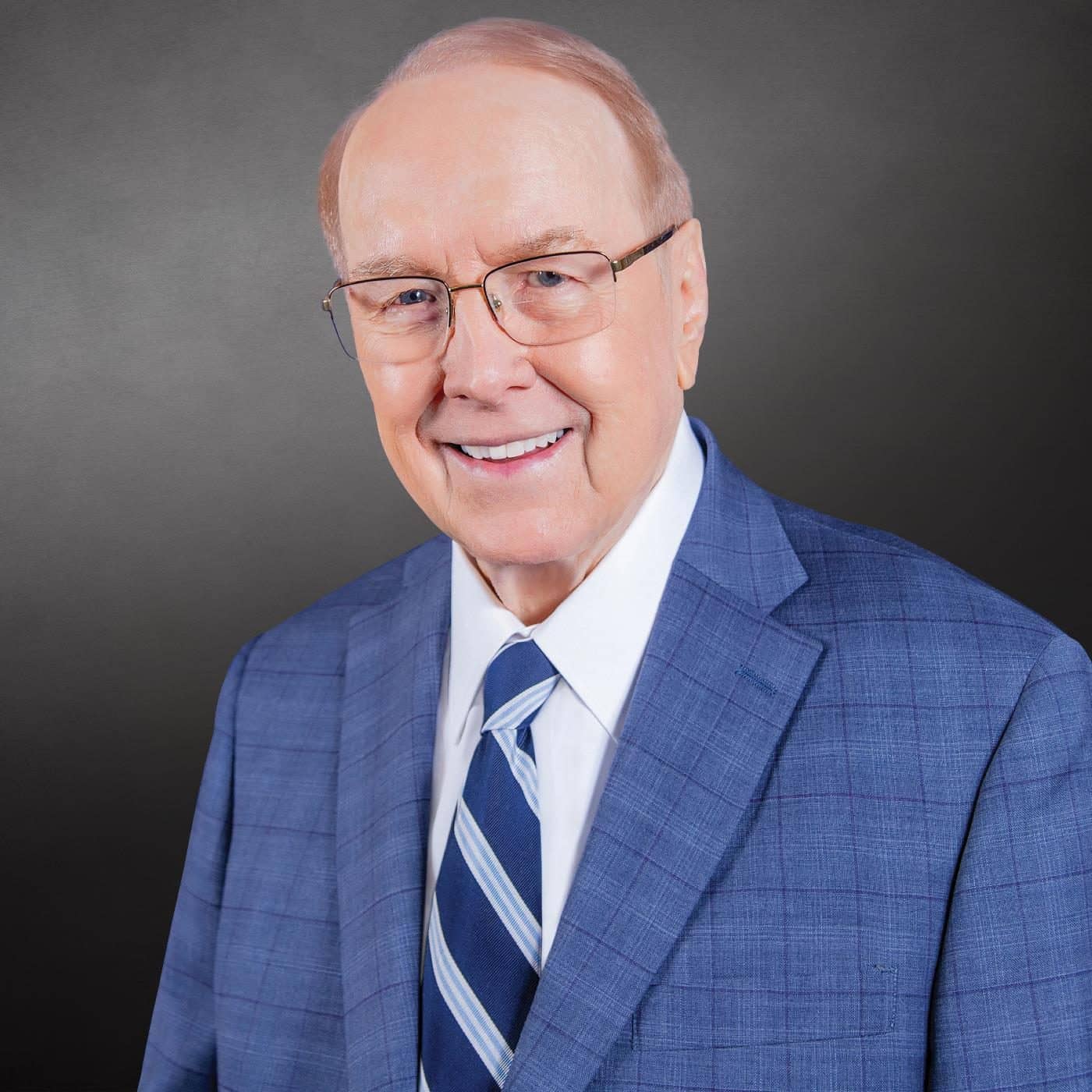


John Smithbaker joins Dr. Dobson to delve into the pain of fatherlessness and the healing power of purpose-driven mentorship. Reflecting on his own experiences, John illustrates how the absence of a father shaped his life and how embracing faith allowed him to turn a personal wound into a mission. This episode offers hope and practical pathways for breaking cycles of abandonment and fostering resilience and growth through community support.
SPEAKER 03 :
You’re listening to Family Talk, the radio broadcasting division of the James Dobson Family Institute. I am that James Dobson, and I’m so pleased that you’ve joined us today.
SPEAKER 01 :
Well, welcome to Family Talk, the broadcast division of the Dr. James Dobson Family Institute. I’m Roger Marsh, and today we’re addressing a crisis that affects millions of American children, and that is fatherlessness. Throughout his life and ministry, Dr. James Dobson firmly believed that the future of Western civilization depends on how we handle the crisis of fatherlessness. Almost every social challenge facing our children, from poverty to educational struggles and crime to substance abuse, connects to this father absence. Our guest today here on Family Talk knows this pain firsthand. John Smithbaker grew up without a father. carrying that wound throughout his childhood. After a successful career as CEO of Brunton Group, God transformed John’s heartache into purpose through a ministry called Fathers in the Field. And he now leads that ministry full time, serving the 13 million fatherless boys all across America. It’s not even been a month since Dr. Dobson passed, but we felt that the timing of revisiting this conversation was absolutely perfect. So now let’s get into part one, Dr. James Dobson’s conversation with John Smith Baker on today’s edition of Family Talk.
SPEAKER 03 :
Well, hello, everyone, and welcome to Family Talk. I’m your host, Dr. James Dobson, and today we’re going to be talking about an issue that I believe is at the heart of the crisis our families are facing today. Fatherlessness is pandemic in this country. As I wrote some time ago in my book, Bringing Up Boys, quote, the future of Western civilization depends on how we handle the crisis of fatherlessness. And I believe that’s more true now than it was then. The numbers are disheartening, and it’s not time to just wave a white flag. We got to do something about it. And my guest today is committed to the task of saving as many fatherless boys as possible and to change their futures. His name is John Smith Baker. We’re of like mind and like hearts on many things.
SPEAKER 02 :
John, I’m so glad you’re here. Oh, thank you so much. It’s a privilege and an honor and You’ve just been such a hero of mine growing up and reading your book, bringing up boys when I became a father and had a son and looked into his eyes and wondered, how do I do this since I didn’t have a father to show me?
SPEAKER 03 :
How do I do it better than my dad did?
SPEAKER 02 :
That’s right.
SPEAKER 03 :
In fact, your dad abandoned your family before you were born, didn’t he?
SPEAKER 02 :
That’s correct. My mom was pregnant with me, and I had a three-year-old sister. He actually encouraged my mom to have an abortion and kill me because I was not wanted by him, and thankfully I had a strong mom.
SPEAKER 03 :
And you know that for a fact.
SPEAKER 02 :
I do. I do. My mom told me, and I even asked my dad.
SPEAKER 03 :
Why would she tell you that as a little boy?
SPEAKER 02 :
Well, she didn’t tell me that as a little boy. This was in adulthood. Yeah. When I asked and, you know, I was seeking truth and wanted to understand the circumstances of why and when he left. And she shared that with me.
SPEAKER 03 :
Well, when we met before and talked, I was touched. deeply touched by what you went through as a child because you were a vulnerable, tender kid, weren’t you? I mean, some boys go through fatherlessness and are not affected by it as much. Most are, but some aren’t. But you felt it. You knew it. You were lonely. You longed for a relationship with a dad. And it didn’t get better. as the time went on. Describe that for us.
SPEAKER 02 :
Yeah, I mean, I didn’t really understand, but I knew I was hurting and I was broken in a lot of ways. I mean, looking back, I just knew something wasn’t right. It wasn’t the way it should be. I remember my mom telling me that I didn’t even speak until I was five years old. And she took me to specialists because she thought I had a problem or whatever else. And they tested my IQ and said, no, your son is fine. But he’s just quiet. I don’t know what all the reasons were, but I just remember her telling me that.
SPEAKER 03 :
How early do you remember that other kids had a dad and you didn’t?
SPEAKER 02 :
I would say it’s probably around six years old. You know, my mom worked nights and I was shuffled around to daycares. And thankfully, I had a grandma who took some of that burden off. But I remember my mom leaving and me just screaming and begging her not to leave me at this institutional daycare because I just knew that wasn’t the way it was supposed to be. I was already lonely and now I’m pretty much lonely 24 hours because my mom had to work evenings to pay the bills and we barely got by. So I didn’t see her during the day and I was sleeping at night. So I didn’t – it seemed like I never saw anybody.
SPEAKER 03 :
Who took care of you?
SPEAKER 02 :
Well, I mean, in the evening I was sleeping and my grandmother would come over or a babysitter or somebody. And then during the day I was at a daycare. So from a family perspective, I mean, I look back and I never saw anybody, it seemed like to me.
SPEAKER 03 :
You know, many people fail to realize just what impact that has on boys. Boys are not born knowing what it means to be male, right? It’s interesting how God designed us. But girls know what it means to be a girl and then to grow up to be a woman. They understand that role. Boys don’t. They have to be taught it. And when there’s not a loving dad on the scene, something’s missing. Something’s aching inside. Something longs for love. I remember seeing Jonathan Winters. You remember the comedian Jonathan Winters? I think he’s gone now. I remember a moment when he was being honest and he was being interviewed and he was very serious. He wasn’t trying to be funny. And he said, when I was a child, my mother and father got a divorce and we never saw my dad again. And he said that boys teased him about not having a dad. That was a different day, you know. Divorce was not so common. And he said that the boys would make fun of him and say he didn’t have a dad. And he said, I’d beat them up. I’d fight them. But then when they weren’t looking, I would go behind a tree and cry. Can you imagine? He said, this is a key line, all of my humor. It’s a response to sorrow.
SPEAKER 02 :
Well, I explain it when I talk now that the father-son relationship is the foundation of the world. I never really understood that until I became saved. And when that’s broken, the soul is broken and hurt. And my experience is that I believe the child has a decision to make when that happens. They decide to fight back. in a weird way for their father’s affection or they flee from it and they rebel. And that’s why so many of them, most of them flee from it. They become angry and bitter and they rebel against the system and they get in a lot of trouble in a lot of ways. I tried to fight for my father’s affection. So I decided that I would be the perfect kid, get good grades, excel in sports. So why would my father love me? Why wouldn’t he come back? Was there something wrong with me? Yeah. Did you have that thought? Yeah. Well, I said, you know, if there was something wrong with me, I was going to fix it. And so I have this striving gene in me now, it seems like, that I want to be perfect and all that. And that’s unhealthy too. And I explained to it that it’s just as destructive. So 85% of these kids get adjudicated some way. And then the other 15 percent become perfectionist nut jobs like I that I had to win or achieve everything at all costs. So I would, one, feel worthy and two, maybe my father would come back. And it’s hard because, you know. If I wasn’t saved when I was, when I started having children, thank the Lord he saved me when he did, I have no doubt I would have probably abandoned my children through divorce because I would put career and fame and ambition trying to fill that hole in me above being a father to my children and a good husband.
SPEAKER 03 :
You and others call that a father wound. Explain what that means.
SPEAKER 02 :
Well, I’m sure it means some things differently to different people. But for me, it really was I felt confused and alone because nobody was there to shepherd me into manhood. Compounding that, I would have the bitter response from my mom. talking bad about my dad. I would have society tell me that I didn’t need a dad, pat me on the head and said, big boys don’t cry, you’ll get over it. So I suppressed this hurt and anger deep down inside because I thought, well, something’s wrong with me because I know I’m broken, but everybody’s telling me I’m not. So I just knew that something was wrong. And I didn’t really know how to address it other than try and win and do and achieve things so I would feel worthy.
SPEAKER 03 :
Did you get acquainted with him later? Did you ever meet him?
SPEAKER 02 :
Yeah, that’s the other thing. He just lived across town. He just lived across town. Did he have nothing to do with you? Well, not in the early years. You know, my mom had to take him to jail to pay child support. He remarried, put his time into other kids. And so that compounds, that’s salt in the wound. Not only did he leave, he was putting his time and energy into a new family. And so that just hurts. And then when I got a little older, he would promise to come pick me up and me and my sister and then not show. So that just picks the scab and it hurts you even more. Then every once in a while, he would pick me up and then he dropped me off at his new house and he would go play golf and I would be a stranger in a home. And I thought we were going to spend time together. So it’s just all those compounding things that just drives that wound deep.
SPEAKER 03 :
You know, when a man kind of responds in that way, I always want to know what his childhood was like. What was his relationship with his dad? Do you know anything about your grandfather?
SPEAKER 02 :
I do. On my dad’s side, yep. They were son of immigrants and worked hard. And it was sad because I would get glimpses of them in my life, but I didn’t know them. When the divorce happens, those extended family relationships get broken too. And so you don’t even lose a dad. You lose a whole half of your family life. So in high school when I was excelling in sports and stuff, he would try to come back and – Because I guess I was doing something special. But then my mom and dad, they wouldn’t even hang out together, like, say, at the football game. So I wouldn’t know what to do at the end of the game. Do I walk to one and hurt the others? So I just walked in. So they didn’t even sit together. No. So who do I go to? What do you do? You put such strain and thought process and emotional strain on a young soul that you don’t know how to deal with it.
SPEAKER 03 :
You know, it’s really different for a girl, but it’s hard for a girl, too, to not have a father. And a girl’s self-esteem hangs precariously on a relationship with her dad. If he tells her she’s pretty, if he tells her he loves her, if he builds her up, if he makes an investment in her, she feels good about herself. And if he doesn’t, it’s really hard for the mother to make up for that. And my wife Shirley grew up in the home of an alcoholic father. And he was not a good man. He was okay when he was sober, but that wasn’t very often. And he would, every Friday night, go to the bar and drink up all the money. And so they were just destitute. It was a really unbelievable childhood of her own. Fortunately, Shirley’s mother was wise enough to get her two kids into an evangelical Sunday school. She wouldn’t go because she was working six days a week, and she had to iron and clean and wash and do all the things to keep the family together. So she didn’t go. So Shirley and John, as small children, Shirley was about five, went to this little church, and a Sunday school teacher there told him about Jesus and told Shirley about Jesus, and that made sense to her. And this Sunday school teacher said that Jesus was building a mansion for them, and they lived in this little lean-to. I mean, it was really kind of pitiful, and yet because of that, Shirley and John are whole people today. And when Shirley was six, she went to an altar on her own. I mean, she was down there by herself and prayed and gave her heart to the Lord and then learned to pray. And you can see that as a prelude. To the National Day of Prayer, which she has been handling for 25 years. So the church can make a huge difference, but you didn’t have that either, did you?
SPEAKER 02 :
No, my mom always would call herself a Christian, looking back. And I remember the first time I heard the name of Jesus, I was young. But we were cuddled up on the only little heater we had in our house. And we were cold. And my mom was crying because she had no food in the refrigerator. And she was crying out to the name of Jesus. I remember that’s the first time I heard the name Jesus. Single moms. No one. There was no safety net. No. My grandmother was probably the only one that helped. But my mom was so prideful that she wouldn’t tell people that she needed help. Do you remember being hungry? I do. Seriously hungry. Yeah. Well, I can’t say I was like starving like the pictures you see, you know, but I remember saying, well, we’re not going to have dinner tonight. You know, I mean, but my mom worked two jobs. Strong woman. Thankfully, she was a strong woman. But, you know, she had to work. And she had to work and pay for daycare. And she didn’t have a car, so she lived in a neighborhood she could walk to. You know, all those things that you do. And it’s just tough. You know, it’s not the way God intended it to be.
SPEAKER 03 :
Yeah. Fortunately, you were a good athlete. Yes. And that helps. That helps a boy. And yet it wasn’t enough for you. I talked to you about this when you were in my office. It didn’t make up for the fact that there was no dad over there cheering for you and hugging you when you made a touchdown or did something unusual.
SPEAKER 02 :
I was motivated by all the wrong reasons. I was motivated because I didn’t want to deal with the fact that I was broken or hurting, and I wanted to find worth in my life. So the accolades that came with sports provided some level of worth. And I would have male coaches that spoke into my life in that regard. And I had somebody that I wanted to please. And I’ve received some forms of affirmation in that process. But looking back, I did a lot of the things that I shouldn’t do trying to find my manhood. Yeah. girlfriends and all those things. How do I know I’m a man? What does a man do? How does a man act? And all those things. And you just go on a search trying to find what it means to be a man versus somebody explaining to you what a godly man is.
SPEAKER 03 :
You know, I don’t promote my own stuff a lot. I just don’t feel that’s what I’m here to do. But my book, Bringing Up Boys, is written for families that have sons that are struggling along this way. And they really have not yet found their sea legs underneath them. And there is a way to do this. I’ve talked about the fact that if a father is not there – And frankly, a mother is not equipped in her physiology and in her brain to teach a boy how to be a man. Some people get irritated by my saying that, but there’s just not. The man has to teach a man. And if there’s not a father there, then there needs to be a father substitute. There needs to be a coach or a grandfather or somebody who can come in and relate to a boy. You had one, and his name was Uncle Bucky. I’ve read your story. Uncle Bucky, who was that man, and what did he do for you?
SPEAKER 02 :
Yeah, thank the Lord for Uncle Bucky. He’s my mom’s brother, and he would come by and hang out. He would— Bring a ball and a glove and throw a baseball. And I would say, you know, he would throw it to the moon and back so I could catch it. That’s what it felt like. And to have a glimpse of a man and his roughness to me and how he spoke and that we would wrestle and we would go fishing and those kind of things just give me glimpses of hope of what a man is. how he acted, how he talked, all those things. Because as you know, I mean, being raised by a mom, not only can he not teach you how to be a man, but honestly, there’s additional wounds that are created. One’s being overly bonded with your mom. because too many things are hoisted upon your shoulders. And being overly bonded with your mom is not a good thing. And that creates a wound of you have to break, you have to leave, you got to, you know. So it is a compounding issue, besides trouble you can get into, the emotional issues. But, yeah, I’m very thankful for Uncle Bucky. And he was the one man in my life that stepped up, and it was not a lot of time. And that’s what I’ve encouraged people. It’s not a lot of time. It’s like a safety raft that somebody throws you that you can grab on and have a little bit of hope to get you through the years until your mind develops and your worldview and your perspective. So it helps you through the tough times.
SPEAKER 03 :
You know, I’m not able to identify the people in what I’m about to tell you because it’s very confidential. But an NFL coach and I sat down together and I was in his training camp. I observed the relationship of the coaches to the men. These are big, burly dudes. And I met with this coach, and I asked him a question. I said, what is the difference in your players between those who had a father at home and those who didn’t? He said, it’s night and day. And you’ll be surprised by what he said. I said, explain what the difference is. And he said, if you want to get the best performance out of the men who didn’t have fathers, you have to treat them like women. Are you kidding me? These guys on a football field are killing each other. And he said, well, they’ve grown up with women, mostly their mothers, their aunts, their grandmothers, and their school teachers have been women. They don’t know how men think and how they act. And they’re very, very sensitive. And he said, if you really want to build men, you have to recognize that sensitivity and you don’t make fun of them. You don’t yell at them. You don’t threaten them. You don’t try to get more out of them by yelling or abusing them. You let them know you’re on their team and you put an arm around them and you become a father to them. And everything changes. Isn’t that interesting?
SPEAKER 02 :
That is amazing.
SPEAKER 03 :
That’s good insight. You can see why I can’t tell this story with the people involved, because these men would be very offended if you said you have to treat them like women. That doesn’t mean to be soft and not to expect the highest performance out of them. But it does mean that you recognize that they think more like women because they’ve never had a man to teach them. I know.
SPEAKER 02 :
Well, I look back and when my son was playing Little League, 8, 9, 10 years old, and I was the coach, even in Wyoming, this little town, so God’s country as we used to call it, out of the 10 boys we had on our team, eight of them are fatherless. In God’s country. This is not the inner city. This is not the third world. We don’t define fatherlessness in what I believe it should be. When a dad divorces and leaves, even if it’s across the town, most of the time we don’t call that kid fatherless. But that kid is fatherless in his mind. Because somebody is not fulfilling the God-given roles of fatherhood in their life.
SPEAKER 03 :
We’ve been talking to John Smithbaker about fatherlessness, and he has experienced it. We need to move right on next time into the ministry that has grown out of that because it’s called Fathers in the Field. And our time is gone. We can just tease it a little bit here. But God has taken your father wound that you experienced as a child. And it’s turned that into a ministry for other boys who are hurting. And we’re going to talk about that next time. Thanks, John, for being with us. I love talking to you.
SPEAKER 02 :
Thank you very much.
SPEAKER 03 :
And we’ll pick it up next time. Thank you.
SPEAKER 01 :
The pain of fatherlessness echoes through generations, but John Smith Baker’s testimony reveals that God can transform our deepest wounds into purpose in healing. You’re listening to a special edition of Dr. James Dobson’s Family Talk. We’re revisiting a classic conversation Dr. Dobson had with John Smith Baker, founder of Fathers in the Field. Perhaps you’re thinking of someone who needs to hear this program right now, and if so, you can point them to drjamesdobson.org forward slash family talk, and you’ll find that information right there. as we carry forward Dr. Dobson’s legacy we invite you to visit his memorial website to reflect on his remarkable life story to share a personal tribute or to honor his memory with a memorial gift in a culture increasingly hostile to Christian values the Dr. James Dobson Family Institute will continue to be a beacon of truth defending the sanctity of human life, God honoring sexuality and religious freedom through our broadcasts, policy work and educational resources. We are still going to be equipping believers to live out their faith boldly while preserving America’s founding principles for the next generation. You can make a tax-deductible donation over the phone when you call a member of our constituent care team at 877-732-6825. That’s 877-732-6825. You can also send a gift through the mail when you write to Dr. James Dobson’s Family Talk, P.O. Box 39000, Colorado Springs, Colorado, the zip code 80949. And by the way, if you’d like to celebrate the man who spent decades equipping families with biblical truth and and defending the values that build our nation. You’ll find those opportunities and more when you go to jamesdobsonmemorial.com. Well, I’m Roger Marsh, and on behalf of all of us here at the JDFI, thanks so much for listening. Be sure to tune in again next time for part two of Dr. Dobson’s classic conversation with John Smithbaker, talking about the issue of rescuing fatherless boys. It’s coming up right here on the next edition of Dr. James Dobson’s Family Talk, the voice you can still trust for the family you love. This has been a presentation of the Dr. James Dobson Family Institute.