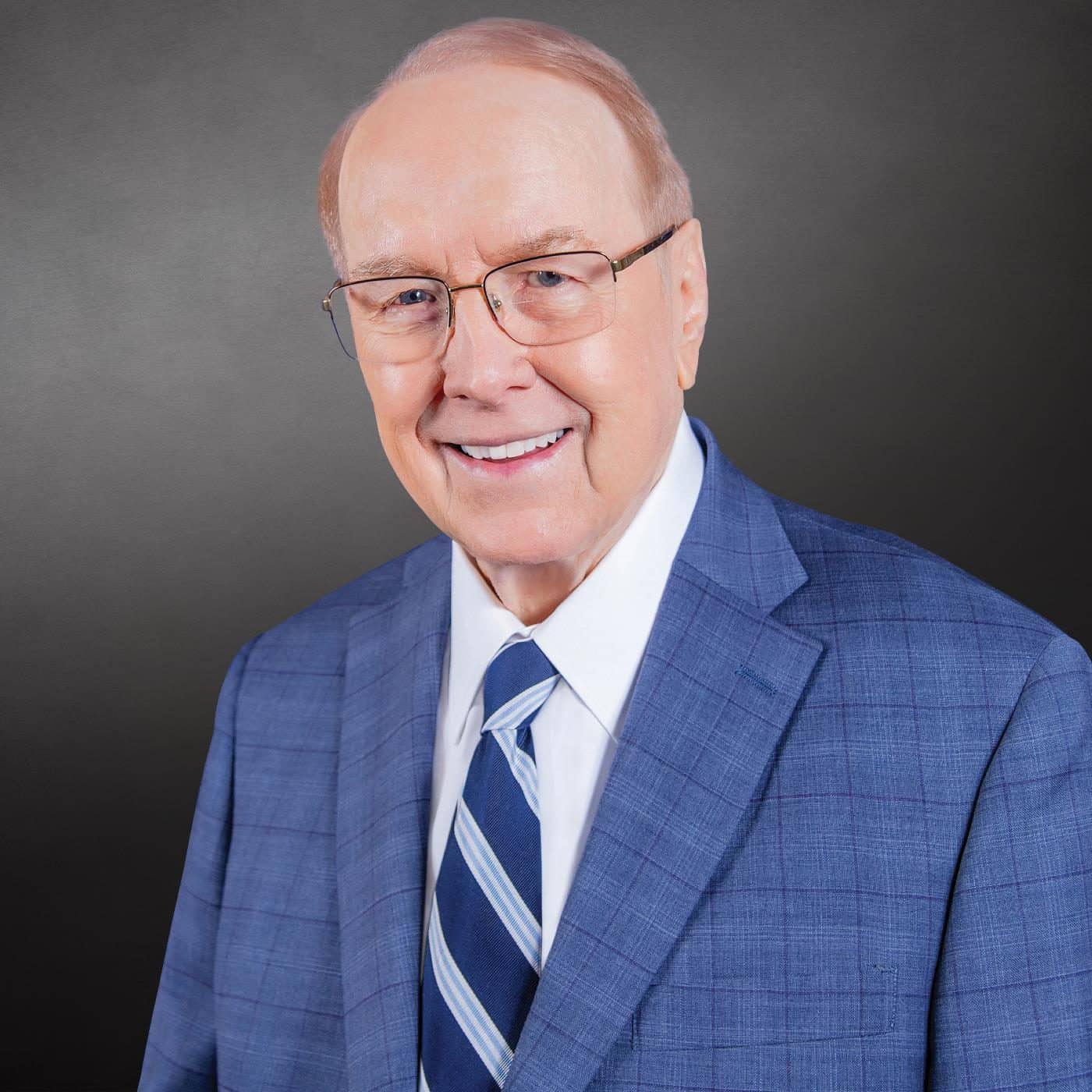


Join Dr. Dobson as he revisits his memorable discussion with Coach Tony Dungy, who shares insights on living an uncommon life. Drawing from his experiences both as a player and a coach, Dungy articulates the significance of character in achieving success and the vital role of father figures in shaping young lives. Through heartfelt anecdotes and practical wisdom, listeners will be inspired by Dungy’s unwavering faith and dedication to making a positive impact beyond the gridiron. Tune in for a thought-provoking conversation that challenges the conventional notions of success and leadership.
SPEAKER 02 :
Well, hello, everyone. I’m James Dobson, and you’re listening to Family Talk, a listener-supported ministry. In fact, thank you so much for being part of that support for James Dobson Family Institute.
SPEAKER 03 :
Well, hello, everyone. I’m Roger Marsh, welcoming you to Family Talk, the broadcast division of the Dr. James Dobson Family Institute. On today’s program, we’re revisiting a powerful and classic conversation Dr. Dobson had with former NFL coach Tony Dungy. If you’re a parent raising children in today’s culture, or if you mentor young people, this broadcast will encourage and equip you. As Booker T. Washington once said, excellence is to do a common thing in an uncommon way. And that describes what you are endeavoring to do in this season of life. Tony Dungy’s credentials speak for themselves. He’s a Super Bowl winning coach who led the Indianapolis Colts to victory in the 2007 Super Bowl, becoming the first African-American coach to hoist the Lombardi Trophy. He’s also a pro football Hall of Famer and a New York Times bestselling author. But what sets Tony Dungy apart isn’t just his success on the field. It’s his unwavering commitment to biblical principles and mentoring young men on and off the field. Throughout his coaching career, Tony Dungy witnessed a troubling reality. Three out of four NFL players came from homes without fathers. This shaped his approach to leadership and also fueled his passion for filling that void. On today’s edition of Family Talk, you’ll hear how Tony stepped away from coaching at the peak of his career to pursue something even more significant, investing in the next generation.
SPEAKER 02 :
The year was 2007, and our guest on one of those days was Coach Tony Dungy, who had just won a Super Bowl shortly before that as the coach of the Indianapolis Colts. And he had also just come out with a new book called called Quiet Strength, which went on to be the number one bestselling book on the New York Times list. And everyone here fell in love with this good, godly man on that day, especially my wife, Shirley. And I wasn’t even jealous. Because Coach Dungy was so generous with his time in helping Shirley with the National Day of Prayer. And she wanted me to give you her regards and welcome you back. Well, thank you, Dr. Dobson. It’s great to be back. Now you’ve brought out your second book called Uncommon. And the subtitle says Finding Your Path to Significance. And there’s a lot of very good advice in this book. And again, it’s a real pleasure to have you back. You retired. from professional football, January 21st, 2009. And you warned us when you were here in 2007. You said you were thinking about doing that. I said to myself, no, no, this man’s been too successful and he loves football so much. But you turned around and did it. You know, as much as you love football, and it was your whole life up to that point, or at least a very significant part of it, why did you close the door to that?
SPEAKER 01 :
Well, I do love football, and I wasn’t burned out. I wasn’t tired of it. I enjoyed our team tremendously. But to me, I was going to something, and that something was to try to do a little bit different things to help the communities I lived in. For 30 years, I had brought good football and tried to raise up good football players. But the past few years, just the things that are going on in our communities in Indianapolis, where I lived the last seven years, Our graduation rates, our crime rates, things that were going on with our teenagers. I just felt there was a little more that I could do that would be more significant.
SPEAKER 02 :
So reaching out to young people and to your own family and so on was what motivated you to walk away at the peak of your career.
SPEAKER 01 :
You get a lump in your throat over that? I will miss it, but right now I’m staying very busy. I’m getting to do things that I would never have gotten to do before, taking on projects that are going to be a great deal of fun, I think very rewarding. But for 30 years, I was really occupied with preparing football teams, getting… players ready to play. And then you realize there’s a lot of other unique things and neat things that you can do.
SPEAKER 02 :
You had 10 consecutive playoff appearances with your teams, which was an NFL record. You were a Super Bowl winning coach, of course. which every NFL coach dreams about. You were the NFL’s winningest coach going back to the 99 season, and you played in Super Bowl XIII. I’d forgotten that with the Steelers. You actually played in the game, didn’t you?
SPEAKER 01 :
I did. was fortunate enough to be on a team that won as a player and then 27 years later come back and win as a coach. And they were two tremendous thrills. They really were.
SPEAKER 02 :
I want to ask you one last question about retirement. Has your identity changed? Have you had any second thoughts about the fact that I was a very good professional football coach and I’m not now? Has that changed your perception of yourself?
SPEAKER 01 :
It really hasn’t changed me. I thought my popularity around the country might go down a little bit, but it just almost seems the opposite, that more people stop you, more people ask the same question you’re asking. How could you step away from a game? And that gives you a chance to talk about things that are really important in life. And so it’s been great.
SPEAKER 02 :
Well, you’ve brought out this book called Uncommon, and I’ve already explained that the subtitle identifies it to some degree. But what’s the significance of that title?
SPEAKER 01 :
It really came from my college coach. He talked about being uncommon. And that success was an uncommon thing. And you had to step away from the norm. Don’t come to college just to be average. And I really kind of wrote this for teenagers to really not feel like you had to follow the crowd. I think that’s one of the big problems we have now. We all want to be accepted. We all want to fit in. And so that leads us to do things that maybe we don’t even believe in. And Jesus talked about taking the narrow road. He did. And not taking the wide road. And that’s really the message in this book. You know what I thought of when I saw the title?
SPEAKER 02 :
Do you remember a famous quote from World War II by Chester Nimitz, the admiral who headed up the Iwo Jima landings? Admiral Nimitz said, uncommon valor was a common virtue. And that is one of the most famous quotes from the Marine Corps.
SPEAKER 01 :
My college coach grew up in that era and talked about being uncommon a lot. And he said, there’s two ways you can make yourself uncommon. You can either have a talent that no one else has, or you can have a desire, a drive, an attitude, something in your heart that allows you to do things that the common person could do, but most people won’t.
SPEAKER 02 :
And you said in here that it’s been your observation that many young men are struggling with what it means to be a man.
SPEAKER 01 :
I think we really are because of the absence of fathers in the home. I saw it as an NFL coach as I would interview our players that would come to us. And probably three out of four by the time I was finished coaching, three out of four were coming home. without that dad in the home. So you start talking about things about how you’re going to represent the community, what you’re going to do, how to be a good teammate, how to be a good person. A lot of this was the first time for many of these guys to hear it. And so it just made me think that we’ve got to some way fill the void. Everybody doesn’t have the benefit of a great dad like I did. So Where do the mentors come in? How can we step in and help young men really see this is what life is all about? And that was the idea behind the book. If I could just sit down with a teenager in a six hour car ride and just tell them what I thought was important about life.
SPEAKER 02 :
Well, let’s talk about that. When you were coaching in the NFL, every year you would have a class of rookies, and they come in and they’re, what, 21, 22, 23 years of age. And they’re great athletes or they wouldn’t be there. And they’ve been given a lot of praise and publicity and now a huge amount of money to come in and play football with you. What is uppermost in your mind that you want to get across to them? Where do you start and what is the deficit that you’re seeking to address?
SPEAKER 01 :
Well, to me, I wanted those guys to come in and be part of our team and be part of the city. I also realized just what you’re saying. They’re facing new challenges that they have never experienced before. They’re living on their own. They’re going to be making their own decisions for the first time. what they’re going to do when they’re away from the football field. And so just talking about those things and making good decisions and realizing that that’s the part that really stops a lot of guys. It’s not athletic ability. Most of them have the ability to play, but can they handle all the other things that go with it? So you start talking about relationships with women, role modeling, being part of the community. And very often, very often, you’re really treading on unknown territory for these men.
SPEAKER 02 :
I think of those that come out of the inner city and they’ve had nothing. They’ve grown up in poverty. And now they’ve gotten contracts for $10 million. What do you tell them about money?
SPEAKER 01 :
Well, you talk about money and using it wisely, saving. You talk about economics, but you also talk about being careful. And so many people now are going to come to them with different plans, different. Hey, you can do this. I can double your money. I can do this for you here. So many of them, they become the sole source of supply for the whole thing, the whole family, friends, that type of thing. And they have to think about. Not only their responsibility to their family, yes, but their responsibility to themselves down the road. And those are all issues that for a 21-year-old, they’re huge.
SPEAKER 02 :
Head coaches are very, very busy people. Did you have an open door for these guys? Could they come in and sit down and say, Coach, I’m lonely. I’m away from home. and I’m scared. I’m afraid I’m going to fall on my face. Can you help me?
SPEAKER 01 :
Did you sit down with them? I tried to create that environment, but most guys wouldn’t take advantage of that until they’d been there two or three years because their first year, they don’t want to admit to the head coach, I may be having some problems. He may not… welcome that. He may not play me. He may not think that I’m mature enough. So I’m going to stay away from the head coach. But once they got to know me and realize that, hey, I’m there to help, most of the guys would come in and take advantage of that later on.
SPEAKER 02 :
How difficult was it for you to let somebody go? How hard was it when somebody had played their heart out and they just didn’t have it or they had it and lost it? And you were the one that had to say, you’re not going to be part of our organization.
SPEAKER 01 :
That is the hardest thing about coaching. People often ask me, what’s the best part of my job? And I’d say, hey, when you win a championship game. and you’re up there and you realize your organization has done something special, they wouldn’t even have to pay you. You’d still enjoy the job. But on those cut-down days when you have to let 15 players go or 20 players go, there’s not enough money in the world. It’s the hardest thing in the world to tell a young man that his dream is over. Have you tried to stay in touch with some of those guys? I have stayed in touch with a lot of guys, and I think I’ve gotten a closer relationship to some guys now that it’s not employer-employee, it’s just friend-to-friend. And that’s one of the gratifying things, when a player will come back to you 8, 10 years later and say, hey, I really appreciate the lessons that I learned from you in 1996 or 97, or even when you had to released me because I wasn’t really listening. That was a wake-up call for me, and even though it was painful then, it helped me down the road. I was just walking down the street with my family and ran into one of my former players who told me that and said, you know, I didn’t really understand all the things you were talking about when I played for you, and I didn’t understand why you didn’t just stick to just football. It seemed like you were just hammering us with all these other things about life. He said, but now that I’m married… I really understand, and I thank you for it. And those are so gratifying. That’s what really makes it for you.
SPEAKER 02 :
You know, I know that in your drafting, you were not only looking for ability, athletic ability, and the knowledge of the game. You were looking for character. How do you know it when you see it? What’s it look like? And if a person doesn’t seem to have it, can you help him get it?
SPEAKER 01 :
Part of our job is to help them get it. And so it wasn’t the type of thing where if everybody’s not the mature, concrete person that we’re looking for, you can’t just say, no, we don’t want them. But those major decisions, when you’re drafting a guy with the first pick in the draft, when you’re drafting a guy high, it is much more character than ability. Athletic ability is going to take you to a certain level, but the championship teams are built on character. So That was very something we stressed a lot with the Colts and with the Bucks when I was there. And it’s so important. And I think many people overlook that. But the chemistry, putting together a winning team character is important. And then you also when you’re winning, your players are going to be role models for the young men in the community. So you want to be able to say. These are the guys that are going to represent us. They’re going to be the standard for the community. And it’s critical.
SPEAKER 02 :
You know, I was fishing in Canada one time with a very well-known developer who had done a lot of things with his company. And I asked him how he selected his lieutenants, the people that would help him lead the organization, and especially what were the characteristics that he was looking for. And he smiled and he said, I only asked one question. And I said, what is that? He said, I wanted to know what his relationship with his father was. Because he said, if he respected the authority of his father and came under his leadership, He would do a good job for me, and he would not challenge my authority. Now, the three out of four guys you bring in didn’t have a dad, and they’ve never seen that. How do they respond to your authority, and is that a major factor in the way you relate to them?
SPEAKER 01 :
It is. It’s one of the questions that you ask yourself when you’re evaluating whether to select a player or not. How is he going to fit in? How does he respond to authority? And is he going to be a team player? And we would go to great lengths to try to find that out. We talked to their high school coaches. We talked to their college professors. The greatest… Tips we would get on that would be to talk to the college support staff. We’d talk to the equipment men. Will they tell you? Oh, yeah. Very much so. If you ask the right questions, you know, you would find out. And it was something that I think. held us in good stead. With the Colts, we were able to maintain those winning teams throughout the years because we did have good, high-quality, high-character guys that practiced hard, that had that good team spirit, that played together year in and year out. And a lot of that was because of the players we selected. Would you draft a person who had three or four drug incidents? We would talk to people who had incidents with the law, and what I tried to do is just look them in the eye and get a gut feel. Did this young man learn from his experience? Does he have a repentant heart? Does he want to go forward and be part of a winning program? Is he just trying to pull the wool over my eyes? And sometimes you’re fooled, but many times you could just sit there and talk and you’d have a gut feel. And if my gut said no, most of the time we wouldn’t take those guys. Coach, how much freedom did you have to talk about Jesus Christ to these kids? unbelievably had the ultimate freedom. Both of the organizations I worked in, the ownership was very much behind me. And I felt that it was part of my responsibility. And I would start out the first meeting of the year and say, hey, I’m a Christian. So that’s going to impact the way that I coach you. Here’s how you’re going to be coached with respect, with love, so on and so forth. That’s what I believe. You don’t have to believe that. You don’t have to be a Christian to be on the team. But I’m going to model that behavior to you. And if you ever want to talk about it, my door is always open. Man, that is so impressive.
SPEAKER 02 :
That is impressive. You know, that goes along with, I think, the bonding that you were trying to create with the individual, too, wouldn’t it?
SPEAKER 01 :
It was part of my leadership style. I always felt that if you were going to lead a group, if they felt a closeness with you and they were going with you, it was not that you were pushing them to some goal. And that’s how I think the stereotypical coach is viewed in the NFL, that you’re the leader. driver that you push people. And I always felt that, hey, we’re going together. And if we build this bond together, you know that I care about you. When the road gets rough, we’re going to go together. If I’m just pushing you all the time and all of a sudden the road gets rough, you may not want to get pushed. You didn’t do a lot of screaming at your players. I did not. I did not. And there were times when I did, but more of it was instruction and encouragement. And I felt like we had motivated players, that if we instructed and encouraged, they were going to do well. What did you tell them about trash talk on the field? We talked about class a lot and doing things the right way. We talked about humility. One of my favorite quotes was pride goes before destruction. And so we want to go out there. We want to win with class. We want to lose with dignity. But we want to be the type of team that when young guys looked at us, that a parent would be able to say, that’s how you should be. Be like those Indianapolis Colts. And that was a big thing to me.
SPEAKER 02 :
What are the qualities that Peyton Manning has that made him such a winner?
SPEAKER 01 :
Peyton is really a driven person. For those that aren’t into football, we’re talking a lot of women who aren’t. And we’re talking about the quarterback. Peyton Manning is a fantastic player. He’s a great leader. He was a pleasure to coach because he wanted to improve. He wanted to win. He studied a lot. He studied a lot. He wanted to play the perfect game every week. And when your top player was a guy that you didn’t have to motivate, you could just tell the other teammates, you know, this is how we want to do it. That really helps you as a coach.
SPEAKER 02 :
Well, you have already answered this question, but Jesus Christ is the centerpiece. His love is the centerpiece of your life, isn’t it? It really is.
SPEAKER 01 :
That’s what motivates you, what drives you. It really is. And I think that’s what we talked the last time I was on the show. I thought I’d get out of coaching pretty early in life. But the reason I stayed in it 30 years, I wanted to show people that you could be Christ led and be successful in an industry where most people would say, well, that’s not the style. You’ve got to be rough. You’ve got to be tough. You’ve got to be aggressive. And I wanted to show that Christ can be paramount and win anywhere in any industry, including the National Football League.
SPEAKER 02 :
You do not have to be an uncaring coach in order to force these guys, beat them over the head to get them to perform.
SPEAKER 01 :
You can do it with love. Right. Many people said over the years, well, he’s a good coach, but they’ll never win, really win big because… He’s not going to push them. He’s not going to demand. He’s not going to scream at them. And that’s what they really need. And I never felt that was the case. So when we did win, I kind of suddenly did say that, that, you know, you can win and still have Christian principles and treat Christians. players this way, and they’ll perform for you.
SPEAKER 02 :
Well, I admire you greatly. Uncommon, Finding Your Path to Significance by Coach Tony Dungy. It’s published by Tyndale, and they’re good people too. Thank you. I’d like to talk to you tomorrow if you will stay with us.
SPEAKER 01 :
I would love to.
SPEAKER 02 :
I would love to. It’s always great being here. I appreciate what you’re out there trying to do. We haven’t had a chance to talk much about your family, but I’d like to do that next time. That played a major role in your stepping down, too, didn’t it?
SPEAKER 01 :
It did. That’s the one negative about coaching. You are away a lot. And I felt I wasn’t home as much as my dad was. And so being able to step down and be home a little bit more was important. Let’s start next time by talking about your dad. I’d love to. Thanks for being with us again. Thank you, Dr. Dobson.
SPEAKER 03 :
In Proverbs 10, verse 9, we read, Whoever walks with integrity walks securely. And I think it’s very safe to say that a man of integrity is a great way to describe Tony Dungy. Wouldn’t you agree? Today, you’ve been listening to Dr. James Dobson’s Family Talk. We’ve been featuring a conversation Dr. Dobson recorded a few years ago with Coach Tony Dungy. If you missed any part of today’s conversation, or if you’d like to share it with someone who needs to hear Tony’s message about uncommon living, go to drjamesdobson.org forward slash family talk. There you can hear this first installment of our two-part conversation with Tony Dungy. You can also learn more about Tony’s book called Uncommon, Finding Your Path to Significance. Again, you’ll find all the details when you go to drjamesdobson.org forward slash family talk. You know, conversations like the one you heard today remind us of why the Dr. James Dobson Family Institute exists and why it’s so important. Your prayers and faithful financial support help make this dream a reality. And that’s why we encourage you to go to drjamesdobson.org and make a donation in support of the James Dobson Family Institute. Again, you can give a gift securely online at drjamesdobson.org. Or if you prefer, you can call us. A member of our constituent care team will be happy to take your call when you dial 877-732-6825. That’s 877-732-6825. The ministry of the James Dobson Family Institute depends on faithful support of friends like you who believe in strengthening families through God’s truth. And it’s because of listeners just like you that we are able to share these relevant and biblical programs with you and your family each and every day. And if you haven’t had a chance to visit Dr. Dobson’s memorial pages yet, I strongly recommend that you do. Go to jamesdobsonmemorial.com to revisit the life and legacy of our founder and chairman here at the Dr. James Dobson Family Institute. Dr. Dobson’s memorabilia is all on display, pictures from his childhood all the way up through the years of founding Focus on the Family and the Dr. James Dobson Family Institute. Videos, great pictures, and more, all waiting for you if you haven’t had a chance to visit them yet. Go to jamesdobsonmemorial.com. Well, I’m Roger Marsh, and on behalf of all of us here at the JDFI and the Ministry of Family Talk, thanks so much for listening today. Be sure to tune in again next time for part two of Dr. Dobson’s powerful conversation with Tony Dungy, right here on the next edition of Dr. James Dobson’s Family Talk, the voice you can still trust for the family you love. This has been a presentation of the Dr. James Dobson Family Institute.