



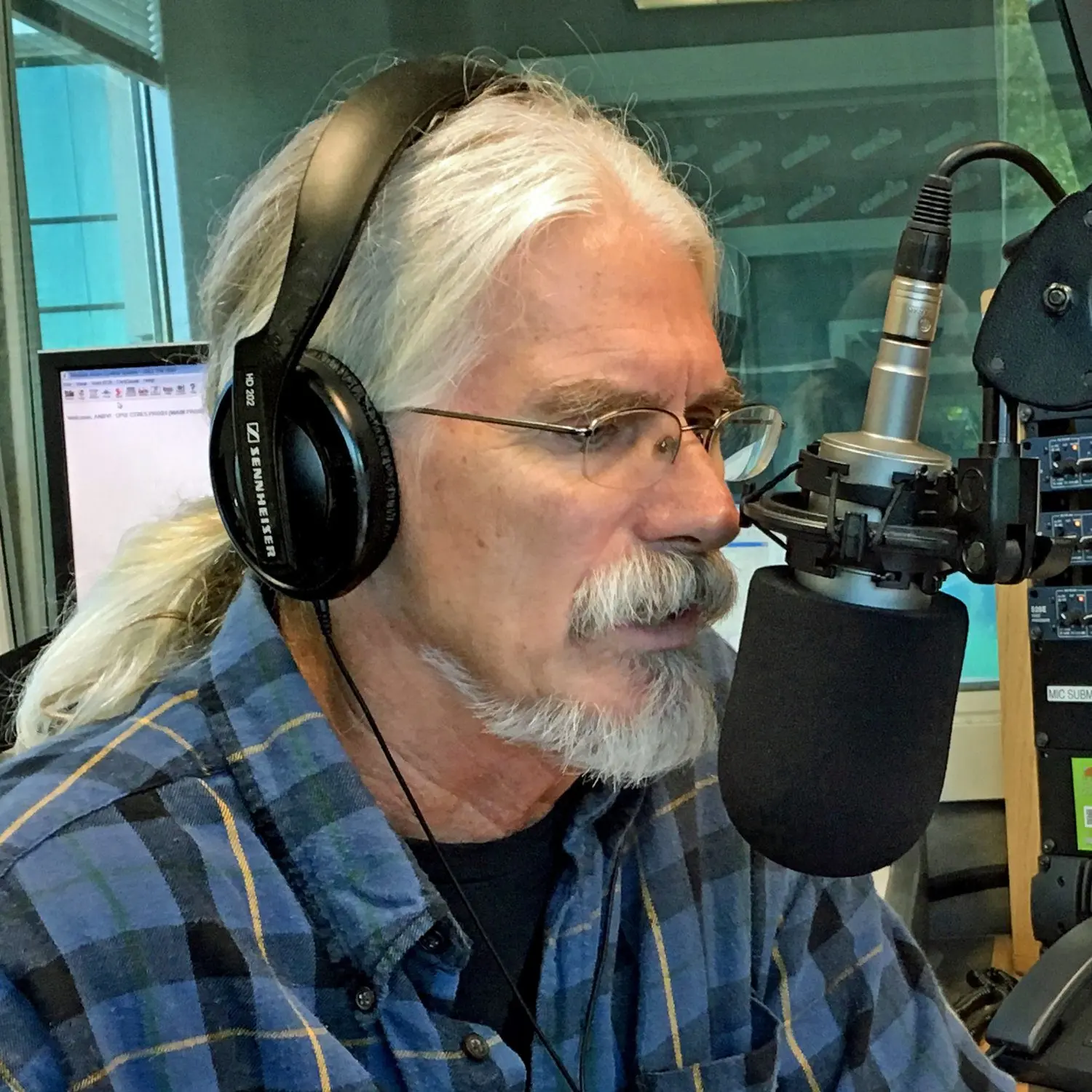
In this episode, host Steve Gregg delves into intriguing listener calls about the Bible’s enigmatic references to the Sons of God, offering an in-depth examination of the varying interpretations and the debated reliability of ancient texts like the Book of Enoch. As listeners present questions concerning deep theological issues, Steve navigates these inquiries with clarity and a scholarly approach, exploring both old and emerging views. This discussion offers a profound exploration into how traditional biblical texts can sometimes align or diverge from popular contemporary theories.
SPEAKER 05 :
Good afternoon and welcome to the Narrow Path radio broadcast. My name is Steve Gregg and we’re live for an hour each weekday afternoon taking your calls. If you have questions about the Bible or you have questions about the Christian faith or the Christian life, I’d be glad to talk to you about those things. If you have areas of disagreement with the host you want to talk about, I’d be glad to talk to you about that as well. I’m going to give you the phone number, but let me just say the lines are full. Don’t call right now, but call later and lines will open. Lines will be opening up all through the hour. You just have to catch them at random. The number to call is 844-484-5737. Our first caller today is going to be Sammy in Dallas, Texas. Hi, Sammy. How are you doing?
SPEAKER 03 :
Very well, thank you. I have a question my sister had got me about to read, and it’s called The World Before the Flood or The Time Before the Flood or something like that. So what they’re drawing from is the Book of the Watchers or the Book of Enoch, and they’re saying it’s a Bible book, and they say it’s almost – almost unanimous now that everybody considers sons of God, when they talk about sons of God, as being angels. So they’re saying that the angels did come down and have relationships with females. And they point to Job when it says sons of God came to present themselves before God, that that’s angels as well. Now my question is, Do you believe that? If sons of God, is it really angels? Because would God have made, created angels to be able to reproduce? Because I don’t think he’s ever said to angels, you know, that you will be a like kind. You reproduce and bring forth like kind. So my assertion is always that angels, sons of God, they were talking about men who were sons of God, but they turned away from men. And even in Job, when it talks about sons of God coming to present themselves, I always thought that was men, sons of God, because if they were angels in heaven, then that means Satan had access just to going to heaven, and I thought he was thrown out of heaven, so he would not have been able to come up to heaven. But that’s just, you know, real quickly… The question that I have is, can you expand on that and what you believe on that?
SPEAKER 05 :
Yeah, I’d be glad to. Well, any book that takes the book of Enoch as a source of information about time before the flood is not reliable for the simple reason that the book of Enoch is not reliable. It claims to be written by Enoch, whom it was not written by. obviously Enoch lived before the flood, so if he wrote a book, he could have told us about things before the flood, but Enoch left. He was taken to heaven before the flood, and the book of Enoch wasn’t written until about two centuries before Christ, which is about, what, 3,200 years too late to be written by Enoch, over 3,000 years too late. So, You know, the book of Enoch was not written by Enoch, and though it claims to be, that means the author is not telling the truth. It also means that the author doesn’t know any more about the situation than anyone else who wants to fabricate a set of circumstances for life before the flood. We don’t have any really biblical detailed descriptions of that period of almost 1,500 years or more. I’m not sure it’s the exact number of years. I think it’s about 1,500 before the flood. So the Book of Enoch is fiction. And when they say, well, it’s almost unanimous that this is referring to angels. Well, I think it’s unanimous among the people who think it’s angels. Among those who think it’s angels, it’s fairly unanimous that that’s talking about angels. But I don’t think anybody, any scholar who had a different opinion, let’s say on this matter 200 years ago, has changed their opinion completely. Well, I mean, some might have, a few might have, and some might have changed their opinion the other way. Some who thought it was angels back then may now believe it’s humans. I believe it’s humans, probably. I mean, I don’t know. The Bible is ambiguous, but there’s nothing in the Bible to suggest that those sons of God were angels. And since they did reproduce with human beings, that strongly suggests that they must have been human beings themselves, since I don’t know of any case where persons or where beings can reproduce reproduce with something other than their own type, their own species. So I’m just going to say I don’t care how many people come to be convinced. I mean, Michael Heiser was very, very influential over the past couple decades, and he took the Book of Enoch, I think, more seriously than it deserved to be taken. And he was strong on the idea that the sons of God in Genesis 6, 1 through 5 were, in fact, angels or some kind of creatures like that, some part of the divine council or something like that. And therefore, because of his popularity and the books he wrote, a lot more people are taking that view than before. But I don’t think the ones who are are the ones who are Bible scholars necessarily. I mean, some of them might be, but… You know, anyone who’s done his own thinking, his own research, would have his own opinion, and Michael Heiser’s citations of Enoch wouldn’t have a profound effect on them, I would think. Now, I don’t think the sons of God in Genesis 6 are angels. I’m not sure about the sons of God in Job, and it wouldn’t bother me if they were angels in Job. We don’t know if they are or not. One thing that may suggest that the sons of God that are mentioned in Job, in chapters 1 and 2 of Job, may be referring to angels or at least something other than human beings, is the fact that later in the book of Job, when God is speaking, he talks about the fact that when the foundations of the heavens and the earth were laid, the sons of God shouted for joy. It says that in Job 38, verse 6 and 7. It says, To what were its foundations fastened, or who laid its cornerstone in the earth, when the morning stars sang together, and all the sons of God shouted for joy? So here, the sons of God, who are also called the morning stars, were singing together when the From the foundation of the earth was founded. And therefore, since human beings weren’t here at that time, if there were beings actually rejoicing and they’re the sons of God, they must have been superhuman beings. Angels would be a good guess. And since this statement is also in the book of Job, it may very well support the idea that the sons of God in chapters one and two of Job are also angels. So I have no problem with that. I don’t know if they are or not. They could be, as you said, it could be humans. I don’t know that – you see, when it says they presented themselves before God, in Job chapter 1, the sons of God presented themselves before God, it doesn’t say they did so in heaven. We present ourselves before God when we gather to worship God and so forth. So, I mean, they could have been on earth, and the devil could certainly have infiltrated. I’m pretty sure the devil goes to church every Sunday. And so, you know, it’s very possible that even if they were humans – godly humans presenting themselves before God in worship, that the devil could have been among them. I don’t know. And it doesn’t matter to me, but I will say that even though I’m open to the sons of God being angels in Job, that would not immediately mean that that’s how the term is being used in Genesis. Job is written by a different author. Job is written probably earlier than Genesis was written. If Genesis was written by Moses, Job almost certainly lived before the time of Moses. So who knows what the sons of God may have meant to these different authors, since the term is used various ways in the Bible. I mean, Jesus is called the son of God. We are called sons of God. The Bible says, Beloved, now we are the sons of God. And it does not yet appear what we shall be, but we know that when he shall appear, we shall be like him. 1 John chapter 3 says in John chapter 1, Verse 12, as many as received Christ, to them he gave the power to become the sons of God. So that’s us. We’re God’s children, and we’re not angels. And likewise, in the book of Hosea, in chapter 1, God referred to Israel. When they are reconciled with God and on good terms with God, he said that they will be called sons of the living God. So you’ve got Let’s just give it to the, for the sake of argument, let’s just say the sons of God in Job really are angels. Okay, we’ll start there. Then we have Israel being called sons of God. We have Jesus being called the son of God. We have Christians being called sons of God. Now, that’s a lot of different uses of the term sons of God. When we then come to Genesis 6, which of these uses is Genesis using? I don’t know the answer to that, but… I suggest it could be humans as well as angels, even if Job used the term to refer to angels. And so, you know, when the book you’re reading purports to give details about the time before the flood, it must be depending fairly heavily on Enoch, which is not an inspired book, nor, for all we know, an accurate one. So it looks to me like that’s a claim that cannot be made. It certainly is not unanimous that the sons of God are angels in Genesis 6. I don’t know what the percentages are of scholars who see it one way or the other. It is true that the early church, the church fathers, that is, they tended to take Enoch seriously. I’m not sure if they thought of it as really written by Enoch or they just thought it was a great book. because we read lots of books that aren’t written by biblical characters that are great books. But, yeah, I don’t take the Book of Enoch seriously if we mean for historical information. I don’t think so. So the book you’re reading, I’m pretty sure I wouldn’t spend much time with myself because I’d be more interested in reading books that give, you know, reliable information than books that speculate about things from the Book of Enoch. Okay, Kelly in Eugene, Oregon. Welcome to The Narrow Path. Thanks for calling. You bet. Thanks for taking my call, Steve.
SPEAKER 04 :
Hey, I have a specific question for you, and it involves the actual meaning of the words of Jesus translated into English, and specifically the Lord’s Prayer. And when Jesus taught us the Lord’s Prayer, he began with, Our Father who art in heaven. And so my question is, in his native language that he was using, when he said, Our Father who art in heaven, was he, in his original language, was he depicting an actual father figure? or were the word or words he was using depicting a more gender-neutral entity? And I have a reason for asking this. I’m struggling with the decisions.
SPEAKER 05 :
Well, Jesus continually used the word that means father, not parent. There were different words in father and mother, both in Aramaic, the language he spoke, And we don’t know, you know, to what degree he spoke any Greek, but the Gospels are written in Greek. So certainly the Greek word means father. And it’s almost certainly the word from Aramaic, probably Abba. That’s what Jesus called his father. And Abba means something like, you know, daddy. It’s an affectionate term for one’s father. It’s not a gender central word at all. Okay.
SPEAKER 04 :
Well, that helps me. And I don’t know. My problem is that the new pastor that came into our church to lead our church, he’s a gay male, which that’s not my problem. I’m not judging or condemning anybody who might do that. My problem is that he’s adverse to gender assignment.
SPEAKER 05 :
Divine names or something.
SPEAKER 04 :
Okay, well, let me ask you this.
SPEAKER 05 :
Is he celibate or does he have a partner? No, he has a partner. Okay, then he’s a fornicator. All right, the Bible says that fornicators, and we’re not even talking about pastors, we’re just talking about, you know, no matter what, fornicators should not be allowed in the church unless they’ve repented. Now, if he has a partner, he obviously hasn’t repented. As soon as he repents, you’ll know it because he won’t have a partner anymore. But let me read something to you. This is what Paul said. The Church of Corinth had a very perverse kind of fornication being practiced by one person in the church. It was not the pastor. It was just another person. And Paul said they had to get him out of the church. And he says in verse 9, this is 1 Corinthians 5, 9, I wrote to you in my epistle not to keep company with sexually immoral people. Now, sexually immoral people in the Greek has to do with fornication. You know, the King James would say fornicators. Yet I certainly did not mean with fornicators of this world, nor with the covetous or extortioners or idolaters, since you would then need to go out of the world. That is, it’s not wrong for you to have friends who are fornicators as long as they’re not in the church. You can’t leave the world and you’re going to find all kinds of sinners in the world. He says, but now I have written to you not to keep company with anyone named a brother, that is anyone who claims to be a Christian, who is a fornicator. or a covetous, or an idolater, or a reviler, or a drunkard, or an extortioner. All those things are on the same level, apparently. He says, not even to eat with such a person. And he says, for what do I have to do with judging those who are outside the church? But do you not judge those who are inside? He’s saying you should. Those who are outside the church, God judges. Therefore, put away from yourselves that wicked person. So, even if he was not the pastor, even if he was not the pastor… he should not be in the church at all until he repents of fornication, and probably until he becomes a Christian. Now, of course, he would call himself a Christian, but if a person says they’re a Christian and they’re a fornicator, let me show you another thing Paul said just a chapter later in 1 Corinthians 6. 1 Corinthians 6, in the 9th and 10th verses, says, Do you not know that the unrighteous will not inherit the kingdom of God? Do not be deceived, neither fornicators… nor idolaters, nor adulterers, nor homosexuals, nor sodomites, nor thieves, nor covetous, nor drunkards, nor revilers, nor extortioners will inherit the kingdom of God. So all these people will not inherit the kingdom of God. It sounds like he does not regard them to be Christians at all. Fornicators and homosexuals and sodomites are in the list. And this is not gay bashing because heterosexual fornicators are not. It’s the fornication. You know, if a man has attraction to other men instead of women, and he remains single and celibate, who can judge him? You know, you can’t judge a person for what they feel or what they’re tempted by. You judge someone by their choices. And if a person says, well, I’m a man attracted to other males… and therefore I’m going to have sex with them, well, that’s making the wrong choices. And the persons who make those choices are what the Bible calls fornicators. And the Bible says they will not inherit the kingdom of God. And, you know, if there’s a fornicator among you calling himself a Christian, he says put him out of the church. He doesn’t belong there. Now, fornication, let’s just say sexual liberation, has made so much progress in our culture. That it doesn’t even carry much of a stigma in the general population anymore. I mean, when I was young and prior to that, in a society that was fairly Christian in its orientation, even though not everyone were Christians, fornication was a shameful thing, but in the sexual revolution in the late 60s and 70s, the stigma for just sleeping with someone who you’re not married to became neutralized. And now we live in a time where you can do the most perverse things, and who’s allowed to judge? Well, God is, and he’s made a judgment. It’s in his word. He says, that person should not be in the church. That person will not inherit the kingdom of God, unless he repents, of course. Now, frankly, I’m heterosexual. And because of that, I have sexual attraction to women. But I’m not allowed to go out and sleep with women. I have a wife, wonderfully. I’m very glad of that. But whether I had a wife or not, I was single for 10 years before I had my wife. And I was not allowed to sleep with women. And even as a married man, I’m not allowed to sleep with any other women, you know, than my wife. So, you know, we all have restrictions on our on our sexual behavior. And you’re not allowed to just indulge whatever your desires are, even if they’re quite natural feeling. You know, some people feel very natural getting drunk. Yeah, well, that’s very natural, but that’s not permitted. So a person who has a strong drinking problem, well, they’ve got to make a choice to not drink. And if someone has a strong urge to sleep with people they’re not allowed to sleep with, They’re going to make a decision not to do that. Now, your pastor, your new pastor apparently hasn’t made that decision. And he’s decided instead to go rebel against Christ. Because Christ is the one who condemned this behavior, you know.
SPEAKER 04 :
Well, that’s, you know, the words of Christ are very important. I’m born again Christian. That’s, you know, my concern was that he begins the Lord’s Prayer now with our God who art in heaven because he’s adverse to the fatherly figure.
SPEAKER 05 :
Well, that is, of course, another example of his rebelling against Christ. When Jesus says, when you pray, say these things, or pray this way, and you say, no, I think I’ll make it up as I go along. I’ll just pray what I want to pray.
SPEAKER 04 :
That was my concern. If he’s changing that, what other meanings is he changing? I’m still kind of an adolescent in my…
SPEAKER 05 :
spiritual maturity so i’m trying to learn everything i can but well you’ve learned better than he has jesus taught yeah you’ve learned better than he has jesus said in john 8 31 that says then jesus said to those jews who believed in him if you continue in my word that means if you’re obedient and live the way i tell you to you are my disciples indeed Now, by saying you’re my disciples, indeed, he’s implying that there are some people who may be disciples in name only. They’re not really disciples. But you are really, indeed, my disciples if you continue doing what I say. Now, if you rebel against his words, you’re not his disciples. You can say you’re a Christian until you’re blue in the face, but Jesus is not convinced. He knows who’s living in rebellion against him. Right. You know, we might say, well, this pastor’s a very nice person. This person loves people, seems to really love people. Yeah, but he doesn’t love them in the way God says to. He’s actually loving one person in a way that’s, strictly speaking, forbidden. And so I would say you need to find another church.
SPEAKER 04 :
I mean, obviously… Well, that’s the decision I was trying to make is, you know, is this, yeah, is this right or… Is it me?
SPEAKER 05 :
It’s not just you. It’s God. It’s God’s word. Yeah. So one thing you need to know, you say you’re relatively new as a Christian, but one thing you will learn as you go along is very many churches could not care less what Jesus said. They’ve got either the worldly culture, they’re bowing to the worldly culture instead of to Jesus Christ, instead of The Bible says every knee shall bow and every tongue shall confess that Jesus Christ is Lord. Yeah, well, they’re bowing and confessing that the woke world is Lord. And they’re going to follow that instead of Jesus. Well, they can do so. They can do so. But the Bible says if they do so, you should have no company with them. Don’t eat with them. They’re not going to inherit the kingdom of God. And Jesus said, he said, not everyone who says to me, Lord, Lord, will inherit the kingdom of God, he said. But those who do the will of my Father in heaven. So, I mean, lots of people in churches, including pastors, like your new pastor, probably they refer to Jesus as Lord, or maybe that’s too gender specific. Maybe Lord and Lady should both be used. But the thing is, if they’re saying that Jesus is the Lord, or they’re claiming to be Christians, in other words, and they’re not doing what he said, they are not real Christians. And Jesus said, the next verse said, many will say to me, Lord, Lord, We prophesied in your name. We cast out demons in your name. We did many mighty works in your name. And he said, I’ll say to you, I never heard, I never knew you. Get away from me, you workers of iniquity. Now, these are people who were in the church doing seemingly impressive Christian stuff, but they weren’t doing the will of the Father. Jesus said, if you call me Lord and you don’t do the will of the Father, well, I’m going to say, depart from me. You cursed it into everlasting fire and prepared for the devil and his angels. So, You know, I mean, when you find a church that doesn’t care about what Christ said, doesn’t care about what God said, doesn’t even care about who God is since Jesus revealed him as the Father, and they say, well, yeah, we don’t feel comfortable with that. We’ll just kind of make it up as we go along. We’ll find another way to think about God than the way that Jesus said God is. Well, that’s not a church of Jesus Christ. They may say church over the door or on the sign out front, but they’re not part of the body of Christ. They are rejecting the head. Jesus is the head. If you’re not obeying the head, you’re not part of the body. You’ve basically amputated yourself from the body. Because the real body of Christ obeys the head. That’s what makes it his body. Just like your feet and your hands, they obey your head. That’s what makes them yours. The person living next door to you, his hands and feet don’t obey your head because they are not your hands and feet. They’re not your body. But your body obeys you, your head. And therefore, you know, the real church obeys Jesus. It’s not a rare thing for some groups to call themselves churches, people who call themselves Christians, and to totally reject everything that defines a Christian and everything that defines a church. And, you know, I guess they’ll find out when Jesus comes back or when they die, because one of those two things is going to happen in the next few decades. They’ll find out on the Judgment Day that, you know, it’s not what they wanted to define Christian as or what they wanted to define God as or what they wanted to define the church as. It’s what God defines it as. And we’re fortunate to have the revelation of God’s mind in the Bible. And by the way, that came to us at great cost because many of the writers of the Bible gave their lives to give us that. And many people who preserved it through history for us gave their lives for it. And so it’s a very expensive thing. proposition for God to give us his word like that and to bring it to us like this it had a lot of cost in human lives but you know they don’t appreciate that they just say well you know maybe God thinks that’s an important book but I know more than he does obviously because I don’t agree with what he says people like that you know they could be atheists they could be you know Muslim or Buddhist they can’t be Christians they’re not what God calls Christians and when you stand before God It’s not going to matter what you call a Christian. It’s going to matter what he calls a Christian. And this pastor, at this point in his life, is not a Christian. He’s not a follower of Christ. And maybe he’ll repent. That’ll be good. But if he does, he’s going to have to obey Christ. So anyway, I’m going to say that church is not a church, frankly, because they accept a leader who’s not a Christian. and who’s in fact thumbing his nose at the teachings of Christ and of God. People who do that, and people who will follow people who do that, are not what we call a body of Christ, not a group of Christians. Anyway, those are my thoughts about that. I appreciate your call.
SPEAKER 01 :
where you’ll find free topical audio teachings, blog articles, verse-by-verse teachings, and archives of all the Narrow Path radio shows. We thank you for supporting the listener-supported Narrow Path with Steve Gray. Remember, thenarrowpath.com.
SPEAKER 05 :
Welcome back to the Narrow Path radio broadcast. My name is Steve Gregg, and we have another half hour ahead of us taking your calls. At this point, I’m only looking at one open line on our switchboard. If you want to call, the number is 844-484-5737. If you do that right now, you might get ahead of everybody else and get in that slot.
SPEAKER 1 :
844-484-5737.
SPEAKER 05 :
Our next caller is, let’s see, it’s going to be Alan from Grass Valley, California. Hi, Alan. Welcome. Hi, Steve.
SPEAKER 02 :
So I’ve heard you talk about the age of the earth, and people keep going back to the Old Testament, but I’m trying to look at it only from the New Testament. In Romans 5.18, it says, And then in Luke, it gives the genealogy of Christ all the way back to Adam. So if we sin, and we sin because of Adam, and Adam’s genealogy is known, there really can’t have been people before that, right?
SPEAKER 05 :
Well, right. There were no people, according to Scripture, there were no people before Adam and Eve. It specifically says about Eve, her name was called Eve. which means living, because it says she was the mother of all living. So it’s very specific. There were no people who had any other mother than her. She’s the mother of the whole human race, and Adam was the founder of the race. So, yeah, human beings did not exist before Adam. Now, the exact length of time since Adam until now has been disputed. Some people think it’s only 6,000 years. That’s what we’d get if we total up the years in the genealogies in Genesis 5 and in Genesis 11. We’d get from Adam to Abraham would be about 2,000 years. And we know that from Abraham to Christ was about 2,000 years. And from Christ till now was about 2,000 years. So that makes about 6,000 years since Adam. Now, on the other hand, that’s not that’s not immediately relevant to the age of the earth. It is for us, if we believe that Adam was created only six days after the earth was created, and we’re talking about 24-hour days, then, of course, the age of the earth is not very much greater than the age of Adam. It’s just about five days earlier the earth was created. But there are people, including Christians, who think that the earth was around a long time before Adam, and that the universe was around a long time before Adam, Now, I’m not of that opinion, but there are Christians who are. There are Christians who think the universe could be, you know, 30 billion years old and the earth 4.5 billion years old. But Adam was much more recently created. those people, of course, will be looking at the Old Testament, looking at Genesis 1, and taking the record of those specific six days, they’ll be taking it more symbolically, or at least in some non-literal sense. And that is what some Christians do. I don’t. I believe it’s not impossible that it could be done. I’m just saying I don’t, because I don’t see a good enough reason to do so. But on the other hand, you say you’ve heard me talk about the age of the earth. I talk very little about the age of the Earth because I don’t really care how old the Earth is. People do ask me about it, so I’ll talk about it just like you did. But, yeah, I don’t care if the Earth is billions of years old or thousands of years old. I’m not sure that we have the data that would make it absolutely certain one way or the other. I think the appearance of the data, a priori, suggests thousands of years old. But, again, to whatever degree Genesis 1 may contain symbolism or gaps that we don’t know about, I can’t say, and no one can say. So people who do believe the earth is much older, they take chapter 1 of Genesis to have either some gaps or some non-literalness about the days. And if they do that, then, I mean, if they’re right, then the earth is older than thousands of years. Right. but who cares? I mean, I don’t care. The people who care about that are the evolutionists. I’m not an evolutionist. Now, as a creationist, I can believe God created the earth 4.5 billion years ago, and it’s no skin off my nose. It doesn’t matter to me when he did it, because he could have created it in six days or in six million years. It doesn’t really matter, or six billion years, but… But the evolutionist needs the time. I don’t need the time because I believe God made things by speaking them. But the evolutionist does need time. Unfortunately, even 4.5 billion years, most honest evolutionists would say 4.5 billion years, that’s pretty tight even to get the first living thing to evolve from non-life, just to get a living cell. from mere chemicals, it’s not clear at all that 4.5 billion years would be long enough. And so, I mean, evolutionists need much more time than that. But they certainly, you know, 4.5 billion is such a big number that we can just say, oh, that’s really huge. I guess almost anything could happen at that time. But statisticians who’ve looked at the difficulties that have to be overcome by organic chemicals forming themselves into an information-rich organism, which has DNA, which every organism does, and DNA contains information, undetailed information, and more information, they say, than all the Encyclopedia Britannica combined, you know, for that to form with no intelligence guiding it would not only take more than 4.5 billion years, it would take longer than the age of the universe itself is thought to be by the secular. So, In fact, it would take so long, frankly, it would never happen. Because what we’re talking about, think about the Encyclopedia Britannica. We’re not, you know, whatever we got, 30, let’s say we got 35 volumes. I don’t know if that’s right or not. Let’s say 35 volumes, Encyclopedia Britannica. When we talk about that coming about without intelligence, we’re not just talking about the creation of paper for pages and cardboard for covers and cloth to cover those and glue to put it together. We’re talking about the information on the cover, the right letters in the right order to spell Encyclopedia Britannica. And then every article in those volumes is full of information, too. We’re talking about you know, give it billions of years, and monkeys on typewriters could never write a single, you know, sensible sentence, much less information, rich information, like in the Encyclopedia Britannica. Yet, you know, Carl Sagan, who is an atheist and an evolutionist, he said one DNA molecule contains more than several thousand volumes of the Encyclopedia Britannica. So, You know, the evolutionists have got their work cut out for them, let’s put it that way, and 4.5 billion years is not going to help them because just getting the first living thing is going to take almost an infinity of time. And then, of course, there’s no reason why it would evolve. I mean, why would a single cell, which is, of course, designed to reproduce itself with another single cell just like itself, why would it ever develop into a multicellular entity that had diversified kinds of cells, blood cells, bone cells, tissue cells, you know, skin cells, hair cells, just all the kinds of cells that there must be thousands of kinds of cells or at least hundreds of different kinds in an organization, an organism like us. And so why would a single-celled amoeba thing Developed into a creature with so many different kinds of cells when it doesn’t need them and amoeba gets along just fine Just with the cell itself and even if it let’s just say an amoeba divided in two as they typically do To reproduce themselves. Let’s just say they divided two and they stuck together two cells stuck together and instead of separating into two units. Now you’ve got like Siamese twin amoebas. And let’s say that kept happening. Let’s say they multiplied into eight and thousands of cells, and they stuck together so that they would be a multicellular batch of amoebas. But they’d still be all amoebas. There wouldn’t be diversified cells for different functions and so forth. So, I mean, even if you get that first cell after gazillions of, failed attempts over gazillions of years, what would make that cell evolve into something else? You know, in order to survive, the cell has to be a functional complete unit. If it’s a functional complete unit, why would it have to turn into something else? It can get by just as it is. So, I mean, evolution is just full of problems, but they need the time. They need the old earth. I don’t need it. I’m not against having an old earth because God could create in any period of time he wants, but You know, the emotions on this are on the evolutionist side because they’re desperate. I mean, I’m not saying to believe in an old earth is a desperate thing. They’ve got a lot of things they point to that give evidence of an old earth. And there’s people who point to evidence of a young earth. But most scientists are on the old earth side. But they’d sweat bullets if somebody began to show them some difficult evidence for them that the earth is young. because their whole evolution is the creation myth of atheist religion. Every religion has its creation stories, and atheism is a religion that has evolution as its creation myth. And, you know, so they got a lot invested in it. So anyway, yeah, I believe the earth is probably younger, but it might be older. It wouldn’t matter to me either way. I can’t imagine why it would make a difference to me, but it would make a big difference to them. I believe. Okay, let’s talk to Dan in Glencoe, Minnesota. Hi, Dan, welcome.
SPEAKER 06 :
Hello, thank you. I’m a good pick-out speaker about that. That was wonderful. That was a wonderful dissertation. Stephen, I love you. I really appreciate you and your ministry. I think it’s profound, but I have to say that I firmly disagree with you on healing as not part of the atonement.
SPEAKER 05 :
Okay, good. I mean, that’s a good discussion we haven’t had for a while.
SPEAKER 06 :
Good to get into it. Go ahead. You know, you say it’s a spiritual healing, and that healing really is an act of mercy of God. And there’s so much to talk about. It’s a very large topic, as you know better than most. And I’m referring to Matthew 8, 17, which you’ve quoted, and I’ve been listening to your lectures on that. I have more to listen to. And I know that maybe the catalyst or the impetus for you to want this is your compassion for your brothers and sisters in Christ who die sick and then they have doubts of their salvation.
SPEAKER 05 :
No, actually I don’t. My entire concern about this is to be exegetically correct. I actually accepted the Word of Faith teaching in the early part of my ministry because I thought it was biblical. And then I studied the Bible better and I realized it wasn’t.
SPEAKER 06 :
Well, I think, I don’t mean to interrupt you because I know I’m short on time. And that is, yeah, but you can’t discount the emotional effect that teaching has. I don’t. I do understand that you believe that it’s biblically sound, that it was spiritual healing. But, you know, Jesus never spiritually, I mean, where in the scriptures does he say people came to him that were sick? He said, well, I’m not going to bother with that. Let’s heal your spirit. The Bible never talks about healing one’s spirit. It binds up the brokenhearted. But all of these healings that he did, including here in Matthew, were physical healings. And, you know, you can’t say that the country was healed or the nation was healed. by by jesus’s ministry because look what happened to israel with the breakup of the temple and the scattering of the jews there was no healing of the nation of israel here it was you know he healed people physically and he commanded the disciples and the great commission to heal the sick and they shall recover and you know you said that jesus is owed by god forgive me my passion i’m sorry i don’t mean i’m not angry But I’m just saying, you said that Jesus may be owed by the Father for all these healings that didn’t happen if it was a justified, in other words, it was justified versus merciful. But, you know, all of our salvation is based on whether we believe it or not. He that believeth not shall be damned. And I think the problem that people have with healing is it’s a physical miracle that’s rarely witnessed, if ever witnessed by humanity. Whereas our spirits being born again and recreated is something we can accept because we don’t see it other than the evidence of the love of Christ that someone may have.
SPEAKER 05 :
Let me ask you some questions. I’m not real clear on your position here. Okay, so you believe Jesus died for our physical healing. What does a person have to do in order to obtain that benefit of the atonement?
SPEAKER 06 :
Well, you have to believe it. Okay.
SPEAKER 05 :
And that’s what you have to do also to be saved, right? In other words, one of the benefits of the atonement is certainly that we can be forgiven of our sins, but we have to believe it. And then the other benefit, you say, is healing of our bodies, and we have to believe that. Yes. So what if I think I can believe for my salvation? But I don’t seem to be able to believe for my healing, because let’s just say I got paralyzed and the neck down. And I’m believing God for my healing, and I’m not getting it. So apparently I don’t have enough faith to benefit from the atonement, right?
SPEAKER 06 :
Well, you can have faith for salvation, I mean for eternal life, but we’ve been fed so much doubt and unbelief by denominational religions, Christianity, and a lot of preachers, Calvinists, John MacArthur’s of the world, etc., that have downplayed and told us that Jesus did not pay for healing and that healing is not part of, you know, is not something that we can expect from God. Whereas God, what’s wonderful about it, and it’s really wonderful news, it’s been paid for, and we have to remove the doubt and unbelief. The same thing the disciples said when Jesus told the disciples, how much longer must I put up with the OE of little faith? He renewed the disciples from not having faith.
SPEAKER 05 :
Go ahead. Were you listening to me yesterday, the show yesterday? No. I had a day off today, so I was able to… Well, I mentioned two women I knew, and these are both women that I knew very well. They both had terminal cancer. One of them believed what you’d believe. And she, for months, was saying, I am healed. By his stripes, I’m healed.
SPEAKER 01 :
I’ve been healed.
SPEAKER 05 :
She had faith like Crazy. And she was cheerful about it because she was sure she wasn’t going to die of cancer. And she kept saying she was healed right up until the day she died of cancer. Never was healed. Now, the other woman was named Janie. She had terminal cancer, and she said that she was not going to get healed. She said that God told her he’s going to take her home. And then he told her what day it would be. He gave her the date. And she said, don’t pray for me to get better. I don’t want to be healed. God’s going to take me home to heaven. She got healed. She got healed. And as far as you know, she’s still alive today. Now, here’s people who, one, had faith for healing. And by the way, if we say, well, she must not have had enough faith. She died? Yeah, one died. As she was saying, she was healed right up to the moment she died. And she had as much faith as a human being could be imagined to have, but apparently it wasn’t enough. If she couldn’t get healed with that kind of faith, I don’t know who could. And then this other lady, Janie, I mean, if you say Jesus made healing, I assume, as free to us as salvation. Okay? Yes. Okay, so she believed like crazy, and she didn’t get healed. So maybe she doesn’t have enough faith to get forgiven either, you know, because both of those come on the same platter free.
SPEAKER 06 :
I have an answer. Go ahead. And this is it. You nor I know the hearts of men and women. You know what I’m saying? Like, for example, this gentleman, you talked to his pastor, Christian pastor that’s practicing homosexual. Yeah. You know what I’m saying? He says he’s a Christian. And all these people go to this church apparently and believe he’s a Christian. Okay. I told you something. You’re ignoring something I said.
SPEAKER 05 :
You’re ignoring something I said. I said I knew these women really well. But you don’t know their heart. Well, I knew that she had nothing on her mind except that she was healed. She was content of it.
SPEAKER 06 :
Well, my point is.
SPEAKER 05 :
Go ahead.
SPEAKER 06 :
My point is this. You mentioned you read nearly one book a day, probably one book a day of Kenneth Hagin. And I believe him to be an extraordinary man, a man of God. And I don’t think that any, most of what he said, I mean, I think, I don’t know of anything he says except perhaps one thing, and I don’t want to get into it, that may not be absolutely true. But he ran into that himself. He said, why is it, Lord, that some people are healed and some people aren’t healed? And You know, God didn’t tell them. But, I mean, my point is we can’t wash away and reason away Scripture. All the Scripture that supports that sickness and disease comes from the enemy, right? And that God came to heal, became a man and healed everybody that came to him. He did not deny anybody. That’s not true. Not true. He didn’t heal Lazarus.
SPEAKER 05 :
He didn’t heal Lazarus when his sisters came and sought him.
SPEAKER 06 :
What do you mean? He raised him from the dead.
SPEAKER 05 :
Yeah, he didn’t heal him. They wanted him to come heal him.
SPEAKER 06 :
Yeah, because he wanted to show you that he had the power to raise him from the dead.
SPEAKER 05 :
That’s exactly right. Sometimes we want a healing, but God has something in mind different.
SPEAKER 06 :
But it’s not going to be… Well, no, there’s no scripture to support that idea.
SPEAKER 05 :
John 11. I’m sorry, I’m going to put you on hold because I need to answer some of the things you’ve said. I wanted to let you speak as long as possible. And I think I’ve got your But let me just ask one more question, then I want to answer some of the things you said, because we’re going to run out of time, as you know. Do you believe, as Kenneth Hagin said, that you will have what you say?
SPEAKER 06 :
Yes.
SPEAKER 05 :
Okay, so you’re wrong.
SPEAKER 06 :
If you do not doubt in your heart.
SPEAKER 05 :
Well, no, if you will have what you say, I know that’s not true. Because when I believed what Kenneth Hagin said, I was… saying that I didn’t have allergies. But I did. And I believed in my heart. I mean, I was a young guy in my teens, totally zealously believing with all my heart. Now, if that wasn’t enough to get me healed, then I doubt that anyone will ever have enough faith to be healed. And like I said, you can say, well, that lady I know who died confessing she was healed, she just had doubt in her heart. That’s making a judgment of her that’s not fair to make. You don’t know her. I know her. If you say she had doubt in her heart, you’re making a negative judgment. Let me tell you something that you said wrong, several things you said wrong. One of them was that you thought, apparently, that Matthew 8, 17 was supportive of the idea that healing is in atonement. Because when Jesus went around healing people, it says that it might be fulfilled, which was spoken by Isaiah the prophet, saying, and he quotes here Isaiah 53, 5, He himself took our infirmities and bore our sicknesses. Now, I agree with you, A, that that is talking about sicknesses and infirmities. But this wasn’t in the atonement. Matthew said this was fulfilled when Jesus was walking around Galilee healing people. So that’s not at the cross. That’s not at the whipping post. That’s not his stripes. They weren’t healed by his stripes. They were healed by him personally because he wanted to heal them. When Jesus left Galilee, To go back to heaven, there were still sick people in the same places where Jesus had walked, including by the beautiful gate of the temple when the apostles went there in the third chapter of John. Jesus had walked through there many, many times. And that beggar had been there for years. But Jesus left him sick. And I dare say there were people sick, you know, in many cities when Jesus had been through. At least we know he didn’t heal Lazarus. He raised him from the dead, but he’s going to do that for all of us. So, I mean, if you say, well, it’s always God’s will to heal. And I say, well, he didn’t heal Lazarus. And you say, well, he raised him from the dead. True. That’s different than healing. He let him die sick, and then he raised him. He may let you die sick and then raise you up, too, on the last day. That’s an alternative to healing. That’s not healing. Now, let me tell you this. You said that the Bible nowhere says that Jesus healed people spiritually sick. I dare to differ. When he was criticized for going to sinners, he said, it’s not those who are well who need a physician, but those who are sick. And he says, I have not come to call the righteous, but the sinners to repentance. He came to call people from a life of sin. That’s a spiritual healing. He said, that’s the same thing a doctor does. He goes to sick people. And he treats sick people. That’s what I’m doing. All I’m doing is spiritual sickness, people who are spiritually sick. I’m bringing them back. So, you know, you and I see differently. Now, I don’t know if you said you didn’t listen to all my lectures on the subject. You may have or may not have. But I think I handle every scripture. Do you have a scripture that you feel like I haven’t addressed on this subject?
SPEAKER 06 :
Well, thank you. I think it’s Hebrews 10.10. You know, the sacrifice that Christ made to die for the sin of the world happened for all time. Yeah. In other words, everybody in the Old Testament, everybody in the New Testament are saved by the… In other words, it’s the same for healing. As he forgave that man, whether it’s easier to heal a man or to forgive him, he forgave him because he had authority to forgive him because he was forgiven for all time. In other words, these were acts that were done for all time.
SPEAKER 05 :
Which scripture do you think that I’m neglecting?
SPEAKER 06 :
Hebrews 10.10, that the work of the atonement was done for all time.
SPEAKER 05 :
Right, but Hebrews 10.10 doesn’t say a word about healing. It doesn’t say that healing is in the atonement. That’s what I’m looking for. The Bible nowhere says that healing is in the atonement. And the closest thing you get to saying that it is, is indeed Isaiah 53, verses 5 and 6. And I’ve addressed those. Now, what I’ve made clear just now, and I think you have to agree, is that in Matthew 8, 17, it quotes Isaiah 53, 5, and it says it was fulfilled. Well, if you want it to be in the atonement, it’s going to have to be at the whipping post. But it says it was fulfilled in Jesus’ active healing ministry, not at the whipping post. Now, if we say, well, it’s because he paid for it at the whipping post that he could do that earlier. Well, no. But where does it say it happened at the whipping point? That’s the question. If you say where it says, well, it says in Isaiah 53, verse 6, by his stripes we were healed. If that’s the whole story for you, Peter quotes that and says it’s not about physical sickness. Peter says that happened to all of us when we were saved. In 1 Peter chapter 2, And he quotes Isaiah 53, 6 about it. So I’m sure you’re familiar with that. But he said that Jesus, verse 24 and 25, 1 Peter 2, 24 and 25, says, Jesus himself bore our sins in his own body on the tree. It would be nice if he mentioned the sicknesses there, but he doesn’t. That we, having died to sins, not sicknesses, might live for righteousness, not healing. By whose stripes you were healed. For you were like sheep going astray. Now, for you were is saying it’s because you were. By his stripes you were healed. Well, how can I say that? Because you were like sheep going astray. In other words, you were backsliding. But you have now returned to the shepherd and bishop of your souls. His stripes healed that relationship. Now, if you’re familiar with Isaiah and other prophets, you’ll realize that from the beginning of Isaiah, chapter 1 and on through, The sick condition of people is actually the metaphor for their sin, their sinfulness. And in Jeremiah and Hosea, God frequently says, I’m going to heal your backsliding, which is, of course, what Peter says happened. You were like sheep going astray, but you’ve now returned to the shepherd and bishop of your soul, which explains the statement, by his stripes you were healed, Peter says. So I’m afraid there’s just nothing there in the Bible to say that healing is in the atonement. And if it is, then an awful lot of people who believe Christ with all their heart are not getting the atonement. And frankly, I don’t think it should be any more difficult to get your healing than to get your forgiveness of sin if they’ve both been purchased for you and they’re both free and all you have to do is believe. And I’ve known people who believed and believed and believed and believed, but you say, well, they didn’t believe enough. Well, then I don’t think anyone could be sure that they could ever believe enough. But that’s okay, because it’s okay if we die. We’re ready to meet Jesus. We’re not supposed to be trying to save our lives. We’re supposed to be giving our lives for the gospel’s sake, and dying is gain. I’m out of time. Thanks for your call. You’ve been listening to The Narrow Path. We’re listener-supported. Our website is thenarrowpath.com. Check it out, and we’ll talk again tomorrow. God bless you.
