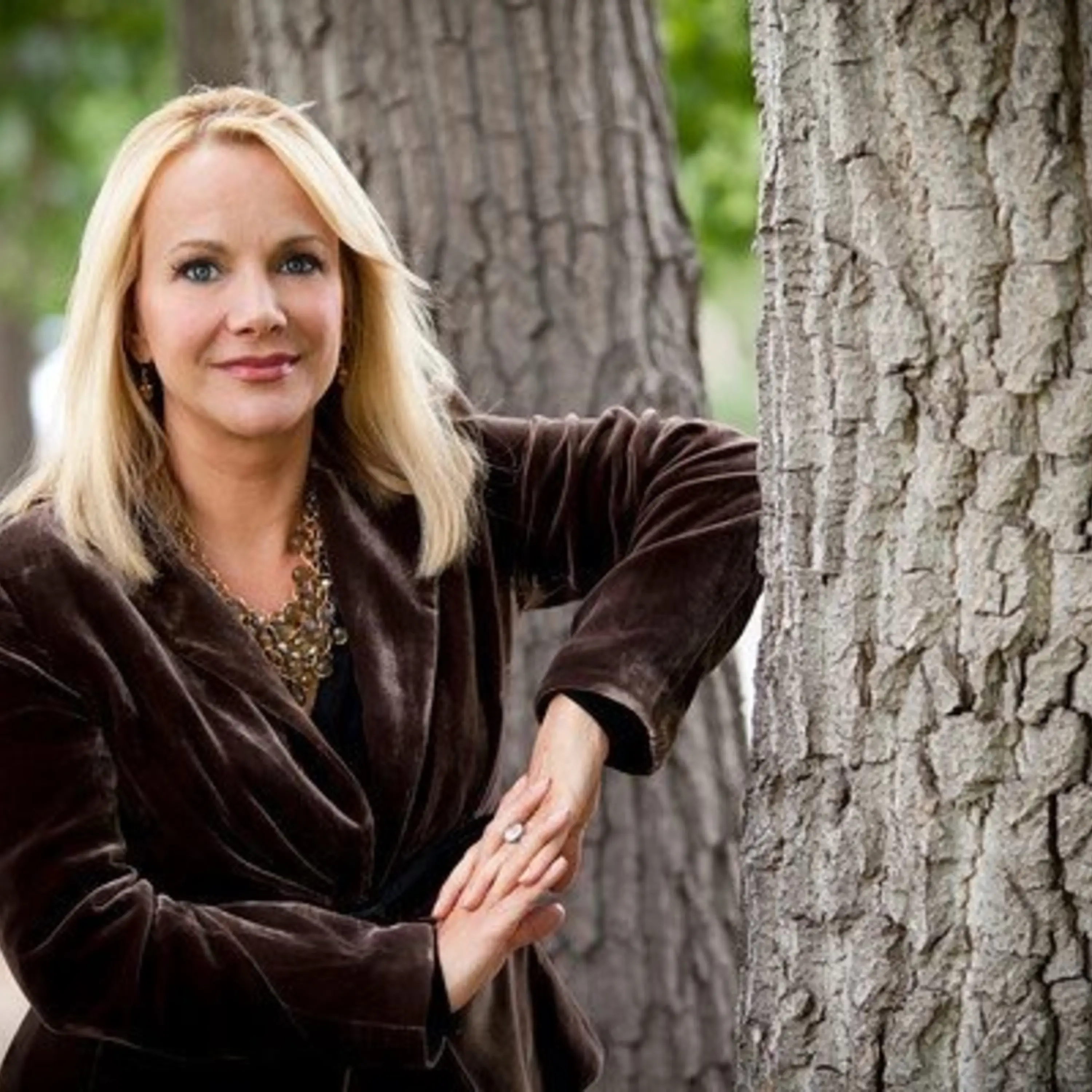
Join Angie Austin and Jeff Schott as they delve into the complexities of trust within family dynamics. Discover how trust impacts parenting and learn strategies to nurture a stronger relationship with your children. Jeff sheds light on his experiences and research, challenging conventional wisdom about earned trust and revealing insights from his new book.
SPEAKER 04 :
At Stop and Shop, we know we can’t change everything you don’t like about shopping, but we’re going all out to improve what we can because you deserve an easier way to save. With over 10,000 items always on sale, easy access to digital coupons through our in-store saving station, and deals that go on week after week, you’re sure to get what you need for a price you’ll love. With so many ways to save, good things are in store at Stop and Shop.
SPEAKER 01 :
Welcome to The Good News with Angie Austin. Now, with The Good News, here’s Angie.
SPEAKER 07 :
Hello there, it’s Angie Austin and the Kid Whisperer, Jeff Schott, with the good news. Hey, Jeff. Hey, great to be back with you. All right, so we’re going to continue our conversation on parenting, and your new book that we’ve been discussing is What’s Really Causing My Kid’s Bad Behavior, which I think we all kind of want to know more about that. So you’ve started the parenting cohort, and I’ll join in when I can, and talk about today’s focus.
SPEAKER 05 :
Well, today we’re going to be talking about trust and specifically earned trust, which is something we’re seeing cause a lot more issues in families than parents would ever dream.
SPEAKER 07 :
And you said that, you know, with trust, when it’s not working, and I have a friend right now whose daughter, I would say, like 20 different lies that are pretty serious that she’s dealing with. And it’s to the point where, you know, her daughter’s moved out of the house temporarily. And, you know, who knows if that’s temporarily. But, you know, we’ll be headed hopefully to college next year. And it’s completely broken down their trust now. I had a kid that did lie a bit last summer, but, boy, she sure turned it around. She really wanted to earn our trust back, and I’d say she’s about there. So let’s talk about trust, and is it earned? Can it be earned back? Let’s just kind of cover that.
SPEAKER 05 :
Well, you know, it’s one of those things where we’re conditioned to believe and earn trust, okay? We hear it in the world. We hear it in society. We hear it in the church that people need to earn our trust. But one of the challenges I ran into as I did all the research was, And looked at the Bible, you know, you’ve got this pesky little verse called 1 Corinthians 13 that says, love, always trust. And so that really caused me to start to wrestle and dig into this whole thought of earned trust.
SPEAKER 07 :
So, yeah, I mean, I’m thinking about, because I kind of actually pretty much naturally trusted my kids and grandpa, my father-in-law, when we were having this issue with, you know, it wasn’t big things, but big enough to us that we knew that we had like video of like going over curbs. And she’s like, I never went over curbs. And we’re like, wait, one of the kids posted this and aren’t you going over curbs here in like a parking lot? Yeah. And so it’s not like she was out drinking and cheating on tests and, you know, doing drugs, but enough for us where I had always naturally trusted them. And then grandpa, my father-in-law said, you know how you know when they’re lying, when their lips are moving. And I never really thought that about my kids.
SPEAKER 05 :
Yeah. And that’s really important. This whole thought of earned trust, where it breaks down, I can see it maybe in the business world and, things like that. The problem is in our homes, we’re all imperfect, right? And we are going to let each other down. We are going to make mistakes. And if our kids’ behavior is a reason not to trust them, or if it’s a reason not to trust within our family, the fact that we’re imperfect this side of heaven means we can never trust. And so It really breaks down because what kids were telling us in the research is, yeah, I made a mistake. I lied. My parents caught me. But now they ask me six extra questions every time I go anywhere. Now that they made it so I have to text back within five minutes of them getting a text, which means I’m texting while I’m driving sometimes. And I know they don’t trust me anymore. And I don’t know how long I have to be perfect to get their trust back. And I don’t know if I can be perfect. And what we found is kids started to just give up and say, I’m just going to do whatever I want. they don’t trust me anyway, so they kind of go for broke. And that was the sad thing we saw with earned trust in the research.
SPEAKER 07 :
Oh, that’s sad. So then what do you recommend?
SPEAKER 05 :
Well, that’s where, you know, this thing that love always trusts really was a rub for me, because I’ve encountered a lot of challenging things in my life with leaders in the church and leaders in ministries, and this thought of always trusting people was really difficult for me personally. And then to extend it to my oldest daughter who, you know, was hard as a rock and would blame the sun, the dog, the wind, the moon to not be wrong and would try and cover things up. But what I found was when I started to approach her with trust, she turned around in a heartbeat, not because she had to, but because she wanted to. And so when you think about a relationship, trust, is the bedrock of love, right? And so when trust breaks down, what happens to a marriage? It’s not good. And when we are saying to our kids, you have to earn my trust, what they tell us is they end up feeling not loved, not believed in, not trusted, obviously. And it gets so discouraging to them when they can’t seem to get their parents’ trust back.
SPEAKER 07 :
Okay, so you mentioned with your daughter. Okay, so the research showed that kids then are trying to earn the trust back, don’t know how long they’ll have to be perfect, don’t know if they can be perfect. So then they just like throw in the towel and just figure, well, I’m just going to do whatever I want. And if I still have to lie, then at least I get to do some of these things until I get caught again. And then I’ll be restricted even more. So you said your daughter just decided, you know, that she was going to, you know, do the right thing per se. So how do we, I mean, I feel like, I’m confused.
SPEAKER 05 :
This is what we do. What does it look like? Yeah.
SPEAKER 07 :
Yeah.
SPEAKER 05 :
Yeah. So I think a great example is I was at a parent event over a weekend for a church and I flew back in and my flight got messed up and I didn’t get into 1 a.m. at night. And I came drove home. fall into bed around 1 45 a.m after being with parents all weekend i’m dead exhausted yeah i fall asleep in about 3 a.m i 3 a.m i reach i feel this cold piece of metal underneath my neck oh okay and i’m like i reach down and it’s my pocket knife and luckily it’s closed right yeah and i know where it was when i left home and my son who was in a cub scouts was working on his whittling his totem chip so he could carry a knife. And we had talked about him not playing with the knife without me being present. And he had agreed. So it was obvious he had played with the knife, right? And so I put it on my night table, I fall asleep. And the next morning, I wake up. And he’s already in a squabble with his mom about something going off to school. And I first I just want to storm out there, bring the knife and say, you know, look what you did. Right. And And instead, I sat there and thought, I said, when am I going to get some – I’ve been gone so much lately. When am I going to have some time with him? When am I going to have time to rebuild the relational capital so he’ll even listen to me? And I realized the next weekend I wasn’t going out for another parent event, and I was going to be taken to the fishing jamboree. I’m like, we’re going to be in the car for an hour and a half. That’s going to be a great time to talk about this. So fast forward to that weekend. And we’re in the car and he’s talking about school and his channel is making friends and I’m having some compassion and helping him think through some things. And I said, hey, I’ve got a question for you, Paul. And he goes, yeah, dad. I said, did you play with my knife while you were out of town? And he goes, no, no, I didn’t play. So play with it. And I said, well, you know, are you sure? And he got a little hesitant and he got that little guilty look on his face. And I’m like and but he still said no. And I said, it’s so funny since we’ve gotten rid of rules and consequences. I’m not sure why you’re trying to. hide things from me anymore, but would you like to know how I know you played with a knife? And it tripped him up, and he said, yeah. And I’m like, oh, so you did play with it. Oh, my goodness. Oh, shoot. Yeah, yeah, I did play with it. I said, well, you know, let me tell you the story. You know, I came back last Sunday really late, and fell into bed, you know, lay down on, fell asleep, woke up with this feeling of cold metal on my neck and reached down with my pocket knife. And I said, and I get big around and I said, you know, I’m really glad that the blade was closed because if it had cut me right here, that’s the, that’s this artery right here. I would have been dead, bled out in about 90 seconds. And I, and I said, so you did play with the knife and he goes, yeah. And I said, well, you know, I’ve got a question for you. You know, we talked about playing with the knives. We’ve, we’ve got guns around the house. You know, are you going to play with the guns too? And he’s like, no, no, no. Well, you know, here’s the challenge. When you do these things, it makes me wonder if I can trust you and whether you’re going to play with the guns anyways or not. And he’s like, dad, I promise I won’t. And I said, okay. Okay. so what are you feeling? And he’s like, I feel really guilty inside. I said, do you know how to deal with your guilt? And we led him through a prayer to confess the guilt and to change his heart’s desire related to doing things that he knew he wasn’t supposed to do. And then I said, you know what, Paul, I’m going to choose to trust you because love always trusts. And I’m not mad. I’m not upset. It all worked out. As long as you’re learning from your mistakes, because we learn more from our from our failures and our successes, I’m going to choose to trust you. And I took that knife and I put it right back out in the open on the shelf where it was. And I watched dust gather around it for months. He didn’t even touch it. Oh, wow. What was really cool is about three months later, he actually made some money on a Big Five card from selling popcorn with the Boy Scouts. And we went to the store, and he buys this giant fixed blade knife, okay, because now he can carry a knife and Cub Scouts. And it’s so funny. The parents are looking at me like I’m nuts. And what was cool is I went on a trip one weekend, and I came back. Another parent event. And I’m sitting at my desk looking at the shelf where my pocket knife was gathering dust. And you know what? His knife was sitting right next to my knife on the shelf. He wasn’t keeping it in his room. He was storing it next to mine. Interesting. Because I gave him trust when he didn’t deserve it. That’s interesting. And you see that with Jesus and the disciples sometimes. Yeah, we see what Jesus and the disciples, with doubting Thomas and all the disciples scatter in fear, does he come back and say, you’re no longer my disciples, I’m going to go get another group and spend five years with them because you guys scattered in fear and you’re not faithful? No, just a couple days after they scatter in fear, he gives them the Great Commission. He extends them even more trust in spite of their failure. And so this is where love always trusts. And it’s such a powerful thing with our kids when we extend them trust when they don’t deserve it. It draws them closer instead of pushing them away. It motivates them to step up instead of step back.
SPEAKER 07 :
You know, it’s interesting. I wouldn’t say that we did quite, you know, gave quite as much trust as you did. But I’d say for the incidents that we had last summer with one of our kids, we didn’t really do a punishment per se. We just said we’re going to be keeping closer track of you and but we’re not punishing you. And you’re going to re-earn our trust, which isn’t what you’re saying to do per se. But I think the only punishment that we gave per se is that we no longer wanted sleepovers because we felt that was a time where we’d seen that she didn’t necessarily use that time wisely. And so we wanted to keep closer track of her, but we didn’t change her curfew. We didn’t change any rules about going out. She wasn’t grounded. She didn’t lose her car. She didn’t lose her phone. Any of the like normal things that maybe you’d do as a punishment or to take, you know, something away. But I think I told you, we did then say, when you go out with this group of friends, because we saw evidence that some of them, some were drinking and some were vaping that we were going to, um, take away any kind of temptation for her and that we would randomly breathalyzer her if she was going out with this group of people. And we said, we prefer you not hanging out. We called them the parking lot kids because they like to hang out in the high school parking lot, which is such a bizarre place, I think, for kids to hang out. But it was the place where they all gathered. And so I said, I prefer you not hanging out with the parking lot kids. But one of them was her best friend that I… do really like so we said you know we’re not going to tell you you can’t hang out with your best friend but we’re not really that thrilled with what we’re seeing on social media from some of these other kids and we only probably gave her the breathalyzer thing twice and then she was asking us to give her it because she wanted to prove that we could trust her and we haven’t used it now for months but i’d say the first two times we used it was like right after she went out the first time to let her know like hey you have this protection You can tell your friends that this is going to happen when you get home so you don’t feel peer pressure. Now we have to take a break, so we’ll be right back with Jeff Schott and we’ll continue the parenting conversation.
SPEAKER 02 :
Arc Thrift is the perfect place to buy quality winter clothing for a fraction of the new price. Cold weather is coming fast, and you need to get your winter clothing before it gets cold. Arc Thrift has all you need for the winter months. They have tons of options like long sleeves, ski pants, snow boots, gloves, beanies, puffer jackets, and so much more. Arc Thrift is perfect for kids because they grow so fast. Spending hundreds, maybe even thousands of dollars on winter and ski clothing adds up when your children grow out of it every year. So why not save with Arc Thrift? There is fresh new inventory added every day, and new great finds are waiting. There is also a new store in Littleton at South Broadway and Mineral Street just off C-470. Arc also has sales every weekend, so you can get deals on top of deals. To find your nearest Arc Thrift location, go to arcthrift.com today. Fort Morgan is listening to the mighty 670 KLT Denver.
SPEAKER 07 :
Welcome back. Angie Austin here along with Jeff Schott continuing our conversation. And we’re talking about his book, What’s Really Causing My Kids Bad Behavior. What’s Really Causing My Kids Bad Behavior. And we’re talking about trust. Your son had taken the knife, then you trusted him. After you had the conversation and then I was talking about with our daughter that she didn’t have any like real punishments per se, but I wanted to take some of the peer pressure away. So we told her that she was going to get, you know, we’d have a breathalyzer that we’d randomly use on her. And we never had any evidence that she was drinking. She always passed the breathalyzer. But then she said she wanted to do it to, like, prove to us that she wasn’t doing anything. Now, it’s been since last summer, so she’s really come a long way. And we haven’t seen any other evidence to not trust her. But I do have the kids spy on each other. Like, I openly say, Jeff, that… You have to have your all of your brothers and sisters that you guys have to allow them on every social media. There’s no private account because if there’s anything that they’re concerned about, they tell us. And so they’re openly told to tell on their siblings if they see something. But then, of course, that I go and then I see it. Right. So they might like raise the flag. But then I go look at it myself, take a screenshot and say, what’s this in the background of this photo? Your friends that I called the parking lot kids, I see they’re drinking or something like that. So anyway, I tried it. I thought I trust her. She has no punishment, but I am going to let her know that to take the peer pressure away, we want to do the breathalyzer. Okay. So that worked for us, but I wouldn’t say that’s what you did with your son. You were like, hey, I fully trust you.
SPEAKER 05 :
Right. And what we’ve found is that, you know, lots of times kids, when they don’t feel like they’re being trusted, they will do that. They’ll try and prove their trust like she was. Yes. The challenge is over time, if that goes on, they give up and stop caring. And that was really clear in the in the research. And it’s why we recommend, you know, as the kid whisper, using different tactics, because we’ve found that consequences don’t and control don’t teach the kids much at all, and then we’re not there to control them when they go off to college, and so many kids end up in academic probation or out their first year. I think the dropout rate in the first year for a lot of colleges is in excess of 40%. Oh, my goodness. Because they haven’t learned to manage their own lives, and in many ways they haven’t even learned to trust themselves. And that’s one of the big things we’re seeing with kids is that they don’t even trust themselves to make good decisions. So they’re like almost paralyzed because their parents are making so many of the decisions for them that when they get out and they’re around other people, they let the other people make decisions for them. And it’s why we really don’t believe earned trust is what God has designed, because we’re all imperfect. And if God said he didn’t trust us because we said something, did something, we made a mistake, God would never trust us, yet he trusts us to be his ambassador here. And we’re called to be like him. And so this concept of loving and always trusting is hard. But we’ve found what it does is it lifts kids up and it increases their motivation not to have to get trust back. But because we’re extending them trust, they feel believed in. They get stronger. They learn to make better decisions so that they’re not controlled. They’re actually ready to step out for life on their own.
SPEAKER 07 :
Yeah. Okay. So my next question would be, what if your son didn’t go along with it? You know, he took the knife and used it. He wanted one for Boy Scouts. He got one. What if you did see evidence that he did grab it again and play with it when you told him not to?
SPEAKER 05 :
I mean, that’s where I’m always looking for the Holy Spirit to convict, okay? And so it’s going to be a conversation of trying to see the Holy Spirit convict him, because the Bible says, you know, forgive your brother 70 times 7, right? Right. So it’s one of those things where grace abounds. But what I’ve found is I’ve done this with all four of my kids. I’ve never had a kid after doing this go and make the same mistake again. So I’ve never seen it happen.
SPEAKER 07 :
Okay. That’s great news. Totally impressed.
SPEAKER 05 :
My oldest is 29. So, you know, got a lot of years of doing this and watching earn trust or not earn trust, but love always trust the work.
SPEAKER 07 :
All right, I want to make sure that people can find you, what’s really causing my kids a bad behavior, the Kid Whisperer, Jeff Schott. What’s the best way for people to get in touch with you for speaking, your books, for the parenting classes?
SPEAKER 05 :
Yeah, OneRuleHome.com if you want to schedule a consult with me to discuss what’s going on with your kid or family. or one of our other coaches, you can through the schedule button on our OneRuleHome.com site. The book is free for download on that site as well. What’s Really Causing My Kids Bad Behavior, as well as the Child Concern Index, is free right now. But you can also get the book on Amazon in all three formats, including Audible and Kindle.
SPEAKER 07 :
All right, Jeff, we’ll talk to you next week. So stick around. This is a pretty interesting interview. You know, I’ve been in the news business for 25 years, TV and radio and Los Angeles and San Diego, Denver. And there’s a lot of, you know, problems in the news and people are looking for hope and inspiration. So joining us today is Yael Eckstein, host of a top rated new podcast called The Chosen People. That’s part of the popular Pray.com app. Eckstein is president and CEO of the International Fellowship of Christians and Jews, Israel’s largest provider of humanitarian aid, and is a frequent guest on major U.S. and Israeli media outlets as well. Welcome, Yael.
SPEAKER 03 :
Thank you so much. What an honor to be with you from here in Jerusalem.
SPEAKER 07 :
Oh, my goodness. An honor for me as well. So tell us about the new podcast.
SPEAKER 03 :
All right. Well, the Chosen People podcast was created by my organization, the International Fellowship of Christians and Jews, in partnership with Pray.com. and it’s a 260-episode cinematic audio experience through the Old Testament that brings to life these timeless stories of the Bible with inspiring commentary and really highlights the relevance of these stories to our lives today. This podcast highlights the biblical stories’ relevance to both Christians and Jewish audiences while inspiring a deeper connection to the scriptures from a uniquely Jewish, Israel, ancient spiritual perspective.
SPEAKER 07 :
Let’s talk a little bit about the Chosen People podcast and why there’s a need for this right now. I mean, I obviously think there is as well. So talk about why you all came together and put this together.
SPEAKER 03 :
Well, I think following the attacks on Israel of October 7th, 2023, I was here with my family and we all know people who were killed and kidnapped. We all have family members who are right now protecting the borders of Israel, Israel the size of New Jersey being attacked on seven different fronts. And we realized that we need a way both to tell Israel’s story and also to spread light. We can’t be so consumed with the darkness because the best way to dispel darkness is to spread light. So we were looking for a way to connect people’s hearts and minds, not only to modern Israel, but to ancient Israel, because you can’t understand what’s happening today if you don’t understand the history. And so this podcast connects people to the history of Israel, to the history of the Jewish people, and these ancient stories that are very relevant today and are at the core and heart of our Christian and Jewish audiences’ faith.
SPEAKER 07 :
All right. Now, if someone said to you, Yael, tell me the goal of this project, like best case scenario, what would you want the outcome to be of the Chosen People podcast?
SPEAKER 03 :
I speak to so many people who say, I’ve read the Bible so many times, but I don’t fully understand the stories or why they’re relevant today. It was such different times. There’s such different situations. I don’t know what God wants me to learn from this. So the goal is to bring the biblical stories of Israel to life and relevance like never before. So Pray.com authored world-class cinematic production, bringing each story to life with a cast of voiced actors and sound effects. We even have a 107-piece live orchestra and choir. And so I host and record the podcast from here in Israel to give a uniquely Jewish perspective that Christian listeners and readers of the Bible are not often exposed to. They are studying and hearing and experiencing what Jesus did.
SPEAKER 07 :
You mentioned, Yael, the relevance of, in particular, the Old Testament in today’s modern world. I hear that a lot as well. You know, oh, what was different? Or maybe the message has changed, blah, blah, blah. Maybe we interpret it incorrectly. So why is the message so relevant in today’s modern world?
SPEAKER 03 :
The Chosen People is relevant today as a podcast because it gives answers to that very important very important question that I believe holds the secret between how we can overcome the darkness that is very much growing all across the world. We fight that darkness with light and we have to know how to spread the light by studying the ancient scriptures. These are timeless Bible stories and in them lies the essence of being human and being people of faith. And they weren’t perfect. As we go through the stories of the Bible, We actually see very flawed people. They wrestled with God, but they found purpose amid the tragedy and sin. And that’s what’s unique. So these concepts are especially relevant today as we all wrestle with those type of questions between good and bad, between right and wrong, between dark and scary. How can we stand up and be the light, be the help, be the hope that we all are all hoping for?
SPEAKER 07 :
I like the way you talk about light. It just reminds me of many years ago, over 10 years ago, I lived not far away from the Aurora Theater where there was a mass shooting. And I interviewed one of the victims the day after the shooting. And he had the governor had come to visit him in his hospital room. And he was on the news and he spoke specifically about being light in that darkness of such a horrible shooting with so many people who lost their lives and, of course, children there as well. And so reminiscent of a smaller version of what your friends and family dealt with at the beginning of the conflict that you’re talking about in 23. well, continuing conflict, I guess I should say, but just that light in the darkness and how it’s difficult sometimes to be that light in the darkness. You’re in the midst of, you know, I’m sure like alarms going off, you know, bombings, losing friends and family. How do you keep that feeling of the light? How do you keep operating as the light in some of that darkness?
SPEAKER 03 :
Yeah, well, that’s where faith comes in. I was woken up this morning with my family to a siren, an incoming rocket siren. We all had to run as quick as we could to the bomb shelter. You can see on my social media pages, on Instagram, on Facebook. If you look at Yael Ekstein, I very much document life in Israel because it’s important for people to see. And so we go and we find shelter from the rockets. But, you know, the whole time we’re praying, the whole time we’re singing. And when the threat is over, we go out and we eat ice cream and we rejoice. And on a daily basis, I go and deliver food boxes on behalf of my organization, the International Fellowship of Christians and Jews. And the decisions are hard. Just last week, I was in Tiberias delivering a food box to an elderly Holocaust survivor. And we have to make the decision when the rocket sirens go off and the elderly won’t make it to a shelter in time. Do I run and protect myself from the rocket and leave the elderly alone? Or do I stay there in faith and in light and in prayer alone? to face it together. And I always decide I stay with the elderly in prayer. Oftentimes, I’ll protect them with my own body. And that, I think, is what brings light to the darkness. Yes, there are people who are trying to kill us. Yes, there are those who are using human shields and who are sanctifying death. But as people of faith, we know that life is precious, that it’s holy. And that’s what makes our contribution to this world so unique.
SPEAKER 07 :
Oh, I could talk to you for another hour. I’d love to know how you got involved in this work, but I’ll go to your website and then also download the app because now I’m curious to see exactly what you’re doing. Explain to us how we can find you, your work, and the app.
SPEAKER 03 :
Thank you so much. So the Chosen People podcast is available wherever you get your podcast. We have five episodes airing each week. Every day we have another episode that we upload. So you can consume that podcast on a daily basis as part of your workout routine or driving to the office or sitting with your children. And you can also, of course, find the podcast on Pray.com, The Chosen People. And if you want to know more about the life-saving work that we do with delivering food here in Israel, you can visit the fellowship’s website at ifcj.org.
SPEAKER 07 :
Oh, thank you so much for all you’re doing for others and for spreading this light. I appreciate you, Yael. Thank you.
SPEAKER 03 :
God bless you. Thank you so much for having me on.
SPEAKER 01 :
God bless you, too. Thank you for listening to The Good News with Angie Austin on AM670 KLTT.