



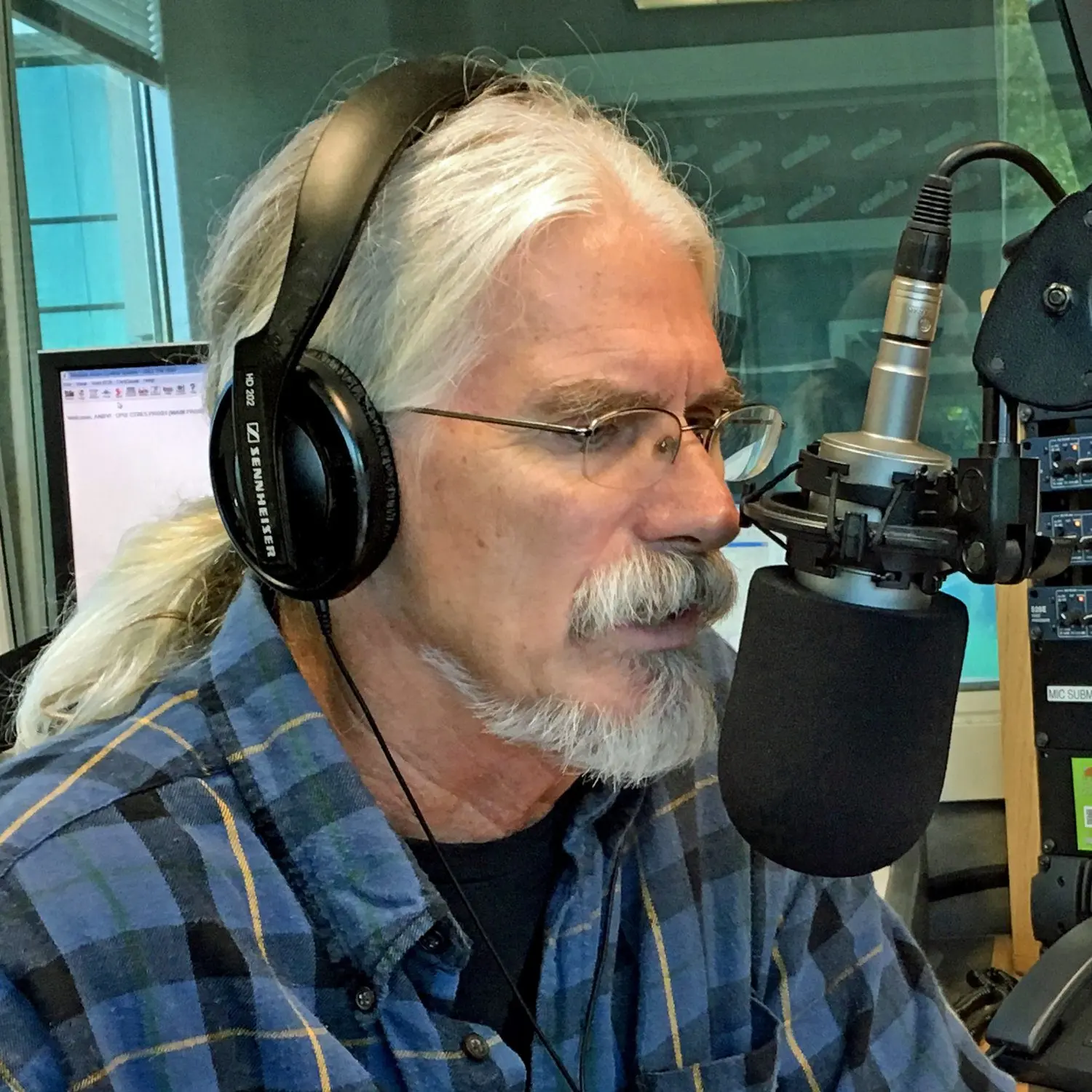
In this episode of The Narrow Path, Steve Gregg delves into a variety of thought-provoking topics, from his recent debate with Dr. Michael Brown to the nuanced perspectives on children’s literature featuring magical themes. Listeners are invited to engage in deep discussions on whether such content might lead children astray from faith-based principles. As usual, Steve takes live audience questions, providing insights into religious texts and practices.
SPEAKER 11 :
Good afternoon and welcome to The Narrow Path radio broadcast. My name is Steve Gregg. I just got back from Texas where I had a wonderful weekend where I saw many friends, some of them old friends, even relatives, and of course I had the privilege of debating with Dr. Brown, Michael Brown, on Friday night, Saturday morning, and Saturday afternoon. It was quite tiring, actually. I think both of us were fairly exhausted after three debates in one weekend, but We got along well, and I will say that Dr. Brown and I have been in conversation since the debate. He was texting me this morning, and I backed to him saying we both enjoyed the debate, and we’d like to do it again sometime. I think he’d like to have a follow-up sometime, which I would also. Also, he suggested that maybe he could call into our show here sometime soon, and we’d just take a Maybe the first half of the show, like the first half hour, instead of taking other calls, we just kind of dialogue about our debate. I believe the debate is now – I think it’s now available at our YouTube channel. The man who puts together and maintains our YouTube channel sent me some information about it. I haven’t had time to look at it. So, yes, it is there, I guess. My wife just told me. I have a – We’re taking calls today as usual. If you’d like to be on the program, you call this number, 844-484-5737. It looks like we have one line open right now, 844-484-5737. And a couple of announcements. This Saturday morning is our men’s Bible study. We have once a month in Temecula. So Saturday morning, 8 o’clock, men’s Bible study in Temecula. And then in the evening, I have what may be our final Boynton Park gathering. We’ve been doing this for years, probably close to two. eight or nine years, I suppose. We do this monthly. And what we’ve been doing is going through a book of the Bible each month, and I’ve been doing an overview. Well, this time, am I correct? I’m doing the whole Bible overview this time, I believe. Oh, this is the Q&A. I did the whole Bible last time. I forget when I did these things. It’s been so long. Anyway, yeah, no, it’s going to be just the Q&A this time, and it’ll be our final Boynton Park meeting until further notice. So if you’re interested in joining us, that’s Saturday night in Boynton Park. And then there’s a Saturday morning men’s Bible study in Temecula. Specific information about where those places are can be found at our website, thenarrowpath.com, under the tab that says announcements. All right, we’re going to go to the phones now and talk to Doug in Lincoln, California. Doug, welcome to The Narrow Path. Thanks for calling. Hi, Steve.
SPEAKER 06 :
I’ve got a question for you. There are children’s books out there that my daughter is reading to our grandkids, and one of them is called The Magic Treehouse. And it does talk a lot about wizards, witches, and sorcerers. What is your view on this? Do you think it’s something that kids should not maybe be hearing at a very young age?
SPEAKER 11 :
Well, I don’t know the book, and it certainly depends on how those things are depicted. I’ve known Christians who objected to C.S. Lewis’s Chronicles of Narnia because they have characters that are witches and centaurs and mythical beasts and so forth, and there’s magic and so forth. But to my mind, C.S. Lewis is writing children’s fantasies such as we’ve all grown up with, only he has a Christian message in it. And I personally have never objected to it. Now, some people think that the very mention of witches to children is somehow dangerous, like it’s going to draw them into witchcraft. You know, when I was growing up, you know, we’d know about the Grimm’s fairy tales and things like that. And even Hans Christian Andersen, I think, had some witches in his, and he was a Christian writer. We had the TV show Bewitched on television when I was a kid, which kind of glamorized it. an attractive woman who was a witch in her married life and the trouble it caused for her husband. It was a comedy. I mean, witches were talked about in fiction, in fantasy, and so forth a great deal. In those days, there wasn’t really a lot of talk about real witches and real witchcraft. And so once, especially in the 70s, it seems to me, real witchcraft became more talked about, and it was something that people were attracted to. But I never assumed that they were attracted to it because of these fairy tales or because of this television show. Because, you know, the TV show is just, you know, fantastical. It’s not realistic. I mean, real witches don’t wiggle their nose and make people disappear and appear and things like that. And the same thing with, frankly, witches in the fairy tales. They don’t really… Real witches aren’t like that. So to my mind, even, of course, Lord of the Rings, written by a Christian author, has a wizard in it who’s actually a good guy. Now, I don’t know to what extent children these days are drawn toward those things or how much they just enjoy them as fiction. There’s lots of fiction around. that is objectionable if it was true, if it was real, it’d be objectionable to us as Christians because we’re against witchcraft, for example. We’re also against evil and crime and wars and things like that, but there’s a lot of fiction and even nonfiction that we are exposed to with those kinds of things. I think that, I don’t know that the books themselves, children’s books, I’m assuming we’re talking about fairy tale type books, I don’t think that they are in themselves dangerous to children, but I do think that we live in a time when there are people who take witchcraft seriously. It isn’t the same kind that you find in the fairy tales, and that should be made clear, I think. When children are exposed to things that are things we would object to in real life, but they’re fiction and they’re fairy tales and things. I think we just need to communicate to them that this isn’t really like, this isn’t realistic. This doesn’t really happen. I mean, there may be something called witches, but they don’t have these powers and they’re evil people who, well, they’re at least people who reject God. And, uh, you know, but I think that a child can, uh, well, I once knew a children’s publisher that wouldn’t publish books with talking animals and, uh, I’m not sure exactly why, but, you know, that’s a feature of lots of children’s books. If animals really did talk, that’d be maybe troubling. And the fact is, movies like Bambi and so forth have caused a lot of people to have, you know, be aroused with animal rights kind of sentiments. because they tend to look at animals like they’re kind of like us, only in different kinds of bodies, but animals aren’t. They’re a totally different order of creation. So, I mean, if our children read books about talking animals or animals that think and relate like people, this could be objectionable, too. In fact, everything in the world could be objectionable if it’s taken the wrong way. But I’ve never objected, per se, to fairy tales or children’s stories that had animals that talked or even that had – you know, mythological creatures or witches that aren’t really like real witches. And, you know, some people will disagree with me on that. I mean, you’d have to follow your own conscience about that. But I would say this. Any children’s book that your children are exposed to that you have the slightest concern about, you should probably read them. or else just ban them, I guess. But just banning books isn’t the best way to protect your children in many cases because they’ll get this kind of stuff outside the home someday. I think it would be safer just to, and maybe in some cases it’s really wicked bad stuff, like promoting transgenderism and things like that. But a lot of this stuff is relatively harmless fairy tales. And if you present it, you know, as a Christian to your child, say this is just not true stories. These are for fun. And, you know, witches do exist, but they’re not like this. The real witches are just people who reject God and love, you know, the devil or something. But, you know, I wouldn’t. I would just expose my children to those as they can consume it without being corrupted. I know that when I saw books and fairy tales and stuff when I was a kid, or read the Chronicles, it didn’t have the slightest effect on me spiritually. I didn’t have any interest in, I didn’t think they were real. And, you know, I was never attracted to the occult through it or anything like that. So some people are afraid that’s what children will be affected by. And maybe some would. I guess you have to know your children. And if your children are quite vulnerable to taking fantasies realistically, then you might have to protect them from some of the worst of that stuff. But they’re going to live in a world where they’ll hear that stuff from other kids. It’ll be in the media. It’ll be all over the place. It’ll be in conversations. And so, you know, I think it’s better to let your children be exposed to it under your curating it. You know, you curate the books they read and the experience they have reading them. I would say read them with them and make your own comments.
SPEAKER 06 :
Yeah. One of the problems is it’s my grandchildren, and of course I can’t. tell my daughter to, you shall not, you know, read to me these books.
SPEAKER 11 :
But you could read those books with your grandchildren and make your comments.
SPEAKER 06 :
Oh, I am. Yeah, I am. And I was reading one the other day, and I looked at my son a lot, and I just kind of looked at him, and he kind of, you know, gave me that rolled eye look. I’m like, okay, yeah, yeah. I don’t think he was as crazy about the books either. But they are, they’re cute, and I do. I do appreciate your insight and input on that because I do think that after speaking with you, it probably, even in my mind, it kind of helped alleviate some of the concern that, yes, if you explain to them that it’s just a fantasy, it’s fairytale, it’s not real, these witches are just make-believe and not like real witches, that would be good. That’s good. Great.
SPEAKER 11 :
I appreciate it, Steve, so much. Thanks for your call, brother. Bye now. Our next caller is calling from Berlin, Germany. Fritz, welcome to The Narrow Path. Oops, I hit the wrong button. Here we go. Hi, brother.
SPEAKER 04 :
Your debate with Michael Brown is definitely available on the Internet. If somebody just Googles Michael Brown, Steve Gregg debate, they can come up with the latest stuff there. I haven’t had a chance to listen to all of it, but one place I happened to snip into it, I had both a commendation and a critique for you. I really appreciated where you… There’s about six minutes of silence at the beginning of the video and then another eight minutes or so where the moderator is introducing it. But it’s about the one-hour, 50-minute portion, I think, where Dr. Brown is kind of grilling you. But before that, I appreciated your showing him up for adding to the Word of God all these years. when you pointed out that when he’s constantly quoting, when God scatters, no man can gather, and when God gathers, no man can scatter, I hadn’t myself realized that that’s not actually a Bible verse, that that’s just a Michael Brown verse. Right, that’s correct. But because of the way he’s always quoted it together with some other stuff. So I really appreciate your pointing that out to us. But then shortly after that, you just made an aside when you said… By the way, the first, as you know, the Zionist movement did not begin with Christians or observant Jews, but with secular Jews. You’re in fact incorrect in that, because the Zionist movement did indeed begin with Christians. It wasn’t called Zionism at the time, because the term Zionism was first coined by Nathan Birnbaum in the year 1890, and Theodor Herzl didn’t start the Zionist movement until 1897, the Jewish Zionist movement. But for at least 60 years before that, what were then, they were Christian Zionists, but they weren’t called that yet. They were called Restorationists. They were very actively promoting, based in part on Darby’s theology, but this was also very current in England even before Darby’s. People like the famous female writer, George Eliot, Lord Shaftesbury, a fellow named Lawrence Oliphant, William Blackstone in America, William Heckeringer, and the founder of Christadelphian cult, John Thomas, and also the founder of what later became known as the Jehovah’s Witnesses, it wasn’t known as that in his time, Charles Taze Russell. They all played major pioneering roles in inspiring and driving forward, attempting to promote Jewish Zionism, long before Theodor Herzl ever took up their ideas. And especially, they were trying to pressure the American and the British and the German and the Russian governments, to a lesser extent the French government, and also trying to pressure the Turkish sultan, who ruled over Palestine at the time, but trying to pressure the Russian, and especially Oliphant. He was very… active in Eastern Europe, in Poland, which is part of the Russian Empire, meeting with the Tsar in Romania, trying to encourage and facilitate and finance Jewish settlement in Palestine colonies, working with the Sultan, trying to gain permission, and especially trying to convince the Jews who all wanted to emigrate to America to instead go to Palestine. And finally, Herzl says, took up their ideas. He’d been somewhat influenced by their ideas, but that had been going on for at least 60 years before Herzl founded Jewish Zionism. So it was a Christian heresy long before it was a Jewish movement, and it was a Christian heresy that was trying to turn its ideas. They were convinced that Israel had to be reestablished so Christ could return. They wanted to to see Christ return in their lifetime. So when you turn by your own efforts, you fulfill your false interpretation of prophecy. It doesn’t mean it comes from God. It just means it’s become a self-fulfilling false prophecy.
SPEAKER 11 :
Right. Well, I know that William Blackstone in America, before Herzl, was a Christian dispensationalist who really promoted it over here. You’ve done more research than I do, and I don’t know about all those European movements. But I know that, you know, technically encyclopedias will say that Zionism began with Herzl in the 1890s. But you’re right. Darby was in 1830. And I didn’t know about all the movements you mentioned, but I knew of some of them. But I think dispensationalism has had the biggest role, at least since the beginning of the 20th century, in bringing about the establishment of the nation of Israel. Now, Louis Brandes was a Jewish Supreme Court justice in the early 1900s who was very – I think he was the leader of the Zionist movement in America in his day. And he wrote a letter to a friend or one of his assistants or something saying that he believed that William Blackstone, the dispensational Christian, was the true founder of Zionism because he predated Herzl. So that’s what he said. So, I mean, even Jewish Zionists… often mention that the dispensational Christians had probably as much to do with the founding of the nation of Israel in 1948 as anyone else did. And now, see, of course, a Zionist Christian can say, well, see, yeah, I mean, God does work through means, and those were the means God worked through. But you’re correct. I mean, we could as easily say, well, this is like something that these Christians predicted on the basis of their own interpretations of what they thought prophecy was saying. And then they worked like crazy to make it happen, and it happened. And it is definitely true that it could have been, for them, as it were, a self-fulfilling prophecy. They make the prediction, and then they make it happen. So I understand your point, and I agree with it, actually. I can’t really criticize any part of what you said, although much of what you said I did not know.
SPEAKER 04 :
I don’t know if you’ll have time to read them, but I can send you some articles that detail some of these people that, Especially Lord Shaftesbury was very influential with the British government in getting the Balfour Declaration finally issued. And the German Kaiser, and I think the Russian Tsar were both like nephews or great-grandsons of Queen Victoria. So back then, before the First World War, they were kind of, you know, very open.
SPEAKER 11 :
Feel free to send me those documents. I would like to have them. I don’t think we can take any more time on this right now because the time is getting away and my lines are full, but I… I appreciate you calling from Germany and giving me that information. If you want to email that to me, I’d love it.
SPEAKER 04 :
Yeah, I will. Okay.
SPEAKER 11 :
Take care. All right. God bless. Bye now. All right. Let’s see. James from Colorado Springs. Welcome to The Narrow Path. Thanks for calling.
SPEAKER 08 :
Hi. Thanks for taking my call. I’m on speakerphone. Is the audio okay?
SPEAKER 11 :
It’s okay so far. Go ahead.
SPEAKER 08 :
Okay. Yeah, by the way, she asked for a… He believed they were in the end times, so he was definitely a dispensationalist. So I don’t know if his works much. Anyway, I have two questions. One is just a clarification, and the other is on the Book of Ruth, if we have time to get to it. We’ll see. Go ahead. Okay. So during your debate, I just want to get some clarification on your position and Michael Brown’s position. So specifically Romans 11, 25 – through 26, and it kind of applies to the whole Romans chapter that you guys were discussing, but I’ll kind of limit it to this passage. So, I just want to see if I understand your positions correctly. So, I believe that you believe that Israel in this passage, and other passages too, is referring to the remnants of Israel where Michael Brown was saying that, no, these verses are all talking about… The whole nation. Right. Is that a correct statement? Yes. Okay. So just like a quick nitpicky thing. It kept bothering me that both of you were referring to the Israel within Israel. Can I just ask, is it maybe more correct to say Yeah, the Israel within Israel plus the believing Gentiles, when we’re talking about Israel and the Roman… Well, we did not… I did not fail to say that multiple times.
SPEAKER 11 :
In fact, when I went through Romans 9 through 11 with him, I pointed out that right from the beginning, the Israel within Israel is called by Paul by several names, including children of the promise, vessels of mercy. And then I read verse 11. I’m sorry, not verse 11. Verse… Well, where was it here? Verse 23 and 24 of chapter 9 says that God might show the riches of his glory on the vessels of mercy, which he’s using as a synonym for children of the promise and the remnant of Israel and so forth. He said the vessels of mercy, which he prepared beforehand for our glory, even us whom he called not of the Jews only, but also of the Gentiles. So I pointed out to him that this Israel within Israel, as Paul begins to use synonyms for it, begins to include the Gentiles. And then, of course, verses 25 and 26, well, I believe that verse 25 is a simple summary of what Paul has said in verses 16 through 24. In other words, the passage just before this verse is about the olive tree and how that the olive tree, which is Israel. That’s the Israel, but all Israel will be saved is the olive tree. That it was made up of Jewish branches. Some of them are no longer on the tree because they don’t believe, though the believing ones remain. And then Gentile ones have been added on. And so now the tree is made up of Jewish believers and Gentile believers. And that’s the tree. The tree is Israel. And so when Paul said, dark hardening in part has happened to Israel, meaning part of the Jewish people Part of the tree has been hardened and been removed from it, the branches that didn’t believe, until the fullness of the Gentiles come in. So the fullness of the Gentiles are these Gentile branches being grafted in. And thus, all Israel will be saved, he says in verse 26. Now, Israel is the tree, and the all Israel is referring to is all the branches. the Jewish branches, and the Gentile branches, all of whom are believers. So all Israel will be saved is simply his conclusion to his argument that he began in chapter 9, verse 6, where he said they are not all Israel who are of Israel. See, Paul has already at the very beginning used the word Israel two different ways. He’s introduced the fact that when you say Israel, you’re not always talking about the same thing. And this is something that, you know, dispensationalists and Zionists, when they’re reading this, they don’t see that. Paul tells us there’s two ways to look at Israel. And by the time he gets to the olive tree, he’s saying it’s obviously made up of the believing Jews and the believing Gentiles who are like branches on the tree. And in that way, all Israel, all the true Israel, will be saved. But it’s by the exclusion of many unbelieving ethnic Jews.
SPEAKER 08 :
But I think you said you didn’t believe Paul is not establishing a chronology. Like when X number of Gentiles become Christians, and so I guess the dispensationalists kind of use this as their basis for kind of like an end times eschatology, like when a certain predetermined number of Gentiles are saved, then Christ is going to return. That was kind of Michael Brown’s position, wasn’t it?
SPEAKER 11 :
Well, his position is that the hardening of Israel is partial and temporary. Now, Paul says it’s partial, but he doesn’t say it’s temporary. And so Michael Brown believes, as many people do, frankly, most dispensationalists, all dispensationalists do. He’s not a dispensationalist, but he believes, as they do about this, that the temporary hardening of the Jews will come to an end. when all the Gentiles who are going to be saved have been, and they want him to say in verse 26, and then all Israel will be saved, in contrast to Gentiles. But Paul doesn’t say, and then. He doesn’t give a chronological reference. He says, and thus all Israel will be saved, meaning in this way. So by the removal of the hardened Jewish branches and the inclusion of the believing Gentile branches, the tree has all of its correct branches now. It’s a believing community made up of the remnants of Israel and the Gentiles who are now one organism with them. And Paul says one body with them. And that’s the Israel of God. That’s the Israel that is all of them are saved. But see, all Israel doesn’t mean all Jewish people. Even if one generation, let’s just say the last generation of Jewish people all got converted, that’s still a very small portion of the number of Jews who’ve lived and died. I mean, it’s still a very small portion of Israel. So they want Paul to be giving a chronology. What Paul is giving is a methodology. In this way, all Israel will be saved, not then. Hey, I need to take a break here. I appreciate your call, brother. And you’re listening to The Narrow Path. We have another half hour coming. We’re not done here today. We have an open Q&A, as we usually do. And, you know, we want you to know The Narrow Path is a listener-supported ministry. If you’d like to help us stay on the air, we do have to pay for the time on the radio stations. It’s very expensive. You can write to The Narrow Path, P.O. Box 1730, Temecula, California, 92593. Or go to our website, thenarrowpath.com. Lots of free resources, but you can donate if you wish at thenarrowpath.com. I’ll be back in 30 seconds. Don’t go away.
SPEAKER 01 :
Is the Great Tribulation about to begin? Are we seeing the fulfillment of biblical prophecy unfolding before our very eyes? In the series, When Shall These Things Be?, Steve Gregg answers these and many other intriguing questions. The lecture series entitled, When Shall These Things Be?, can be downloaded in MP3 format without charge from our website, thenarrowpath.com.
SPEAKER 11 :
Welcome back to the Narrow Path Radio Broadcast. My name is Steve Gregg, and we’re live again for another half hour, taking your calls. Our caller at the end of the last half hour had another question, I believe, but when we came to a break, he may have thought we were done, so he hung up. So anyway, we’ve got one line open right now. You can call at 844-484-5737. That’s 844-484-5737. Our next caller today is Matthew in Jersey Shore, New Jersey. Welcome to the Narrow Path, Matthew.
SPEAKER 02 :
Hi, Steve. Thanks for taking the call. Firstly, a great job with the debate. For what it’s worth, I watched it online. It was on YouTube. I think on Michael Brown’s channel. I forget what it’s called.
SPEAKER 11 :
Yeah, he streamed it. He streamed it for his channel. I think it’s on our website now or our YouTube channel now.
SPEAKER 02 :
Oh, fantastic. Okay. But, yeah, really well done. So, Steve, my question today is regarding, like, modern prophesizing. I know of, like, a few churches in the area where they’ll actually have, like, certain nights where they’ll have, like, a prophecy class. And I was just kind of wondering what your thoughts were about that. My kind of vague understanding is that all instances of prophecy are recorded in the Word. And if you wouldn’t mind just kind of like sharing your thoughts, like what your thoughts are on like modern prophesizing.
SPEAKER 11 :
Okay. Yeah, I’ll be glad to talk about it. First of all, I don’t agree with having prophecy classes. There’s classes teaching people how to prophesy. To my mind, that’s doing something in the flesh that is supposed to be done in the spirit. You don’t learn how to do it. The Holy Spirit comes upon a person to prophesy. Now, are all the prophecies that are genuine recorded in the Bible? No. No, they’re not. I mean, Agabus in the book of Acts… who first appears in chapter 11 and then is again later on, I think, in chapter 21 or so, maybe 20. He’s said to be a prophet, and we only have two specimens of his prophesying, which can’t be all he ever did. I mean, if he was a prophet, it can’t be that the two brief prophecies that we have record of are the only things he ever said in his whole ministry. He probably did a lot of prophesying that we don’t have recorded. And the Apostle Paul, indicated that in the Church of Corinth, and this was probably not only in the Church of Corinth, probably in most of the churches, there would be prophets speaking. And he said in the Corinthian church, let two or three prophets speak, not more than that, and let the others judge. Now, Paul assumes that there could be as many as two or three prophets in the church, who would speak in a meeting, and what a prophet does when he speaks is to prophesy. In fact, he tells the Christians there, desire the best gifts, especially that you might prophesy. So it’s kind of hard to say that all the Christians who ever prophesied, that their prophecies are recorded. In fact, most of them are not. But some people who believe that prophecy should not be existing today, are afraid that it might compromise the closed canon of Scripture. In other words, they’re afraid that, well, if God is still speaking today just like he did in biblical times, why wouldn’t we put these prophecies in the Bible too? There’d be no end to the Bible if everyone who got up and said, thus saith the Lord, if their words were entered into Scripture. Yeah, well, that’s not really, that doesn’t have to be a concern. None of the New Testament books were written by prophets. They were written by apostles, and there aren’t the apostles of Christ who are selected by Christ’s own choice. Those all died off. They’re not writing any more books, so there won’t be any more New Testament books. Now, Agabus was a prophet, but he didn’t write any New Testament books. Philip’s daughters in the book of Acts are said to have been prophetesses. They didn’t write any biblical books either. In fact, no prophet wrote any book of the New Testament. The Old Testament was written by prophets, for the most part, but the New Testament by apostles and by their companions, who I believe wrote under their supervision and with their approval. But the New Testament is not written by prophets. And therefore, there could be a million prophets in the world today, and there might even be, for all I know, and they wouldn’t be writing material that’s like the material in the New Testament. The reason the apostles wrote the New Testament books is because they spoke with authority over the whole church for all time. Jesus appointed them to that role. So what they wrote is, you know, we put it in a book for all Christians to read and obey. But what a prophet speaks in a church, for example, what Agabus said, in the church. He said there’s going to be a famine that’s going to affect the poor saints in Jerusalem. Okay, well that happened actually, but that’s not for the whole church everywhere and certainly isn’t for us for our time. We don’t know if there’s going to be a famine affecting Jerusalem anytime soon. And later, Agabus, he binds himself with Paul’s girdle or his sash from around his waist and says this is how the man who owns this girdle will be bound when it comes to Jerusalem. Now, again, that’s not a word for all churches for all time. That’s simply for Paul. So that’s how a lot of the prophecies were, I think, in the New Testament. I think New Testament prophets, I think they spoke to local situations. They weren’t writing anything for the whole church worldwide for all time. That was the apostles’ role. And therefore, we don’t have to assume that that even if there are prophets today who are legitimate, that somehow compromises the closed canon of the New Testament. The apostles are not writing any more books, and prophets were not involved in writing the books of the New Testament. So, you know, there’s just no overlapping domain there. We might say, well, the book of Revelation is prophecy. It is prophecy, but it’s written by an apostle. So, I mean, the standing of New Testament writings is that they should be apostolic. The Old Testament writers were, generally speaking, prophets, and that was a different kind of spokesman for God, and they wrote different kind of literature. When they spoke for God, they spoke in the first person. I, the Lord, say this, thus says God. And they spoke in the first person as if they were God’s own voice. The New Testament writers didn’t do that, generally. They talked about God. They talked about Jesus. But they spoke in their own voice as agents of Christ. So it’s a different situation. Now, I will say, because there are groups of people who believe that prophecy continues, and I’m one of them. I actually believe that nothing in the Bible says that there will not be prophets after a certain point. The Bible says God gave some apostles, some prophets, some evangelists, some pastors, some teachers. And it doesn’t say that these are going to be taken away necessarily. Although after the apostles died, we don’t know of God appointing anymore, so I don’t know of any apostles today. And as far as prophets go, I don’t know any people. And I’ve been in charismatic circles for 55 years, but I don’t know of anyone I know right now that I would call a prophet today. But you don’t have to be a prophet in order to prophesy, because Paul said you may all prophesy. He said that every Christian should seek to prophesy. Seek the best gifts, especially that you may prophesy. So a person may not be a prophet, but they may prophesy if the Holy Spirit moves upon them. But see, I don’t think in the New Testament they had schools teaching people how to be prophets. Now, I would say some gifts of the Spirit can be taught. For example, teachers. You know, teaching is a very different kind of thing than prophets. A prophet claims to be speaking directly as the oracle of God. A teacher doesn’t claim that. A teacher claims that he’s speaking correct things about God, but he’s not speaking the voice of God himself. And so, you know, if teachers are simply teaching correct things, there’s nothing wrong with them learning correct things. And so going to school and learning the Bible, learning the correct things to speak is helpful, you know. But a prophet is, you know, if the Holy Spirit comes upon you, no one can teach you how to make that happen. That’s a sovereign thing God does when he wants it to happen. But teaching, that’s a different kind of thing. So people do go to school and learn to be teachers if they want to. I didn’t. But I will say this. that because teaching is also a gift, just like prophecy is a different kind of gift, I believe that not everything about being a teacher in the body of Christ can be taught. I think that God calls people to be teachers. I think he anoints certain people to be teachers. I think he gives them the spiritual gift of teaching. But that gift can be improved by study and by meditating on scripture and just coming to understand things better. But if you don’t have a gift of teaching, then you could have, frankly, all knowledge and be able to communicate information. But the spiritual gifts aren’t so spiritual. They minister life, spiritual life, and not just information. A teacher does pass along information, but hopefully if he’s a real teacher, anointed by the Holy Spirit, along with the information is sort of an inspired transmission of deeper spiritual life and truth to the person. It’s a spiritual thing, not just an intellectual thing. Anyway, that’s how I see it, and obviously a lot of people see it differently than that, but that’s my position on that. Rez from the Bay Area of California, welcome to The Narrow Path. Thanks for calling.
SPEAKER 09 :
Hi, Steve. Thanks for taking my call.
SPEAKER 10 :
I was wondering if I could ask a question and then just tell you a quick story that happened to me that’s about 30 seconds. If it’s 30 seconds, yes, but I have a lot of people waiting and not much time. Go ahead.
SPEAKER 09 :
Okay, what happened to me is I met this girl. online and we started talking. She told me that she was kind of in the new age and that she would practice meditation and something called astral projection. So one night I was asleep and then around three in the morning I was awakened. I felt some presence in my room. I prayed and went back to sleep. The next day I was talking to her and we were just talking and She messaged me. She goes, so how did you like my little visit around 3 a.m.? So I think… So what’s the question?
SPEAKER 11 :
Go ahead with the question.
SPEAKER 09 :
So have you actually known any real witchcraft that has happened to people, or is this all delusions?
SPEAKER 11 :
Right. Well, I think astral projection is an occultic phenomenon. I don’t know what actually happens. I’ve known of cults that practice it. And she’s obviously involved in that somehow. Do I believe that she could have come to your room? You know, I don’t know that that’s the case. Even if she could describe what you’re doing, it’s possible that a demon had, you know, informed her about those things and given her a visual vision. Because, I mean, God gives visions and dreams, but so do demons. And demons do it to deceive. So, I mean, I don’t know what happens in the mind or in the consciousness of a person who’s astral projecting. And I can say this. I can’t say for sure that astral projection can’t really happen. Because, I mean, the devil does imitate and counterfeit things God does. And, for example, it would appear that Ezekiel in chapters 8 through 11 of his book may have been carried by the Spirit of God. from Babylon to Jerusalem to see and describe things. Then he was carried back. Was that astral projection? I don’t know if it was or if it was just a vision he was having. But, you know, I don’t know. I mean, I can’t say that the Bible says it can’t happen. But certainly to try to cultivate that kind of a practice is to go beyond what we are authorized to do in terms of the spiritual realm. You see, it is a form of divination. I mean, if I’m just walking down the street and the Holy Spirit, you know, puts me into a trance and in a trance carries me away to somewhere else and I see things and so forth and then I come back and I had nothing to do with it. It was just God. then I’m going to say, well, I didn’t do anything to violate normal laws of spiritual practice. But when you do it yourself, when you say, I’m going to go into now a meditative state, I’m going to use my imagination to do this, I’m going to rise from my body, I’m going to be carried somewhere, that’s magic. When you are doing it yourself, I’m not saying there’s no supernatural thing doing it, but you are the one controlling it. You’re the one making it happen. It happens because you are… as it were, putting yourself into a spell to make that happen. And so, I don’t know. It’s interesting that you said it’s three in the morning. It seems like an awful lot of demonic things happen at three in the morning. I’m not sure why. Traditionally, it’s considered to be the witching hour because I guess so many demonic things happen. I remember… You know, waking up at the night sometimes and feeling the presence of demons coming against me. And I’d look at the clock, and it was always 3 in the morning. It was very funny. But, you know, so, I mean, maybe there’s a demon visited you. Maybe you sensed a demon. And maybe it was her spirit being brought there by a demon. Or maybe it was just… a demon deluding her and present with you getting information so it could convey it back to her. I don’t claim to understand how this works. What I can say is that no one should do it if they want to avoid getting demonized. Nobody should get involved in any form of the occult, and that certainly is one form of the occult. All right. Blue in Mesa, Arizona. Welcome to the Narrow Path. Thanks for calling.
SPEAKER 03 :
Hello, Steve. Hi.
SPEAKER 11 :
Hi.
SPEAKER 03 :
I really love your ministry. I listen to it every day, even if I miss it. My question is about anointing. I was at a men’s retreat recently, and part of it involved getting anointed and prayed over. So my question is, what is it exactly, and who can do it, and when can you do it, and who can get it done?
SPEAKER 11 :
Now, when you say anointing, are you talking about dobbing oil on things?
SPEAKER 05 :
Yes, yes. Yeah.
SPEAKER 11 :
Well, very little is said in the Bible about that as far as getting supernatural things done that way. You know, anointing with oil in the Old Testament, it was something that was done to inaugurate people into some kind of important spiritual office. When Samuel anointed Saul, it was to be king. Interestingly, when he did anoint him with oil, the Spirit came upon him. and remained with him until later Samuel anointed David, and the Spirit left Saul and came on David. Now, but all of this, of course, was special cases where God was giving the instructions to do it and so forth. The anointing could very well have simply been a visual sign. since nobody can really see the movement of the Holy Spirit, just kind of, you know, by Samuel anointing Saul publicly, it’s letting people know this man has been anointed. He is chosen by God. The Spirit of God has, you know, selected him to be the king. And then the same thing with David. Although something really did happen in both cases. When the Spirit of God left Saul, an evil spirit came upon him, and the Holy Spirit came on David. Now, we don’t know how many kings were anointed with oil after Saul and David. We don’t read of it. Maybe all of them were. We’re just not told. But the priests also, when they entered office, at least the first time, they were anointed with oil also. But again, it was an installation rite. It was a way to designate that they are officially accepted. Now, when Joshua was chosen to replace Moses, I believe there was no anointing with oil. Then it was just Moses laying hands on him, which is probably very similar in meaning. The laying on of hands and the anointing with oil, if the laying on of hands is done by somebody who’s got authority and they’re transmitting authority to the next person through laying on of hands, to my mind, I don’t think there’s any supernatural power in the laying on of hands or in the oil. I think it’s an expression… of something that is truly spiritual, but in a physical way, so that people can see that this is what’s taking place. The Holy Spirit moves invisibly, so I think these things are just visible, tangible ways of demonstrating a spiritual thing is happening. Now, James tells us in James chapter 5 that if anyone is sick, they should call for the elders of the church, and the elders should anoint them with oil in the name of the Lord. This is interestingly said instead of lay hands on them. Jesus said in Mark chapter 16, they shall lay their hands on the sick and they shall recover. But it appears to me that both the anointing of oil and the laying on of hands, in cases where they’re directed by God, are once again just kind of symbolizing something that’s going on spiritually. Now, who can do that? Well, it depends on what’s being done. If somebody’s been, let’s just say, installed into office as a deacon or an elder of the church, laying on of hands was generally done, we see in the New Testament, although anointing with oil would not be a problem. Anointing the sick or laying hands on the sick, both of which are mentioned in Scripture, I think perhaps any Christian can do that, although the anointing in James is done by the elders of the church. But I don’t know of anything that forbids the ordinary Christian from doing that or at least laying hands on the sick and praying. But, you know, there’s not an extensive teaching. All we can do is look at the anecdotes in the Bible of this happening and conclude whatever we can conclude. And so what I’ve given you is what I conclude from those anecdotes. Now, I do know people who go around anointing lots of things. Like I know people who move into a house and they anoint the door frames and they anoint the window frames and stuff like that. And in their mind, they’re protecting that house from the incursion of demons into the house. They feel like this anointing is going to do something about that. I, you know, I don’t see anything in the Bible about that. To me, I kind of waver between say it is strictly superstition or. maybe on the alternative, that it could be something that God is leading somebody to do. I don’t see that it does any harm unless we’re starting to put some kind of faith in the oil. It’s sort of like when people were sick in the book of Numbers, God told Moses to build a bronze serpent, and when they look on it, they’ll be well. And so they did. That did happen. So God used the act of looking at this bronze serpent as a means of them obeying God and receiving healing. But later, we read in 2 Kings, this bronze serpent was still around, and some of the Israelites were burning incense to it, which means they were worshipping it. And so, I think it was Josiah who had to destroy it, because it had become an idol. I think that if God uses something, a person or a thing or an action or a ritual… to accomplish something in one case, we need to be careful not to start putting our trust in that thing and realize that that’s just something God used in that instance. Now, I do believe we should be led by the Spirit. And I don’t know, maybe the Holy Spirit does lead some people to anoint the door frames of their house on their windows. I’ve never felt that leading myself, but if the Holy Spirit tells someone to do it, I don’t know that they’re hurting anything by doing it. And actually, if God’s telling them to do it, they’re probably doing some good of some kind. But, you know, if they are doing it just as a ritual because someone told them that’s what you do when you move into a house, then I would think that’s superstitious. At least the Bible does not recommend it anywhere, and we have no example of it. All right? Okay. Thank you, Steve. All right. Thanks for your call, Blue. All right. We’re going to talk next to John in Apple Valley, California. John, welcome to The Narrow Path. Thanks for calling. Thank you.
SPEAKER 07 :
Hello, Steve. This is a pretty big subject, and I have to tell it another day, but I’ll introduce it. I just found out about something over the weekend that I’d never heard about before, and I looked into it and made a purchase, and I thought I should ask Steve about this. What do you know about the Ethiopian Bible?
SPEAKER 11 :
You know, I was asked about that recently, and I gave an answer that it turns out I don’t think was correct. Okay. I had heard not very long ago. I’ve never looked at it. I’ve never had an Ethiopian Bible, never looked at it, don’t have any firsthand knowledge about it. But I had heard not long ago, maybe a year or two ago, I’d heard that it included the Book of Enoch and that it included some other books. Now, someone I know went on to chat GPD or somewhere like that, and came back with the answer that it had the same books in it that the Protestant Bible has. It has 66 books. So that surprised me because I was pretty much informed, I thought, that there were some apocryphal books in it, including Enoch. Do you have a copy of it? Have you looked at it?
SPEAKER 07 :
No, I just ordered one on eBay. It’s on its way. It’ll arrive in a few days. The quick back story is that it was a collection of books, including all the books in the Bible and a whole bunch more, that went to Ethiopia long before the Catholic Church was assembled. And so if the Bible is true, the books in this book will also be true. And that changes everything. It’s massive, massive. For years I’ve been saying, if only someone asked Jesus, so Jesus, what happens when you die? Or ask Jesus about this or something about that. If only we had more information about Adam and Eve. Well, these things are available and they’re in this book. And I’m telling you, you’re going to have to read it. You are going to have to read it.
SPEAKER 11 :
Well, I may or may not, but let me tell you how I think about it, all right? I don’t decide what book is in the Bible by how early a collection of writings was assembled by some Christians. I know that the early Christians liked the book of Enoch, but it doesn’t qualify to be in the Bible because it’s not written by a prophet. It’s not written by Enoch. It was written around 200 B.C., rather than around, you know, 3500 BC or whatever time Enoch lived. And so, you know, there’s a lot of books that people put in their collections. Sometimes people say, the Roman Catholics, I think, tend to say, though they don’t say this about all the books, but the Roman Catholics add seven books to the 66 that are in the Protestant Bible. Or maybe we should say the Protestant Bible took out seven. I think the Catholics prefer it that way. But there are 66 books that I believe were written by prophets and apostles. And then the Catholic Bible has what’s called the Apocrypha. That’s seven more books. Now, those books are found in the Septuagint, which is the Greek translation of the Old Testament. And so the Catholics say, well, it’s in the Septuagint. That was the Greek Bible. So, you know, we use that. So we use those books. Well, the thing about the Septuagint was it wasn’t just a Greek translation of the Bible. The books they include were not part of the Hebrew Bible ever. The Septuagint originally was a translation of the Hebrew Bible into Greek. But when they finished that, they began to include other books that were written in Greek after the Old Testament was finished. And these books were not necessarily written by prophets. They don’t even claim that they were. I mean, some of them do, like Enoch claims to be, but that’s not even one of them that was included. The Catholic Bible doesn’t have the Book of Enoch, but books like the Book of Enoch were written in the 400 years between the Testaments, and a lot of them were included in the Septuagint, and so the Catholic Bible includes them. Protestants don’t because the Jews apparently did not accept them as Scripture in the time of Christ and the Apostles. I don’t have time to get into that in detail. But the Ethiopian Bible, if indeed it has a lot of other books in it besides, that doesn’t mean that just because it’s early that those were real biblical books. I don’t care how early something was written. The question is, was it written by an inspired writer or an authorized writer like the apostles? And if not, then I don’t care how many people put it inside the pages of their Bible. It’s not the Word of God in the same sense. that the biblical books are. That’s how I see it. But I am curious about it. I mean, I don’t know much about it. Ethiopia was one of the lands that became Christian earlier than most pagan lands did. Of course, the Ethiopian eunuch was one of the first Gentiles converted. He was an influential political person, went back to Ethiopia, and it’s interesting in history that Ethiopia was one of the first non-Jewish nations to really become Christian. And so whatever Bible they were using, or whatever Bible plus other books they were using, no doubt took root really early. But that doesn’t mean that they had made good decisions about the proper canon of Scripture. It just means they included those books. Hey, I’m out of time. Sorry to say, you’ve been listening to The Narrow Path radio broadcast. Our website is thenarrowpath.com. Everything there is free, though you can donate there if you wish, at thenarrowpath.com. Thanks for joining us.
