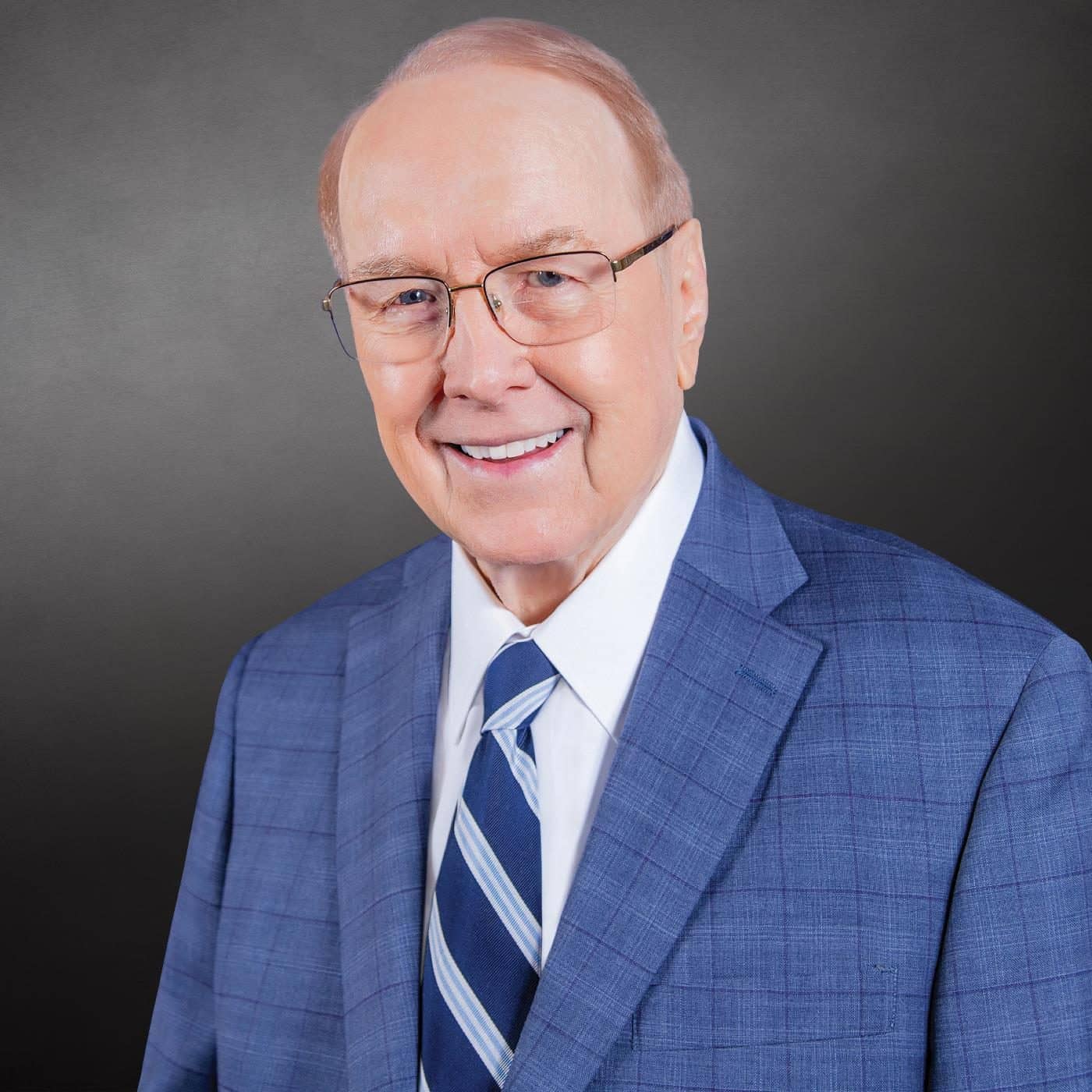


In this insightful episode of Family Talk, Dr. James Dobson and guest Cherry Fuller delve into the pivotal role parents play in motivating their children to embrace learning. With over 40 books to her name and invaluable experience as an educator and parent, Cherry provides a unique perspective on fostering curiosity and enthusiasm for knowledge at home. She shares strategies from her book ‘Motivating Your Kids from Crayons to Careers’, offering innovative ideas to inspire genuine excitement for learning. Cherry Fuller and Dr. Dobson discuss the often overlooked but crucial impact of family storytelling and encouragement in shaping a
SPEAKER 02 :
You’re listening to Family Talk, the radio broadcasting division of the James Dobson Family Institute. I am that James Dobson, and I’m so pleased that you’ve joined us today.
SPEAKER 01 :
Well, welcome to Family Talk. I’m Roger Marsh, and on today’s broadcast, we’re tackling a question every parent faces, and that is, how do we motivate our kids to love learning? You know, it’s one thing to get children through their homework, but it’s something entirely different to ignite genuine curiosity and enthusiasm for discovery. Our guest today here on Dr. James Dobson’s Family Talk is Cherry Fuller, an award-winning author of more than 40 books and a gifted speaker who has encouraged families all throughout the U.S. and abroad. As both a former teacher as well as a mother of three, Cherry brings a unique perspective to this topic. She understands the challenges from both sides of the desk, if you will. In her book called Motivating Your Kids from Crayons to Careers, Cherry reveals how the learning environment starts at home, long before children ever step into a classroom. She’ll share practical ways parents can spark their children’s natural love of learning through encouragement, storytelling, and creative engagement. So here now is Dr. James Dobson with his guest, Cherry Fuller, to continue that conversation here on Family Talk.
SPEAKER 02 :
Jerry, welcome back. The public schools have come in for a lot of criticism in recent years. SAT scores have dropped. I think they’ve leveled off now, but they’ve been dropping for some years. There’s a lot of criticism of what goes on in the classroom. I think as I see what you’re trying to say in this book, you don’t put all the blame on the schools. You say that the environment… for learning, and the motivation for learning starts in the relationship between parents and children. So if kids are not motivated to learn in school, the school is only part of that equation that we need to take a look at what goes on at home, too.
SPEAKER 03 :
Right, and I think that can offer a lot of hope to parents to say, how can I have a positive impact on my children’s motivation? And how can our home be a place that really is full of resources that can help motivate our child? And that we’re not just dependent. We choose the best tools we can with the school that’s accessible, that God has led us to, whatever kind of school that is. And then we see, how can I get involved? And how can I stay in touch with what my child’s learning? And how can we dialogue about it? Because learning is not just in the classroom. It’s beyond the classroom. And it’s a lot bigger than that. And I do try to share that in the book.
SPEAKER 02 :
Cherry, I want to hit head on what we’ve kind of been hinting at and something that plays a major role in your book. And that has to do with the motivation that comes from encouragement. That parents can involve their youngsters in the learning process by making them feel good about what they’re doing there. And to the contrary, when there is nothing but criticism, it’s a real turnoff for children. I’m reminded of a little girl that attended a very tough Christian school in Dallas, Texas. And the teacher of this class was very cold and very rejecting. very demanding. The children lived in kind of a dangerous environment and this one little girl was very sensitive to her teacher and to everybody and wanted the teacher’s love and affection and appreciation and constantly reached for it and couldn’t get it. Came home and told her mother how frustrating this was for her because this little girl was an achiever and yet she could not achieve in this environment. One day, the teacher had shared with the class that her brother was very ill, and she asked for prayer for him. It was a Christian school environment. The next day, that little girl wrote at the bottom of her math paper, I am praying for your brother. Only she spelled your Y-O-U apostrophe R-E instead of Y-O-U-R. The teacher circled that word at the bottom and pointed out that she had misspelled it and made no comment at all on the expression of love that this child was offering to the teacher. Those little subtle things become very important in the motivation of a child, don’t they?
SPEAKER 03 :
Well, I think the discouragement becomes a very important part of demotivating a child. I think children are hungry for encouragement about what they’re doing. I think of a little girl that I worked with this spring in writing, in a setting of creative writing, and I had read her poem, her hand poem that she had written, and I really didn’t even know exactly which child she was, but I asked that Brandy come up and read her poem to the class. And I didn’t realize, and I mentioned how I thought this was such a fine poem and what a spark that it had. And I didn’t realize what an impact this had on her until she wrote me a letter and said, these have been the best days of my life. And I’ve discovered the person within that I didn’t know was there. And she was kind of a shy little girl. not one that would stand out in a crowd. I think our encouragement to children can be something that they remember and that really helps them to tackle things that are difficult for them. And we find that kids who are motivated are kids that tend to be encouraged by their parents instead of criticized. So I think it’s just a very important element to realize that children need our encouragement.
SPEAKER 02 :
One of the approaches to motivation, and especially in the area of writing, that Cherry has applied in her own teaching, she’s brought into the Oklahoma schools not as a full-time teacher but as kind of a creative consultant. And there are these little white books that you can buy that are completely empty. You and I are holding one of them now. and there’s no writing anywhere in them, a little small book, hardback, and the child is allowed to compose his own book and put his own picture on the cover and title it. So Cherry will sit down with the kids and work with them on this, and this is at the second grade level? Is that right that you do this?
SPEAKER 03 :
Right, and those books, those Someday books, were particularly for them to focus on what their hopes and dreams for the future were. So they were saying, Someday this is what I hope my life will be like. Someday I want to be a doctor or a zookeeper or whatever.
SPEAKER 02 :
It’s really interesting to read these and see how kids think. This one is titled Someday by a boy named Craig. And on the first page, he’s got this picture of this gigantic lion with himself standing side by side. And it says Grr at the top. And he said, I want to have a pet lion, L-O-I-N. I want to have a pet lion because I won’t be bugged by people. He’s going to sic the lion. But the creativity in these things is striking, and the children obviously love doing this. Does school have to be boring?
SPEAKER 03 :
I don’t think school has to be boring, and I think there are some exciting things going on in the area of helping kids do hands-on science experiments, and this is a hands-on sort of process, creating books. I think that school can be a wonderful experience. It was for me, and I think it can be. I think it takes creative teachers. I think it takes parents who are involved and who are interested.
SPEAKER 02 :
and supportive and i think as we all work together school can be an experience that helps children discover the gifts and talents that are within them and and stay encouraged because it’s a long marathon this education process this is the essence of what concerns me in the area that we’re talking about today if you stretch your right arm as far out to the right as you can and stretch your left arm as far to the left as you can There is between your two hands now an imaginary continuum of the knowledge that mankind has accumulated through the centuries. It begins with an understanding of Scripture and goes on to science and math and creativity and all the books that have ever been written and astronomy and all the subjects that are out there, all the knowledge that is out there. What concerns me is that most children in the Western world live in about an eighth of an inch in the middle of that world of information. There are so many exciting things out there. Everybody has some area of interest along that continuum, but they don’t even know it because they live in the center. If you talk to today’s teenagers, they’re talking about rock music and they may be talking about skateboarding and they’re talking about cars and And they’re talking about dating. And it’s such a narrow, narrow little spectrum in the center of this wide expanse of information. And how can we push those borders back? for those children and broaden that world. That’s really what the college experience does. It’s not just the memorization of facts and the taking of tests. It pushes your borders back and shows you a little more of that fascinating world that’s out there. And really, your book deals with the pressing back of the dimensions, the borders of your field of vision. Is that one way to put it?
SPEAKER 03 :
Yes, I think it is and I think that can start in the early years and really children need to be developing some goals and seeing some things out there besides just the day-to-day drudgery of homework in those middle school years so that they can then approach junior high and high school with look at all there is to learn and I think there are children who really are excited about learning.
SPEAKER 02 :
Do you remember that happening to you in college?
SPEAKER 03 :
Yes, in fact, I share in the book, in my chapter on storytelling, the value of storytelling, that one of my history professors at Baylor, Mr. Reed, it was just like going to a Shakespearean drama every day. He had such a breadth of knowledge about art and architecture and medicine and history, and he brought that all together in a drama of storytelling each day, whether it was Western civilization or whether it was Chinese history, and I didn’t want to miss it. And I think that it’s a rare person who can do that and who can just weave those things together so that we can begin to get a picture of history.
SPEAKER 02 :
Yeah, that happened to me too. I came into college as an 18-year-old, a typical 18-year-old, not terribly motivated and not any great student. I had many things that I was interested in and books were only one of them. And I remember in the latter part of my freshman year and especially during my sophomore year, the excitement of learning hit me. I mean, just what I was exposed to there turned me on to things I did not know exist. And out of that came my interest in human behavior. Just the fascination with why people do what they do. And it’s carried me really to this moment. It’s a shame that so many people go through life not ever having had that spark turn into a flame with the excitement of knowing what’s out there, you know.
SPEAKER 03 :
Well, often I think it just takes one person, though. For me, it was one English teacher who was just fascinated with literature and who would get up there and read an Emily Dickinson poem and share her love of that. And I think that that’s something that children catch from us. If I’m excited about learning something, if I’m excited about it, I can transfer that to my child or to the children that I work with.
SPEAKER 02 :
Well, there’s the central theme of your book, isn’t it? That the parental excitement translates to the children and provides the environment, which carries over into the school setting.
SPEAKER 03 :
It’s that enthusiasm, because really enthusiasm is a key to teaching anybody anything. I mean, I go in because I’m enthusiastic about writing, and I feel like whatever field these children go into, if they are good writers and communicators, they’re going to be better at whatever they do.
SPEAKER 02 :
if you as a parent are so exhausted, so worn out, so overcommitted, it hampers what we’re trying to do inside the home. And here’s another one where the total absorption of our energies and our creativity and our time and our effort in the business of a career, whatever it happens to be, if it is so all-encompassing that it eliminates what we’re supposed to be doing at home, the children suffer. A scripture I have in front of me says, and this is Joel 1, 2, and 3, has anything like this ever happened in your days or in the days of your forefathers? Tell it to your children. And let your children tell it to their children and their children to the next generation. He’s telling us to preserve our tradition, preserve our relationship by passing along from one generation to the next the stories that give meaning to life. You really believe in storytelling at home, don’t you?
SPEAKER 03 :
I really do, whether it’s just a very casual thing that you do as you rake leaves together or you’re in the car together, or whether, as I share in the book, when our family met in Kansas for a 50th anniversary, and Uncle John sat down and told us stories of the Old West. He told us stories about how his father, John Mathias, had met Bat Masterson in Dodge City and how Bat Masterson had taken his guns away. And I got the tape recorder out and I tape recorded these stories. And he told us about a flood in Winfield, Kansas. And he told us about Grandma Fuller’s knitting needles during World War I, how she would sit and read her Bible propped up, her big Bible, and knit mittens and knit socks for the soldier boys and send them over. And everyone would bring her the yarn. and I’ve always been fascinated with family history, and so I would type these up and then send them off as Christmas presents, and I encourage children to interview their grandparents. I mean, it’s a wonderful storehouse of heritage that a parent has, that a grandparent has, that they can share, and it gives children an interest in history, that it’s not just dry facts and dry bones and Once that person is gone, it’s a lot harder to put those stories together. My mother died about eight years ago, and I’m trying to go back to people who knew her and say, could you tell me a story?
SPEAKER 02 :
Could you write down a story about mother? Some of it will never be retrievable.
SPEAKER 03 :
That’s right. That’s right. There’s an old saying that says, an African saying, that when an old person dies, it’s like a library burns down. And there’s such a richness of family heritage, and we can transfer it to children. by telling stories that are important in our own faith and important in our family, how we overcame obstacles.
SPEAKER 02 :
My great-grandmother helped to raise me when I was very young, and she had lived in a frontier area of the West. I’ve forgotten where it was, but when I was three or four or five years of age, she would tell me stories about that. They live in my mind today, all these years later, and she’s been gone for 35, 40 years now. But she’d tell me about how they had a log cabin and the mountain lions would come down at night and she could hear them outside the cabin. And the pigs would squeal and the horses would neigh. And she would tell me what that experience was like. And then she described… Just how different life was then than now. That helped to open my mind to a love of history and to how life used to be, which I’m still fascinated with today. All that is available if we’ll take the time to do it.
SPEAKER 03 :
You may not think your courtship was that interesting with your wife, but your child might think that it was fascinating. And so we can transfer even the stories of how we met, how God brought us together, stories of our child when he was a baby and things that happened to him. And I think birthday time is a wonderful time to share those stories. When we travel together, when we eat together at dinnertime, we can share stories of our family’s history together.
SPEAKER 02 :
Once again now, what you’re saying in your book is that these exercises in sharing information and communicating between generations are directly linked to what goes on in the classroom.
SPEAKER 03 :
Yes.
SPEAKER 02 :
That you open a child’s mind to learning, that you light the flame of curiosity and creativity. That translates into reading, writing, and arithmetic.
SPEAKER 03 :
Right.
SPEAKER 02 :
and perhaps that it is not occurring as well today because of busy families as it used to.
SPEAKER 03 :
Well, I think a hectic lifestyle, you know, as you said, it can absorb a person. And if things are so hectic that I’m not even talking with my children, then that certainly is something that is not going to, you know, build that relationship. And so I think that we do need the time together, but we can also harness the time that we do have. I know a mother who’s a single parent who has three girls, and she’s a schoolteacher. But she’s told me about how they use the time in the car when they go to the doctor, when they go on errands, to talk together, to share stories, to play word games. And she has a great interest and involvement in her daughter’s education. And so I think that it’s available for all of us if we’re aware of it, if we’re focusing on what’s really important. my child, your child, that God’s put gifts and talents within them. And we’re excited about what they’re going to become someday and the purpose that God has for them.
SPEAKER 02 :
When you’re sitting in the classroom now, you’re on the other side of the ledger. You’re also a mother of three children. But when you’re there as a teacher, can you tell what the kids you’re working with, those that have had this kind of enriched environment at home?
SPEAKER 03 :
Well, I think I can in the sense that especially the child that’s had a good relationship with the parents and just has that attachment and that sense of security is going to relate to me and be more receptive to what I have to share. And that sort of child really does stand out in a classroom because the child can make connections with the teacher if he indeed feels like he’s worthwhile and he’s got somebody behind him that’s supporting him and encouraging him. And as parents, I think if we have realistic expectations of our children, expectations that they can meet and therefore feel successful, then they’re going to go on being motivated. And that’s a real key is to say, you know, be realistic about what age your child is and what his abilities are so that then he can meet those expectations and even go beyond them and feel successful.
SPEAKER 02 :
And the key to it from the perspective of both a parent and a teacher is to Get behind the eyes of the child and see what he’s seeing and feel what he’s feeling. Right. So you can work with him and reinforce what’s going on there in his mind. Have you ever missed it as a teacher?
SPEAKER 03 :
Well, I know I’ve missed it. I’ve missed it as a parent many times. And it reminds me, though, in the times where we feel inadequate, that we feel like we’ve made mistakes, is I remember an analogy that John White gives about the disciples. And it has encouraged me as a parent. He says, as parents, we can bring the five loaves and the two fishes that we do have to Christ. And offer those to him and give our children what we have and what we are. And then trust him to multiply that to meet the needs of our children. And I know so many nights when I’ve prayed on my knees and said, Lord, would you fill in the gaps between the love my children needed today and the love they didn’t get because I was sick or I was stressed? And Lord, can you encourage them today? through me but also through other people in their lives because I believe if we bring what we are to Christ and we offer that to him and we say you know make me a vessel of love to my children and encouragement that he will multiply what we bring and someday we’ll look and we’ll see that a lot of hungry children have been fed and that the needs of our children have been met and it’s been the Lord it hasn’t just been us
SPEAKER 02 :
Jerry, that’s so good, and it reminds me of a breakfast that I had this morning, this very morning, with a friend of mine, Dr. John Welch, a retired physician in this area. And he was commenting to me about the influence that I have and that this program has throughout North America. And I said, John, do you have any idea how heavy that burden is? Because I’m an ordinary man. I’m not a superstar. I am just a person that God has made visible for his own purposes. And the responsibility of coming before these microphones and trying to feed those people who are out there who have all those family problems and all those needs, even in the area we’re talking about today. I feel inadequate to do that job. But the only way I can feel comfortable in coming here is what you just said, that we break the fishes and the loaves. It’s an inadequate meal. It’s not enough. And it’s not enough to go around. And then to give it to the Lord and ask him to bless it and multiply it. And for reasons that I can’t explain, he does that. He does. In the mail it comes back. People say, I had precisely that need. We didn’t even know to whom we were talking that day. And the Lord makes use of what little bit of substance that we can bring here. I want to say to our listeners who are out there, I’m going to ask them to continue to pray for us here, that he’ll help us do that job. I return it and pray for you all as parents and teachers who are trying to bring children through these experiences. incredibly difficult days when there’s so many distractions, where so much of what they see and hear is harmful. And when the educational system might not be as efficient as it ought to be, the Lord can somehow take all that and multiply it to feed the multitudes. That’s really what you’re saying, isn’t it?
SPEAKER 03 :
Right. I think as parents, as we pray for our children daily, and as teachers, as we pray for the children that are in our charge, that God would use us as vessels of love to them, that he would encourage them, that he would develop the talents and the gifts he’s put within them, because the truth is that he loves them even more than I do. And so I can trust his love and his faithfulness because he loves them even more than I do.
SPEAKER 02 :
You feel that deeply, don’t you?
SPEAKER 03 :
I really do. He’s a faithful father. He’s been the father to the fatherless, to me and to so many other children and people.
SPEAKER 02 :
Cherry, thanks for being our guest again for the second time. We’ve been glad to have you out here. You came all the way out from Oklahoma to be with us these two days, and I do appreciate it.
SPEAKER 03 :
Thank you. Thank you.
SPEAKER 01 :
You know, I love what Cherry said about bringing our loaves and fishes as parents. We don’t have to be perfect. We just have to offer what we can and trust that God will do the rest. You’re listening to Dr. James Dobson’s Family Talk, featuring Dr. Dobson’s encouraging conversation with author and speaker Cherry Fuller about motivating children to learn. Now, if you’d like to hear today’s program again or share it with a friend, go to drjamesdobson.org forward slash family talk. While you’re there, you’ll also find information about Cherry’s book called Motivating Your Kids from Crayons to Careers. Again, you’ll find all that information and more when you go to drjamesdobson.org forward slash family talk. You know, these Family Talk broadcasts exist to strengthen families through biblical truth and practical wisdom. Every program you hear represents our commitment to helping parents navigate the challenges of raising children in today’s world. But we can only continue this work with the partnership of listeners like you. Right now, thanks to the generosity of some special friends of our ministry, the Dr. James Dobson Memorial Matching Grant has been established and every dollar you donate to the JDFI between now and December 31st will be doubled up to $6 million. Your generous support allows us to reach millions of families all across America with practical help and biblical hope. Now to make a secure donation online, visit drjamesdobson.org forward slash broadcasts. That’s drjamesdobson.org forward slash broadcast. You can also give a gift over the phone when you call a member of our constituent care team. That number is 877-732-6825. That’s 877-732-6825. Or if you prefer to send your donation through the U.S. Postal Service and maybe include a Christmas card for the Dobsons as well, write to Dr. James Dobson’s Family Talk, P.O. Box 39000, Colorado Springs, Colorado, the zip code 80949. Well, I’m Roger Marsh, and on behalf of all of us here at Family Talk and the James Dobson Family Institute, thanks so much for listening today. Be sure to join us again next time right here for another edition of Dr. James Dobson’s Family Talk, the voice you can still trust for the family you love. This has been a presentation of the Dr. James Dobson Family Institute.