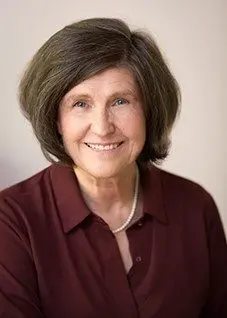
Join Mike Triem and Dr. Kelly Sutton as they delve into the complexities facing today’s medical practitioners. Dr. Sutton shares her personal story of losing her medical licenses across multiple states for adhering to her professional judgment rather than government mandates. Her experiences highlight the broader narrative of control that medical boards exert over physicians who refuse to conform to the ‘consensus medicine’ dictated by governing bodies like the CDC.
SPEAKER 02 :
It’s Mike Treen with Crawford Media Group. Today I’m joined by Dr. Kelly Sutton. Dr. Sutton has been just such a good friend in talking to us about some of the issues facing physicians who have been brave against what the government would like most of us not to know. Dr. Sutton, thanks for taking the time with us.
SPEAKER 01 :
Thank you, Mike.
SPEAKER 02 :
I’m happy to be with you. So Kelly, tell us, there’s a There’s now some lawsuit and actions against some of these boards that were so heavy-handed, tried to strip credentials away from doctors, keep them from practicing. Let’s back up for a second. Tell us about what happened, kind of big-picture overview, and then what’s happening now with this lawsuit.
SPEAKER 01 :
Thank you. My particular story began before COVID when California restricted parents’ rights to choose vaccination for their children going to school. and said that they had to have all vaccines unless a doctor wrote a note. The doctor writing the note was the new law that I followed, and so did a bunch of other physicians in California. But shortly after we did that, the medical board began investigating us and saying that the standard was different than what the law said. As a result of that, I lost my license in California, and that sort of spread to two other states where I had licensure. Massachusetts and New York. So I have currently no medical license. And even though the state I live in is short on primary care physicians, I cannot practice. So the whole COVID thing happened after I had my incident with the medical boards. And that was like a magnification of what happened in California where doctors were told how to think about vaccines for school. And in COVID, we saw restrictions of opinions and the requirement to do what’s called consensus medicine, where you just do what the organizations with the three letters tell you what to do, like the CDC. Okay.
SPEAKER 02 :
So they… Basically gave orders. I know here in Colorado, if I remember, the governor got involved and said, if you prescribe ivermectin to a patient, we do not consider that XYZ. We will take your license. I think I heard that right.
SPEAKER 01 :
That could well be. Some states have done that. And one of my co-plaintiffs is Dr. Mary Talley Bowden of Texas University. And it was an ivermectin issue when she was trying to help a patient in a hospital. And the court had given her a go-ahead. And then another court took it away. And it was a big melodrama. And she still is fighting that in court and to have the right to continue to practice at great legal expense to herself.
SPEAKER 02 :
So, Dr. Kelly, it sounds like – and I’ll remind our listeners. This affected people whose place of employment said – Unless you get the vaccine, you can’t come to work. Or college athletes, of which our daughter was one, and she was not allowed to compete unless she got the vaccine. So it wasn’t just school children. It affected so many people in our society. And COVID has changed. Now people aren’t as freaked out about it. Kind of the perspective’s changed. But these lawsuits have not. And these doctors are still being knocked around when they shouldn’t be.
SPEAKER 01 :
Correct. And the medical boards don’t work through ordinary lawsuits. They are part of the administrative state. So they don’t have to be as thorough as a regular court. They can bring charges against individuals. a physician and make claims and not have to produce the same sort of evidence nor give depositions, namely be cross-examined to provide answers. And so many of us were investigated and disciplined with that administrative law as the tool being used against us. And now several of us are working together in order to bring a lawsuit in the state of Texas at federal court against the medical boards that investigated and disciplined us and against the Federation of State Medical Boards, which stands behind all the medical boards in the country.
SPEAKER 02 :
So, Dr. Kelly, where did this start? Was it someone with initially good intentions and it turned into evil? Or was this just simply… Well, you’re not marching to the narrative, so we’re going to go after you and take your license. Where did it start?
SPEAKER 01 :
My story begins in 2015, but I have since learned from Dr. Bruce Dooley, who was interviewed in New Zealand by a very good journalist, Liz Gunn, that the issue began long before, and the Federation of State Medical Boards has, in fact, been trying to get rid of what is they call quack or fringe physicians and integrative or holistic medical practices for at least 30 years.
SPEAKER 1 :
Wow.
SPEAKER 02 :
Honestly, all we deal, all we work with in our company has been primarily overwhelmingly integrative, holistic, natural medication. I don’t know if I’m using the right terms, but maybe some of them. But the doctors that don’t march to the just typical medical, you know, orders. And so it’s really interesting to us that that started that long ago, and perhaps even longer before it.
SPEAKER 01 :
Yes, exactly. The FSMB was founded in the same year as the Federal Reserve, 1913. So Someone has been thinking about centralizing control in our country for a long time and has recognized it needs to be done around banking. It needs to be done around medicine. And I think another thing was the IRS was founded in that year. So it goes a long ways back. And the FSMB is hardly known by doctors even. It’s got a lot of power, but we don’t even recognize it.
SPEAKER 02 :
Speaking to Dr. Kelly Sutton, Dr. Sutton is somebody that we’ve leaned on for her expertise when it comes to what happened not only during COVID, but as Dr. Sutton’s talking about this, it goes far, far back, decades back in terms of control over doctors and even just what kind of proof and evidence has to be provided for them to censor a doctor. And it’s pretty amazing. Dr. Kelly, how does this affect the patient’s big picture that you and other doctors are trying to serve well?
SPEAKER 01 :
The patient has always had respect for the doctor, been able to choose a doctor and could open up, share intimate details and get honest answers back from a person with training and professionalism. That time is really gone because while the individuals in medicine can still be very high-minded and ethical, the system of medicine has very clearly stated that it’s here for profit. The medical boards no longer refer to patients as patients. They call them consumers, which means we’re dealing more with seeing the doctor-patient relationship as a retail exchange instead of a professional exchange between someone who’s studied and someone who’s in need. The shift in our times is driven to a great extent, I think, by putting ads into the media. Only the United States and New Zealand allow that. And it really is to the point where about two thirds of media advertising is pharmaceutical. So the places that we can trust the most are those that are not dependent on pharmaceutical ads. The other thing that’s happened is financial incentives have been brought forward to physicians. And while this is hard to find lately, in 2016 when I was first facing the situation in California, the Blue Cross Blue Shield Provider Incentive Manual stated very clearly, if you do such actions as this and this and this, you will get such and such extra money. My focus at that time was the childhood vaccines, and it was clearly stated that if a provider had a two-year-old patient up to date on the CDC schedule, the provider would receive an extra $400. So if you think about 10 children, two-year-olds being vaccinated, the doctor gets $4,000 extra.
SPEAKER 02 :
That’s crazy. That is just nuts. Dr. Sutton, we… Right now… Oh, go ahead, please.
SPEAKER 01 :
I’m sorry. It’s hard to trust our doctor’s judgment. Is the doctor recommending something to me because they get reimbursed better if they write me a prescription for statins or have me get a mammogram? Or do I really need these things? It’s a very difficult thing to discern in what should be a professional relationship.
SPEAKER 02 :
To your point, Dr. Sutton, we’ve We’ve more recently heard by some of our local doctor friends, integrative doctors, that this whole thing of oncologists being paid for the drugs, the chemotherapies, the treatments that they recommend for their clients, their patients. And if you look it up, all you have to do is do a little web search, and there it is right there. That blew my mind. I had no idea that was happening.
SPEAKER 01 :
Exactly. Exactly. I don’t think we can keep money in medicine the way it is because it impacts judgment. Even if the doctor intends to be objective, there’s that subconscious pull to support the practice or whatever and get the extra money.
SPEAKER 02 :
So, Dr. Kelly, our listeners, I want to make sure we have ample time for this. What can they do? And by the way, you might also remind them how it might affect them even if it doesn’t affect them right now.
SPEAKER 01 :
Thank you. I think the best thing they can do is read the fine print, be careful of signing things when you go to the emergency room or the hospital and ask questions freely of any medical interaction that happens and be willing to take time out before you make a decision and research on your own or get second opinions and educate yourself as much as you can to take care of things in a home care sort of way where you can not have to rely 100% on the medical system that we used to be able to confidently rely on 100%.
SPEAKER 02 :
Dr. Kelly, how do you… Oh, go ahead.
SPEAKER 01 :
The organization that has been so helpful with this lawsuit is called Physicians and Patients Reclaiming Medicine. And there are many new organizations coming in response to the harshness of the time that we’re in. This particular organization has the website reclaimingmed.org and it gives the story of my case and other physicians and is a 501c3 that helps raise money in order to allow the legal defense of physicians who are trying to care for patients using full truthfulness and sharing information for the patient’s instead of just to practice consensus medicine.
SPEAKER 02 :
Good. And if they want to help with the lawsuit, is that something they can or should do?
SPEAKER 01 :
That would be lovely because this is not a short process. The suit is filed, but it will probably be a couple of years before things wind out, and it could well be that there will be appeals, attempted dismissals, a lot of adverse publicity against us as individuals. And so we have a long haul ahead of us, but we feel that that’s what we are in this position for in a certain way. We can’t just take it lying down. We have to speak up.
SPEAKER 02 :
Well, Dr. Kelly, we’ve known you and Rachel Corbett and the other doctors you’re working with to be committed to And willing to really to take some arrows for this. I mean, some of the stuff that you and these other doctors have put up with is unthinkable. Yet you all stand in the breach. You’re fighting this for what’s right for the profession and for patients now and in the future. Same website for people that want to help out financially, reclaimingmed.org. Is that where they go?
SPEAKER 01 :
Yes, it is. Thank you.
SPEAKER 02 :
Okay, reclaimingmed.org. Dr. Kelly Sutton, thank you for taking the time with us. What you’re doing is outstanding, and we’re so thankful that you’re fighting back for patients and physicians. Thank you so much, Mike.