



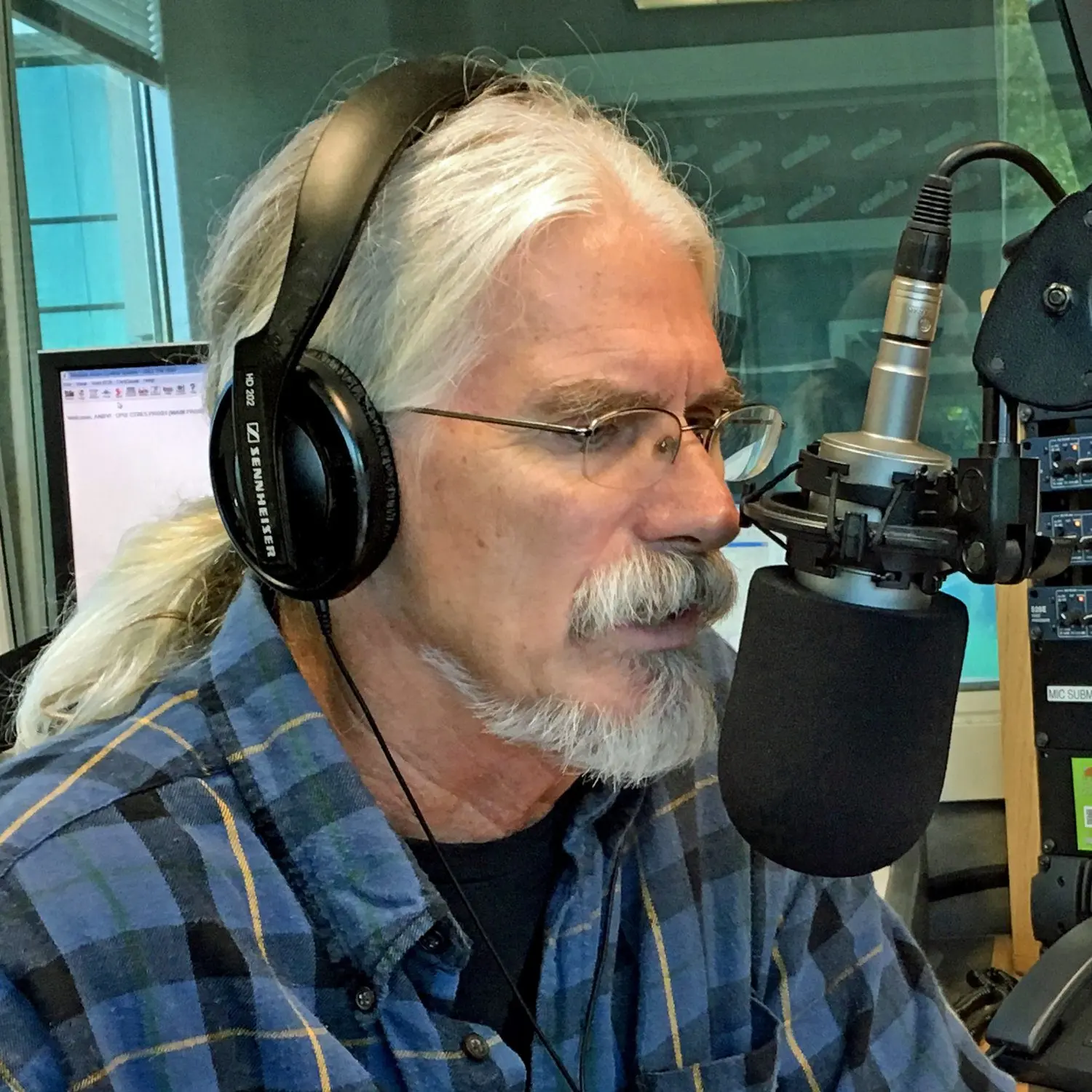
In this episode of The Narrow Path, host Steve Gregg explores numerous complex theological questions posed by callers. From understanding the historic and symbolic interpretations of the Mark of the Beast to unpacking the nuanced views of the rapture, Steve provides biblically based insights into these frequently debated topics. Discover how prophecy can be misconstrued when current events shape biblical interpretations and understand why discerning believers should focus on scripture for clarity.
SPEAKER 1 :
Thank you.
SPEAKER 09 :
Good afternoon and welcome to the Narrow Path radio broadcast. My name is Steve Gregg and we’re live for an hour each weekday afternoon, taking your calls. If you have questions, you’d like to call in about the Bible or the Christian faith or something like that, or if you have a different view from the host and want to call in about that, there is a number you can call. And there are lines open as I speak, which you can occupy if you call. The number is 844-484-5737. That number again, 844-484-5737. I want to remind those of you in the Seattle area that I will be up in that area teaching for about a week. evenings, just about every evening for a week, as well as mornings at Youth with a Mission in Monroe. The Monroe meetings in the morning are not open to the public, but the evening meetings would be open to anybody who wishes to attend. Feel free to check our website, thenarrowpath.com, under announcements to see where those meetings are going to be. And join us if you’d like to. All right. We do have lines open, so let me give you that number again. It’s 844-484-5737. And our first caller today is Donald in Long Beach, California. Donald, welcome to The Narrow Path. Thanks for calling.
SPEAKER 07 :
Yeah, thank you so much, Steve. Appreciate your ministry. Always a joy to hear your Q&As. on a daily basis. Anyways, two-part question. I know your position on the Book of Revelation, the Mark of the Beast is my question. I know I believe you and what you say as far as the early date of Revelation, the Mark of the Beast number equates in Hebrew 666 to Caesar Nero. So first question to that is, do you know any time in history that you, and I know you studied this Josephus or Eusebius or any other writings where somebody took a mark in that time period, 70 A.D., the destruction of the temple in Jerusalem, where they couldn’t buy or sell unless they had the mark. Do you have any information on that, number one? Second part of the question is, you know, with all the crazy talk going on daily, weekly, about the new temple, you know, they’ve signed, sealed, and getting ready to deliver a new temple in Jerusalem, and the red heifer… And then over in Europe, you know, everything’s going to change. You can’t buy or sell without some sort of a mark or being scanned. Your comments on all that.
SPEAKER 09 :
Well, as far as the time of Nero, there being a time when you could not buy or sell because you didn’t have the mark of the beast. No, I don’t know of anything like that. I’ve heard some commentators who want to believe that. suggest it, but I’ve not seen any primary sources for it, so I don’t believe that ever happened in that way. That’s not how I understand the prediction, however. I believe that when it says people cannot buy or sell without the mark, I understand the mark to mean the proof that you are loyal to the beast, and buying or selling or boycotting, to my mind, simply refers to ostracism. and persecution. Not such persecution as leads to people dying necessarily, but that leads to them being marginalized because they don’t follow the society’s way of doing things. To my mind, the mark on the hand or the forehead represent the works. Your hand represents your works. And the head would be your thoughts. And those who do not think or act in the way that those two who are loyal to the beast do, are by that very fact not having the mark of the beast on their forehead. And to say that they will not be able to buy or sell, this does not necessarily speak of an economic situation, you know, like a cashless society or something like that, which most prophecy teachers like to talk about. To my mind, I mean, that could be one reason why people couldn’t buy or sell, because you need to have money. a mark as a credit number. That’s how it’s been taught in recent generations. But I don’t think that’s the only or most reasonable suggestion. I think the fact that you can’t buy or sell is not because there’s a cashless society, though one could be coming. I’m not saying there isn’t one. I’m just saying I don’t think that’s what it’s talking about. I think it’s talking about people won’t want to do business with you because you’re a nonconformist. You’re not going the way of the world. and that is something the Bible talks about a great deal. I think that’s symbolically spoken of in Revelation is the mark on the hand or the forehead. But, no, I don’t know of any case where having an actual mark on your hand or forehead was required, certainly not in the days before 70 A.D. So that’s not how I understand the mark in Revelation 13. Now, as far as the temple and all this plan to rebuild the temple and so forth, People may plan whatever they want to. I don’t interpret the Bible by headlines. That’s called newspaper exegesis. When you exegete scripture, you try to draw the meaning of the scripture from the scriptures. not try to import meaning into it from the newspapers. And this newspaper exegesis has been probably the habit of most people who call themselves prophecy experts. Really, they’re not prophecy experts. They’re probably more current event experts, if anything. And they know something about prophecy, and they think that they can shoehorn these events into what they think they know about prophecy. Most of them, I think, do not understand prophecy very well, at least the way I’ve heard them teach it. They don’t seem to. But they certainly are committed to saying, well, there’s people in Jerusalem now at the temple, and so they’re planning to rebuild the temple. Okay. Yeah. I mean, it certainly is not a majority sentiment in Israel. In fact, there’s a very, very tiny minority of Jews who are interested in that. But so what? What if they do build it? There’s nothing in the Bible about them building a temple. That’s the point. If we say, well, because they’re doing it, the Bible must mean that. No, the Bible doesn’t say anything about that, and we have no obligation to interpret the Bible according to whatever may be in the current plans of a few Jewish people in Israel. Now, what if they do rebuild the temple? Well, fine. I mean, anti-Christian shrines are built all over the world every day in Hindu lands and Buddhist lands and Muslim lands and Jewish lands, I suppose. Judaism is an anti-Christian religion. They don’t believe in Christ. If they do build a temple, it’s because they want to thumb their nose at Jesus, because Jesus put an end to temple sacrifices. And there’s no reason for building a temple unless you’re going to offer temple sacrifices. So, in other words, the finality of the sacrifice of Christ is something that the Jews have had to almost live with to their chagrin for 2,000 years. But if they build a temple and start building, doing animal sacrifices again, it’s just a thumbing the nose at God, or at least Christ. And Christians should have no interest in it at all. I don’t think the Bible predicts that they will, so whether they will or not remains to be seen. It wouldn’t be significant to Christians any more than a mosque built in Saudi Arabia would be significant to Christians. Now, as far as the red heifer, the red heifer, of course, would have no use except for the consecration of the temple, those who think the consecration of the temple is coming up because they think there’s going to be a temple, then they feel like we should go through all the Levitical things, or the Jews should, to dedicate it, and they have to burn a red heifer to ashes so they can put it in the holy water to sprinkle the new furniture of the temple. All of this has no interest to me. Again, I’m not part of that religion. I follow Christ. I’m not part of any anti-Christian religion. And Judaism is anti-Christian as a religion. But even so, only the minority of the Jews in Israel are even religious, even in the Jewish religion. There are more of them that are atheists, and they certainly don’t have any interest in building the temple. So, I mean, the slightest interest that anyone in Israel might show toward these things will set ablaze the blogs and the podcasts of people who think that that’s supposed to be happening. But the Bible doesn’t predict it anywhere, so why should we think it’s supposed to happen? And if it actually does happen, instead of being elated, we should see it as the insult to Christ that it is intended to be. Anyway, those are my thoughts on that. Donald, I appreciate your call. Anthony from Blaine, Minnesota. Welcome to The Narrow Path. Thanks for calling.
SPEAKER 03 :
Hi, Steve. Clear connection, first of all? We’re good?
SPEAKER 09 :
So far, so good, yeah.
SPEAKER 03 :
Okay. I’ll cut right to it. I’m a believer, brother in Christ. Just wanted to hear your thoughts on, we had a little small group breakdown at a house church in kind of praying about, you know, with family coming over for Thanksgiving, as a lot of Americans do, just, you know, that you have wisdom and some of those good things as you bring different people into your house. But one guy was really heavy and strong on, in my opinion, a little too strong, but it was on that you have to, you know, that you really should pray over all these rooms in the house and all, you know, because the house is under your authority and all of this praying over vehicles. I know you’ve heard this before. I’ve heard it before, but I just wanted to hear your thoughts on it. It doesn’t ring true to me. It seems there’s other ways to do it. I think it underlies a lack of understanding maybe in an area, but I wanted to hear your thoughts. I’ll hang up and listen. Thanks, brother.
SPEAKER 09 :
Okay, great. Well, thanks for your call. Yeah, normally I’d say that the more people pray, the better it is. I mean, prayer is a good thing. On the other hand, Jesus said it’s not a good thing to pray as the heathen do, who think they’ll be heard for their much speaking. In other words, there are superstitious kinds of ways to pray, and there are biblical ways to pray. I don’t know of anything in the Bible that speaks of anyone praying over a room or a house or a vehicle or an animal or, you know, or a city, I mean, in a sense that maybe praying for Jerusalem. But, yeah, I mean, this idea of praying over every room, I’d ask what for? Are rooms vulnerable to something? I mean, if you have non-Christians coming over for Thanksgiving, I assume the context of this is you might have some people, family members or friends over, who are not Christians. Maybe some of them are involved in the occult. Maybe there’s some gay couples or something. And you have to be careful about some kind of contamination. But I don’t see the Bible saying that a house is contaminated by the visitors who come there. Showing hospitality to people is a good thing. Now, there might be some kinds of people that you would not invite into your home, possibly because You know, their speech is full of blasphemy and things like that that you would not wish to have in your house, especially if you have children. There might be kinds of people whose lives are so immoral that you don’t want to put them on display before your children. So there would be some issues I could see not having people over simply because they don’t value that. what your home values are, you know. And when they come into your home, they’re coming into your turf. Now, to pray over your house regularly that God would protect it or put angels around it or whatever, I don’t have any objection to doing that, you know, to pray for protection of various kinds. But this idea that we need to go into each room and pray something over it, well, why? Why? Are there demons particularly aiming at coming into that room? You need to put angels at the doors? Or what do you have to do? I mean, if you had real reason to believe that demons were bombarding your house somehow, then I could see devoting some fasting and prayer to sending them off. But this idea that if you have strangers to your house or non-Christians to your house, Oh, your house is vulnerable. I don’t think so, necessarily. I mean, if someone’s in your house working witchcraft and spells and things like that, maybe that would be a different issue. But when it comes to having someone over for Thanksgiving dinner, I just think you need to be discerning in who you invite, right? I mean, if you want it to be a strictly evangelistic situation, invite as many non-Christians as you want to, and you control the conversation if you want to. But if it’s a family get-together and largely godly people, then you just have to decide how many of another type you would invite. One or two might not spoil things. In fact, it might be a good witness to them. But I don’t know. People say you have to pray over every room because non-Christians are coming to your house. That strikes me as superstitious praying. I guess according to their faith be it unto them. But, yeah, it doesn’t sound like anything the Bible teaches. It’s not biblical teaching on prayer. So I would see no reason to teach it or recommend it. If somebody feels the Holy Spirit’s urging them to do something along those lines, then by all means, do what the Holy Spirit leads you to do. But I would never recommend it, per se, because it’s not something Jesus or the apostles did, as far as we know. All right, let’s talk to Howard in Seattle, Washington. Howard, welcome.
SPEAKER 04 :
Hello?
SPEAKER 09 :
Hi.
SPEAKER 04 :
Hi, can you hear me?
SPEAKER 09 :
Yes, go ahead.
SPEAKER 04 :
Okay, the radio’s not interfering?
SPEAKER 09 :
No, fortunately I can’t hear the radio. If I could, there would be a delay.
SPEAKER 06 :
Oh, I can hear it now.
SPEAKER 09 :
Okay, you might want to turn the radio down as far as you can so we can’t hear it. I do hear it now. Okay, if it’s in another room or down or whatever. Yeah, go ahead, please.
SPEAKER 04 :
Okay, I have an end times question about the rapture. And there’s… been a lot of books about pre-rapture. I don’t understand post-rapture. So in pre-rapture, the Christians are taken out to heaven. What about post-rapture? What happens to the Christians? I’ll take the answer off the air.
SPEAKER 09 :
Alright, that’s fine. Well, you’re talking about pre-tribulation rapture versus post-tribulation rapture. The rapture is a term that Christians use to refer to Jesus catching the church, the living people, the living church, living Christians, up into the air at the time of his coming. And this happens immediately after he raises the dead. Paul said, the dead in Christ shall rise first, then we who are alive and remain will be caught up to meet the Lord in the air, and thus shall we ever be with the Lord. So, you know, the idea of the rapture is after God has raised the dead, He also raises the living Christians to meet him in the air. Now, the pre-tribulation rapture doctrine holds that this rapture and resurrection of the saints occurs before there is a great tribulation that comes on the earth. Usually they say it’s a seven-year tribulation and that before that tribulation begins, the rapture will take place and the Christians will be taken out of the world into the clouds. Now, those who hold this view are not all of one opinion. Some of them believe that once they’re taken into the clouds, they’ll go back up into heaven with Jesus. So he didn’t really come down to seriously come down. He came down to meet them and take them back into heaven with him. That’s how some believe. Others believe that Jesus is going to come to the clouds and remain there for the seven years with us with him in the clouds. And then he’s going to finish the trip to the earth with us with him. Now, that’s the pre-tribulation rapture. You say you don’t understand the post-tribulation. Well, the post-tribulation rapture is simply that the rapture occurs at the end of the world, not seven years before. That whatever tribulations there are going to be before Christ comes back, will happen before he comes back. And when he does come back, he’ll raise the dead and rapture the church. So this is what it teaches, that Jesus will come back to earth. But as he draws near to earth, he’ll raise the dead believers and the living believers, raise them into heaven to meet him, and we will continue his downward journey with him. We’re like a welcoming committee rising from earth to meet the king as he is coming to his own domain. And we’ll meet him in the air and then continue the trip down to earth with him. So that’s what the post-trib is. I guess if you believe in a seven-year tribulation, you’d call it post-trib. I just call it the resurrection and rapture of the last day because that’s what Jesus referred to it as. He said he’ll raise his people up on the last day. Now, obviously, if it’s the last day, it’s not before a seven-year tribulation. Because if there’s seven years of tribulation after this event, well, then it’s not the last day because there’s a lot of days after that. And there’s no reason to speak of it as a last day in that case. So I don’t believe in a pre-tribulation rapture. I just believe that Jesus will, as he said, raise us up on the last day. And that will be the last day of the world when he comes back. And that, by the way, is the majority view that the church has held throughout most of history. The other view became popular after the 1800s or in the 1800s. Before that, it was not really a popular view or a well-known view, or I’m not sure anyone mainstream taught it ever. All right. Well, let’s talk next to Alan from Homestead, Florida. Hi, Alan. Welcome to The Narrow Path.
SPEAKER 11 :
Thank you. question. How does one truly accept Lord and our Lord, Savior, Jesus Christ as his one and only true Savior? How does one be forgiven for his past sins? That’s my question.
SPEAKER 09 :
Yeah, well, you know, Paul said in Romans 10, 9, if you confess with your mouth that Jesus is Lord and believe in your heart that God raised him from the dead, you’ll be saved. Now, confessing with your mouth means you’re confessing what you really believe. It means you’re embracing the fact that Jesus is the Lord. Now, Jesus is the Lord. And when you embrace him as your Lord, believing that God, in fact, raised him from the dead and exalted him to his right hand where he reigns as Lord and King, when you embrace that truth, then you surrender to him. You see, the claim that Christ has upon us was expressed in his own words in Matthew 28, 18. After he rose from the dead, he said, All authority in heaven and earth has been given to me. Now, that is, he has all authority, which means he has the right to rule. Just like if you have a job, whoever is in authority over others has the right to give them orders. That’s what authority is. Authority is the right to give orders and be obeyed. And Jesus said all authority in heaven and earth has been given to him, which means he has the right to rule and to have his will done. So now that is true. Jesus is the Lord. But most of the world doesn’t know that. And if you’re not his follower, you have not yet dealt with that reality. And it’s dealing with that reality, embracing Christ’s lordship, the fact that he is the king and that he did die and rise again, as Paul said there. that God raised him so that he would sit at his right hand and reign as he is now doing. So to be forgiven of your sins means to be in Christ. To be in Christ means that you are making a once and for all decision to surrender to the fact that Jesus is your king and that he will be your king from this point on. and that you’re basically, people talk about accepting Jesus as your Lord and Savior. The Bible doesn’t use that expression, and it’s rather, in these days, I think it’s rather ambiguous. I think surrender, as in a case where you’ve been at war with somebody, and you’re going to now surrender and be, and obey them and let them rule you. That’s really what it comes down to. Now, how do you do that? Well, I mean, you contemplate for a moment. Well, is Jesus the Lord or is he not? Well, the Bible says he is. Okay, so if the Bible’s true and Jesus is the Lord, what am I going to do about it? Am I going to live in rebellion against the king or am I going to submit to the king? Now, that’s the choice that has to be made. When a person decides, I’m going to stay in rebellion against the king because I really want to run my own life, then their sins are not forgiven, in my opinion. They’re not in the realm of the saved. But when a person says, you know, I’ve been doing my own thing all my life, and I kind of had plans of doing that for the rest of my life, but I’m changing my mind now. That’s what repent means. It means to change your mind. I’m changing my mind. I’m going to let Jesus rule because he is the rightful ruler. I’m not going to make him Lord. God has already made him Lord. I’m just going to stop pretending that he isn’t. I’m going to start living in that reality that Christ is the king. Christ is Lord. And I’m going to seek his will, not my own, from this point on. I’m going to trust him to save me from my sins. I’m going to trust him to guide me, to instruct me. And once that decision is made, you get baptized, and you ask God to fill you with the Holy Spirit, and then you’ll be born again. But the surrender has to be genuine, of course, not just play acting.
SPEAKER 11 :
Yes, sir.
SPEAKER 09 :
I’m sorry? Oh, yes. I thank you for calling. It’s good talking to you, brother. Bye now. God bless you, too. All right. Well, We’ve got some calls waiting. We also have some lines open, and we also have a break coming up real quick, and I don’t think I’ll take a call before the break because we just have to interrupt it. It’s a very hard break that comes up here at the bottom of the hour. If you would like to get in line, we have another half hour of the program, and there looks like two or three lines open right now. So that’s a good opportunity for you to get in line, and we can get to your call in the next half hour after the break. So if you’d like to call in with your question about the Bible or the Christian faith or disagreement with the host, we’d be very glad to have you do so. The number to call is 844-484-5737. That’s 844-484-5737. And The Narrow Path is a listener-supported ministry. What that means is we don’t have any sponsors. That’s why we can do an hour of programming without any commercials. It gets more time to take your calls and to answer them, and then we don’t have to worry about what kind of companies may be advertising in our airtime. So we like to just buy the hour. We just buy the hour from radio stations. We’re on about 80-something stations around the country, and we’ve been on stations for about 28 years. And we’ve never had a sponsor. We’ve never had an underwriter. The program is simply supported by people like you who would like to see the program continue. If that does describe you, you can write to us at TheNarrowPath, P.O. Box 1730. Temecula, California, 92593. That’s The Narrow Path, PO Box 1730, Temecula, California, 92593. Or you can donate from our website, but everything at the website is free. It is thenarrowpath.com. I’ll be back in 30 seconds. Don’t go away.
SPEAKER 02 :
Small is the gate and narrow is the path that leads to life. Welcome to The Narrow Path with Steve Gregg. Steve has nothing to sell you but everything to give you. When today’s radio show is over, we invite you to study, learn, and enjoy by visiting thenarrowpath.com where you’ll find free topical audio teachings, blog articles, verse-by-verse teachings, and archives of all The Narrow Path radio shows. We thank you for supporting the listener-supported Narrow Path with Steve Gregg. Remember thenarrowpath.com.
SPEAKER 09 :
Welcome back to the Narrow Path radio broadcast. My name is Steve Gregg, and we’re live for another half hour, taking your calls. If you have questions about the Bible or the Christian faith, I’d be glad to talk with you. You have to call in, and we’ll do that. If you disagree with the host, you’re welcome to call in. We’ll talk about that, too. Right now our lines have filled up, so I won’t give out the number, but if our lines have been out and we need some more calls, we will be glad to give out that number again. Right now we do need to get to the calls that are waiting. We’ve got full switchboard. Ben in San Diego, California, welcome to the Narrow Path. Thanks for calling.
SPEAKER 01 :
Hi, sir. It’s a pleasure to speak with you. Yeah, so I have a question because I’m kind of struggling with – Actually, the previous call kind of falls in line with this, with the election in a sense, because I’m just wondering how the circle gets squared. You have your John 3.16, which kind of, and again, I’m no professional theologian, correct me at any point, please, but it seems to apply sort of a universal openness, like, hey, anyone who believes, truly, you are saved. And then sort of the, you know, it seems like it’s primarily from the Apostle Paul where it’s talking about that kind of election before the foundations of the world, so to speak. And it seems like only maybe certain folks are elected at the end of the day. And then the Bible also seems to say God has a heart for all to be saved. So I’m just wondering, it’s genuinely something that confuses me, and I’m just trying to see how to, square that circle because it’s the one that gives me the most heartache.
SPEAKER 09 :
Yeah, well, maybe I can alleviate that heartache because the Calvinist view definitely encourages heartache because if someone isn’t saved, it means God didn’t want them to be saved. He doesn’t love them. Whereas the Bible indicates that God loves everybody and wants everyone to be saved. So the Calvinist idea that God just selected some to be saved is and did not select others because he didn’t want to, and didn’t want them saved, is rather distressing, partly because the Calvinist also believes that those that God did not choose to be saved are going to be tortured forever and ever and ever and ever in hell, and God could have prevented that if he wanted to, he just didn’t want to. According to Calvinism, God saves everyone that he wants to save. He’s sovereign in this. He just elects to save the ones he wants to save, and the others he just passes over. Well, And they say there’s no basis for his passing over one and choosing another. It’s just his sovereign decree. So, I mean, in other words, they got out to be a person who loves a few people, but wants most people to burn in hell and doesn’t give them any option because they’re born already with that election or determination. upon their head that they’re going to burn in hell forever and ever, and they can’t do anything about it. That would be a very scary God to believe in. And I’m not, you know, I’ll believe in a God, a scary God, if the Bible teaches it. And there are things about God that’s scary to the rebel, but that’s not one of them. The rebel never can really say, well, it’s not my fault because God didn’t choose me. Well, why would you say that? Well, what does it mean that God chose people? The Bible does talk about God choosing. And by the way, the word election or elect, Just another English word for the same concept of choosing or being chosen. God has chosen Christ. The Bible always refers to him as the chosen one. He’s the chosen one. Now, we can be in Christ or not be in Christ. A person who is in rebellion against God is not in Christ. A person who is submitted to God and trusting in Jesus and following Jesus, that person is in Christ. Now, in Christ, there is salvation. And all who are in Christ, because he is chosen, they are also chosen in him, which is the language that Paul used in Ephesians. He chose us in him. Those of us who are in Christ are chosen. And Christ was chosen before the foundation of the world, so we share in that chosenness. We are chosen in him before the foundation of the world, Paul said. Now, But we choose to whether we’ll be in him. The Bible does not say that God chose us to be in him. It says he chose us in him. It’s a very different idea. If Paul said God chose us to be in Christ, that would mean that whether we’re in Christ or not was God’s choice entirely. We had nothing to say about it. But he didn’t say he chose us to be in Christ. He chose us in Christ. That is, because we are in Christ, we have that chosen status entirely. that Christ has. In him we have that, just like we have righteousness in him, just like we have died and risen and are seated in heavenly places in him. When Paul talks about being in Christ, he’s talking about what Christ has accomplished and what we benefit by being in him. And he is the chosen one. If we are in him, so are we. He is Abraham’s seed. If we are in him, then so are we, Abraham’s seed, Paul says. So, you know, this is the thing. We weren’t born of Abraham. Jesus was, but we weren’t. But if we’re in him, he is Abraham’s seed, and in him we are too. This is Paul’s concept. It’s not that God chose some people to be saved and some people to be lost. He chose Christ. And whoever is in Christ is in him chosen. chosen for benefits because those benefits will belong to Christ. We are heirs with God and joint heirs with Christ if we’re in him. Now, what does it mean to be in him? Jesus made it clear that we have responsibility about this. Jesus said, I’m the vine and you are the branches. Every branch in me that, you know, bears fruit, my father will prune it or whatever, and it’ll bear more fruit. But it says, every branch that does not remain in me is cast forth as a branch and withered. And they gather them and burn them. So the branch has got to remain in Christ. Remaining in Christ means that we retain the connection we made. It’s like remaining in a marriage. It really is very much because our relationship with Christ is compared to a marriage. And when you enter a marriage, it is by marriage. you know, swearing loyalty to your spouse, and living in your marriage is living out that oath. You remain loyal to your wife and your spouse. You keep your promise. You keep your oath. When you get baptized as a Christian, you’re making an oath to God. You’re pledging yourself to God for life, just like you do when you get married to your spouse. Now, how do you stay married? You stay married by keeping your vows. How do you remain in Christ? Well, by keeping that vow. You pledge yourself to him, to obey him, to follow him, to trust him, to love him. Well, okay, do it. That is what it means. You just continue. Paul said, as you have received the Lord Jesus Christ, so walk in him. That is, you walk your life out the way you came into it in the first place. Just like in marriage. You come into marriage by a mutual promise by both parties. And the marriage remains, and you stay in the marriage, you remain in the marriage by not bailing, not betraying, not backing down on those promises. So that’s what it means to remain in Christ. So you become a Christian when you make that transaction with God that you are embracing him as your king and lord, just like A wife does when she takes a husband. And I know I said that that way because I know it’s provocative in today’s world. But the Bible says that’s true. So that wives should submit to their husbands as Sarah did to Abram. And she called him Lord. OK, well, I’m not going to change the Bible. Are you? Don’t expect me to. Anyway, the point is when a person says, okay, I’m surrendering to Christ. I’m giving myself to him. I’m taking his name. I’m going to be a part of his bride. He’s my Lord. He’s my king. That’s when you come into Christ. Some people would say that happens when you get baptized. Well, I’m not going to argue against that. You get baptized. If you’re going to obey Christ, you’re going to get baptized because he commands that. So when you come to Christ, you should be baptized. And that baptism is your pledge. It’s like your wedding ring. And so how do you remain in Christ? Well, by not betraying your vows, same as the way you stay in your marriage. It’s really not too complicated. But if you are in Christ, then you are chosen in him because he is chosen. And it’s not that God chose who would be in Christ. The Bible nowhere says that. The Bible says God has chosen those who are in Christ. That’s a category. That’s a category of people who are in Christ. And we decide if we’ll do that. And once we’ve decided that, we decide if we’re in Christ or not. If we are in Christ, then we share in all those choices. benefits of the chosen one. So that’s how I understand those things. It’s not really as if those two concepts are free will and election. Some people see this as some kind of opposite, just a mysterious thing. But that’s because they believe that God chooses some people to be saved and not others. And if they believe that God chose me to believe in Jesus and didn’t choose the guy next door to believe in Jesus, well, then it wasn’t really my decision. It was his. But, no, we make our decision. We make our decision just like we do about getting married. And then, of course, once we are in Christ, we share in the privileges of being in that situation, including all the pleasures of election. All right, Ben, thanks for your call, brother. Mark in Portland, Oregon, welcome to The Narrow Path. Thanks for calling.
SPEAKER 12 :
Thanks, Steve, and I appreciate your show and your interactive concept to answer people’s questions. But I have two questions regarding Genesis 6, and they’re pretty straightforward. So if I can ask them, you can answer when I’m off. Okay. The first one is when God says that man is flesh and blood, and my spirit will not contend with him forever in his life, His time shall be 120 years. I always thought that that was man’s lifespan, but it doesn’t really make sense because if you look at post-flood, it took a while. That almost looks like a graph chart going down over several hundreds of years. Does that mean that when God said that, that that’s how much time man had left before the flood, rather, at 120 years, meaning Noah was about 480 years?
SPEAKER 09 :
Yes, yes, that is what it means, I believe. Now, some people might disagree, but if they disagree, they’ve got the Bible against them, because you’re right, in the days when God said that, people were living to be about 900 years individually, and then after the flood, they lived to be about 500 years, and as you say, it went down, down, down. Finally, Abraham, 10 generations after the flood, he did live 175 years. If you go further down, They get younger still, and, you know, Moses lived 120 years. I think he’s the only person we know who lived that exact amount, but that’s not – God is not predicting that individuals will live 120 years. He’s saying mankind, collectively, will last 120 years before he sends the flood to wipe them out. Gotcha.
SPEAKER 12 :
Okay. That’s what I thought. The other question I had was I was watching – uh, YouTube. And, uh, I can’t remember what the guy’s last name is. First name, Michael. And he’s, he’s passed away since then, but yes, that’s exactly who he is. Yeah. So one of the, uh, presentations he put on, and this guy seemed to be preoccupied with demon, uh, demonology a lot, but he seemed to think that demons were not fallen angels, but they were disembodied Nephilim. Um, and I, I just was curious about that. Um, I don’t know why, but I am. And I’ll take my answer off the air on that one.
SPEAKER 09 :
Okay, Mark. Thanks. Well, Michael Heiser believes that the Nephilim were people who were half deity and half human, sort of like some of the Greek myths about how Zeus came down and made it with women and had children and stuff by them. although Michael Heiser believes that there are no other real gods, only Yahweh is God, that they believe that God created 70 other kind of lesser deities in a council. And he’s got this elaborate cosmology about this thing and theology. But he believes that the Nephilim were offspring of human women and these superhuman gods. beings that came down now of course Genesis 6 does say that the sons of God saw the daughters of man that they were beautiful to look upon and took wives of as many as they chose and it also mentions there were Nephilim in the world in those days but it doesn’t say that they came from those marriages in fact it suggests that they did not because it says there were Nephilim in the world in those days and also afterward when the sons of God took the daughters of men and children were born to them so There were Nephilim there both before and after those marriages. So there’s no suggestion that those marriages produced the Nephilim. Now, people who do believe that the Nephilim were sort of half angel, half human creatures, some of them have held the view that the spirits of the Nephilim who were killed in the flood became the demons. Now, this is not taught anywhere in Scripture. But neither does the Scripture plainly say what the demons are. We know they’re evil spirits, and we know what they do. We know mostly from the New Testament what they do, though there’s some activity of demons in the Old Testament, too. But the truth is, the Bible doesn’t ever tell us where they came from. The view I was raised with, and it sounds like maybe the view you were raised with, also is that the demons are fallen angels. That could be. We know that there are angels who sinned. The Bible does say that in 2 Peter 2 and in Jude, that there are angels who sinned. It does not tell us whether those angels who sinned are also the same beings that are described as demons and evil spirits in the New Testament. They could be, but we’re not told that they are. And because of that, the theory that demons are fallen angels doesn’t is only one possible theory since the Bible doesn’t really affirm it. Some people think there was a whole human society before the time of Adam and Eve that was wiped out before Adam and Eve were created and that the demons are the spirits of beings that lived at that time that remained in the world as disembodied spirits when Adam and Eve were created later. I don’t hold that view either. I don’t think the Bible supports it. Some people have thought demons are simply the disembodied spirits of people who’ve died, who were very wicked and even maybe made special deals with the devil when they were humans alive. And when they died, their spirits were bound to him to serve him in the demonic realm. That could be too, but the Bible doesn’t teach it. The Bible simply doesn’t teach where the demons are from. The Bible does teach that the demons exist. It tells us a lot about what their activities are. It tells us that they are certainly the enemy’s spirits. I mean, Satan is, they’re identified with Satan. When the Pharisees said to Jesus that he was casting out demons by Beelzebub, Jesus said, well, if Satan is casting out Satan, then his kingdom cannot stand. Notice he equates Beelzebub with Satan and the demons that are being cast out with Satan. That’s Satan casting out Satan. So we know that the demons are aligned with Satan. We don’t know, without any controversy at least, what their origins are. They could be fallen angels. They could be spirits of some human beings or something like that. I don’t know. I mean, I don’t affirm it. But those are theories out there, and the Bible does not tell us otherwise. So Michael Heiser does have a view that has become very popular. He was a very popular teacher. But I don’t follow his teaching particularly. I think a number of scriptures that he uses for his theories, I understand those theories. Same scriptures very differently than he does. So the bottom line is we don’t know. We don’t know what the demons, where they came from. We know they’re the bad guys. We know they’re on Satan’s side. But we’re not really told explicitly even where the devil came from. So these things remain as things for God to know and perhaps for us to find out someday. Nelson in Fort Worth, Texas. Welcome. Welcome.
SPEAKER 08 :
Yes, thank you. That was an interesting topic about the angels, demons, and so on, you know. And you read the book of Jude, and it says, Likewise, the angels which kept not their first estate are reserved, you know, into darkness.
SPEAKER 06 :
It changes under darkness.
SPEAKER 08 :
It’s just not clear, you know. Right. But anyway, I have a question about the thing Darbyism. Okay. Two shall be working, the one shall be taken, the other left. And it says where the eagles are gathered, you will see the carcasses. So is that talking about war, some taken prisoner and the others killed? Is that what it’s referring to when it says the two will be working, one shall be taken, and the other left? I’ll hang up and you can answer.
SPEAKER 09 :
All right. I appreciate your call. You’re talking about Luke 17. which is one of the two places that that imagery is used of one taking the other left. The earlier one is found in Matthew 24, which is part of the Olivet Discourse. And so they’re in different contexts, really, but it’s probably the same teaching that was just placed in a different location in Matthew’s Gospel than Luke has placed it. But here’s what it says in Luke. This is talking about the second coming of Christ, I believe. And it says in verse 33 of chapter 17, no, verse 34, I tell you, in that night there will be two men in one bed. One will be taken and the other will be left. Two women will be grinding together. One will be taken and the other left. Two men will be in the field. One will be taken and the other left. Now, the disciples answered and said to him, where, Lord? Now, they’re asking where these people are taken to, apparently. And he says, wherever the body is, meaning the corpse, there the eagles will be gathered together. Now, he’s stating that you can pretty much find corpses if you look for the circling birds. In America, we’d expect them to be vultures more, but it is also the case that eagles will sometimes gather around a corpse. They… Eagles usually prefer to catch live meat, but they do eat corpses, too. I’ve seen it happen. So that is, you know, he says they’re corpses, basically. The ones who are taken is a figure of speech for saying they are essentially, they’re dead. They’re dead, and their corpses would be found dead. by looking for the eagles, the circling eagles. Now, the context in Matthew 24, where he makes the same teaching, might even help a little more. Because in Matthew chapter 24, he says in verse 36, Of that day and hour, no one knows, not even the angels of heaven, but my father only. As the days of Noah were, so also will the coming of the Son of Man be. For as in the days before the flood they were eating and drinking, Now, this one doesn’t record the question of the disciples’ wherefore. But we see, he said, it’s going to be like the days of Noah were. Well, what were they like? Well, the people were going along doing their own business, getting married, buying and selling, you know, just eating and drinking, doing normal stuff. You know, life was going on as normal. And they did not know. They had no warning, apparently, until the day the flood came and took them. Now, the ones that were taken were the ones who were killed in the flood. They’re taken out of the land of the living. They are taken in death. And he says, and that’s what it’ll be like when I come. One will be taken and the other left. One will be taken and the other left. So in the context of that, being taken is not referring to being taken into heaven. Some people think one taken and the other left means that one is taken into heaven and the other is left behind to go through the tribulation. That’s a very popular way to take that, but it’s actually the opposite. One will be preserved. They’ll be left unharmed. They’ll survive this sorting because they’re God’s people. The ones who are taken are like the ones outside the ark who the flood came and took them. That’s when Jesus comes. He’ll come in flaming fire, taking vengeance on those who don’t know God and don’t obey the gospel, Paul said in 2 Thessalonians 1.8. So there’ll be, as it were, a baptism of fire for them, whereas in Noah’s day it was with water that took them. So the idea here is it’ll be a sudden thing. God’s people will be preserved just like in Noah’s day, and the others will be taken in judgment. But it won’t be with water this time. It will be with God’s consuming fire when Jesus returns. All right, let’s talk to Christopher in Newmark, New Hampshire. Hi, Christopher. Welcome.
SPEAKER 05 :
Hey, Steve. How are you doing?
SPEAKER 09 :
Good.
SPEAKER 05 :
I just wanted to say before I ask my question, I just wanted to say that not many people can say they’ve taught decade after decade and been relatively flawless in the eyes of many like you have.
SPEAKER 09 :
Well, I don’t know if I’m relatively flawless in the eyes of many. I know there are some people who think I’m credible, and I hope I am.
SPEAKER 05 :
I think there are people that believe that, a lot of people. And my question is… When Satan is referred to as the prince of the power of the air, do you think that could be a reference to his ability to fly anti-gravity craft?
SPEAKER 09 :
I don’t know that Satan needs craft, for example. I mean, he doesn’t need technology to fly. I mean, I believe he pervades the atmosphere, he and his kingdom. Satan isn’t everywhere at once like God is. But Satan has an organization that’s everywhere. Sort of like the U.S. military. We have outposts all over the place. But the president is the commander-in-chief. So whatever is done by our military could be said to be done by the commander-in-chief through his subordinates. And so I believe that Satan is only one place at a time. But the demons are all over the place. And that they do his will. And so what they do is often said to be what Satan does because he’s doing it through his organization. Now, I don’t think that it’s referring to him flying per se. The Bible never talks about him flying. In fact, in Job, God asked Satan where he was, and he said he’d been walking, walking around through the earth, up and down through it, observing things. And I don’t think that Satan would need aircraft to travel through the air. In my opinion, if Satan travels, he probably travels similar to angels, just flies. Now, by the way, the Bible nowhere says that angels have wings, but the idea that they have wings has come from the idea that we’re told they fly. And I guess if someone can fly like a bird or like a kite on the wind, they don’t have to have wings necessarily. Anyway, Satan is the one who rules the atmosphere of the earth. I don’t know that there’s any reference here that you might be thinking in terms of UFO-type craft or whatever. And maybe Satan has something to do with those, too. I’m not sure. But I don’t think that’s the meaning of the word air there. Because I don’t think Paul or anyone in his day had actually encountered UFOs or anything. anti-gravity craft or have any concepts of that. Those are rather advanced scientific ideas, and I don’t think Paul had thought of such things. I don’t think his words refer to that. I appreciate your call, though. Thank you for joining us. You’ve been listening to the Narrow Path radio broadcast. We’re out of time, but we’ll be on Monday through Friday most weeks, including this week, so you can hear us tomorrow, hopefully. We are listener supported. If you’d like to help us, you can go to our website. Everything there is free. It’s thenarrowpath.com. And we’ll join you again tomorrow. God bless.
