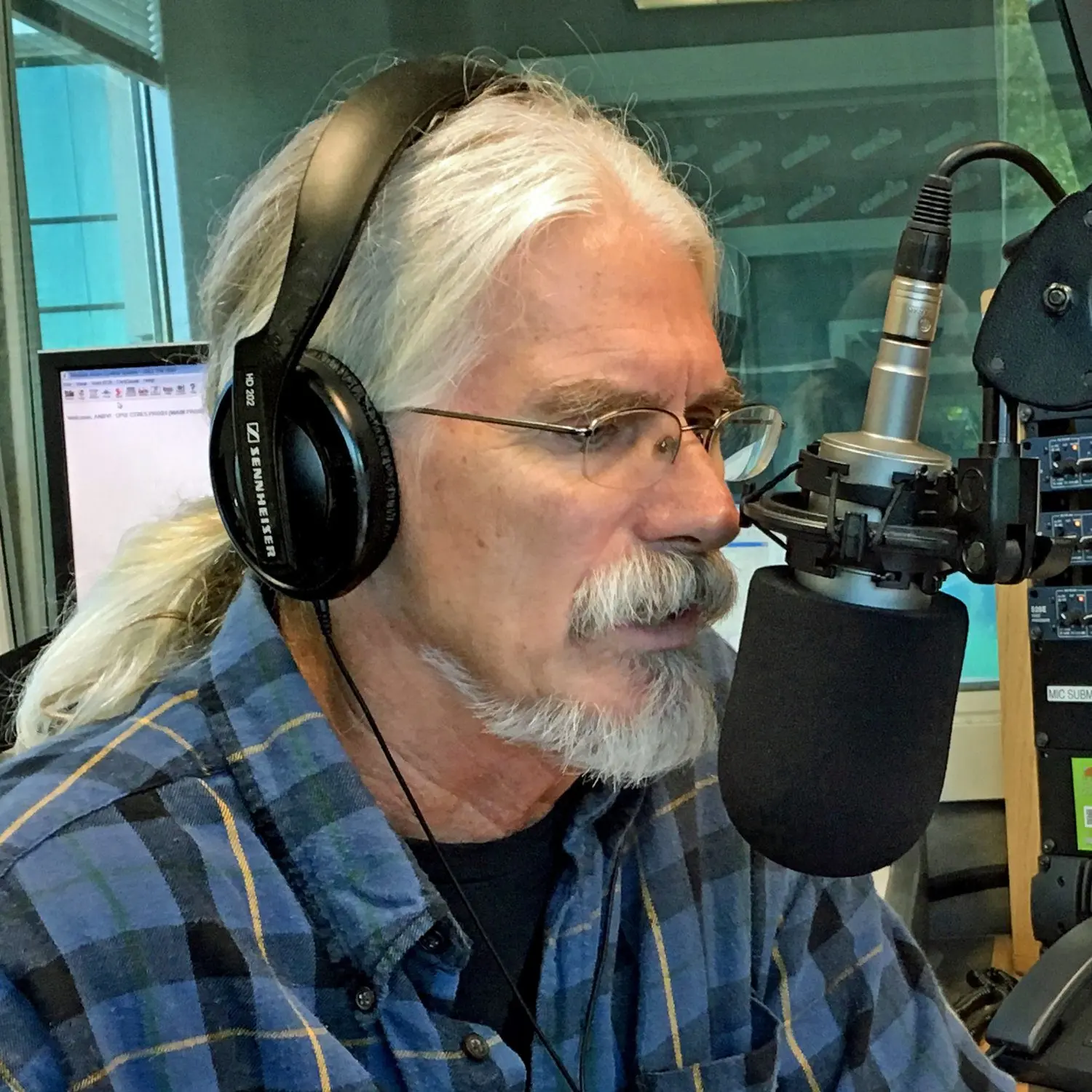
Join Steve Gregg as he navigates through intriguing questions on biblical interpretations and church doctrines. In today’s episode, we explore the perplexing conversation about swords as instructed by Jesus and the interpretation challenges surrounding Matthew 11:12. What does violence in the kingdom truly mean, and how can one press through opposition? These questions open the discussion on the dual purpose of swords, both metaphorically and historically, within the faith community.
SPEAKER 1 :
Thank you.
SPEAKER 02 :
Good afternoon and welcome to the Narrow Path radio broadcast. My name is Steve Gregg and we’re live for an hour each weekday afternoon so that we can take your calls on the air. If you have questions about the Bible or the Christian faith and would like to call in and discuss those together, I’d be glad to talk with you about those. If you’ve listened before and you already know that you don’t agree with the host about something, maybe you’re not a Christian and you simply disagree with the Bible and Christianity as a whole, Or maybe you are a Christian and you are on the other side of the aisle on some issue that is controversial or you see it differently. Feel free to give me a call. We’ll be glad to have that discussion. The number to call is 844-484-5737. Right now I’m looking at some open lines. We’ve got some calls waiting, but we have some open lines, which may not be the case like five minutes from now. If you want to try to get through, this is a good time to do it. The number is 844-484-5737. And just another reminder to our Seattle area listeners that I will be teaching for about a week, the second week of next month, in the Seattle area, various places. And if you’re in that area and want to know where I’ll be and want to maybe join us, go to our website, thenarrowpath.com. and look under Announcements and look at the dates coming up the second week of December. All right, we’re going to go to the phones now and talk to Barbara in Roseville, Michigan. Hi, Barbara. Welcome to The Narrow Path. Thanks for calling.
SPEAKER 01 :
Hi, Steve. Thank you. I was listening to you yesterday. You said you struggle with when Jesus said for all the disciples to have a sword. But something you were missing is that They used weapons differently than why we buy a weapon. They had to fight off wild animals or if they wanted a bird to eat, they didn’t have a Kentucky Fried Chicken. They had to be able to kill it because Jesus no longer was going to have them looking for people to provide for them because they probably would have poisoned them. But it was so that they can get them food to eat and to protect themselves in that manner, but definitely not to be killing people.
SPEAKER 02 :
Well, let me just jump in here and say you’re right that a sword has more than one use. And it’s not necessary to assume that Jesus, even if he wanted them to get real swords, that is physical swords, it’s not necessary to assume that he was intending that they should fight or kill people. Now, as I said, I don’t think he was talking about getting real swords because he first said that they each needed to have a sword. He said, if you don’t have one, any of you who doesn’t have one, sell your cloak and get one. There’s somewhat of a matter of urgency about this. And then, as soon as he said that, they said, Lord, here are two swords. Now, there are 11 of them. So what he had just said to them meant they needed 11 swords for 11 people. Each one should have one. And they said, well, here’s two. And he said, it is enough. Now, if he means two is enough… Then he changed his mind because he had just said they need 11 swords for 11 men. It was important enough to sell their clothes if they had to get one. Or, you know, he’s either changed his mind about how many are required or he’s speaking metaphorically and not literally of getting a literal sword, in which case it is enough means, well, it’s enough on this subject. Let’s move on now. But like I said, I do have difficulty knowing, and it’s not because I’ve never given any thought. As a matter of fact, when I first began answering Bible questions for a group of people, which was in 1971 when I was in high school, I remember telling people, you can ask any question about the Bible you want to or about the New Testament that you want to, but don’t ask me what Jesus meant when he said, In other words, we’re talking 55 years ago. I was already aware that that passage was difficult. And in the 55 years since then, I’ve looked it up in so many commentaries, and I still don’t know what it means. That is, I don’t have any certainty of what it means, but neither do the commentators. It is something that there’s about four or five different explanations for that are different from each other. I’ve never heard anyone suggest a definition, though, that swords were used for hunting. I’ve never known anyone using swords for hunting. To do that, you kind of have to run down the animal, catch up with it, and you could probably as quickly grab it as hit it with a sword. But swords are not usually used for that. But I will say this, that the word sword, I have heard in the Greek, can refer to simply a dagger or a knife. Now, any Boy Scout knows that a knife is a very valuable thing to have on a camp out. And if they’re traveling around, knives can be used for lots of things, you know, for cutting ropes, for cutting open fruit, cutting open, you know, skinning a fish or scaling a fish. I mean, there’s lots of things that you can use a knife for. You’re probably not going to be hunting with it unless you’re really good at throwing a knife. But you might use it for any number of utilitarian purposes that have nothing to do with self-defense. So I hear your concern about that. Anyway, I’m still not sure exactly what Jesus meant, but I appreciate your input on that. Thank you very much, Barbara. Let’s talk to Chad in Sacramento, California. Chad, welcome to The Narrow Path. Thanks for calling.
SPEAKER 06 :
Thank you, Steve. How are you doing, sir?
SPEAKER 02 :
Good, thanks.
SPEAKER 06 :
Oh, yes, sir. I just have a quick question about St. Matthew, chapter 11, verse 12. It reads, and from the days of John the Baptist until now, the kingdom of heaven suffers violence, and the violent take it by force. So, sir, I was in a Wednesday prayer, like a prayer meeting, and then after that I heard the Holy Spirit tell me this, and it was a verse like verbatim, and I looked it up, but I was just wondering, and I’m about to get off here and listen to you, But I was just wondering your take on that verse, if you could explain it to me.
SPEAKER 02 :
Sure. I’d be glad to. So Jesus said in Matthew 11, 12, from the days of John the Baptist until now, that is from the time John began to preach the kingdom of God, it has been resisted. He says the kingdom of God has suffered violence, or the kingdom of heaven has suffered violence. Now, he’s referring to the fact that Violent people are attacking this project of the kingdom of God, which John began to announce and which Jesus then continued to perpetuate. John was now in prison. He would soon be beheaded in prison. This was an example of how the kingdom’s agents were suffering violence from the devil’s agents, basically. When Jesus announced and John announced the kingdom of God was at hand, they were saying that the devil’s kingdom was being invaded. The devil had held unchallenged sway over most of the world since the time of Adam and Eve. And now there was a new sheriff in town. There’s a new king showing up. A new kingdom was invading the territory that Satan had regarded to be his. And Satan wasn’t taking it kindly. And so Satan and his people were violently resisting the kingdom’s people. Now, that’s not too hard to understand in the context, but the next line is difficult to understand because it says, and he says, and the violent take it by force. Now, this could be simply another reference to the same thing. He could be saying the same thing twice. Basically, the kingdom of God represented in people like John the Baptist and Jesus and so forth and the agents of the kingdom, it suffers violence because violent people like Herod are taking it by force, taking these people and torturing them. However, I think because there’s another passage similar to it in Luke, which reads a little differently, it says all men press into it, meaning that if you’re going to be in the kingdom, you’re going to have to press into it against resistance. That is, there are people who are violently opposing the kingdom. You’re going to have to have the same measure of determination to press in. Because of the opposition. So he’s saying there’s a violent struggle here. Satan’s kingdom is violently attacking God’s kingdom. And if you want to be in God’s kingdom, you’re going to have to take the kingdom, as it were, by having the same kind of forcible attitude. The word forcer is used, or one who presses in, is used here. The word violent actually means a forcer in the Greek. And so I believe it means somebody who is determined to get in. Determined to get in even though there will be opposition, even though it may be a struggle, even though you may be persecuted for it. If you’re going to get into the kingdom at all, you’re going to have to be as determined to get in as the devil’s people are determined to keep you from doing so. And so I think he’s saying that the violence of the enemy against the kingdom has got to be met with similar forcefulness on the part of the believer. Now, it doesn’t mean that the believer is going to use physical violence like the devil does, but it does mean that you’ve got to have the determination that you’re not going to be intimidated. You’re not going to back down because it’s hard. Gaining the kingdom is worth everything, even worth losing your life, or like John the Baptist, going to prison and losing his life. That’s what John was willing to do. And Jesus is basically saying to his disciples, I think, yeah, this is the kind of thing that the kingdom of God suffers from the bad guys. And so if you’re going to be in this kingdom, if you’re going to take the kingdom for your own, then you’re going to have to be a determined individual. You’re going to be a forcible person, not physically forcible, but one who’s simply not going to take no for an answer when the enemy tries to keep you from it. That’s what I understand to be the meaning of that. All right, let’s talk to Michael in Englewood, California. We have a line open for you if you’d like to join us. The number is 844-484-5737. Once again, that number is 844-484-5737. Michael from Englewood, California, welcome. Welcome.
SPEAKER 05 :
Yes, Steve, I was calling because also yesterday someone mentioned, I believe it was Matthew 19, 28. But in Matthew 20, 19, he’s talking to 11 disciples on the Great Commission. But I think what you said yesterday was the 12 thrones. So when Jesus was talking about that in Matthew 19, 28, was he kind of saying that Judas would have one of the 12 thrones?
SPEAKER 02 :
Well, it’s true that Judas at that point was still among the 12. And yet he left his place, you know, and he left faith. He betrayed Christ, and he himself is now lost. So Jesus, of course, would not be literally saying that those 12 individuals would sit on 12 thrones, but the ones who have been faithful to him. Now, Judas had been, but excluded himself, and so he was replaced. He had a throne, but he never sat on it, you know. And so after the Holy Spirit was given, In Acts chapter 1, the disciples chose another man named Matthias to be the next apostle in Judas’ place, to occupy the vacancy. So when Jesus said you 12, I think he doesn’t mean necessarily you 12 as individuals, but you as a group of 12, the 12, the 12 apostles. And when one of them defected, another was added to make out that number, to round out that number. and that the position of the 12 apostles was to be a governing body, ruling over the faithful of Israel, the 12 tribes of Israel. So, yeah, Judas was in that position when Jesus made the remark. And although Jesus said, you 12, I mean, Judas could say, well, I’m one of those 12, so I’m going to be. No, he means you, the group of the 12. And a group can change in its constituency. but be the same group, you know. So that’s what I think. I just believe it’s saying that the 12 apostles would be ruling with Christ in the regeneration, he said. So that’s, yeah, Judas certainly is not in there, though he was when Jesus made the statement. But Judas was obviously replaceable and got replaced. So Matthias was the one who sat in the position that Judas would have sat. That’s my understanding of it. All right. Let’s talk to Daniel in Vancouver, British Columbia. Daniel, welcome to The Narrow Path. Thanks for calling.
SPEAKER 07 :
Thank you for taking my call, Steve. God bless you. Thank you for your ministry.
SPEAKER 10 :
Thank you.
SPEAKER 07 :
I have a couple of questions. The first one is, can a woman preach in the podium in the church? And also, can she be a member of elders? And the second one is, is the church be led by elders or by one person, by pastor? What’s your opinion on this one? Thank you.
SPEAKER 02 :
All right. Thank you for your call. Well, is a church ruled by elders or by a pastor? Well, if we were to use the New Testament as our guide, we’d have to say elders. Because we don’t read of any church in the New Testament that had a pastor. But we read that Paul and his other apostles appointed elders in every church. And these elders were told to shepherd the church of God. In other words, shepherd God. is the same word as pastor. The word pastor is just an old English word that means someone who takes care of sheep in a pasture, a shepherd. So the word pastor, as we use it, is an old word in English. It just means a shepherd. Now, the elders were told to shepherd the church. So in Acts chapter 20 and verse 28, Paul told the elders of the church of Ephesus to pastor or shepherd the flock of God. in the church of Ephesus. There were multiple pastors. There were multiple elders who were to pastor the church together. Peter also wrote to the elders. In 1 Peter 5, verse 1, he says, the elders who are among you I exhort. And then he goes on to say, shepherd the church of God. So both Paul and Peter, in speaking to elders, told them to shepherd or pastor the church. So it’s clear that the churches were pastored by a body of elders rather than one pastor. Now, these elders were also called overseers. Some of the older translations in English translate that bishops, but it’s episcope means overseers. And when Paul wrote to the Philippian church in Philippians 1.1, he said, Paul and Timothy, bondservants of Jesus Christ, to all the saints in Christ Jesus who are in Philippi with the overseers and deacons. Now, the overseers are the same as elders in the Bible. So, So he addresses the church saints. He addresses their elders, their overseers, and their deacons. But he doesn’t say hello to the pastor because they didn’t have a pastor. We don’t know of any church in the first century that had a pastor. Now, some people think that when you read of the angel of the church of Ephesus or the angel of the church of Smyrna and so forth in Revelation 2 and 3, that the angel of the church refers to the pastor. But there’s no evidence of that. that churches in those days had what we call a pastor. They were governed by elders. Paul told Titus to appoint elders or overseers in every church, in every city, in Titus chapter 1. And, of course, he indicated that Timothy would be doing the same thing, at least in Ephesus and maybe some other places, too. Now, can a woman be an elder? Well, I guess if she could qualify… By the qualifications Paul gives, let me read them and see if a woman could qualify for this. 1 Timothy 3, 1 says, This is a faithful saying. If a man desires the position of an overseer, he desires a good work. An overseer, then, must be blameless, the husband of one wife, temperate, sober-minded, of good behavior, hospitable, able to teach, not given to wine, not violent. not greedy for money, but gentle, not quarrelsome or covetous, one who rules his own house well, having his children in submission with all reverence. For if a man does not know how to rule his own house, how will he take care of the church of God? Now, so Paul says if a man desires the role of an overseer. He didn’t say if a person or he didn’t say if a man or woman does. When he begins to give the qualification, he says an overseer has to be blamed. It’s the husband of one wife. I don’t believe a woman can be the husband of one wife. I don’t think a woman can be a husband at all. When it says that he must rule his house well, well, that’s the man’s position, according to Paul, everywhere else. In Ephesians and Colossians and Titus and, frankly, here, the suggestion is that the husband is the head of the house, the head of the wife. 1 Corinthians 11 also says that in verse 1-3. Anyway, so it looks to me like Paul expects elders to be men. Now, this is not because Paul didn’t know about women. There were actually more women in the church than men through most of the early centuries of the church. There might even still be. Paul had certain women that he knew were excellent servants and co-laborers with him. He commends Phoebe, for example. He commends Paul. Euodia and Syntyche and some other women that he mentions by name that were fellow servants of his in the ministry. But they weren’t pastors. They weren’t elders. They weren’t, as far as we know, apostles. There’s lots of different ways that people can minister, men and women. Frankly, if you read the qualifications for an elder, most men don’t qualify either. But that doesn’t mean most men can’t do anything for God. There are different gifts. Not everyone’s called to be an elder. A woman apparently is not called to be an elder because she can’t be the husband of one wife, among other things, that prevents her from doing it. She’s not the head of her household unless she has a broken home, which isn’t ideal either because the elder is supposed to have an ideal family to be a model of Christian marriage and family, as Paul says. And if he can’t do that, then he can’t have any role in leading the church. So we’ve got, you know, As far as that goes, the idea of a church being led by a pastor or by one person who has predominance over others is not a New Testament concept, at least not one that the New Testament endorses. We do have in 3 John a reference to a man named Diotrephes, who seemed to be making himself the big boss in the church. John says in 3 John that Diotrephes loves to have the preeminence, and it kind of is a dictatorial role over the church. Obviously, the church needed some elders, and they apparently didn’t have any, so one guy just made himself a big boss. And that was abusive. That’s not the way God set things up. Jesus said to his disciples, you know, the rulers of the Gentiles exercise authority over them, but it shall not be so among you. He said, among you, whoever would be chief among you has to be the slave of everybody else. So, when you get one person who’s kind of making all the decisions for everybody, that’s like a CEO of a corporation. That’s like a king on his throne of the Gentiles. Jesus said that’s how the pagans do that. Pagans are like that. You can’t be that way. You want to be great? Be a slave. Be a slave to everybody else. So, I mean, if a woman wants to be great in the church, she can be. She can be a slave of everyone else. She just won’t be an elder. But why should someone need to be an elder to be a slave? I can be a slave. I’m not an elder. I mean, I don’t hold a position of eldership in a church. I don’t want one. But it certainly hasn’t kept me from being in the ministry for the past 55 years. And, you know, if you can serve the church, you can serve the church. But that doesn’t make you an elder. So that would be my position. You also asked if a woman could be in the pulpit of the church, meaning preaching the church. Now, I don’t see why the answer would be no to that. It depends. I don’t believe a woman should be in the pulpit either. like, let’s say, regularly as if she’s the leader of the church, as if she’s one of the elders. The elders have the task of teaching the church. In my opinion, a woman as a guest of the pulpit, not trying to be the shepherd of the flock or something like that, but just sharing something from the pulpit, I don’t see a problem with that. I had the privilege of going to hear a woman, Elizabeth Elliot, go and speak in a church in Portland, Oregon, when I lived in Oregon. And, uh, I had no problem with it. And interestingly enough, Elizabeth Elliot does not believe, or she’s deceased now, but she did not believe in female pastors. She was a Bible scholar herself. Uh, I think she was a professor at a seminary and so forth, but, but she, uh, she didn’t believe women should be pastors. And, uh, I agree with her, but the thing is that that didn’t mean she wouldn’t talk to people. And so, you know, I went to a church in Portland. I visited because she was there visiting and speaking. I wanted to hear. No problem with that for me. It might be a problem for some people. But besides being an elder in a church, there’s lots of things a woman or a man can do. For example, being an evangelist. The first evangelists in the Bible were Christians. at least after the resurrection of Christ, the first to preach the resurrection, which is the gospel, were women. Angels at the tomb sent these women out to evangelize the apostles and tell them that Jesus had risen from the dead. So the first carriers of the gospel, who even evangelized the apostles themselves, were women. And they were commissioned none less than angels commissioned them. So, I mean, I don’t think there’s any problem there. For a woman to teach younger women, Paul actually urges women to do that. In Titus chapter 2, he says that older women should teach the younger women. He even tells what they should teach them in Titus chapter 2. Of course, there’s no problem with a woman teaching children. Timothy’s mother and grandmother were his first instructors in the Word of God, and Paul was glad of it, glad that he had that. A woman can even teach a man, apparently, if she’s doing so in partnership with her husband, not as an elder, but just in a private conversation. In Acts chapter 18, Priscilla, a woman, and her husband, Aquila, together they corrected a man who was a traveling preacher named Apollos, and apparently they didn’t figure Paul would have any problem with that. They were Paul’s disciples. So, In other words, women can teach. They can teach children. They can teach other women. They can teach men if they’re doing it jointly with their husbands. They can evangelize, and they can prophesy. Paul said that a woman could prophesy, which Paul said, seek the best gifts, especially that you may prophesy. So he doesn’t withhold that from women. And besides that, the greatest of all functions that Jesus identified is being a slave of all. A woman can do that, too. Most women who are trying to get a position as pastor are not the least bit interested in being a slave. But maybe that’s a good place to be. If that’s the most lofty, the most privileged, the most honorable position available in the body of Christ is that of a servant, then I’d like to see more people striving for the opportunity to do that rather than striving for the opportunity to be the one in the front that everyone’s looking at and listening to. Anyway, Those are my attempts to answer your questions. We have a break coming up, but we have another half hour of taking your calls, so don’t go away. During this break, we want to tell you we are listener-supported. If you’d like to help us stay on the air, you can go to our website, thenarrowpath.com. Everything there is free, but you can donate there, too, if you’d like to help us stay on the air. That’s thenarrowpath.com. I’ll be back in 30 seconds. We have another half hour of taking your calls.
SPEAKER 04 :
The Narrow Path is one feature of the teaching ministry of Steve Gregg. Steve’s philosophy of teaching is to educate, not indoctrinate his listeners. He believes that Christians should learn to think for themselves about the Bible and not be dependent on him or any other teacher for their convictions. We hope to teach Christians how to think, not what to think about the Bible.
SPEAKER 02 :
Welcome back to the Narrow Path radio broadcast. My name is Steve Gregg, and we’re live for another half hour taking your calls. Our switchboard has a couple of lines open. If you’re interested, you can call in with your questions about the Bible or the Christian faith. or your disagreements with the host, if you’d like, the number to call is 844-484-5737. Again, it’s 844-484-5737. Our next caller is Kyle from Sacramento, California. Hi, Kyle. Welcome. Thanks for calling. Hey, Steve. Man, your ministry is awesome.
SPEAKER 08 :
Thank you. I have a question for you. It’s a great segue from your last caller. I’m an elder at my church, First Church of God of Indiana, and affiliation. And we believe in the plurality of elders at our local church. And so I have two questions for you. What’s your number one advice for a new elder? And then two, I’ve done it for about a year and almost close to a year now. And then the second question is, like, I’ve been, I don’t like to promote myself for ministry opportunities that I get. My whole mindset, I don’t know if it’s correct. I just wanted to get your opinion on it. I stay humble. I trust God. Stay in the word. Faithful. And I trust the Lord, too. to set my platform before me. And I was just wondering, like, what would be your, is that an okay mindset? Because I’ve seen ministry opportunities opening up for me, but I don’t like to stick my name in a hat. I try to trust God to confirm my calling, if there is a calling through others.
SPEAKER 02 :
Well, you already, of course, are in ministry. If somebody has appointed you to be one of the elders of the church, And so your name is in the hat. It may be that you don’t do everything. The good thing about an eldership, as opposed to simply one-man leadership, is you’ve got the combined gifts of various people and not just one person involved in the decision-making and the shepherding of the congregation, which is a very good thing to have, I think. Now, that being so, some elders do more teachings. than others. Paul said that one of the qualifications of being an elder is he has to be able to teach, but it doesn’t mean that every elder teaches equally well or equally frequently. Uh, you know, if, if an elder has a particularly good, uh, gift of teaching, probably that person will be doing more teaching than someone who’s not, not as good at it. But that doesn’t mean that all the elders can’t sometimes teach if they have something to share. Um, Some of the elders are going to be more organizationally minded, and so they may do more of that kind of thing. Paul said, let the elders who rule well be esteemed worthy of double honor, especially those who labor in the word and doctrine, which means not all the elders labor in the word and doctrine as much as others, but they all lead, those who lead well. Now, leading… It doesn’t mean you set an agenda and force the church to follow that agenda. That’s what most pastors feel they’re required to do because they have the corporation model of a church. In our lifetimes and for some generations, churches have operated like corporations have. And therefore, they hire a pastor to be like the CEO, and he’s supposed to be the vision caster for the organization. And then the assumption is, by many, that he gets a vision, and the congregation has to get on board with his vision because they’re a corporation, and the congregation are his team, and they’re supposed to get on board with his vision and push it. That’s what secular corporations do. The church is not a secular corporation. The church is a family of people with various needs and various gifts. And, you know, the ideal thing is not for, I think, there to be some kind of a vision that they say, we’ve got a five-year plan, you know, this is what we hope to accomplish in five years. Well, I mean, if you’re running a secular corporation, you can do that. But the Bible says… In James, what you should say is, if the Lord wills, we shall live and do this or that. In other words, you don’t even know if you’re going to live. You don’t know what God’s going to do. You can’t make a five-year plan. You might say we’re going to kind of aim in this direction because we feel like that’s a good, fruitful way to go. But we’re depending on God for everything, and we’re not assuming that we’re running things. Elders, of course, I think in most organizational churches, are soon to be the ones who are running things. Well, true, they do make decisions. They do oversee the flock. But they don’t run the lives of the Christians. They do go after the strays. But if the Christians in the church are doing well, they don’t have to look to the pastor or elders to tell them how to act or how to think or what projects to support. You know, we’re supposed to have churches that are full of real Christians who have the Holy Spirit who leads them. And where the Spirit of the Lord is, there’s liberty. The idea that we have to get all the people in the church to follow the plan of one man is, well, that’s a secular idea. It’s not a Christian idea. Jesus is the head of every man, the Bible says. The pastor isn’t the head of anyone except his wife. So, you know, I just say, how do you be an elder? You be an elder by being… a mature Christian, and therefore setting an example to the sheep, that’s the main thing that shepherds are told to do is set examples for the sheep. Your life. People should be able to look at you and see what a mature Christian does in certain circumstances of life. How he, you know, how he treats his wife, how he raises his kids, how he, you know, conducts himself at the job if he has a job, how he, you know, You know, how he stewards his money. I mean, just in other words, he should be the ideal Christian. Now, you might say, well, I don’t know if I am the ideal Christian. Well, I’m not sure that the ideal Christian really does exist. But everyone should be as close to that as they know how to be. Because the whole point of having older brothers recognized in the church is that the younger brothers and sisters can say, I don’t know how this Christian life is to be won. Well, watch this guy. He’s been doing it a long time. He does it the way it should be done. If you read the qualifications for elders, there’s no special qualifications. Being able to teach is, of course, probably the only thing that’s like an ability they have to have. The rest has got to do with having their family intact, having a good reputation for being honest, men of good character. In other words, being good Christians. Everything the Bible says about elders really should be true of all Christians. It’s just that not all Christians are living that way. And the ones who are elders should be the ones who are. The church should take, you know, the Christian men who are living the way that all Christian men should and set them up and say, now here’s the older brothers here. That’s what elder means, old man. You don’t sound very old to me, but you’re to be an older brother guiding younger brethren into the way Christ is followed and served properly. And you just have to be as much of an ideal Christian man as possible. And you said you’re staying humble, and that’s a good thing, too, because that’s an ideal for Christian men. Any Christian man who’s not humble is not an ideal Christian. In fact, he’s missing the first qualification because the Bible says God resists the proud and gives grace to the humble. So being humble is like a basic requirement, even to be a Christian, to say nothing of a Christian leader. So anyway… So that’s what I’d say. Now, I don’t know if you have a gift in teaching. Hopefully you’re capable of teaching because you’re an elder. But if you feel like your gifting is in teaching and you say, well, I don’t like to put myself forward, well, you know, you certainly could talk to the other elders and say, you know, I feel like I’d like to teach on such and such a thing.
SPEAKER 08 :
I have some sermons on Sunday morning.
SPEAKER 02 :
Has it gone well?
SPEAKER 08 :
It went really well. It went really well.
SPEAKER 02 :
Okay, well, then that’s good. Just say, I think you should just let the others know, you know, I’m available. Give me some advance notice any time you want me to share, and I’ll be glad to teach. The rest of the time, because, of course, very few pastors or elders are teaching 24-7, you know, the rest of the time, you just be what a Christian is supposed to be. Now, that would also mean, because you are exhorted to shepherd the flock, an elder has that vocation to shepherd. And what a shepherd does, I’ll tell you a story that I’ve told before, but I was at a church once for a while, and the pastor had an agenda, tried to get everyone to do the same things, and it just wasn’t working out for my family, and I was pretty sure it didn’t work out for every other family necessarily. So I asked the pastor if he objected if my family and I didn’t get involved in this particular project he wanted everyone involved in. And he said, well, you know, If the whole church doesn’t do what the pastor wants them to do, how can he shepherd the flock? Which was a strange question to me, but it’s very clear that he saw shepherding as being the one who directs everybody. You know, a shepherd goes ahead of the sheep as an example to them, but he doesn’t dominate them. Anyway, I said, well, okay, if I were the shepherd here, if I were a shepherd here, I would probably do what Jesus said about that, because Jesus said if a good shepherd has 100 sheep and one of them goes astray, he leaves the 99 that are not doing badly because they seem to be self-feeders, and he goes out after the one that’s going astray. Sheep don’t need the shepherd’s micromanagement every moment. He leads them to good pastors. But, you know, they can do a lot on their own if they’re mature Christians. Hopefully a church has numerous mature Christians. But the shepherd spends his time on the high maintenance sheep, the ones who simply don’t seem to go right without special attention. I would say an elder should not try to dominate anybody, especially anyone who’s living a godly Christian life. And that would even be people who have maybe doctrinal differences in the church but aren’t causing division over it. They just don’t see it the same way. By the way, you’re in the Church of God, Anderson, Indiana. I’ve had good experiences with that denomination because, well, for one thing, they’re amillennial. Another thing is they’re not dispensational. They’re not Calvinistic. But anyway, you know, but the idea is, Be as much a slave as you can and serve people. See what their needs are. Don’t force your service on people who don’t feel like they need it, especially if they don’t need it. Now, sometimes people are going astray and they don’t know it, in which case they may resent you going after them. But you know they’re going astray because you can tell their life is messed up. But hopefully… I mean, ideally, every church should be mainly consisting of people who aren’t messed up. I mean, they’re following Jesus. That’s what being a Christian means. They’re following Jesus. It’s the ones who don’t do it very well that need to be gone after, especially with most of your attention.
SPEAKER 08 :
Yeah, yeah, definitely. That’s great stuff. And I appreciate it, Steve. I don’t want to take up too much of your time because you’ve got other callers, but it’s interesting you brought up vision because our pastor is very vision-driven. Even though our vision is very biblical, it’s still like it’s hard to get on board because I look at it from my role is to do what the Bible says, everything you mentioned, and it’s hard when you’re growing a church, and our church is growing. And you want to be in a vision. You want to build ministries because it produces fruit. But it’s like, at my heart, I just focus on what the Word of God says.
SPEAKER 02 :
I hear you.
SPEAKER 08 :
And this is true.
SPEAKER 02 :
This is a problem that many pastors have. And it’s not entirely their fault, though it can be if they learn otherwise and don’t change. But most pastors have been raised and even trained in a system where the pastor is seen as the CEO of a corporation or as the general of an army, and everyone else is ranked below him, and he’s the one who sets the battle plan. He’s the one who sets the trajectory for the church to go. Well, the only trajectory the church has to go is in the direction of holiness. You know, the people who are in the church need to become more holy. They need to become more obedient to Christ. To say, well, we want to have this project by 2026, and we’ve got another project in mind for later in the year, and everyone needs to get on this project. No, the shepherd of the church, he’s not a project manager. He’s not a project decider. He’s there to cultivate people. godliness in the people. If he does that, he is successful, because that’s what a leader is supposed to do. He’s supposed to be a spiritual leader, not a project leader. And I’m not saying that a church can’t have projects, but I would say this. If somebody says, you know, I think we ought to start sort of a soup kitchen for homeless people. Well, then do it, but don’t expect anyone else to do it who doesn’t feel called to that because they may be called to something else. Let those who have the calling do it. Yeah, I remember Chuck Smith, who was the pastor of Calvary Chapel back in the 70s when I was going there. He was very minimalistic in terms of leadership. He did have the total authority in the church because their view of church was a Moses model. They felt like the pastor has total authority. But Chuck just liked to teach. And he didn’t want to get involved in all kinds of administrative stuff. He just wanted to teach the Bible. And so he said if people would come up to him and say, Well, Pastor, I think there’s a room here for a ministry to unwed mothers. Chuck would say, Well, it sounds like God’s giving you a vision. Go ahead and start that up. Let me know how it’s doing. In other words, Chuck didn’t say, okay, let’s get everybody on board and make everyone do this. No, if you’ve got the vision, if that’s what God’s given you to do, do it. As long as you’re being godly and doing it in a godly way, he had no desire to obstruct it. That’s different than saying, everyone in this church, this is where the money’s going. From now on, for the next five years, we’re going to be building this gymnasium or whatever, you know. We’re hoping to get up to this number of people in the church. That’s secular thinking. That’s not Christian thinking. That is just secular corporation business management.
SPEAKER 08 :
Yeah. That’s great advice. For a long time, I was like, all right, thank you. I’ve got a million questions, but I’ll let you go. Thank you so much, Steve.
SPEAKER 02 :
Yeah, there’s people behind you, and I only have a few minutes left. God bless you.
SPEAKER 08 :
All right. See you.
SPEAKER 02 :
Good talking to you, Kyle. Call again sometime. Okay. Let’s see here. Jessica in Kalamazoo, Michigan. Welcome.
SPEAKER 03 :
Hi. Thank you so much for taking my call. I appreciate you so much. And I was listening to yesterday’s program while I was getting ready today, and I’m calling about the gal from Big Sur. I’ve been thinking about her all day today, and I feel… Worried about her and I’ve been praying for her. She was going, she’s undergoing all of those demonic supernatural attacks, right? And I appreciate and I agree with everything you said to her about how you know, he who’s in us is greater than he who’s in the world. And I wanted to ask you a question. When I was listening to her talk, you know that scene from The Jerk when all the gas cans are exploding and Steve Martin is like, oh, these cans are defective. And his boss is like, you’ve got a defective person because there’s someone out there shooting at him. And I wonder, listening to her, right, like, she’s definitely undergoing demonic attack, but I feel like, and I wonder if there’s, she’s got a defective person living on her ranch, a demonized individual who’s poisoning her dog and strangling her goats, and I wonder, is it ever okay as a Christian, like, We can stand our ground and do battle, but if she’s casting out these demons and there’s a person on her property who likes those demons, they can come right back, right? And so she’s being tormented maybe, I think, by a person. And so is it ever okay to, like, shake the dust off your feet and say, whoa, this isn’t working and I’m out of here. I can’t. What do you think about that?
SPEAKER 02 :
Well, I don’t know enough of her situation, actually, to know if she has workers on the property or if she has neighbors that are malicious. Yeah, I didn’t get the whole, and I wouldn’t have had time to get the whole description of all that she’s, her living situation there. But I’ll say this, she may well be listening right now. And so what you’ve shared may give her some thoughts about what direction to look, but she hasn’t tried yet. I appreciate your call, Jessica. We need to try to get one more in before we run out of time. We’re almost out of time.
SPEAKER 03 :
Yes, yes. Thank you so much. Happy Thanksgiving. Thank you.
SPEAKER 02 :
Thank you, and thank you for sharing. God bless. Bye now. Okay, Robert from Pinto, California. Welcome to The Narrow Path.
SPEAKER 09 :
Yeah, hi. I was talking to two Mormons the other day, and they told me they had the Holy Spirit in them. Is it possible to be in that religion and have the Holy Spirit?
SPEAKER 02 :
Well, part of the Mormons’ belief is that they do have the Holy Spirit. They believe that you become a Mormon by repentance and baptism and receiving the Holy Spirit. I’m sorry, are you speaking to me?
SPEAKER 09 :
Oh, no, no, go ahead. I’m sorry.
SPEAKER 02 :
Okay, one conversation at a time, please. All right, so… They believe that they do receive the Spirit. They believe in the laying on of hands. In that sense, they have that in common with the early church and with maybe Pentecostal people today and charismatic people today. The problem is, of course, their theology is so off. And Joseph Smith himself was a false prophet. And his book was certainly a deceptive book, the Book of Mormon and the other books he wrote. So, I personally am of the opinion that any spirit that leads you to believe a false gospel is going to be a false spirit. Now, Paul was concerned about this because you can receive a spirit thinking that you’re receiving the Holy Spirit, and it can actually be an imposter. Paul expressed his concern about this in 2 Corinthians 11. where he said to the Corinthians, who were troubled people and needed a lot of correction, he says to them in 2 Corinthians 11, 3, But I fear, lest somehow, as the serpent deceived Eve by his craftiness, so your minds may be corrupted from the simplicity that is in Christ. For if he who comes preaches another Jesus, whom we have not preached, or if you receive a different spirit, which you have not received, or a different gospel, which you’ve not accepted, you might well put up with it. He’s rebuking them for being less discerning than they should be. They might receive the wrong Jesus, the wrong spirit, and the wrong gospel. Now, there’s many people, many evangelical people, would say that the Mormon church has the wrong Jesus, the wrong spirit, and the wrong gospel. And I agree. I believe that they have the wrong gospel. I think the wrong Jesus. As far as the wrong spirit, I would think that the wrong spirit comes along with the wrong Jesus and the wrong gospel. So I’m not really inclined to give them credit for really being filled with the Holy Spirit. If so, it seems like he would lead them into all truth. And that’s generally speaking not where the Mormons are going. Now, Mormons are often good people and very sincere in their beliefs. But That doesn’t necessarily mean that, I mean, people can be sincere. Muslims can be sincere. Hindus can be sincere. But that doesn’t mean that their beliefs are thereby vindicated by their sincerity. So I’m not of the mind that Mormons have the Holy Spirit that Jesus speaks of. But, you know, they do think so. So you shouldn’t be surprised if they say, yeah, we have the Holy Spirit. They also say they follow Jesus. But the Jesus they follow has many characteristics contrary to the Jesus of the Bible. And the gospel they preach is not identical to that in the Bible either. So I just have issues, obviously, concerns about Mormons in that respect. And, you know, if you’re surprised to hear they say they have the Holy Spirit, well, don’t be surprised. That is part of what they claim and what they think. They also think they have the greatest profit that God has brought in the last days, and I don’t believe that either. Joseph Smith was a deceiver, and his writings were deception too. So that would be my take on that. Are you in ongoing conversations with them?
SPEAKER 09 :
No, but I see them. They shop a lot where I work, and every time I see them, I’ll strike up a conversation with them. And when he told me that they had the Holy Spirit, I was really blown away. And I’m more of the mindset of you, like, if they had the Holy Spirit, the real Holy Spirit, you know, that it would lead them into all truth. I don’t see how you could have the Holy Spirit and be deceived. And that’s why I was calling and asking you.
SPEAKER 02 :
Right. Now, for any of our listeners, including you, Robert, who are in conversations with Mormons, I have a resource online that you can get for free. If you go to the website, Matthew713.com. It should be easy to remember. It’s Matthew 713. Matthew 713 is the verse where Jesus said, you know, enter in at the narrow gate. And so Matthew713.com. If you go there, you’ll find that I think there’s a thing that says articles. There’s several tabs. One of them says articles. And if you go down there, I have a very comprehensive article I wrote about Mormons. It’s called Problems with Mormonism. So anyone who’s curious about Mormonism or engaged with Mormons talking about the gospel and so forth, it could be very valuable, I think. It’s quite a lot of information. called Problems with Mormonism. If you go to Matthew713.com and look under articles in that website, that’s where I believe you’ll find it.
SPEAKER 09 :
You’re very knowledgeable in scriptures. Have you ever talked to Mormons and you sharing your knowledge, what you know in the scriptures, and then a light went off in their head like, whoa, you’re right.
SPEAKER 02 :
I’ve been deceived. You know, I’ve talked to Mormons a lot. I don’t know if I’ve ever seen that happen. These people are pretty deeply ingrained in their belief system. I will say, you know, I did tell some Mormons, this was many years ago, that they were deceived because they had received a different gospel message. And that they are, you know, they need to be aware because the spirit they have may be an evil spirit. And one of them said, you know, I’ll have to think about that or something, you know. So I don’t think, I don’t know if the light went off or whatever. It’s hard to get people out of a cult, certainly in a conversation. You might get them thinking, though, and that might eventually bring them out of it. That would be the desire. All right. Well, I appreciate your call. And thanks for joining us today. God bless you. We’re out of time. You’re listening to The Narrow Path. radio broadcast. Our website is thenarrowpath.com. The one I just mentioned is matthew713.com. Check them both out. Let’s talk again tomorrow.