
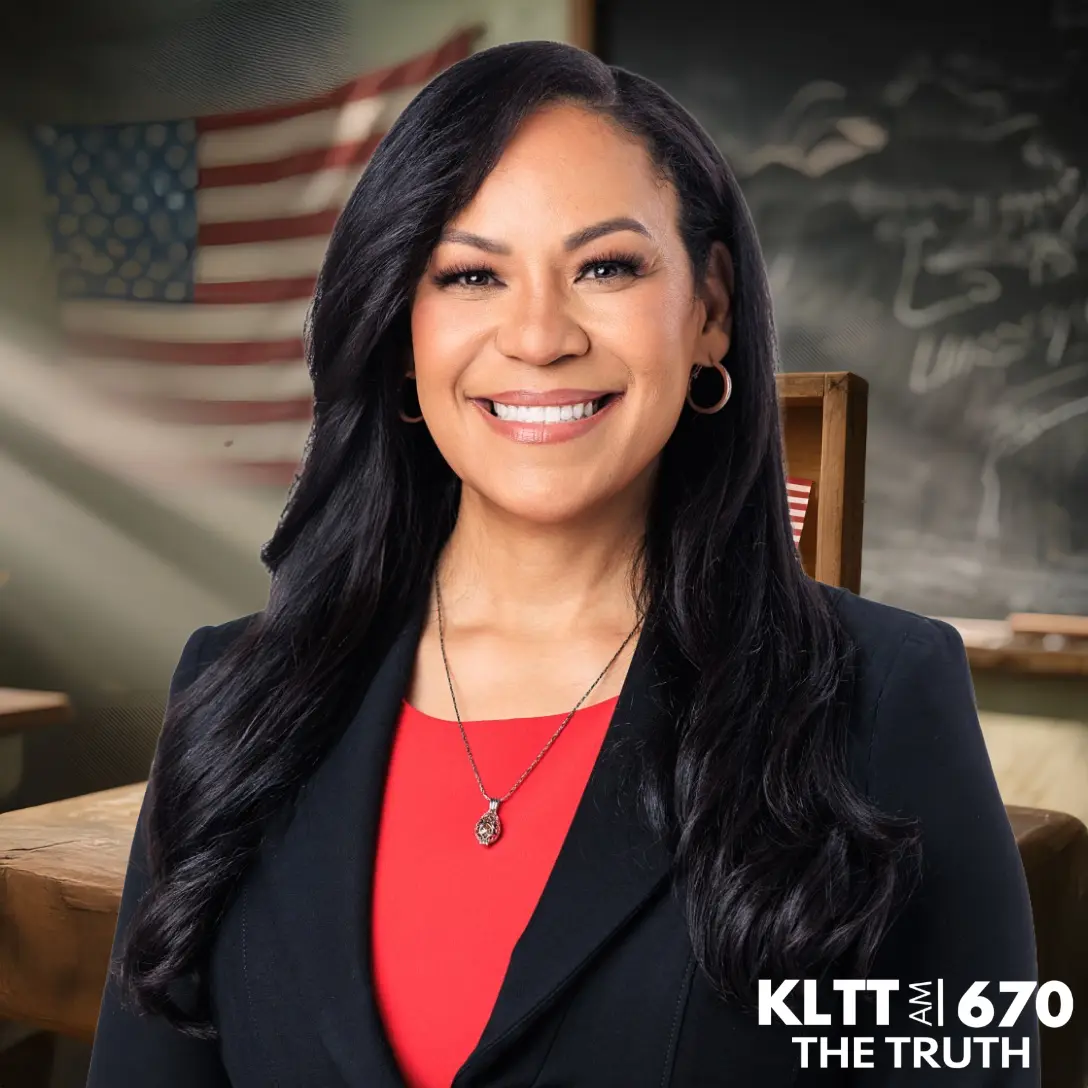
Join Priscilla Rahn in a compelling dialogue with Craig DeLuz, a Project 21 ambassador and seasoned school board member, as they dissect the evolving landscape of public education in America. Delve into Craig’s unique journey—from his college days as a student body president to advocating for change in schools—highlighting the essential roles of parents, teachers, and local governance in shaping educational outcomes. This episode uncovers pressing concerns around school safety and discipline, reflecting on recent legal cases and policy implications.
SPEAKER 01 :
Welcome to Restoring Education in America with Priscilla Rahn. She’s a master educator and author, leading the conversation to restore the American mind through wisdom, virtue, and truth.
SPEAKER 03 :
Well, hello, hello, everybody. Welcome to Restoring Education in America. I’m your host, Priscilla Rahn, and I’m so excited that you’ve decided to join the conversation today. I have an amazing guest who’s joining us. His name is Mr. Craig DeLuze, and he’s a fellow Project 21 ambassador. Welcome, Craig.
SPEAKER 02 :
It is a pleasure to be with you.
SPEAKER 03 :
Well, before we go on, I’m going to share a little bit of your bio with our listeners and You are a Project 21 ambassador and you are the founder of Uncommon Sense Media Group. You have almost 30 years in media, political advocacy, policy analysis, and grassroots activism. You’re the president and CEO for 2A News Corporation, as well as spokesman for the California Republican Assembly. You’ve served as the spokesman and senior legislative advocate for Firearms Policy Coalition, and as CEO for the Frederick Douglass Foundation of California. You’ve served on the legislative staff of California Assemblyman Kevin Jeffries and Tim Leslie. You have an extensive resume, but most recently you’ve launched a daily news commentary program called The Rundown. So thanks again for being with us today. Let’s just jump right in and talk about all these hats that you’ve worn as media leader,
SPEAKER 02 :
policy advocate and longtime school board member for those who don’t know you can you share a little bit of what inspired your nearly 20-year commitment to serving in education well it probably started in college when uh when i decided to run for student body president at california state university chico uh it was a school with uh wow how long put this it was a school that was about three percent african-american and uh one of the one of the professors there said that there would never be a black ass president at chico state so i said well you know You tell me I can’t do something, that’s the first thing I’m going to go and try and do. And I wound up running and winning with 50.6% of the vote. So it was a landslide victory. But I share that because it was the first time where I really started to understand that there is a whole world of decisions that are made out there about which I knew nothing and about which I had absolutely no input. And so I dedicated myself from that point on to understanding what decisions are being made on my behalf and playing a role in making sure that I could impact those decisions and the people who were making them.
SPEAKER 03 :
So I have a very similar story actually in college. I got involved in student government and I think that’s a great place to get your feet wet when it comes to advocating for things that are important to you and having your voices heard. So when you look back and how have you seen public education change over those years and what’s most concerning to you about where we are today?
SPEAKER 02 :
Well, there was a time in public education where The goal was to prepare young people for the future. The idea was to not necessarily teach kids what to think, but to teach them how to think, to teach them to be critical thinkers. There’s been a transformation in education, in particular in public education, where it’s gone from teaching kids how to think to teaching them what to think. it’s almost become a situation where it’s more about indoctrination than it is education.
SPEAKER 03 :
So my guest today is Craig Duluth, and you’re a big two-way advocate, constitutional carry. I may or may not be a concealed carrier myself. You know the rule, you’re not supposed to tell people, you know, if you’re carrying. But, um, What you’ve done in this space is pretty remarkable. And when we talk about combining the concern around school safety and gun rights, you know, we have this recent ruling with Abby Zwirner versus Ebony Parker. She’s a teacher who was shot by her six-year-old student, which that is profound. She sued her assistant principal, Ebony Parker, and she just won, I think it’s $2 million in court. So how do you reconcile public safety in this situation? What are your thoughts about that whole trial?
SPEAKER 02 :
Well, first of all, I need people to understand, number one, your first role as an educator, and I’ve been a classroom teacher. I’ve been on a public school board for over 20 years. I understand what the primary role of an educational institution is to, number one, provide a safe, a safe environment for students to be able to learn, right? So safety is the number one thing that you ought to be concerned with. And in this particular case, you had a situation that developed through multiple problems. Most important of which was in this particular case, you had an assistant principal who was told multiple times that there was a student with a firearm that was on campus. I don’t care how unlikely you think that may be. That is something that you follow up on. That is something that you investigate. You don’t hesitate. You don’t wait. You don’t say, oh, I’ll get to it. You get to that immediately and you find out if that student, if there is a student there that does in fact have a weapon and you make sure that that student is in fact disarmed. So there’s issue number one. The other issue is that this was a student who had had not just disciplinary issues previously, but had had violence disciplinary issues and one of the problems that we’ve had with with a modern education where you have this uh i forget what the phrases they call it but the idea where they’re they’re trying to uh know you have a situation where they don’t really want you to discipline students they don’t want you to remove students who are unruly let alone violent well what that is doing is that is putting both students at risk as well as staff at risk you have many instances in public schools today where you have students who are lashing teachers uh and and doing so violently And once you see one student do it, I’ll just say if you’ve ever been in a classroom, you know, it only takes one or two unruly students for the entire class to get off track. But even worse, once you’ve established with a group of children that they are in control, that they are an authority and that the staff member, the teacher is not an authority, you know you have a class that is now out of control. And in this particular case, once again, you put all of that together with a violent student who we now know is armed, or at least suspect is armed, and then you do absolutely nothing. Yeah, you’ve got a real problem on your hands.
SPEAKER 03 :
Yeah, I mean, the whole discipline matrix concept really needs to be evaluated because especially in city school districts where the policies, even in politics, are very liberal, where you’re giving adults multiple chances of breaking the law, right? Oh, well, he’s stolen a car three or four or five times or violated something. their parole. We see some of that same mentality in public schools where kids get multiple chances for what they call low level, level one, level two, low level types of interruptions to the classroom, but they end up being a big deal because it keeps the teacher from being able to teach the rest of the students. And then you have teachers who are getting frustrated, calling out sick, not wanting to come to work because the environment is not safe for them. And they’re very, very frustrated. We have this continuous like chasing the tail sort of situation in public education. What role do you think parents play? Like how do we change the culture so where parents are seen as partners, not domestic terrorists?
SPEAKER 02 :
Well, first of all, I think we need to, as a society, let people understand that when you send your children to school, you do not abdicate your responsibility or your rights as the primary educator of your children. You are delegating part of that to the public school system, but you still have, wherever you send them to school, whether it’s a public school, whether it’s a private school, you still have a responsibility To to make sure that they are getting what it is that they need to make sure that, by the way, your child has received the prerequisites that they need before they go there, that they understand discipline, that they understand. Most importantly, that me and your teacher, me and those who are who are at school, we are partners in making sure you are getting educated. If I’ll say this, when I was in school, my parents only had a high school diploma. By the time I was in middle school, most of the work that I was doing, my parents couldn’t help me with. Here’s what they knew. They knew I had homework. They knew if I wasn’t turning it in, they got a call from my teacher. My teacher was down there. If I was acting a fool in class, my mother would be down there in a hot second. They knew. They were not to be trifled with. Now you have parents who think that, and then once again, this is not all parents, but you have a lot of parents who think that, well, all I got to do is get them to school and, you know, drop them off or they walk to school, they crack open their heads, they pour the knowledge in and send them back. Well, no, if your child cannot read by the fifth grade, you knew they couldn’t read in the third grade. You knew they couldn’t read in the fourth grade. Why were you not there at the school advocating for your child? That’s something that we need to be doing is empowering parents, teaching them how to be advocates for their children in public education or in private education for that matter.
SPEAKER 03 :
If you’re just tuning in, my guest today is Craig DeLuz. He is a Project 21 ambassador. He is a school board member and he is a staunch advocate. gun rights advocate and um we’re having a great conversation about school safety and making sure parents are very involved in their child’s education so you talk often craig about common sense bringing common sense back to education um what does that look like in practice when it comes down to like curriculum and discipline or character development
SPEAKER 02 :
Well, let’s start with curriculum. You’ve probably heard about this new movement in education called the science of reading. Do you know what the science of reading, the fundamental part of it is? Phonics. You know, that thing we used to do where we used to teach kids how to sound out words, where we taught them that in order to find out the meaning of a word, once you knew the root, the roots, a meaning, a meaning of some of the different segments, then you could piece together what the definition is. That thing that we did for generations. Well, we decided to get rid of that because it was innovative. See, in education, what happens is we reward the innovative. We don’t reward the effective. And too often what happens is we wind up putting things in place educationally that sound good and look good. And oh, my, they are so innovative. But there’s no real evidence that they are effective or that they actually work. So the first thing we need to do is common sense says, let’s start with what works. And if it ain’t broke, don’t fix it. So that’s number that’s point number one. Point number two, when it comes to curriculum, the number one job is to teach kids to read, write, and do arithmetic. I know probably a lot of high school graduates right now who just graduated don’t even know what arithmetic is. It’s called math. We need to teach people how to do these things. And the way in which you learn how to do them is through repetition. I know that’s not sexy. I know it’s not some neat computer program, but we have to teach kids fundamentals, right? And I think too far we want to skip ahead. The other thing we need to do, quite frankly, is, you know, California is horrible for this one thing in that we have these really, really quote unquote high standards. And then nobody ever meets those standards. And so we brag about the high standards. But what we don’t do is is we don’t actually hold people to be accountable to actually meeting those standards. So we wind up with students graduating from high school with a piece of paper that’s not worth it’s not worth the paper that it’s written on. And then we wonder why when they go off to college like, let’s see, UC San Diego and come to find out that once they get there, About what was the saying? I think it was something like only 86 percent of them can do can do first grade math. All right. That means that means that means if only 86 percent can do can do first grade math, that means that 17 in a UC in the University of California cannot do first grade math. And by the way, that gets worse as you go up and up and up. We ought not promote people who are not meeting the standards. Hold students accountable to the standards. And by the way, that also has to do with their behavior. Hold students accountable for their behavior. One of the worst things that we’ve done with young people today is we’ve taught them that choices don’t matter. We’ve told them that the system is against you. We’ve taught them that the white man is against them. We’ve taught them about systemic racism, but we haven’t told them That where you wind up will be the sum total of the decisions that you make. And if you make better decisions, then you wind up in a better place where you get to make better decisions.
SPEAKER 03 :
You know, what’s critical is that we need classroom teachers. We need the army of teachers sharing that message because without it, we have, we still have this education gap. We still have this economic gap and the data doesn’t lie. And, um, it’s part of what I talk about in my book, restoring education in America. In your opinion, what are some of the moves that we need to do? Does it need to start in our community, in the Black community? Does it need to start in the education system where we start to have high expectations for all kids instead of having low expectations for our city kids? What do you think?
SPEAKER 02 :
Well, I think, first of all, we need to understand that not all children are the same and that there is no panacea for fixing education. There’s a lot of different things, right? First, we need to understand that decisions made closest to the students are the best decisions because they’re generally made by people who know the students, who care about the students, and understand the situation that’s going on. Having having politicians in Washington, D.C., decide how students in Chico, California, are educated makes absolutely no sense because they do not know the community. They do not know the students. They do not know the family. So the first thing is we have to get decisions being made more closely to the to the to the students. We need to not worry about, quote unquote, treating everybody differently. equally or equity we need to give people we need to give students what they need uh you know when people talk about equity and sadly i think many have have perverted that term but when they talked when they first started talking when they were talking about giving students what they need well we now have access to data that lets us know exactly where johnny is where Johnny needs help and to be able to provide Johnny with these exact assistance that he needs. We also have access to data that shows that, for example, boys learn differently than girls oftentimes. That’s a generalization, but we need to be willing and understand and create an environment that is just as conducive for boys to be able to learn as it is for girls. When Sadly, one of the things we’re seeing in public education today is we’re seeing, I call it a feminization of our educational system. All things that are deemed to be male or masculine are deemed to be toxic or bad. And all things that are female are tended to be good. And the reality is, is that both are good. Right. In other words, competitiveness, aggressiveness. But you have to develop an educational system that plays on those and utilizes those for those who exhibit those sorts of tendencies for people who are sympathetic, who are empathetic, people who are good listeners. You need to have an educational system that then works with them. And be able to develop it and allow kids to be able to be in a situation that will allow them to thrive. And I think if we start with that and then accountability has got to be key. We’ve got to have accountability from beginning to end. We have to have it with the students first and foremost. You don’t move to the next level if you haven’t mastered the previous level. At whatever it is, you move at the pace that you learned and you’re held accountable for trying to at least maintain a basic pace. If you’re not, then we get you the resources that you need in order to get to where you need to be. We need to hold teachers accountable. They need to know and understand this idea of a guaranteed job. In what real world does that actually happen? If you, on the whole, are not educating kids, and I’m not saying that every child you educate has to be educated. has to be a genius scientist. But I’m saying from the time they enter your classroom to the time that they depart from your classroom at the end of the year, there needs to be some demonstration that students are learning. Maybe one individual student isn’t learning, maybe a group. But if in general, we need to know that the students were better off having spent those nine months with you every day or just about every day in your classroom. And by the way, you need to be rewarded when they do well. Right. Teachers who do well, who are effective, need to be rewarded and understand that not every teacher who teaches well should be should move to administration. Right. Not all of them. Some teachers need to be in the classroom. We need you in the classroom. I don’t want you to be an administrator because some people who are really good administrators, quite honestly, we’re not very good teachers, but they’re good at understanding the things that you need to do administratively. Right.
SPEAKER 03 :
It’s a skill set for sure.
SPEAKER 02 :
Oh, yeah. But but then parents need to be held accountable. Look, you have a basic thing as a parent. Number one, make sure your children are have some self-discipline. Right. When it comes to raising children, I always say from zero to three, either you’re raising them or you’re training them or they’re training you. But by the time they’re three to five years old, someone’s been trained. And if the parent has is the one that’s been trained, then you have a child who has no self-discipline. our job as parents is to instill discipline in them so that they can have self-discipline so that when they go to school, they are in a position where they can receive what it is that the teachers are offering them. If there were one thing that I think is the number one issue we have right now is we have a lot of kids who have no self-discipline. And that doesn’t mean that they’re bad kids. It just means that they’re not in a situation where they can maximize what it is that they’re supposed to be getting out of their education. And then you have teachers who, quite frankly, in many cases, aren’t trained or don’t know how to establish their authority in the classroom and to obtain that and to help students when they are lacking that self-discipline. And then, you know, parents, make sure your kids get make sure your kids get to school and know where your child is at. Know what the standards are. Know what they’re learning in school so that you can, as a parent, hold your child accountable when they’re not doing their part. Or you can hold the school system accountable when they’re not doing their part.
SPEAKER 03 :
Craig DeLuz is my guest today. He’s bringing the heat. He’s bringing all the common sense. He is a project 21 ambassador, a school board member and second amendment advocate. You’ve touched on so many things. One of the things you touched on was, you know, not having education from DC telling us what to do, that local control and local government really is the most effective because as you said, it’s closest to the student. What are some of the, you know, challenges that you faced 20 years on a school board? That’s amazing. I didn’t know you could be on a school board for 20 years, but tell me, tell me some of your stories about what’s been the most challenging or what’s been the most rewarding thing about being on the school board.
SPEAKER 02 :
So when I started on the school board, it was literally because my children were going into the school district and I wanted to have a say in the type of education that they would receive. Now I’m happy to say that now my grandchildren or my granddaughter is now now attends the very same school district where my kids went to school. So it’s been interesting seeing it from beginning to end. Our biggest challenge largely had to do with what I said with funding and control of that funding. In California, we get all of our money pretty much from the state and we can’t dictate how much we get every year. so a big part of it is trying to figure out how to do more with less uh that was the first i would say eight years on my eight first eight years on the board and then all of a sudden we came out of the economic downturn uh we had a rejiggering of how we figured out uh education funding in california and then it was how do we do more with more That understanding how to set standards, how to look at programs and how you’re spending your resources and determining whether or not it’s being effective. That’s probably the biggest thing. Everybody who serves on a school board, they want to provide interventions. They want to spend resources. Trust me, your school board members are not making a fortune off of being school board members. Let me tell you, they are investing way more time than they are receiving compensation. But what oftentimes winds up happening is we get all these people coming to us with all these great ideas. Well, how do you weigh it? How do you determine which ones are good, which ones are bad? When you’re in the middle of them, when you’re evaluating, how do you determine what works and what doesn’t? And then getting people to understand that just because you’ve gotten used to something, Doesn’t mean that there’s not something better out there. We just went through that with our after school programs. We had been working for a very, very long time with one after school program. And we decided that because we were changing how the funding was working, that we do what’s called a request for proposal from other organizations to see what else is out there. We had people in the school district that were like, well, my kids went through this and they had this and they love that and they love this. And I’m like, we’re like, look, we’re not saying we’re not continuing with them. But we want to see what else is available because we weren’t seeing huge gains with that particular program. So what other opportunities could potentially be out there? How can we diversify? So a big part of it is that a big part of it is also getting parents engaged. Usually the only time parents come to school board meetings is when their child is being honored or when you’ve messed up or someone in the district has messed up. Parents should know what’s going on at the school board meetings on the regular. Look at the agenda. See what’s coming up. I’m not saying you have to be at every school board meeting. But when I have a parent tell me, well, I didn’t realize that this was coming up. Well, it’s been something that’s been discussed for quite a while, you know. I would rather you, and by the way, when you come to school board meeting, understand we haven’t made a decision yet. So come on in. If you have an issue, let us know what your concerns are. And it may, I don’t know, I can’t speak for everybody else, but I rarely go into school board meetings with my mind made up on the decisions that I’m going to be making. So I’m wide open to listen to new information. But getting people in the community involved in schools, let me tell you, there is nobody more important than a school board member when it comes to politics, because they’re the ones who hold your child’s future in their hands. They’re the ones that are making the decisions that are going to be affecting the location where your children are going to be most of their waking hours during the school year. So to know who they are is important. to know the values they they have is vitally important and to to play a role in the decisions that they’re making well uh to not do that would be an abdication of your responsibility as a parent well craig i’m looking at the time i can’t believe we have to land our plane i’ve enjoyed this conversation with you greatly um in about 30 seconds tell us where can people find you You can find me at CraigDeluse.com. You can also find me on X, formerly known as Twitter, at Craig Deluse. You can find the show that I do on a daily basis, Monday through Friday, 3 p.m. Pacific, 6 p.m. Eastern. You’ll find that at TheRundown.com. I mean, I’m sorry, TheRundown.us. And then in general, if you just Google Craig Deluse, you will find everything you need to know about me and where I stand on various issues.
SPEAKER 03 :
Craig DeLuz, Project 21 ambassador, school board member, and 2A advocate. Thank you so much for your conversation. And to my listeners, thanks for joining today. Catch me next time. And remember, educating the mind without the heart is no education. So seek wisdom, cultivate virtue, and speak truth.
SPEAKER 01 :
Thanks for tuning in to Restoring Education in America with Priscilla Rahn. Visit PriscillaRahn.com to connect or learn how you can sponsor future episodes to keep this message of faith, freedom, and education on the air.


