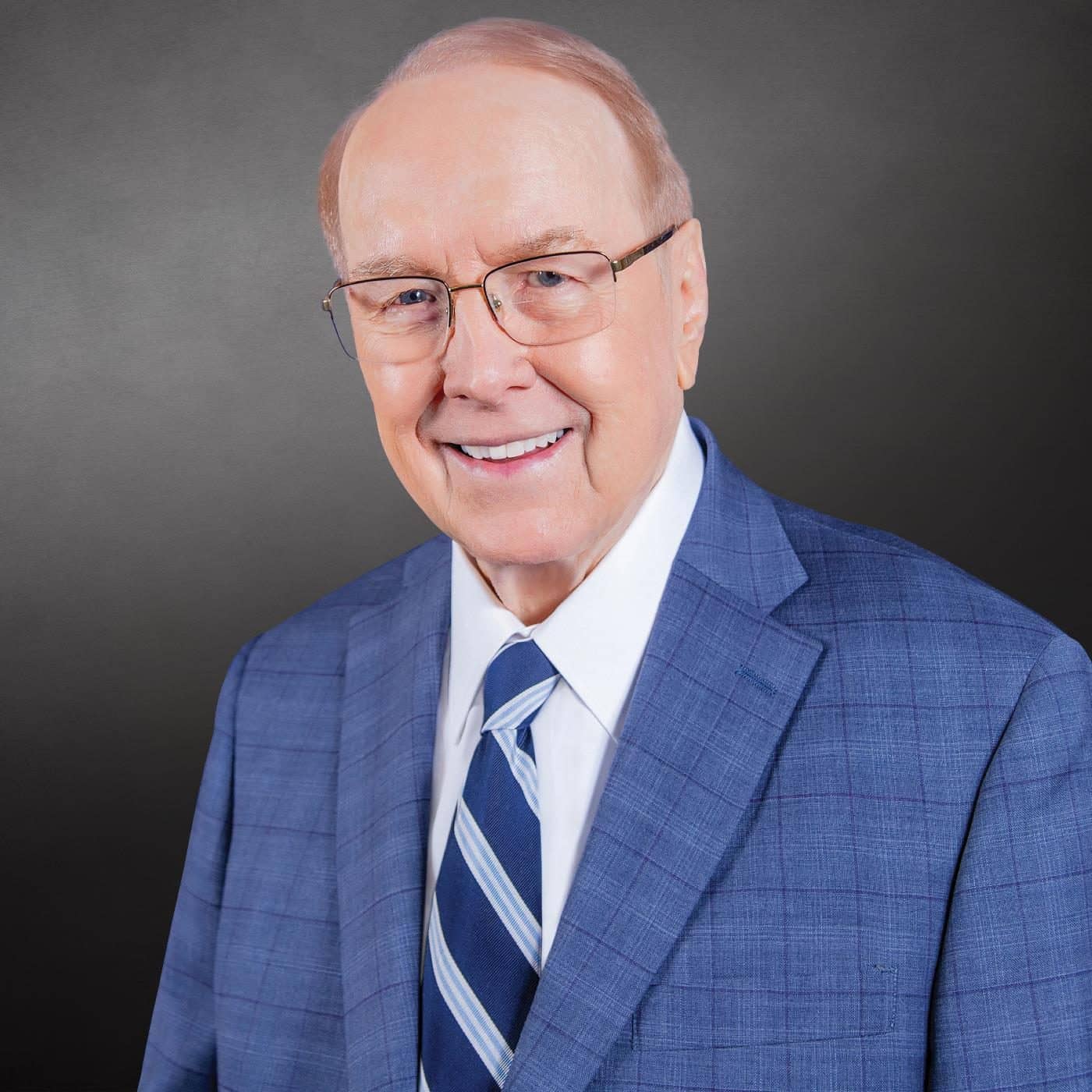

In this heartwarming episode of Family Talk, Dr. James Dobson engages in an intimate conversation with his daughter, Danae Dobson, about the pressing challenges faced by teenage girls today. They delve into Danae’s journey as an author and her book, ‘Let’s Walk the Talk’, which addresses issues such as eating disorders, self-esteem, and the importance of following Christ. With Danae’s candid insights and Dr. Dobson’s perspectives, they offer a reassuring voice and guidance to parents and teens alike navigating the turbulent waters of youth.
SPEAKER 03 :
Well, hello everyone. I’m James Dobson and you’re listening to Family Talk, a listener-supported ministry. In fact, thank you so much for being part of that support for James Dobson Family Institute.
SPEAKER 01 :
Well, welcome to Family Talk, the broadcast division of the Dr. James Dobson Family Institute. I’m Roger Marsh, and today we truly have a special program for you because on today’s broadcast, we’re going to hear a conversation featuring our founder, Dr. James Dobson, and his daughter, Denae. Now, Denae, of course, is an accomplished author. She’s a great speaker, and she’s a member of the JDFI Board of Directors as well. And you know, their topic of conversation is going to be one that is of great importance to anyone who has experience a young girl in their life, especially a teenage girl who’s trying to navigate the pressures of today’s world. Young women desperately need someone to talk to, someone who understands what they’re going through, and someone who can offer good and godly wisdom and encouragement. Well, on today’s edition of Dr. James Dobson’s Family Talk, we’re going to revisit a conversation that Dr. Dobson had with his daughter, Danae, about a book she wrote on this topic called Let’s Walk the Talk. It’s written in a conversational, big sister style and addresses the real issues teenage girls face with honesty, compassion, and biblical truth. Now during the next half hour, you’re going to hear Danae and her dad discuss everything from eating disorders to the importance of following Christ and the power of mentorship in a young woman’s life. Now, the program you’re about to hear is included in our 2025 Best of Broadcast Collection. And today and now through the end of December, we have a special opportunity for you. We would love to place a copy of the 2025 Best of Broadcast Collection into your hands. And we’ll do so when you give us a call at 877-732-6825 or go to drjamesdobson.org forward slash broadcast. When you give a gift of any amount in support of our ministry, we’ll be happy to thank you for that tax-deductible donation by sending you a copy of the six-CD collection, the 2025 Best of Broadcast collection. It features this program and several others. Now, what’s extra special about this year’s collection is that when you call and make that donation, your gift will be doubled thanks to the James Dobson Memorial Matching Grant. And we’ll have more about that coming up at the end of the broadcast. So make sure you’re with us for that important announcement. And now, if you have a daughter, a granddaughter, or you know a young woman who could use some encouragement, the conversation you’re about to hear is for you. Let’s listen in now to Dr. James Dobson and his daughter, Danae Dobson, on this special edition of Family Talk.
SPEAKER 03 :
She has been precious to me since the day I met her in the delivery room. Danae, I’m so glad to have you here.
SPEAKER 02 :
Oh, thanks, Dad. There’s only two people who ever come to this studio and refer to you as Dad. So that’s probably a shock for the listeners. They’re going to hear Dad all the way through this.
SPEAKER 03 :
How about Dr. Dobson with that?
SPEAKER 02 :
No, I don’t think that works. I don’t think I’ve ever called you that before, and let’s not start now.
SPEAKER 03 :
Well, I am very honored to be called dad, and it’s really a pleasure to have you here. Do you remember that first Wolf book, and you remember the excitement? You were only 12, and do you remember the thrill of publishing your first book?
SPEAKER 02 :
Absolutely. Well, actually, I wrote it when I was 11 and then it was published when I was 12. So that was one of the most significant gifts that the Lord has ever bestowed upon me. But you had a hand in that because it was your little stories that you told in the carpool on the way to school that prompted me to write my first story that was based upon the theme of A Dog Named Woof.
SPEAKER 03 :
I was making them up as I went along, too.
SPEAKER 02 :
And doing a good job of it. In fact, as you’ll recall, one morning you drove up to the front of the school and you were tired of telling Wolf stories, so you decided you were going to end one by saying that he died. The kids who were in the carpool, they really got depressed about it. And all day at school, you know, we kind of talked about it. There were a few tears. And so when Dad picked us up that afternoon, we made him find a way to resurrect Wolf.
SPEAKER 03 :
Well, you’ve gone on from writing books for children, other books, in addition to the Wolf books. And then you came to your first book for teen girls. That was about four or five years ago, and it was called?
SPEAKER 02 :
Let’s Talk, Good Stuff for Girlfriends About God, Guys, and Growing Up.
SPEAKER 03 :
And it is a conversational big sister type book. That was your purpose, to introduce girls to Christian concepts and just general advice like a big sister would have for a little sister.
SPEAKER 02 :
Right. That book really tapped into the issues that teen girls are dealing with, such as postmodernism and family dilemmas and dating issues, maintaining a healthy weight. and eating disorders, clothing choices. There were many issues that I covered in that book, and a lot of them are issues that transcend the generations. Because some issues such as self-esteem, peer pressure, figuring out what you’re going to do with your life and where God fits into the plan, I mean, generations have dealt with those issues. They’re always relevant.
SPEAKER 03 :
Well, today we’re going to talk about the sequel to Let’s Talk. And give us the complete title and subtitle again, please.
SPEAKER 02 :
The title is Let’s Walk the Talk, Girlfriend to Girlfriend on Faith, Friendship, and Finding Real Love. And the real love is really referring to discovering the love of God.
SPEAKER 03 :
There’s a strong spiritual component in this book. And you told me before we came in the studio that you have found teen girls really want that spiritual component.
SPEAKER 02 :
They do. And yet what I found in my research is that the ones who are really committed to the Lord and are sold out for Christ 100%, they just cannot be moved. They are grounded. And that’s encouraging.
SPEAKER 03 :
Despite the culture and the influences of it. I I’m working on my own book for girls. Isn’t it interesting that we’re both writing for girls? And the reason is because girls are going through a great deal today, even more than. when I wrote Bringing Up Boys. The world has changed, and girls are in more trouble now, I think, than they’ve ever been, at least in my lifetime. And so that’s why your book is of interest to me, Denae, and it’ll be fun to compare notes because we’re dealing with the same issues coming from a different perspective. I have a chapter called The River of Culture, which talks about the fact that the River of Culture is a raging Colorado River. It is crashing downstream. And if you’re not careful, it will carry you into unknown waters. And that’s why I feel so strongly that it’s parents’ responsibility to help them navigate the river. and you’re doing it in a different way. Yours is directly to teens. What are you hearing from them?
SPEAKER 02 :
Well, I had a unique opportunity with this book because in my former book, it was just me writing to the teens. But in this book, I really wanted to bring in other people. I wanted to bring in teen girls, guys, youth ministers, high school teachers, middle school teachers. And I wanted to ask them a lot of questions, everything from standards in regard to entertainment to abstinence. And they gave me some really great candid responses. And I was so impressed by what I heard. And the teens whom I interviewed, they really are aware of the challenges out there, but they want to come through and they want to finish strong. And I was really impressed. They actually were a lot more conservative than I had even presumed they would be.
SPEAKER 03 :
You talked to boys, too, didn’t you? Didn’t you have some interviews with guys?
SPEAKER 02 :
Teen girls and teen guys. And a couple of the teens, the guys whom I interviewed, they attend a public high school. And one of them told me that the cuss words are just unbelievable. Some words are as common as the word the. So he was saying that even though he doesn’t use that kind of language, it’s difficult because those words come into his mind. I mean, how could you not be around that five days a week and not be impacted by it? But he said that he’s had some great opportunities to be a light and an example even on his swim team because the guys know that he doesn’t cuss and all the rest of them do. And he said sometimes he feels like he’s not heard or acknowledged because he doesn’t cuss. But nevertheless, he’s making a difference and they are seeing that difference in his life.
SPEAKER 03 :
You know, I taught school, as you know, when I was very young. I taught the sixth grade, seventh grade, eighth grade. I was a junior high counselor and then a high school counselor. And so I was around a lot of kids at that time. And girls in that era did not cuss. I mean, there were rough girls who did, but you didn’t hear it like that. And I grieve for young people who are trying to live a Christian life, who are just saturated with that stuff around them at this time. You talk in your book about eating disorders, and you did quite a bit of research on that. In fact, some of your research was helpful to me. Explain what you have learned and what you have said.
SPEAKER 02 :
That’s really heartbreaking to me because you may recall a year ago in Nashville, we had dinner with a friend of our family’s and he expressed concern about one of his daughters who was struggling with an eating disorder. And that’s how I found out about it. what she was going through. So I contacted her and I interviewed her for my book. And she was very, very open, very forthright in her responses. But she said that what caused her to start binging and purging was the fact that she didn’t really want to lose weight. She just wanted to stay thin. And she discovered that she got a lot more attention, especially from guys, when she had a great body. And so it was reinforcement in a negative way because she wanted to be the pretty girl. She wanted to be the girl whom everybody liked. And she found that by binging and purging that, you know, that was giving her the reinforcement that she sought.
SPEAKER 03 :
It is unbelievable because five-year-olds are now captured by the culture, either through television or the Internet or their peers at five years. I mean, it’s unbelievable what’s happening to girls. And that’s why I’m so glad Danae has written this book. Let’s do talk about cutting because I dealt with that in my book as well.
SPEAKER 02 :
I interviewed a physician from the Ramuda Ranch, which is a ministry for those with eating disorders. And he provided a wealth of information. But I asked him, what causes girls to injure themselves? And he said that based upon seeing and interviewing a lot of patients, that he believes the primary reason is to provide a way of dealing with emotions. because the girls feel a lot of anger or depression and cutting themselves enables them to experience temporary relief from their emotional pain. So it kind of causes the internal pain to become external and therefore it provides some relief. So when a person has gone through a past trauma such as sexual abuse, When she relives that experience in her mind, then when she injures herself, it’s a way to kind of put an end to those thoughts and bring herself back to reality.
SPEAKER 03 :
It also releases endorphins so that they get a kind of high from doing this.
SPEAKER 02 :
I know. Isn’t that twisted?
SPEAKER 03 :
It’s a terrible thing.
SPEAKER 02 :
Yeah. And I asked this physician, you know, what areas of the body are the girls most likely to cut? And he said typically their arms and legs. But with eating disorder patients, they often see girls who have cut the areas of their bodies that they’re most disgusted with, such as their thighs or their abdomens. And it’s a way of expressing anger or hatred toward their bodies.
SPEAKER 03 :
What did you say to these girls in your book?
SPEAKER 02 :
Well, obviously, that’s not the right way to handle your emotions. The right way to handle it is to give it to the Lord in prayer. Just unload it all upon Him. Nobody and nothing is worth hurting yourself. And even in my own life, when I’m going through a difficult time, The way I deal with it is to give it to the Lord and let him deal with it. What better way can you possibly deal with your emotional problems?
SPEAKER 03 :
That is extremely important. But I’m sure you also told them they need help because this is not a disorder that you can talk yourself out of. It’s not one you’re likely to get out of on your own. And it’s not one that parents can deal with by saying, you’ve got to stop doing this. That does not help. And you have to put these young women, and there are guys who do it too, into the hands of individuals who are thoroughly trained, know how teens think, and help them to come out of this ridiculous behavior.
SPEAKER 02 :
That’s right, because as I learned in my research, that cutting can become an addiction.
SPEAKER 03 :
And who would have believed 75 years ago, 100 years ago, that this would be a problem with kids who are deliberately harming themselves? And these are not the only ways. Suicide is related to it, too, and other forms of self-harmful behavior. Danae, if you will permit me, I am going to read— Two things that I wrote about you in my book. When Danae was three years old, I was a professor of pediatrics at a medical school and a researcher at a large children’s hospital. Five days a week, I would prepare to leave with my briefcase for a long drive through Los Angeles traffic. Typically, Danae would cry. She didn’t want me to go. I would give her a big hug and I’d promised her hurry home that afternoon, but she was inconsolable. I can still see this precious kid standing in the doorway crying. Denae was particularly upset one morning as I explained again why Daddy had to go to work. Her beautiful blue eyes welled up with tears, and she said sorrowfully, “‘It’s all right, Daddy. I forgive you.'” I asked my daughter a few weeks ago if she remembered those days. She has a remarkably vivid memory of her childhood, which is almost scary at times. She not only remembered her tears on that morning that I’m describing, but she recalled something for me that I had forgotten.” One day when she was three, she and her mother came to the front yard to wave at me as I drove away. I had already backed out of the driveway, however, and I didn’t see them standing there. Danae recalls that she sobbed in disappointment. Then when I was a long block away… I happened to catch a glimpse of my little family in my rearview mirror. They were still frantically waving goodbye. As I was going around the corner, I put my arm out of the window and I waved in return. Even after all these years. Denae remembers the excitement she felt at that moment when her daddy saw her and returned her wave.
SPEAKER 02 :
You’re crying today. Yeah, that’s really special. I remember that so vividly. Because we had waved for so long, and you didn’t see us. And you were almost ready to turn the corner, and I saw that hand go up. And it was like I felt like my job was done that day.
SPEAKER 03 :
I didn’t remember it until you told me about it, but I vividly remember it today. Because I just frantically waved out the window and hoped that you would see me. And I found out that night you did.
SPEAKER 02 :
There’s one thing I wanted to mention, though. And you and mom were just so good about providing unconditional love for us and spending time with us. And yet, my self-esteem still got whacked in junior high. And I think that happens to a lot of kids. They can have a great upbringing, but sometimes on the school campus, it’s a whole other situation. And as you’ll recall, in ninth grade, I transferred to a new school. And I didn’t really know anybody. I couldn’t break into the cliques even if I had tried. And so that was a very difficult time for me. It was a public school. And I remember the very first day of school. There was a girl who was assigned to take me around to my classes and show me where the lunch area was. And so she seemed to like me. And so, you know, we kind of hit it off. And the next day I thought that the same arrangement was going to repeat itself. So I’ll never forget standing in the snack line with her on my second day. And she turned to me and she said, you don’t have to keep hanging around with me if you don’t want.
SPEAKER 03 :
Uh-huh.
SPEAKER 02 :
And I knew exactly what that meant.
SPEAKER 03 :
I put a knife in your back.
SPEAKER 02 :
I knew that meant get lost. And so… You know, I went through worse situations than that in ninth grade. But my point is that a kid can’t go through experiences like that and come out unscathed. No matter how great a Christian upbringing he or she has, wounds at school can run deep. And I tried to be sensitive to that in my book because kids spend a lot more time with their peers than they do with their parents during the teen years. And that’s why I encouraged my readers to sink their roots down deeper in their relationship with the Lord and concentrate on how extraordinarily valuable they are to him and how much he loved them enough to make the ultimate sacrifice. Because throughout life, people are going to say and do things that are offensive or hurtful. That’s the human condition.
SPEAKER 03 :
Danae, if there was only one message that girls could walk away with after reading Let’s Walk the Talk, what would it be?
SPEAKER 02 :
It pays to follow Jesus. When I was going through my awkward stage at age 12 to 14, I had a mentor, Ann Kimmel. Some of your listeners may have heard of her. And she was a popular author and speaker at the time. And so she used to write me little notes and cards. And she saw a lot of herself in me. And she would often end her cards with those words, it pays to follow Jesus. And at the time I thought, well, that makes sense, but I hadn’t really lived it. Now I’ve lived long enough where I know from experience that that is absolutely true. It does pay to follow Jesus. It’s the most gratifying feeling in the world to know that you’re following his plan. And even if things don’t go the way you want them to, you’re still headed in the right direction. And there’s just an unbelievable peace that comes as a result of that.
SPEAKER 03 :
And that’s more valuable than anything in the world to you, isn’t it? Because you get your sustenance for every day that way. Well, Danae, thank you for coming and being our guest. Thank you for writing this book and for the heart that’s in it, the heart for the Lord that’s in it. That was your primary motive, I know. And I think girls are going to be very interested in what you had to write and will also get a lot of big sister advice for these years.
SPEAKER 02 :
I hope so. I’m looking at a picture that I gave you that’s right to your left of where you’re sitting. And it’s a picture of you and me. It’s black and white. I’m about five years of age and you’re holding me up. And around the frame it says… My dad, my father, my hero, love, Danae. And that pretty much sums it up.
SPEAKER 03 :
I love you, babe. Thanks for being our guest.
SPEAKER 02 :
My privilege.
SPEAKER 01 :
Well, the love between a father and a daughter is one of the most precious relationships God has designed. And today’s conversation here on Dr. James Dobson’s Family Talk, a poignant discussion featuring Dr. James Dobson and his daughter, Danae, reminds us just how powerful that bond can be. You’re listening to Dr. James Dobson’s Family Talk and a heartfelt conversation featuring Danae Dobson discussing her book, Let’s Walk the Talk, a conversation she had with her dad. Now, if you missed any part of today’s program, remember you can listen again anytime by visiting drjamesdobson.org forward slash family talk. And please share this conversation with someone who might have a teenage daughter or perhaps works with young women. This is a message that girls need to hear now more than ever. You know, raising daughters in today’s world requires courage. It requires wisdom and a whole lot of prayer. Between the pressures of social media, the confusion surrounding identity, and the constant cultural messages pulling our kids away from biblical truth, parents and grandparents need all the help they can get. And that’s exactly why the Dr. James Dobson Family Institute exists, to equip you with practical resources and godly counsel as you raise the next generation. And right now, you have an incredible opportunity to help us continue in this mission. Thanks to some generous friends of our ministry, we have the Dr. James Dobson Memorial Matching Grant in effect now through New Year’s Eve. This remarkable grant will match every dollar you donate. up to $6 million. And you can make your tax-deductible donation online when you go to drjamesdobson.org. And when you give a gift of any amount to support the Dr. James Dobson Family Institute, we’ll be happy to send you a copy of our 2025 Best of Broadcast Collection. It’s a powerful six-CD set that will certainly be a keepsake for years to come. It features the program you heard today, featuring Dr. Dobson’s conversation with his daughter, Danae, on sisterly advice on faith and life, It also includes the first ever Family Talk broadcast, which features the Family Talk Covenant that aired all the way back on May the 3rd, 2010. The Best of Broadcast collection for this year also features Dr. James Dobson’s final interview recorded in studio and the last words Dr. Dobson ever spoke into a Family Talk microphone. It’s definitely a keepsake that will be a treasured resource in your family for years to come. And we’ll be happy to send you a copy of the 2025 Best of Broadcast Collection as our way of thanking you for your gift of any amount in support of the Dr. James Dobson Family Institute today. So remember, between now and December 31st, that gift will also be doubled thanks to the Dr. James Dobson Memorial Matching Grant. And that doubling will go on up to $6 million. So a $100 donation becomes $200. A $250 donation becomes $500. A $100,000 donation becomes $200,000. For more information on how you can receive the 2025 Best of Broadcast Collection as you have your gift doubled here at the end of the broadcast year, call a member of our Constituent Care Team at 877-425-7000. 732-6825. That’s 877-732-6825. If you prefer, you can make your contribution online at drjamesdobson.org. That’s drjamesdobson.org. Well, I’m Roger Marsh, and on behalf of all of us here at Family Talk and the James Dobson Family Institute, thanks so much for listening today. Be sure to join us again next time right here at as we continue making our way through our 2025 Best of Broadcast collection. We’ll have another entry coming up for you on the next edition of Dr. James Dobson’s Family Talk, the voice you can still trust for the family you love. This has been a presentation of the Dr. James Dobson Family Institute.
SPEAKER 03 :
And yet nothing worth having comes cheap anyway. Speaking as a father, there’s never been a greater moment in my life than when I gazed into the eyes of my newborn daughter. And then five years later, my son. What could be more exciting than seeing those tiny human beings begin to blossom and grow and learn and love? And what reward could be more meaningful than having my little boy or girl climb onto my lap, hug my neck and whisper, I love you, daddy. Yes, children are expensive, but they’re certainly worth what they cost us.
SPEAKER 01 :
For more information, visit drdobsonminute.org.