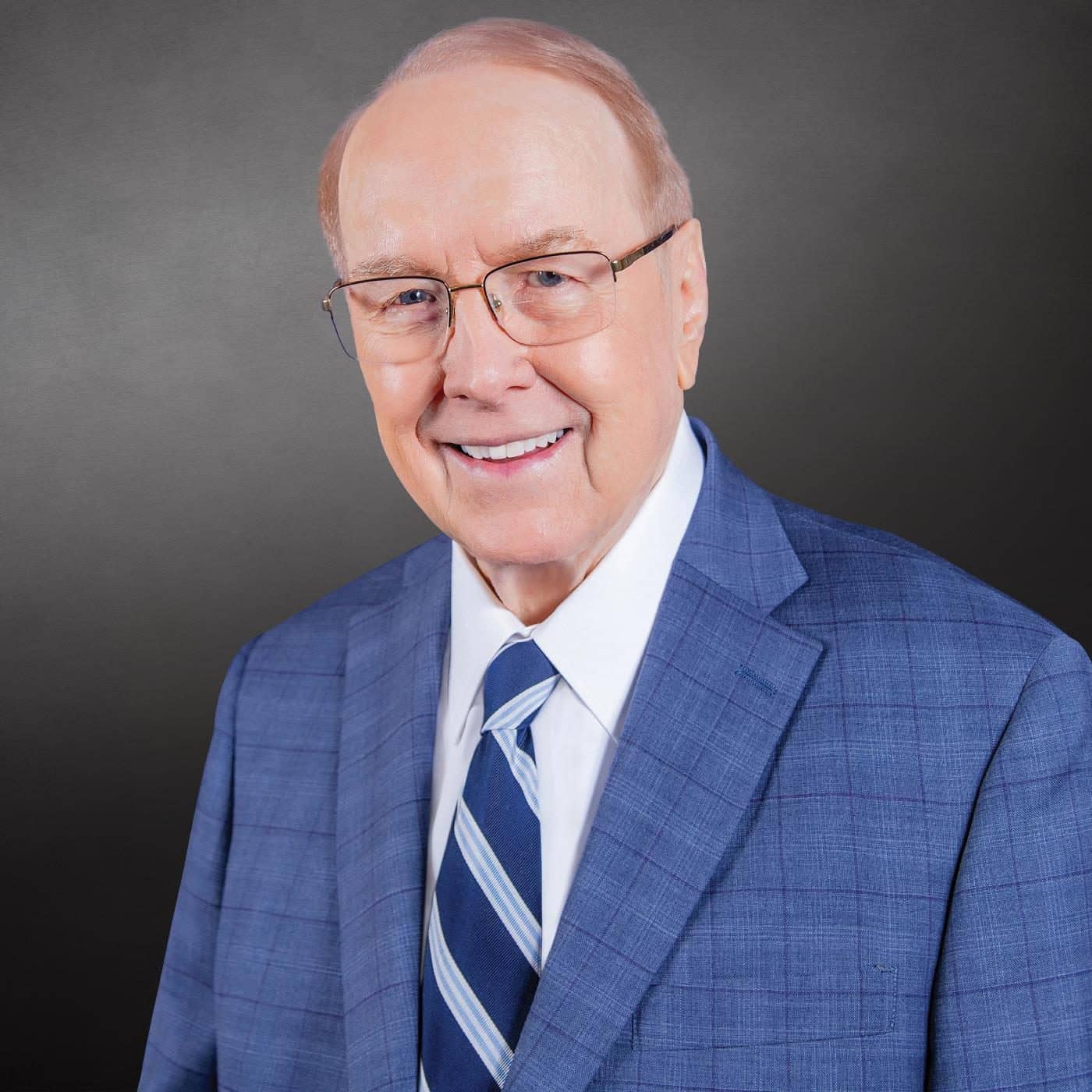
In this compelling episode of Family Talk, Dr. James Dobson and Roger Marsh revisit a profound conversation with Chuck Colson, a man who has walked through the corridors of both worldly power and deep personal trial. As special counsel to President Richard Nixon, Colson had access to the pinnacle of political influence before the Watergate scandal led him to prison. Instead of succumbing to despair, this experience became a crucible for transformation, leading to the founding of Prison Fellowship Ministries. Join us as we explore the seductive nature of power and why true strength is found in faith and
SPEAKER 02 :
You’re listening to Family Talk, the radio broadcasting division of the James Dobson Family Institute. I am that James Dobson, and I’m so pleased that you’ve joined us today.
SPEAKER 01 :
Well, welcome to Dr. James Dobson’s Family Talk. I’m Roger Marsh. Power. We all want it, don’t we? I mean, if we’re honest, the ability to control our circumstances, to influence others and to make things happen, it really seems appealing, at least to our natural selves. But what does power do to us when we finally attain it? And what happens when it’s then suddenly stripped away? On today’s edition of Dr. James Dobson’s Family Talk, we’re going to revisit a conversation that Dr. Dobson recorded with his good friend Chuck Colson all the way back in the 1980s. As you may remember, Chuck Colson served as special counsel to President Richard Nixon, literally working just a few feet away from the most powerful office on earth. He had access to state secrets, military jets at his disposal, and aides waiting on his every word. But then came Watergate, and in an instant, Chuck went from the corridors of the White House to a prison cell. That shattering experience could have destroyed him, but instead it became the doorway to discovering real power, the kind that comes not from position or prestige, but from a relationship with Jesus Christ. Out of that prison experience came Prison Fellowship Ministries, a ministry that has now touched countless lives for nearly five decades. And on today’s edition of Dr. James Dobson’s Family Talk, you’re going to hear part one of a remarkable three-part conversation between Dr. James Dobson and his good friend Chuck Colson was recorded over 40 years ago. They’ll discuss the seductive nature of power, the dangers facing those in public ministry, and why the pursuit of power itself can corrupt us all. This is a conversation as relevant today as when it was first recorded back in 1984. And it’s a conversation that we’ve included in this year’s 2025 Best of Broadcast Collection, a memorial tribute to Dr. Dobson and the legacy of work he’s done here. in broadcasting over the years. For more information on how you can get the six CD collection of the 2025 Best of Broadcast Collection, be listening at the close of today’s program, and I’ll let you know how. First, though, let’s listen in as Dr. Dobson and his friend Chuck Colson explore the use and abuse of power on today’s edition of Dr. James Dobson’s Family Talk.
SPEAKER 02 :
I don’t think, Chuck, you need a lot of introduction, but you were special counsel to the president during the Nixon administration, got involved in the Watergate affair and went to prison for that. I wonder how long you’re going to be identified that way.
SPEAKER 03 :
You’re supposed the rest of your life, your introductions will start that way. Sure. The man who ran over, said he would run over his own grandmother.
SPEAKER 02 :
went to prison, the ex-convict. But the Lord really used that experience, and from it has come your own prison ministry. So he has turned that tragedy to triumph, hadn’t he?
SPEAKER 03 :
Yes, I reflect back on that often, Jim, and I think the lowest point of my life was the first night in prison, the stale odors from the open urinals and the desperate feeling and the men crowded together and the guard shining a flashlight in your eyes every two hours. And I recently gave my papers to Wheaton College, and in the course of giving the papers, I went through them and read some of the things that I had written from prison, both once when I got a tape recorder in, which I wasn’t supposed to have, and dictated some impressions, and another time when I wrote a letter to my prayer group. And I relived the despair that I felt at that point in my life, the awful feeling of having your wallet taken away. And I protested. I said, supposing I get out of here, nobody will identify me. I won’t be able to identify myself. And they said, don’t worry. you’re number 23226, and that’s that. And that awful sense of loss of your own personal identity. Man, what a shock for a guy who just a few days before had been 10 feet from the president. That’s right. But a shock for anybody. You strip away anybody’s humanity, you take away their identification, you take away their relationship with people on the outside, and you put them in a prison, and that’s that lostness that after a period of time… really begins to have its effect in terms of embittering people. Anyway, I was reading those papers and reliving it and sort of in a cold sweat. And then I realized I was giving my papers to Wheaton College because Wheaton has set up an institute for ministry to prisoners, which is now significantly endowed, and there will be ministry going on in the prisons for generations until the Lord returns. And it grew out of that lowest and most desperate point in my life. And so you really do see the amazing way in which a sovereign God works often through the most desperate moments of our life. As a matter of fact, I think most frequently works through the most desperate moments of our life.
SPEAKER 02 :
Well, that, in fact, is what I want to talk to you about today, that powerlessness as opposed to having power. And what it does to people. This was kind of a selfish thing. I invited Chuck here to just draw from what God has taught him and for the two of us to interact as brothers. And this has been an absolutely incredible morning for me. Chuck and Patty, his wife, flew in last night, and Shirley and I went to dinner with them, and that was a neat time together. And then we met together this morning. We’ve had our devotions together and just been sharing stories our own views of what God is doing in our ministries and the dangers that are implicit in public ministries and how Satan can get us off the path. And I just enjoyed those conversations so much. I asked Chuck to come on down to the studio and let’s talk about some of it here. Let’s get to that issue.
SPEAKER 03 :
I enjoyed them just as much, and it’s been a great blessing to me to be with you and to be with a brother who’s – We think alike on a lot of things, and I hope God is going to use our relationship one way or the other to help. It sure helps me, Jim.
SPEAKER 02 :
Well, there are times when you need to stop and take stock of where you are, especially in a fast-moving, growing ministry like we’re both experiencing. It can roll over you, and you need to stop and bounce it off somebody else and say, now, wait a minute. Are we on track here? Yeah. And this was just so meaningful to me in that context. And it relates to what we want to talk about, having to do with power. What, in your view, having sat next to the president, having known all the secrets of state that there are to know, having worked with the most powerful man on the face of the earth, what does it do to a human being to have that kind of power as opposed to those who are totally powerless as you saw them in prison?
SPEAKER 03 :
Well, you see, you’ve got to approach that question from several different perspectives. The first perspective is that as a young political idealist, having worked in politics and government and in and out of campaigns all of my life, to arrive in the White House and to have the band playing Hail to the Chief and the flags frilling and the crowds cheering and people around saying, yes, sir, no, sir. Nobody ever says no, sir. They always say yes, sir. An aid outside your door at all times, the ability to pick up a telephone and have a four-engine jet waiting at Andrews Air Force Base to generals and admirals saluting, the aura of power, the trappings of power, are inherently corrupting. I went in there determined, at great sacrifice, I left a very successful law practice, lucrative law practice, determined to pass laws, to change things in the country, to bring my political views to bear.
SPEAKER 02 :
You were not a Christian at that time.
SPEAKER 03 :
I was not a Christian, but I went out of a sense of duty. And I now look back and realize how that aura of power that surrounded us began to warp your views. You began to feel you were a little bit above the law. You began to feel that you could do almost anything because your goals were so noble. As a matter of fact, self-righteousness was for me a real problem. And I think we have to understand there’s a great adage of Plato when he said, only those who do not seek power are fit to hold it. And the seeking of power in and of itself is corrupting just by the nature of it, just by the sinful nature of those of us who are part of the human race. It does this to us, and you have to really fight against it. You’ve got to really wrestle with it daily. Paul said, I die daily. Paul had a big ego. Paul was a prideful man. Paul had good reason to be. Look at all the things he’d accomplished in his life. And then he had this extraordinary experience with Christ and met him personally, was taught by him personally. And because of that, he said, I have to die daily. Now, that’s looking at power in one dimension. That’s looking at what the aura or the trappings of power do to people. There’s another dimension to power that I think is really pertinent to the times in which we live. And that is that there is the aura or the appearance of power or the illusion of power. But it isn’t real power. One of the things that led to my conversion was when I walked out of the White House, I realized that most of the problems I worked on when I started in government were worse when I left than when I began. I realized that while I thought I was influencing things, most of the battles that I fought were with the Congress over who would have control over a particular program or what we were going to put in the budget. And I realized that the power of government is vastly overrated. And it led to sort of an emptiness in my own life because I was thinking I’ve devoted my life to this and it really hasn’t mattered all that much. And that was one of the things God used to begin to soften my heart to look for the real values of life, which is the power of the King of Kings living in us, the eternal values of God, which are so transcendent. to the momentary battles and power struggles of man. Jacques Ellul, a French theologian and historian who’s written some marvelous books, one of them, The Presence of the Kingdom, which is a powerful book about Christian living in society today. He wrote a book prophetic for our times. It is entitled The Political Illusion. And Elul’s thesis is that politicians let people think – make people think that they have all the power because – and that they can solve all their problems because that’s how they acquire more power and more power. And then in the age of the media, the media plays the game with them because the media can focus on government and make it appear that government has all power. And that sells newspapers and gets people to watch television. And, of course, the media gains power as a result. By association.
SPEAKER 02 :
Sure.
SPEAKER 03 :
And profits because in this country at least they’re private enterprises. And so there’s this vicious circle that begins with a politician saying we can solve all your problems. Then people are lulled into this belief of political illusion and they begin to do nothing. And Allul’s fundamental thesis is that the only thing that stands between man and totalitarianism are private voluntary associations. It’s only when people get together and do things as people, when they get involved in their community, when they begin to help people. Now, he writes as an evangelical Christian. But what he is saying is that the defense in this media age in which we begin to build our trust and faith in institutions, the only defense against that is private voluntary action. That’s what so excites me about the ministry I’m in because it gets people, lay people involved doing something with their Christian faith. And it shatters the political illusion. And we Christians in particular have got to look at things right now in perspective. And it’s very important we register and vote and get into politics. But don’t do it with the illusion. that government is going to solve all of our problems. We’re going to win some battles there, but the kingdom of God, the battle for the kingdom of God goes on in the hearts of men.
SPEAKER 02 :
This subject absolutely fascinates me because it’s very much related to the profession that I’ve chosen. I see it in newborns. Research is pretty clear on this, that the first day home, the first day after birth, a child reaches out for the manipulation and the control of the adults that are around him. The very first day. Every mother knows this, but it took the researchers all these years to come up with it. But there is a desire for power. Power being defined as the ability to control yourself, your circumstances, and other people built into human nature. And the interesting thing is that the more you get, the more you want. It is never satiated. And you and I were talking earlier today about the physicians that I worked with in the medical school who had incredible power. And yet, instead of satisfying those inward needs, the ego needs, instead of finding themselves, their egos became more infantile and their demands more incredible. And power does that to you. It’s insatiable. It’s not like a good meal that’s been fixed and you eat it and for a while you’re not hungry anymore. But it’s just a bottomless well.
SPEAKER 03 :
Well, power is destructive in the sense that the more you have, the more you have to have. And, of course, that’s what leads people to start out often with relatively noble motives, but then the constant desire for more power, for more adulation, for more ego-stroking. It leads them to more and more extreme measures, and that’s how you see empires degenerate.
SPEAKER 02 :
Was that the downfall of the Nixon administration? In part it was.
SPEAKER 03 :
In part it was because we were in a constant battle for power against the press and the Congress, and particularly against the press. And so we had declared war and they saw us gaining power over them and we saw them gaining power over us. And Agnew declared war on the meteor and they weren’t going to be satisfied until they had wiped us out. It was a giant power struggle and we lost. But I think the problem with power is one that affects everybody. I think it affects the shop steward who bullies his employees. I think it affects the mother who tries to dominate her children too much. I think it affects the businessman who is arrogant towards the people that he has under him. I think it affects the pastor who tries to play God. I think it affects – Every aspect of our lives. It is not just government officials. When you look at power, don’t sit back folks who are listening on the radio and say, well, that doesn’t involve me. It sure does involve you.
SPEAKER 02 :
Well, it involves you and me, Chuck, in visible public ministries like we’re in. What are the dangers to us?
SPEAKER 03 :
We’re in, I guess, as dangerous a position as anybody can be in. And after the National Religious Broadcast, there was a press conference. And I had a press conference because I’d given the opening night address. And there was a man from a secular newspaper sitting in the front row. And the first question, he said, Mr. Colson, aren’t born-again Christians supposed to be loving and caring for one another? I said, yes, compassionate for the world. He said, and I said, absolutely. He said, well, I don’t understand. He said, I’ve walked around these exhibits here at this convention. And he said, seems to me the bigger the exhibit, the more arrogant the person who’s manning the exhibit. And I defended my brethren. I said, look, they’ve gotten into this business because it’s a ministry. It’s God’s calling. And many of them have started on a shoestring and they’re building up their ministries and they’re proud of it. And that’s an understandable human reaction. And then he began to describe the various things that different people had said to him at the different exhibits. And I was, again, defending my brethren. But at the same time, I was cringing inside because I knew exactly what he was talking about. And it was kind of interesting. After the press conference, I went over and I talked to him. And I said, look, don’t judge all Christians by some of us who can’t handle power. I said, any more than I’ll judge all people in the media by some of the things that you folks do. And he said to me, I’m a recovering alcoholic, Mr. Colson. And he said, I really was asking those questions because I’m searching. But he said, I run into an awful arrogance among people in Christian ministry. And he’s right. The idea of reaching into millions of homes, as we’re doing right now, is a very awesome thing. And running big ministries, and particularly for people who know what Christ teaches, and suddenly we have all this power. And I wrestle with it. I have a terrible time. Pride was my sin. Pride was what drove me all my life. The most deceitful thing is our man’s own heart. And so I’m not sure I can ever be honest with myself. I try to be. I ask my friends to be honest. I read all the critical mail that comes to our ministry. I can’t read all the mail that comes in, but any letter of criticism has to come to me. I want people to tell me. I ask them to. I go out of my way looking for them to tell me because I know I won’t see it in myself and I know it was the deadly snare of my life when I was in politics. And I’m scared of it. But I believe this is God’s call and I got to sort of like Jonah be the reluctant prophet who goes and does what God calls, hoping and praying I can forestall the inevitability of my own pride and ego getting in the way. And the only way I’m able to deal with that is to get out of the public light for a while. I just have to go off for a couple of weeks and study and read and not get that. I don’t ever walk on an airplane or into an airplane terminal or a restaurant or Invariably, people will come and talk to me. And it’s always very nice. It’s wonderful. But I fight this. That’s power. That’s power. It sure is. And it’s inevitable in some senses. And we have to deal with it. Everybody has to deal with it in their lives. Everybody has power. A parent has power over his children. The question is how you deal with it. Now, power is not inherently evil. It’s what it does to you. It’s what it does to you. Power is inherently corrupting but not inherently evil. Power comes from God. I look at someone – but the paradox, of course, is the more you get rid of it, the more you have, the more you give it away. I look at Mother Teresa. I received a letter from her as I was – Telling you last night, Jim, and I was terribly impressed that she had taken time to handwrite a letter until I inquired and found out that she doesn’t have a typewriter that any letter that she sends, she handwrites. She has no power in the sense that she doesn’t have computers and buildings and budgets and baptisms and buses and all the signs of Christian success. But she has enormous authority. It’s an authority that she has earned by virtue of serving others. A little bit of what we were talking about earlier. She has come to know God in a way that is a very intimate fellowship by sharing in the suffering of people around her. Now, this has given her authority, no power. No money. When the Pope was in India and left his automobile with her, a white limousine as a gift to Mother Teresa, she accepted it graciously. She didn’t come up with any false humility. She didn’t embarrass the Pope. She simply took the car and then auctioned it off and sold it and put the money into the proceeds, put the proceeds into her work. But she would be a classic illustration to me of authority which God invests in us by virtue of faithful service and obedience. which can be a hundred times more influential than the use of raw or naked power, which depends upon force. You see, authority always has a moral foundation, which power may not.
SPEAKER 02 :
Talk a little bit about the power that comes from the media. Are we out of harmony with him? in making use of electronic avenues that are available to us to communicate. Oh, no.
SPEAKER 03 :
I will often find people who say, well, if you really want to be biblical, you’ve got to do exactly what Paul did, and that is you take sailing ships and you walk over land and you carry all your possessions in your back because Paul did it. Well, that’s absurd. Paul used the resources that were available to him in the culture and the technology at the time, and we’re supposed to do exactly the same thing. It’s certainly not wrong to use it. But you do feel it’s not being used right in many contexts. I’ve been very critical of much of religious broadcasting in America today, particularly Christian television, which I think is pandering to the egocentric nature of American culture. I think what we’re really saying to much of the world in a form of pop Christianity is, So you really want to get your own thing and do your own thing and you really want to succeed and you really want to win and you really want to gratify yourself. Well, we Christians have got a better formula than you secular people. We’ve got God on our side. And if you pray to God, he’s going to solve your financial problems. If you pray to God, he’s going to bless your life abundantly. And look at us in this gorgeous, attractive, multimillion-dollar studio. See how God blesses us, and you can know God and be blessed, too. Now, that’s cheap grace. I picked up a newspaper recently, and it sort of captured it all. It was a thought for a day from a prominent Christian pastor. And up at the top of the page, they always have a thought for the day every day, some quote that the editors choose. And this one they chose from a pastor who will remain unnamed. And it said, put God to work for you in this divinely ordered capitalist system. See, that isn’t just bad theology because God was not created for man’s pleasure. Man was created for God’s pleasure. It’s not just bad theology. It’s heresy. It is an appeal, not even a subtle appeal. to the egocentric, materialistic nature of man. We call people to come to Christ not because there’s something in it for them, but because Jesus Christ is truth. He is God incarnate. It is the plan of creation embodied in the person of Christ. That’s why you come to Christ. And you come to Christ whether it is going to mean that you’re going to prosper and have two cars and a nice home, or whether you lose your life. But you come to Christ because it’s true. And we sell… a cheap grace, as Bonhoeffer called it, on much religious broadcasting. And I addressed the national religious broadcasters and told them so, and it was a sobering experience for the first 15 minutes of my speech.
SPEAKER 02 :
Dead silence. Yeah.
SPEAKER 03 :
But then there were little ripples of applause, and I think people began to understand what I was saying. I said, if we dare to speak for God, if we dare to speak for a holy God, then we have an awesome responsibility. to present the whole truth of the gospel of Jesus Christ, the bad news of the conviction of sin before the good news of the redemption. The fact that Christ is calling us to be obedient, to live as Christians in a world where it may cause us to be persecuted and suffer and be ridiculed. And it is not simply a religious adaptation of the me too, give me everything I can get secular world. And if we make it that, we’ll one day be called to account, if not by the disillusioned masses we have led into this false Christianity, then surely by the sovereign God we believe in. Chuck, can we carry this on next time? I’d love to.
SPEAKER 01 :
Chuck Colson walked the halls of power in the White House and then walked the cell blocks of a federal prison. Few people have experienced both of those extremes. And yet that unique perspective makes his warnings about power especially relevant even for us today. You’re listening to a special edition of Dr. James Dobson’s Family Talk. We featured part one of a classic conversation Dr. had with Chuck Colson, the founder of Prison Fellowship. If you missed any part of today’s broadcast or if you want to share it with a friend, go to drjamesdobson.org forward slash family talk. And keep in mind, this year, Dr. Dobson, of course, went home to be with the Lord. It was back in 2012 that Chuck received his eternal reward. And what a wonderful reunion those two have had in heaven, I’m sure. Well, as we approach the end of this year, I want to remind you that a group of dear friends have established the Dr. James Dobson Memorial Matching Grant because the ministry of the James Dobson Family Institute will continue. It’s a historic $6 million matching fund that’s available now through December 31st. And this remarkable gift honors Dr. Dobson’s nearly five decades of faithful ministry, but it also ensures his legacy will continue through the only organization that he personally entrusted to carry out his work and and expand it to new geographies and generations, and that is the Dr. James Dobson Family Institute. That means when you give to the JDFI before the end of the year, your gift will be doubled, placing biblical wisdom into twice as many hands and homes. A $500 gift becomes $1,000, and dare I say, a million dollar gift becomes $2 million. Your generosity will strengthen marriages, equip parents, defend life, and share the hope of Jesus Christ well into the future. Now, this is the time of year when we gather the best family talk programs over the past 12 months and put them into our Best of Broadcast collection. Now, when you contact us, either at drjamesdobson.org or over the phone at 877-732-6825. Make a donation of any amount. We’ll thank you for that gift by sending you a copy of the 2025 Best of Broadcast Collection. But keep in mind, because of the Dr. James Dobson Memorial Grant of up to $6 million, your gift will be doubled. So thank you for prayerfully and generously supporting our ministry here at the end of the year. We would love to send you a copy of the 2025 Best of Broadcast Collection. Again, go to drjamesdobson.org, give us a call at 877-732-6825, or you can drop us a line. Our ministry mailing address is Dr. James Dobson’s Family Talk, P.O. Box 39000, Colorado Springs, Colorado, 80949. Well, I’m Roger Marsh, thanking you for being a part of the Family Talk broadcast today. Be sure to join us again next time when we’ll hear part two of Dr. Dobson’s unforgettable conversation with Chuck Colson. That’s coming up right here on the next edition of Dr. James Dobson’s Family Talk. This has been a presentation of the Dr. James Dobson Family Institute.