



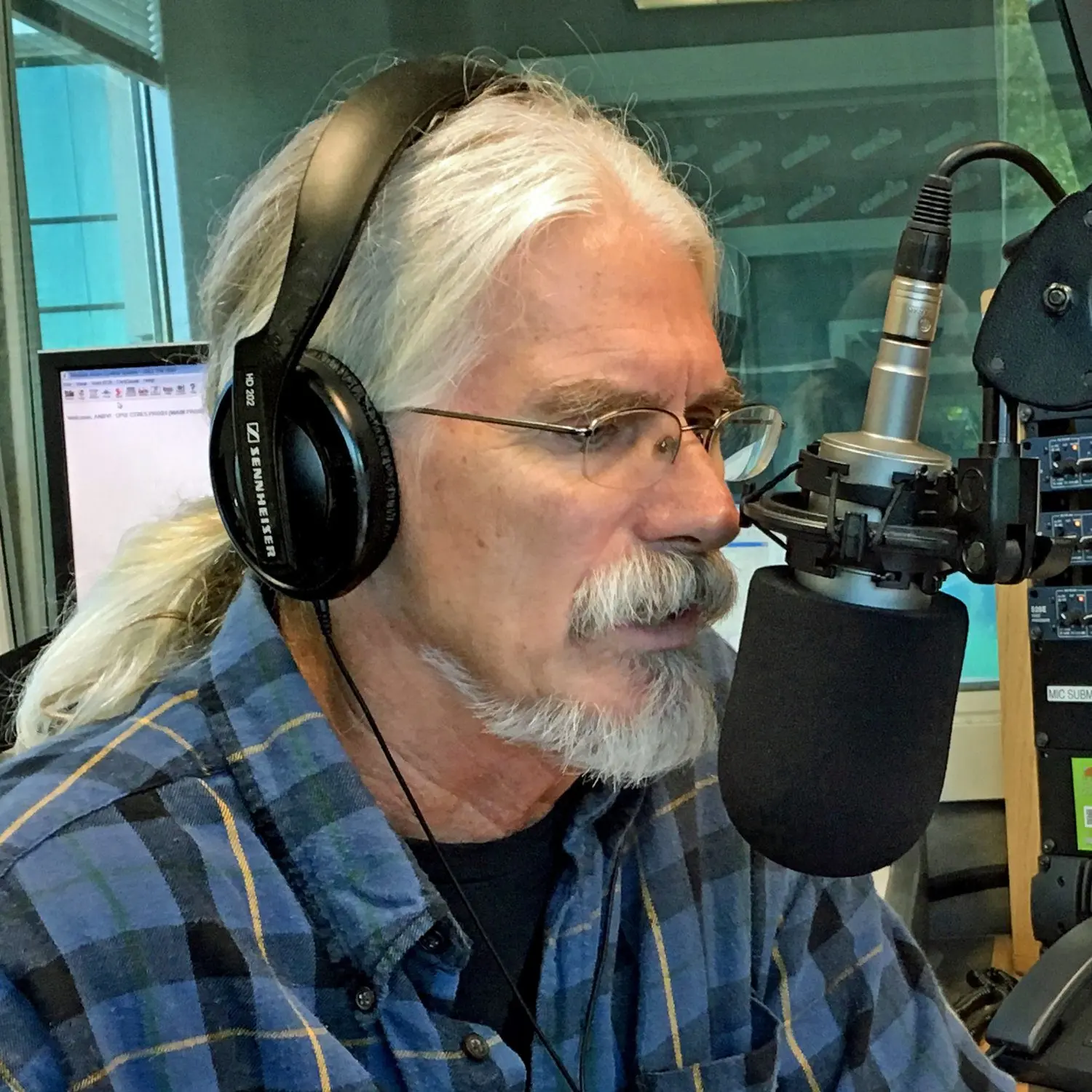
Join Steve Gregg on this episode of The Narrow Path, where listeners get a chance to delve into profound topics across the Christian faith. Starting with an enlightening discussion about Abraham’s historical and religious background, Steve takes us through the intricate differences between being a Hebrew and an Israelite. The episode further explores Jesus’ life lessons, such as his miracle of walking on the water, signifying his control over nature, and his encounter with the woman with the issue of blood, highlighting the significance of faith.
SPEAKER 1 :
Thank you.
SPEAKER 04 :
Good afternoon and welcome to the Narrow Path radio broadcast. My name is Steve Gregg and we’re live for an hour each weekday afternoon, taking your calls if you have questions about the Bible or the Christian faith or you’d see things differently from the host and want to balance comment, I’d be glad to hear from you today. Feel free to give me a call. The number is 844-484-5737. That number again is 844-484-5737. 5737. And so we’re going to go directly to the phone lines. I don’t think I have any announcements to make. So we’ll talk to Tracy in Sacramento, California. Tracy, welcome to The Narrow Path. Thanks for calling.
SPEAKER 09 :
Hi, Steve. Thank you for taking my call. I’m actually surprised that I was able to get through.
SPEAKER 04 :
Well, you called earlier.
SPEAKER 09 :
Yeah, I sure did, on purpose. Okay, so I’ll make it quick. My husband and I, we have Bible conversations, and we have a debate going on right now regarding Abraham. And I’m curious about something. As a background on Abraham, can you clarify some things? Because we’re having a discussion about was he – Was he a pagan believer before he became monotheistic, if I’m using the term correctly? Or are we confusing that with someone else? And then we were also asking, what’s the difference between Israelite and Hebrew believers? So these are some questions. If you can clarify that for us, that would be really great. Thank you, Steve.
SPEAKER 04 :
Okay. Well, first of all, Terah was the father of Abraham. And according to Joshua 24.2, it says that Terah and his family served other gods. Actually, what it says is, Joshua said to all the people, Thus says the Lord God of Israel, Your fathers, including Terah, the father of Abraham and the father of Nahor, dwelt on the other side of the river in old times, and they served other gods. Now, they might not include Abraham, although he was in the family. It says Terah was the father of Abraham and the father of Nahor. Well, maybe the whole family initially served other gods, but obviously God revealed himself to Abraham. And Abraham ceased to worship any other gods. So it looks like he came from a pagan family. Most families were. This is ten generations after Noah. And so it was also after the Tower of Babel where most of the people rebelled against God. I have to assume that the majority of the nations that grew out of the three sons of Noah were not very godly. And Abraham himself might not have been very godly initially. He lived in Ur of the Chaldees, which is in Mesopotamia, you know, near what we call Babylon today, or in Iraq. So that was their background. There were no Israelites in those days because Israel wasn’t born yet. Israel was Abraham’s grandson. His name was Jacob, actually, and then his name was changed to Israel. And then his 12 sons, that is Jacob’s 12 sons, were called the children of Israel. Eventually, when there were so many of them that they constituted a nation, the nation was called Israel. But it was named after Abraham’s grandson, Jacob, who also was called Israel. So Abraham was called a Hebrew. I believe it’s in Genesis 14, if I’m not mistaken, that it refers to Abraham the Hebrew. Now, there’s no explanation of what Hebrew means in the Bible. It just shows up, Abraham the Hebrew. So, you know, we’re left to kind of speculate about what the word Hebrew meant. Most scholars I’m aware of seem to believe that it comes from the name Eber. If you read the genealogy from Noah to Abraham. Just a few generations after the flood, there was a man named Eber, and he’s a descendant of, he was an ancestor of Abraham or of Terah. So some people think that the name Eber gave rise to the word Eberite or Hebrew. But no one’s really quite sure. But apparently Hebrew is an ethnic name, speaking of the genealogy from which Abram came. Now, later on, of course, the Israelites were also Hebrews because they’re descended from the same line. They’re descended from Abraham. But the name Israel was more narrow because there were lots of Hebrews. In fact, Abraham himself had eight sons, but only Isaac gave rise eventually to the Israelites. And Isaac himself had two sons, but only Jacob gave rise to the Israelites. So there were a lot of sons and grandsons of Abraham who were all Hebrews, because Abram was a Hebrew, but they were not all Israel. But the Only two generations after Abram, one of his grandsons was named Israel. And so, I mean, one of his grandsons, Isaac’s son, Jacob, was named Israel. So anyway, Israel speaks specifically of that nation and that people that came out of the 12 sons of Jacob, who was also named Israel.
SPEAKER 10 :
Okay.
SPEAKER 04 :
And there was something else you had. What else was your other question?
SPEAKER 09 :
Yeah, that was basically it, because we were just curious about Abraham, and then we got onto the terms of Hebrew, and the Israelites were like, oh, wait a minute, how do we explain that?
SPEAKER 04 :
Now, you said you and your husband were having a debate about this. Is this a very hot debate?
SPEAKER 09 :
It’s an ongoing. No. Which side was I on?
SPEAKER 04 :
Which side did I help out here?
SPEAKER 09 :
You’re on my husband’s side, so I’m outnumbered.
SPEAKER 04 :
Oh, well.
SPEAKER 09 :
But I do appreciate you, Steve. You did answer my question, and I do appreciate it. I listen to your show every day, and I do appreciate how you answered the question so thoroughly. Thank you very much. Thank you.
SPEAKER 04 :
Well, it’s good to hear from you, Tracy. Thanks for joining us. Carrie from Fort Worth, Texas, welcome to The Narrow Path.
SPEAKER 07 :
Hi, Steve. Hi. I’ve been listening to your verse by verse on Matthew to just kind of get your perspective on some issues. But it brings up a question that what type of format are you using in Matthew as opposed to other lectures where it seems like you’re in a classroom setting And the lectures are probably an hour, maybe longer, where these are about 20 minutes.
SPEAKER 04 :
Yeah, all the other books of the Bible were taught in classroom. Now, I also taught Matthew in classroom, but not as a book by itself. In the classroom, I taught a harmony of the Gospels. Now, those lectures are at the website, too, if you read the Life and Teachings of Jesus. I forget, I think it’s 95 lectures, and it harmonizes all lectures. four of the Gospels, including Matthew, and they’re about an hour and a half long each, I think. The Matthew lectures were done differently. They were done for another radio show. I had two radio shows. They were both called The Narrow Path, but one was this one back in the 90s. That is the 1990s. And then for one year back then, I think it was 1999, I also did a second daily show, but it was recorded, not live. And it was only a half hour. And that was the one where I went through Matthew. There’s almost 200 lectures of Matthew, but they’re only like 23 minutes each. More convenient to listen to, perhaps on a commute. But they were also done. in studio which means in my house but it was not done before a classroom and you can kind of tell i mean the tone of voice is a little different when you’re speaking just at a wall into a microphone than when you’re looking at faces and kind of interacting with people so it does feel a little different well the reason i was listening uh was because i’m kind of following this uh kurt hamlin uh
SPEAKER 07 :
debacle that he’s in about hell. And I saw that Albert Mueller had a response to Kirk Cameron, and I listened to it because I feel like he’s really somebody worth listening to. And, of course, he’s on the traditional side. And his main argument is the Matthew 25, 46 passage. And where he says, because of the parallelism… Yeah, Augustine made the same point.
SPEAKER 04 :
Because the word aionios, which means eternal… is used of Ionia’s life and Ionia’s punishment in the same verse. And they’re contrasted with each other. He’s saying the word Ionia’s must mean eternal. Now, for those who don’t know what we’re talking about here, we’re talking about Kirk Cameron, the debacle he’s in. I don’t really see why it should be a debacle, but he came out saying that he believes that one of the other views of Revelation, I mean of hell, other than the traditional view, is correct, and he’s got every right to think so. Many Christians have thought the same way he does. I mean, no one’s obligated to follow the view that Augustine wanted us all to believe. There are three different views of hell. I’ve written a book on the three views of hell, of course. Carrie, you know that, but some may not. It’s called Why Hell? Three Christian Views Critically Examined. All three views are orthodox. All three views are evangelical. All three views have been held by church fathers, and only Augustine in the 4th century or 5th century, decided that one of them was going to become the standard one, and the other two were kind of ignored or eventually anathematized. but not because they were inferior, simply because Augustine was the influential theologian of all history, and so people followed him. That is, the Western Church did, the Catholics and the Protestants. Now, that being so, you know, a person certainly has no obligation to follow Augustine. For example, the Eastern Orthodox Church doesn’t follow Augustine. They don’t all hold to some other view than the traditional view of hell. There certainly were important church fathers in the Eastern Church who held to universalism and others who held to annihilationism. And some, I imagine, probably did hold to a traditional view, as we call it. But there’s no obligation on any Christian to agree with Augustine on this matter. He’s not an apostle. He’s not Jesus. He’s not God. He wasn’t inspired. He came up with a lot of theological views that the Western Church simply adopted as normal, and that means the Catholic Church did. And then when the Reformation happened, many of those doctrines remained intact in the Reformation because those reformers came out of the Catholic Church and didn’t change everything. So Kirk Cameron has decided, as I myself have, that the traditional view of hell is probably not the best one supported in Scripture. And he has adopted one of the other alternatives, and that’s gotten him into trouble. Now, here’s the thing. Albert Muller, you say, has said that, no, the traditional view of eternal conscious torment of all lost people is supported in Matthew 25, 46. That’s the very end of the parable of the sheep and the goats. And the goats go off into everlasting punishment, but the sheep go into everlasting life. Now, the word everlasting… is the word aionios in both cases, the Greek word. And aionios, as any Greek scholar will tell you, doesn’t necessarily mean everlasting. You know, it can refer to things that are everlasting, but it literally means related to an age, either enduring for an age or related to an age. But it doesn’t necessarily mean unending. It can refer to some things that are, but it can also refer to things that are not, and often does. It simply is not an exact parallel to our English word everlasting or eternal. Now, the question then is, When it talks about everlasting punishment in Matthew 25, 46, in this case, does it mean unending or could it mean enduring for an age or pertaining to an age, which would not really be specific about its duration? Now, what Albert Moeller is saying, and he’s repeating Augustine because this is the main argument, that Augustine used for eternal conscious torment. He said that he admitted that Ionius can mean something other than everlasting. I mean, that was, in fact, his statement about this just took it for granted that Ionius sometimes doesn’t mean everlasting. But he said in this case it must because it’s juxtaposed from eternal life. We’ve got Ionius’ life. contrasted with Ionia’s punishment. So if the Christian’s life is everlasting, then the punishment must be everlasting also. That’s how he reasoned. But that doesn’t necessarily make sense. That’s still presuming that Ionia’s means everlasting. It is true that the Christian’s salvation confers upon him a life that has no end. But in referring to it as Ionius life, it may or may not be referring to the endlessness of it. There are other features of it it could refer to. Ionius could refer to pertaining to the Messianic age. So it could, I mean, many scholars believe Ionius life, or life Ionius, means life that pertains to the Messianic age. And the punishment would also be punishment that pertains to the Messianic age. That’d be entirely Ionius. a legitimate way to translate both those words. Or, in probably more cases than not, aionios in the scripture means just lasting a very long time. Now, our life could last forever, but it could still be described as lasting a very long time. And the punishment could last a very long time, too, even if it wasn’t the same length of time. If I say, I’ve known this man, if I tell you about two men who are old friends, and I say, Both of these men have been friends of mine for a very long time. You don’t know that they’ve been friends of mine the same length of time. I might have known one of them for two decades and one of them for four decades, for all anyone knows. So to say these go into Ionius’ life, it could mean the life of the Messianic age without any reference to how long it is, because that is a legitimate translation of Ionius. Or it could mean a very long life. which could actually end up being forever, but that’s not the point it’s making. And then, of course, the punishment also could be the punishment of the Messianic age. That’s a possible translation. And it wouldn’t say anything about its length. Or it could mean a very long punishment, because both the life and the punishment could be very long without being equally so. So to argue that because the life and the punishment are both said to be Ionius, and that the assumption is the Ionius life is endless, as it is, of course, it doesn’t mean that the word Ionius means endless. And if the punishment, let us say, were not endless, then Ionius is being used in a different sense than endless. And whatever is being said about the punishment can also be said about the life, But it doesn’t tell us everything there is to know about that life. So not every statement about everlasting life has got to be about its everlastingness, although we can accept that it is. But we need to take each verse in its context. So anyway, this argument has convinced Augustine, convinced most Western Christians since Augustine. Obviously, it has convinced Albert Bohler. But it’s not necessarily a strong argument.
SPEAKER 07 :
I was wondering if, let’s just say we do accept the argument about everlasting, that it is the same. Couldn’t the misunderstanding be in the word punishment? Yes. Because punishment does not describe what the punishment is, and that punishment could be annihilation.
SPEAKER 04 :
Yes, that’s a very good observation, and it’s one that’s often made too by those who believe in annihilation. they point out that annihilation is an everlasting punishment. Because once you’re annihilated, that’s forever. You never come back from that. So it’s everlasting. And they sometimes will say it’s the punishment that lasts forever, not the punishing. It’s not a punishing that goes on forever and ever, as if someone’s consciously sensing punishment forever and ever. The punishing process… doesn’t continue forever, but the punishment lasts forever. So, in other words, if somebody is, let’s just say, for the sake of argument, people don’t have an immortal soul. I’m not saying that’s the case. I’m just saying, let’s say, for the sake of argument. If you torture a man forever and ever, then the punishing goes on, as long as he’s alive, at least. But if you shoot him and he’s dead, the punishment, he’s still dead forever. But the punishing doesn’t go on forever. He’s not experiencing it consciously, but he’s permanently lost out on eternal life. That’s forever. So that’s how some people argue that. So, yeah, those points are all treated in my book. Yeah, I appreciate your call, Kerry. I need to take some other calls. Our time is getting away from us. But that’s a very interesting point you raise. Thank you. Ron from Vacaville, California. Welcome to The Narrow Path.
SPEAKER 07 :
Hi there. I just have a very quick question. What was your opinion on the Apocrypha?
SPEAKER 04 :
Well, I believe the Apocrypha is interesting, but it’s not on the same level with the rest of Scripture. And frankly, even the Catholic Church agrees with that. The Catholic Church includes seven books in their Bible that Protestants usually don’t. And that group of seven books is usually called the Apocrypha. Even the Catholic Church refers to these as deuterocanonical. That is to say, they’re not canonical books like the inspired books are. They are a secondary canon, which is they keep it distinct from the other books in that way. Now, they do believe that they belong in the Bible, and I think the main reason they believe that is because these apocryphal books were also included in the Greek translation of the That was made by the Jews almost three centuries before Christ, which is called the Septuagint. The Septuagint was the Jewish Bible translated from Hebrew into Greek by Jewish scholars in Alexandria, Egypt, three centuries before Christ, or beginning at that point. They kept going. After they translated all the Hebrew Bible into Greek, they kept translating or adding more books to the library, including the Apocrypha. Now, the Apocrypha books weren’t even written in Hebrew. They were written in Greek, so there’s no translation involved there. It’s just that after the Bible was translated into Greek, they decided to fill out the library with other books that were originally written in Greek, not necessarily biblical books. And even the Catholic Church does not include in its Apocrypha all the books that are found in the Septuagint. So if they say, well, we include them because the Septuagint included them, I think, well, then you probably should, to be consistent, include all the books that are found in the Septuagint, including all four books of Maccabees instead of just two. and so forth. But the point is here, there’s a difference between books that are written by inspired prophets and those that are simply written by pious historians or romantic novelists. And some of those books are romantic novels, and some of them are, you know, historical books. Now, to say that they’re not inspired doesn’t tell us we can’t trust the history in them. There’s lots of books that that are historically accurate, written throughout history, that were not inspired by God. They’re not written by inspired prophets. So the books can still have value, but they don’t have the exact same value that inspired books have, which is why… Protestants generally do not condemn the Apocrypha. If they know anything about it, they don’t condemn it. But they don’t put it on the same level as Scripture. They don’t put it inside the Bible. That was actually Luther’s position when he came out of the Catholic Church and translated the Bible into German. He said that the Apocrypha books were good for edification, but they weren’t Scripture. And I would agree with that, not because I follow Luther, But I think he got it right. I think that the evidence is in his favor. So that’s how I feel about the Apocrypha books. They’re fine to read. They’re just not part of the Bible.
SPEAKER 10 :
Okay. All right.
SPEAKER 04 :
Thank you. Greg from Sonoma, California. Welcome.
SPEAKER 01 :
Blessings, Steve. Mark chapter 6, verses 45 through 52. It’s about Jesus walking on the water. And I didn’t find Peter trying to go out to meet Jesus on the water. Right, only Matthew records that part.
SPEAKER 04 :
Yeah, only Matthew records that part.
SPEAKER 01 :
Okay, and then at 51 and 52, it says, He climbed into the boat, and the wind died down, and they were completely amazed, for they had not understood about the loaves. He’d fed 5,000 the day before, and their hearts were hardened. What does the phrase, their hearts were hardened, what does that mean?
SPEAKER 04 :
Well, their hearts were hardened means that their minds were blinded to something important. And I don’t know exactly why the loaves are mentioned. Jesus mentions the loaves to them sometimes when they’re crossing paths. the Sea of Galilee, he says, you remember how many loaves there were and how many baskets we kept afterwards? And they said, yeah. He said, well, are you still without understanding? As if there’s something deep there. And Mark kind of refers to it that way, too. You know, they were amazed that he could still the storm or they could walk on the water. But that’s because they didn’t understand, you know, the miracle of the loaves. I honestly don’t know what the connection is to the loaves. That’s one of those things I’ve always wondered about. It may simply be saying that, you know, his breaking of the loaves manifested his total control over nature. And therefore, they shouldn’t have been surprised when he had the kind of control over nature that he demonstrated by walking on the water and by stilling the storm. Jesus did only rarely exhibit control over natural forces like that. I mean, he healed the sick a great deal. And he cast out demons. But that’s not exactly the same thing as taking authority over the forces of nature. And yet he did on a few occasions. He walked on water on this occasion. Of course, he cursed a fig tree and it withered up once. He stilled a storm on this occasion and also a more notable case where he was sleeping in the boat and woke up and stilled the storm. It’s very possible that what we’re being told here is that in multiplying the loaves, he’s defying the laws of physics, the laws of nature. And therefore, it was strange that they had not picked up on that or that they hadn’t realized, hey, this guy can do whatever he wants. You know, nature is no obstacle to him. So I think maybe that’s what Mark means when he says they were astonished because they didn’t understand about the loaves because their heart was hardened. Their heart was hardened because It doesn’t mean that God hardened their heart. It just means their hearts were not perceptive. Their spiritual insight was dull, is what I believe it’s referring to. The term is used in some other situations like that. Anyway, I hope that helps. You’re listening to The Narrow Path. We have another half hour coming, so don’t go away. We are listener supported. If you’d like to help us stay on the air, you can write to TheNarrowPath.com. P.O. Box 1730, Temecula, California, 92593. You can also donate if you want to from our website, thenarrowpath.com. All the resources there are free. Nothing is for sale at thenarrowpath.com. I’ll be back in 30 seconds. Don’t go away.
SPEAKER 02 :
If you call the narrow path, please have your question ready as soon as you are on the air. Do not take much time setting up the question or giving background. If such detail is needed to clarify your question, the host will ask for such information. Our desire is to get as many callers on the air during the short program. There are many calls waiting behind you, so please be considerate to others.
SPEAKER 04 :
Welcome back to the Narrow Path radio broadcast. My name is Steve Gregg, and we’re live for another half hour. Take in your calls. If you have questions about the Bible or the Christian faith, feel free to give me a call, but not at this moment because our lines are full. But do not despair. Even though our lines are full, they do open up throughout the remaining half hour. There will be lines opening. If you call randomly, you just might get through before the show is over today. And if you don’t get through today, Lord willing, there’s always tomorrow. We do this daily, and we hope you will get through today or tomorrow with your question. Let’s talk next to Pastor Green in Los Angeles. Hi, Pastor Green. Welcome.
SPEAKER 06 :
How are you doing, Doctor? Can you hear me?
SPEAKER 04 :
I can hear you, yes, but I’m not a doctor. Well, no, I take it back. I have a doctorate, yeah.
SPEAKER 06 :
Actually, I’m a doctor, but I call everybody that. It’s my video. I have a question because it’s kind of hard, difficult to figure this out. Okay. How can the average reader, when he’s reading the Bible in the Old Testament, figure out those biblical timelines? Like, for instance, this is in the second year of Jehu or whatever. First, First Kings 15 would be a good example. It would say in the 18 year of so-and-so. And then later on it would say in the second year of so-and-so. So how can the average reader read that and go, hmm, that must be, okay, 800 B.C. or 700 B.C. And then what’s the sense to it? You know, because, like, if we know our ABCs, ABCs, we can look up a word and we know that, you know, what comes next, you know. So what can we go about to know? Yeah. But I’ll go into seminary.
SPEAKER 04 :
Yeah. Well, it may help to get some reference books. There are books on biblical chronology. And most Bible encyclopedias, if you look up The Reign of a King, it will give the years on our Julian calendar or whatever one we’re using that they were. But here’s the problem with calculating the years of the kings, and that is that the Hebrew method of reckoning included a portion of a year at the beginning of a reign as a whole year. It’s called the accession year, or it’s called the non-accession year. The accession year, they count it as a whole year. Let’s just say on our calendar someone became president, let us say, in November. of this year. We don’t have an election this year for that, so this is totally hypothetical, but let’s just assume that in 2025, somebody became president in November. Well, then November would be considered the first year of his reign. Two months later, you’ve got 2026. 2026 would be the second year of his reign, though at the end of 2026, he’s only been president for 14 months. He would be treated in the records, if they were following the Jewish reckoning, going into 2027, it would be his third year because of that, you know, the treatment of the first few months of a calendar year as a whole year. And if the same thing happened at the end of his time, if he left office in March of, you know, 2027, well, 2027 would still be considered a year. just the way they record it. Now, not all ancient societies did this, but it’s well known that the Jews did. And this makes it somewhat difficult because if it says, okay, this happened in the 14th year of such and such a king, well, what year exactly did he become king? And would the 14th year be what we call the 15th year? because of the way they’re thinking of things. And you’ve got 20 kings in Judah after Solomon, and you’ve got 19 of them in Israel, and you’ve got these years of their reigns. And then sometimes their son, a king’s son, would co-reign with him during part of his period of reigning. And so the length of his son’s reign isn’t necessarily to be added to the length of his father’s, but it overlaps. This makes it exceedingly difficult, the problem you’re talking about, I think the closest we can get to being certain is when there are mentions of certain things that happened during the king’s reign. You know, if Sennacherib, you know, went to war against Lachish or something in the such and such year of Hezekiah, well, from secular history, you can kind of nail down what year that happened. And, you know, those kinds of things. So there are, fortunately in the Bible, there are secular events that are recorded taking place during the reigns of these kings. Not in every case, but in enough to make kind of, you know, points of reference that you can at least take. You might not know exactly what year they became king, but you can still pretty much keep it within the realm of the general period. Now, there are people who are more sure than I am that they can get the exact dates. There’s a big book on Bible chronology. Somebody gave me once written by a guy from Dallas Theological Seminary. He’s got every exact date of everything in the Bible in there. I have to say. You know, he did a lot more work on it than I did, partly because he cared more about that than I do. I don’t really care, you know, whether it was 605 or 606 B.C. when Nebuchadnezzar came and took Daniel and his friends into captivity. I think generally speaking, when Cyrus allowed the Jews to go back from Persia, usually we’re told it’s in 586 B.C., but some scholars say 587 B.C., simply because there are There’s a little wiggle room in some of these cases, but you can pretty much get it down to approximately to the year when something happened, though sometimes a month or two may lapse into a different year or something. Yeah, I mean, we’re dealing with ancient documents that were written in a way that we don’t speak usually, especially with this session year when they come to power calling a few months a year and so forth. And since they do that frequently, and there’s a whole bunch of different reigns whose years are given, We don’t know how many lag months there are in that whole length of time. But we do, as I say, fortunately, have numerous events from secular history that are mentioned within the reigns of these kings. And we do have secular archaeological knowledge, or else maybe from other historians like Herodotus or Thucydides or someone like that, that we can compare and say, oh, that happened in this particular year. So I’m not going to, excuse me, I would not be dogmatic or overly certain about the exact year that a certain king came to power, but you could get it pretty close within a year, you know, one way or the other, I think, give or take.
SPEAKER 06 :
But just like we have our ABCs, and they go A, B, C, D, E, F, you know, they’re going somewhere. There should be a method to the madness. So like when you hear in the 18 year of our Lord, and then it says 17 year of our Lord, does that mean that it’s going to be like, okay, 950 B.C., and then the next time when you hear 17, it’s going to be 940 B.C.? That’s what I’m talking about. Is it descending or ascending?
SPEAKER 04 :
Well, no, I mean, of course, when we talk about B.C., Something that happened earlier has a larger number because it’s a larger number of years before Christ. In other words, we divide time at the birth of Christ. Everything after the birth of Christ, the bigger numbers get closer to our time. And everything before the time of Christ, since we’re measuring it how many years it was before Christ, the numbers get bigger as you get more years before Christ. Right. Okay, so it’s not really hard to calculate whether you’re going forward or backward. If you’re reading about events that were before Christ, then the dates on our calendar are going to get larger the longer the period is before Christ that they’re talking about.
SPEAKER 05 :
Logically, it makes sense.
SPEAKER 04 :
Right, but the Old Testament… Okay, nobody dated things before Jesus came as B.C. Because you’d have to know what year Jesus was going to be born to know how many years it would be ahead of the time you’re talking about. The Old Testament was written before Jesus was born. So nobody was measuring the length of time by how distant it was from the time of Christ. Nobody knew when the Christ would come back then. But almost all societies, Jewish and otherwise… dated significant events from what year it was of a particular king. So, you know, that’s what we read in the Old Testament in the third year of Jehoiachin, you know, Nebuchadnezzar comes and invades Jerusalem. Okay, we’re dating from the accession of Jehoiakim here. And you can do the same thing with any of those kings. And all societies did that. What year of Pharaoh Amenhotep was it? The king’s reigns became the touchstones. for dating events that happened during their reigns. It was, you know, and that’s what they didn’t, you know, the bigger numbers then would be later years because those kings were reigning in history in a forward way. So, you know, let’s just say this. The third year of Nebuchadnezzar would be an earlier year than the tenth year of Nebuchadnezzar. Though on our calendar… The 10th year of Nebuchadnezzar would probably be, what, 505 B.C. And the third year, which is earlier, would be 605 B.C. So we’re looking at, you know, the numbers get bigger when the distance from the time of Christ is being used as the measure. But they get bigger the other way. when you’re dating from the reign of that king himself. That’s just, to me, that’s just common sense. Once you know that you’re looking at the beginning of a king’s reign as the beginning of what you’re talking about, then the tenth year of his reign is the tenth year of his reign. Okay, let’s talk to Eva from Los Angeles. No, I’m sorry, not Los Angeles, from Las Vegas, Nevada. Eva, welcome.
SPEAKER 08 :
Yes, hi.
SPEAKER 04 :
Hi.
SPEAKER 08 :
Hi, I have a question. It’s fascinating to me that when the woman with the issue of blood touched Jesus, Jesus said, he said, who touched me? I felt power go out of me. And I find that so fascinating that he did not initiate the fact that he was going to heal her. And yet the power was there and came out of him. And I think that is one of the most fascinating things about Jesus. There are so many. But that one really, I had that on my mind for three or four days, and I thought, wow. So I wanted your thoughts. I wanted your thoughts on that.
SPEAKER 04 :
I assumed it. Thank you. Yeah, the interesting thing is that usually Jesus initiated a healing or withheld it. That is, it was usually Jesus paying attention to whether he was going to heal somebody or not. When Lazarus’ sisters wanted him to come heal Lazarus, he didn’t. He just chose not to. But in the case of the woman with the issue of blood for 18 years, she’s the one who initiated it, as you say. And he said to her, your faith has healed you. So, I mean, it’s interesting how that worked. Because usually, you know, he would touch somebody. Or he would tell them to go wash their eyes in the pool of Siloam. Or he would tell them, you know, that your faith has made you well and they’d get well. But he or she got well before he said it. And I’m not really sure what to say about that except that, of course, obviously the one who is, when Jesus was healing people, it was God healing them. Jesus is God’s agent and God’s representative. But it was, he said he was doing the works of his father. He said, my father does these works in me. So God was paying attention and God chose to heal her because of her faith, even before Jesus was aware of it. I thought you might be planning to mention, which you didn’t, but that’s also interesting that Jesus didn’t know who it had happened to. He said, who touched me? And Peter said, well, everyone’s jostling you here in the crowd. How can you ask who touched me? He said, no, somebody touched me. I felt power going on me. I mean, like, But he didn’t know who it was until she came and said it was me. So, I mean, we see interesting things here about Jesus. You know, Jesus is deity in the flesh, but he also didn’t know everything, apparently. And we know he didn’t because he himself said he didn’t. He mentioned things that he didn’t know and only the Father knew. So, you know, we know that Jesus didn’t know everything. And apparently he acted like he didn’t know who touched him until she came and identified herself. And yet, as God in the flesh, he was the touch point for connecting with God. And she was seeking her healing apparently from God. And God healed her. Just like he can heal us today if he wishes. You know, if we have faith and if it’s his will. then he can heal us too. But, yeah, it is an unusual miracle in that Jesus didn’t initiate it or didn’t seem to even have anything to say about it until it was already done. It is kind of fascinating. I agree with you.
SPEAKER 08 :
And wonderful. I find it fascinating and wonderful, and I thank you. Bye.
SPEAKER 04 :
All right, bye now. Thanks for joining us. All right, our next caller is George from Covina, California. Hi, George. Good to hear from you.
SPEAKER 03 :
Hey, Steve. So I recently visited the Narrow Path website and watched the short three-minute video that is presented there for the first time. And there’s an excerpt from who I believe was the narrator quoting your words that said, what the sinner falls short of is not personal bliss, but the glory of God. I was wondering if you could expound on what you meant by the sinner falling short of the glory of God.
SPEAKER 04 :
Sure, that’s a good question. By the way, now I know what you’re referring to. When you go to our website, on the front page of the website, there’s this video. This video was made by a videographer in Switzerland, and he took something I had written on an online forum, and he took the quote, and he actually hired somebody in Switzerland to read it, and he wedded it with some of his own video that he took in the Alps. He regularly goes in the Alps and he did his stuff. And then he sent it to us, and I liked it, so we posted it. So, yeah, in it, it’s kind of a brief statement about the gospel, but In it, I do mention that when the Bible says that all have sinned and fall short of the glory of God, it doesn’t say that what they fell short of was reaching their own potential or finding happiness or bliss. In other words, they do no doubt fall short of that, but that’s not the tragedy. The tragedy in sin is not… that we fail to find self-actualization and fulfillment and things like that in our sinful lives. That may be a true thing, but it’s not the crisis. The crisis is what we have failed to do is what we’re made to do, which is to glorify God. All have sinned and fallen short of the glory of God. It doesn’t even say all have fallen short of going to heaven. You see, so many times we think of the message of the New Testament as being how to get to heaven, or how to have your best life now, or how to find happiness, or how to find this or that. No, the whole purpose of existence is not that I find satisfaction, though I will say that being a Christian has been the most satisfactory life I can imagine. And whenever I see people who aren’t Christians, I can’t imagine what they’re doing for satisfaction because, you know, what is there? What is there other than God? But the thing is, though I find great satisfaction in following Christ, that’s not why I do it. If there was no satisfaction to be had in it at all, it’d still be the right thing to do because God’s the creator. He made us. He deserves to receive from his creation what he created it for. You know, and what he created us for is for the glory of God. Now, what that means is that he would be glorified in our lives, that he would, in other words, his glory, not our, you know, fulfillment and so forth. That is the aim. Now, obviously, since we were made for his glory, we can’t really be fulfilled short of that. I mean, it’s not like you could be made for something and miss it entirely and still feel fulfilled. You know, being fulfilled certainly would come from fitting into the place in the puzzle that God designed you for and doing the thing that God made you for. You know, if you take an engine part and, you know, jury rig it to work as a different kind of engine part that’s not made for, I don’t know, it may work in the emergency somewhat. You know, if you put bubble gum on a leaky radiator or something, it may work. But it’s not what bubble gum is made for, and it’s not what the radiators are made for. It’s not going to be perfect. It’s going to be under stress. as long as we’re trying to do something that we weren’t made for. You know, it’s a stressful life, and we may break under the stress. But it’s not the avoidance of stress that calls us to Christ. It’s, I mean, obviously being stressed, being broken, being wrecked by sin. These things are very important considerations when it comes to our advantage or disadvantage, but But the world doesn’t exist for my advantage or my disadvantage. It’s not about me. It’s about God. And therefore, whether I find a measure of satisfaction and happiness in life or not is kind of irrelevant in the eternal cosmic scheme of things. What does the universe care if I’m happy or not? Now, God cares. But God knows that the only way for me to really… you know, be what I need to be is to do what he made me to do. And that is to glorify him. And this would be the right thing to do, whether it was satisfying to me or not. So what we have fallen short of in sinning, we have fallen short of bringing God to glory and living for his glory. Remember, Paul said, whatever you do, whether you eat or drink, do all to the glory of God. It’s all about God. It’s all about God being honored. It’s all about God being glorified. And, you know, sometimes people say, well, God must be a supreme egotist to require that we glorify him. No, it’s not that. He’s actually the supreme humble person. He came down and took on the form of a servant and then died for us. That’s the ultimate humility greater than any man I’ve ever known ever had. God who made everything became a worm like us so that he could die. That’s not arrogance on his part. That’s the opposite. So why is he so obsessed with us glorifying him? Because anything short is to miss the whole point of existence. You can’t really be in touch with reality. Unless you have gotten in touch with how glorious God is and become enamored with that. How could you not be? I mean, if someone knew of how glorious God was and was not enamored with it and remained unenamored with it, I’d have to say there’s something wrong with their intelligence. I mean, they’re obviously missing the point of reality. And God doesn’t want us to miss the point of reality because we are made to function best and eternally and most happily in the slot that God made for us, which when we’re in it, he is glorified. And when we’re not in it, not only is he not glorified, but we’re not achieving anything of value either.
SPEAKER 03 :
Wow. You never cease to amaze me, brother. That was a beautiful answer. Thank you so much.
SPEAKER 04 :
That’s a good question. Thank you, George. Always good to hear from you.
SPEAKER 03 :
Love you, brother. Love you, too. Bye.
SPEAKER 04 :
All right, Daniel from Tampa, Florida. Welcome.
SPEAKER 05 :
Thank you, Steve. I heard you talking earlier about the different views on hell, and I can sympathize with the apparent maybe inconsistency of God’s mercy with the eternal torment. I had never heard the annihilation or the… Yeah, I guess. Universal reconciliation. There you go. Universal reconciliation. Before, and so that was great to hear all that. My question, I guess, is that how does Satan and his angels fall into that inconsistency, possible inconsistency of the eternal torment? And it doesn’t appear that they are restored to their bodies, the angels.
SPEAKER 04 :
I have to agree. I don’t think there’s anything in the Bible that would suggest that God is intending to restore demons or Satan or anything like that or has any interest in doing so. Of course, we don’t know much about what their nature is. They’re not like us. God made us in his image. We have no evidence that God made angels in his image. God became a man to redeem mankind. He did not become an angel to redeem angel kind. Angels are an entirely different thing than humans, and we don’t know much about their emotions, their senses. We don’t know anything much about them except that they run errands, and they’re apparently pure spirit. That is to say, we don’t know that they have any flesh or physical makeup about them. So, I mean, they’re a mystery to us, but there’s certainly nothing in the Bible that indicates that God has particular mercy upon angels, fallen or otherwise. You know, in Hebrews it says he does not give help to angels, but to the seed of Abraham, it says. So, you know, I don’t know God’s sympathies toward angels. Now, maybe there’s a Bible that is written to the angels to talk about them, but the only Bible we have doesn’t talk about them that much. It talks about us because it’s God’s message to us about his redemption of us. Now, we do know that what the Bible tells us about humans is God is not willing that any should perish, but that all should come to a repentance. Now, whether God will get what he wants or not is, of course, another issue. Some people think yes. Some people think no. That’s where the different views of hell come in. people who believe that hell is a place of eternal conscious torment, as well as those who believe that hell is a place of total annihilation, would have to say then God didn’t get what he wanted because he’s not willing that they should perish. And regardless how perish is interpreted, whether perish means you go into eternal torment or you simply are annihilated, if anyone is, then he didn’t get what he wanted because he’s not willing that any should perish. But that all should come to repentance. And if they don’t all, well then, I guess he’s eternally disappointed. And that is a possibility. Because free will is a real thing. And people can, by free will, reject God and leave him disappointed. There are those who believe, though, that since God is not willing that they should perish, but all should come to repentance, that God never stops pursuing the sinner, even after they’re dead. He pursues them to bring them to repentance. And some people believe maybe all sinners will someday after they’ve suffered a great deal. Who knows? I can’t say because the Bible isn’t unambiguous on the matter, it seems to me. But those are the different views. By the way, for those interested, if you’ve never heard of the three views of hell, my book on the subject has been out for many years. I think it came out in 2013. But if you go to Amazon and look up my name, Steve Gregg, you’ll find there’s two books on hell. Don’t buy the one that says all you want to know about hell. That was the earlier edition. The newer edition is better. It’s called Why Hell? Three Christian Views Critically Examined. by Steve Gregg. Why Hell? Three Christian Views. Check that out and you’ll know more about it. You’ve been listening to The Narrow Path. Our website is thenarrowpath.com. Thanks for joining us.
