



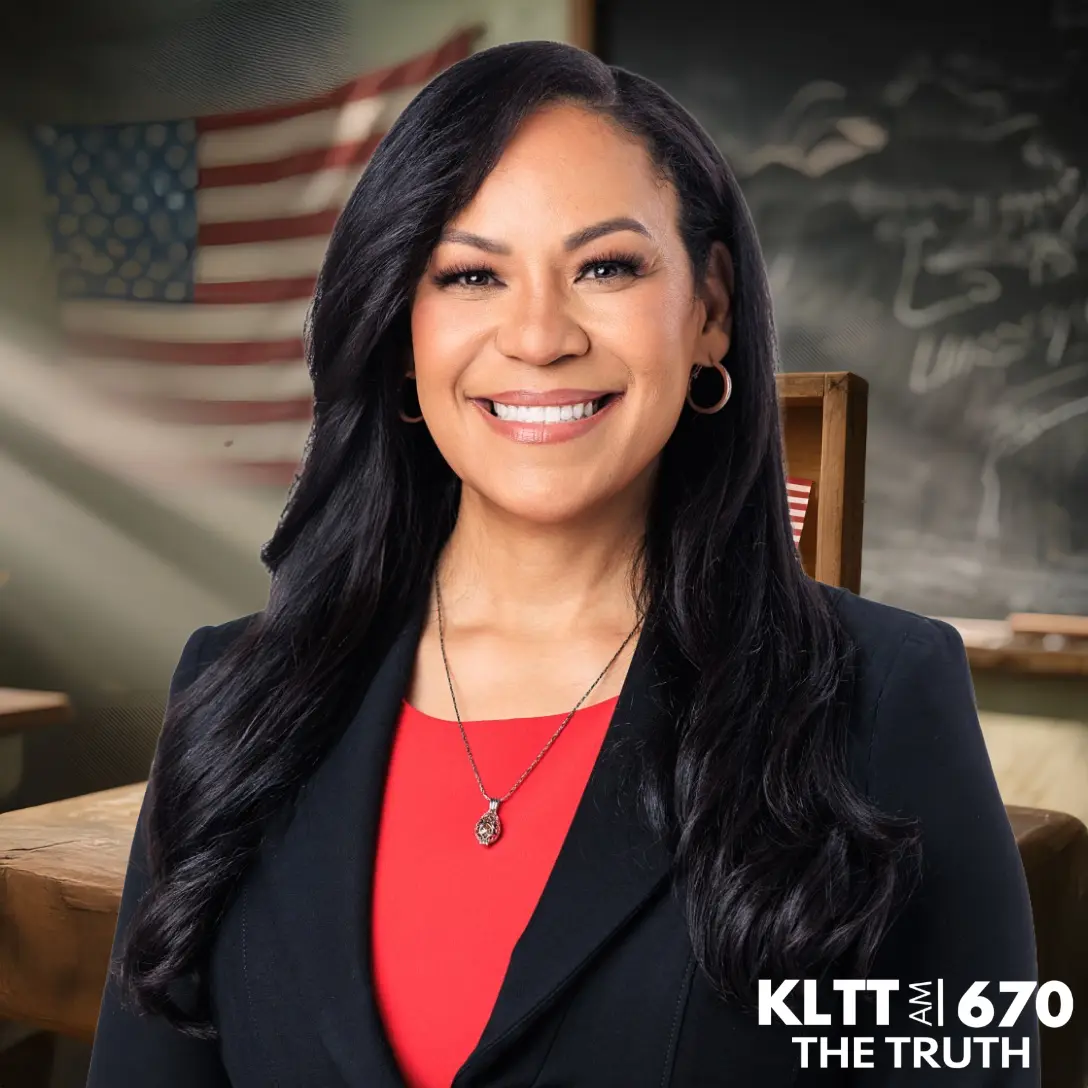
In this engaging conversation with Priscilla Rahn and Dr. Dedrick Sims, discover the power of belief, structure, and practice in transforming educational outcomes for young men of color. Delving into the cultural aspects that influence education, Dr. Sims offers a novel perspective on how these can be harnessed to create environments that nurture every child’s potential. Through personal anecdotes, the discussion provides a candid look at the challenges and triumphs facing educators today.
SPEAKER 01 :
Welcome to Restoring Education in America with Priscilla Rahn. She’s a master educator and author, leading the conversation to restore the American mind through wisdom, virtue, and truth.
SPEAKER 03 :
Well, hello, everybody. Welcome to Restoring Education in America. I’m your host, Priscilla Rahn, and I’m so excited that you decided to join the conversation today. I have a very special guest and a very good friend of mine that I have known for years, and it’s an honor to have him here today. I’m going to welcome to the stage Dr. Dedrick Sims. Hi, Dedrick.
SPEAKER 02 :
What’s up, Priscilla? It is really great to be in this position to have a conversation with you, and I look forward to the conversation.
SPEAKER 03 :
You know, you are such a hot commodity. I’m so glad that I was able to nail you down for a half hour conversation. But before we get into the conversation, I’m going to share a little bit of your bio with the listeners. Dedrick is an award-winning educator, author, and national thought leader in the development and advancement of boys and young men of color. He is the founder and CEO of the Sims-Fayola Foundation, a Colorado-based organization that operates across schools, communities, and policy systems to transform outcomes using his proprietary SIMS framework, a model that helps leaders design environments where young men feel seen, valued, and supported. Under his leadership, the Sims-Fayola Foundation has launched groundbreaking initiatives, including My Brother’s Keeper Denver. Above all, Dr. Sims is driven by a simple but powerful belief, Every young man deserves an environment that mirrors his brilliance, not his barriers. He’s married to the amazing joy, and he’s dad to three girls and grandpa to two. So, Dr. Dedrick, the most important question that I have is, what do your grandchildren call you?
SPEAKER 02 :
Wow. Kendall calls me Papa. And the others just call me, you know, if they want something, you know? They just, whatever that is, right? I told them all, I wanna be called El Jefe.
SPEAKER 03 :
You know, it’s always fun when I talk to grandparents to see like because there’s just so many grandparent names like Mimi and like you said, Pop Pop and Granddad. So it’s just it’s kind of my thing. I like to find out what people call you. Is it really different going from being a father to being a grandfather? How different is it?
SPEAKER 02 :
Yeah, I mean, it is different. I mean, I think there’s a lot more responsibility, immediate responsibility when it’s your kid versus when it’s your grandkid. For me, as a grandfather, my thoughts with them are always, how am I presenting a model for them to follow? What doors am I trying to open for them? And, you know, will they be proud of me when everything is done? I just try to be the best father I can to my daughters to help them to be the best mothers that they can to their sons. Like that’s kind of the way I engage with it.
SPEAKER 03 :
That’s amazing. So you and I met, I’ve lost track. It’s probably been what, 15 years ago or?
SPEAKER 1 :
2011, 12.
SPEAKER 02 :
I mean, it’s been a while.
SPEAKER 03 :
Yeah, I was still, I was an assistant principal in Brighton when you moved and we have a mutual friend, Chris Wetzel. Somehow, I don’t know how you… came in touch with Chris, but he, he told me about you and then we met and then you opened your charter schools in, in Denver. And then I, I have fond memories of your charter school because I came and worked with your boys singing. And I’ve, I came across a couple of old pictures and your boys were so cute and so sweet and they were such good singers. And we just had a fun time doing that work. And I just remember that, thinking, wow, you are creating your own pathway in education. And I’m just curious, like what inspired you to start your Sims, Faola, charter school and to bring you where you are today?
SPEAKER 02 :
Yeah, I just to step back for a second, I do remember that play and the things you worked on with the boys. Was it the Lion King?
SPEAKER 03 :
I think so. Yeah, it was.
SPEAKER 02 :
I have pictures as well, and that was pretty cool, and that was a really good time. Growing up, I didn’t have the best experience growing up, and the thing that was always consistently good to me was education. It was being in school, it was being in the classroom of Ms. Keese, of Ms. Farver, of Ms. Van Hoose, of Dr. Blakely, of Ms. Branch. uh it was a place where i felt safe and it was a place where a place where i felt seen and so i knew that education was the key or having an education understanding how you learn and how to process information was the key to craft your own world right to craft your own experience in your own lane and i i wanted that for for every one of my friends for everyone who i grew up with and and didn’t have uh the We all grew up in dire circumstances. And as I went through school myself, I saw that the experiences were very different. And particularly, they were very different for boys of color. And again, I felt like that if I could somehow replicate the experiences that I had for every young man of color, then I wanted to do so. You know, that’s what really drove the beginning and starting of the school. That school and this foundation is an extension of everything that I am as an individual and everything that I didn’t have growing up. And so it’s about, as you mentioned earlier, creating a space of belonging to where everyone can actually have an opportunity at the American Dream. And that was the impetus behind the school.
SPEAKER 03 :
I love that you named a couple of your teachers, because I think we can all name that one or two or three teachers who we love, that we remember. It was something about them that is memorable. And I think for every teacher, we hope that we leave that sort of legacy behind. to some kids. Where did you grow up? Where did you go to school?
SPEAKER 02 :
So I grew up in Pine Bluff, Arkansas. I went to Watson Chapel High School, and then I ended up going to University of Arkansas at Pine Bluff, HBCU for my undergrad. And then I went to University of South Alabama for two masters and a PhD, and I did some substantive leadership work over at Harvard. So that’s kind of my educational journey.
SPEAKER 03 :
Oh, no, you have to say Harvard. Listen, I took a summer leadership course, strategic leadership course through Harvard. And, you know, I’m putting that on every resume. I got the shirt. I got the Harvard. You know, yeah, yeah. It’s so fun to be able to go to an Ivy League. And I don’t know about you, but I think about my ancestors, you know, who were enslaved and who didn’t have the opportunity to go to school and to be now in a generation where I can go to Harvard. I can go to an Ivy League school and get a bachelor’s degree and a master’s degree and in your case, a Ph.D., It’s so wonderful. When you think about the work that you’re doing, would you say that you had a good education experience or would you say that there were some things missing in your experience that you hope to bring to kids in this generation?
SPEAKER 02 :
Yeah, I think that my experience was was exceptional for the crowd that I was running with and the people I grew up with. I was always a very inquisitive person. I was always wanting to learn more. I mean, there are stories my mother told me that on Saturdays when my brothers and sisters were watching cartoons, I was reading a dictionary or I was reading the encyclopedia and I was asking questions about those things. And so I think I was naturally drawn towards learning. So what that did, I think, is gave me an advantage. It gave me advantage that no matter what the educational experience was like coming from a teacher, I was already driven to dive deeper than what the teacher was putting out there. I remember always being the one who asked the most questions in the classroom. people would you know sigh when i started asking questions because they knew a question was coming and so i was naturally inclined to go get my my education but that’s not the case for every everybody right some people are just not driven that way and so that’s when the educational experience i think matters i think that’s what when what’s coming from the teachers and what’s coming from the school environment matters because that person is just going to take what is what is given to them And if that isn’t coming across in a very quality way, then they’re going to be an output of the level of quality and intention, attentionality that was given by the teacher.
SPEAKER 03 :
if you’re just tuning in my guest today is dr dedrick sims he’s the ceo and founder of sims faola foundation and he’s created uh charter schools and he’s doing amazing work around the united states not just here in colorado but all over the place you’re getting recognized every time i open my social media You’re getting some sort of award and I’m just like applauding you because as you said, you know, it’s nice to be recognized. You don’t do the work to be recognized, but it’s nice that people are recognizing the work you’re doing. With the work that you’re doing at the Sims-Fayola Framework, can you describe a little bit about what your framework is?
SPEAKER 02 :
Yeah, so this framework, I mean, it’s just really coming to be in terms of words, but this is something I’ve always done. So I’ve managed to capture my perspective on education and being an environment that is welcoming and create spaces of belonging so your brilliance can show. And so there are three kind of main pillars to the SIMS framework. The first one is belief, the second one is structure, and the third is practice. So belief is systems are designed to produce what the system designer believed in the first place. So for example, if you believe that boys are brilliant or people are brilliant, and then, so you’re gonna design a system and you’re gonna put structures in place, whether that’s policy, whether that’s budgets, whether that’s protocols in place to support your beliefs, and then you actually going to practice what you believe. And even though this framework was kind of developed in schools, because my background is education and nonprofits, it really goes across sectors, goes across industries. When you think about what do you want your output to be, starts with what do you believe about them first? And so when people say things that like education is broken, I’m 1 of the people in the camp that say, no, I think it’s producing exactly what is designed to do. And that’s why people could start charter schools or private schools or micro schools and their belief is different. And so they end up putting structures in place to support those beliefs and practices that support that. And then you get a level of predictability around what what the kid or what the person is going to end up end up doing. So that’s the SIMS framework. It seems simple in, I guess, in words, but it’s really hard to do because most people don’t storm a norm within themselves about what they really believe. A lot of times you will walk into a school or walk into an organization and you’re only practicing the structures that were put in belief by someone that you don’t even know, right? Or some system that you may not agree with. And so you end up having these outcomes that you throw money at trying to solve or trying to do all kinds of things to try to solve these outcomes that are not the outcomes you want when it’s really about what do you believe, what is your structure’s support and what are you actually practicing? And that’s the SIMS framework.
SPEAKER 03 :
I love what you said earlier when you were talking about your self-motivation. And we know not all kids have that same self-motivation that at an early age you were inquisitive And you mentioned the word, the mind. And when you and I were growing up, there was that United Negro College Fund commercial that said, a mind is a terrible thing to waste. I love that commercial. And I remember like it was yesterday when I was just in elementary school seeing that commercial and it was ingrained in me. I’m supposed to go to college. I’m supposed to learn. Like I can’t, I’m not going to let my mind go to waste. Someone else might let their mind go to waste, but I’m not going to let my mind go to waste. And that’s just stuck with me over the years. And when we look at the time from before, when our parents grew up during segregation and went to segregated schools, and then we have the civil rights movement, and then we have integration, and then we have that period of folks that you and i both know that were in that cusp where they went to segregated schools and all of a sudden they were pushed into integrate and that wasn’t a good experience for a lot of them but i’m looking at the data dedrick and we still have an achievement gap and we still have an economic gap and it’s one of the reasons why i wrote my book restoring education in america you can go on amazon and get your copy What do we need to do to restore education? How do we like decrease that education gap?
SPEAKER 02 :
You know, people talk about, you know, an achievement gap. And again, because I believe systems produce exactly what they’re designed to do. I don’t think it’s an achievement gap. I think it’s an opportunity gap. I think it’s an opportunity gap. I think it’s a belief gap. I think that if you believe that students, all students, regardless of background, culture, race, if you believe they all have the ability to achieve at high levels, then you will put structures in place that allow you to practice that. And because education is a social industry, it is easily able to bring in social ills, I-L-L-S. And so when our country, when our society, when our community, when we were fighting about things around who should have what and who should have access to this and access to that, unfortunately, that walks through the doors of our schools and our classrooms in the backpacks of our kids. They bring more in your classroom than just your homework. They bring what’s happening in the community. They bring what their dads and what their mothers are thinking and going through and what they believe in those values. And education is one of the few industries to where what’s happening in society can impact what’s actually happening in the classroom. And so with all of that in the classroom, Sure, you’re going to have people achieving at different levels, right? I mean, you also have socioeconomics that that’s part of that people who make different levels of income have different access to life. And so when you look at education as a whole, if you go back and look at education as a whole. You know, education is based on middle class white values. No judgment is just data, right? On middle class white values. And so when you have a culture or population, that’s that’s not raised in that. no matter what their color is, no matter what their race is, they’re going to have problems accessing that, those values, that axiology, if there are not scaffolds put in place. And so that’s why I say I don’t think there’s an achievement gap. I think there’s an opportunity gap and a belief gap about what people can achieve. So I think until that is addressed at a real level, you’re going to continue to have what we call an achievement gap. But it’s, you know, I think people have the stormy note within themselves and really understand what they believe about what a population can and can’t do and whose values and whose goals are the right ones to achieve.
SPEAKER 03 :
You know, I’ve heard this belief, like, about when you talk about white values. Like, can you unpack that for me? Because when I hear that, I hear, you know, kids say, oh, you’re speaking with proper dialect. So that’s a white value. Or you have to sit down and listen to the teacher, and that’s a white value. Is that what you’re talking about? Or is there something else that when you describe that, like, for example, students of color are – being put into a white valued education. What are some examples of what you’re talking about?
SPEAKER 02 :
What I’m saying, what I mean is that the values of of America, the values of our country are based on the founders of the country, right, which were not people of color. And for example, I remember when I was in Texas, I had a teacher whose class I was doing some observations in. So this teacher was a white teacher. She had her kids coming into the classroom, and the kids were at the door. And she had a practice that’s good on surface level to where she was shaking her hand as they come through the door. And as an educator, I understood that she was greeting them and trying to show this is a safe place. And really, as an educator, you also know that’s the chance when you get a chance to read a kid to see whether or not they’re going to be present with you that day. And so this kid was a Black kid who came in and did not shake the hand, did not look her in the eye the way that she wanted to. And the kid got pulled to the side. And everyone else went in the classroom. And then later, she goes out to talk to the kid. And the kid gets in trouble. The kid goes to the principal office because he did not want to shake her hand and look her in the eye. Well, after the class, I did some investigation myself and talked to the principal and found out that the kid came from a family that said that kids were not supposed to look adults in the eye. And his culture said that you don’t shake someone’s hand with this level of veracity that our Western world values, right? That’s a value, that you look someone in the eye and you shake their hands. Well, this kid was practicing what his culture and his family’s values were, and he got in trouble. He didn’t get in trouble and he didn’t sit in the office because he refused to do homework or refused to participate in the classroom or to do anything cognitive or academic. He did it because he was honoring his his values. And that’s just a micro example of what I’m talking about when I say that. You know, it’s the assumptions and the beliefs that you think people should have when they come into your school, your organization, your business. You know, you have to make sure that if you’re trying to produce a positive outcome for all that you in your design, that you are considering that. And this kid would not end up sitting in the office missing education and end up being behind and produce this achievement gap all because he didn’t do something that was that you value. But it wasn’t he didn’t value that. And you looked at it as disrespect.
SPEAKER 03 :
I mean, I can understand that. I have grown up in a biracial home, Asian culture where, yeah, you bow. You’re very respectful, you know, looking people in the eye. That’s a great example. I I think my only pushback to the narrative is that it’s not necessarily a white or black or. or yellow or red value. It is a Western. Yeah. Versus Eastern value. I, because, because what I’m starting to see socially is when we put the skin color label on some of these behaviors, then it forces us to prejudge people based on their skin color. I have personally felt like, you know, when we say something’s a white culture label, Like being on time, right? Like we hear people joke about that. Oh, you’re on time. That’s what, that’s a white expectation. No, that’s like a value expectation. So I don’t know. I mean, do you, do you draw the line there too? Or is everything what you’ve seen in your experience, like these are white values versus just cultural differences?
SPEAKER 02 :
Well, I draw, I mean, I draw from historical fact as well. I mean, I think about the time when African American scholarly research and history and Latino research were excluded because they didn’t follow certain protocols when we looked at how do you run a study and produce an outcome. outside of those cultures of color it was very very scientific it was very methodical about how you got where you went to your outcomes if they weren’t replicable then they weren’t valid or if they weren’t you know if they weren’t very uh concrete then they weren’t valid Well, when you look at Latino populations and cultures and African-American cultures, a lot of the things that happen, those cultures are spirit based kind of approximations and they still mean something. They still mean something to that culture. There’s still an outcome that’s valuable to that culture. But for a long time, African-American scholars and Latino scholars were excluded from academia because their research methods did not match the research methods of those who were. uh in charge and and and they were white scholars right so i draw from that as well and someone then said that this was the value that this was how how it should be well i mean but says who right according to your culture yes but what works in your culture may not work in my culture i think if we work to understand each other then we can find out how do we make what each other which each person values our ideology meaningful to the contribution of humanity
SPEAKER 03 :
Yeah, and I think you’re doing that. I’ve seen the work that when you deploy your, I don’t know, your ambassadors, I don’t know what you’re calling them, into this. What are they called?
SPEAKER 02 :
Loyola men.
SPEAKER 03 :
Feola men. Yeah, they’re amazing. They come into the school and they work with the boys and they teach them about choices. I think that’s such a valuable skill, especially when you’re dealing with middle school boys who they have to get that frontal lobe developed and it takes a long time for them to develop their choices. What would be your magic wand, right? If we’re talking about bringing people together because America is this big stew, right? And we have people with different religious beliefs, political beliefs, cultural experiences, and yet we’re all under one same roof in a school district and in a schoolhouse, yet we still see. But I love what you said about the philosophies. So we have all these smart people, Dedrick, in We’ve got all these PhDs downtown at the central office, and we still can’t figure it out. And I’m so perplexed why our public education system is like this, because there’s people like you who are speaking common sense about these pillars and having high expectations. Let’s just start there. I mean, I’ve asked you like five questions in one sentence right now. I know, but- Do you follow me? What’s the answer to this problem of all this fighting the social stuff? We can’t fix what’s going on socially. I can only do what I do in my classroom.
SPEAKER 02 :
So that, so this is this, this is a prime example, right? Your question was, what’s the answer? So the answer is going to be my value, my benchmark, and someone else’s answer is going to feel like it’s not, it’s not the right answer. So I don’t think, I mean, I don’t, I don’t have the answer. I have my answer. And my answer is. goes back to when you can recognize that in America, in this great melting pot salad, however you want to call it, that there is value in differences. When you fix a salad, you have lettuce, you have tomatoes, you have cucumbers, you have cheese, whatever it is. But each one adds a value to your salad. And without that piece, your salad is not complete. And so the same thing about education in our communities in our countries, unless you value that. And I think the issue is that no matter if you have a PhD or whatever it is, if you think that your way is the only way, if you think your benchmark is the only benchmark, then you’re going to have problems. You’re going to exclude people. It’s, it’s, it’s inevitable. And when you exclude people, then you’re going to have. You can call it an achievement gap. You can call it whatever it is. But for me, it’s an opportunity gap. And I think that’s the issue, right? We’ve thrown money at curriculum. We’ve thrown money at pedagogical practices. We’ve thrown money at charter versus private versus public. We’ve had these arguments. And to me, it all comes down to respect. Understanding differences, accounting for those differences, but most importantly, realizing that those differences have value and you got to figure out what the value is to what you’re trying to to what you’re trying to solve.
SPEAKER 03 :
Where do you draw your value system from? For me, I draw my value system from God. People may not believe in God. I’m a Christian. Like, where do you draw your value system from?
SPEAKER 02 :
Yeah, I’m definitely Christian. I draw it from Christianity. And when you look at the practices of Jesus, I mean, it’s clear that differences were valued and he went to places that people thought he shouldn’t go. He associated with people that they thought he shouldn’t associate with. And yet, you know, he. try to show that there’s value in differences and where you think you are strong you’re weak and where you think that this is a weak point it’s a strong point and when you start to not value people like a moses who stuttered or you know a david when you start not to value people those are the very people who you actually need in order to move the calls forward so yes christianity is one and then two is just from my own experience it’s like i grew up a very hard life And I saw a mother who was addicted to drugs, yet was probably one of the most humane people when it comes to taking care of people who didn’t have. And she forced us to go take people plates and feed them. And she overcooked in order to feed people who were drug users, alcoholics, people who were thieves. These were people who I all grew up with. But yet each one of them had a story. And you found out that They ended up in the place they ended up in, because their story wasn’t was incomplete. Someone didn’t value what they brought to the table. And at that point, Maslow’s hierarchy of needs kick in. You got to have someone to stay. You got to have something to eat. And if no one will employ you, then you’re going to do what you need to do to, you know, to make it work right. You’ll start selling drugs. You start doing this. And some people today call that disruption.
SPEAKER 03 :
Well, I would agree that we need to start seeing people the way God sees us and value all humanity. And I think that’s beautiful. But my friend Dedrick, I’m looking at the time and we have to land our plane. So thank you so much for your time. I love the conversation. We need to do this again. And to my listeners, please catch me next time. And remember, educating the mind without the heart is no education. So seek wisdom, cultivate virtue, and speak truth.
SPEAKER 01 :
Thanks for tuning in to Restoring Education in America with Priscilla Rahn. Visit PriscillaRahn.com to connect or learn how you can sponsor future episodes to keep this message of faith, freedom, and education on the air.
