
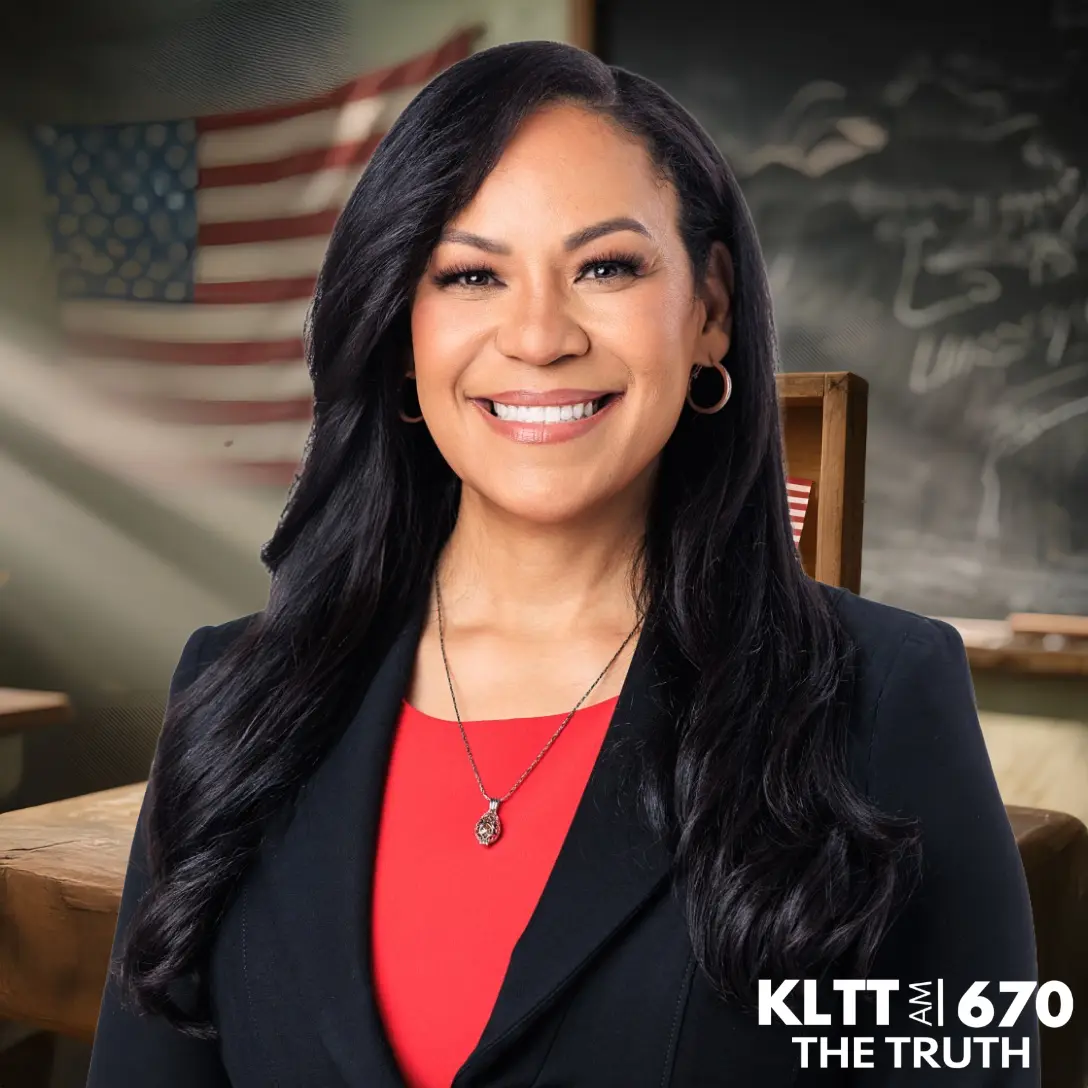
Join Priscilla Rahn in an insightful exploration of American education as she navigates through her personal journey and the larger context of the country’s educational system. This episode delves into Priscilla’s unique family background, growing up with a military father and a resilient mother from Korea, and how these experiences shaped her views on education and society. Discover her reflections on the evolution of teaching, her encounters with the teacher’s union, and her perspective on social movements impacting schools today. Uncover the transformative power of aligning educational principles with cultural heritage.
SPEAKER 01 :
Welcome to Restoring Education in America with Priscilla Rahn. She’s a master educator and author, leading the conversation to restore the American mind through wisdom, virtue, and truth.
SPEAKER 02 :
Well, hello, everybody. Welcome to Restoring Education in America. I’m your host, Priscilla Rahn, and I’m so excited that you’ve decided to join the conversation today. Happy New Year. I hope you had a wonderful and safe New Year, and we welcomed in 2026. I had a great 2025. It was amazing. My husband and I were talking about all of the blessings that we had experienced in 2025. And my husband, Darren, he’s an amazing musician. And he He has been working at our church, Brave Church, and then he did a five-week tour with Brian Culbertson, the jazz tour, 27 shows on a bus tour. It was amazing. He had some success on the Billboard charts. And for me, I wrote my book and self-published. It’s called Restoring Education in America, which you guys can get on Amazon. I self-published. because it was quite expensive and would have been a really long process to hire a publisher. And I thought, you know, I can figure it out. So and then in 2025, I was offered this radio show. And I know you guys are used to hearing me talk to guests across from me, whether they be educators, parents, thinkers, policymakers. But I have decided it was going to be just me because I never did do a solo show where I talked about who I am and why I’m here. So I am going to share a little bit more about myself, how we started the show, and just so you can have a little bit of context. So… I was approached a few months back by my friend from AM 670 KLTT. Her name is Rachel Mays, and she is the operations director at the radio station. And She said, you know, it was right after Charlie Kirk’s assassination and she and the GM were talking about show programming and how important the conversation around education is and just being able to share ideas and debate. It’s a skill that we really do need to teach children. And she thought, Priscilla, you’re in the education space. You’d be the perfect person to have a radio show. and let’s call it Restoring Education in America. And at first I was like, that’s exciting, but I don’t know anything about hosting a radio show. I mean, I’m a talker, but I don’t generally talk to myself for half an hour. She says, no, you’d be great. Let’s just try it out. And it has been such an amazing experience for me to have conversations with people that are in the education space and And just expose a lot of the things that are happening, but also talk about what we need to do to restore education. So a little bit about me. I am an Army brat. My dad was drafted in the Army when he was 18. And he’s originally from King Street, South Carolina. And my dad was raised Catholic. And they had tobacco farms all around the area. And my dad, when he was drafted, went to Vietnam and he served our great nation for almost 30 years. But my dad’s the one who taught me how to stand for the pledge, how to love our country. Now, my mom, she was born in Seoul, Korea, when there was still a unified Korea. She was born in 1938. And when she was 12 in 1950, when the war started, her education was interrupted. And she has an amazing story. She has a memoir out called Morning to Morning. You can find that on Amazon as well, but it’s her firsthand experience of what it was like being in the war and coming out of the war and coming to the United States. So, you know, I was really fortunate to have both my mom and dad You can imagine being raised by a tiger mom and a military dad, how I grew up in a very structured home with high expectations. And they were Christians. We went to church together. And I just loved the example that my mom and dad gave me. But actually, when I was a senior in high school, I was a very good student. I was in all honors classes, AP classes. But I… did not go on any tours to college campuses. My parents didn’t know how to navigate the college application process. And I remember my high school counselor stopping me in the hallway one day and saying, Priscilla, this fall, you’re going to go to Central Texas College, which was the little junior college in my city. Everything’s paid for. You just need to show up, declare your major. And I thought, wow, this high school counselor cared enough, realized that I might have fallen through the cracks. And she talked to somebody at the junior college and made sure that I was able to take the next step in my education. And that’s how I ended up going to college. And I decided eventually that I was going to become a music educator because I My aunt, who was an educator in Killeen Independent School District, her name was Rosa Hereford, and she is an icon in the city. In fact, they named the rec center after her, or the community center, I should say. It’s the Rosa Hereford Community Center. And she told me, Priscilla said, you know, you’re a natural at music. You should do what comes natural to you. And that started my journey. I ended up transferring to Texas Christian University where I received an amazing education, but it was very, very expensive. I didn’t know then that You know, listen, college education is some in a lot of ways can be a rip off, meaning you can spend a lot of money on a degree when you don’t have to spend a lot of money on a degree. But I will say for the money that I paid, I got an amazing education, an amazing experience. I wouldn’t trade it, but it did take me, what, 22, 23 years to pay off my student loans. But I was raised in a home where my father did not talk about race and talk about people according to their skin color. And I just observed my parents loving everybody and taking people into the home and homeless people and feeding them and giving them a place to sleep. And Eventually my dad became somewhat of a chaplain, not officially, but he would do Bible studies on the military base. And then my parents got into nursing home ministry. And that was their calling was going into the nursing homes every Sunday and doing church service for the senior citizens. And so I just always watched my parents being selfless and loving people. So when I became a teacher and, I started seeing that not everybody was raised that way. Not everybody thought that way. And education started changing. When I started teaching 32 years ago, I thought teaching was just going in there and teaching my content and being a master at pedagogy. A couple of years into being a teacher, I was persuaded to join the teacher’s union really based on fear. I was told, oh, Priscilla, if you’re not in the union, you know, the principal could fire you. And if you get in trouble, you know, you could lose your job. And so I was afraid because if I didn’t have the union backing, I wouldn’t have any liability insurance and protection. So that’s what started my journey into being a member of the teachers union. But again, this was many years ago where being in the teachers union meant you got a education publication once a month and you got discounts on your car insurance and different things. And you would go to conferences and workshops and it seemed pretty benign. But as time went on, the social justice movement started creeping into the profession and And I remember probably about 20 years ago, I was in a professional development training and the trainer said, OK, all the teachers stand in a line. I’m going to start listing off some things. And if this is an experience you’ve had, I want you to take a step forward. Um, or if it’s not, you take a step back. Okay. So for example, if you’ve gone to the grocery store or a department store and you were looking for pantyhose that said nude, that it was the color of your skin. And I thought, Oh, that’s interesting. I never thought about that. Or, um, If you were raised in a divorced family, take a step back. Or if you don’t know your father, take a step back. Or if you were trying to find a foundation color to match your skin and you couldn’t find it, then take a step back. So it was these types of questions that were socially based, but also based on skin color. And that was literally the first time that I had to stop and think about my everyday life. And I just didn’t go through life thinking about a lot of these things as determining my life as being good or bad. And so that was the start. But fast forward, really, it was when COVID hit in 2020, when everybody started to see, you know, the mask come off of public education. we looked behind the curtain so to speak you know and we started to see how teachers were speaking to students how they were bringing their own personal viewpoints into the schools and it became really disturbing for me now My education philosophy has been that children learn best when they see themselves in the curriculum. So what does that mean? It’s more experiential. What’s going on in your community that you can connect with? What are the holidays that your family celebrates? What are the restaurants that you love to go to? Where do you like to shop? And what are the clothes that you like to wear? These are like cultural things. And we’ve lost that. We don’t speak to each other like that. So professional development in our school started changing where The trainers would use language like oppressed and oppressor. If you’re white, you’re systemically racist. There’s nothing you can do to change it. And I had one white female trainer tell me, well, I accept that racism is in my DNA, quote unquote. And I was shocked. Because I thought, what does that even mean, racism is in your DNA? And she literally believed it. And I think she felt like she needed to say that to me because I’m a Black educator. And I didn’t like that the trainers were saying, if you’re Black, you’re oppressed, you’re basically you’ll never be equal. You’re going to have to deal with the fact that the world is not fair to you. And that just went against everything that I knew about our country and our history. Of course, we had very ugly times in our history, slavery. Of course, we know that there was a civil war fought, but that civil war was fought because we had individuals who who said, you know, we’re going to hold ourselves accountable for what our constitution says, that all men are created equal. Are we Christians? Do we really believe this, that we have inalienable rights that come from our creator? I’m really upset about the fact that we have generations of students who hate our country. They hate law enforcement and authority. They are not capable of handling disappointment. We went through a whole millennial generation of everybody gets a trophy. And we have an entire welfare system that rewards divided homes and encourages women to marry the government instead of marrying the father of their children and having intact homes. So let’s talk about that. Because I’m one of the privileged ones. When you talk about privilege, I was raised by a father and mother who were married at the time of my birth and who stayed married at the time of my graduation. And they were married until my father died last year. So they were my example. And that’s really what privilege is, is having both of your parents together. And when you look at the data of intact children, Black families, there was less than 30% of Black children born to single parents before the Civil Rights Act. And then after that, we can see that almost 70% of children are born into single parent homes. So this statistic does impact mental health of children and um, their ability to create wealth. Um, it, it impacts father, fatherlessness impacts social, emotional wellness. Um, it, it affects crime. It affects so many things. And, you know, when I, when I decided that I was going to start speaking out in education, I was not received very well. I have spoken up in faculty meetings. I have spoken up in school board meetings. I have talked to everyone that is a decision maker in a school system from school board members to principals to superintendents. I’ve tried to explain the things that are going on in a classroom And I remember being so upset when my school district made a public statement that, well, there are no furries. There are no children dressing up like cats in our schools. And I’m like, of course they are. I have pictures. I have proof. And this is the thing. In the public eye, people on the left were saying over the last five years that These things are not happening. Grooming is not happening in our schools. Furries are not in our schools. There’s not indoctrination happening in our schools. And I’m going to tell you right now, I have the receipts. I have emails. I have photos. I have recordings of professional development that prove otherwise. And When I started seeing parent groups rise up, moms, mama bears, papa bears, rising up and going to school board meetings and saying, we are no longer going to co-parent with the government. We are no longer going to stay silent. Our kids are no longer safe. I mean, look at the high, high number of young children who are being pulled away from their parents, who are being told that teachers are the trusted adult. By the way, let me put a tack in that for a second. Because in our professional development as public school teachers, we are taught to use the language of we are the trusted adult. We are taught to identify students who might not have a lot of friends and who might be quiet or who might be on the cusp and they need a little support. If something’s going on at home, go be the trusted adult for that student. Now that can seem pretty benign at the beginning, but now I’m looking back and I’m thinking, Wow, that was the indoctrination of teachers because we were not taught, call the parent, set up a meeting, take them a coffee, go do a home visit with them and sit down and say, how can I partner with you, parent, to help support your child at school? But instead, what you started seeing was students not trusting their parents. They were going to their teachers and teachers were taking advantage of that. And if you look at testimonials of parents whose children have been transitioned or who have been successfully taken away from their parents by the legal system because the school system, the government has figured out a way to strip children away from their parents. This is a very, very dangerous movement. And I would encourage any teacher to be thoughtful about how you are talking to students. They’re not your kids. This is another thing. We are taught as teachers to say, our kids, our kids. Sounds endearing. Oh, I care about my kids. but they’re not our kids. They’re our students. They belong to their parents and we have a job to do. And that job is when those students come to us, we protect them. We care about them. We teach them the content and we support them on their journey of learning and becoming outstanding citizens. And then we send them home. but they’re not our kids. And that was language, I’ll admit, I was using unknowingly being a part of this movement to devalue parents. And it’s no wonder we have low parent turnout at back to school night and parent teacher conferences. A lot of parents don’t feel comfortable coming to the schools. There was a time where parents were called domestic terrorists and ostracized. And especially, I’ve noticed this with fathers who were not made welcome. If you’re a divorced couple, schools care more about moms. They cater more to moms than they do to dads. So I finally last year at the beginning of the year when President Trump signed his two executive orders to end DEI and the Department of Education, I said, you know what? Now is probably the best time for me to start writing my book. And I’ll have to admit, as a music educator myself, I felt like I am not an English teacher or literacy teacher. I should not be writing a book. That belongs to scholars and researchers and English teachers. And then I said, no, Priscilla, you’ve been a principal. You’ve been a teacher evaluator. You’ve been an educator, national board certified educator, master teacher, starting 32 years. You have something to say. And so I started writing my book. I would get up early in the morning before school and I would write and then I would come home after school and I would write till it was time to go to sleep. And weekends I would write and spring break I would write and the summer I would write. I would just write every time I had time. And so my book, Restoring Education in America, is an inspirational teacher toolbox and I went back and forth about the inspirational part because I thought if I’m going to market this book to the masses I can’t talk about my faith and then I thought well that’s the problem if you don’t talk about your faith that’s what’s missing in this whole conversation so I then said, well, let me ground each concept in a biblical perspective. And then I decided to put it at the end of every chapter. And then I thought, Priscilla, why are you putting it at the end of every chapter when it’s the foundation of every chapter? So then I moved every scripture to the beginning of every chapter. So let me explain a little bit more about my book. So there’s 18 chapters. The reason why I decided to do 18 chapters was one chapter a week for a semester, since there are 18 weeks in a semester. Each chapter is relatively short. So a teacher could read it on their lunch break, 15, 20 minutes. And then at the end of every chapter are a series of reflective questions. And I have seen that reflecting is a very effective way of improving your teaching practice because Someone told me, a mentor told me, Priscilla, a master teacher is not a perfect teacher. A master teacher is a reflective teacher. You must constantly reflect on your practice. And if there’s a new idea, it should be applicable at the very next class. You should be able to affect change in your teaching practice immediately. So my questions are… designed to be implemented right away. And then so I started thinking about what are the most important concepts that I feel will transform a teacher’s practice in the classroom. And so I started with a very important foundational chapter. My first chapter is called Father figures, the foundation of every classroom. So why? Guys, look at our world. Fatherless homes, the foundation of the family. So goes the father. So goes the family. So goes the community. The lack of fathers in our society has attributed to the problems that we have with discipline and with mental health, with crime, with income. All of these things are connected. But in addition to that, it’s God’s design to have fathers as the head of the household. When things are in order, then the whole community is in order. It’s really a shame that we have women who have devalued men and devalued the father of their children who’ve said, we don’t need a father in the home. I don’t need a man. and downplaying the importance of fathers. But when you see a father who is walking in his role that God has created him to be in, and he loves his wife as Christ loves the church, and he loves his children, and he’s a provider, and he’s a protector, then everybody else in the family feels secure. I can attest as a wife that When my husband is in his role that God has created and designed for him to be in, I feel more secure. And that is the beauty of the family. And children feel safe and secure. And there is cohesion. And a mother is able to walk in her design as a Proverbs 31 woman. And together, the husband and the wife walk. will teach their children and raise them up in the way that they should go. And they will not depart from that. And they have respect and they love their country. And we talk about patriotism and the Latin roots of Potter, no wonder we have a generation of young people who hate America. And we need to get back to putting fathers in the home. I’m looking at the time, you guys. I’m going to have to land my plane. But to be continued, we’re going to talk a little bit more about the different chapters in my book. But go to Amazon, get my book, Restoring Education in America. If you like what you’ve heard today, please go to my website, PriscillaRahn.com. And we need sponsors to keep this show on the airwaves. So please consider becoming a donor or a sponsor of the show and catch me next time. And remember that educating the mind without the heart is no education. So seek wisdom, cultivate virtue, and speak truth.
SPEAKER 01 :
Thanks for tuning in to Restoring Education in America with Priscilla Rahn. Visit PriscillaRahn.com to connect or learn how you can sponsor future episodes to keep this message of faith, freedom, and education on the air.


