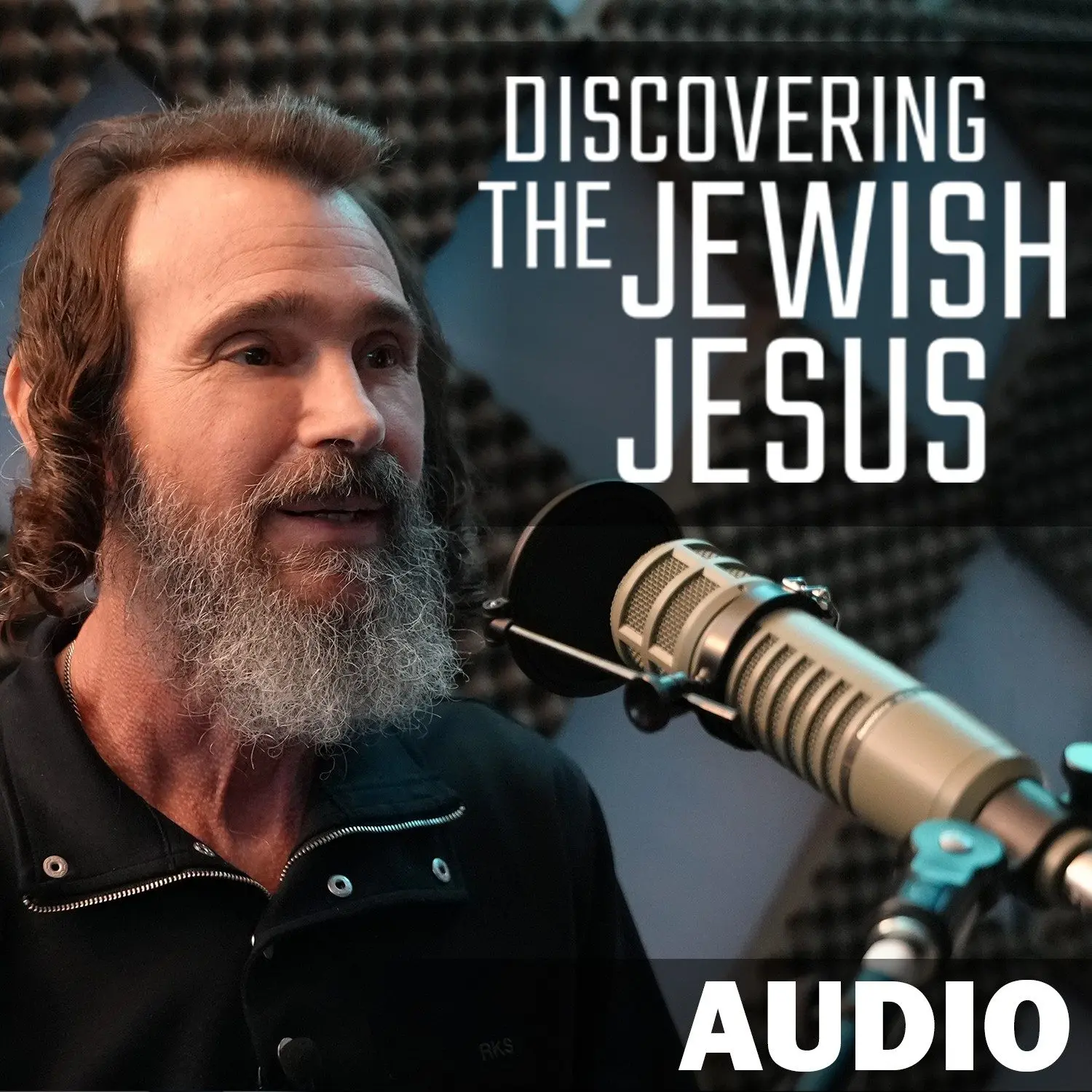

Join Rabbi Schneider and Dustin Roberts as they embark on a profound exploration of the Book of Romans, diving deep into the eternal truths of the gospel of God. As they journey through the scriptures, discover how the good news of salvation has foundational roots in the Hebrew Bible. With insightful discussions and personal reflections, they invite listeners to see the interconnectedness of the Old and New Testaments, emphasizing the continuity of God’s redemptive plan. In this episode, Rabbi Schneider sheds light on the cultural challenges faced by modern-day believers and the importance of maintaining gospel truth in a
SPEAKER 03 :
You know, we live in a generation where people think that feeling sorry for the underdog is the highest expression of truth. And if you don’t express empathy for the underdog, then somehow you become an immoral person.
SPEAKER 01 :
The book of Romans is one of the most simple and straightforward expositions of the gospel that we have. And I’m really enjoying this series with Rabbi Schneider live with me here in the studio as we’re going through the book of Romans. The series is titled Exploring Paul’s Epistle, the Book of Romans. And if you’d like more information about our ministry, you can visit us online at discoveringthejewishjesus.com. Now, we’ve got a lot of great content to go through with Rabbi today. And we started in Romans chapter 1, verse 1, and we just barely got through the first verse, Rabbi.
SPEAKER 03 :
We left off with the phrase, gospel of God. It begins, Paul, we say in Hebrew, Shaul. Paul, or Shaul, a bondservant of Christ Jesus, called as an apostle, one that was sent out, set apart for the gospel of God. And I’m not going to take time to go review everything that we covered last time as we focused on the words apostle, bondservant, set apart. I just want to dive into fresh territory today and focus on the last three words of verse 1, gospel, of God. Most of you know that the word gospel, it means good news. But we ask ourselves, what exactly is the gospel? And if we give the strictest definition of the gospel, it means it’s the message of salvation through the atonement of Messiah Jesus. But Dustin, The word gospel, for example, oftentimes Yeshua uses the word, go preach this gospel of the kingdom. Of God. Yes. Here’s the gospel of God. Yeshua refers to it as the gospel of the kingdom. And the gospel in entire explanation is everything that Jesus taught. Everything he taught, it’s all part of the gospel. Again, most basically, you could say the gospel is about the death, burial, resurrection, and ascension of Yeshua and the sacrifice that he made that gives salvation. But more fully, the gospel that we carry includes the full teachings of Jesus. He said, go teach this gospel everywhere. So whenever we’re teaching people about the fact that God loves us and how to live for him, how to relate to him, how to understand his ways, that is the gospel.
SPEAKER 01 :
It reminds me of the Great Commission where Jesus said, teaching them to obey everything. Everything.
SPEAKER 03 :
I’ve commanded you. Amen. Amen. There it is right there. Good word. So I hope that springs clarity to some of us today that might not have fully understood what is the gospel. And then he continues in verse number two, and Paul says, “…which he,” referring to the Father, “…which he promised beforehand through his prophets in the holy scriptures concerning his Son…” Verse 3, who was born a descendant of David according to the flesh. So let’s go back to the beginning of verse 2. Number one, this gospel, this good news, this revelation of the kingdom of heaven. By the way, gospel is also referred to as the kingdom of heaven. So it’s referred to in Jesus’ teachings, depending on whether you’re reading Matthew, Mark, Luke, or John, as either the kingdom of God or the kingdom of heaven. And so, this gospel was announced or promised beforehand through his prophets in the Holy Scriptures. Now, what’s the point? The point is that many Christians don’t know the Hebrew Bible. And Paul said that the gospel of Jesus was promised in the Holy Scriptures, and the Holy Scriptures he was referring to was what we call in Judaism the Tanakh, or as Christians, many people refer to it as the Old Testament. But think about it. All the apostles didn’t have the New Testament.
SPEAKER 01 :
They only had the Old Testament.
SPEAKER 03 :
They only had the Old Testament.
SPEAKER 01 :
And so in the Old Testament, there’s certain scriptures that promise this God. What are those scriptures, Rabbi?
SPEAKER 03 :
Well, there’s so many. I mean, you think of, first of all, about the promise of a Messiah being born. You know, the book of Isaiah, unto us a child is born. Unto us a son is given. And then the prophet Michael, where he would be born. Isaiah 53, what the Messiah would do, he would take our sin, our sickness, our infirmity, our emotional wounding in his own body, and that he would release to us in the place of the suffering, the sin, and the sickness, that he would take that from us and release healing and wholeness into our lives. And so all this is promised in the Hebrew Bible. Now, the thing that I think is most critical is that many Christians today, Dustin, they’re not really convinced that Jesus is the only way to heaven. Deep down inside, many believers, those that call themselves Christians, are not fully convinced that Jesus is the only way to heaven.
SPEAKER 01 :
Yeah, they say, I believe in Jesus. But when you question them, like, is he the only way? Oh, well, this person’s good. Yeah. And it’s hard to conceive that someone’s good wouldn’t be in heaven. Exactly.
SPEAKER 03 :
Exactly. And, you know, we live in a generation where… Empathy has been weaponized, meaning that people think that feeling sorry for the underdog is the highest expression of truth. And if you don’t express empathy for the underdog and champion the underdog, then somehow you become an immoral person. And so because of this cultural pressure that people are feeling to side with the victim, to side with the underdog, they’ve let go of truth. and instead replace it with their own gospel. And this involves what we’re talking about right now. They look at good people that, you know, appear good people, people at work, people in their neighborhood, that are in the natural good people. I mean, they are friendly. They do go out of their way to show kindness. Some of them even get involved in moral causes, but they don’t believe in Jesus. And so, many Christians think, well, this person wouldn’t go to hell. Would they? Could they? Because, look, they’re a good person. But the value of knowing the Hebrew Scriptures, and this is what Paul is saying here, is that the gospel of Christ was promised in the Hebrew Scriptures is because when you know the Hebrew Scriptures, you begin to understand that there is no forgiveness of sin without the shedding of blood. And that the only one that ever shed blood for the sin of humanity is Jesus. And when you understand the Hebrew Bible and the whole sacrificial system outlined in the Hebrew Bible, how on Yom Kippur, for example, the highest holy day of the Jewish year, when the high priest would go into the Holy of Holies, first in the tabernacle and later in the temple, and offer the blood of a bull and a goat, pouring it upon the mercy seat, which was over the Ark of the Covenant, and then God would overlook the sin of the people for the year. When you see these patterns of blood atonement in the Hebrew Bible, and recognize that the only way the Lord ever forgave Israel’s sin was through a blood atonement, then you can fully appreciate the sacrifice of Jesus. So Paul is saying here that who Christ is and what he’s come to do was promised in the Hebrew Bible. And beloved church, when you know the Hebrew Bible and get rooted doctrinally in the Hebrew Bible, you’ll become fully convinced that Jesus is the only way to heaven. And when you’re fully convinced of that, there’ll be a new power on your life.
SPEAKER 01 :
Instead of being caught up in being good to make it to heaven and through works, we understand that it’s the gift of God. Even Jesus, Rabbi, he said, why do you call me good? No one is good but the Father in heaven. I mean, he was basically making this statement that goodness… is not what gets us there. It’s that sacrifice to cover our sin like you were just talking about and receiving that that gets us into heaven. In the Old Testament, Rabbi, I think about the covenants. If you are not in covenant with God, you are treated by God different than if you were in covenant with God.
SPEAKER 02 :
Yeah.
SPEAKER 01 :
I think about like Abraham and like his wife, Sarah, with the king of Egypt. And Abraham lied and said, this is my sister. And God’s like punishing the king of Egypt, yet Abraham lied about it. But he’s supporting Abraham because there’s this covenant difference. And it wasn’t the goodness of someone that caused God to respond in a certain way. It was whether they were in covenant or not.
SPEAKER 03 :
Amen. Amen. So I’m just going to repeat the phrase that we’re focused on and we’ll move on. But notice once again, listen to what Paul said. He’s speaking about Messiah. He’s speaking about the gospel. He’s thinking about Christ. And he says in verse 2, which the Lord, in other words, speaking of these things, which he promised beforehand through his prophets in, you could say there, the Hebrew Bible. Paul says here, holy scriptures. That’s good. But the only holy scriptures there were at the time was the Hebrew Bible. So, to your point, and the example that you just gave, Dustin, about God’s favor towards Abraham, which was not the same favor upon those that were outside of his covenant, we learn… about how God treats us and who He wants to be to us when we’re in covenant with Him through the Holy Scriptures or the Hebrew Bible. So, for example, one of my favorite scriptures is when David said, “‘Your gentleness has made me great.'” And when I think about the Lord’s dealings in my own life and his long suffering towards me and his mercy and his favor and his gentleness towards me, it’s what allows us to get strong. But we learn who he is to us. Through the Hebrew Bible. Yes, we learn in the New Testament, 100%. But if we only have the New Testament, we’re going to really miss out on a lot that the Lord wants to flesh out in our hearts.
SPEAKER 01 :
Amen. And now before we continue our conversation, I just want to thank everybody today who’s listening to Discovering the Jewish Jesus. we want to invite you to go to our website. It’s discoveringthejewishjesus.com. We’ve got a lot of articles on there that’ll help you dive deeper into the Word, just like we’re doing today. And just for example, Rabbi has one that’s titled Set Apart, and it refers to Paul’s life and his writings in Romans. And if you want even more teaching on this book of the Bible, then check out our podcast. Just search Discovering the Jewish Jesus Podcast. on YouTube. And we really believe that you’ll be blessed by these resources. And they’re all thanks to your support. We really couldn’t do what we do without you. And if you’re feeling the Lord leading you today to support us, and you’d like to give a financial gift, you can give online at discoveringthejewishjesus.com. That’s discoveringthejewishjesus.com. And now we’re going to jump back into our study on Romans. And Rabbi, you just mentioned David. And here he is in the next verse.
SPEAKER 03 :
God says he’s revealing the gospel to us concerning his son in verse number three, who was born of a descendant of David, according to the flesh. David is the most celebrated figure in Judaism. And you go to Jerusalem today and, you know, you see the village of David. You see the menorah that, you know, was so much a part of Judaism during David’s time. David Melech, the king of Israel, just such a beloved figure. figure within Judaism. And Jesus said in the book of Revelation, at the very end of the book of Revelation, Yeshua said that he was the offspring of David. So Jews today that don’t believe in Jesus are still looking for the Messiah to come as a descendant of David. The point is, is that God had a very specific blueprint of how the Messiah would come, from where he was going to be born to what genealogy he was going to descend from, and David is right at the top of the list. Interestingly, the first verse in Matthew begins like this, Matthew 1.1. This is the genealogy of Jesus Christ, the son of David, the son of Abraham. We have messianic prophecy that causes us to see that Jesus fulfilled that which has been promised. Jesus came as an offspring of David, and he was declared—he wasn’t just a child that was born. He was declared, in the next verse, the Son of God, with power by the resurrection from the dead. And that gets back to what we spoke of earlier in the series when we talked about an apostle in the first verse, that an apostle’s ministry is oftentimes accompanied with signs and wonders. Right. to the gospel that true apostles preach, that it’s the real deal. And we talked about how missionaries, when they go to the mission field, oftentimes have ministries that have exploded because there were signs and wonders accompanied with their ministry, even as we’ve observed when we’ve traveled the world and preached the gospel and people get healed, etc. So there was a miracle that took place in Jesus’ life that confirmed to the population that he was who he claimed to be. He was the Messiah. In other words, if Jesus wouldn’t have been resurrected and then presented alive to those that knew him, the movement would have never got off the ground. Right. But because a miracle, the miracle of miracles took place, bam, it exploded, and the apostles lost their lives because they wouldn’t deny what they knew to be the truth.
SPEAKER 01 :
Right. Wow, that’s so good. So without the resurrection, there wouldn’t be any power to our faith. There’d be nothing. Jesus would be dead.
SPEAKER 03 :
Yeah, yeah, there would be nothing. There would be nothing at all. We’d be lost and trapped in the world still if Jesus hadn’t risen from the dead. And the same one that raised Jesus from the dead. is still raising people from the dead today. In other words, he’s raising us from the dead every day because his Spirit is imparting resurrection life to us. Remember at Lazarus’s death, they were crying, and they said to Jesus, when Jesus finally came, Lazarus had been dead for several days, and finally Jesus shows up where his body was laying, and they cried.
SPEAKER 01 :
He would have been here.
SPEAKER 03 :
Yeah, if you would have been here, he wouldn’t have died. But they said, we know, though, that he’s going to be raised from the dead at the last day. And Jesus said, I am the resurrection and the life.
SPEAKER 01 :
Wow. That’s powerful. It is powerful. That is powerful. Right now. I am right now. And we have hope that we have a future even after death because Jesus was raised. We have the hope that we’ll be raised. Yeah.
SPEAKER 03 :
But even also is like every day, every day as we look to the Lord, resurrection life right now, every day. is being imparted into our inner man. Jesus said, if you eat my flesh and drink my blood, you have life in yourself. And eating his flesh and drinking his blood means receiving him, receiving him, receiving him, taking him into our soul through depending on him, through crying out to him, through longing for him, through talking to him, through depending on him in our weakness. As we do that, as we look to him, we’re receiving him, and as we’re receiving him, power, resurrection power, Dustin, in our listeners today is being imparted to us every single day, the same power that raised Jesus from the dead.
SPEAKER 01 :
This is why, as you say so much, Rabbi, when we get up in the morning, we need to start our day talking to God in the Word of God, because the Word of God is alive and powerful. It’s actually imparting that life and energy, because there is life in God’s Word.
SPEAKER 03 :
Amen. I mean, there is. There are absolutely—I mean, I can’t state it as deeply as is the truth. The only hope we have to be whole— The only hope we have of truly coming to a place of completeness in our lives is by fully receiving Jesus. And even as Yeshua made Lazarus whole when he said, Lazarus, come forth, he is making you and I and his people whole today as we truly cling to It’s a Hebrew word for cling. It’s called devukut. It’s one of the primary concepts in Hasidic Judaism. Some of our listeners might know that Hasidic Judaism is an ultra-Orthodox form of Judaism that is tied to the mystical as well as through observance to God’s Word. Of course, obviously, without Jesus, no man will see the Father, but there’s still a lot of beautiful things within Hasidic Judaism, and one of those things is called devukut, which simply means clinging to God. We receive him as we cling to him.
SPEAKER 01 :
As people are listening right now, Rabbi, and they’re reaching out and clinging to God, would you just pray for them right now to receive that resurrection life into them as they’re holding on to the Lord? Amen.
SPEAKER 03 :
Father God, we need you, Abba Daddy. We need you, Father God. I ask you to strengthen us. so that we can receive you in a deeper way, so that you can come and dwell within us in a heavier way. Father, open our hearts and grant us the ability to hunger and thirst after you in such a way that your righteousness would be birthed in our hearts at a brand new level. Lord Jesus, thank you for the revelation that you spoke when you said, I am the resurrection and the life. And that even as you were raised from the dead by the Father, you were imparting that same resurrection victory into your people’s lives today as our hearts are open, longing for you. Thank you, Yeshua. Make us whole. Your word says that in you, we are complete. So, Father God, I speak right now. Healing. supernatural recovery, and your shalom over your people. Have your way in our lives. Be glorified. We honor you and give you glory. Father, we say that you created us for your glory, and we want to live, Father God, for you fully in Yeshua’s name.
SPEAKER 01 :
Amen. I think we are in verse 4, and it says, picking up, according to the flesh who was declared the Son of God with power by the resurrection from the dead, according to the spirit of holiness, Jesus Christ our Lord, through whom we have received grace and apostleship to bring about the obedience of faith among all the Gentiles for his namesake, among whom you also are are the called of Jesus Christ. And this is where we’re about to transition to Paul speaking to the Gentiles, right, Rabbi? But we are running out of time today. Would you share with people a little bit about the ministry of discovering the Jewish Jesus before we wrap up?
SPEAKER 03 :
Yes, well, discovering the Jewish Jesus, I would first of all say is supernaturally birthed. It came out of nowhere. It was given to me. I could tell you so many stories of things that God has done to establish this ministry. He has done in this ministry what I could have never done a million years of striving to in the flesh. I mean, it’s just awesome. birthed of the Lord. And the primary ministry of Discovering the Jewish Jesus is to help God’s people understand how the Old and New Testaments fit together like a hand in a glove. And when we understand our faith, not just from a New Testament perspective, but also through the lens of the Hebrew Scriptures, it strengthens us and establishes us in truth. And now, perhaps more than ever, God’s people need to be sanctified and established in the truth in order to stand, to overcome, and to be victorious over the powers of darkness that are assaulting God’s people all over the earth. We’re about to face times that are even more difficult than what we have presently been experiencing, and beloved, by being girded in the truth, you’re going to be able to stand and even ascend. I want to ask you today, if this ministry is helping you, would you financially support us? Because I can’t teach on radio without your help, beloved ones. Every single station that I broadcast on, we have to pay for. So if God is ministering to you, I want to ask you, open your heart. Simply say to the Father, Father God, are you leading me to sow a financial offering to you through discovering the Jewish Jesus? If he is, beloved, just say yes. And know this, not a glass of cold water that’s been given in his name is going to go unrewarded. I love you. This is Rabbi Schneider saying, Shalom Aleichem. And Dustin, would you share with God’s people how they can respond in gift?
SPEAKER 01 :
I’d love to, Rabbi. So friends, if the Lord is leading you to financially support Discovering the Jewish Jesus with a gift of any amount, call us at 800-777-7835. You can also give online at discoveringthejewishjesus.com. Or if you’d like, you can text in your donation. Just type the keyword GIVE to the phone number 88777. That’s the keyword GIVE. to the number 88777. And you know, one place that you’re giving is making a huge impact is in Israel. And this is something close to Rabbi and I’s heart because at Discovering the Jewish Jesus, we’re not just talking about Israel. We’re actively engaged there. Our Hebrew YouTube channel, is a bridge where Israelis are hearing about the Messiah in their own native language. And we’re witnessing firsthand God reach His Jewish people with the gospel. And you know what? The Jewish people play a crucial role in God’s redemptive plan. This isn’t just ministry, it’s prophecy unfolding before our very eyes. So if you’d like to partner with us this year and support this effort, visit discoveringthejewishjesus.com. Call us at 800-777-7835. Or if you’d like, send your generous financial donations in the mail. Send it to Discovering the Jewish Jesus, P.O. Box 777 Blissfield, Michigan 49228. And now here’s Rabbi Schneider to speak God’s sacred Hebraic blessing over your life today.
SPEAKER 03 :
In the book of Numbers chapter six, we find a personal blessing from God our Father. This blessing should touch our hearts because it’s so personal. Father God wants to intimately bless you. So receive his blessing into your life today with gladness and an open heart.
SPEAKER 02 :
Yevarechech Yahweh, vayishmarecha. Ya’er Yahweh, panavelecha, vihunecha. Yissa Yahweh, P’navei Lecha Ve’asem Lecha
SPEAKER 03 :
The Lord bless you and keep you. The Lord make his face shine on you and be gracious to you. The Lord lift you up with his countenance. And the Lord give you, beloved one, his peace. God bless you and shalom.
SPEAKER 01 :
This program is produced and sponsored by Discovering the Jewish Jesus. And I’m Dustin Roberts. Be sure to come back tomorrow when Rabbi Schneider explains the obedience of faith. That’s Friday on Discovering the Jewish Jesus.