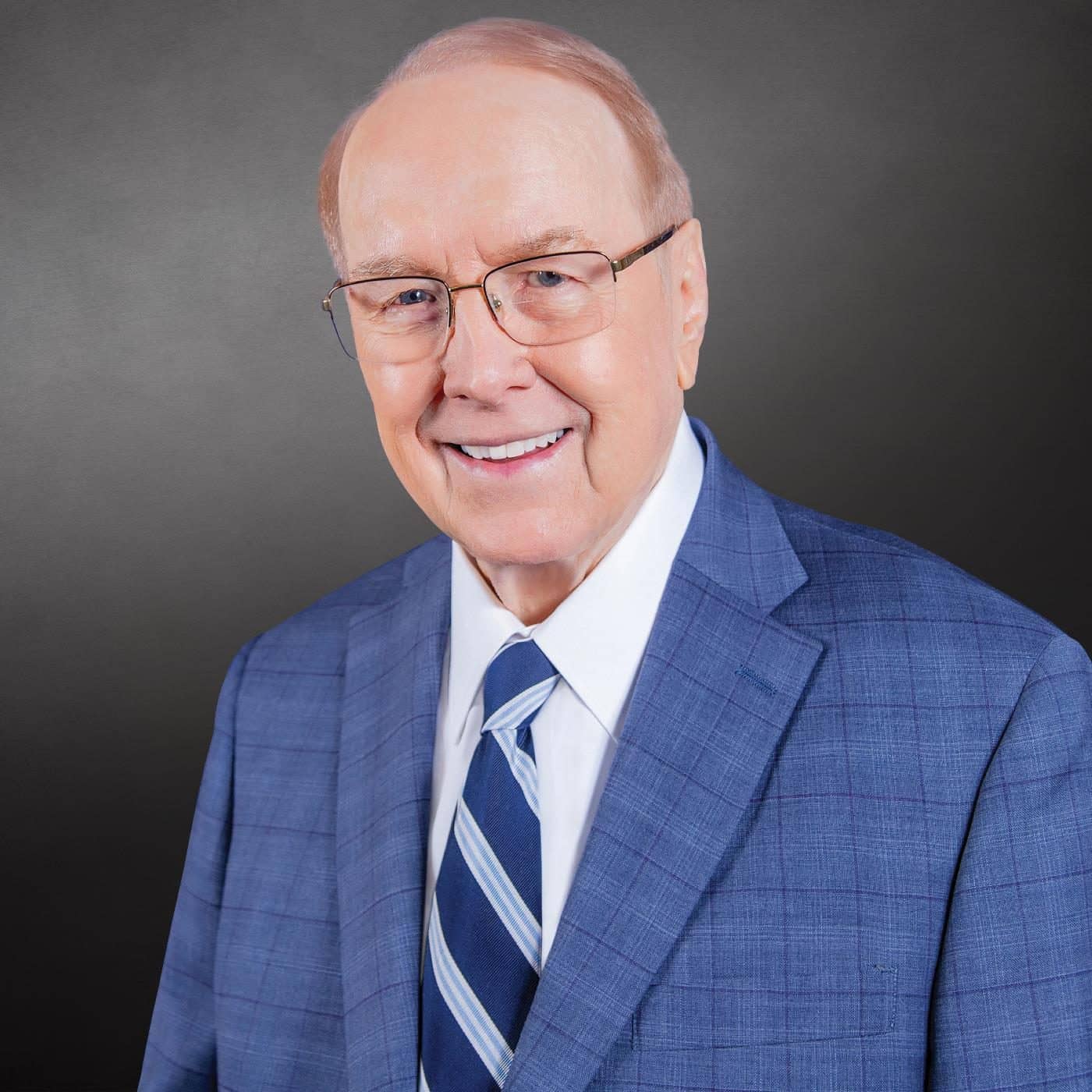

In this engaging episode of Family Talk, Dr. James Dobson welcomes back Bob Beal, author and executive mentor, to dive deeper into the transformative world of mentoring. Together, they explore the critical elements of a successful mentor-protégé relationship and the profound impact it can have on personal and professional growth. Bob Beal shares invaluable stories from his decades of experience mentoring leaders across various fields, shedding light on the simplicity and effectiveness of asking the right questions at pivotal moments.
SPEAKER 02 :
You’re listening to Family Talk, the radio broadcasting division of the James Dobson Family Institute. I am that James Dobson, and I’m so pleased that you’ve joined us today.
SPEAKER 01 :
Well, welcome to Family Talk with psychologist and bestselling author, Dr. James Dobson. I’m Roger Marsh, and today we’re bringing you a classic conversation about mentoring. It’s a topic that could quite literally change your life. Our guest on today’s edition of Dr. James Dobson’s Family Talk is Bob Beal, founder of Master Planning Group International and an executive mentor who has worked with over 500 senior executives. Dr. For decades, Bob has helped leaders in churches, nonprofit organizations, and corporations achieve their God-given potential. He served on numerous boards and has invested over 50,000 hours in one-on-one counseling sessions with some of the finest leaders of our generation. Bob is the author of the book, Mentoring, How to Find a Mentor and How to Become One, which offers profound wisdom wrapped in surprising simplicity. As you’ll hear on today’s Family Talk broadcast, mentoring is not about having all the answers or having impressive credentials. Rather, it’s about caring enough to ask two fundamental questions. First, what are your plans? And second, how can I help? Now let’s join Dr. James Dobson for part two of this timeless discussion about mentoring on today’s edition of Family Talk.
SPEAKER 02 :
We’ve asked Bob to come back for a second day of discussion on his book entitled Mentoring, How to Find a Mentor and How to Become One. This is actually an updated version of a 1992 book that he wrote that’s now in its fourth printing. But I don’t think we ever personalized it between the two of us, Bob. And so let me ask you this question. Have you had a lot of mentors in your life? And if so, what did they contribute?
SPEAKER 03 :
I’ve had three or four that I consider just dear friends and lifelong friends, et cetera. In a lifetime. In a lifetime. But let me tell you a story that shows you how important this was in my own life. But I have to tell you two stories to tell you one. I had a cousin named Bob Batterby, and he was three years older than I was, but he was, in the 50s, the real Fonz. He was the real guy that they patterned the Fonz after. And he taught me this one principle. He did try to teach me principles, and he said, don’t ever talk about fighting. He said, if somebody wants to talk about fighting, just sissies and girls talk about fighting. He said, either don’t discuss it at all or try to kill the kid. But do not talk about it.
SPEAKER 02 :
That’s sage advice.
SPEAKER 03 :
That was his bit of advice to me. Well, fast forward to age 24. I’m 24 years old. I have two children. Cheryl and I aren’t getting along all that well. My mentor from Michigan State days, a man named Bill Bullard, calls me. And he’s 187 miles away. Back before cell phones, he says, how’s it going, Bob? I’d been out of school about a year. He was still following up to just see how I was doing. I said, well, things could be better. And he said, what’s wrong? I said, well, Cheryl and I aren’t getting along all that well. He said, I’ll be right down. And he hung up. He just hung up the phone. He said, I’ll be right down. 187 miles away. I didn’t want to tell Cheryl that I’d been talking to anyone about we weren’t getting along, but I knew Bill was going to come in the door in about three or four hours. So I said, well, Bill’s coming. What is he coming for? I said, well, I don’t want him to come down, but there weren’t cell phones. It was too late. He was already on his way. Well, he tried to help us in the marriage counseling, and it got to about 2 o’clock in the morning. And at 2 o’clock in the morning, I remembered my cousin’s advice, don’t talk about it. And I was sick and tired of talking about our marriage and why it wasn’t working, so I stood up to leave. I was ready to leave the marriage at age 24. I just stood up and sort of like a deer in the headlights, I think, but I was headed for the door. And Bill said, where are you going, Bob? I said, I’m out of here. I’m through talking about it. That’s it. I’m done. He said, Bob, sit down. I just looked at him like… Well, should they or shouldn’t they? Of course, I sat down and we had our 40th wedding anniversary this year. But now- And you give him credit for making- I give him the credit. If it hadn’t been for that one sit down, Jim, by one mentor- And Chris, if I had walked out on my wife at that point, would I have ever written 20 books to the Christian community and leadership? Would I have ever consulted with 400 Christian leaders in helping them develop their companies? Would I have had access to anything I’ve done? The answer is no. Now, there’s another story. There was a guy, I’ll call him Zingle for obvious reasons. I won’t mention his name. But he was a contemporary of mine at the school I went to, Bethel College, Mishawak, Indiana. He was the preacher boy of the year when he was 17 years old for Youth for Christ nationally. I mean, he was a silver-tongued orator. I mean, he was a guy that I thought, there’s got to be the next Billy Graham. The minute I heard him, I mean, he was just an amazing speaker. But at age 24, it just happens, at age 24, he walked out on his wife and three children and has never had a Christian ministry since. Last time I heard, he was raising funds over in Europe for some stadiums or something, soccer stadiums or something. I’m saying the mentor, that’s where I came up with the concept that on the mountain of life alone, without someone to hang on to you when your life falls apart or is about to, you’re about to do something really stupid, is one of the critical roles for a mentor to play in your life.
SPEAKER 02 :
All right, Bob. There’s somebody listening to us right now that’s hanging on the side of the mountain. I mean, they are going to slide down. And they don’t have anybody that they can call. There’s no one to walk in and say, sit down. There’s no one that they trust. No one committed to them.
SPEAKER 03 :
That’s right.
SPEAKER 02 :
Where do they find it?
SPEAKER 03 :
I would say what you want to do is ask yourself this question. Who are the one or maybe two or maybe three people that you like a lot, that have more experience than you do, they’re more mature than you, they’ve been married longer than you have? You have some access to them, but you’ve never really gotten to know them real well. Ask them today if you can have a cup of coffee, lunch, something, and just get to know them a little bit. And then if that works well, it’s sort of like a first date. If they seem open to you, they seem to like you as much as you like them, sort of get along, then ask them, would you ever consider being one of my life mentors? And when they say, what do you mean by that? Because you can mean a thousand things. Darrell Bock To say, I’ve got a little booklet here. I’ve got a book here. I’d like to have you read it. I’ve read it. I’d like to have you read it. And then let’s get back together a week or two from now, and then let’s discuss what we really mean by that.
SPEAKER 04 :
I want to go back to the story because some people could think that mentoring is simply all encouragement. You mentioned Barnabas last time. He was the son of encouragement. It sounds like a mentor, if you allow a mentor in your life, you kind of open yourself up to this other person. If it’s a man, another man, a woman, another woman, you give them permission to say some hard things as well as the encouraging things. You give him permission to say, sit down.
SPEAKER 03 :
I think that’s exactly right. And what I would say also is that the more you get to know each other, the more that trust builds and lowers the barriers, the more open you are to constructive criticism as compared to encouragement like that. I was talking with a client this morning on the phone. And he said to me, I mean, this is a client of mine. When people ask me, what do you do? I say, I’m an executive mentor because I basically help people know how to grow companies. That’s what I do. Or ministries. Or ministries, organizations. It can be a church or a nonprofit organization or a for-profit company or a government agency. But I help people know how to grow organizations, how to sort out direction, get the right team in place, get the money in place, those kind of things. He, because of our maturing relationship, said, Bob, do you mind if I share something with you that I think is hurting you? This was this morning on the phone. And he told me something that I had done that he said, Bob, you shouldn’t be doing that. That’s hurting you. And I thanked him for it. In other words, when there’s a mutual trust relationship, I’m happy to have him speak into my life. sit down kind of things. I’m happy to speak into his life, sit down kind of things. So it’s a mutual relationship that builds trust over time that really begins to be that safety rope on the mountain of life.
SPEAKER 02 :
I would guess he had earned the right to say that to you.
SPEAKER 03 :
Absolutely. And we’ve had a growing relationship of trust over four years now. I’ve helped him acquire companies. I’ve helped him hire and fire people. I’ve helped him do a lot of things, and he’s helped me see things as well.
SPEAKER 02 :
Have I heard you correctly that the initiation of a mentoring relationship can go either way? The mentor can say, let’s have a cup of coffee and sit down and begin to get acquainted. Or the… Protege can. Is it the mentee? I call it the protege.
SPEAKER 03 :
The protege can. Ideally, the mentor approaches the protege. The reason is because the mentor is giving a lot. So the mentor should approach the protege ideally and say, I would like to offer to become one of your life mentors. But… If you’re the protege and no mentors are coming around, don’t hesitate. Initiate. Go to them and say, would you consider the possibility of being one of my life mentors?
SPEAKER 04 :
Can anyone be a mentor? Do you have to be perfect? Do you have to have scored a certain amount on your ACT or SAT?
SPEAKER 03 :
That’s a great question. I can answer that best by telling you one simple story. It’s a story called George Kaywood. And George has given me permission to share this with anyone I want to so it’s not telling tales out of school. George Kaywood, I met him when he was the executive director of the Union Rescue Mission in downtown Los Angeles. And he was a client of mine. I consulted with him for a number of years. And he told me this story. When he was 15 years old, he came home from school, and his father committed suicide. It turned out it was even George’s gun. And they didn’t have help, so George and his mother had to clean up the house afterwards. You can imagine the trauma it is to a 15-year-old boy. And every time, George is a man that probably knows more scripture than almost anyone I know. He can quote massive amounts of scripture. He speaks a lot. He’s just a godly, gifted man. But whenever you mention the word church to George, you see the muscles on his jaw sort of tighten up. And having observed that, I said, George, when your father committed suicide, were you going to church at that time? He said, yeah, we were actively involved in a little church in the San Diego area. I said, how did the men of the church… react to you he said they never said one word to me i said and you could tell it was very emotional for him i said george you do know as an adult the men didn’t know what to say it wasn’t they didn’t care they just didn’t know how to say they didn’t know how to approach a boy 15 years old they didn’t know what to say so they just said nothing he said as an adult i understand that as a boy i did not I said, George, what do you wish the men of the church had approached you with at that time? He said, I just wish someone would have told me I was going to be okay and that they believed in me or something. Or just ask how I was doing. And I said, George… How smart would the person have had to be? Your question, Chris, what kind of SAT scores would he have had to have? He said he could have been a flunk out from the first grade. I said, what kind of position would he have had to have? He said he could have been a homeless person, just sort of dropped by the church. The only criteria that would have made any difference at all to me was, did he care for me? Did he care whether I lived or died? I don’t know if you knew this, but Abraham Lincoln’s inaugural speech You know, Lincoln was about 6’6″, and they had a stovepipe hat that got him up over seven feet tall. There was a guy that was four feet tall in the front row with a little stovepipe hat, and all the people didn’t know who he was. Who is that guy up there with Abraham Lincoln’s inaugural? Nobody knew who he was. You know who it was? It was his mentor. He was the guy that stood with him when he lost his governor. He lost everything. And he was four feet tall. And he came to him. He was named Mentor Graham. It just happened his name was Mentor. He believed in Abraham Lincoln. He said, Abe, hang in there. You can do it. Here’s the next step. Here, go from here. And when he became president. But here’s the kicker. Today in the fourth grade, I’d ask, let’s say, for example, if I were talking to a lay person, I’d say, tell me something. How comfortable would you be mentoring the governor of the state today? Oh, I wouldn’t even know what to say to him. I say, what if you knew that the future governor of your state or the future president of the United States was in your fourth grade Sunday school class today? Oh, I could talk to him. I say, you don’t know. You don’t know. Now, consider this. I was speaking at a conference over in Vienna with Campus Crusade, and I talked on mentoring. And afterwards, a 65-year-old lady came up and said, you know, this talk changed my life. I thought, changed your life? Isn’t that sort of an overstatement? I mean, it couldn’t have been that high impact. But instead of saying something sort of silly like that, I said, how? What was so meaningful to you? She said, Bob, I’ve been a teacher, like a fourth-grade teacher at the sort of an American school in a foreign country kind of thing. And she said, in my classroom, I’ve had sheikhs, shahs, princes, all that kind of thing. And she said, but when they hit graduation from my class, I thought, I’m done with them now. But she said, when I look back, I think, what would have happened? If out of each class of 30, 40 kids, I’d have taken the one kid that I had a natural heart connect with and just corresponded him like Dr. Harwood did with you, Jim. Just think if I’d have taken one person per class over a 40-year period, I would have still access of influence and encouragement to 40 heads of states around the world today. And she said, I just feel – it just changed my life. She said, frankly, I’ve retired now. I’m not going to have that chance. But she said, I’m going to take each of my grandchildren and I’m just going to be their best encourager and the sounding board, et cetera. It’s just a few stories, but mentoring is such an incredibly powerful thing.
SPEAKER 02 :
Bob, most of your illustrations and what we’ve talked about last time in this one. have been in the context of an adult with an adult, a younger adult perhaps with an older adult. I want to talk about the age factor in a minute. But we had a guest who’s very familiar to all of us named Stu Epperson. He and Ed Atzinger own the Salem Radio Network, and they’ve been friends forever. of ours for years. But he has a ministry called One Kid at a Time where he’s talking about mentoring these inner city kids. They’re desperate. Many of them from foster care situations where they’ve been bounced from pillar to post. There’s no one that has made a commitment to them in their entire lives. They have no real substantial friendships. And they’re lost. They’re absolutely lost. And this is the heart’s cry of Stu’s ministry to provide mentors to reach out to those kids. Now, would you use mentoring in that context?
SPEAKER 03 :
Does that word apply there? I’d be very careful to use it. I would love to use it, but I’d be very careful to for this reason. Let’s say if Stu came and asked me, Bob, how do we maximize mentoring in this setting? I would say, first of all, make sure that there’s a natural chemistry between the person, the child, and the adult. Don’t assign people. Just make sure there’s a natural chemistry there where you can see a kid, and it could be a kid that you think has enormous leadership potential like a future president, and it could be… A kid that you think won’t make it unless someone cares. Either way. But if you have a kid that you say, Lord, bond my heart to this kid for a lifetime. Think of the difference that would make as compared to six months and I’m out of here. I’m saying anything we can do to lengthen the amount of time when we have a relationship with a child like that, it just gets better and better.
SPEAKER 02 :
All right, going back to what we were talking about before, and Chris, back to your question. The person who’s being asked to mentor, I think, often says, I’m not qualified. I really can’t handle this. I don’t have anything that I can do to help you address that.
SPEAKER 03 :
Well, first of all, often they feel like, I’m supposed to be this genius of some kind that’s like a concert pianist teaching a 16-year-old protege how to play the piano. That’s not it at all. The question is one of experience and caring. If you care for a person and have more experience than they do in some area, you’ve got all the qualifications you need to be their mentor. Can a parent mentor a child? I say no. A parent is supposed to be a parent. Actually, the parent sets the child’s agenda. Here’s what you’re supposed to learn. You’re not supposed to do drugs. You’re not supposed to do this. You’re supposed to go to Sunday school or whatever. The parent basically has an agenda for that child, is supposed to have. it wouldn’t be appropriate for the parent to come to a six-year-old and say, what are your plans and how can I help? But as you know, with older children, I don’t know about you, Chris, but with like Danae and Ryan and Jay and Kimberly, the older they get, the more it morphs into more of a mentoring relationship where when they get to be late teenagers, your relationship better have become more of a mentoring relationship. Like You’re still the parent, but it’s a higher blend of what are your plans and how can I help? So when your child gets to be an adult, I think that’s – you’re still the parent, but it’s a high percentage of that what I call mentor’s attitude. What about a couple mentoring another couple? This is incredibly important from my perspective because – and fortunately, a lot of churches are picking up on this and getting couples who want to mentor young couples, and it’s just great. A lot of young couples have never seen a healthy marriage. They come from broken homes, broken marriages. They’ve never seen a healthy, loving relationship. And it isn’t just reading about it that’s important. It’s seeing it and experiencing it, smelling it, tasting it, touching it. And when a mentor couple can come along that has a mature marriage, invite this young couple into their home, watch how they do things, it’s so much better.
SPEAKER 04 :
People in today’s society, I think, are so wrapped up with what their own agenda is and they have these blinders on and I’m going for this and that. A lot of people are. You’ve really got to look outside of that and to reach into somebody else’s life.
SPEAKER 03 :
I say anyone can be a mentor, like the George K. Wood story. But not everyone should be. And the reason they should not be is that at certain times of life, we’ve got so dang much stuff going on that we really don’t have anything left to give anyone. At that time, it may not be the phase of your life when you’ve got any energy left to be a mentor. So I don’t need to feel guilty for that. So do not feel guilty if now is not the time you’re supposed to be mentoring someone. But if you’ve been saying, how can I make a significant difference? How can I work in their lives? I don’t have a Ph.D. in family psychology or something. Take one couple you really believe in and come along beside them. And even though they move 15 times in the next 10 years as they get promoted, keep calling them, saying, how are you doing? What are your plans? Any way I can be helpful? That someone cares whether you live or die is fundamental.
SPEAKER 02 :
Bob, let’s suppose here in closing that you’re talking to some pastors, and you probably are, who have caught the vision today and last time. And they see that there ought to be more mentoring going on. in his or her church. Where do they start?
SPEAKER 03 :
This is going to sound self-serving. I’d start with the book so that the pastor can read through it and get sort of the definitions clear so he knows what he’s talking about when he introduces the subject. Then we also have a video with it. He could show the video, which he may not feel like I’m the expert to introduce it, but could say if there’s anyone in the church interested in being a mentor or being a protege, come and watch the video. Watch the video, then discuss it. Then we have little booklets you give out. You don’t have to give a book to everyone. But it’s like there are tools available is what I’m saying. The other thing is every mentor needs someone building into their life. We have a website called quickwisdom.com that’s free. And it’s where each month I do two or three things that basically try to help people who are trying to be mentors or trying to be leaders just keep building into their life over 30, 40 years, hopefully. I’m not their mentor, but it’s a mentoring attitude of here’s something I think will help you win.
SPEAKER 02 :
Thank you, Bob. It’s been all these years since we talked about this subject. It’s still of interest to me and still important. It’s still an extremely significant subject.
SPEAKER 01 :
Some of the greatest gifts we can offer to others cost us nothing but time and attention, and yet their impact can last for generations. On today’s edition of Dr. James Dobson’s Family Talk, we featured a classic conversation Dr. Dobson had with Bob Beal about the power of mentoring. If you missed any portion of today’s broadcast, or if you’d like to go back and listen to part one, you’ll find both installments on our website, jdfi.net. Once you’re there, you’ll also find information about Bob Beal’s book, Mentoring, How to Find a Mentor and How to Become One. Again, all that information is waiting for you at JDFI.net. And speaking of relationships that matter, I want to tell you about a free digital resource we’ve prepared for you called The Undeniable Differences Between Husbands and Wives. Drawing from Dr. Dobson’s decades of experience and research, this practical guide explores how men and women are uniquely designed by God and how understanding these differences can actually strengthen your marriage. So whether you’re a newlywed or you’re celebrating your golden wedding anniversary, you’ll discover fresh insights that can help you appreciate your spouse in deeper ways. You can request your free download of The Undeniable Differences Between Husbands and Wives when you go to jdfi.net. Through daily broadcasts like the one you just heard, the Dr. James Dobson Family Institute works to strengthen marriages and families all across America. We are committed to promoting biblical principles that support healthy relationships and child development, introducing people to the gospel of Jesus Christ, and defending the sanctity of human life and religious freedom. But we can only continue this work with partners just like you. Would you partner with us today with a donation? Your gift of any amount helps us reach millions of families with biblical truth and practical guidance that they can’t find anywhere else. To make a secure donation, visit JDFI.net. If you prefer, you can send your tax-deductible contribution through the U.S. Postal Service. Our ministry mailing address is Dr. James Dobson’s Family Talk, P.O. Box 39000, Colorado Springs, Colorado, the zip code 80949. or call a member of our constituent care team when you dial 877-732-6825. I’m Roger Marsh, and from all of us here at Family Talk and the Dr. James Dobson Family Institute, thanks so much for listening today. Be sure to join us again next time right here for another edition of Dr. James Dobson’s Family Talk, the voice you can still trust for the family you love. This has been a presentation of the Dr. James Dobson Family Institute.