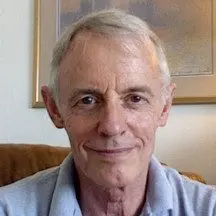

Join Mike Triem as he converses with Colin Cook, the prolific author and host of How It Happens, about his latest book, God’s Unbreakable Oath. Colin delves into his teaching journey over 50 years, elucidating the profound messages found within the Book of Romans. He unpacks his realization that salvation through Christ extends to the whole of humanity, challenging traditional interpretations that many have held dear.
Mike Triem :
It’s Mike Triem with 670 KLTT. I’m joined by Colin Cook. Colin is the host of How It Happens every weeknight at 10 p.m. And Colin, you’ve written a book. Thanks for taking the time with us. Oh, yes, it’s my pleasure. Thank you, Mike. So the book’s name is God’s Unbreakable Oath. We wanted to talk to you about that book. And, you know, one of the key first questions is what led you to write a book on salvation?
Colin Cook :
Well, it’s a message of the salvation of the whole of humanity. And I have been teaching Romans for, oh, 50 years, I guess. And, you know, there are hints in Romans, more than hints, but implications that God is going to save all humanity through the atoning work of Christ. But I couldn’t bring myself to say it or believe it because traditionally that was not my upbringing. Anyway, finally, as I kept teaching it, and 28 of those 50 years were teaching it on KLTT, I finally had to admit that Paul was really teaching that the extent of God’s salvation in Christ equals the extent of Adam’s sin and death for the whole human race.
Mike Triem :
Is that, you know, people will ask the question of, okay, so why have I been taught that it’s only through the saving faith of Jesus Christ in that distinction? Is that the Adam and Eve story? Is that kind of what you’re pointing towards?
SPEAKER 02 :
Well, yes, but first of all, let me say that it is only through the saving grace of Jesus Christ that all will be saved. Salvation of all does not eliminate or sidestep the atoning work of Christ. In fact, for me, it is the central point of how and why God can save the whole human race.
Mike Triem :
And so when you said there was kind of a resistance on your part, if I caught that right, And yeah, explain what that was about and then how God kind of walked you through it.
Colin Cook :
Well, you know, when I first became a Christian at 15, I know this is almost embarrassing to say, I was in a church that was pretty literal. I believed that only 144,000 would be saved. But as the church grew and my own faith grew, I knew that that couldn’t be so, but still I held on to a belief that and not simply held on, but believed seriously, that there are the saved and the lost. And of course, that’s true. There are the sheep and the goats that will be divided and separated at the second coming of Christ. But people don’t realize that there is another major event, and that is the final judgment. And whereas the second coming of Christ separates the world into sheep and goats, the final judgment reconciles the world. Now, how do I know that? Well, because Isaiah 45 says that God makes an irrevocable, unbreakable oath that before him every knee shall bow and make an oath themselves, that in Christ alone shall be their righteousness and strength. Now, that promise in Isaiah is repeated in Romans 14 and Philippians 2, and Philippians reveals that it will be everyone bowing before Christ who will make an oath that in him alone is their righteousness and strength. So that promise is just gospel-oriented totally. It’s really amazing.
Mike Triem :
That Christ-centering seems like an important part of when you wrote God’s unbreakable oath that people need to know. And it sounds like it was a resist, resist, resist. Oh, you know, I hadn’t seen this. And Colin, related to that, are you speaking about people who think, When it comes to judgment, it’s going to be judgment either, you know, you’re going to hell or you’re going to heaven. And your argument is those are people who have already accepted Jesus. They’re going to heaven.
Colin Cook :
Well, you know, the— One of the unique things about my book, God’s Unbreakable Oath, is an exploration of the judgments in the book of Ezekiel. I have been utterly astonished how Paul is drawing on Ezekiel in his chapter 8 of Romans when he says, nothing can separate us from the love of God in Christ Jesus. He is going back to the judgments. Now, in the book of Ezekiel, over 60 times it says that they shall know that I am the Lord. And that, as you explore that phraseology, they shall know that I am the Lord, it’s not they shall know and then be blasted out of existence, but they shall come to know him by his judgments of them. And so we see in Ezekiel that coming to know that God is the Lord is the end result of judgments. Judgments that are upon mankind do not lead to hell or death, or final death, but lead, yes, they may lead to death, but they lead to resurrection. Ezekiel 37 says the whole house of Israel will be resurrected, and Ezekiel 16 gives the reason why, because he will make an atonement for all that they have done, so that they will never open their mouth again for shame. And that theme is taken up by Paul when he says that nothing, not even death or life or famine or nakedness or the sword, can separate us from the love of God in Christ Jesus.
Mike Triem :
And in my notes, you said that you’re really thankful that Paul carried that through to the New Testament, through the book of Romans. Talk about that a little bit, too, if you would.
Colin Cook :
Yeah, absolutely. As I say, I’ve been teaching Romans for 50 years and it has been teaching me. I have no pride in saying I’ve been teaching it for 50 years because… Many times, Mike, on teaching it on KLTT, I would come up to passages that I just felt uncomfortable about because I hadn’t accepted Paul’s argument. You see, if you don’t accept that Paul’s talking about the salvation of all, then many passages in Romans simply do not fit. But once you get the belief… that he’s talking about everyone being saved, then it is that everything fits into place. Now, when I say that, I’m not saying that God is zapping people. He’s bringing everybody. He will bring everybody, either here or in the final judgment. to an end of themselves, where they come to the end of their resources. That’s what the fire and brimstone imagery is about in Revelation. They come to an end, excuse me, an end of their resources, and then they call out to God for mercy. And Romans 11 says, God has imprisoned all under sin that he may have mercy on all, Romans 11.32. And so, you see, God is going to bring everyone to faith. Now, that is another factor in my book. Where does faith come from? Is faith a choice of human beings to either take heaven or leave it or take hell or leave it? That’s what the common understanding in Christendom these days. No, faith, and I do a lot of study of the texts here, faith is a gift from God. It is conferred along with the good news of Jesus Christ, according to Paul. And it is imputed to us. When faith is imputed, it means obviously that it doesn’t come from us. It comes from God and is charged to our account. God is able to bring faith upon everyone and he does it and will do it he does it in various box of time he does it to various people and finally those people witness to others and all ultimately now remember this fact if i may say the book of revelation well the book of romans chapters 9 through 11 talks about jealousy I’ve underrated jealousy for years. I’ve just thought of it as a trivial thing that immature lovers have. The fact is God declares himself as a jealous God and he will not allow any form of idolatry and he will bring the human race to the place where all their idols are broken down, and the Lord alone will be exalted in that day, and all the families of the earth, according to Psalm 22, will remember and return to the Lord.
Mike Triem :
Fire and brimstone. How do you address that in the book?
Colin Cook :
Well, it’s not difficult when you examine the whole of the Old Testament in regard to fire and brimstone. It’s obviously used in a very symbolic way. When David, for instance, is talking about his deliverance from Saul in that cave there, it’s in Psalm 18, he talks about hurricanes and floods and tornadoes and rain and fire and brimstone and it’s obviously figurative language it doesn’t mean to say it’s any less terrifying it simply means that God is using forces of nature beyond human capacity to deliver or to judge and that is what God is doing with fire and brimstone now remember this Sodom and Gomorrah, according to Ezekiel, are going to be delivered from fire and brimstone, and they are going to become the daughters of Israel. How about that one?
Mike Triem :
That was an interesting point that you brought up. I think for some, they have missed that part. Some readers of the Bible, not that they didn’t read that, I don’t mean that necessarily at all, but Sodom and Gomorrah, you think of, Oh, man, judgment. Cast into the lake of eternal fire, done.
Colin Cook :
Yes. Well, remember the fire and brimstone. is the second death. So if the second death is the end of death, then that means there’s nobody dead anymore. It means that the people return to the Lord. Remember, there are just two major groups in the book of Revelation, the people of God and all the world. figuratively spoken as Babylon and the beast and all of that, and the kings of the earth. And those kings of the earth in Revelation are talked about after the fire and brimstone as going into the city of God. So, the fire and brimstone is the ultimate confrontation of the world with the glory and the goodness and the mercy and the judgment of God. It will bring the world to its knees and the world will then, as David says in Psalm 22, all the nations will return to the Lord and they will come into the the city of God. That is why the gates of the city of God are always open, they shall never be shut. What does that mean? It means that there are no more enemies outside, that’s why they used to keep the gates shut to prevent the enemies coming in, because the enemies will be turned to the Lord and they will flow into the city of God.
Mike Triem :
So Colin, we’ve got about 60 seconds left. And by the way, we’re really grateful. It’s Colin Cook, by the way, we’re talking with. How It Happens is heard every weeknight at 670 KLTT at 10 p.m. So Colin, tell us real quick kind of the overall tone of the book and then how we get it, please.
Colin Cook :
Yeah, the overall tone, Mike, is… It is somewhat poetic as well as very biblical, but attempting to give you an experience of the glory and the worship of God and the joy in the Lord, ultimately. And the book is called God’s Unbreakable Oath. It’s in two volumes. You can get one volume or both at the same time, and it’s available on Amazon.
Mike Triem :
God’s Unbreakable Oath. God’s Unbreakable Oath, Colin Cook, author, and on Amazon. Very good.
Colin Cook :
Yes.
Mike Triem :
Yes. Well, Colin, thank you for taking the time with us. You and I have talked for years about the book. Thankful that our voices held up for this interview because we’ve both been a little under the weather. Yeah, that’s right.
Colin Cook :
Thank you, Mike. Many, many years in the making. I appreciate it. Yes, many is indeed. And I appreciate the interview and the time spent with you. Thanks for giving the time.
Mike Triem :
Many blessings. And again, that book, God’s Unbreakable Oath. Find it on Amazon. Colin Cook. Thanks, Colin.
Colin Cook :
Bye-bye.