



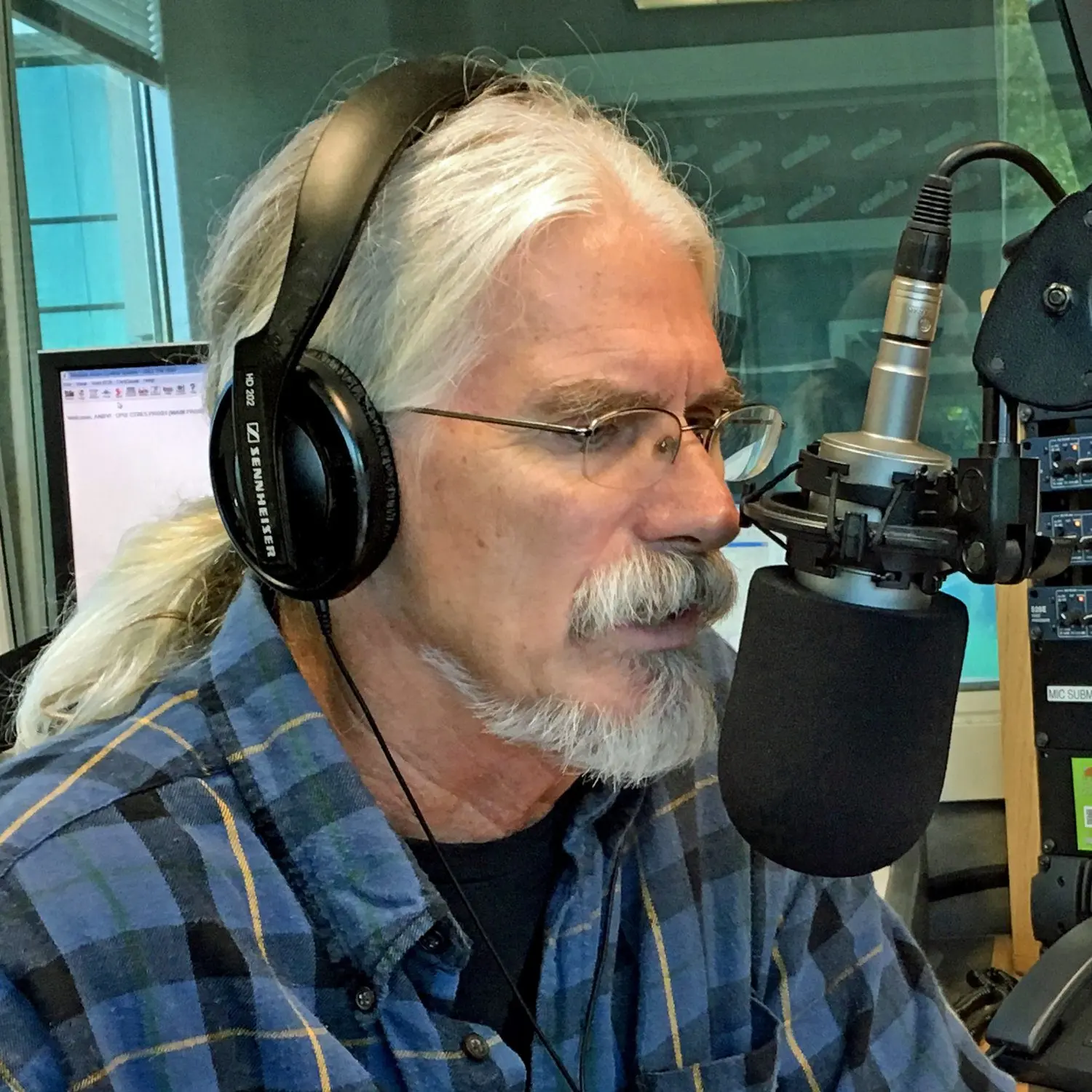
In this insightful episode, host Steve Gregg delves into a complex discussion about the nature of Jesus Christ, defining His humanity and divinity. As callers bring forward questions surrounding the impeccability of Christ, the temptation He faced, and His genealogy tracing back to Adam, listeners are invited to ponder deeply on theological doctrines. Steve articulates the intricacies and disputes surrounding these religious beliefs, presenting a balanced examination that encourages a broader understanding of Christ’s nature.
SPEAKER 1 :
Thank you.
SPEAKER 06 :
Good afternoon and welcome to The Narrow Path. My name is Steve Gregg. If you’re not familiar with the show, this is a live broadcast on most of our stations and it’s an hour long, commercial free, and it’s an interactive show where you can call in. In fact, a I interact with you, not vice versa. You call the subject matter by calling in with your questions about the Bible or the Christian faith, and I discuss what you bring up. You can also bring up points where you have a difference of opinion from the host, and I’ll be glad to talk about that too. Right now our lines are full. That will not be the case for the entire hour. If you try randomly in the future, later in the hour, to call the number, you may very well find lines have opened up. Right now, you’ll get a busy signal, but wait a little bit and call this number, 844-484-5737. That’s 844-484-5737 if you’d like to call and be on the air. A few things coming up. This is the first week of the month, and that means the first Wednesday of the month is coming up in a couple of days. Each first Wednesday of the month, we have a Zoom meeting. where we are joined by people all over the country and some other countries, too. And it’s just an open Q&A, sort of like this, only it’s on Zoom. So we get to talk to each other kind of face-to-face, and we’re not limited by the hour that the broadcast is, so we can go a little longer. So we do that once a month. That’s coming up this Wednesday. Now, if you’d like to join us, wherever you may be, you can. It is at 7 o’clock p.m. Pacific time. Obviously, that’s a different time in different time zones, but I’m in Pacific time, so we give that time, 7 p.m. Pacific time this Wednesday. If you want to know how to log in, that’s quite simple. You go to our website, thenarrowpath.com, thenarrowpath.com. Go to the tab that says Announcements. Look up the date for this Wednesday, which is going to be the 4th, and you’ll find the login information there, the code. You can get right in and join us. We’re glad to have you. All right, that’s this Wednesday. Another thing coming up is about a little over a week from now, not much over a week, about eight days from now, and that is I’ll be speaking in San Juan Capistrano Tuesday evening, the 10th, and that is going to be on the subject of the four views of Revelation. I think we have about a two-hour time slot carved out. They’ve asked me to come in the evening Tuesday and present that. That’s open to anybody, open to the public. That’s at the Ranch Church in San Juan Capistrano. If you’d like to join us there. Again, that information is also at our website in the same place as you’ll find the other. There’s a tab at our website that says announcements. And whenever I’m speaking somewhere, that’s where we put it on. And you can find it where and when in that particular place, that page on our website. All right, that’s at thenarrowpath.com. And that’s all I really need to say about that. So let’s go to the phones and talk to Yosef in Knoxville, Tennessee. Hi, Yosef. Welcome to The Narrow Path.
SPEAKER 08 :
Hey, Steve. Thank you. So I had a quick question about Jesus’ humanity and his temptation based off of a conversation I had with my pastor. And he claims that Christ wasn’t exactly… Tempted as we are like he came, you know flesh and blood as we are but not tempted and had the inclination as we are because a lack of a simple flesh and this is a reformed view and My question is specifically on one word and a couple of verses and when he said this I brought up Romans 8 3 saying that God sent his son in the likeness of simple flesh mm-hmm, and there’s a similar verse in Philippians 2 7 and And then his reaction was he focused and emphasized the word likeness, saying that Christ wasn’t sent exactly in our nature, but it was kind of like a resemblance. It wasn’t like, you know, it wasn’t exactly like us because of the lack of sinful nature. And so I wanted to ask you, like, just to comment about that word likeness.
SPEAKER 06 :
Right.
SPEAKER 08 :
And…
SPEAKER 06 :
Well, the likeness of human flesh could, I mean, obviously that could mean a number of things. It could mean that he looked like a human, though he wasn’t. Or it could mean he was like us all the way through, you know, skin to DNA, all the way down. And, I mean, likeness is vague in that respect. So the question of his nature is going to have to be determined by more than just that one word. And frankly, it is a confusion, especially to those who teach the doctrine that’s called the impeccability of Christ, which is considered to be orthodox doctrine to reform people. It sounds like you said he’s a reformed pastor. So the impeccability of Christ teaches that because Jesus was God, he could not sin because God cannot sin. And therefore, obviously, if he couldn’t sin, then his temptation would be very different than ours. Because we can sin. I mean, when we face temptation, we’re facing a very real danger that we will succumb. And we will do harm to ourselves and others and to our souls. So, in other words, since we can sin, temptation represents a real risk to us. Now, they would say, well, Jesus can’t sin because he’s God. And therefore, even though the Bible talks about him being tempted… it really wasn’t the same for him because you know there was no real risk that he would succumb. Now this idea that there was no risk that he would succumb is strictly made up. It has become standard doctrine and to deny it is considered to be heretical and has been so for hundreds of years for the simple reason that the deity of Christ was disputed in some of the early centuries and once it was established that the Bible, in fact, does teach that Jesus is God, not a God, not a created being, the church jealously guarded over that to the point where if you… There was also another major controversy, not related to this one, but it had to do with the emphasis on Jesus being God, when the question is whether Mary could be called the Theotokos, the mother of God, God-bearer. And, you know… People who objected to calling her the mother of God, like Nestorius, were kicked out of the church, even though the Bible never calls her the mother of God. But, of course, the idea is Jesus is God, she’s Jesus’ mother, so she’s the mother of God. Okay, well, I think that this emphasis that Jesus was God so he couldn’t sin and therefore couldn’t be tempted genuinely to sin. He was God so his mother is the mother of God. I think this emphasizes an aspect of Christ that the Bible doesn’t. talks about a very little bit. I mean, there’s a few verses that teach us that Jesus is, in fact, divine. And there’s a great number of verses that tell us that he’s human, too. So the church has come up with the idea, well, somehow Jesus is human and divine. And that is true. He is, in some sense. But the more biblical language would be to say that Jesus was the word of who was God, who became flesh. That’s what it says in John chapter 1. Now, becoming flesh means he became a human being. It doesn’t say he just put on a skin costume. He became one of us. He came through the line of Adam. Now, in the Old Testament, sometimes God appeared in a human form, wrestled with Jacob all night, had a meal with Abraham, walked in the garden with Adam and Eve. The Bible indicates that God sometimes did kind of put on a skin costume. and appeared to people briefly, but he wasn’t born into the human race in those cases. He didn’t live a lifetime, grow up as a baby and grow up into an adult and then die and so forth like people do. He just took on human appearance. In those cases, we call those theophanies, where God takes on the appearance of a human or some other physical thing like a burning bush or a cloud or a pillar of fire or whatever. These are theophanies. And some of them, God took on a human-like form. Now, he didn’t become a human being in those cases because he didn’t come through the human family. He just kind of apparently appeared in a human form. Angels did this too, but they weren’t human. God and angels on occasion could take on a human form in order to communicate with people, but that wasn’t a permanent change for them. Jesus, in a sense, was like a theophany. It’s God taking on a human form, but he did it in a unique way that no one else ever did. No theophany ever did. He actually came from the lineage of Adam and Abraham and Judah and David. And that’s very important. He was an actual human being, a part of the human family. Now, we don’t know how did the human nature and the divine nature of Jesus manifest. You know, how did that work out? How does God take on a human nature? Well, we’re never told how that happened. In fact, there’s only a relatively few verses that actually tell us that that is the case, but there’s enough to let us know that it’s true, that God did take on human flesh. But what the result was in terms of could Jesus be tempted like we can be tempted? Well, apparently so. Now, I want to say that some people say that Jesus couldn’t sin because he was God. But if being God means that Jesus was not susceptible to things that humans are susceptible to, we would also have to say that not only could Jesus not sin since God cannot sin, we’d have to say Jesus couldn’t be tempted because it says in James, God can’t be tempted to sin. And yet the Bible teaches us that Jesus was tempted. by sin. It says, of course, famously in Hebrews 4.15 that he was in all points tempted as we are, yet without sin. Now, to my mind, I think the statement, in all points he was tempted like we are, is a little stronger than just to say likeness of sinful man. It means he just kind of looked like it. I mean, likeness is much more ambiguous. It seems to say he was tempted in all points like we are is a little more Absolute. It’s more emphatic. He went through temptation just like we did. Now, if we say, but how could God be subject to temptation? Since God can’t be tempted, how could Jesus? Because Jesus wasn’t just God. He was God in the flesh. That flesh part is his human nature. And human beings suffer temptation. By the way, God doesn’t get tired either, the Bible says. But Jesus did. He got tired and fell asleep numerous times. Of course, many times in his life, but we have record of him being so exhausted. On one occasion, he was asleep in the boat, and the boat was filling up with water, and it didn’t even wake him up. He was that tired. But the Bible says Yahweh neither slumbers nor sleeps. Neither is he weary. So how’s that? How could Jesus be God and still be weary? Because he is the God-man. He was God in the flesh. Human flesh can get weary. Human flesh can be tempted. Jesus, there were things he didn’t know, but God knows. God knows everything. But Jesus said there’s things he didn’t know. He said only the Father knows that. He said, I don’t even know that in Matthew 24. So, you know, let’s face it. Jesus was God. But I think sometimes the church, in order to protect that truth, almost goes almost into a Gnostic direction where he’s not really human. But he is. He’s really human. In fact, Paul says this. There’s one mediator between God and man, the man, Jesus Christ. It’s interesting, it doesn’t say the mediator between God and man is the God, Jesus Christ. So Jesus is God in the flesh. It is that he’s, even in heaven, he’s still a man. He’s the God man. Now, if someone says, I don’t understand what that means. Well, I’ll join you in that club. I don’t know what that means either. I don’t know what that looks like. But to say that Jesus couldn’t sin, we’d have to say then he couldn’t be tempted like we are. Because all the things I’m tempted to do are things I can do. I have to assume that when Jesus was tempted to turn rocks into bread, he could have done it. That was possible for him. That when he’s tempted to jump off the pinnacle of the temple, that’s something he physically could have done. He was not tempted to do things that he couldn’t do. Which means if he was tempted to sin, as the Bible says, then presumably he could have sinned, but he didn’t, thankfully. His human nature had a role to play, too. But for me to even say that puts me in the category of historic heresy because that’s called the impeccability of Christ. The idea that Jesus, if he had chosen to, which he never did, he could have sinned just like we could sin. He could succumb to temptation just like we can. That was considered centuries ago when some church council decided that’s a heresy to think that way. But the Bible doesn’t say that’s a heresy. And in fact… it makes it very difficult to say anything else if we’re saying that he was tempted in the same way I am. Because, frankly, if I’m fasting and somebody puts a beautiful meal in front of me, I would be tempted, of course, to eat it if I’m very hungry. And I hopefully would not succumb, but I would be tempted to, and it’s something I could do. Likewise, if Jesus had temptations put before him, presumably they are something he could have done. It was not his choice to do so, to his great credit.
SPEAKER 08 :
You mentioned him coming from the line of Adam. And what would you say to the argument of like, you know, Jesus clearly wasn’t, I guess, born in that line physically, but he was born, obviously, of the Holy Spirit.
SPEAKER 06 :
Well, he was born of Adam. You can read the genealogy of Jesus in Luke chapter 3. Yeah. It goes all the way back to Adam. Yeah. And even the genealogy in Matthew, though it doesn’t go back to Adam, it goes back to Abraham and David. It’s very essential. The Messiah cannot be the Messiah unless he’s the seed of Abraham. He cannot be the Messiah unless he’s the son of David. So if Jesus didn’t come through the lineage of Abraham and David, and of course of Adam, because those men came from the lineage of Adam, then he can’t be the Messiah. So I think the pastor’s wrestling with something that’s probably… beyond our power to fully grasp. But I think he’s saying something out of loyalty to the doctrine of the deity of Christ, which he has not thought through very well. And frankly, no criticism of him too much. Most theologians haven’t thought through all these things thoroughly. They have a certain perimeter of things that you can’t say anything against, lest you be a heretic. But then you are forced by those perimeters to deny certain things that the Bible may affirm, like that Jesus was, in fact, tempted in all points like we are, though he didn’t sin. Anyway, it’s mysterious, and I wouldn’t explain it the way your pastor did, but I think he was mistaken. No, it’s helpful. Yeah. All right.
SPEAKER 01 :
God bless you, Joseph.
SPEAKER 06 :
Thank you so much. Good talking to you. You as well. Bye. Bye now. Okay, Peter in Spokane, Washington, welcome to The Narrow Path.
SPEAKER 01 :
Hey, Greg, thanks for taking my call. I’ve got a timing question looking at Philippians and Colossians. I know a lot of times people say they were written at the same time from Rome. And I came across two verses, well, two couplets that seem to indicate that maybe they’re written at different times. And the first one is Philemon 22, where he says, prepare a lodging for me because he hopes to come to Colossae. But then in Philippians 2, 23 and 24, He says he’s sending Timothy to him to Philippi soon, and he’s hoping to come shortly as well. So it seems like it would be hard for him to do both, maybe not impossible. So that’s the first section.
SPEAKER 06 :
You brought up two points that you feel are in tension with each other. I’m not sure where the tension lies. I mean, I’ll let you have a chance to explain it more. But Paul mentioned that if Timothy comes, Paul hopes to come with him, right? Right. and visit the readers. Is that what you pointed out?
SPEAKER 01 :
He’s saying that Timothy will be coming, I believe. I’m going to pull this up here so I can actually see it. And then he’s hoping to come shortly after he finds out how things go with his case. Okay, yeah.
SPEAKER 06 :
Okay, and is that a problem? I mean, Timothy could come soon, and then Paul could follow if he gets released from prison.
SPEAKER 01 :
Yeah, I think my question is if this is all occurring and he’s writing both of these letters from Rome, it seems strange that he would be saying he’s going to be coming to Colossae to the point where a bed should be ready for him. But he’s also telling the Philippians also writing this from Rome, assuming the origin is from Rome. that he would also be telling the Philippians that after he finds out how things go, he’s planning on coming there shortly.
SPEAKER 06 :
Okay, so you’re saying since Philippi was in Greece and Colossae was in Asia Minor, which are pretty far from each other, would Paul be expecting to visit both of them shortly? Is that what you’re saying?
SPEAKER 01 :
Yeah, so it seems to me that maybe it would make sense to have a split – time of writing where I know some people have proposed, you know, that Colossians was actually written from Ephesus or some other prison location. But I was wondering if you thought this might indicate that as well.
SPEAKER 06 :
Well, I don’t know if it does or not. Uh, there’s a good case to be made for an, uh, for an Ephesian imprisonment. That is the provenance for his writing Colossians. And if Colossians, then Philemon also, um, because both letters were sent to the same town and have much of the same information. But then as far as when he was writing Philippians, some people think all the prison epistles, they would say, basically, traditionally, they were all written from Rome during Paul’s first imprisonment there. And then he was later released and came back and died there. Right. But we don’t know that. We know that Paul was imprisoned in Rome for at least two years, according to Acts. We don’t know which imprisonment, though, was the time when he wrote these prison epistles. We call them prison epistles because he mentions in them that he’s in prison. But he doesn’t say he’s in Rome. Now, in Philippians, he does mention that all the household of Caesar has heard the gospel as a result of his being imprisoned where he is. So Caesar’s household could refer to, of course, the Roman… officials in Ephesus, but it sounds like Rome. The Praetorian Guard are mentioned and so forth. It sounds like he’s running Philippians from Rome because of the Roman converts he has there from Caesar’s household. Colossians could have been written from a different or the same imprisonment. I think you’re correct in suggesting the possibility. In Colossians… and in Philemon, which he wrote apparently at the same time, and to the same church, because Philemon lived in Colossae. He does mention, you know, visits he’s received from them while he’s in prison, and his going there, and you almost get the picture of people coming and going between Colossae, who he’s writing to, and the prison where Paul is, you know, where Epaphroditus comes and visits Paul in prison, but he’s sent from Colossae and so forth, and And Paul hopes to go there. So, I mean, in other words, some people say there’s some real reason to believe that Paul could have been imprisoned in Ephesus. We don’t read of an Ephesian imprisonment in the book of Acts, but we do read that Paul spent three years in Ephesus, which is the longest he spent in any place after his conversion, except possibly Rome and his final imprisonment. But, yeah, the longest known imprisonment. residence of Paul after he became a believer, was three years in Ephesus. And when he writes about that in 2 Corinthians, he mentions that he was in prisons oft. Now, he didn’t say frequently. He didn’t say he was in prison in Ephesus, but he apparently was in jail a lot of times. We know he was in Philippi. We know he was in Rome. He could have been in jail for a while in Ephesus. So there’s a strong case made by some that, you know, Colossians and Philemon were written from an imprisonment in Ephesus. Nothing would be at stake, but it’s possible that some of the points in those epistles would be better explained that way. On the other hand, even if they’re written at the same time, Paul could be anticipating visiting both those areas, Philippi and Colossae, though they’re quite far from each other, if he got free, because he visited both of them on his second missionary journey, too. You know, he was in… Asia Minor, went through Asia Minor on his second missionary journey and then went over into Philippi and to Greece and so forth. So, you know, it’s not impossible that he could envisage a trip that would take him visiting Philippi and Colossae. We just don’t know. But, you know, if somebody felt like, I think it’s more likely that all this travel between Paul in prison and the people of Colossae better suggests that Colossians, those epistles were written from Ephesus, which is in Asia Minor, both cities being in Asia Minor. So I’m going to give you a possible thumbs up on that, but it’s uncertain.
SPEAKER 01 :
Could I get one more take from you? This is related to the same thing. Colossians 4.10 says that Aristarchus is Paul’s fellow prisoner of But it’s interesting on his journey to Rome by boat in Acts 27, verses 1 through 2, they mention that they pick up prisoners in verse 1 that are going to be taken with them. But then Luke also mentions that as they’re putting out to sea, Aristarchus, a Macedonian of Thessalonica, is accompanying them. And to me, it sounds like with that word accompanying that he’s Aristarchus is not one of these prisoners that was brought on board, although I guess maybe that could be the case. But if it’s the case that he’s not a prisoner, it seems that would also sort of rule out Colossians being written from Rome. But I just figured, you know, maybe you would have some thoughts on that. I know some of these things are very detail-oriented.
SPEAKER 06 :
That’s a sensible suggestion. If Aristarchus was a free man accompanying them… on the trip just to be with them. And, of course, Paul was a prisoner on that trip to Rome, but Aristarchus might have been a free man traveling with them. And yet Paul had referred to Aristarchus in Colossians as his fellow prisoner. So if Paul had written Colossae from Ephesians, or from Ephesus, excuse me, and Aristarchus was in prison with him there, he’d be his fellow prisoner in Colossians, and yet he might be freed before Paul was and traveling to Rome. Possibly. On the other hand, to say that Aristarchus was with them on the ship to Rome doesn’t say he wasn’t also a prisoner. That’s true. Yeah.
SPEAKER 01 :
I’d have to know more about the Greek, which I just don’t know what accompanied means or how it’s used more often, but… These are the fun details that I enjoy. So I do thank you for your input.
SPEAKER 06 :
It is fun, isn’t it? Not everyone likes this kind of thinking, but I think it’s fun. Yeah. All right, brother.
SPEAKER 01 :
Thank you so much. I appreciate your ministry, Greg.
SPEAKER 06 :
Great talking to you. God bless you, Peter.
SPEAKER 1 :
Bye.
SPEAKER 08 :
See you, Steve.
SPEAKER 06 :
All right. All right. We’re up for a break here pretty quick, which means I won’t take the next call yet. We have some calls waiting, but we also have a couple of lines have opened up. So if you were not able to get on, Our switchboard at the beginning of the hour. And you call right now. You will be able to get on. We have a couple of openings. And we’ll take these calls in our second half hour. For those of you who don’t know, you’re listening to the Narrow Path radio broadcast. We are now in our 29th year of broadcast. This is 2026. We started in 1997. Daily broadcast in one radio station. The next year, we were on two. The next year, on three. And it’s been like close to 30 years. We’re on 80-something stations, I believe, across the country right now. And we pay for the radio time. This is not a paid gig for anybody, not for me or anyone else. None of us receive anything for it. We buy the time, and we give our time. But we buy the time from radio stations. It’s quite expensive, and we don’t have commercials or sponsors. We depend on the Lord to provide through mostly people like yourself. If you’d like to help us out, you can go to our website, thenarrowpath.com. A lot of free resources there, but there’s also the opportunity to donate at thenarrowpath.com. I’ll be back in 30 seconds. Don’t go away.
SPEAKER 07 :
In a 16-lecture series entitled The Authority of Scriptures, Steve Gregg not only thoroughly presents the case for the Bible’s authority, but also explains specifically how this truth is to be applied to a believer’s daily walk and outlook. The Authority of Scriptures, as well as hundreds of other stimulating lectures, can be downloaded in MP3 format without charge from our website, thenarrowpath.com.
SPEAKER 06 :
Welcome back to the Narrow Path Radio Broadcast. My name is Steve Gregg and we’re live for another half hour taking your calls. If you have questions about the Bible or the Christian faith, well, here’s one place you can ask. Call this number, 844- 844-484-5737. If you call immediately, you will get in our lineup, and we will almost certainly get to your call today. The number 844-484-5737. And now we’re going to go talk to Jimmy in Staten Island, New York. Hi, Jimmy. Thanks for waiting.
SPEAKER 03 :
Hi, Steve. Do you mind if I read four verses and then make a statement and ask a question?
SPEAKER 06 :
Sure. Go ahead.
SPEAKER 03 :
Okay, Romans 4.15, Because the law worketh wrath, for where no law is, there is no transgression. The next chapter, 5.12-14, Wherefore, as by one man sin entered into the world, and death by sin, and so death passed upon all men for that all sinned. For until the law, sin was in the world, but sin is not imputed when there is no law. Nevertheless, death reigned from Adam to Moses. even over them that had not sinned after the similitude of Adam’s transgression, who was the figure of him that was to come. Now you say as children, we spoke about why children died last week, but as children that you say are not condemned due to Adam’s transgression, I’m not saying that they sinned, I’m saying that they were condemned by imputation, but you say they’re not condemned, they’re innocent. Then why did the whole world know as they died? According to these verses, there was no law yet from Adam to Moses, and they didn’t even have the tree of knowledge of good and evil. So why did they die? I say as righteousness is imputed to believers, death was imputed to the whole human race due to the first Adam’s transgression, as Romans 5 and 14 teach. I’ll take my answer over to you.
SPEAKER 06 :
Okay. Thank you for calling, Timothy. Well, that certainly is the doctrine I was raised with also. In fact, I think almost all evangelicals have heard and believe that doctrine simply because, you know, Augustine was a very persuasive guy. He’s the father of Roman Catholicism. He’s the father of the Protestant Reformation. Most Western Christians are either part of the Catholic tradition or Reformed tradition of some kind. Eastern Orthodox, you know, not so much. They didn’t go with Augustine, but we are Westerners anyway. Most of us. And, yeah, we get this idea that when Adam sinned, we have been told, at least from the time of Augustine onward, we have been told, Adam sinned, we all sinned in him. And in the sense that he incurred guilt on himself, he incurred guilt for all of us because we are all in him. Therefore, we who have come from Adam, and that’s everybody, have had this guilt of Adam because it’s a collective guilt. on the collective Adam. All people who have been born of Adam are part of the collective Adam, at least until they become part of the collective Christ, the second Adam, become part of his body by being saved. So we are born then, according to this view, in fact conceived, not just born, but conceived with the guilt of Adam’s sin. This was Augustine’s point. Now, I believe last time you called, you mentioned Psalm 51.5. When Augustine invented this doctrine, he had two scriptures he used. Psalm 51.5, which you brought up last week, and Romans 5.12-14, which you just brought up. So these are the two passages in the Bible that are thought to teach this. Well, we talked about Psalm 51.5 last time. I said, you know, if you have such a doctrine already, you could read that verse through that lens. You could certainly read it through that lens if you have that lens already installed. But the truth is that the place we would expect to find this teaching initially, Genesis 3, when Adam and Eve sinned, this is where you’d expect there to be some kind of revelation given about this mysterious thing that’s so counterintuitive for us to hear about. Yeah, there’s nothing like it mentioned in Genesis or Exodus or Leviticus or any of the books of the Old Testament except this one psalm, which doesn’t have to be interpreted that way. There’s at least two other ways I can see it, which I talked about last time. So, you know, the Augustinian way of seeing Psalm 51.5 is one possibility out of five, I mean, out of three, out of three possibilities. In my opinion, though everyone will read it differently or feel differently about it than I do, in my opinion, the Augustinian way is the least intuitive way of understanding Psalm 51.5 of the three possibilities. Now, we talked about that before. Let’s talk about Romans 5.12. Now, what Paul says there is, And this is the only other passage Augustine had to invent his doctrine from. But in chapter 5, 12, Paul said, Therefore, just as through one man, which is Adam, one man’s sin entered the world. Okay, sin became part of human reality in the world because of that one man. Before Adam sinned, no one else had sinned. There was no sin in the world. Now there is. And it started with Adam through his one sin. Sin as a reality entered the world. Okay. And death through sin. Now, why did death come through sin? Well, a lot of people say, well, it was because something changed in the nature of man through sinning. That man became corrupted in a certain way so that he now had a different nature than before. And as a result of that nature, he passed that down to the rest of the human race. And that nature of sin came under the condemnation of of death, which would not have been the case had there not been sin. So when it says through one man sin entered the world, we don’t doubt that. And death through sin. So the statement death through sin suggests that because of the sin of Adam, not only did sin come into the world, but death did. Adam and Eve would not have died had they not eaten of that tree. But why would they not have died? Not because they were immortal and that they suddenly became mortal when they sinned, I mean, that’s one way of looking at it. Certainly, it’s kind of the way I thought about it. But then even those who believe that think that Adam and Eve were still immortal. I mean, that we’re immortal when we go to hell and we’re immortal there, too. So, I mean, it’s kind of an inconsistent view, but it’s widely held that Adam and Eve were immortal from creation. But when they sinned, they incurred death so that mortality came upon them. But again, those who teach this still believe that humans are immortal, whether they’re saved or not, and that immortality is sometimes lived out in hell. Okay, well, none of that is in this verse. We do know this, because Paul is referring to Genesis. And we do have Genesis. And we do read that God told Adam and Eve that if they ate that tree, they would die. He didn’t say what it was that would cause their death from it, but he just warned that this will be what will happen to you. Why? Well, we learn of that in Genesis 3. Where after they sinned, God said, I don’t want Adam and Eve to eat of the tree of life. That’s the other tree, the good tree. I don’t want them to eat of the tree of life lest they eat it and live forever. In other words, he’s saying if they eat from that tree, they’ll be immortal. If they eat of that tree, they’ll have eternal life. Now that they’ve sinned, I told them they can’t do that. I told them they’re going to die. So I’m not going to let them eat of the tree of life. So they were banished from the garden. The tree of life was guarded by an angel with a flaming sword. No human being was allowed to go to it. And all the children of Adam and Eve were born outside the garden without any access to the tree of life. Now, my understanding is human beings are mortal. Adam was mortal. He could have become immortal if he ate the tree of life, but he chose the wrong tree there. Didn’t get to eat the tree of life, so he continued to be mortal and certainly died. And his children who were born mortal like him, they died too because they didn’t have access to the tree of life. Now, being mortal is not in itself a mark of God’s wrath. Animals are mortal, and God’s not angry at them. Humans were mortal from the beginning. God wasn’t angry at them either. But they had only the potential of having immortality if they would eat the tree of life. And they squandered their opportunity by sinning and being alienated from it. So they and all their children have been born without access to that immortality, which means they’re mortal, and they stay mortal until they die. Now, Jesus, I believe the tree of life is sort of a type and shadow of Jesus. And Jesus said, you know, if you eat of me, you’ll live forever and so forth in John 6. So I believe that mortality can only be escaped and we can become immortal in Christ. That’s what John 3.16 says. That’s what lots of verses say, that we pass from death to life by coming into Christ. And that life is eternal life. It says in 1 John 5, God has given to us eternal life. This life is in his Son. So, you know, in Christ, we do gain immortality. But without Christ, we don’t. Now, again, mortality is not a proof of God’s anger. Mortality was simply the default. of all created beings. Only God possesses immortality. Nothing else was created immortal. Only God. And he’s not created. But in 1 Timothy 6.16, it said that he alone possesses immortality, which means nothing else does. He alone does. Humans didn’t. We don’t internally. We don’t possess immortality, but in Christ we have it, in him, because he has it. And so we are immortal in him, or we have immortality given as a gift. The gift of God is eternal life through Jesus Christ, our Lord, Paul says. John 3.16 says, whoever believes in him will not perish, which means be destroyed, but will have everlasting life. So believing in him confers everlasting life. We don’t have that without him. So the reason that all the people died between Adam and Noah is your question. And then from Noah to Moses, and then from Moses to Jesus. And even from Jesus on, we still have physical death, although believers will be given immortal bodies in the resurrection. That’s where our immortality is seen as different from that of the world. But here’s the thing. People died not because God was especially angry at them, but because they had no access to eternal life. That’s not inherent in human beings. They didn’t have the tree of life there, so they lived out natural lives and died. Some of them were good people. Noah was a good person. There were a number of them who were good people, but they still died. Their death was not the suggestion that God is somehow condemning them for their behavior, because some of them had behavior that would condemn them, some did not. Actually, the fact that Christians die physically, It’s not really a different situation. We’re saved. We’re destined for eternal life. But physically, our bodies are mortal. And that was true of the people before Noah. And that’s what you’re asking about. From Adam to Noah, people died. That’s right. They didn’t have access to the tree of life. But to connect individual death with individual guilt… I think is a mistake because everything has death as its end unless supernaturally in Christ you gain the gift of eternal life because it’s not something that’s inherent in humans or animals. So that’s how I understand it. I realize that’s like totally different from what you believe and frankly what most Christians believe. What I believe is very different than most Western Christians do. There’s something in Eastern Christianity, which I’ve never really been exposed to very much. But from what I understand, Eastern Christianity, which, by the way, has as much of a claim to be invalid as Western Christianity is, has never really made an issue of this particular point. And I think that… Well, I don’t know exactly what Eastern Orthodoxy would say. I don’t think they would have much objection to what I had to say. The Western Christianity does because of Augustine. Augustine is like kind of the head of Western Christianity in many respects. He’s the founder of Roman Catholicism. He’s the founder of the Reformation. So that’s all Western Christianity. Eastern Orthodoxy never had a Reformation, so they don’t have the Augustinian influence. All right, I appreciate your call. Let’s talk to Michael in Englewood, California. Michael, welcome.
SPEAKER 04 :
Hi, Steve. I had a question about Daniel 7-9 and Revelation 1-14, namely the NIV version in Daniel. But why does it sometimes say hair white like wool or hair like pure wool?
SPEAKER 06 :
Well, wool, assuming it’s from sheep, was white. Sheep in Palestine were mostly white. Now, there were some that were speckled and striped and so forth, but they were rare. That’s why that deal between Laban and Jacob was struck, that all the irregular sheep that had speckles and stripes and spots and so forth would be Jacob’s, but all the ordinary sheep that were white, solid color, would be Laban’s, which Laban thought was a good deal because virtually most of the sheep were white. So wool was considered to be white in color. And, of course, there are sheep of all different colors. But when it says white like wool, it obviously means white wool as opposed to some other color of wool. The idea that the head is covered with white hair suggests age. In fact, in Daniel 7, you know, God is referred to the ancient of days, which is a Hebraistic way of saying a very old person. A person who is ancient of days or ancient of years, ancient of age, you know, he’s old. And the white hair suggests ancient, which is, you know, a positive trait. Of course, in our days, you know, we worship youth in the modern Western world. And everyone wants to pretend like they’re young even when they’re not, wants to look young when they’re not. But in the ancient world, people respected age. because age meant you’ve lived a long time, you’ve had a lot of experience, no doubt, unless you’re very stupid and don’t learn well, you’ve probably learned a lot, you’re probably wise. The older you are, it was assumed, probably the wiser you are, and therefore age and wisdom were thought to go together. White hair, in Proverbs it says the hoary head, hoary means white, the hoary head, meaning white hair, is a crown of glory if it’s found in the way of righteousness. So, In Solomon’s day, it was understood that an old guy with white hair, if he’s lived his life and attained age in a way of righteousness, well, it’s a crown of glory to him. It’s not something to be ashamed of. He doesn’t need Lady Clairol. He needs to be respected for his age and wisdom. So that’s why the imagery in Revelation and in Daniel has him with white hair, suggesting he’s old, and by that, by implication, wise as well. Thank you for your call. Ted from Medical Lake, Washington. Hi, welcome to The Narrow Path. Hi, Steve.
SPEAKER 02 :
Thank you for taking my call. What are your thoughts concerning modern day prophets? There sure seem to be an awful lot of them, at least online.
SPEAKER 06 :
Well, you know, they have to go online because no one in their real life recognizes them. They have to find them. They have to reach out to the rest of the world to to try to find some credibility. First of all, I believe that the gift of prophecy is a gift of the Spirit, which remains for the church to enjoy and benefit from until Jesus comes back. I believe the Bible teaches that about all the gifts of the Spirit. The Bible does not indicate that any of the gifts of the Spirit would be done away with before the coming of Christ. Paul said in 1 Corinthians 1-7 that they would come behind or lack in no gift while they’re waiting for the revelation of Jesus Christ. So as the church waits for Christ, we should lack none of the gifts, Paul said. Now, Paul indicated that prophecy is one of the best gifts. And he said you should desire the best gifts, especially that you should prophesy, when he’s talking about the gifts in 1 Corinthians 14. And so, you know, prophecy is a good gift. And Paul even said you may all prophesy one by one, that the church may be edified. But it’s interesting that Paul said, you know, all Christians should desire to prophesy. All might prophesy. But in another place he says, are all prophets? And that follows the statement, are all apostles? Are all prophets? And clearly not all are. And that’s the point he’s making when he asks that. It’s rhetorical. No, not all are apostles. Not all are prophets. And therefore, we have to say, not all are prophets. But perhaps any may prophesy. All of us might prophesy. That is, God might speak through us in some sense that’s inspired, like a prophet. But not all hold the position of one who’s called a prophet. In Ephesians 4, or actually in Ephesians 2, Paul said that he built the church on the foundation of the apostles and prophets. And, of course, in Ephesians 4, 11, he says he gave some apostles and some prophets and some evangelists and some pastors and teachers. So some people are prophets, and the apostles and prophets are the gifts or the offices in particular that God built the church on, the foundation of them. So I don’t know that we need prophets per se, though we do need the gift of prophecy. Paul recognized that there can be people who are not prophets, since not all are prophets. or apostles, but all might prophesy. So the act of prophesying doesn’t mean you hold the rank of a prophet. King Saul prophesied almost against his own wishes when the Spirit came upon him when he was a bad man. He wasn’t a prophet. In fact, people mocked him when they heard him prophesy. Is he also among the prophets? You know, is Saul a prophet too? Like, it’s ridiculous. He’s obviously not a prophet, but here he is prophesying. You know, even Balaam prophesied that he was an evil man and a soothsayer, but he was not a prophet of God. Caiaphas, when he’s plotting to kill Jesus in John chapter 11, it says he prophesied. But certainly as a high priest, he had a rank, but he wasn’t a prophet. So people can prophesy. Even bad people may prophesy, but not be prophets. So when someone says, I’m a prophet, I want to say, well, I’m not sure why I should believe you. I’m not saying you aren’t. But I’ve never found anyone who said they are prophets who really could produce the receipts, you know, who could really show that they were prophets. And that should be easy enough if you really are one, because the Bible said you know a true prophet if he can predict the future and it comes true. I’ve known a lot of people who call themselves prophets. And almost all of them either had no evidence that they were prophets at all, or they had evidence that they were not, because they had prophesied things to happen that didn’t happen. By biblical definitions, they’re not prophets. Now, does that mean those same people might never in their life ever prophesy genuinely? Maybe. I mean, Balaam prophesied genuinely, but he wasn’t a good guy. But the point is, being a prophet seems to refer to a an office in the early church. I don’t know if we still have that office. I will say this, that in the early church fathers, also the Didache and Irenaeus and some of the church fathers, they made reference to the fact that there were prophets in their churches. This is the second and third century and late first century. after the apostles were dead. They talked about prophets coming to the church. The Didache, in particular, which was written right at the beginning of the second century after the apostles were dead, but not much later, it gives instructions about how to tell if these traveling prophets are true prophets or false prophets. So that there were prophets in the early church and that there might be prophets now, I do not deny. However, I’ve known many people, and because I’ve been in the charismatic movement for now decades, I’m getting close to 60 years. I’ve seen a lot of people who think they’re prophets and who clearly are not. But I do know that calling yourself a prophet in some places is the assumption of some kind of rank. You know, apostles and prophets, they’re the chief ones. God gave first apostles, secondarily prophets, it says in 1 Corinthians 12. So, you know, if you’re a prophet, you’re way up there in the minds of some people, and usually in the minds of the persons making the claim about themselves. Most cults, or a great number of cults, have been starved by people who call themselves prophets. Seventh-day Adventists usually believe that Ellen G. White’s a prophet. Mormons believe that Joseph Smith is a prophet. Jehovah’s Witnesses believe that their organization, the Watchtower Society, is the prophet of God. You know, there’s, generally speaking, all kinds of little cults have sprung up by following people who call themselves prophets. Problematic. When somebody starts calling himself a prophet rather than demonstrating that he really is a prophet, I’m not interested in him. If I were to go around saying, hey, I’m a teacher, I’m a teacher, I’m a teacher, I hold the office of a teacher, I think, so? Anyone can say that. Let’s hear you teach. You say you’re a prophet. Let’s hear you prophesy. I’ll tell you if you’re a prophet or not. Not you. I’ll tell you if you’re a teacher or not. Let me listen to you teach. I’ll let you know if you’re a teacher or not. I don’t want you telling me you’re a teacher. Jesus said, don’t call any man teacher. That is, don’t give people titles like that. Not that there aren’t some who are. But titles, they’re just kind of contrary to the whole spirit of Christ. Not that there aren’t legitimate titles available. that are descriptive of what someone does, which can be used. It’s the problem of the attitude people have toward titles. Like they put it on their desk or their door or they have a badge that says, I’m a prophet, I’m a teacher, I’m this or that, I’m a rabbi. I just think that’s contrary to the spirit of Christ. But I will say I’ve met many people who call themselves prophets. None of them have convinced me necessarily that they are. I will say there’s a few people. very few, and they’re totally unknown, they never had a website or anything like that, but I’ve been in church with them, who prophesied from time to time, and I felt like they had a pretty good record. That is to say, you know, we’re supposed to judge prophecies, and I do, and there’s been a few people that prophesied fairly regularly in one of the churches I was in, and in another one too, who, you know, they had a pretty good record. They didn’t call themselves prophets. I would say they were people who prophesied, and when they did, I took them seriously. But they didn’t claim any rank as prophets. And therefore, I don’t know anyone who claims to be a prophet who really can deliver the goods and prove that they are. But why would it be necessary? Just prophesy. If you’re trustworthy, you’ll get a reputation for being trustworthy. You don’t have to wear a label, in my opinion. All right, that’s… That’s great. Thank you so very much. Wonderful information. Okay, thanks. Good talking to you, brother. John in Conyers, Georgia. Welcome to The Neuropath.
SPEAKER 05 :
Hey, thank you, Steve, very much. I’ve got a question. I have read a lot of your studies online and found a lot of profit in genuinely following Jesus, And, you know, studies to that effect of, you know. But anyway, let me get to my question. I’m an A-mill like you. And when I look at Revelation, there’s a passage that I think is a little troubling to A-mills. And I’d like to see your point on it. It’s in Revelation 20.
SPEAKER 06 :
Verse 4?
SPEAKER 05 :
Actually, verse, I’m sorry, let me sign it again. Verse 10.
SPEAKER 06 :
Oh, verse 10. Okay. Oh, where the beast and the false prophet are, right?
SPEAKER 05 :
Yes, that’s it. Right.
SPEAKER 06 :
Yeah, Satan is… The dragon is cast into the lake of fire. It says where the beast and the false prophet are. Now, at the end of chapter 19, we had read that the beast and the false prophet had been captured alive and thrown into the lake of fire, which seems to make chapter 20 subsequent to… I think that’s the point you’re making, right?
SPEAKER 05 :
Well, actually, no. I don’t take Revelation as being chronological. Me either. But I have seen Revelation. I think sometimes you had said on occasion that it could be the last day of time in chapter 19, the second coming.
SPEAKER 06 :
Could be, uh-huh.
SPEAKER 05 :
Yeah, so if they’re both the last day, how is Satan cast in… when they’re both cast in the same day, the false prophet and Satan.
SPEAKER 06 :
That’s what I mean. Yeah, that’s what I was understanding your question. I would say, I mean, I don’t know the answer for sure, but what occurs to me immediately is that they are thrown in there first, and then Satan is too, and they’re there first. Or he’s simply saying this is the same lake of fire that we just read about the beast and false prophet being thrown into, although they are at the same time. It’s hard to say. You’re right. It’s a… It’s one of the things in Revelation, of many, they’re a little difficult to understand. However, I’ve got six seconds left, and that’s not hard to understand. You’re listening to The Narrow Path, our website, thenarrowpath.com. Thanks for joining us.
