

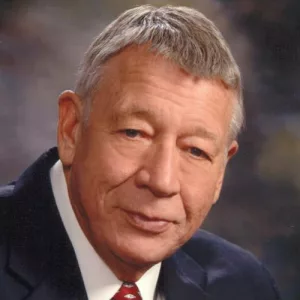

Join Dr. Chrysandra Brunson on The Calling’s radio show as she sits down with Henry Yoshida and Joe Massa to explore the journey of pursuing dreams and breaking barriers. Henry shares his story of transitioning from corporate life to becoming an entrepreneur, inspired by his cultural heritage and the lessons learned from his parents’ immigrant experience. Discover how Rocket Dollar is revolutionizing investment opportunities and making them accessible for all. In this episode, listeners are introduced to the concept of financial discipline and the significance of starting small when it comes to investing. Joe and Henry discuss the value
CHRYSANDRA :
Welcome everyone to The Calling’s radio show to all the dreamers. I’m your radio host, Dr. Chrysandra Brunson, founder and CEO of The Calling. And it is such an honor to be with all of you today. You know, at The Calling, we have realized that so many people are afraid to go after the dreams that God has placed inside each one of our hearts because they are afraid to fail. And that is just plain wrong because if God has given us a dream and we’re not living it out, we are wasting it and we do not want to die with regret. That’s why at The Calling we love to inspire, empower, and equip people to, after God’s calling on their lives, treat the best kind of eternal legacy possible to have immediate impact on ourselves and our families. We love to do this through so many different avenues, through custom tools, programs, workshops, seminars. but especially through this radio show where we bring on world renowned guests to share how they’re going after their dreams and how you can do the same. Today is no exception. We have the one and only Henry Yoshida. Henry, welcome to the show.
HENRY YOSHIDA :
Thank you very much. Thank you. Thank you.
CHRYSANDRA :
We’re so happy to have you and to have the one and only Joe Massa. Joe, welcome to this show.
JOE MASSA :
Yes, thank you for having me. I’m here because Henry needs to be here. He’s so good. He’s got such great content, but I’m just happy to be here with you.
CHRYSANDRA :
This is a dream. And you guys are live in studio with us, which is just very special to my heart. I think in person makes all the difference. And to have you here, Henry, is such an honor. Can you both just share your leadership positions that you have held and are currently leading right now?
HENRY YOSHIDA :
Sure. I’ll start. I am the CEO and co-founder of an investment platform called RocketDollar at RocketDollar.com. And we have tens of thousands of customers who can take their IRAs, keep the same tax treatment, but instead of stocks, funds, and mutual funds, our customers can buy private and alternative investments. So real estate, crypto, invest in private companies directly.
CHRYSANDRA :
That is phenomenal. And I think, Henry, many of us have perhaps used your incredible technology to advance our lives. So we can’t wait to hear all of those details and how you started this. And Joe, a little bit about you.
JOE MASSA :
Yeah, so I’ve been in the radio industry alongside of Chrysandra for many, many years, but I now currently own and operate a podcast network called Podtopia Network. So we help individuals find their brand, build their businesses, and really get their voice out there through the power of broadcasting, podcasting, and radio in general.
CHRYSANDRA :
The best of the best right here. And you guys together talk about a powerhouse duo right now. Well, Henry, take us back to how you you started this incredible company and what what sparked the innovation of it?
HENRY YOSHIDA :
I got the idea after my last company had sold. I sold it in 2016 to a Wall Street firm, Goldman Sachs, and that platform serviced a customer segment that was just getting started with savings and retirement. And after that company sold, I spent a couple of years thinking about what’s another way that I can create a product in an area that I was familiar with, so financial services specific to retirement and tax-advantaged accounts. that could impact a different segment and maybe allow people to invest monies, but just a different group of people altogether. So that kind of became the idea of thinking about Rocket Dollar. It was people were investing in private companies, less companies were publicly traded. A lot of my friends, you know, at this point, I’d had a startup that then got acquired. I ended up meeting a whole network of people who are venture capitalists, private equity folks, and so forth, and realized that a lot of regular people actually don’t invest in the things that they invested in. It’s because most of their money was inside of a 401k or IRA. So I decided to see if I could tap into those accounts, let regular Americans invest in the same things that these VCs and private equity folks were doing.
CHRYSANDRA :
I think we’re all seeing these bubbles, probably just listening to you, Henry, that this is such a brilliant idea and historic one. And we had to tell us when you were little, what what do you see going back to your past? Were some of those strands in the fabric of who you who you are today and what you’re doing today?
HENRY YOSHIDA :
Well, we talked about this before the show. I am a firstborn United States citizen. My parents, they immigrated from Japan. They met in America, but they never went to college, never had really the typical corporate job with the benefits. And they always struggled with money. And part of it’s because they didn’t understand the system in the United States. And one of the things that I just learned was When I was in high school, they didn’t understand the way that the United States worked. And I just had this belief that if you understood how the system worked, then you had the ability to succeed within that system. And it kind of inspired me to learn about either law or about the way money worked. And truth be told, I actually pursued through college the law one and then realized I didn’t have the money to keep doing that. So then I switched to finance as a way to get a job. And then I’ve never looked back since. But it was just… thinking that if I understood how the way money worked, how money flowed in the United States, then that was a skill that would help me do better than my parents. And, you know, every parent wants their children to do better than themselves. And they encouraged that. And it just led me to thinking about ways to create the biggest impact possible in a positive way. And knowing that probably outside of health and relationships, maybe money was always something in the top three or five of just concerns and stresses for all people in America.
CHRYSANDRA :
Right, right. And well, for you to have the courage to, Henry, to switch degrees in the middle, you know, I think that takes a lot of bravery to do that.
HENRY YOSHIDA :
Well, truth be told, I was planning on going back. I just wanted to save enough money to then go back and finish the law part. I just never went back to it. But everything I did in my undergrad days were geared towards me going to law school, becoming a lawyer. And it changed because there was no financial aid available for me to go to graduate school. and ended up taking this job thinking it’s a big company. I worked at Merrill Lynch for 10 years. I could save up some money and then go back and go down the path that I was actually really geared towards doing and structured my entire educational background for.
CHRYSANDRA :
Right. Right. Well, it sounds like this just being an entrepreneur was in your DNA since you were a little little lad. Would you say what was what was it like to be to grow up here in America, but with the Japanese background that you have? Talk to us about that.
HENRY YOSHIDA :
You know, being Japanese was very different. I grew up in Dallas, Texas, the suburbs of Dallas, Texas, and there were no other Japanese-American students in the entire time I was in elementary, middle, or high school, except for my brother, because he was 21 months behind, so always two grades behind, and for a portion of the year, only one year different in age from me. And it kind of created this two-step system of being a little bit of an outsider and trying to need to blend into other groups, because I didn’t quite… Blend in directly with the Asian American population because they were predominantly in my area growing up Vietnamese actually was very big where I was and then Chinese second and I was neither one of those and then obviously I wasn’t you know Caucasian or let’s say some second third fourth generation Texan either so It put me in a position to always think about like wanting to understand how the other side thinks. And that’s what helped me a lot, I think, in business and growing up just throughout my life was that if you felt like you never fit in, you always had to take the stance of the perspective of the person sitting across from you and understand where they’re coming from. because you didn’t have those common experiences and they may have looked at you a little bit differently. So they may be communicated to you as if you were somewhat of an outsider. It was subconscious to maybe be fair, but you just always knew that there was an undertone and those kinds of thinkings in the back of your head actually help you become more observant, which then allow you to identify opportunities that you can maybe solve. You know, find your calling, for example, or where to create a business. You know, financial services is a gigantic industry. So where are you going to create a business where you can make an impact and actually get noticed in a very big industry with a lot of money behind it? And that’s where the ideas for all the companies I’ve started to sort of come from.
CHRYSANDRA :
Well, I think that that’s just priceless wisdom that all of us can now we’re just walking away from. It’s almost a mic drop, Henry. We we love that. Can you talk about an experience, you know, on on this journey of going after what each one of us are called to? We see the common theme that there’s so many different giants or trials or, you know, obstacles that get in our way. How have you if there’s one that comes to mind, how are you able to overcome it and know that you could get through it?
HENRY YOSHIDA :
weird thing is with rocket dollar the goal of course is to build the business as big as possible and be successful but when i was at merrill lynch one of the most impactful things that i used to always think about was my entire job so i would spend four business days a week traveling all over the southern united states from texas up through colorado and then i went west to silicon valley And I would spend my time in lunchrooms giving presentations about joining your 401k, the company 401k, because that’s what I was paid to do. I was a consultant for the 401k plan. And what I really liked was that there’s probably someone, the youngest, most junior employee in this lunchroom, and I’m the guy who brought breakfast tacos or donuts or bagels, depending on the particular setting. Oh. The young person in this room is going to listen, sign up for this plan. These are all paper-based forms, not online when I started. And probably put away something like 5% or 10% of their salary. And in 20 years, they’re going to look back and say that that was the best decision from a financial standpoint. You know, again, health, relationships, different area of life that I didn’t deal in. Right. But they would look back and say that that was the single best financial decision I ever made. And I had a little part to do with that. And maybe it’s because I bribed them with a breakfast taco. Right. It’s the only reason they showed up to the meeting in the first place. And then they blindly filled out the form and then forgot they did it.
CHRYSANDRA :
Right. Right. Well, it gives me goosebumps. Honestly, Henry, just thinking about that, that that decision. And is it a decision that could be so tiny and means or, you know, seems so critical of giving up something, quote unquote. But it would have such a huge return on investment.
HENRY YOSHIDA :
Right. And for someone you never even met in person. And now we’re in a digital age. So I only bring this up. I was telling Joe one time that sometimes people reach out to me via LinkedIn or Instagram.
HENRY YOSHIDA :
And they remember they’ll say that, hey, I was in one of those rooms 15 years ago and you were the guy that came in. That was my first job out of college. A lot of other things didn’t work out, but this one did. And now they have a half a million dollars sitting in an investment account.
CHRYSANDRA :
Wow.
HENRY YOSHIDA :
By putting away 5% of their then entry-level startup salary.
CHRYSANDRA :
Right. I mean, Henry, just for people that are tuning in and saying like, oh, I want to jump into that. And we’re going to share more about exactly how to get involved in Rocket Dollar. Sure. But why is it so important for people to start investing immediately?
HENRY YOSHIDA :
Well, you know, at some point, you have to think to yourself. I think the attitude for a lot of folks is that it’s just too late. There’s no point in starting now. You’re too far behind. And, you know, I think that’s obviously the wrong attitude. It’s that, yes, would it have been better to start 15, 10, 20 years ago? That’s true. But if you haven’t, you just start somewhere, whatever amount you can. And I think these little compounding effects are really what… create big differences down the road. So right now, in modern times, we think about this sort of the 1% better every day rule, you know, kind of maybe more pop-culturized with atomic habits by James Clear. But that’s actually a concept in Japanese manufacturing, which is just look for little things. If you fix the little things every day and everyone is working to fix little things and get 1% better every day, then… After a year, you’ll be 37.5% better. After 10 years, if you’re better by 37.5% in one year, where would you be if you made a 1% improvement for over 10 years? And it’s the same thing with money. It’s the same thing probably with health and getting in shape and eating a little bit better. One little change per day compounds on itself. Walk five minutes to start. you keep that up for a year, you might be up to like walking 30 minutes an hour. You walk an hour a day for two years, the compounded health benefits are significantly more than when you started two years ago.
CHRYSANDRA :
we love it so much henry we we have so much more to ask you and joe what you’ve taken from your relationship with henry and and the wisdom that has been given to us you guys don’t want to miss a second this is a life-changing conversation we’ll be right back so Twist and shout with Lee & Co. They are the premier oldies band delivering the rock and roll vibes you’ve been missing. Great songs, great memories. Book them at LeeAndCo.com. Liquid Acre is the world’s first crypto to land marketplace, allowing you to own fractional acreage through non-fungible acres. Don’t let the dream of owning a piece of the trillion dollar real estate market slip away. Visit liquidacre.com to invest in real survey land in seconds and start building your real estate legacy.
ADVERTISER :
Continue to grow in the calling God has for you through ORU Online. You can earn your degree without changing your busy schedule. 100% online and 100% on your time. Learn more today, oru.edu slash calling.
CHRYSANDRA :
At Ignite Brilliance Coaching, you will get 34 years of science teaching, a decade of university level instruction and over 10 years of instructional coaching to empower educators with the tools, mindset and confidence to thrive. Contact Ignite Brilliance Coaching on Facebook. we are back thank you for listening to all the dreamers radio show you guys we have just been in awe of the wisdom that has been given to us just at this first half we’re in for such a treat for the second part and how we can get involved in rocket dollar we have the one and only the founder and ceo of rocket dollar and that’s henry yoshida And we are so honored that you’re here with us in person, Henry, and that Joe Massa was able to bring you in studio with us. Joe, before we went to break, I just wanted to share and ask you, how has your life changed from meeting Henry?
JOE MASSA :
Well, you know, listening to him talk, you get to understand the wisdom and the knowledge and the experience that he’s had that he brings to these conversations. But it’s really one of those things I think, you know, obviously getting 1% better every day is the ideal scenario, but it’s more learning the discipline of… Pay yourself first. Take care of yourself. Don’t think of yourself as an afterthought, whether that’s with your health, whether that’s with your finances. You have to build that into your life, your financial discipline, your health discipline, whether you’re just starting from day one. or you know the old adage the best time to plant a tree was 20 years ago the second best time is today so if you haven’t started on that path learning and listening to someone like henry who’s done this and helped thousands and thousands of people do this in their daily lives you really take away the stigma of it being daunting you just have to actually start so take Take care of yourself first. Pay yourself first. And then, you know, the long term compounding effects of that will benefit you much greater than sort of being terrified of actually getting your feet wet and just doing it. So I think the one thing I’ve learned from Henry is stop overthinking it and just get started. Just do it.
CHRYSANDRA :
Henry, so tell us of a situation, and this could be within Rocket Dollar or just throughout your career or family life, but some scenario that you, it looked completely impossible, but you had to experience a miracle and knew that it was in store, but you had no idea that it could happen.
HENRY YOSHIDA :
I would probably say it’s in this entrepreneurial journey. I mean, there were times in my current business, my last business, I’m on number three now. So I was a corporate person for 10 years. And then I started a management consulting business. that was a little bit easier because it wasn’t a technology business it wasn’t a product to be built but the two since then have been technology and product businesses and there were definitely times where um it didn’t seem like the business was going to make it you know some miracle had to happen and truth be told i didn’t i wasn’t sure if we were going to make it like we were actually making contingency plans to shut things down but then all of a sudden we got customers in the last business and we had an investor that came through And they got to us right at the right time and we were able to turn things around, eventually exit and sell that business.
CHRYSANDRA :
What did you feel like, Henry, in those moments? Because I think all entrepreneurs relate to what you just said of the agony that you feel at different moments.
HENRY YOSHIDA :
well at that moment i would tell you and all entrepreneurs can probably relate to this at that moment they think to themselves why did i leave that corporate job so that’s probably the first thing that you think about the safety net right and and it really did seem like things weren’t going to work out and maybe i shouldn’t have taken this path but if you don’t take that path then you’re never going to create that product that could impact more people i mean the reason why i left the corporate world was not because I hated it or that I was bored or that I didn’t see myself doing it forever. My thing was that at that point, after being in the corporate world for 10 years, I was doing things that had an impact, but to a very small group of people. And the people that I was helping were large, midsize corporations at this time. And I think to myself, I go back to when I was growing up, that the people who really needed help were or that entry-level employee in the lunchroom. My parents, when I was in high school and didn’t understand what a retirement plan or an IRA was, or even how mortgages worked and so forth. So I just thought that I need to do something if I want to impact the people that I really set out to help in the first place. I mean, at this point, I’d given up on the law side of it to go into financial services. And I really thought that I was getting really good at getting paid to help corporations pay less in taxes or fees for themselves, but they didn’t need my help. I mean, they were already wealthy from a, from a business standpoint. What I really wanted to help was the average person who was more similar to my parents or that person in the lunchroom who had just started the job. Or basically everyone else in America and creating these products. It was always thinking about how can you serve the largest group of people in something that you’re very, very passionate about, which for me was maybe ensuring that people have stability and happiness and the ability to live comfortably in the second part of their life. That’s the past professional part, because now with medical technology and longevity, that part is just as long as the working part of your life.
CHRYSANDRA :
Well, for people that are, you know, they’re just they’re taking this in and they’re saying, I do need to do something today. What would you challenge them to do?
HENRY YOSHIDA :
Yeah. If they don’t have one of these types of accounts, I mean, now you can look them up. It doesn’t cost any money to open one of these accounts, whether that’s. A company like Rocket Dollar, a company like Fidelity or Schwab or Vanguard, or with a financial advisor. Typically, the account opening fees are minimal to zero. And now, if you’re dealing with ones that can invest in public stocks, you can start with as little as $1 a week, $1 a month. And again, that’s that 1% better every day. I talk to people who… in front of groups they’ll say that you know at the end of the day i have no money left to spare for anything and then the reality is that if you really thought about you probably do now there’s probably a very small segment of the population they’re truly in that situation but i would argue that most of the people tuning in listening to us right now If you were to be honest and look at every transaction, every dollar you’ve spent, there’s probably a way to cut it out. I mean, you know, we’re all sitting here. I drove past, I think, six Starbucks on the way here. And when you say that Joe brought me here, he quite literally brought me here in terms of driving me. And we did pass six Starbucks. So if someone passes that up, that’s money. That’s three bucks that could be put away today. Three bucks invested at 10% per year actually ends up being $40 in 15 years.
CHRYSANDRA :
Right. Right. And to have that mindset and the the ability to have the wisdom to know that we are living longer and God wants us to be able to make the most out of the time that we have here. What would you say, Henry, for your family? Your nuclear family and your outer family, what have they been able to learn and embrace from this experience and what you’ve taken from the amazing Japanese culture that I think most Americans, including myself, need to discover more?
HENRY YOSHIDA :
Well, I think we get currently a good rap for being generally kind, hardworking and disciplined. I just try to show that to my children. So when I’m around, I think to myself that they probably pick up more from me when I’m not actually talking to them, just by my actions, the way I carry myself, the way I communicate with people, how I go about my daily life. And I think about that lot maybe sometimes i overthink it and stress myself out a little bit but i’m very conscientious about trying to be present but also understanding that most of what my children or my family will pick up from me probably doesn’t happen in the form of a direct conversation with them so in a way you’re always you’re always there and you always have to be the best version of yourself even when no one’s watching
CHRYSANDRA :
Right. Right. Well, Henry, we we don’t know where time goes. It goes by so quickly. We’re coming up towards the end of our show. But we do have a couple of questions for you before we go. And we would love to have you back sooner than later. We would love to know, Henry, just your what your advice of someone tuning in and. they’re listening right now and they’re afraid to go after what their true calling is and they know deep and down like what that uh you know that dream and that calling and purpose is and they’re hearing about rocket dollar and they’re hearing how that’s so successful but how could they ever go about it how would you encourage them to take the next step and why it’s so important that they do
HENRY YOSHIDA :
Well, just think about how you might feel a long time from now if you never even took a chance and tried. I mean, one of my business heroes is Jeff Bezos, the founder of Amazon. And he’s always been asked. He was making a million dollar salary in the 1990s. This is the 1990s. He was making a million dollar salary. And they asked him in interviews, why did you leave that? If you’re making a million dollars a year, then what would you be making now in the investment banking world? And he said, you know, I wanted to start this business. I could always go back. But the way I thought about it is if I were an 80 year old version of myself and I had never tried to start this business, I would have regretted it.
CHRYSANDRA :
Yeah.
HENRY YOSHIDA :
So in other words, he didn’t think of himself as the 20 something year old Jeff Bezos at that time. He tried to position himself and understand what would the 80 year old Jeff Bezos think of himself if he never tried or never at least pursued this calling. For example, if it doesn’t work out, I think all of us have something that we’re doing today that we could live with and then find something else to live for.
CHRYSANDRA :
not to die with regret that we love that here at the calling so much. And Joe, we just want to ask you as well, what would be your piece of wisdom for someone tuning in? That’s afraid to go after what God’s called them to.
JOE MASSA :
Yeah, it’s hard to argue with what Henry just said. You do have to humanize the idea and understand that everything is terrifying when it’s on paper and it’s just a marble rolling around in your head. But taking some simple actions to really map out your idea and then not overthinking the process as far as trying to have everything perfect and all the ideas maxed out to the perfection and everything dialed in and logos and all the stuff that’s irrelevant. People get really hung up on the thought process and the planning phase and they forget to do the doing phase. So my best advice for my I have to give myself daily when I’m coming up with new businesses or ideas or programs is quit thinking about it and quit planning it and just actually learn by doing it. So don’t overthink and just start working.
CHRYSANDRA :
Thank you, gentlemen. And Henry, I think everyone wants to be a part of Rocket Dollar. And so can you tell us how we can do that and how people can find Rocket Dollar and yourself and get involved immediately?
HENRY YOSHIDA :
Sure. RocketDollar. That’s our domain name. So just RocketDollar.com. RocketDollar.com is an easy way to find us. We have a lot of information. So even if you’re not ready to quite do business with us, I think you can learn a lot about how alternative investments, how IRAs with private investments work. There’s a lot of information there. So one of the parts of our site that I’m most proud of is that we have over 500 articles that just talk to um from an education standpoint to help people understand and then for me personally i’m pretty easy to find uh henry yoshida and on instagram or linkedin can you spell your last name henry for everybody sure it’s y-o-s-h-i-d-a so henry yoshida it’s it’s epic and henry uh for people just recognizing people can download uh the app So they can open an account. It’s a web app, so you don’t need to download it. I think that’s even more helpful. So people don’t download apps anymore. They don’t want to. I think we have enough apps on our phone right now.
CHRYSANDRA :
Agreed, agreed. Well, you guys, we couldn’t be more honored for both of you to be in studio. Joe Massa and we have the founder and owner of Rocket Dollar, Henry Yoshida. You guys, go find these gentlemen right now. Go to Rocket Dollar right now and start your first investment or your 10th one, but you’ll look back and never regret it. Till next time, dreamers. Keep dreaming big.

