



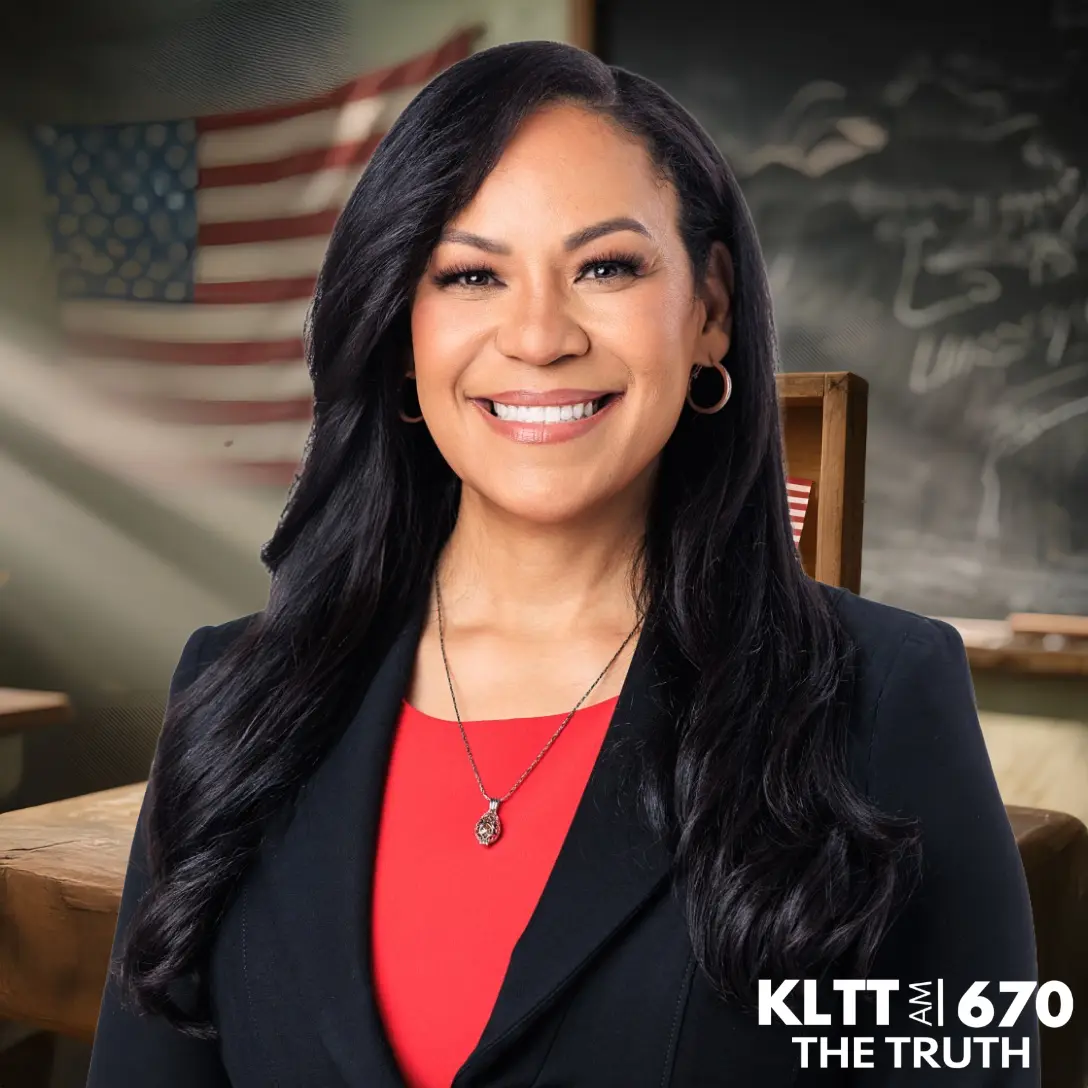
Join Priscilla Rahn as she welcomes Bas Wolf, a seasoned educator who shares insights from over 26 years of teaching. In this episode, they discuss the evolving challenges in education, from technological disruptions to the enduring value of foundational skills. Boss highlights the inspirational role of teachers and shares his journey from a young student to a mentor shaping future leaders. Explore how traditional educational systems are adapting, or failing to adapt, to the modern world.
SPEAKER 01 :
Welcome to Restoring Education in America with Priscilla Rahn. She’s a master educator and author leading the conversation to restore the American mind through wisdom, virtue, and truth.
SPEAKER 03 :
Well, hello, everybody. Welcome to Restoring Education in America. I’m your host, Priscilla Rahn. Thank you so much for joining the conversation today. As I have been talking about all month of January, I’m so excited that there’s a new school opening in the Centennial area. If you’re not familiar with that area, it’s a suburb of Denver, just a little bit south. Excalibur Classical Academy is a private school under the lineage of the American Classical Lyceum as implemented by the highly successful John Adams Academy. They utilize an American classical leadership curriculum and pedagogy. Excalibur offers families a unique blend of intellectual formation grounded in faith, where children can take a stand for God and country as our founding fathers did. Our goal is to restore America’s heritage by developing servant leaders. They’re going to be opening K-3 and And if you know where Maggiano’s Little Italy is off of I-25 in Centennial, that’s kind of the location where it’s going to be. So reach out to them. Go to their website, ExcaliburClassicalAcademy.org to find out more information. Enrollment is open and they’re also looking to hire great teachers and great staff members. Well, we’re going to celebrate school choice in Colorado. That school choice movement is opening. And I’m going to invite someone to the stage who knows all about teaching and all about innovation. My friend, Mr. Boss Wolf. Hi, Boss.
SPEAKER 02 :
Hey there, Priscilla. How are you today?
SPEAKER 03 :
I’m doing great. You are a teacher in Douglas County, and you’ve been doing some really amazing things. But before we get into the conversation, I’m going to share a little bit of your bio with our listeners. Bas Wolf was born in Hamburg, Germany, and spent his early years living across Germany, Texas, and just outside of Washington, D.C., before his family settled in Steamboat Springs, Colorado, in 1989. He earned his degree in English from Pepperdine University, completed his teaching licensure at Colorado State University, and has spent more than 26 years as a veteran teacher in Douglas County, most of that time in Highlands Ranch High School. After the sudden loss of a close friend and colleague, Boss stepped up into the ACE mentor program for at-risk students, a role he’s held for the past 11 years. That experience became the foundation for his business, Endeavor, which helps students develop the skills and character needed for real-world success. Boss lives in Sedalia with his wife, Kristen, their three children, and a very full household grounded in family, faith, and purpose. That’s amazing. Way to go, Dad.
SPEAKER 02 :
yeah it’s kind of fun to hear your whole life sort of summarized like that but it’s it’s all true and that’s just where I’ve landed now faith and family and it’s the most important things to me and on the side then get to do some teaching as well
SPEAKER 03 :
So, boss, you’ve said that since you were a freshman in high school, you knew that you wanted to help people and see beyond what’s easy and obvious. Looking back over your past 26 years in education, how has that original vision held up or changed as the world has changed?
SPEAKER 02 :
Oh, gosh. The original vision I don’t think has changed one bit. When I was a freshman, I had an English teacher, Mr. Sinclair, who was just incredibly impactful, specifically in the way that he was relational with his students and the way he built them up and made you feel like you were the most important person in the room. And that kind of stuck with me. And when I became a sophomore and was reading some English books, namely The Great Gatsby, I kind of started to see how life has a lot more meaning when you start to look beyond the surface and beyond the obvious things. It’s where the real depth, I think, exists. And that made me want to be an English teacher in specific. And from there on out, I had incredible teachers and mentors that kind of reiterated that, yeah, I was on the right path. And then for 28 years now, it’s been my life’s mission to be there to help kids. And the nature of helping them has not changed for me at all. But I think unfortunately what I’m helping them with has changed pretty significantly because I’ve just noticed that no one else is. And the normal avenues where we might see help for kids or for kids in the classroom or at home, they’re being compromised. And so I just feel that weight of my purpose even more than in the past.
SPEAKER 03 :
I don’t know if you feel this way, but I think the longer I’ve been in the classroom, the more my heart has opened to this mission because you just see the need. It has increased. You started teaching almost three decades ago. I’m in my 32nd year. Teaching has changed so much. The kids have changed. The social environment has changed. Okay. So part of that change, you and I grew up without technology, without cell phones. Thank God. Okay. Yeah. But now we’re living in this day and age where we’re battling kids with their cell phone and technology. Every kid has a phone. Kids are addicted to their cell phones. I am fighting with kids. They would rather go to detention and have me call the dean than to give up their phone to me for a class period. How does this addiction show up in the classroom in ways that you think parents don’t realize that it’s showing up?
SPEAKER 02 :
Oh, I don’t know about whether parents realize it or not. I think at some point parents have to recognize that a lot of the responsibility is theirs. If a kid is addicted at school, they’re probably addicted at home too. And parents are probably, I hope not, but seem to be kind of turning a blind eye to it or have just capitulated and said, I don’t want to keep fighting it. But the addiction is very real. To me, it presents a really unique experience. situation for education to finally maybe start questioning how and why we do the things that we do. I mean, you know, we haven’t really changed the dynamic of a classroom and what we’re teaching in three decades and arguably much, much longer. And we’re still sitting in this world of sit down, take notes. I’m the expert. You regurgitate these notes back to me on some form of worksheet, homework, or comprehensive test. And then we just move on. And I think with phones in the classroom, we’re missing an opportunity. Same with AI. I think teachers that are afraid of AI, I think they want to hang on to this old dynamic and old paradigm of how we do education. that the teacher is at the front of the classroom and they are the only expert in the room and we must adhere to what they say. And I think phones, if used properly and if certain technologies are used like sight blockers and working on the the kids that use vpns and how to monitor that but if you have a teacher that’s up and circulating around the room as they help kids use these devices to learn more information instead of a barrier to information i think we have an opportunity to really flip the classrooms around as to what they could be versus what we’ve always been doing so i do see the addiction but i see teachers having an opportunity to Monitor it a whole lot more and utilize it while they’re while they’re present. So I’m hopeful.
SPEAKER 03 :
That we take advantage of some of that, you know, it still bothers me. Of course, I don’t say anything when I’m going going out to a restaurant. And I see a toddler. with a cell phone, with the family. And I’m thinking, do you realize the psychological damage you are developing in that child, the addiction, and you’re missing an opportunity to connect. I mean, what’s wrong with a coloring pad or a puzzle book or something else, a manipulative, you know.
SPEAKER 02 :
A word search, anything.
SPEAKER 03 :
Something, anything but the cell phone. And parents, they’re taking the easy way out by doing that. But they’re also damaging their children. Please stop doing that.
SPEAKER 02 :
You give them the headphones and the AirPods and then they’re next thing you know, they’re wearing hoodies and their hair is in front of their face. Yeah. And I call it the zombification of our youth, because when I try to sit out in the hallway as much as possible and just engage with kids during passing periods. And boy, the social level, the social skills, the interaction where you just see somebody and you say, hey, good morning, how are you? It has just vanished. And they do, they walk around and their heads are looking down, I shudder to think what this is doing to their, their spines and their their vision. And then they plug in these headphones, and some of them are giant noise cancelling headphones. And so they are, they’re shuffling through this world, attentive to a world that is beyond their screen. And the social skills is, is where I look at it. And I say, They don’t know how to have conversations anymore. They don’t know how to have those deep, rich, meaningful relationships because they’re always looking for next and better and can just swipe on to someone or something that’s more interesting.
SPEAKER 03 :
Definitely true. And I don’t think parents realize how smart kids are. They’re able to get around some of these firewalls and the way they talk to each other through text messages. It’s it’s so bad. So the social emotional part that that is something that we are. That’s another layer that we as teachers are having to battle in the classroom on top of. teaching content to your point, like we now have to walk around a classroom constantly monitoring because we’re trying to teach children how to have integrity with their technology on top of making sure that they’re learning something new. But let’s talk about some of the systemic gaps. You’ve said that the education system hasn’t qualitatively kept up with the new reality. What are schools still teaching well and what are they failing to teach?
SPEAKER 02 :
um what are they teaching well um that all depends on the individuals that are teaching it i don’t think a subject matter matters as much as the person leading it i mean i have some uh some colleagues that i work with in the science department that bring a sense of awe and wonder and excitement to every single lesson they do they go so far above and beyond that it’s not a kid just sitting there taking boring notes is them engaging with the telescopes, with the planetary models, with all of this to really excite them so they’re not learning because they have to. They’re learning because they want to. And so I think whether it’s a science teacher, I know our PE department and some of the physical stuff that they’re learning nowadays and what we’re trying to realize about the human brain and development and how it coincides with physical health is really exciting for a lot of PE departments. I think unfortunately our English and social studies departments are Still teaching the same old books, and even if they’ve modernized some of the books, they’re teaching. It’s still unfortunately a platform for personal beliefs. And it is a platform for. As I’ve heard from a shocking number of students, a platform for shaming, for disparaging, for othering as a term that they might use. And so they’re still hanging on to the model of I am the expert. And unfortunately, it can come at a price of egotism very easily. As a teacher, you know this. It could become an ego game very easily if you don’t keep it in check. So for me, as an English teacher for 17 years, I always had to kind of fight that, encouraging discussion, encouraging opposing discourse. And when I became a teacher for ACE and these at-risk students, I didn’t have the luxury of thinking they would just fall in line and listen to my expertise without questioning me at every turn. And I… found that I became a much better teacher that way. And I don’t see a lot of teachers encouraging opposing discourse. And that I think is probably where we’re failing the most in our cultures today and in our schools is we don’t want to hear the opposing viewpoints. We seem to be dropping the ball there.
SPEAKER 03 :
If you’re just tuning in, my guest today is Boss Wolf. He is a teacher in Douglas County and a very good teacher at that. I’m just going to assume that you are.
SPEAKER 02 :
I like to think so.
SPEAKER 03 :
So, boss, you have created this website, Endeavor, and it grew out of your work with struggling students. What problem were you trying to solve that traditional classrooms weren’t fulfilling?
SPEAKER 02 :
Well, it came really as a – not an aha moment, more of a duh moment because – Every single time that I was having back-to-school conferences or back-to-school night and parent-teacher conferences, every individual that I would sit next to on a plane and describe what it is that I teach, without fail, they would always say something along the lines of, this should be in every classroom, this should be in every school, this should be required. And I realized that really nationwide, our schools are not going beyond the core curriculum as much as they should. we’re still hanging on to some of these old models of education instead of saying, well, what are the true skills for success? What are the things that are going to make people genuinely successful in the world? Whether that’s through college or not, they have these real world skills that if you really study a lot of successful people, and I love to do that. I love, I’m a huge reader and biographies and, And anytime I can study somebody who has made it, who has achieved whatever levels of success we sort of ascribe in our culture, they all sort of share some of the same traits. So I thought, why not try to distill those lessons down to a couple of core ideas and values that we could put on a website and literally turn into lessons if the schools aren’t going to do it that we at Endeavor could say, yeah, this is what is important to a student and this is what is important to their future beyond rote memorization of a few facts. So it really was a look at what is the mindset and the mentality of success versus a couple of memorized facts that somebody who’s successful at Jeopardy might have.
SPEAKER 03 :
Endeavor, such a great name. You have a website, EndeavorCourses.com. And if the listeners go to your website, there is a tab that outlines the courses that you have. Transferable Skills, Have a Mission, The Value Effect, Art of Discipline, Job Interview First Impressions, Adjacent Possible, Job Interview Questions, How Not to Blame Others. Oh my goodness. That should be at the top. Okay. How to move forward, overcoming your inner critic, seek out discomfort, think, win, win. Okay. So talk a little bit about how you decide what courses to create. How long are the courses? How much does it cost? Give us all of the details.
SPEAKER 02 :
So I decided on, on which ones, namely because they were the first 12 that I put up there were sort of the ones that I’ve develop the most and they are the ones that seem to keep coming up in my classroom. I mean, I refer to the value effect probably at least on 50% of my other lessons. We talk about transferable skills, ad nauseum in my classroom, because that’s just a future skill set and value that I think is paramount to success. And so the adjacent possible is one where I’d say, This is how we always move forward with intention and purpose. So most of my lessons every day sort of revolve around those things. And so these just kind of became like, these are sort of my foundational lessons. And then from there, I can sort of branch into some more nuanced lessons down the road. So that’s where the genesis of those first 12 came from. Each lesson is probably 10 to 12 minutes. And it comes with a journal, a downloadable journal. You can actually… fill out what what the the prompts are i hate to use the term worksheets but it is more of a an ability to to translate your thoughts onto paper and monitor your progress and then there’s also a video that comes with it you can either just do the lessons uh yourself as a parent or as a student and then you can also listen to me blather on about the same thing for 10 or 12 minutes so And then I just put a book version of all 12 lessons on Amazon very recently. So pretty excited about that. Just endeavor courses. Okay.
SPEAKER 03 :
And how much are the courses?
SPEAKER 02 :
So each one is $19.99. And then I am currently working with our website to offer bundled courses at different price points so that if you do three, four or five at a time, that there’s a discount for that as well.
SPEAKER 03 :
Okay, kids, this is what we call capitalism. You have an idea and then you organize your idea. And if someone wants to pay you in the free market exchange for your idea with capital, you know, That’s how we make the world go round. I think it’s a great example. You should do a lesson on capitalism. Well, I do, actually. Oh, well, there you go. OK, see, you’re smart. OK, boss, let’s talk about what what are some examples of these values that are important for kids to know?
SPEAKER 02 :
For the most part, knowing that they themselves have value. I think in this day and age, we have diluted children down to their three basic identities, their religion, the color of their skin, and their gender. And I think that the students that come into my classroom, I hope and pray that they have a sense of value so far beyond those three descriptors, that they are children of God, that they are valued for every single part of who they are. So that I think becomes primary is knowing that you have value and knowing that you are worth investing time into. And that just because a lesson doesn’t necessarily grant you a vision of your future that you vibe with, you still deserve that and you should go and seek that. And that’s where most of my lessons, I really try to say, not only are you valued today, but you have value as a future successful person that is worth doing the hard work now. And so that becomes another one of our lessons is hard work and discipline. Motivation is wonderful. Motivation gets the engine started, but discipline is the thing that keeps our engine running on its own, that keeps us on our path and doesn’t let us deviate from one side to the other because we no longer question who we are or what we’re gonna do in a situation. We have discipline and we know what our true north is, and that keeps us aligned to that.
SPEAKER 03 :
When you talk about transferable skills and discipline, what are some of those soft skills that you think are important for kids to grow up with?
SPEAKER 02 :
Absolutely. I think that one of the primary ones that seems to come up frequently in class is problem solving. Systems thinking is important as well. When you are faced with challenges, one of the mottos we actually use at Endeavor Courses is challenge accepted. And it’s something my own kids would be able to quote back to you very quickly. They know what it means to say challenge accepted, that when hard things come your way, you have problem solving skills, that you don’t give up at the first obstacle. And so you keep pushing through and you have systems thinking to break down the emotional component of a problem into its more rational and logical steps that you can now accomplish. So systems thinking and problem solving are probably our two big ones. Resiliency is, I think, becoming more and more valued because we’re seeing so many students that do give up so quickly at the first sign of adversity, at the first sign of disagreement that we we retreat to the easy route of, well, I’m going to label you and then I don’t have to work through that problem anymore.
SPEAKER 03 :
Well, we’re living in a day and age where those soft skills aren’t really taught in the classroom. We’re not grading. In fact, this concept of those types of life skills are white supremacist. I mean, are you hearing that kind of pushback around this type of skill development?
SPEAKER 02 :
Yes, specifically. You know, the idea that these are dynamics of power structures, and I don’t understand that, I guess. You could look at any successful person from any background, any skin color, any cultural background, and discipline is going to exist in their lives if they are successful you can look at martin luther king i see frederick douglass in your your background there i would venture to say if you really analyzed what they had to go through uh problem solving discipline systems thinking resiliency are paramount to why they became so great so i suppose If you want to find flaws, well, you could find them anywhere. If you want to find reasons to not agree with somebody, you can just stay on the surface and you could probably find them pretty easily. But I don’t believe in that paradigm. And I believe in knowing people and knowing their true heart and their true intention. And not just simplifying them as, as a couple of vague terms. So I do hear those, those, that pushback every once in a while. Uh, I, I just don’t give it a lot of credence.
SPEAKER 03 :
So boss, we’re seeing a lot of parents pulling their kids out of public schools and putting them into private charter and even homeschooling. Why do you think more parents are looking outside of the traditional public school system towards homeschooling hybrid models or programs, even like yours in endeavor?
SPEAKER 02 :
I think for a lot of reasons we’ve talked about, they’re aware, they know that their kids are coming home and they’re saying these outlandish things that were talking points from a teacher that don’t align with their own values. And it’s not so much anymore that we can question those. If we question things, we are labeled. And so I think a lot of teachers are setting themselves up for this because we’re not allowing civil discourse anymore. And so parents, I think for the most part are seeing that and saying, so we’re allowing these schools to become havens for ideological capture that doesn’t align with my family values. Or we have also done a lot of damage in public schools by sort of being so worried about our graduation rates and so worried about our statistics and numbers that we keep students in our building and i suppose i can only talk for my school but but we allow people to have second third fourth fifth 12 chances and unfortunately they make the learning environment really uncomfortable for a lot of students that want to get a good education want to feel safe and because we are allowing certain behaviors because We allow our students so much weight to what they say and so much privilege that we don’t argue with them. We don’t discipline them anymore because that hand has been taken away from us. We don’t allow the social disciplining from one group of students to another to exist anymore. None of the corrective behaviors that make school a pleasant experience are really enforced anymore. So we have students that It’s just not fun for them to be there anymore. I know my building has become so pass happy. It’s disturbing. A kid has to be monitored every single step of their day. And at some point, an 18-year-old or 17-year-old realizes that and says, I have no sense that anybody here trusts me or values me to do anything the right way. And that, I think, after… a lot of years of doing that students just realized there is so much more going on in this world than the the core curriculum that we’re capturing for 90 minutes of notes and then just regurgitating on a test and and moving on i think they i think parents realize that wow this is the same stuff i did when i was in school But we’ve got phones and social media and AI and all these things that can really encourage our sense of wonder and awe in the world. What are we still doing the same old thing for? So I think a lot of that is burnout of the lack of adaptation that our school systems have done over the last several decades.
SPEAKER 03 :
Well, from the master teacher himself, Mr. Boss Wolf, go to his website, EndeavorCourses.com, and you can help teach your children how to have all these great skills. And I want to thank you for your time. And to my listeners, thank you so much for tuning in and catch me next time. And remember, educating the mind without the heart is no education. So seek wisdom, cultivate virtue, and speak truth.
SPEAKER 01 :
Thanks for tuning in to Restoring Education in America with Priscilla Rahn. Visit PriscillaRahn.com to connect or learn how you can sponsor future episodes to keep this message of faith, freedom, and education on the air.
