



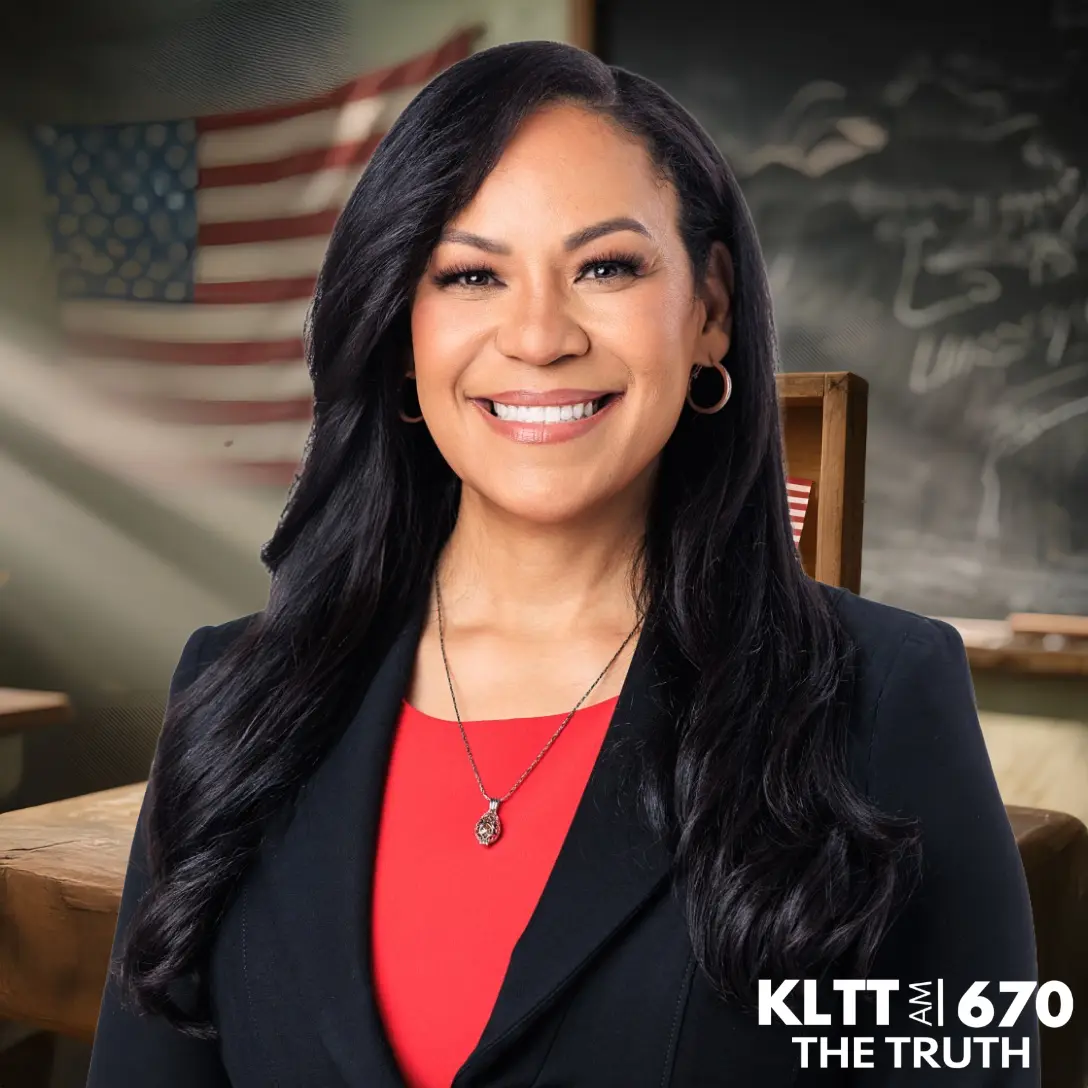
Join Priscilla Rahn as she explores the transformative educational movements reshaping America in its 250th year. Featuring a dialogue with Terris Todd, this episode unveils the mission of Excalibur Classical Academy and Project 21’s initiatives to amplify Black conservative voices. Discover how these pioneering efforts aim to restore America’s educational heritage and build a new generation of informed leaders.
SPEAKER 01 :
Welcome to Restoring Education in America with Priscilla Rahn. She’s a master educator and author leading the conversation to restore the American mind through wisdom, virtue, and truth.
SPEAKER 05 :
Well, hello, everybody. Welcome to Restoring Education in America. I’m your host, Priscilla Rahn, and I’m so thrilled that you’ve decided to join the conversation today. It’s a wonderful year, 2026. It’s America’s 250th birthday. There’s so many amazing things happening. all across the nation in schools, but I have something really exciting to share. There’s a new private school that’s opening this fall. It’s called Excalibur Classical Academy, and their mission and vision is restoring America’s heritage by developing servant leaders who are keepers and defenders of the principles of freedom for which our founding fathers pledged their lives, fortunes, and sacred honor. They’re a private school, opening in the Centennial, Colorado area. And if you know I-25 in Magianos, it’s really close to there, Dry Creek, okay? If you have children that are starting school this fall, kindergarten through third grade, please reach out to Excalibur for more information. Their website is ExcaliburClassicalAcademy.org, and they’re also hiring for some amazing educators. So please go to their website. Well, there’s a lot of things that are happening in our nation and especially with Project 21, which I’m an ambassador for. So I want to bring my friend to the stage. He’s my brother from another mother, Mr. Terris Todd. How are you, Terrace?
SPEAKER 02 :
Doing good. Thanks for having me again. Appreciate it.
SPEAKER 05 :
It’s always great to talk with you. We talk actually regularly because you are the director of Project 21. But before we get too far into our conversation, I’m going to share your bio with our listeners. So Terris Todd is the director of coalitions and outreach for the Project 21 Black Leadership Network and author of Just Being There, A Parent’s Guide to Raising Children. Terris recently served as the advisor of coalitions engagement at the Heritage Foundation in Washington, D.C., In 2020, Terrace was appointed by the White House to be the executive director of the White House Initiative on Educational Excellence for African Americans in the U.S. Department of Education, where he focused on working with educational professionals in the public and private sectors to elevate and bring awareness to the challenges faced by African American students in the country. and on leveraging resources to help ensure students are prepared for college and productive careers that contribute to the well-being of society. He is the host of In the Classroom with Mr. Todd, a podcast on Anchor and Spotify. And Terrace was born and raised in Battle Creek, Michigan. He has worked as a public school teacher, administrator, and college instructor. He currently resides in Woodbridge, Virginia, but his biggest job is husband to his beautiful wife, Karen, and his three lovely daughters, one of which you just graduated, right? Yes.
SPEAKER 02 :
Yeah, my second daughter just graduated from Western Michigan University, where I’m an alum as well.
SPEAKER 05 :
What was her major?
SPEAKER 02 :
Psychology. Yeah. She eventually wants to get her master’s degree and, you know, maybe open up her own private practice working with children and families.
SPEAKER 05 :
Very good. Well, good job, Dad. And you’ve worn many, many hats. When I met you the first time, I was the vice chair of the Colorado GOP. Yeah, that’s right. Yeah, to Western Conservative Summit. I was like, who is this guy? Yeah. I can’t remember what you were talking about. Was it CRT?
SPEAKER 02 :
Yeah, I think it was CRT, Critical Race Theory. Yeah, I was on a panel discussion there at that conference. And when we finished talking on the panel, that’s when I noticed that you were walking our way. I said, oh, here it comes.
SPEAKER 05 :
I made a beeline to you.
SPEAKER 02 :
You were definitely gracious. And I thank the Lord that he connected us because we’ve been together ever since and been doing amazing work. And I’m real proud of what you’re doing there in Colorado.
SPEAKER 05 :
Well, I really appreciate that you’ve invited me to be a Project 21 ambassador. Real quickly, for our listeners who might not know what Project 21 is, tell us a little bit of the history and what the mission is for Project 21. Sure.
SPEAKER 02 :
So Project 21 overall is 21 meaning the 21st century. It launched back in 1992 as a result of the Rodney King issue that was taking place out in California. And what happened was the founders of the National Center for Public Policy Research, which Project 21 is a program of the National Center, they realized that we had some trouble. And the trouble was that black conservative voices were not even being considered in the conversation about what was happening in their own communities. And so as a result of that, uh you get our chairman horse cooper and many others who had come together as founding members of project 21 to say hey i think this is um definitely time for us to launch something that literally kind of you know elevates the voice of black conservatives um all over the country and so that’s how project 21 had started and so that’s been our mission ever since it’s to really elevate the voices of black conservatives all over the country in media, whether that’s social media, like your podcast here, or radio, or even in Fox News, One American News, CNN. We have people on Newsmax, Newsmax 2, and you name it, the list goes on and on. PBS, we have some people on there. We have some people on several different radio stations all over the country, be it local or national syndicated radio. I’m now one of the… standing, you know, visitors or should I say voices on the Vic Percelli show out of St. Louis and also on the Peter Vasquez show out of Rochester, New York. They do amazing work there. And so, you know, it grows from there. But we have several ambassadors as well that are, you know, leading voices in different media platforms and so on. So anyway, that’s been our goal and we’ve been expanding this ambassadorship ever since I started a little over a year ago. So anyway, we have about a total over the years since 92, we have like probably over 400 and something ambassadors nationwide. And so when I came on, I think we added close to a hundred more.
SPEAKER 05 :
So this is really amazing for people to understand that Project 21 has a really diverse group of experts in different fields. And when I came on as an education expert, there were so many doors that opened for me through Project 21 media opportunities. I’ve been on Fox, I’ve been on Newsmax just because Project 21 was able to connect me to these big news outlets. But like you said, other people in smaller networks And in towns that have great reach as well. I’ve been able to speak to a lot of people about important issues around education. So I’m really grateful for that. And I’m really grateful for Horace Cooper because he’s big in media and he’s been a great mentor to so many of us. Just chat a little bit about who Horace Cooper is, because there are a lot of people who might not know who he is.
SPEAKER 02 :
Yeah, so Horace Cooper is our chairman. He’s the chairman of Project 21, and he also sits on the board of the National Center here in Washington, DC. Horace Cooper is, he lives in Houston, Texas area. He was born and raised there from my understanding, but he also spent some time here in DC on Capitol Hill, I think close to 20 years. I think exactly it’s like 18 or 19 years he was working on the Hill. His background is law. He was also, I think an associate professor of law at George Mason University for a number of years. And he’s been highly respected in that regard with his law background and whatnot. But he also is a communications guy. He owns his own business. He has some amazing people that’s working with him in regards to communications. And it’s really more of like a public affairs kind of a business, but he has contracts with various different you know organizations and um so he’s doing amazing work he travels all over touching base with people he’s a christian man um i had the pleasure of sitting down with horace uh to do my review you know of my one year review and it was a blessing i mean we met at a local restaurant here in dc and um and i got a chance to really get to know the heart of the man and um i was truly impressed and i was thankful to the lord that we were able to have that time together to get to know each other uh on that level as uh brothers in christ so Yeah. So that’s kind of him in a nutshell. He’s not married. I don’t think he has any children, but he did have a foster son. He told me that he raised and he still has a relationship with his foster son. And that went really well. So I was really proud of the fact that he, you know, reached back and he grabbed someone to help raise a child that was without a family, basically. And so so his heart is really in the right place. He’s an amazing human being. And I thank the Lord for him.
SPEAKER 05 :
Well, I’m going to be interviewing him here shortly, and I’m going to ask him if you got an A-plus on your review. Nah.
SPEAKER 02 :
I guess we’ll find out.
SPEAKER 05 :
Well, I’ll get the tea. I’ll get the tea.
SPEAKER 02 :
Yeah, yeah. On national news. Yeah.
SPEAKER 05 :
So, Terrence, we are not a monolith. I think that’s the other powerful thing about all of us conservative Black voices in these spaces to say, we don’t always agree on what the left tells us we should agree on. And a lot of us who are Project 21 ambassadors are well into our careers. We have families. But you have a new initiative that you’re working on with some younger folks. Talk to us about this new vision for the next generation.
SPEAKER 02 :
Yeah, so Project 21, when I came on, I noticed that we did not have any type of program that literally reached back and helped build the next generation of Black conservative voices because they’re out here. They’re on college campuses. They’re in HBCUs and so on. And the thing that has been said for many, many years now is that Black Americans are pretty much conservative, you know, in their values socially and whatnot. I mean, you know, we have faith in God. We believe in, you know, believe in family, you know, father and a mother in the home and whatnot, even though, unfortunately, you know, we have a lot of, you know, fatherless homes right now, but we still believe in family. We still believe that a father and a mother should be at the helm of the family and they should both have engagement in raising their own children. We believe in freedom. We believe in free market enterprise. We believe in all of this stuff, you know, capitalism. We believe in making money. I think that needs to be passed down, though, because if we don’t pass this down to the next generation of the things that we believe in and really what our ancestors has passed on to us throughout the generations from slavery until today, then it’ll get lost because we don’t want them ending up with landing in the hands of the left, leftist individuals who are basically Marxist, you know, these are just Marxist ideologies or communism, really, to be honest with you, all entrenched in that kind of ideology. And so so we want to reach out. We want to be the one that’s on the front line of reaching out to the next generation to build the next generation of conservative black voices all over the country and the world, quite frankly. And so I’m So, yeah, that initiative is coming out. We’re right now in the recruitment phase of really recruiting the next generation of people, because I’m going to have three cohorts this year that we’re launching as pilots. And these individuals will be trained. They will be trained by professionals, ambassadors like yourself and I’m even including myself in on that because we want them to be ready for the workforce. We want them to be ready for entrepreneurship or business. We want them to know the importance of family, you know, marriage and those kind of things. And so everything that conservatism embodies, we want them to know that they’re not on an island by themselves. And so they don’t have to be recruited by. Some crazy ideology that’s just far out there that, you know, is just absolute lunacy. But anyway, that’s what we’re after. And by the end of this, each cohort, the plan is that these young people will have maybe some policy initiatives that we can present to their congressman or congresswoman on Capitol Hill. And hopefully it. turns into something to where it ends up becoming law at some point. So that is the hope and plan of the next generation of young black ambassadors through our youth program. And so to be continued, I look forward to coming back and telling you and giving your audience an update of how that program is actually going. But I’m pretty optimistic because there is a need for it.
SPEAKER 05 :
So talking about the next generation is really critical. A lot of people don’t know that about 80% of Black parents are pro-school choice.
SPEAKER 04 :
Yes.
SPEAKER 05 :
We currently have a Secretary of Education at the Federal Department of Ed who’s very pro-choice. He worked in the Federal Department of Education under Trump’s first administration. Terrace, why do you think pro-choice is so important and so attractive to Black families and families in general?
SPEAKER 02 :
yeah well black families and like you said families in general simply because this is the united states of america i mean freedom is our banner right i mean you know we’re the land of the free home of the brave so to speak and so and that’s why a lot of people from all over the world come to this nation you know they desire we’re like the envy of the world because of our freedoms and so why would we not have the freedom to choose what we believe is best for our children’s education. It’s just absolute craziness. And so that is the best approach. And like you mentioned earlier, about 80% of Black and even Hispanic Americans really believe in school choice. There was a study that was done some years ago when I worked with the administration. Even the Heritage Foundation picked up on this study because it was done under the first term of the president’s administration. And they noticed that about 43% to 45% of Congress sent their kids to private schools but yet they’re trying to basically tell you you don’t get a choice that makes no sense especially especially with black americans in this country whose ancestors didn’t get a choice matter of fact many of them were beaten many of them were maybe even killed if they were found to be educated knowing how to read and and stuff like that and so to to come all the way to today’s time and not have that choice is absolute craziness and so that’s why i’m thankful that um the current uh president’s administration as well as the secretary of mcmahon they are real big on choice and so are we and that’s part of conservatism
SPEAKER 05 :
Well, I think they understand that there’s no one size fits all. And if we’re going to meet the needs of kids, then we’re going to have to give children options. And public school should be one of those options. We’re not anti-options. Parents, if they love their local public school, then by all means. But It doesn’t necessarily fit with all kids. And when you’re talking about what’s going on from state to state and you mentioned these problems with some of these laws and liberal ideologies like DEI and CRT that we don’t necessarily agree with. Well, I want assurance that if I send my children to school, that they’re going to come home with the same values that I sent them to school with. And so that’s what’s critical. And that’s why I’m a part of Excalibur Classical Academy. That’s a private school where we’re going to partner with parents. But let’s talk about higher ed, because you have been on a board, a foundation at an HBCU. Talk a little bit about the foundation and the importance of HBCUs.
SPEAKER 02 :
Yeah, well, thank you. I’m glad you mentioned that. So fresh out of high school, I had the pleasure of attending Norfolk State University here in Norfolk, Virginia. That’s where I got my start. That’s where I cut my teeth into manhood. And so it’s interesting because even though I attended Norfolk State University, I ended up transferring back to Michigan and I got both of my degrees in education from Western Michigan University. But You know, fast forwarding is interesting because a friend of mine that I grew up with, she was on the University Foundation Board at Norfolk State and she got a hold of me, called me up and asked if I would be interested. And I said, absolutely, I’ll be honored. And so that’s how I actually got involved. you know, voted in to be on the Norfolk State University Foundation Board. And when I started working with the administration at the Department of Ed, I stepped back because I didn’t want there to be a conflict. Right. So any conflict of interest. And so they had told me that, you know, if I would love to rejoin them after, you know, working with the administration, that they would welcome me back. And so that’s exactly what happened. So when they found out I was no longer with the administration, They loop back around and got a hold of me and asked me to return. And that’s what I did. And so I’m there currently, and I’m on the University of Mary Washington board of visitors. I was appointed by Governor Glenn Youngkin to that board in Fredericksburg, Virginia. Excuse me. And so, but HBCU is very important. I mean, you know, the work that we do there and the money that is actually raised to help with scholarships, you know, for students who just, you know, may follow their families may have fallen on hard times and whatnot. We’re growing in our revenue and we’re growing in our impact on student achievement and stuff like that at Norfolk State. So I’m really, really proud to be a part of a lot of the great work that we’re doing there. And so the president of the university, she’s doing an amazing job. She’s doing an amazing job there as well. And so I really love a man because when I went under, I had to have surgery on my neck one time. Totally unexpected. They sent me, you know, just a wonderful card with everyone’s signature, a wonderful message, man. It was a blessing, man. I totally wasn’t expecting it. So they truly feel like family and I thank the Lord that I’m a part of it.
SPEAKER 05 :
Something that a lot of people may not know is that President Trump has allocated millions of dollars to HBCUs. He gets such a bad rap. You know, people on the left call him racist. Do you realize how much he’s given even to scholarship students in D.C. where Obama cut? People don’t know Obama cut scholarships to students in D.C. Talk a little bit about that and about how this current administration is actually supporting HBCUs.
SPEAKER 02 :
Yeah, well, you’re absolutely right. In the first term when I was there, again, that was part of my responsibility working with the administration. When the White House appointed me there, I was specifically designed in my position to work with Black American students in the country. And so I worked alongside the HBCU initiative as well. And so I was more on the K-12 level than I did tap into the post-secondary level as well. But we worked alongside and we did that. And it was truly amazing to see that even when the Secretary DeVos was meeting at a phone call, a phone conference with a lot of the HBCU presidents at that time, they specifically said that they were satisfied with what the administration was doing. But unfortunately, Because of media, because of the slanted media, that word or that story never got out. And so at that time, he had been the one to have really funded them the most. And you’re absolutely right. What doesn’t get said or doesn’t get noticed is that Obama, you’re right, he did cut. As a matter of fact, when I worked for the public school system, that was the reason why I got laid off in 2012. Because Obama administration cut funding, federal funding to the states, which then trickled down to the local level. And so me, as well as several others, we were laid off that year to never return back to education. At least I didn’t in that capacity. But yeah, that was a cut. But HBCUs are very important because they produce the highest percentage of black doctors and so on. And they’re doing an amazing job. I know at Norfolk State University, one of… Our great programs is the nursing program. We have an excellent program in cybersecurity, which obviously we know that is very important nowadays. And the list goes on, but HBCUs are very important. It’s pride, it’s family heritage to a lot of students. Another thing people don’t understand about HBCUs, they’re historically black colleges and university. That doesn’t mean they’re still just black only schools. As a matter of fact, if you go on Norfolk State University’s website and you look at some of the athletics, I think it was baseball the last I saw, it was majority white. And so anyway, HBCUs have become far more diverse, even in their bands. You know, my youngest daughter goes to Clark Atlanta University. She’s in the band. But HBCUs have now become so diversified. It’s been a blessing and a beautiful thing to see and watch over the years. But HBCUs, exactly what they’re saying, they are historically black colleges and universities because we all know the segregated times of our country. They had to have a place to go and learn. And they did amazing work. They produced inventors. doctors, attorneys, business people, scientists, you name it, they produced it. Howard University, you know, and the list goes on. A lot of these universities are producing a lot of Black American professionals that, quite frankly, the world needs to know about and hear about.
SPEAKER 05 :
If you’re just tuning in, my special guest today is Terris Todd. He’s the director of Project 21. And Terrace, so it’s America’s 250th birthday. There’s just so many great things to celebrate this year, our history. We didn’t always have a Department of Education. President Trump, earlier in 2025, signed an executive order to eliminate the Department of Education. We know that that takes an act of Congress, but there’s been quite a bit of decrease or changes in where some of the functionality of the Department of Education has changed. So what’s your opinion? You’ve worked at the federal level in the Department of Education. Should we still have a federal Department of Education or should it just go back to the states? What do you think?
SPEAKER 02 :
Well, it should always well, the States have always controlled it. Anyway, about 93% of the control is at the state and local level. I mean, most most people know that, you know, 93% of the funding comes from state local government and about 7 to 8% comes from the federal government. And so. I don’t know, Priscilla, to me it’s very simple. If I own a company and I own 93% of that company, why would I give the majority of say to the one who only owns 7% to 8%? That doesn’t make sense. Or why would that 7% to 8% have such a huge impact? You know what I mean? It’s beyond me, but, um, truthfully, I do believe having worked there on the 7th floor, staring at the Capitol building every day out of my office. Um, I do believe that they’re on the right path with. Decentralizing this function and sending that authority or anointing those state level governments and local governments to say, hey. The education that’s more closest to the students and families is what’s best for you guys. Why would you want bureaucrats in Washington deciding your fate at the local level? It makes no sense. And they never have. The federal level, we don’t have any school buses. We don’t own any buildings. We don’t have any teachers. We don’t, you know, none of that. We don’t control any of that. So bottom line, all of that is controlled. We have no curriculums. I mean, you know, the federal government is not controlling curriculums in the school districts and whatnot. So it makes perfect sense why we should send this authority or this blessing back to the states. Now, keep in mind, the funding is not necessarily going away when it comes to students with disabilities and stuff like that and Title I folks. But at the same time, they’re sending it back. It was at other agencies before the Department of Air was even formed. That function was at other agencies like the Department of Treasury and the Labor or whatever or Health and Human Services or USDA or whatever. That money was there. It was in those other places before the Department of Air was even formed. And so I don’t know why people are up in arms about that. I think it’s just, of course, it’s political because the The Department of Ed has become like a pass-through for funding. It’s to fund agendas versus funding the actual student in the classroom. And so I’m all for it. We’re supportive of it at Project 21 in the National Center. I think they’re on the right path with… making for sure that that function or that priority goes back to the states. Because again, the education that’s closest to the child and their families is what’s best for them. And rightfully so. And people will thank us later. They probably are upset because it’s a political thing for them, but they will certainly thank us a lot later because that’s the right thing to do.
SPEAKER 05 :
So Terris, it’s really important in our community to have fathers back in the home and there’s been an attack on the family. Talk about your faith and how your faith is interconnected into the work that you do both at Project 21 and as an educator.
SPEAKER 02 :
I’m glad you said that because as an educator, my faith is everything. Well, my faith is everything with whatever role I’m playing, whether it’s a husband, a father, or an elected official, someone in government, someone in policy now. But faith is everything. I mean, all of this is made possible because of God, period, full stop. And everything that I do specifically, me personally, and even the people that I work with, a lot of it is driven by our faith and looking through the lens of how God would see it according to the scripture. I try to make for sure every day, every morning I wake up before, I told some people this, before I meet with man, I meet with God first. And that is the truth. I have my time in the morning before, you know, I even step foot on the ground in my bedroom. I literally get into my devotion, get in my prayer time and my focus with the Lord. And then… When I’m finished talking to the Lord, then I call my wife. So that’s been my order for several years. It’s been that order ever since. And even if my mom calls sometimes, I don’t even answer because I’m maybe talking to the Lord. I maybe need to talk to my wife first. And so that’s been my own personal conviction. And I try to live by that in everything that I do. Even with these programs, I pray over all of our ambassadors. I pray over your families. I pray over my coworkers. I just pray for our nation and the world ultimately, because as people of faith, that’s what we’re called to do in the first place. And so I just want the Lord to be pleased with what we’re doing here at Project 21 and the work that we’re doing to impact our world. My goal is to leave it better than I found it.
SPEAKER 05 :
Well, Terris Todd, I’m looking at the time and we have to land our plane. I’ve really thoroughly enjoyed having this conversation with you as always. For my listeners, thanks for tuning in. And if you are catching this on YouTube as an encore, you know what to do, like, subscribe and share. You guys catch me next time. And remember, educating the mind without the heart is no education. So seek wisdom, cultivate virtue and speak truth.
SPEAKER 01 :
Thanks for tuning in to Restoring Education in America with Priscilla Rahn. Visit PriscillaRahn.com to connect or learn how you can sponsor future episodes to keep this message of faith, freedom, and education on the air.
