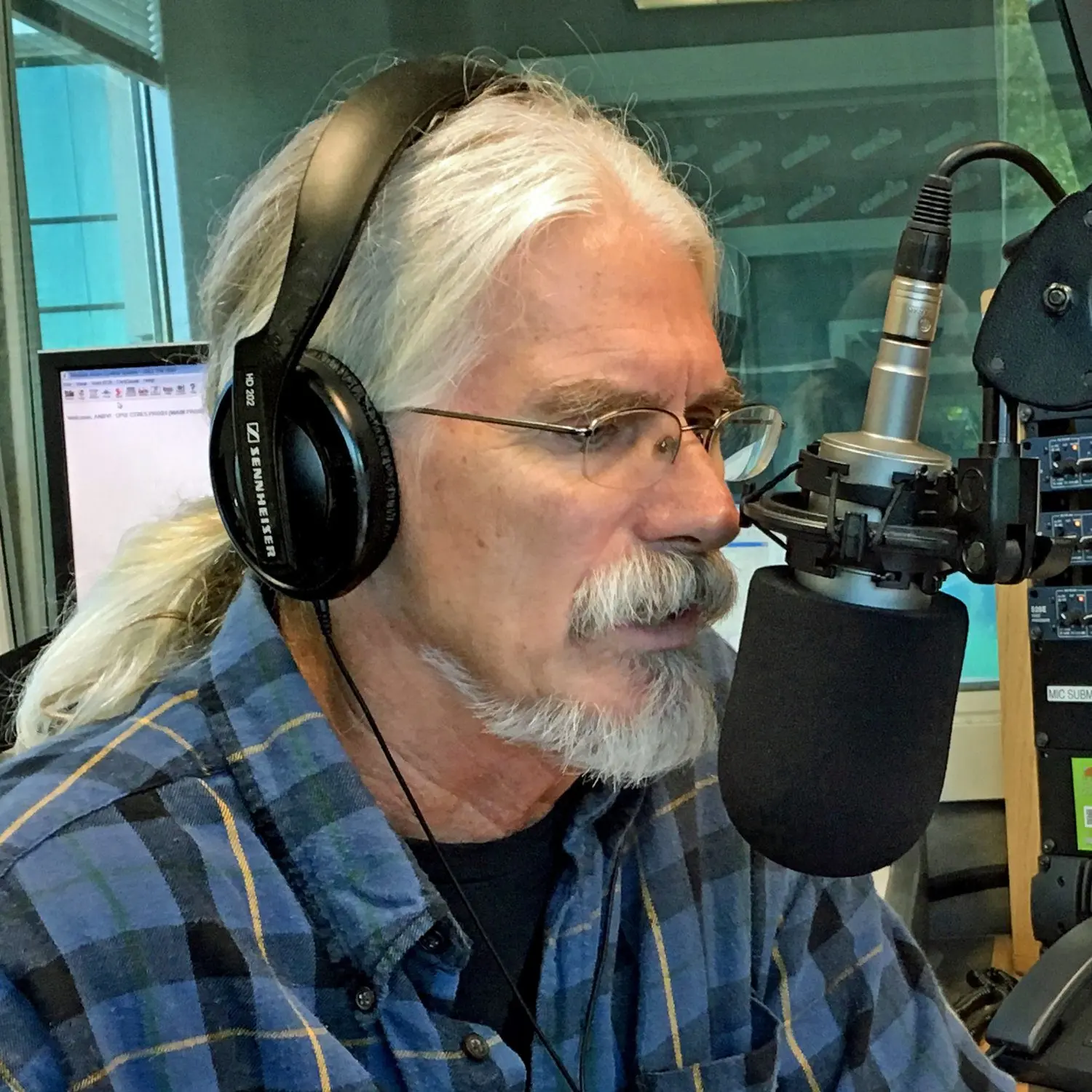

Join Steve Gregg in this insightful episode of The Narrow Path as he addresses intriguing questions from listeners. Discussions range from the historical and theological implications of the Book of Enoch to the nature of Christian marriages, providing comprehensive insights grounded in biblical teachings. Explore the diverse perspectives on the justification of Abraham’s faith and how it aligns with both Old and New Testament views. This episode promises a rich exploration of scriptural understanding, crafted with Steve’s unique ability to connect historical contexts with present-day applications.
SPEAKER 1 :
Thank you.
SPEAKER 03 :
Good afternoon, and welcome to the Narrow Path radio broadcast. My name is Steve Gregg, and this is the beginning of a new broadcast week. We’re on Monday through Friday, and have been on Monday through Friday pretty much ever since 1997. It’s about 29 years now. And we did take one-year hiatus back around the turn of the century, but we’ve been doing this for 29 years. Anyway, we still have callers who call in, and that’s what keeps us going. If you have questions about the Bible and you want to bring them up for conversation on the program, we’ll talk to you about that if you call. You can call to disagree with the host. Also, we don’t mind at all. You can call this number, 844-484-5737. That number again is 844-484-5737. 484-5737. One announcement coming up this week, tomorrow, actually. I’ll be speaking tomorrow night in San Juan Capistrano in Southern California. I’ll be talking on the subject of the four views of Revelation. Many of you know I wrote a book back in 1997 called Revelation Four Views. A Parallel Commentary. It’s been in print continuously by Thomas Nelson since that time. So it’s been in print for, how long is that? About the same length and size as this show. 29 years. Anyway, that book is still around. It’s used as textbooks in Bible colleges a lot, from what I understand. And yet, there are very many people in the churches who do not know about the four views of Revelation. Only one view is very commonly known. And yet there are three others that are quite different and much more of long-standing than the popular view. The one that you know best is the one that’s the newest. It just came up a couple hundred years ago. Whereas there are other views of Revelation that were much more common and accepted by the evangelical world for many centuries before. And they still have reason to be considered. In my opinion, some of them are better attested than the one that’s most popular that you may have heard and that I heard all my life. Anyway, I’m going to talk about those four views tomorrow night in San Juan Capistrano at a church called Ranch Church. Now, the talk is from six to eight. There’ll be a short break in the middle, but six o’clock tomorrow night till eight. But they are serving food. to people who will register in advance. It doesn’t cost anything, but you have to kind of email them or contact them, let them know you plan to come. And at 530, they’ll be serving a meal for those who have registered. So if you want to do that, just check out our website, thenarrowpath.com. Go to announcements, the tab that says announcements, and go down to tomorrow’s date, which is February 10th, and you’ll see how you can register, let them know you’re coming. and then we’ll see you tomorrow there in Southern California. And so I don’t have anything more to announce, so we’re going to go to the phones now and talk to Robert in Brunswick, New York. Robert, welcome to The Narrow Path. Thanks for calling.
SPEAKER 02 :
Good evening. I must first profess with the fact that I’m vision impaired. That’s why I can’t go to the Bible and look for the answer for what I’m asking you about. I just want to know whether for a Christian marriage to be valid must be officiated by a pastor or a minister or a priest.
SPEAKER 03 :
Did you say baptism to be valid?
SPEAKER 02 :
No, no, marriage.
SPEAKER 03 :
Oh, marriage to be valid. Okay, yeah, I couldn’t catch the first part of your sentence very well. For marriage to be valid, does it have to be done by a priest or a minister? Well, there’s nothing in the Bible that would say that. The Bible doesn’t actually say… anything of what constitutes a marriage except the assumption that everyone had was that it is a covenant relationship made between two parties. Now, in the Bible, especially in the Old Testament, we see this was usually arranged between the family of the bride and the family of the groom. And, yeah, Jewish times, they probably had a rabbi who was overseeing it. But before Jewish times, like Abraham’s time, for example, it was simply a matter of witnesses watching the man and the woman say, you are my husband, you are my wife. That was their way of taking vows in the time of Abraham. We don’t have record of that in the Bible. We just know that from history, from records of ancient Mesopotamia and so forth. But there is no example of a wedding in the Bible. There’s no prescription of how it has to be done. But it was not, generally speaking, something that was, for example, a state-licensed thing as it is so often today. I’m sure that the Roman Empire and other pagan empires had ways that they licensed the marriages that they conducted. But before there were any such secular powers to do it, God had instituted marriage. And it was, generally speaking, an agreement between the families of the bride and the groom. I’m sure that once religious institutions like Judaism and the church and so forth became established, it became customary for those within those institutions to conduct their vows before the congregations, before the community, before the families, and probably with a religious officiant. Like I said, a rabbi. Today, Jews would use a rabbi. Most Christians use a minister or a priest. Now, does that mean that that is a biblical requirement? Well, apparently not, because there were marriages long before there were rabbis and before there were ministers. So, you know, from the time of Adam and Eve and on, there were people who got married. So marriage is not primarily defined by a religious ceremony, though there’s nothing wrong with a religious ceremony. I think it’s a very helpful thing for I think it’s a very important thing, actually, for the vows to be taken before witnesses because those witnesses are there to keep you accountable, to keep your vows. It’s always tempting to break your promises when it’s hard to keep them. And, you know, if no one heard you make them except you and the person you promised to, then, you know, a dishonest person, and by the way, many people, most people probably sometimes are tempted to be dishonest, A dishonest person might just walk out on their vows. But the idea is that there are witnesses, there’s family members. In the case of Christians, there’s the body of Christ who’s witnessed those vows and who’s to hold you accountable to them. But as far as whether the person who officiates at the wedding is a minister or not, there’s nothing in the Bible that requires that. Thank you. All right. Thank you for your call. God bless you. Larry in Kent, Washington. Welcome to The Narrow Path.
SPEAKER 08 :
Yeah, hey, Steve. Good talking to you again. Oddly enough, we’ve got another marriage question.
SPEAKER 10 :
Okay.
SPEAKER 08 :
Maybe it’s the season coming up or something. My question was in 1 Corinthians 7, 36, 37, 38, where it says, if you are firmly established in your heart and you have your desire under control, You can keep your betrothed as a betrothed. But then he who marries a betrothed does well. And he who refrains from marriage will do even better. But does this mean that I always thought betrothed meant be engaged to. But does this sound like something you can be engaged to for a while without marrying somebody?
SPEAKER 03 :
Well, it’s not the easiest thing in the world to know whether Paul is addressing the father of the bride or the groom of the bride when he says, if a man will keep his virgin. I don’t know what translation you’re reading, but in the Greek it says, if a man wants to keep his virgin, it’s fine. He who keeps his virgin is fine. He who marries her is okay, too. The idea is rather unclear whether it’s talking about the father or Who decides not to give away his bride. But I think in the context of the chapter, it’s more likely he’s talking about the betrothed, the groom. Because he is talking about the virtues and the advantages of remaining single, which would be a virtue that comes upon the bride and the groom by remaining single instead of getting married. Right. More than the father. Right. uh it’s hard to exactly what paul’s saying of course earlier he says for the time he says because of the present crisis but because of the present uh what is the word he uses in this translation i think uh distress verse 26 he let me just read verse 25 and 26 now concerning virgins i have no commandment from the lord okay so there’s liberty about this he’s just i’m going to give my judgment or my opinion about as one who’s whom the Lord has shown his mercy to make me trustworthy. Okay. He says, I suppose that this is good because of the present distress, that it is good for a man to remain as he is. Now, there’s some present distress he has in mind. Now, whether that was a local situation or something that we don’t know about, or whether he just means the whole distress of this present life, it could be that because he goes on to say, In verse 33, he who is married cares about the things of the world, how he may please his wife. But, of course, he says before that, he says he that is unmarried cares for the things that belong to the Lord, how he may please the Lord. Paul is saying it’s okay to get married, but he thinks that if people can handle it, single life, if they can stay pure, if they can overcome temptations and stay pure, it’s a wonderful advantage. to not have the responsibilities of a family. So you can, he says, spend your whole time doing things that, you know, promote the things of God. Now, he’s not disparaging marriage. You know, when he says, well, a man who gets married, he’s got to care about the things of the world, how they may please his wife. By the things of the world, he doesn’t mean bad things. He just means, you know, a home and, you know, clothing for children and the kinds of things that become more of an obligation, more of a responsibility that ties a person down. And so Paul is kind of, he’s not requiring, but he’s encouraging people who can to stay single. So in the context of the passage you mentioned, the man who has self-control and wants to keep his virgin, as Paul puts it, is very probably the guy who is engaged. He’s writing to people about staying single, but of course many of his readers are already betrothed. And a betrothal, I don’t know about Corinth, because that was a Greek city, but I know in the Jewish culture, which Paul was from, betrothal was made with an oath. It was not just, hey, will you marry? Oh, good, let’s tell people we’re going to get married. It was rather like a marriage covenant. It’s just they didn’t move in together yet, but it was kind of a solid promise, and you didn’t break it unless you had grounds for divorce. So a man who’d made such a promise should keep it. Unless he can, I guess what Paul is saying is if he can keep his virgin, if he can support her without, you know, actually getting married. Now, that doesn’t seem very fair to her if she wants to be married and have kids. So, you know, I think that Paul may be talking about a brief period of time. I don’t think he’s, I don’t think, you know, he says because of the present distress. I don’t know what he means by that. Nobody knows what he means by that. And there may be a situation he’s saying, you know, at the moment, you might want to just stay single as long as you can because of this present situation. But who knows, when the present situation is over, maybe he was thinking, then it would be a better time to get married than now. So just keeping her as a virgin and waiting to get married could be even what he has in mind. It’s not clear. This is a great example of how we look at epistles because Paul and Peter and James and John wrote epistles to people whom they knew personally, whose circumstances they knew personally, and whose living situations and stuff and culture they knew personally, so they could make allusions to things that the readers would understand immediately. But we’re reading it 2,000 years later. We’re not familiar with all the circumstances they were in. And we’re saying, how do we make sense of this? And this is one thing we always have to remember when we’re reading the epistles. We are reading somebody else’s mail. And just like listening to one side of a telephone conversation and not hearing the other side, you kind of have to deduce, if you can, you know, what the context is of the statements made. And sometimes that’s easy. And sometimes it doesn’t really matter the context because some things that Paul or Peter write are just universal theological truths that aren’t, you know, that are not circumstantially governed. But when he gives advice, sometimes he does allude to things and people’s names. You know, they give people’s names that we don’t know and what they’re doing. And we have to realize, okay, this is not really written directly to us. And the advantage we get is when we can apply, you know, what he said to some of the group to a situation that’s similar in our own case. But once in a while, you’ve got situations like this where it’s not entirely clear. Is Paul talking about a temporary hold off on getting married for maybe a few months or years? Or is he talking about, you know, go single the rest of your life? You know, they would understand the circumstances he’s referring to, and we don’t. And we just have to live with that fact sometimes. It’s like later on in Chapter 15 when he talks about those who are baptized for the dead. We don’t really have any certainty what he’s referring to, but he knew and so did his readers. They knew some people who were being baptized for the dead. We don’t know anyone who does that except the Mormons. But I’m not sure that he’s referring to the same practice of the Mormons practice. But the thing is that, you know, we just don’t know. But they did. And this is one of those things that I have had to live with, just being uncertain exactly what it meant. But the principle of the chapter is, of course… applicable and understandable, namely that if you have the grace to stay single and pure and just serve God with all your energy without the distraction of family, more power to you. But if you don’t, and he starts this right at the beginning of the chapter, he said it’s great that a man would not touch a woman, but to avoid fornication, let every man have his own wife and every woman her own husband. So he’s kind of urging people who can do it, to stay single and pure. But he also admits that not everyone has that gift, as he calls it. He says to one is given one gift and to another a different gift, meaning the gift of being celibate or not. That’s verse 7. So throughout the thing, he’s not trying to put down marriage or discourage marriage, but he is saying if you can handle celibacy and not be overwhelmed with temptations, You’re in a good spot to serve God without distraction. And that statement about the man keeping his virgin is in that context somehow. And while it’s not entirely clear what keeping the virgin means, whether it means, okay, you were going to get married two months from now, but because of the present distress, maybe you should wait a couple of years, you know, and just keep her as a virgin that long if you can control yourself. Now, that could be what he means. Or he could be talking about something more long-term. It’s just not entirely clear. But the principle, of course, is not too difficult to understand. That’s, of course, the principle that’s governing his whole instructions.
SPEAKER 08 :
Yeah.
SPEAKER 03 :
Okay? Okay. Well, thank you. Okay, Larry. God bless you. Good talking to you. John from Phoenix, Arizona. Welcome to The Narrow Path. Hey, Steve. How are you doing? Good.
SPEAKER 06 :
All right. Hey, I emailed you over the weekend. Thanks for getting back to me. I’m still kind of a little foggy about the issue I emailed you about. It was about reading in the New Testament that Abraham was justified on several occasions. And, you know, in today’s Protestant teachings, we kind of assume that, you know, justification is a one-time shot. And it kind of comes with a new birth. And, you know, you wouldn’t be justified otherwise. on an ongoing basis or a lifelong journey. And I agree with what you said, that it’s kind of an ongoing thing as long as our faith stays alive. But can you kind of explain the difference between the view you explained versus what’s kind of taught by the Calvinistic-type teaching today?
SPEAKER 03 :
Well, you know, it is said of Abraham in Genesis 15 and 6 that when God told him his descendants would be as the stars of the heavens, it says Abraham believed in the Lord and it was counted to him for righteousness. So that’s the first time we read specifically in Genesis of Abraham’s faith or of justification. Now, in Hebrews, of course, his faith and Romans, Romans 4 and Hebrews 11, Paul is also commended for his faith in trusting that God would allow Sarah to have a baby when they were two old dead babies. And in Hebrews 11, it talks also about especially about when he offered Isaac, that that was a great demonstration of his faith. Now, the term justification, you know, is applied in both those places. Because in Romans 4, when it talks about, you know, when he was too old to have children, yet he believed and hoped against hope and, you know, all of that, it says, therefore, it was counted him for righteousness. What this is just saying is these are illustrations of the kind of faith Abraham had. You know, I think maybe some people are trying to say, okay, what do I have to do to get to heaven? Just tell me. I’ll do it. Okay, do I have to say this prayer? Do I have to get baptized? Do I have to confess something? What thing do I have to do to be saved? And there’s not some one thing. It’s a relationship with God. Abram had that relationship with God, which was a trusting relationship, which was demonstrated in many parts of his life. When God told him things about his descendants that seemed impossible to a man his age, he believed him. You know, when God told him to offer up his son and all would be well, well, Abraham believed him and obeyed. The point here is that these are just illustrations that punctuate the life of Abraham, but really were true of him at all times. These were times when his faith was made visible to people reading his story. But the days in between those incidents, he had faith, too. He was a man of faith, and it’s his faith that made him right in the sight of God. So it’s not that, I mean, I realize that there is a point in time when a person first puts faith in God, when they first learn of God or first surrender to God and put their faith in God, there’s that point in time when they are first justified. Right. But it’s not a punctiliar thing that happens one time and then you have to kind of do it again once in a while to make sure you’re, you know, renewing your membership or something. It’s rather when you are justified, when you are converted, you become a follower of Jesus. And that’s for life. That’s not, well, I’ll try this for a while, see how this works out, see if this is better than my other, you know, hobbies, you know. No, you don’t get saved unless you come all the way in. You jump into the deep end, and you’re in it for life. And a lot of people think they’re going to just try it out. And, you know, they’ll believe in Jesus at this moment, if that means I’ll get saved. And then someone will tell them, there are some people who tell you, and if you just do that one time, then you’re saved forever. It doesn’t matter what you do after that. This is the one saved, always saved idea. But, of course, the Bible doesn’t teach that. But the point is, when you get saved, you become a child of God. You become a disciple of Jesus. You become bought with a price. You’re owned by God. You’re his servant for life. And you’re his child for life and for eternity. And, you know, and so you live your life, a life of faith in God. And you live your life under the umbrella of being justified by God, by your faith. It’s not that you, it’s not that the prodigal son comes home and he gets justified by And then he goes back to the pigsty and then comes back and gets justified again every once in a while, goes back to the pigsty. No, he comes home and stays home. He comes home to a right relationship with his father, and he lives in that relationship with him. And all is well with him and his father from now on. I think many people see Christianity or their Christian life as once in a while they’ll check in with God and see if he’s still interested in forgiving them for the way they’ve been living in between. People like that are not converted. I mean, that’s just not what conversion is. Conversion is a change. Conversion is a redirect of your whole life. And it’s not just a tryout. You don’t just test drive Jesus and decide if you’re going to buy him until you buy him. You don’t drive him. You know, he’s just not yours until you are his. So this is so Abraham’s faith is mentioned many times. And it’s mentioned many times in connection with his justification. James also, of course, mentions that when he offered Isaac, he was just showed his faith was justified him. So Abraham is a. remembered primarily as a man of faith. But not because he did one or two or three things that showed his faith. Those are the things that showed what he was all the time. He was a man devoted to trusting God. And there are several incidents in his life where this comes to the fore, particularly. And these are mentioned by different New Testament writers. But he’s only justified because he is a man of faith. Not because he had faith on that occasion and then God forgave him of his sins that time, but then didn’t forgive him again until the next time he believed. Faith is a way of life. Trusting God is a relationship with God. And that’s the only kind of life with God that the Bible knows about in the Old or the New Testament. The people who were saved were the people who had this kind of total life with God. They were devoted to God and trusted him. Old Testament and New Testament. And there’s just no other kind of salvation known in the Bible. So it’s not, I mean, you’ve written me a couple times about this, and like I said, it’s not that he got justified on that occasion or that occasion or that occasion. Rather, he lived his life under the covering of God’s approval and justification, which means God says, you’re okay with me. Why? Because he lived his life of faith. And the incidents you talk about are simply moments where that was manifested in his experience. That’s really good. I appreciate you saying that. Thank you. Okay, John. Good talking to you. Thanks for joining us. Oh, sure. Thanks, Steve. Bye-bye. All right. God bless you. All right. We have a break coming up here, but we have another half hour coming up, too, and we have some calls waiting, and we have a couple of open lines, so if you want to get on for the second half hour, this is a good time to call in. The number is 844- 844-484-5737. That’s 844-484-5737. Now, many of you have listened to this program. Maybe it’s on the radio at a time when you’re usually driving and you always catch it or occasionally catch it. Maybe you’ve made a point of catching it because you know when it’s on and you turn it on at that time. But if you’ve only heard the radio show, And have never been to our website or our app. I mean, you really are just, it’s just the top of the iceberg. Our website has like 1,500 of my lectures, verse by verse, through the whole Bible, as well as on hundreds of topics. And they’re free. All these lectures are free. They’re audio. There’s also links there to our YouTube page, where there’s also hundreds of the lectures in YouTube. And there’s other stuff, a lot of stuff, and nothing is for sale at our website. I really urge you to check it out. The website is thenarrowpath.com. That’s thenarrowpath.com. Nothing there will cost you any money. Even my books, most of them, the audio book is there for free. to listen to them. You can buy the books from Amazon, but not from us because we don’t sell anything. But you can hear the audiobooks for free of at least three of the five books at our website, thenarrowpath.com. We are listener-supported, and you can also see there, if you wish, how to donate and support us and help keep us on the air. I’ll be back in 30 seconds. Don’t go away. We have another half hour.
SPEAKER 01 :
As you know, the Narrow Path radio show is Bible radio that has nothing to sell you but everything to give you. So do the right thing and share what you know with your family and friends. Tell them to tune in to the Narrow Path on this radio station or go to thenarrowpath.com where they will find topical audio teachings, blog articles, verse-by-verse teachings, and archives of all the radio shows. You know listeners supported Narrow Path with Steve Gregg? Share what you know.
SPEAKER 03 :
Welcome back to the Narrow Path radio broadcast. My name is Steve Gregg and we’re live for another half hour taking your calls. If you have questions about the Bible, objections to the Bible, you’re not a Christian or you are a Christian and disagree with the host, we want to talk about that You’re just confused about something in the Bible, feel free to give me a call. We’d be glad to talk to you, whatever you bring up along those lines. The number to call, by the way, we have a couple of lines open. The number to call is 844-484-5737. That’s 844-484-5737. Our next caller today is Tammy calling from Honolulu, Hawaii. Hi, Tammy. Welcome. Aloha, Brother Steve.
SPEAKER 05 :
I just wanted to ask two questions for you. The book of Enoch, what is your overall view of it, and how should Christians kind of understand its place historically, spiritually, in relationship to Scripture? And believe it or not, that was just one question, but my second question is… Do you believe there’s any appropriate benefit for Christians to be reading the book of Enoch for its historical or cultural context, or should it just be avoided altogether? Thank you.
SPEAKER 03 :
All right, yeah. Well, I certainly would not advise avoiding it altogether, although I don’t say we’re under obligation to read it either. I mean, that is to say, if avoiding it means we think it’s poison or we think it’s dangerous or it’s heresy and we’re going to just avoid reading that, I wouldn’t say that. The early church read it, sometimes even quoted from it or alluded to it, even Jude, you know, in his epistle quotes a portion of it favorably. Now, so, I mean, the early church liked the Book of Enoch. The Ethiopic Bible even includes the Book of Enoch, though I don’t think it belongs in the canon of Scripture, but it’s obviously, you know, it’s accepted in Christian circles, in some Christian circles. So there’s really nothing dangerous about it, unless, of course, you read it thinking that it’s inspired. Now, here’s the thing. The book of Enoch is an apocalyptic book, like many other books that were written when it was written, about two centuries before Christ, which is a long time after Enoch disappeared from the earth. Enoch lived before the flood of Noah. The flood of Noah was like, what, 2,700 years before Christ. Enoch lived and left this earth before that. And here, you know, 2,500 years later, the book of Enoch is circulating. It’s not written by Enoch. And in fact, it resembles very much a whole genre of literature that was produced in those early centuries between the Old and the New Testament times. Religious in nature… written by Jewish people, and yet not inspired. They’re not written by prophets. They’re not written by inspired prophets or apostles like our Bible books are. Excuse me. So it is an interesting book if you’ve got a lot of time on your hands. I’ve got it, and I’ve only read portions of it. And, you know, I’m curious. I’d be curious to read the whole thing if I had all the time in the world. I have the Book of Mormon on my shelf. I’d be curious to read the whole thing, too, not because I believe it, but because it’s obviously influential in some circles, I’d love to read everything I could. I’d like to read the Quran just so I know how to talk to Muslims about it. But there’s a lot of religious books out there that are not inspired, but which a lot of people have taken seriously, which it doesn’t hurt to be familiar with them as long as you keep it in the right perspective. If you think of it as an inspired book, then you’re going to let it do some of your interpreting of the actual inspired books. Because he talks about the flood. He talks about the so-called Nephilim before the flood. He talks about angels and watchers and things like that and relates them to some of the stories in the Bible. And frankly, these are giving a human, uninspired interpretation of stories that are somewhat vague and when they’re told in the Bible. For example, of course, the Nephilim story comes from Genesis 6, but it doesn’t say what Enoch says. It only says that the sons of God saw the daughters of men, that they’re beautiful, they took wives of them, as many as they wished, and then they had children. And it says the Nephilim were in the world in those days, too. So, I mean, that’s what we’re told. But Enoch will say, well, the sons of God are angels. Well, the Bible doesn’t say that, but that’s what Enoch says. and that they took women and their children were these Nephilim. Well, the Bible doesn’t say that either. Genesis does not say that the Nephilim were the offspring of these marriages. This is what Enoch tells us. And I think Enoch might be the first book, I’m not sure, but I think it may be the first book to have given it that interpretation. Now, people in Jesus’ day were reading Enoch, Jews were, and the apostles were, and they make allusions to it. Now, to say that they made allusions to or even quoted from Enoch does not necessarily mean that they believed it was inspired. You know, when you quote a book, it means that you like something that it’s saying, and you’d like to, you know, kind of mention it, sort of illustrate or underscore something you do believe that you’re saying. But it doesn’t mean that you believe it’s scripture. For example, Paul on Mars Hill quoted some of the Greek poets because he was talking to Greek people, and they liked their poets. So he quoted some Greek poets to confirm the kind of things he was saying. He wasn’t saying these Greek poets are inspired. In 1 Corinthians, he quotes some Greek poets. In Titus 1, verse 12, he quotes Epimenides, a Cretan poet. Now, he’s not saying these are inspired. He’s just saying these guys said the same thing I’m saying. So, I mean, preachers do that, too, and rightly so. They can quote other literature that’s not inspired, but which is maybe well-known, proverbial literature, quoting, you know, poor Richard’s Almanac or Aesop’s Fables or, you know, some other non-inspired work because it happens to say the same thing and say it well. So, I mean, that’s kind of what I think that’s what they did with Enoch. They quoted him favorably, but they never said he was inspired. They never said it was the Holy Spirit speaking through him. So that’s how I would look at Enoch. It’s not really written by Enoch. The real Enoch is one of the apocryphal books. And, you know, you might as well ask, you know, should we read Second Maccabees or the second, third, Esdras. Well, these are books that you might find, well, you’ll find them in the Septuagint. Some of them are found in the Catholic Apocrypha, though Enoch is not. And reading them can be edifying. In fact, Luther, you know, Luther didn’t like the Apocrypha. I shouldn’t say he didn’t like the Apocrypha. He didn’t believe the Apocrypha belonged in the Scriptures, but he did say they were edifying to read. And probably many people would find the Book of Enoch that way, too. There were some other written works in the early church, the Sibylline Oracles and the Shepherd of Hermas and so forth, that were kind of apocalyptic books too, which are not inspired, but which were so popular among the early church that some people wanted to put them in the Bible. They didn’t get into the Bible because they weren’t written by apostles, and I agree that they don’t belong there. But to say that a book is not in the Bible doesn’t mean it’s something to avoid reading. I would not want to spend very much time reading those books until I had really mastered the Bible itself, partly because you can go to heaven and be very well informed about Jesus without reading those apocryphal books, which is much less the case with the biblical books. Reading the biblical books, you learn about Christ, important things about following him. Also, the better you know the Bible, the more discerning you can be in reading the apocryphal books and seeing what parts you would agree with, what parts you would not. So Enoch, you know, a lot of people talk about Enoch these days. Michael Heiser’s books kind of popularized the interest in Enoch with many people today. I wouldn’t say don’t read it, but I would say if you do read it, don’t imagine that Enoch wrote it or that it’s inspired.
SPEAKER 05 :
Thank you so much, Steve. I really appreciate that. I have the whole ohana here sitting listening to that, and so God bless you. We appreciate you, and… the short time that we can listen in and really take your information. So I appreciate you. Mahalo. Thank you, Tammy. God bless you.
SPEAKER 03 :
And hello to you.
SPEAKER 05 :
God bless you. Aloha.
SPEAKER 03 :
Bye-bye. All right. Tom from Gainesville, Florida. Welcome to the Narrowcast, Tom.
SPEAKER 04 :
Hello. I have two questions. Number one, could someone be a Christian if they lived in the year 200 B.C.?
SPEAKER 03 :
Not a Christian as we call it. But they could certainly be a believer. They could certainly be saved. Yeah, the word Christian means someone who’s following Jesus. The term was never used until after the resurrection of Christ. And the believers, the disciples of Jesus who were in the city of Antioch in Syria, kind of adopted the name Christians for themselves, which stuck. You know, it stuck. And so since then, people have been called Christians, which means followers of Christ. Okay.
SPEAKER 04 :
Okay, also, three days ago, I was on the University of Florida campus, and there was a Christian preacher, Sister Cindy, and it seemed like she talked about sex just to get an audience, and then she just talked about Jesus. Any thoughts?
SPEAKER 03 :
Well, I’m not sure. I don’t know her. I may have heard of her, unless there’s another sister, somebody who has that name.
SPEAKER 04 :
I think you have, because she was married to Brother Jed, who she claimed for the last 50 years, five hours a day for the last 50 years, she said she was on campus, he was on campuses all across the country preaching about Jesus.
SPEAKER 03 :
What’s his last name? Do you know his last name?
SPEAKER 04 :
Um… Yes, I would recognize it if he said it.
SPEAKER 03 :
It said Jed Newton, maybe? Okay, there was a fairly famous campus preacher whose name was Jed. I forget his last name. So, okay. Now, I don’t know her, and I’m not sure why she was talking about sex.
SPEAKER 10 :
Yes, he’s married to him, yeah.
SPEAKER 03 :
Okay, so you’re saying that she talked about sex to get attention. And then preached the gospel. So what kind of, was she talking in a wholesome way about sex? Was she speaking biblically about sex?
SPEAKER 04 :
Yeah, she was. For some reason, her kind of motto was, hoe no mold. which means to the women, don’t be whores anymore, and just give sex before marriage. And the women loved that message. The men didn’t like it, but the women at that talk three days ago, they were cheering her.
SPEAKER 03 :
Okay, you’re talking about Jed Smock and Cindy Smock, right?
SPEAKER 04 :
That’s right.
SPEAKER 03 :
Okay, yeah. Yeah, I’m not familiar with their ministry. I’ve only heard of them. You know, I will say there’s a lot of campus preachers, Yeah. They’re kind of outside the box. I mean, I don’t know if you ever heard of Holy Hubert Lindsay. When I was young, he was on the campus at UC Berkeley. And, boy, was he in your face kind of a guy. And he was a funny guy, too. I mean, he was pretty hard on his audiences, but they were hard on him, too. I mean, he got beat up and stabbed and all kinds of stuff, but he did it for decades. And they called him Holy Hubert. Anyway, I mean, sometimes these campus preachers, in order to, I guess, get the attention of people in that particular environment, say provocative things. But no, you’re asking me if this woman was right to do that. Lots of preachers will bring up contemporary concerns that people have from a biblical point of view, and then before they’re done, they’ll have preached the gospel. So I’d I don’t know how she does this, but I would say I don’t have anything in principle against her doing that. I mean, certain campuses need to hear about sexual purity. They need to hear about what the Bible says about sex because we live in an age where younger generations don’t seem to have much of a clue about what the Bible says about it. So, you know, if she’s teaching it faithfully, more power to her. Yeah. Okay, Alan in Juliette. Georgia, welcome to the Narrow Path. Thanks for calling.
SPEAKER 07 :
Good afternoon, sir. I had a question about hermeneutics for you. I’d love to hear your thoughts. I’ve heard recently from some friends who are in the Torah-keeping Christianity movement talking about, they call it New Testament-only-ism. And I heard you speaking a while back. It was really good. about how we use the New Testament to understand and interpret what various prophets meant when they said, I know 1 Peter speaks of this, but I want to hear you talk maybe a bit more fully about this.
SPEAKER 03 :
Okay, well, I don’t know what New Testament only-ism is. I haven’t heard them speak. Now, if they mean we only read and only care about the New Testament, and we don’t even need the Old Testament, our Bibles, I’d have to disagree with that, since what we call the Old Testament is the only Bible Jesus ever read or preached from. And same thing with the apostles. They didn’t have any Bible except the Old Testament, and yet they were pretty good Christians who had a pretty effective ministry in the gospel. So to say, well, we don’t need the Old Testament, I think would be a mistake. Now, if they’re simply saying we only obey the New Testament, we don’t obey the law of the Old Testament, then I’d be… I wouldn’t have any complaints about that because, of course, the duties of followers of Christ differ from the duties laid out in the law of Moses. And, you know, if you follow the teachings of Christ, you will be doing all that you need to do to please God. You don’t have to add to that the animal sacrifices and circumcision and dietary restrictions that you find in the Old Testament law. If they’re saying, well, we only follow the New Covenant, not the Old Covenant, Well, I’d agree with that. I do, too. But if they’re saying we don’t need to read the Old Testament, I’d say, well, then they’re going to be very different than the early church. The early church had no other Bible than the Old Testament until the apostles, of course, wrote their books, which was pretty much near the end of the lifetime of the apostles. So the church got along quite well without those writings. But they did have the preaching of the apostles. See, that’s the thing. Before, we only had their writings. The early church had their, you know, preaching in their churches. So they had, you know, they had the advantage of the New Testament without it being in writing. Yes.
SPEAKER 07 :
Yes. I’m thinking that term New Testament only of them was meant as a pejorative probably and intentionally exaggerated, you know, put down type of device.
SPEAKER 03 :
Yeah, yeah.
SPEAKER 07 :
Yeah.
SPEAKER 03 :
I’ve heard of the red letter movement, which are people who say only the red letters, the words of Jesus in some Bibles are printed in red. Some people say they’re Christians who only follow the red letters, which means they don’t follow Paul and Peter and John. They follow only what Jesus said, which is not really following what Jesus said, because Jesus said, whoever receives him that I send receives me. And he sent the disciples out and he said, you know, as the father sent me, so I’m sending you. So receiving what they said. You can’t reject what they said without rejecting Christ also who sent them. But it is good to put an emphasis on the teachings of Jesus since he is the king. He’s the Lord. He’s the one who we’re seeking to please by obedience to him. And it’s also right that the New Testament supersedes the Old Testament in terms of its position as giving us instructions for our lives. The teachings of Christ and the apostles are… There’s a great overlap between them and the law and the prophets, but it’s not exactly the same because the rituals of the Old Testament have been fulfilled and we don’t have to keep them. Anyway, I’m not familiar with the movement that’s called by that name. Now, you were asking about my statement that we interpret the Old Testament by the New. What I’m saying is that the Old Testament prophets, first of all, they wrote in poetry. which means they used hyperbole, they used metaphors. Poets do not write literally in most cases. Poetry is a different genre than regular writing. And it’s written for aesthetic appeal with figures of speech and things like that that you expect in poetry that you don’t find in other writing that much. So to understand what they meant, We need what Jesus taught and the apostles. Now, it does say in Luke 24, 45, that Jesus was with his disciples after his resurrection. It says he opened their understanding that they might understand the scriptures. Now, the rabbis, we assume, did not understand the scriptures properly, or else Jesus wouldn’t have to give his disciples special insight into them. They could just listen to the rabbis. But Jesus said the rabbis were blind leaders of the blind, he called them. Paul said, that when the Jews are reading the Old Testament without Christ, they have a veil over their mind, over their heart. They can’t understand what it says until they turn to Christ. So, obviously, if you don’t let Jesus and the apostles’ teachings explain what the Old Testament is saying, the Jewish rabbis themselves would not get it right. You need, you know, their blind leads to the blind. So, unfortunately, many people who are Christians and who… who teach about prophecy, they get most of their understanding from reading the Old Testament through the same eyes that the rabbis did, and not the ways that the apostles and Jesus did. And so they miss it, because basically the rabbis would take a lot of that literally, which Jesus and the apostles took in a spiritual sense and saw fulfillment in a different sense than the rabbis did. And then modern Jews did. So the Christian really has a choice to make when it comes to deciding on what the prophets were teaching. Do I understand them the way the blind guides, the rabbis who read the scriptures with the veil over their mind? Do I take it the way they did? Or do I take it the way the apostles did, whom Jesus opened their eyes so they might understand the scriptures? I’m going to go the other way. All right, brother. Thanks for your call. Raymond, also calling from Honolulu, second call from Honolulu today. Hi, Raymond. Welcome.
SPEAKER 09 :
Hello, Steve. So I just want to be clarified on what does the woman in the Revelation signify and who is the child that she gave birth to?
SPEAKER 03 :
Yeah, you’re talking about Revelation 12 where there’s a woman groaning in childbirth and the dragon is waiting to consume and kill her child when he’s born. but fails to do so, the child is caught up into heaven and to the throne. The woman, I mean, first of all, there’s a lot of different views of Revelation, and a lot of people would see it differently than I do, but they shouldn’t. But, I mean, I’m kind of joking there by saying that. But, no, honestly, I think that it’s not too hard to see what it’s supposed to say. The woman is clothed in the sun with the moon under her feet, and she has a garland of 12 stars on her head. The sun, the moon, and the 12 stars is a reference back to Genesis 39. which was a reference to Jacob and his family, Jacob and his 12 sons. And so it’s not about Israel. The woman is Israel. But I think more specifically, because of what is said about her later in the chapter, it’s the faithful remnant of Israel. God’s promises to Israel were really to be fulfilled through the faithful remnant. Mary and Joseph, Zacharias and Elizabeth, Simeon in the temple, Anna in the temple. These were part of the faithful remnant of Israel. At the time Jesus was born, there were faithful Jews before and after Jesus was born. And it was this faithful remnant that went through great sufferings to bring the Messiah into the world. And this woman in labor, I think, represents this faithful remnant of Israel in the years just before Jesus was born. The birth of the child is the birth of Jesus. And when he’s caught up to God and to the throne… Of course, that happened after Jesus rose from the dead. He ascended up and took his place at the right hand of God. So, I mean, he’s not too hard to identify because it also says about the son that he’s to rule the nations with a rod of iron. Well, Psalm chapter 2 and verses 8 and 9 tell us that that’s what the Messiah does. The Messiah is to rule the nations with a rod of iron. So, this is the Messiah. And the woman is the faithful remnant of Israel. Now, the Catholics think the woman is Mary, which is reasonable enough since she’s Jesus’ mother. But in Revelation, a woman is usually not a literal woman. For example, the bride, who is mentioned later, and the harlot, who is mentioned later. They’re not representing actual individual women. The harlot is that great city that rules over the kings of the earth, we’re told in chapter 17. And the bride is the Lamb’s wife, which is the church. So, you’ve got two women… you know, a harlot and a bride who are not really women at all. A woman is a symbol for them. And likewise here, the woman in labor, I think, in Revelation 12, is a symbol for a larger entity, which is the believing remnant of Israel.
SPEAKER 09 :
Okay. Mahalo.
SPEAKER 03 :
Mahalo to you too, Raymond. Thanks for your call. Steve in Tuscany, California. Welcome to The Narrow Path. Thanks for calling. Are you there, Steve? There’s others waiting, and we only have a couple minutes.
SPEAKER 08 :
My apologies. I’m so sorry. Yeah, go ahead.
SPEAKER 07 :
I’m interested in hearing your thoughts on how does God know the future as an actuality or as a high degree of probability?
SPEAKER 03 :
Well, let me just say, because we only have a minute or two left, and it’s a big question. I personally believe that God knows the future. Absolutely. Absolutely. But this is not the only Christian view available. All Christians believe that God knows much of the future. For example, if God decrees that he’s going to do something and he does it, well, he knew he was going to do it. And he knew it pretty much absolutely. And so, I mean, he could know in advance what he’s going to do. But the Bible indicates that not everything that happens is his direct doing. There are things that happen. He says, hey, I had nothing to do with that. I didn’t command that. I didn’t even think of it. Never came to my mind, he says. He blames people for some things that happen, but he even seems to know when those are going to happen. Like when he told Peter, Peter would deny him three times before sunrise, before the rooster crows twice. And that’s exactly what happened. So it sounds like a very high degree of accuracy. It seems like he knew exactly how many times Peter would have this temptation to deny him, how many times he would fall to that temptation. He knew Peter would repent after that. He knew what time frame that was going to happen in. You know, that’s like knowing the future. Now, there are people who are Christians who believe that God knows everything except things that are unknowable. To say he’s omniscient, they would say, doesn’t mean he knows what doesn’t exist to be known anywhere, namely future contingencies, like what someone’s going to choose 10 years from now or 100 years from now, someone who’s not even born. However, God did know that Cyrus, 200 years before he was born, was going to let the Jews go from Babylon and said so in Isaiah 44 and 45. A couple hundred years before Josiah, God knew that Josiah was going to defile the altar at Bethlehem and predict it by giving his name long before he was born. So it seems like God does know exactly what’s going to happen. Some people think, like you said, that he knows with a high degree of certainty that And there are Christians who love the Lord and believe the Bible. They read some of the passages differently and see them differently than I do. But I do believe God knows the future with exact certainty. If he didn’t, it’s not a problem to me. I mean, if the Bible taught otherwise, it’s not going to offend me. But some might say, well, if he doesn’t know the future, how can he know that he’s going to win? Well, that’s easy enough. If you’re a giant and all your opponents are ants and you’re determined to win, it doesn’t matter what they choose to do, you’re still going to win. So it’s not like God’s threatened by whether he knows what people are going to do or not. He can always respond in a way that will further his purposes if he wants to. And some people think that’s the way it is. I personally think that he knows the future, and I don’t have any problem with that. Other people have other views on that. Hey, I’m out of time, I’m sorry to say. You’ve been listening to the Narrow Path radio broadcast. My name is Steve Gregg. We are listener supported. If you’d like to help us out, you could write to us at The Narrow Path, P.O. Box 1730, Temecula, California, 92593. Or you can go to our website, thenarrowpath.com. Thanks for joining us.