



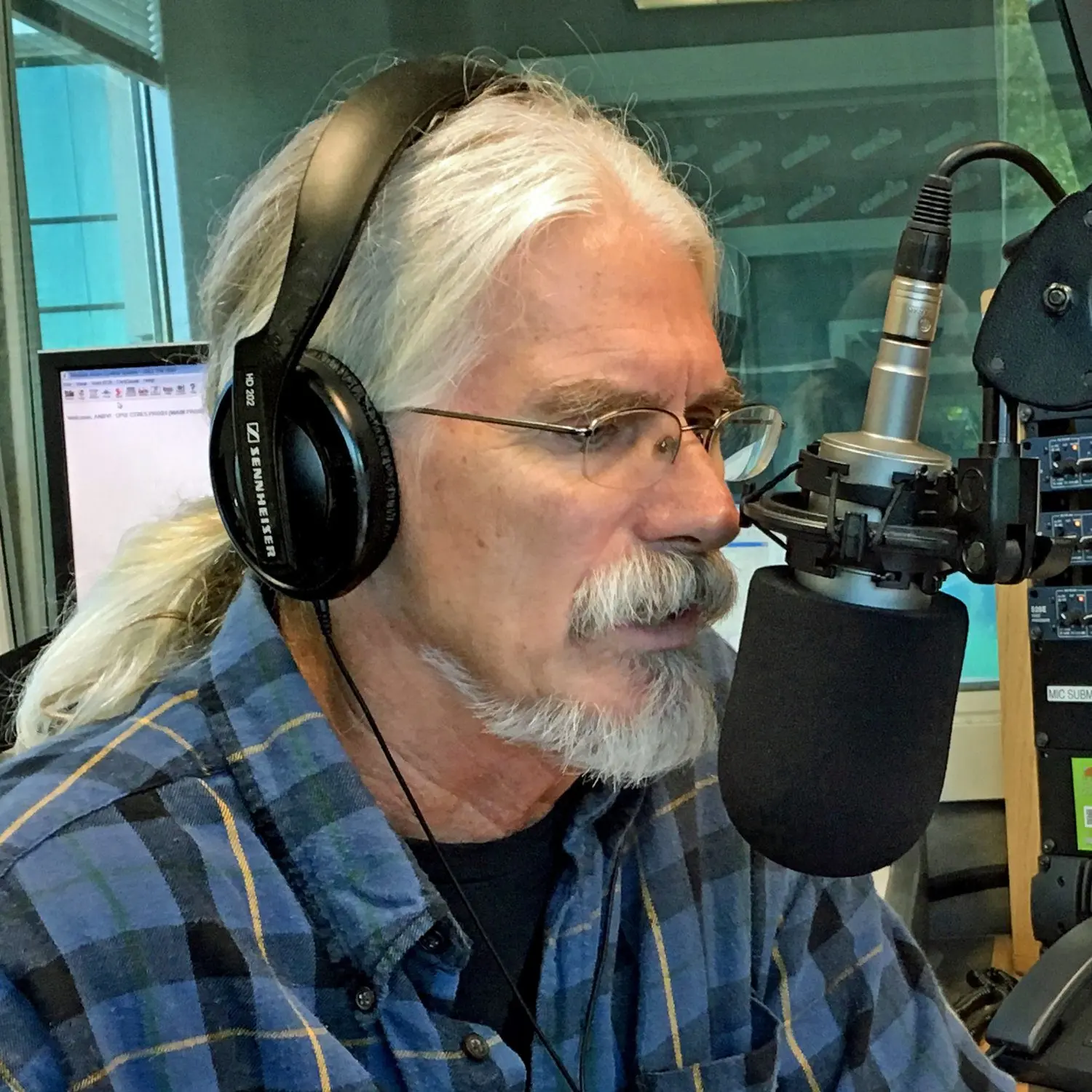
Join Steve Gregg on another insightful episode of The Narrow Path as he takes calls from listeners and answers questions about the intricacies of biblical scripture. From the possibility of Israel keeping the law without the Spirit to the dynamics of salvation by grace through faith, Gregg delves deep into topics that shape Christian doctrine. Learn how Hebrews received commendation for their faith and explore the elements of salvation that have consistently underscored the Christian faith.
SPEAKER 06 :
Good afternoon and welcome to the Narrow Path radio broadcast. My name is Steve Gregg and we’re live for an hour each weekday afternoon with an open phone line for you to call in if you have questions about the Bible or about the Christian faith. We’d be glad to talk to you in this hour. The number to call is 844-484-5700. That’s 844-484-5737. And we have a gathering giving a talk about the four views of Revelation. The talk is from 6 to 8 with a brief break in the middle. So from 6 to 8. But if you want to come… Earlier, there will be food served, but you have to let them know you’re coming because they need to know how much food to have available. So I think it’s at 530, just a half hour before the talks. If you would like to join for a meal, there’s a registration contact information at our website. If you go to thenarrowpath.com, that’s thenarrowpath.com, under Announcements. Find today’s date, which is Tuesday, February 10th, and you’ll find how to contact the church to register that you’d like to join us for food at 530. And if you don’t, then you can come at 6 and we’ll be having our talk on the four views of Revelation from 6 to 8. So I may not get another chance to announce that. That’s tonight and just a few couple hours after the program ends. All right. Our lines are not full, but close to it. We have one line open, actually. If you’d like to join us, the number is 844-484-5737. Our first caller today is Warren calling from Las Vegas, Nevada. Hi, Warren. Welcome to The Narrow Path. Thanks for calling.
SPEAKER 10 :
Hi, Steve. Thanks for taking my call. Steve, not long ago you had a caller who said that they believe that Israel could have kept the law. And you agreed with that. I was wondering how you harmonized that with Romans 7, and I’ve been reading your information online on Romans 7, and particularly verses 18 and 19, which emphatically states that we, in the New Testament, using Paul as the example, could not have kept the law or could not keep the law without understanding himself being under the restraint of walking in the Spirit. And, of course, the Old Testament persons, the Old Testament Israel, they didn’t have the Spirit. And so how are you harmonizing that with justifying that they could have kept the law? And, of course, you know, Orthodox Christian teaching mostly says state that the law was impossible to keep, and we could never keep the law. But I’d be interested in your take on that.
SPEAKER 06 :
Yeah, well, I’m not sure that we could say the Orthodox Christian teaching is that the law is impossible to keep. It’s certainly so I was taught growing up, like yourself, apparently. Now, Paul did say, Paul did speak of being unable to perfectly live. as he wished to do. You’re talking about Romans 7. He says, you know, the good I wish to do, I cannot do. The things I want to not do, those things I do. He doesn’t specify exactly what those things are. But, I mean, nobody is perfect. That’s for sure. But God didn’t require people to be absolutely perfect. That’s evangelism 101 is telling people that God requires us to be absolutely perfect. And we are in Christ. We are in Christ. So that’s fine. But the Old Testament doesn’t say that if they are not absolutely perfect, that they can’t be saved. You know, what they had to do was stay faithful to the law in the sense that they didn’t, first of all, they didn’t worship other gods. That was the main thing. But then also, you know, the Ten Commandments, but the other laws that are not the Ten Commandments. By the way, I’m not really sure why any of the Ten Commandments would be impossible for someone to follow if they wish to. For example, I mean, When you look at the Ten Commandments in the spiritual sense, looking at a woman to lust after her is adultery, and being angry at a brother without cause is kind of like murder. Obviously, people fall in many ways. James himself said, in many things we all stumble, and we do. But the Bible never says that we stumble because the law was unreasonably hard and that we couldn’t have kept it. And there are people in the Bible… who are described as having been pretty much blameless in the sight of God. One of those cases is, you know, the parents of John the Baptist. It says in Luke chapter 1, verse 6, speaking of Zacharias and Elizabeth, it says they were both righteous before God, walking in all the commandments and ordinances of the Lord, blameless. So, I mean, I’m not, I don’t know how, how perfect that really is, but it sounds perfect enough for God to speak that way of them.
SPEAKER 10 :
So, Steve, are we saying that being in Christ, we use Paul’s term, gives us a certain amount of grace or latitude for our imperfections that categorizes us or either positions us as righteous and fully keeping the laws?
SPEAKER 06 :
Right, yeah, no one is perfect, but people who have desired to be, like David. David is described as perfect, his heart was perfect for the Lord, except in the issue with Uriah’s wife. When Paul talks about his own background in Philippians chapter 3, he says if anyone has… grounds for confidence in the flesh, I more so. He says, circumcised the eighth day, the stock of Israel, of the tribe of Benjamin, the Hebrew of the Hebrews, concerning the law, a Pharisee, concerning zeal, persecuting the church, concerning the righteousness which is of the law, blameless. Now this is before he was a Christian. He’s talking about when he was a Pharisee.
SPEAKER 10 :
I see.
SPEAKER 06 :
Okay, so… It’s also said of John the Baptist’s parents before he was born.
SPEAKER 10 :
Would we technically say that No one has ever successfully been able to keep the law but Christ. Right. Is that correct?
SPEAKER 06 :
Right. No one has ever kept the law completely. Although Paul said that he was blameless according to the requirements of the law. He’s obviously thinking of the outward requirements of the law. And almost certainly, Zechariah and Elizabeth, who are also said to be blameless according to all the things the law said, that’s speaking about outward conformity.
SPEAKER 10 :
I’m sorry, Paul. I’m sorry. So then are we saying that God’s grace compensates for our inadequacies and it’s imputed unto us that grace that allows us to position ourselves as perfectly positioned in Christ. What we’re saying is because of His grace that compensates for our deficiencies, for our shortcomings, in that we are in Christ.
SPEAKER 06 :
Well, absolutely. I mean, our only hope is to be found in Him with a righteousness which is not of our own selves, Paul said in Philippians 3. Now, saying I want to have the righteousness of Christ, which is not like the righteousness that I have in myself, Christ is perfect. I’m not. You know, I’m not perfect. But nonetheless, people were said to be, in some cases, not very many people, but some people in the Bible were said to be blameless, according to the law. And I think that means, again, talking about the external performance of it. They didn’t eat unclean foods. They didn’t violate the Ten Commandments. They didn’t worship idols. You know, they kept the rules. They kept the rules. And these people happened to also be good people in their hearts. Now, the Pharisees, I think, did keep the rules like Paul said he did when he was a Pharisee. He was blameless according to the law. But Jesus said about them, at least the ones he was talking to, that their hearts were corrupt. You know, their outward behavior was good. Their hearts were corrupt. So, the laws that God gave them, although Jesus explained in the New Testament what God’s really looking for is purity of heart. What God’s really looking for is perfection of love for God. And, of course, that was never found. I’m not sure it’s even found completely now among even believers, but that’s what we desire. We desire to be perfect inside and out. But the thing is, you know, in the law, God didn’t really lay those inward parts out as commandments. So the commandments he gave them were external. For example, I mean, I’m sure every man who ever lived from Adam on had experienced lust and anger in degrees that, according to Jesus’ teaching, would be sinful. But they weren’t addressed in the same way in the Old Testament. It wasn’t made that clear that that was sinful. Then the laws actually only said don’t kill and don’t commit adultery. So, I mean, Jesus made it very clear there’s an inward part of that that God is concerned about, too, which I’m sure no one could keep. But obviously, when people are said to have kept the law blamelessly, it is in terms of the actual commands given by Moses, people could do it. But even if they did it outwardly, like the Pharisees, they wouldn’t necessarily be pure in heart.
SPEAKER 10 :
Could we say, then, that inasmuch as one was able… or willing to keep as much law as they could, as much of the law as they could, it still wouldn’t equate to salvation. It still would have to be by grace or by faith.
SPEAKER 06 :
Right. Salvation has always been by grace through faith, as it says in Hebrews 11, where it goes through the whole Old Testament, and from Abel on through the prophets and so forth. So they all received a good report because of their faith. Of course, their faith acted out good deeds, too, but the point is it’s pointing out that faith has always been the issue. Hey, my lines are pretty full, so I need to move on, but I hope that clarifies things. All right. God bless your wife. Bye now. Okay, Priscilla in Vancouver, B.C. Welcome to The Narrow Path. Thanks for calling.
SPEAKER 01 :
Hi, Steve. Priscilla here. Thank you so much. I listen to you from KARI 5.0. 50 a.m. Shouts out to everybody there, including you, to reach us and all the Titans here and gone home. I would like to expand, interestingly, if you want, why you call the show The Narrow Path. Listening to the studies from the Titans for God’s kingdom, it was a study, one of the pastoral studies on Joseph’s struggles. And they brought up the narrow path. From what I get in my notes here, I put down like still being a person of principle where no rage or like fear or revenge is going to be like in my eternal.
SPEAKER 06 :
Let me jump in here. You’ve alluded to some things. I’m not sure what they are. but, uh, but it sounds to me like your main question is why is, why do we speak of the narrow path? And the reason for doing that is because in Matthew chapter seven, Jesus spoke that, that we must, he said, there’s two gates and there’s two paths. And most people are on the broad path that leads to destruction. He said, we need to strive or enter, seek to enter into the, the narrow gate, which obviously is accessed by the narrow path. And, um, Why does he call it that? He said because it’s harder and there’s fewer people who will take it because it’s not a broad, comfortable road. Following Christ can’t just go do everything they want to do, everything their flesh would want to do. People who have no commitment to God, they can do whatever they want to if they can get away with it. And that’s what most people apparently want to do. Jesus said most people are on that path that doesn’t really have many restrictions. It’s broad. Easy. And it leads to destruction. But to follow Jesus, he is the narrow path. He is the way that we follow. And so, you know, the reason the program is called The Narrow Path is because it’s about following Jesus. And following Jesus means doing what he said. And when you do what he said, you’re not going to be doing everything that the world does. But then you’ll be doing some things that they don’t do, which are frankly, more gratifying to do. It’s much more gratifying to do what God wants than what the world wants you to do. Now, I’ve had people say, well, Steve, you seem pretty broad-minded about certain things. You don’t really take a hard line about what people think about hell or some of those things. So maybe you should call it the broad path. Well, no, no. What you believe about hell has nothing to do with the path you’re on. The word path refers to walking. It’s the way you’re living. you can live following Jesus and very faithfully and very narrowly and avoiding the pitfalls on either side of the narrow path and still have different opinions about things. I think one thing that the Christian church got wrong eventually, they didn’t in Jesus’ day or the apostles’ day, but we know that when the apostles were dead, the church has evolved somewhat. They adopted traditions. They changed focus. in many respects. And one of the ways they changed was that in the days of Jesus and the apostles, although there were theological views that they had to hold, the majority of the things that they were concerned about was how are you living? Are you living in obedience to Jesus? Are you living on the path the way he said to walk? Are you walking with him? Are you walking obediently? And if you were, there were some things you could disagree about. For example, Paul said in Romans 14, there were Christians who thought you should keep the Sabbath, and there were Christians who didn’t think that. There were Christians who thought you should probably keep a kosher diet, and there’s those who didn’t. Basically, that’s okay. Just let everyone do what they can. Let them be satisfied in their own conscience about what they do. Why? Because why? What you eat and drink has nothing to do with following Jesus. Jesus said it’s not what goes into your mouth that defiles a man. It’s what comes out of his heart that defiles him. And likewise, the holy days. Jesus didn’t say that people had to keep one day holy, so Christians can or they may not. There are things that are relevant to following Jesus, and there are things that are not. For example, if you’re living in adultery, that’s very relevant, and it definitely is not… Consistent with following Christ. If you’re greedy and you idolize money, if you idolize anything, well, then your heart is not fully the Lord’s. And you’re going to be walking in a way that pursues those values that he doesn’t approve of. So your walk is going to be different. Your life is going to be different. But on esoteric things, which, you know, if you think one way or the other on this thing, it won’t change anything about the way you live. For example, I mean, let’s just say the views of hell. People have been a little alarmed that I’m open-minded about people having different views of hell. So what? Suppose I believe one or another of those views. How will it change the way I live my life for Jesus? Now, you know, one view is that people are tormented forever and ever in hell. One view is that they are punished proportionately and then they are extinguished. One is that they are punished and experience the consequences of their sin until they actually repent. Those are the different views of hell. And obviously some of them are familiar and some are unfamiliar to any group of Christians. The ones that are unfamiliar might seem really strange. They might even seem like evil somehow. And yet, no matter what you believe about hell, it doesn’t have any impact, it shouldn’t, on whether you follow Jesus or not. Because following Jesus, we don’t do it because of hell. We do it because of Jesus. If people are following Jesus only because they have a certain view of hell, then I’m not really sure they love Jesus. They may love themselves enough to want to escape punishment. But loving Jesus, you know, you’ll follow Jesus if you love him. And it won’t matter what your opinion is about hell. There’s lots of different options out there. But, you know, obviously they’re not all right. But they all have some support from Scripture that could lead some serious Christians to believe them. And it’s just not one of the things that the Bible actually puts up as a necessary thing to understand. There’s no place in the Bible that says you have to believe this or that about hell. And that’s true about a lot of things. A lot of things that we Christians think differently about. Predestination. A lot of Christians have different views from each other on predestination. And I think, okay, I don’t care which one you believe. Believe whatever you think is true if you study the Bible. But you see, I can believe in predestination or not, and it won’t have any impact on the way I obey Jesus. In other words, if being a Christian means following Jesus, that’s walking on the narrow path. Now, but if people who follow Jesus are capable of thinking different things about, you know, abstract doctrines that don’t have any impact on the choices we make, well, then there’s every reason to be broad-minded. You can be broad-minded, you know, loose about walking with Jesus. So the narrow path, the name of the ministry is based on that. So I hope that clarifies things for you. We’ve got a call from Fritz calling from Berlin, Germany. Fritz, welcome to The Narrow Path. Thanks for calling.
SPEAKER 08 :
Yes, I have a question that’s a little bit involved. I hope you’ll let me spell out the dimensions of it. There’s a famous oft-quoted verse in some circles in Matthew 23, 39, where Jesus says, For I tell you, you will not see me again until you say, Blessed is he who comes in the name of the Lord. The verses quoted is exactly the same in the two verses before about Jerusalem, Jerusalem who killed the prophets. Everything is exactly the same in Luke as in Matthew, with the exception of the four. In Luke, it just says, I tell you, rather than for I tell you. Now, according to Matthew’s chronology, this was supposedly said on Tuesday of the Passion Week, two days after Passover. Palm Sunday when the crowds had said this to him blessed is he who comes in the name of the Lord but some things indicate that Matthew wasn’t so chronologically exact as Luke that Matthew tended to group things more thematically teachings and healings together and in Luke this is recorded in chapter 13 and in the Palm Sunday where the crowds say this is recorded much later, in chapter 19, and the difference is there. They say, blessed is the king who comes in the name of the Lord, rather than blessed is he. But the reason I’m raising the question is because some messianic Judaizers, such as Arnold Fruchtenbaum, they make a big deal of this being about Christ’s second coming, and that there needs to be a major national revival of Jews, and that Israel needs to be in existence. I’m familiar with that. And they even say that’s the whole reason for anti-Semitism is because Satan knows, quote unquote, that if he can wipe out the Jews before they get to that point where they can welcome Christ back with these words, then Christ can’t return.
SPEAKER 06 :
Well, that’s a theory, but it doesn’t have any scripture in its favor. It’s all based on that very verse. Now, what Did you have a question about it?
SPEAKER 08 :
Yes, my question is what your take on it is, but also he doesn’t say, blessed, I tell you, you will not see me again until you say again, because they just said it. And whom is he talking to as you? Because many of the scribes and Pharisees, I think, were in the Sanhedrin, and they saw him again a couple days later at his trial, and much of the crowds saw him again. when Pilate presented him to the crowds along with Barabbas and says, you know, who do you want me to free? And they said, Barabbas, and what shall I do with him? They said, crucify. So clearly they did see him again.
SPEAKER 06 :
So your question is, your question is what?
SPEAKER 08 :
The question is, how would you explain this to people like Arne Fruchtenbaum who say that this refers to the second coming?
SPEAKER 06 :
Okay, I’d be glad to. We’ve got a break coming up, so let me get to it if I can. Jesus did not say that they were going to say, blessed is he who comes in the name of the Lord. He said, you will not see me anymore until you say. Now, until has many meanings in different contexts. If you say to your child, you will not watch any television until you finish your homework. You’re not predicting that they will watch TV. You’re not even predicting that they’ll finish their homework. You’re saying finishing your homework is a condition for watching TV. So until means something in that case would mean something like unless. You will not watch TV unless you finish your homework first. I believe that that’s the meaning here. He’s speaking to the Pharisees who have said their fathers killed the prophets and they want to kill him, he said there in that passage. And he’s saying you’re not going to see me anymore. Until, which I think means unless, you say, blessed is he who comes in the name of the Lord, like the others did who were his followers. His followers on Palm Sunday said, blessed is he who comes in the name of the Lord. But the Pharisees rebuked them for it. They weren’t saying that. So the Pharisees were not recognizing Jesus as the one who comes in the name of the Lord. He says, you’re not going to see me anymore until you do. Now, to see him does not mean with their eyes, in my opinion, because you’re right. They saw him on trial. A few days later, they saw him on the cross. I’m sure that many hundreds of Jews saw Jesus again. But what he’s saying is, you people who are rejecting me, you who are going to crucify me, I’m not going to be speaking to you anymore. I’ve been speaking in the temple. I’ve been speaking publicly. You’ve seen me all the time around here. That’s not going to be happening anymore. The only way you’ll ever see me again is if you say, blessed is he who comes in the name of the Lord. Now, what’s it mean to see him? Well, here’s the case. In John chapter 14, Jesus is in the upper room with his disciples. And he says to them in verse 19, John 14, a little longer, and the world will see me no more, but you will see me because I live. You will live also. He says, at that day, they will know that I am in the Father, et cetera, et cetera. And Judas, not as scary, said to him, Lord, how is it that you’ll manifest yourself to us and not to the world? Because he just said, the world won’t see me, but you will. And Jesus answered and said, If anyone comes to me, he will keep my word, and my Father will love him, and we will come to him, and we will make our home with him. In other words, that’s how you’ll see me. He also says at the end of verse 21, And he who loves me will be loved by my Father, and I will love him and manifest myself to him. So the believers would receive a manifestation of Christ. Like it says in Hebrews, we see Jesus. I believe that he’s talking about seeing him in a different sense than with the eyes. Because they did see him with their eyes, but they never perceived him. It’s like they read the Old Testament with a veil over their mind. They saw him, but they had a veil over their mind. Only those who believed in him would truly see him. And that’s, I think, what he’s telling them. You won’t unless you come to that point. I don’t think he’s predicting that they will. He’s setting a condition for it. Our website is thenarrowpath.com. We have another half hour coming up. Don’t go away. This is The Narrow Path.
SPEAKER 04 :
In the series, When Shall These Things Be?, you’ll learn that the biblical teaching concerning the rapture, the tribulation, Armageddon, the Antichrist, and the millennium are not necessarily in agreement with the wild sensationalist versions of these doctrines found in popular prophecy teaching and Christian fiction. The lecture series entitled, When Shall These Things Be?, can be downloaded without charge from our website, thenarrowpath.com.
SPEAKER 06 :
Welcome back to the Narrow Path radio broadcast. My name is Steve Gregg and we’re live for another half hour taking your calls. I want to announce again because I won’t get another chance that tonight I’m speaking in San Juan Capistrano at a church called Ranch Church. On the Four Views of Revelation, if you’re curious about that subject, go to our website, thenarrowpath.com. Look under Announcements. And if you’re in Southern California and want to join us, you’ll find there the address and the time and the other necessary information. That’s tonight. From 6 to 8, I’m going to give that talk. And you can find that information at thenarrowpath.com under the tab that says Announcements. Announcements and under tonight’s date, February 10th. All right. We’re going to go back to phones, but we have two lines open. If you’d like to join us today, the number to call is 844-484-5737. That’s 844-484-5737. And our next caller is Daniel Cullick from New Rochelle, New York. Hi, Daniel. Welcome back.
SPEAKER 05 :
Hey, Steve, how are you today?
SPEAKER 06 :
Fine, thank you.
SPEAKER 05 :
Yeah, yeah, yeah, Steve. Actually, today, I first want to ask you, do you have a cat?
SPEAKER 06 :
No.
SPEAKER 05 :
No, yeah, me too. You know, because I don’t like cats, and the thing is, I fear cats, you know, and I fear some other animals. And I also fear height and some other things. So what can I do for you? Yeah, so my question is, since I fear certain things, but I put my faith in Jesus, so it doesn’t mean that if I fear these things that my faith is futile, that my faith has made no effect.
SPEAKER 06 :
Well, it probably means that if you have any irrational fear of certain things, you definitely need to grow in faith to the point where you won’t fear. There is such thing as rational fear. I mean, fear of heights. You know, if I’m standing up on the edge of a skyscraper looking down, you know, scores of feet below – I should say scores of stories below – You know, I’d get a little dizzy. I probably would feel a little uncomfortable. Fear of heights is a rational thing because heights can be dangerous. Fear of some animals can be a rational thing. Now, most people aren’t afraid of cats. I have to say that. That does seem an unusual phobia, though there have been people who’ve been injured by cats. Maybe that made them worry. I don’t know about your experience. But to be fearful about some things does not mean you’re not a believer in God. It means that you’re aware that there are dangers in life, and a wise man will seek to avoid those dangers. Now, there is such a thing as being paranoid. It says in Proverbs, the wicked flee when no one is pursuing, but the righteous are bold as a lion. So, I mean, if you’re terrified of things that aren’t realistic, that’s what paranoia is. If you’re irrationally fearful. about things when there’s no actual danger. That’s a disordered state of mind. But the things you’re afraid of, I don’t know all the things you’re afraid of, and I don’t know why you’re afraid of them. Actually, like I said, there’s some rational reasons to fear certain things. And if you have irrational reasons, then, of course, it would be the truth that would set you free to realize that most cats are not going to be a danger to you or whatever. or that you’re probably not in great danger if you’re in an airplane. You might be. I mean, you might be in danger just getting up in the morning and walking across the room. You have no idea. I mean, the roof may cave in on you. But a person has to be paranoid to think that they can’t function in the world because there are these remote possibilities of things going wrong. Things that are much more likely to be dangerous, like playing Russian roulette, You know, that’s obviously, I’d be afraid to do that. And not because I’m afraid to die. I’m actually eager to see Jesus, but I don’t want to see him after I’ve done something stupid to end my life when he didn’t want me to do that. You know, there’s things we have to steward our lives. So, you know, if there’s dangers, then you’re as a steward. to avoid those dangers. But to have any irrational fear of them, then I just think, you know, you need to grow in your faith. And I don’t know, you might need some counseling. I don’t know. In any case, I think everybody has some things they’re afraid of. It doesn’t mean their faith is deficient. But even if there are things that are really scary and they really are there, But we can’t change it. You know, if we can’t get away from it, if we can’t help ourselves, then we need to trust God. So maybe there’s like three different situations to think about. One is where there’s no real danger, but we are irrationally afraid, and therefore we’re paranoid. That’s not good. It’s not being in touch with reality. Then there are things that there could be danger, but we have the power to avoid it. We can, you know, we can distance ourselves from it. We can make sure we don’t take the risks. That’s just responsible living. And then there’s, of course, dangers that come upon us, and we have absolutely no escape from them. You know, a war in our area, you know, a crime on a certain street that we find ourselves caught on or whatever. I mean, there’s, if you’re, you know, a plane crash in a jungle and there’s tigers and so forth, I mean, there’d be things to be afraid of there. On the other hand, you can’t change anything about that. If you’re in immediate danger and there’s nothing you can do, that’s when you just trust the Lord. And either he’ll save you or he won’t. If he doesn’t, you get to go be with him, which is winning the lottery as far as I’m concerned. Anyway, I hope you don’t have too many fears. I hope it’s not too disabling for you. Let’s talk to Robert in Red Bluff, California. Robert, welcome to The Narrow Path.
SPEAKER 02 :
Hey Steve, thanks. I got a question for you out of Isaiah. I was recently listening to one of your conversations, debates with, I think it was Dr. Michael Brown, about Israel. And you were talking about prophecies in the Old Testament that were or were not fulfilled. And you kind of got to a place where you sort of conceded that Isaiah 65 could potentially be like the only place where the Old Testament prophets are referring to something that has yet occurred, you know, with the reference to the new heavens and new earth. And my question is twofold. One, I’m wondering if you still hold that or if you’ve thought about that a little bit more and you have different thoughts on that, and or if you think there are other passages in Isaiah, like maybe Isaiah 11, where it talks about the wolf flying with the lamb and the verses following that, that can maybe fall into that category as well.
SPEAKER 06 :
No, I don’t think that one does. But, yeah, the thing about the new heavens and the new earth is that it falls – it’s only mentioned in two places, Isaiah 65, verse 17, and also in chapter 66 near the end of the book. And yet that’s part of a longer discussion that begins way back in chapter 61. And so the last six chapters of Isaiah are kind of a streaming – you know, prophecy. And the thing is, there’s like, I think, like eight passages from that section that are quoted in the New Testament. And they’re all and they quote them as being fulfilled in Christ in the first coming of Christ. So it looks like when the apostles read this section, they were seeing it as fulfilled in the new covenant that they were living under. And so the that would suggest that the new heavens and new earth could conceivably have been seen as symbolic for the new covenant, the new earth, new creation. Paul said, if any man is in Christ, he is a new creation. And so some people have thought that the new heavens and the new earth represent the new creation or the new covenant. Now, you know, I don’t know that they do. I would think they do. I would think they do because of that context. except for the fact that Peter talks about a future new heavens and new earth that we’re waiting for. And, you know, 2 Peter 3, verses 10 through 12. So, now, he says, we, according to his promise, in verse 13, he says, we, according to his promise, look for new heavens, new earth. If the promise he’s talking about is in Isaiah, then he seems to be treating Isaiah and the new heavens and new earth as future. Though it’s possible… and most people do not think this is possible, but I’ve looked into it, it’s not impossible, that Peter wrote this after the book of Revelation was written, and that he’s referring to the promise in Revelation 21 of the new heavens and the new earth, and that’s future. But then, of course, okay, so we’ve got Revelation 21, and we’ve got 2 Peter 3 talking about the new heavens and the new earth, and I believe that both of those are future. Then we’ve got Isaiah speaking of new heavens and earth. And, of course, the natural thing then would be say, oh, well, then that must be future too because it’s the same expression. It’s the same expression but in a different context. And, therefore, it’s not entirely clear to me. So when I said to him, it’s possible. It’s possible that Isaiah 65 says, And the new heaven is not yet fulfilled. However, it’s also possible that it is seen the other way. If you’re seeing it as the new covenant coming, then it is fulfilled. So I was willing to be uncommitted about that. And I’m not really sure. It’s not just a matter of not having studied it. It’s a matter of having studied it enough to know that the evidence can go either way. Now, you mentioned the lion and the wolf and the lamb lying down together in Isaiah 11, which also is found in Isaiah 65 again. That’s twice in Isaiah. In chapter 11, it seems clear to me that he’s talking about the present age because it does not mention the second coming of Christ inaugurated. It mentions Christ. So, like Paul, in quotes verse 10, over in Romans 15, verse 12, and he applies it to his mission to the Gentiles, which he was involved in at the time. And there’s quite a few things here. I mean, I would suggest you go to my website, thenarrowpath.com, in the verse-by-verse lectures through Isaiah. And I’m sure there’s probably a whole lecture on this one chapter. And I would explain everything in it in terms of how the New Testament takes it and spiritualizes it. Now, what about the wolf also shall dwell with the lamb, and the leopard shall lie down with the young goat, and the calf and the young lion together? And it says also, eight, the nursing child shall play at the cobra’s hole, and the weaned child at his viper’s den. They shall not hurt nor destroy in all my holy mountain. That’s, of course, verses 6 through 9. First of all, the lion, the wolf, the leopard, these carnivorous animals are used in the prophets to refer to the Gentile nations. Daniel, for example, in Daniel 7, has a vision where a lion and then a bear and then a leopard and another fierce beast come out of the sea. But almost all Christians agree they represent the Babylonian Empire, the Medo-Persian Empire, the Grecian Empire, and the Roman Empire. So a lion is the Babylonian Empire. In the earlier chapters of Jeremiah, Jeremiah says the lion has come out of the thicket. He’s referring to Nebuchadnezzar and the Babylonians coming to attack Israel. And it’s not uncommon at all. In fact, in Ezekiel 34 and Ezekiel 37, God talks about how God will rid his flock of of the danger of the wild beasts, which are then identified as the Gentile nations. So, you know, the wild beasts are the untamed. They’re ferocious. They’re hurtful. And that’s what the Gentile nations were in connection with Israel. Israel was God’s flock of sheep. They were his goats. They were his calves. They’re called by all those things in the prophets. And in other words, they are the domesticated animals. They’re the ones that God has created. domesticated by his law, by his care for them. He cares for them. They’re not like wild animals that nobody’s caring for. But they’re always in danger from those wild animals. So throughout the prophets, the imagery of Israel as helpless domestic animals under God’s care is contrasted with the Gentiles seen as ferocious carnivores. that threatened them and are unclean animals. So when Isaiah says, the wolf, which is an unclean animal, the Gentiles, shall dwell with the lamb. The leopard will lie down with the young goat. The calf with the young lion and the fatling together. It’s talking about how these carnivorous animals will be at one with the domestic animals. I believe this talks about Jews and Gentiles being brought into reconciliation in Christ that Paul talks about in Ephesians chapter 2. And then it talks about a little child shall lead them. Well, Jesus told his disciples, he that be chief among you must become like a little child. If you want to be great, you have to become like a little child. And it says this, the child shall play at the cobra’s hole. Well, Jesus said to the disciples in Luke chapter 10, I give you authority over serpents and scorpions and over all the power of the enemy. And he says, and nothing shall by any means hurt you. Well, here it says, they shall not hurt nor destroy in my holy mountain, verse 9. So, I mean, a lot of the language from this passage is in the New Testament and applied to the Christian age. And, you know, the whole chapter begins with, We’re saying there shall come forth a rod from the stem of Jesse, and a branch shall grow out of his roots. This is a reference to Christ. And it’s not talking about him coming from heaven. It’s coming from Jesse, descending from David. This is not about his first coming. It’s not talking about his second coming. So, I mean, there’s more. I would suggest you might want to hear my whole lecture on Isaiah 11, which anyone can hear for free at our website. But that’s how I look at it.
SPEAKER 02 :
Yeah, I’ll definitely go check that out. Thanks for unpacking that.
SPEAKER 06 :
Okay, Robert. Good talking to you, brother. Thanks for calling.
SPEAKER 02 :
Yeah.
SPEAKER 06 :
Okay. Bye now. All right. We’re going to talk to John from Boise, Idaho. And we have a few lines open if you want to try to get through before we’re out of time here. The number to call is 844-484-5737. That’s 844-484-5737. So, John in Boise, Idaho, welcome to The Narrow Path. Thanks for calling.
SPEAKER 07 :
Thanks for doing what you do, Steve. You’re a very interesting person to listen to, and I appreciate your studies. I go to your website a lot. I was talking with a friend of mine at a Bible study today about in Exodus, when the Egyptian army follows the Hebrews and they’re encamped overnight, And then the Hebrews go off into the Red Sea, parted. And the Egyptians go ahead and follow them. They do it. And what struck us was we were so amazed. If you follow this phenomenon that’s so odd, and all of a sudden there’s the sea parted, highway. would think, something’s wrong here. I’m not going in. And they just marched right in there. Would you talk about the culture back then and why they might have done that? Because it’s not really detailed.
SPEAKER 03 :
Yeah.
SPEAKER 06 :
When you’re in the military, you follow orders. And, you know, if you’re told to run into a jungle where there’s a bunch of the enemy waiting to mow you down with machine guns, you do it. If you’re going to storm the beaches of Normandy and you’re walking into a tree shredder of bullets, you do it. I mean, this is what military culture is. I imagine that the Pharaoh’s armies were very terrified when they saw the sea part. And when they chased Israel in there, they probably thought, well, let’s get through this as quick as we can before those waters come down again. I don’t know that they knew it was God or not, but they may have even known that. When the chariot wheels fell off in the middle, when they were in the middle of the sea and the chariot wheels were falling off, they said, this is, you know, the God of the Hebrews is fighting against us. But it was a little too late then. But, yeah, they ran into danger, like soldiers do when they’re under orders. So I personally think that’s just a military thing. I’m not saying they weren’t afraid. Soldiers… may very often be afraid that they will do what they’re told anyway, unless they’re going to go AWOL. So that’d be, that’d be how I would understand their, their actions there. Thank you for your call. Uh, let’s talk to Carrie in Fort Worth, Texas. Hi, Carrie. Welcome to the narrow path.
SPEAKER 11 :
Thanks, Steve. Uh, first of all, I’m listening on the app and there’s periods of violence every now and then. That’s not good. You’re aware of that, but, uh, I was listening to your teaching on the crucifixion, and when Christ says it is finished, you said that that was a military term and kind of meant that we win. I’ve always heard that it is an accounting term and means paid in full. There’s probably not a lot of difference in the interpretation, but I just was wondering why.
SPEAKER 06 :
I’ve heard both. It is finished is a single word in Greek, as you probably know. It’s tetelestai. And different commentators have spoken of different ways that it was used in secular Greek. And I’ve heard both, that if a bill was paid off, that they’d stamp tetelestai on it, like paid in full. I’ve heard that it was also a term that the general’s would cry out when they realized the victory had been accomplished. And I’ve heard some other things, too. I mean, you know, I imagine it’s used more than one way. I mean, most English words are used more than one way in different contexts. I’m sure Greek words are the same way. So preachers sometimes bring out what they think is most interesting about it. But I think both are probably true. I have not personally. gone back into the original sources, meaning going back and looking at Roman history to go back and get the ancient records from ancient Rome to see how it was used. It wouldn’t help anyway. I can’t read their language. But the people who I get things from usually at least claim to have that information. Now, I’ll tell you one thing I’ve learned in 55 or more years of teaching is is that when a teacher says, in the ancient Greek, this was used this way, or in the Roman Empire, they used to do this, and they use it as an illustration for something they’re preaching. Sometimes you just have to say, well, okay, I’ve heard people say that’s true. I don’t know if that’s true or not. And the reason is because if a preacher thinks it’s true and says it, Even if he’s wrong, the people who heard him say it, if they find it interesting, they’ll repeat it. If he’s a Bible college professor, then his students may become Bible college professors, and they’ll repeat it too. They figure he said it must be true. And a lot of times, some things like that get repeated, and nobody really goes back to what we call the original sources, like the ancient documents of the Romans, to see if that is the way it was used. So a lot of things preachers say, including myself, we just kind of trust the people who told us. Now, this would be about things that aren’t at the very essence of our faith, obviously. I mean, to know whether Jesus rose from the dead or not, that kind of thing we’d have to know from looking at all the evidence, not just because someone told us it’s true. But there’s lots of little things, little sermon illustrations and stuff like that that I’ve heard over the years that I get thinking, I wonder if that’s really true or not. And then some of the things I’ve heard people say interpreting certain passages of Scripture that have become famous or popular, passed down explanations for things. You know, when I’ve searched them out, and I have looked at the, you know, I have looked at the originals, I’ve realized that that was not true. You know, one of the things I used to hear, and I wasn’t sure if it was true. was that the mark of the beast on the hand and the forehead refers to the fact that slaves in the Roman Empire were sometimes branded with their master’s name on their hand and their forehead. And that made a lot of sense to me in terms of understanding what Revelation 13 is talking about and 14.1. But I wasn’t sure if it was true. But I did do some research. Once I first had access to the Internet, I was kind of looking stuff up, and I looked up some old Roman history stuff. And so that is true. They put a finer point on it. They said if a slave had escaped and been recaptured, they would brand them. They didn’t just brand slaves all the time, but they would do that to a slave if he’d been escaped and recaptured. So, you know, it’s always good to know that you can go somewhere that’s not a Christian source, you know, about the Roman practices or the Greek uses of verbs or whatever. And find it yourself. But we can’t always do that. We don’t always have enough access to it. So some things I’ve learned to say, I’ve heard this. I’ve heard from people who say they know that this is the way things were done back then. But I like to look them up when I can. But as far as tetelestai and how it was used in the various ways, I can’t claim that I’ve gone back and looked at all the Roman sources for that.
SPEAKER 11 :
Well, God bless you, Steve. Thank you.
SPEAKER 06 :
Thanks, Kerry. Good talking to you, man. Bye now. All right. Let’s talk to Ryan from Atlanta, Georgia. Hi, Ryan. Welcome.
SPEAKER 09 :
Hi, Steve. I just wanted to ask a quick question. When you were mentioning earlier about the gentleman kind of interpreting Isaiah 11, 65, and saying that those beasts referenced there were primarily about the Gentile nation. My question is, do you see those prophecies possibly being, I guess as some theologians call it, telic and ecbactic? Are you familiar with those terms they use sometimes?
SPEAKER 06 :
Well, sometimes, I don’t know that term, but some people say that the prophecy has a short-term fulfillment and then a later-term fulfillment, too. Is that what you’re talking about?
SPEAKER 09 :
Absolutely. Absolutely. It’s sort of almost like a duel, like with Isaiah talking about a woman will be with child, virgin, she’ll be with child. And some people say, well, that word virgin there is not a virgin, but a young woman. And I’ve said for years, I believe that’s true. I believe there was a young woman there because if she was a virgin, she would be married, basically. So she was a young woman. But in Matthew, I believe she was a virgin. So I think it had like two different perspectives, even though the prophecy was specifically for the time of, you know, the time of Isaiah.
SPEAKER 06 :
Yeah, what you’re saying, I think, is that the prophecy about the virgin having a child Bethula is the Hebrew word that’s translated virgin, and it can just mean… I’m sorry, it’s actually Alma. Alma is the word, and it just means a young woman. Bethula, I think, would mean a virgin. Alma, I think, just means a young woman, and a young woman who’s probably not married, and therefore probably a virgin. And therefore, Isaiah… his prophecy could be fulfilled and was fulfilled in part in the next chapter in Isaiah 8 where a child was born and his name was called Emmanuel and so forth. But Matthew quotes that verse from the Septuagint which is in Greek and the Jews had translated the word Alma with the word Parthenos in Greek which is virgin. And so since Jesus was actually born of a virgin, we’re actually told that Mary said that she had not had intercourse with a man. We know she was a virgin. You know, he saw that as the secondary fulfillment of that. And I do believe that some scriptures have secondary fulfillments, though we can’t make them up as we go along, but there are cases that we are told about in the Bible. I’m sorry I’m out of time. You’ve been listening to The Narrow Path. Our website is thenarrowpath.com. Thanks for joining us.
