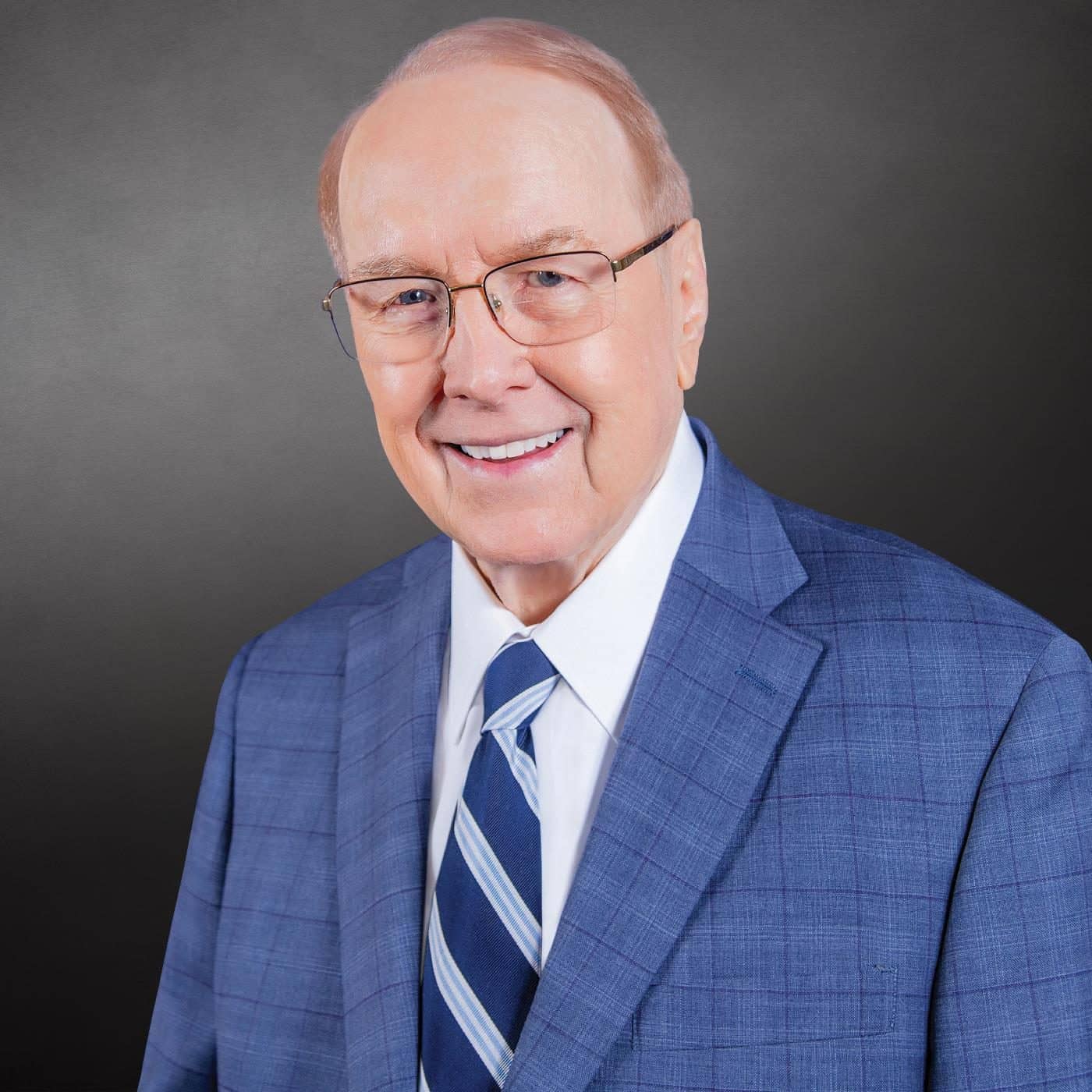


Join Dr. James Dobson and Roger Marsh as they bring a compelling conversation to Family Talk, featuring Dr. John Trent and Doug Barham. Explore how the concept of blessing others can deeply transform lives. Learn about John Trent’s personal journey from a troubled youth to a man of deep faith, thanks to the influence of mentor Doug Barham. This discussion reveals how positive word pictures and faith-led actions can forge lasting impacts, showing that every person has the power to be a blessing.
SPEAKER 04 :
Welcome everyone to Family Talk. It’s a ministry of the James Dobson Family Institute supported by listeners just like you. I’m Dr. James Dobson and I’m thrilled that you’ve joined us.
SPEAKER 02 :
Well, welcome to Family Talk. I’m Roger Marsh, and today we’re going to hear a conversation about the power of blessing others. Dr. John Trent, president of Strong Families Ministries and bestselling author of the book, The Blessing, is joined by his longtime mentor, Doug Barham. When John Trent was a troubled teenager from a broken home, Doug showed up at his football practices and invested in his life, ultimately leading John and his entire family to faith in Jesus Christ. The discussion we’re about to hear, featuring John and Doug and Dr. James Dobson, explores how creating positive word pictures for others can literally transform lives and why each of us has the power to be a blessing. That’s coming up on today’s edition of Dr. James Dobson’s Family Talk.
SPEAKER 04 :
Dr. John Trent is back with us for another visit. John’s written or co-authored more than a dozen books. He speaks and lectures to tens of thousands of people. As a matter of fact, you get around a lot, don’t you, John?
SPEAKER 03 :
I do, and you guys have been really gracious to allow me to speak at a number of different events, and it’s a real honor to do that.
SPEAKER 04 :
Speaking of an honor, John, I’m going to give you the honor of introducing our guest. In fact, you asked for that honor because this man means an awful lot to you.
SPEAKER 03 :
Well, you know, he does. Dr. Dobson, today as we talk about choosing to live the blessing and taking that Old Testament and New Testament concept and living it out, well, the guy sitting next to me, I was a high school kid, and Dr. Dobson, you know this story, but I grew up in a single-parent home. My mom and dad divorced when I was two and a half months old, and I never met my dad until I was in high school. When I did, he was an angry alcoholic, and I used to hate him, and I didn’t know Christ. I’m ashamed to say that I was drinking like crazy and going wild, and then… You know, interestingly, all of a sudden, you talk about the blessing. Somebody showed up and stood on the sidelines. Now he’s about six, what, three, and weighed about probably 215 back then and was an ex-football player at Chico State. Now he’s a freshman, mighty football freshman. You’re 14 years old. 14 years old. And I’m wild and crazy. And all of a sudden, this guy shows up and he begins to invite a bunch of us players home to his home. And I get to meet his two sons who were five and three. And I would watch him pick up those boys and hug them and bless them. I didn’t know that was the blessing. And then this guy here, actually later on, he was my young wife leader and just loved me, just built a relationship with me. And then he actually tricked me into going to a religious movie, a Billy Graham movie. I didn’t know that’s what it was. Or I wouldn’t have gone. I hate to say it. And I thank the Lord because, as we’ll get to talk about, Doug Barum led me to Christ. He led my twin brother Jeff to Christ. He led my older brother Joe to Christ. He led my mom to Christ. Well, Doug Barum, who still goes actually now into prisons and meets with kids who don’t have a future, never saw the blessing lived out, he still goes in and blesses people today.
SPEAKER 04 :
Doing for others what he did for you. Doug, it is good to have you here. Thank you. You’re a busy man too, aren’t you? Yeah.
SPEAKER 01 :
Yeah, boredom isn’t in the vocabulary.
SPEAKER 04 :
Take us back to the time when John was 14 years of age. What did you see in him that made him worth reaching out to? You know, at 14, it’s hard to see past the adolescence and the drinking and the other things. You saw something valuable in him, didn’t you?
SPEAKER 01 :
Well, you know, I have to be honest. I wish I could say I really had a great, wise perception and perspective on people, but I was scared myself. You know, I was 28, 29 years old, and I was working with kids, and I was kind of scared of them. And so I would hide behind the bleachers and look through them out onto the football field, and I hung around the freshmen because they were less intimidating. And John was probably the smallest guy on the team. And… You know, he was kind of a – he was like a hand grenade football player, small but powerful. And I was drawn to him. He was the quieter – at that time, he seemed like he was the quieter of the twins. He got over that. He got over that. Yeah, he got over that. And so we just hung around together, and the friendship just plain grew. So over the years, it’s been special. Yeah.
SPEAKER 03 :
But you know what’s interesting, and as we’re talking today about living out the blessing and making that choice, it’s funny, those pictures to me are so vivid. I can remember the theater. I can remember the red seats. I can remember walking down the aisle. And I guess the thing that I’m getting at is, and as we get to talk today about living out this blessing, which is really I think what the Lord wants us to do is to bless people like this, those pictures are so vivid. You know, to me, and I know for Doug, he was just, I was just one of a whole bunch of kids that he was blessing. But boy, I’m telling you what. They burned in your heart.
SPEAKER 04 :
They burned into my heart. Absolutely. When you talk about the blessing, you’re referring to your new book. The essence of this book is not simply to bless your own family, which you’ve written about before, along with Gary Smalley. But this is urging Christians to bless others the way Doug has blessed you. Yeah. and was with you at a critical time.
SPEAKER 03 :
Hey, we’ve had the privilege, you know, of sitting here. Remember when we had several years ago, Dave Drevecky with me, and we talked about blessing kids and with Gary and I. But as I began to look at this whole concept of the blessing, and I ran into a passage in Deuteronomy. I know most of us had our quiet time there, you know, this morning. But Deuteronomy chapter 30, there’s this passage where it’s dramatic, Dr. Dobson. Think about this. Think about a USC. ucla game remember back to those where you’ve got blood pressure just rose i know you know what i mean you know and and uh well god uh took the nation of israel and he put half of them on one mountain he put the other half on another mountain now those mountains mount gerizim and mount ebal are facing each other and right down the middle so it’s kind of like here’s two opposing stands uh there like usc and ucla you know And he put the priest down the middle. And then to Joshua, you know what he said to him? He said, now they were, Dr. Dobson, they were one mile from the promised land. They’re getting ready to go in. And yet the Lord says to him, he says, I call heaven and earth to witness against you today that I have set before you life and death, the blessing and the curse. And And you know what? I guess what I hope to communicate today to that mom who is the only one in her home right now, maybe the dad’s not interested in blessing the kids, but she is, you know. Or maybe that guy that’s thinking about bailing out on his family right now, you know. It is a choice every day that we have to bless or to curse, to add life and light or to subtract it, which is what the literal word for curse means. So that’s what I’m excited about getting across is that even if you came from a home like me where the pictures weren’t wonderful and beautiful, I thank the Lord for guys like Doug who were willing to say to a guy like me, you can change the pictures.
SPEAKER 01 :
Doug, talk about your work today. You’re still involved in Young Life. Well, I was on staff for 17 years. I do it as a volunteer now. In our little town, we call it prime time. And, you know, at the beginning of the year when the kids all come to club, and that’s the result of the relationships of hanging around the football practice field, I’m still going to the freshman. You still intimidated by them? No, not quite as much. But I stand in front of those kids and I tell those kids, we want this to be a safe place to come every week. And I try to communicate how valuable they are because I feel it in my – last year when I did this, I started crying because I told them, I don’t know hardly any of you. I don’t know most of you kids, but I think I would die for any of you. Because that’s what Jesus means to me and what he’s done for me. And he has filled my heart. And I’m just blown away by how I feel about kids. Because they’re just kids. But they have infinite worth. John, that’s what you felt when you were 14 years of age, wasn’t it?
SPEAKER 03 :
Can I give you two quick pictures? Sure. The first time, now remember my dad left when I was two months old. And so we weren’t just real close, you know, when he left. But years would go by and we weren’t the greatest football players, but we did end up on the front page of the sports section for the Arizona Republic one time. Twins, same backfield. That’s kind of unusual. So they put a picture of my twin brother and I. Guess who read the paper that day was my dad. Now, he had lived, Dr. Dobson, he was within 20 mile radius of us the entire time growing up. And you’d never seen him? But he never bothered to call. There was no restraining order. You know, again, this is back in the 50s and 60s. And we knew he was somewhere, but we didn’t know where. And he calls and he says, I want to meet you boys. So you can imagine the hype. We’re playing this team and we just, you know, are so excited about the fact that I was more excited that up there in the stands was going to be my dad, you know. And so we played our hearts out. I won’t tell you who won the game. All right, I will. They had this pathetic quarterback, this guy named Danny White, who went on to play for the Cowboys.
SPEAKER 01 :
No, Western High School.
SPEAKER 03 :
And they beat us right at the last three minutes mark of the game. But you know what? I remember standing on that field after the game, and I was so excited that I was going to meet my dad. And Jeff was there, my twin Joe and my mom. And we wait and we wait and we wait. And we got permission to stay put. It was an away game. The team left. We wait. And the lights finally go out. And we’re still standing on that football field. He never showed up. He never called, didn’t say he was going to go. And I had so much anger in my life. Just that was kind of like lighting a fuse and it just exploded. Well, it was at that time that Doug showed up. And who goes to freshman football practices? I mean, you know, a few cheerleaders that are paid. I mean, that’s about it. You know, a few parents. And my dad never went to a game. Doug did. When I was a JV wrestler, and I did better after that, but I remember my first varsity match, I got beat 23 to 3. You know who the first person was off the mat when I got off wasn’t my dad. It was Doug. You became a father. Yeah, and I used to go to his home and watch him with his kids.
SPEAKER 04 :
Obviously, John, I have your book and knew that you might share that story. In fact, I was going to ask you to tell the story with your father. And I have brought something with me into the studio that I think will provide a word picture as you talk about it. This book is really based on the notion of creating pictures. Pictures, right. And I want you to hear one of my commentaries that was aired recently. And we have it queued up, I think. Several months ago, I talked to a man who described one of the most painful experiences of his life. When he was 17 years old, he was one of the stars on his high school football team. But his father, a very successful man in the city, was always too busy to come see him play. Quickly the final game of the season came around, which happened to be the state championship, and the boy was just desperate to have his dad there. The night of the big game, the boy was on the field warming up when he happened to see his father arrive with two other men, each wearing dress suits. They stood talking among themselves for a moment or two, and then he saw them leave. Amen. Amen. Amen. Amen. When he’s uninvolved, when he doesn’t love or care for them, it creates a vacuum that reverberates for decades. That man’s father died not long ago, and he stood by his dad’s body in the mortuary and said, Dad, I never really knew you. We could have shared so much love together, but you never had time for me.
SPEAKER 03 :
Wow.
SPEAKER 04 :
Does that sound familiar?
SPEAKER 03 :
I spent eight and a half hours the last day of my dad’s life feeding him ice chips and talking to him. And when he died at 4.43 in the afternoon, Dr. Dobson, I mean, I just grieved for what I didn’t know. See, it wasn’t, you know, I mean, he, bless his heart. I mean, he was in World War II. He went through tons of struggles in life and all that stuff. And so I’m not slamming him. I loved my dad. After I became a Christian, I sat down and I asked his forgiveness. Because, you know, the interesting thing is, is that for a lot of us, when we’re so blocked up with anger, no wonder we don’t bless anybody else. I was so frustrated. filled with anger. I sat down at a restaurant and I looked at him in the eye and I asked him to forgive me. And I told him I loved him and I tried to bless him. And he goes, well, you know, if you need that, fine. And I said, I do need it, dad. And I tried when he had his first heart attack, I was right there. I was there the day that he died. But that anguish of not knowing. And so, you know, Dr. Dobson, one of the things that you shared in your commentary that’s so powerful And what this book is really all about is the fact that we know through clinical research and all the studies that we do with people that people don’t tend to remember. They don’t remember decades. They don’t remember weeks. They remember moments. And we need to deal with those. But every time we choose to bless someone, to live out Jesus’ love.
SPEAKER 04 :
You’re creating another picture.
SPEAKER 03 :
We’re giving them a picture that can change their life.
SPEAKER 04 :
Doug, put your own spin on John’s understanding and explanation of blessing others. We have talked here in the studio, as we said, about blessing your own family. That comes out of the Old Testament where the eldest in the family was actually blessed by the father. But this is an expanded perspective of it. As you do work with kids and with prisoners and with the down-and-outers, tell me how you see this concept.
SPEAKER 01 :
Well, I think the source, obviously, is our Lord. And when I consider how the myriad of ways that He has touched us and blessed us, accepts us, values us, grants us dignity, it becomes a very natural thing. And again, all the kids that I see, there’s deep pain. There’s a lack of identity. There’s a lack of worth. There’s a lack of clarity of the future. And we have just an incredible privilege to just reach out. I think it’s as Jesus lives his life through us, if we’ve truly received the blessing, then we have the blessing to give.
SPEAKER 04 :
Jesus himself was the picture. Of God. Yeah. You make that point in your book, don’t you?
SPEAKER 03 :
Yeah, absolutely. And I can remember, you know, Doug pointing me to the pictures. Okay, maybe I didn’t have an earthly dad there. And then as I, you know, grew older and got out of high school and went away to college, Doug wasn’t there. But the thing that really kept me going was I could look at a heavenly father who has said, I will never leave you nor forsake. So those pictures of how Jesus, remember how he dealt with a woman at a well and how he dealt with the disciples and how he dealt with Peter when Peter denied him.
SPEAKER 04 :
Now, the essence of what you’re saying, as I understand it, is that every experience you have And every waking moment throughout your life creates a picture.
SPEAKER 03 :
Yeah. Whether it’s a negative one, one we do in our own effort and a lot of times we mess up in, or whether it’s a beautiful picture.
SPEAKER 04 :
And even whether you recognize it or not. Doug, you were creating a beautiful picture of fatherhood for John, filling a void. And you don’t even remember much of it. And yet you were creating a picture.
SPEAKER 01 :
What I remember is how much it meant to me. I had very little sense of was I making any impact on John. And I think that’s the way it is with the Lord. The more we give, the more it comes back. I think so often of our society and how hurting we are as a society. And if in a community we have 1,000 kids, let’s say 1,000 people who are hurting, I’m convinced we don’t need any programs. We don’t need any money. All we need are 1,000 healthy adults who will each love one. Amen. And give the blessing. Paint the picture, a new picture for one person. Jesus says if you do it under one of the least of these, not all of these.
SPEAKER 04 :
And we don’t have to be great artists to pull this off. That’s right.
SPEAKER 03 :
I mean, it can be a stick figure if the Lord uses it. You know, Dr. Dobson, whether again, it’s that single parent mom and she’s the only one leaving positive pictures. Whether it’s us and we’re a grandparent and there’s those kids on our street and we’re the only ones that are… smiling on him, blessing him. I get letters all the time from people who said, I never got the blessing, I never got affirmed by mom and dad, but I did from my coach, from my teacher, from my young life leader, from my grandparents. And so that’s the kind of thing that I’m saying is, is this isn’t just for pastors and missile scientists. When Joshua laid before the nation that choice, it was for all of them, life or death, the blessing or the curse.
SPEAKER 04 :
John, we’re surrounded by 40 students today. Doug, you know these young people. Even though you haven’t met them personally, you know them well because you spend so much of your time dealing with the next generation. Apply what you all have been saying to those who are here in this studio and also many others in college today or high school perhaps. How do they extend this blessing onto others today?
SPEAKER 01 :
I would say, first of all, make sure that you have truly received and are currently on an ongoing basis receiving the blessing from Christ. You can’t get it from a program. You can’t get it from a lot of rah-rah stuff. It’s got to come from Him. You can’t give it if you don’t have it. That’s right. And then as you just open your life to say, Lord, I want to be a conduit and let your grace flow through me.
SPEAKER 04 :
Are people still hungry, Doug? Oh, wow. Some of these young people here today are going to secular universities where there’s no evidence at all that God is even there. I mean, they’re surrounded by kids that are doing all kinds of things. Are they really hungry? Is there a need?
SPEAKER 01 :
No, there’s not a yes. And I would say that society, you know, tries to answer with money, with programs, with all kinds of conferences, seminars, hoopty-doos, you know, to make it happen. But a heart is touched by another heart. And we’ve lost that. I think even the Christian family, we’ve lost the one, I don’t mean family, nuclear family, I mean as the Christian family, the church. that our lives are touched one at a time. And what a wonderful investment to give your whole life to one person for life. That’d be your whole vocation.
SPEAKER 03 :
Yeah, absolutely. You know, I just think, too, at the time, I was so hungry. Now, you couldn’t have shown it on the outside. In fact, Dr. Dobson, I had a guy stay at our home recently, and my kids, I think, tricked him into this, Carrie and Laura, you know, or maybe Cindy set him up. I don’t know. But I walk in, and they’ve yanked out all the old yearbooks, you know, which is embarrassing, you know, the hair and those. So much you used to look like. Oh, man, those bell-bottoms that went way too far out, you know, and all that stuff. Your hair was black, too. My hair, I used to have dark hair. Well, I remember sitting there, and he’s flipping through, and he’s laughing, and he’s looking at the pictures, because that’s what we’re talking about, the pictures. And you know what he said to me? He said to me, he goes, you know what? You never used to smile, did you? See, I was the quiet one. I was the angry one. I was the one that was ticked off at life and at God and at people. And all of a sudden, when one—and we would do these things at Doug’s house. We’d go over and we’d play bull moose football, and we invented it. I mean, it ought to be an ESPN 2 sport today, you know, kind of a deal, you know.
SPEAKER 04 :
Maybe ESPN 4 or 5.
SPEAKER 03 :
Yeah, or 8 or something like that. But what it was was he knew that a bunch of high school guys— who thought they were real studs, that how is he going to get to their heart? Well, we’d play football, and then we would have a Bible study. And I would watch him pick up his kids and hug them. And now that’s what I do. I try to, because one man poured his life into me, I’m trying to do that with my kids. I go out, as you know, all over the country and do seminars and the blessing and try to tell people to do this. But it started because one guy… Showed up at one practice and said, I’m going to look at a bunch of freshman kids as valuable.
SPEAKER 04 :
You started to say, I thought, that your photographs from your album show you not smiling. Yes. Show tension on your face. Do you know that there was a study that was just released in the last few weeks about that where they took high school annuals from 1958 to 1960. Wow. And they divided them into two groups, those who were smiling, those who had laughter lines around the eyes, those who seemed to be enjoying themselves as opposed to those who were tense. You could see it in the pictures and followed them from those years to today. Wow. And those that were laughing and smiling and relaxed are significantly more healthy and have had a significantly better life than the others. You can see it in the photographs at 16, 17, and 18 years of age.
SPEAKER 03 :
And see, that’s when I needed to know that God loved me.
SPEAKER 01 :
Recently, well, four years ago, I started going to the county jail to see kids. And I’d known them in the streets. These were, in most cases, Hispanic gang kids. And I noticed that when I would come out of jail, I would be choked up and I would cry walking in my car. I don’t mean bawl. I’d just be very tenderized. And it would confuse me. I said, I’m not sad. I’m not mad. I don’t know. Why am I doing this? I’d get in my car, and I would just automatically break into a worship song and sing. And finally one day I was looking at Matthew 26 where Jesus is making that funny statement, the poor you’ll have with you always, but you won’t always have me. And I didn’t understand that. When I looked across the page of chapter 25 and it says, you reached out to the poor and you touched my life, the sheep and the goat story. And so what struck me there was that if I want to encounter Jesus, I go to the hurting person. Jesus is in the poor. He’s in the lost. He’s in the alien. He’s in the prisoner. And so I think what was going on was I was seeing Jesus when I saw John, even before he was a Christian. And Jesus was touching me because he said, if you touch one of these, the least, the hurting high school kid or whatever. And that was a marvelous. Then I understood why I was crying and breaking into song after being in jail. I’d just been with Jesus.
SPEAKER 04 :
So in as much as you were doing it to the least of those, you were also being ministered to.
SPEAKER 01 :
It’s one of the least of these. It wasn’t all of them.
SPEAKER 04 :
It was one. Doug and John, thank you for being with us and for providing the stimulus for this discussion. And thank you, John, for your book. I think we get the idea. We’re going to go out and create some pictures, whether we’re artists or not. And Doug, keep ministering to those young people. What a tremendous thing.
SPEAKER 02 :
Well, what a meaningful conversation about the power of blessing others. Today here on Dr. James Dobson’s Family Talk, Dr. John Trent and Doug Barham have reminded us that we don’t need a title or a program to change someone’s lives. We literally just need to show up. As you’ve been listening to today’s edition of Family Talk, please keep in mind that if you missed any part of today’s broadcast, or if you want to share it with a friend or dig through our archives, go to jdfi.net. That’s James Dobson Family Institute at jdfi.net. When you donate to our ministry, you’re investing in the next generation, helping us reach young families with biblical truth and timeless wisdom for the road ahead. Every day, we hear from listeners who tell us how these broadcasts have strengthened their marriages, transformed their parenting, and deepened their faith. You can play an integral role in those life-changing moments by partnering with us today. Visit JDFI.net to give a gift online through our secure website. That’s JDFI.net. Well, I’m Roger Marsh, and on behalf of all of us here at Family Talk and the James Dobson Family Institute, thanks so much for listening today. Be sure to join us again next time right here for another edition of Dr. James Dobson’s Family Talk, the voice you can still trust for the family you love. This has been a presentation of the Dr. James Dobson Family Institute.