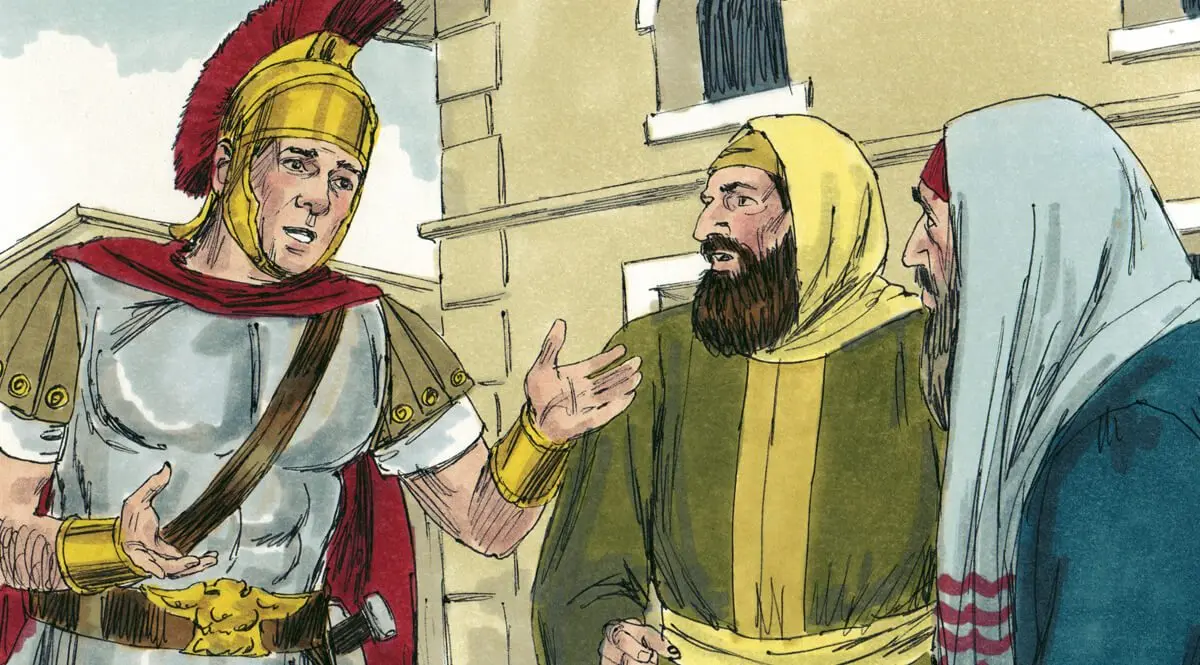

In this compelling episode, dive into the story of a Roman centurion whose faith surprised even Jesus. Explore the intriguing dynamic between faith and those deemed outsiders in Jesus’ time. Ronald L. Dart unpacks why faith might thrive more prominently in those perceived as distant from God compared to the faithful Jews and even His own disciples. Discover the essence of faith, sprinkled with personal insights, and tackle the underlying reasons why proximity to a church doesn’t always translate into strong faith.
SPEAKER 02 :
The CEM Network is pleased to present Ronald L. Dart and Born to Win.
SPEAKER 03 :
It is hard for me to imagine Jesus being surprised at anything. I mean, after all, Jesus knows the thoughts and the intents of the heart, doesn’t he? Isn’t he able to tell what we are thinking before we think it, to know what we’re going to say before we say it? Well, here is a Roman centurion who comes to him. He’s a Roman officer, captain of 100 people, perhaps the equivalent of a company commander in the army. He comes to Jesus, and he requests healing for his servant. Now, that’s surprising enough all by itself. Why would a Roman officer care about his servant? But when Jesus says to him, Well, surely I will come down to your house, and I’ll heal the servant. The centurion tells him, Master, you don’t have to come down to my house. You just speak the word. I know how this works. I’m a man under authority. I take orders. I give orders, and they are carried out. You just say the words. And Matthew tells us that Jesus marveled at the man’s faith. He seems to have been genuinely impressed. When Jesus said this, he marveled and he said to those that were following behind him, You know, I have not found so great a faith. No, not in Israel. Now, Jesus seems to have been surprised more than once about this question of faith. For example, he seems surprised at the fact that he does not find the kind of faith in Israel that he often finds among Gentiles. And then when it comes right down to it, he doesn’t find an awful lot of faith in his own disciples. He seems disappointed in them. He seems distressed in them. He rebukes them for their lack of faith. He expected more of them than he got. Now why do you think that would be? Why do you think that greater faith would come from somebody further away from the center of things than it would from people who are right next door? to what you would call perhaps the source of faith. I mean, here were Jesus’ disciples. They had wandered up and down the roads of Judea and Galilee with him for months. They had seen people with withered arms healed. They had seen blind people healed. They’d seen all this stuff. And yet Jesus will say to them, Oh, how come you don’t believe? Why do you have so little faith? And I think it’s a very good question. Here is a Gentile soldier, a career soldier, who has no problem in believing, whereas the Israelites do, and Jesus’ own disciples do. You know, I once heard a Bible teacher remark that he felt that faith was easier for children. They approach God simply, and they take Him at His word simply. God says, ìYouíll do it, youíll do it. What am I to worry about it?î And as we grow up, our thought processes become more complicated, and as a result, he thought, ìFaith became harder.î I’ve heard others remark that probably 90% of the miracles that take place among Christian people come to people who are in their first year of faith. They’re new. And the longer they are in the faith and the more complicated their faith becomes, the more involved with theology and questions of doctrine and all that they become, faith kind of gets shoved back on the back burner or it’s not the first thing that one thinks about. I think something like this afflicts churches. Those closest to the center can get so wrapped up in the business of the church that they begin to rely more on method and less on God. I know personally what this is like. When you sit down every month to write your newsletter, for example, the temptation to manipulate your readers is always there. It’s especially true when people respond to your newsletter with donations. I can catch myself very easily sitting there and thinking, well, now, should I leave this paragraph in or should I take this paragraph out? And I think about it not so much from what it will mean to the people, not so much for the service it will provide, not for the inspiration or the uplift, but for whether or not they’ll turn around and send a donation. And this temptation is always creeping into every aspect of church work. We think about donations or we think about numbers or attendance or whatever it is that we have set out there for us that we use to measure our success by and we manipulate. Well, how do we get around this? You know, it’s easy to assume that money is what keeps the wheels turning, but it isn’t really. What keeps the wheels turning is faith, is simple trust in God, and of course, carrying out His will, doing what He wants, getting His work done. So, what does this mean to you? Well, it may mean that your faith has become too complicated. Or, if you have no faith, maybe it’s because you’re making faith too complicated. Maybe you should learn to just put things in God’s hand and launch. Get with it. Start the program. Go after it. And trust God to make it work. So, Jesus marveled at the faith of the Gentile centurion, and then he said this, And I say unto you that many will come from the east and the west and shall sit down with Abraham and Isaac and Jacob in the kingdom of heaven. But the children of the kingdom shall be cast out into outer darkness. There shall be weeping and gnashing of teeth. All right. People coming from the east and the west are Gentiles. The children of the kingdom, Israel, Jews. So the people who were supposed to be in are out. And the people whom we thought were out are in. I think there is a temptation to rely on where you are. For example, I’m a member of the church. I am in church. I attend church. Or to rely on who you are. Well, I’m an Israelite or I’m a Jew. I suspect that temptation is at times just too much for people. The truth is that faith is a very personal thing and it has very little to do with your church affiliation. You can have people in the same congregation, some of whom have faith, and I suspect most of whom really don’t. Don’t let your church spoil your faith. I don’t say that to be anti-church. I am a member of a church myself. A church is necessary. A church is good. A church is uplifting. A church can be inspiring, and a church is certainly help when you’re in trouble. We ought to be in church regularly. But if you go back to the Old Testament and the prophets, and you go back to Jesus and his statements, being close to the temple, being in the shadow of the walls of the house of God, is no substitute for simple faith. And so this man said, please heal my servant. If you say the word, I know it will happen. And Jesus said to the centurion, Go your way, as you have believed, so be it done to you. And his servant was healed in the selfsame hour. And when Jesus, this is Matthew 8, verse 14, was coming to Peter’s house, he saw his wife’s mother laid sick of a fever, and he touched her hand, the fever left her, and she arose and ministered to them. You know, one wonders a little bit why Matthew, he didn’t have a lot of space. You know, he only used 28 chapters to tell us this whole story, and you and I probably would have liked to have had 128 chapters. Why is this one here? I don’t know, but it does serve to reveal one bit of information we might otherwise miss. Peter was married. Yeah, see, he went into Peter’s house, Peter had a house, and he saw Peter’s wife’s mother, his mother-in-law, sick of a fever. So Peter had a wife. You know, we normally think of the 12 apostles as being single guys. After all, Jesus went around calling these fellows, and because he was going to take them on the road for three and a half years, you would have thought that he’d want them unencumbered from family. But Peter had a wife, and his wife had a mother, and his mother was sick, and Jesus, while he was staying at their house, healed her of a fever so she could minister to them. Peter was probably about 30. He was a married man, and he had to be away from his wife a lot during the three and a half years he traveled around with Jesus. But it is revealing that Jesus, irrespective of the family, called him anyway. In a moment, I’m going to explain to you something about Jesus and Jesus’ healings that you may not know. Stick around.
SPEAKER 02 :
I’ll be right back. When was Christ born? Everyone thinks it was December 25th, but was it really? The Bible tells us more about the birth of Christ than you think. To find out more, write for a free copy of the program titled The Birth of Christ. Write to Born to Win, Post Office Box 560, White House, Texas 75791. Or call toll free 1-888-BIBLE44.
SPEAKER 03 :
When the evening was come, they brought to Jesus many who were possessed with devils, and he cast out the demons with his word, and he healed everyone that was sick. He did this, Matthew tells us, that it might be fulfilled which was spoken by Isaiah the prophet, saying, himself took our infirmities and bore our sicknesses. Now the passage Matthew is talking about here is found in Isaiah 53. The healing of the sick is equated by Matthew with this passage. Now, the prophet Isaiah, actually, if you were reading through this all on your own and you had not read Matthew at all, I don’t know for sure if you’d really understand it. He is talking about a servant of God, a suffering servant. And I think some Jewish commentators, at least, equate this suffering servant with Israel. It’s very plain that in the New Testament, Jesus sees himself as that serpent, as does Matthew, and all the New Testament writers really look back and see Jesus as the fulfillment of that. It’s a Messianic prophecy. But what’s surprising to a Jewish reader is that it’s a Messianic prophecy of a Messiah who suffers. He begins Isaiah 53 by saying, Who has believed our report, and to whom is the arm of the Lord revealed? There’s almost an implication in the prophecy here that nobody’s really going to believe what we’re telling them here. He shall grow up before him as a tender plant, as a root out of a dry ground. He has no form nor comeliness, and when we shall see him, there is no beauty that we should desire him. What’s surprising about that in a way is that one would have thought Jesus to be a handsome man, someone that we would look on and think was good-looking, admirable in that sense. So what are we to conclude from this, that he had no beauty, that he was a very plain-looking man? Or looking back to Isaiah 52, where it speaks of the chastisement of this servant of God whose face was so marred that it was almost indistinguishable. Is that what we’re talking about? It’s not entirely clear. But it becomes clear along about verse 3 when he speaks of this one and says he is despised and rejected by men. In fact, John, when he begins his gospel, says he came unto his own and his own would not receive him. He was Jewish himself. He was rejected by the Jews. And he goes on to say he was a man of sorrows and acquainted with grief. and we hid, as it were, our faces from him. He was despised, and we esteemed him not. Speaking in the first person, the prophet, I think, puts himself in the position of Israel. He looks at the Messiah to come and says that he is a man of sorrows. The Hebrew word suggests pain. And acquainted with grief, the Hebrew word suggests sickness. And that takes us right back to Matthew. For indeed, Matthew, in talking about this, says, himself took our infirmities and bare our sicknesses. Here it says, He was despised, we esteemed Him not. He was a man of sickness and acquainted with pain. Surely He has borne our pain and carried our sickness. Yet we did esteem Him stricken, smitten of God, and afflicted. Now I suppose that at any moment you look at Jesus Christ as He hangs on the tree and as you look at him with the crown of thorns on his brow and the blood coming down his face, and watch the agony that he endures, that if you are unable to see that he bore your sicknesses and carried your pain, your grief, your sorrows, then the only conclusion you could come to is that he was smitten by God and afflicted by God because of himself. Because of what he had done? Well, now, that doesn’t work with our theology, for we all know that Jesus was sinless. We know his life was perfect. We know that he never transgressed God’s law. We know that he was a gentle person, a kind person. And yet, at the same time, he wound up crucified. And before he was crucified, he was tortured. Oh, yeah, it was a kind of torture. Scourging was precisely that. He was strapped up to a post and beaten within an inch of his life. A scourging would sometimes tear out an eyeball. It would cut the flesh all the way to the bone. A man once scourged oftentimes didn’t need to be crucified. It could kill you. You might linger long enough to be put on the stake, but you would not linger well. But the prophet says he has borne our griefs. It’s our sorrows, our pains, our sicknesses that he carried to the tree. And in verse 5 of Isaiah 53, he says, But he was wounded for our transgressions. He was bruised for our iniquities. The chastisement of our peace was upon him, and with his stripes we are healed. Now, this is a sobering thought. I can recall for many years when I would go to take the Lord’s Supper or communion, whatever you would like to call it in your faith, your tradition, that I full well understood the blood of Christ. I full well understood his death. I understood entirely that his blood was shed for my sins. And so when I partook of the wine or the grape juice, as the case may be, I had a profound sense of awareness of the sacrifice of the death of Christ, of his shed blood for my sake. And I don’t know how I went on for so many years without ever paying any attention to the other side of that equation. The bread, which is the body of Christ, which was broken for us in the same way that the unleavened bread of Passover was broken. His body, broken for us. And it is by His stripes we are healed. Now, I can easily understand someone preaching that it is by Christ’s death we are healed. For his death put away all of our sins. His death took away all of our guilt. And so there is a kind of spiritual healing that goes along with his death. Well and true. And the spiritual healing is very important. But I don’t guess I’d ever ask the question as I really should have asked it. I understand that Christ had to die for my sins. But did he have to suffer? And in fact, now that I think about it, I do recall many, many years ago when I was just a youth and facing this question, I used to ask myself, why did it have to be this way? Why could they not merely have taken Christ out and executed him quickly, instantly, painlessly? Why not just cut his head off? Why not just run him through with a sword? Why was it necessary that Jesus suffer for our sins? For the wages of sin is not pain, we think. The wages of sin is death. And yet, common sense tells you that God did not intend that man be sick. God didn’t intend that we suffer from terrible, incurable diseases. God didn’t intend for us to have to go through all of that agony. Why then do we? Well, we’ve not walked in His way. We’ve turned our back on Him. We have sinned. And it is almost as though sickness and disease are in the world as a sort of, what shall we call it, an earnest payment on death. For it surely is a reminder when you have a lump that’s beginning to grow in some part of your body and you go down to the doctor and you have the test done and you’re waiting for the test to come back, that you’re painfully aware of your mortality. that you’re going to die sooner or later, whether this is cancer or whether it’s benign, that it is a reminder, and it makes us think deeply oftentimes about our life. So we know that sickness and disease are in the world, and we believe that sickness and disease are in the world because of sin. And so in a sense, it makes sense that Jesus would not merely die in our place, that he would also suffer in our place. So let’s think back for a moment at what the prophet has said. He is despised and rejected of men. A man of sorrows and acquainted with grief. And we hid, as it were, our faces from him. We turned our back. We wouldn’t look at him. We would not really come face to face with what was going to happen to him and that it was going to happen in our place. He was despised and we did not hold him in esteem. Surely He has borne our sickness and carried our pain, but we looked upon Him as just stricken of God and afflicted. But He was wounded for our transgressions. He was bruised for our iniquities. The chastisement of our peace was upon Him, and it is with His stripes that we are healed. Now, I’m not going to suggest to you that every time you’re sick, And every time you go to a preacher and you ask him to pray for you, that you’re going to suddenly and miraculously be healed. But I do think you need to understand that as Jesus goes up and down the roads of Galilee and Judea and heals sick people, that this was not a toss-away thing for him. This wasn’t just a let’s go through and clear up all the hospital beds for him. There was an awareness on Jesus’ part that as he went, there was a price that had to be paid for for every single one of those healings, that for him to have the power and the authority to forgive sins and to put away sicknesses and to put away diseases, there was a terrible price that had to be paid. The price was his suffering, and he knew all that. He knew it as he approached a blind man who could not see. He knew it as he approached a lame man who could not walk. He knew all of these things. And yet, he reached out to them anyway and healed them anyway.
SPEAKER 02 :
I’ll be back in just a moment. And tell us the call letters of this radio station. All of us have gone astray like sheep.
SPEAKER 03 :
We have turned everyone to his own way. And the Lord has laid on him the iniquity of us all. This is Isaiah 53, verse 6. Isaiah doesn’t cut us much slack. He doesn’t indicate that we’ve been good most of our lives and just made a slip here and there. He just said we’re like a bunch of sheep, and we’ve all, all gone astray. We have turned everyone to his own way. And as a consequence, we have brought upon ourselves a lot of penalties, a lot of torn up lives, a lot of destruction of the inner man, a lot of destruction of the outer man. All this has happened to us, and it says that the Lord has laid on him that is upon the suffering servant, upon Jesus, the iniquity of us all. He was oppressed. He was afflicted. Yet he opened not his mouth. He is brought like a lamb to the slaughter, and like a sheep before her shearers is done, he doesn’t open his mouth. He wasn’t whining. He wasn’t begging for his life. He wasn’t arguing with Pilate. He just simply went in there, and he took it. He suffered, and he died. He was taken from prison and from judgment forever. And who shall declare his generation? For he was cut off out of the land of the living. For the transgression of my people was he stricken. Everything that happened to Jesus happened to him because of you and me. Not somebody else. You and me. I mean, there’s no point in laying it off on the Jews. There’s no point in pointing fingers at the Israelites. It’s hardly worth the time to point the finger at Pilate. No, no, no. For the transgression of my people was he stricken. And you know, all the way from the Garden of Gethsemane until they finally took his dead body down off the stake, Jesus was paying for you and me. Oh, yeah. You know, whenever he was in the garden and he was suffering great agony and he was in dread of his life and his sweat was like great drops of blood falling off his brow, he was going through at that time the kind of thing that you and I go through when we know we’re going to die. So he knows what it’s like. And when the Roman soldiers showed up in the garden and all of his disciples fled and left him completely alone, Jesus knew what it was like to be left forsaken and alone. He knew what it was like to have his friends run away from him. You think you have problems? So you’ve lost friends? So you’ve had people turn their back on you? So has Jesus. He knew what it was like in that long night to be humiliated, so that when we suffer humiliation… We can actually suffer with him or know that he is suffering with us. He suffered humiliation, shame, spitting, being slapped in the face, being belittled, made fun of, a crown of thorns put on his head and jammed down to where it caused him to bleed. All these things. They plucked out the hairs of his beard, they spit in his face, and they mocked him. So everything that you and I might deserve for the way we have lived our life, Jesus actually experienced in the flesh. And finally, they trapped him up to a stake, whipped him within an inch of his life, and made him carry his own instrument of death up to Golgotha, where they nailed him to it and hung him up in the sun to die. for the transgression of my people. All of this took place. He made his grave with the wicked and with the rich in his death, because he had done no violence. There was no deceit in his mouth. Yet it pleased the Lord to bruise him. Now, pleased is a funny word. It means that it was within the will of God to bruise him, not merely to let him die, but to let him suffer. He has put him to grief. When you will make his soul an offering for sin, the man who will actually take the life of Jesus and come before the Father and make him an offering for sin. But you see, in order for you to do that, you have got to realize, A, that you have sinned, and B, that Jesus died in your place, that he suffered in your place, that he went through all that stuff in your place. and that as you suffer and as you live through your life, Jesus will live through it with you. When you make his offering for sin, you’ll see your seed, you’ll prolong your days, and the pleasure of the Lord can prosper in your hand. This person shall understand the work of God and be satisfied by his knowledge, and by his knowledge my righteous servant will justify many, for he will bear their iniquities. So I’ll divide him, that’s Jesus, a portion with the great. He shall divide the spoil with the strong, because he has poured out his soul unto death. And he was numbered with the transgressors, and he bore the sin of many, and made intercession for the transgressors. I suppose we have to realize something here. That after his death and burial and resurrection, Jesus ascended to the Father. And one of the apostles tells us that he ever lives there to make intercession for us. He’s pictured by the writer of Hebrews as sitting at the right hand of God. And when you think about it, it isn’t merely a matter that he died and suffered in our place. He’s actually got to represent us in the presence of the Father. He’s actually got to accept what has happened in the presence of the Father. So that when you come before God to make his soul an offering for sin, Jesus acknowledges you and says, Yes, I know him. Yes, he is my servant. Yes, he is coming to me. And yes, he has repented of his sins. For the truth is, the Bible tells us that our sins have cut us off from God, and He will not hear us. So how can we repent? How can we come back to God? How can we be heard? Because Jesus Christ, at His right hand, says, Father, I know this man. And so when all is said and done, One of the most important things in your life is to be sure that as Jesus sits at the right hand of the Father, that He’s prepared to confess you. For that to happen, you’ve got to be ready to confess Him. Until next time, this is Ronald Dart reminding you, you were born to win.
SPEAKER 02 :
The Born to Win radio program with Ronald L. Dart is sponsored by Christian Educational Ministries and made possible by donations from listeners like you. If you can help, please send your donation to Born to Win, Post Office Box 560 White House, Texas 75791. You may call us at 1 888-BIBLE-44 and visit us online at borntowin.net.
SPEAKER 01 :
Stay in touch with the new Born to Win with Ronald L. Dart app. This app has all of your favorite Ronald L. Dart radio messages, sermons, articles, and it even has a digital Bible. Simply search on the iOS or Android app store to download it for free today.