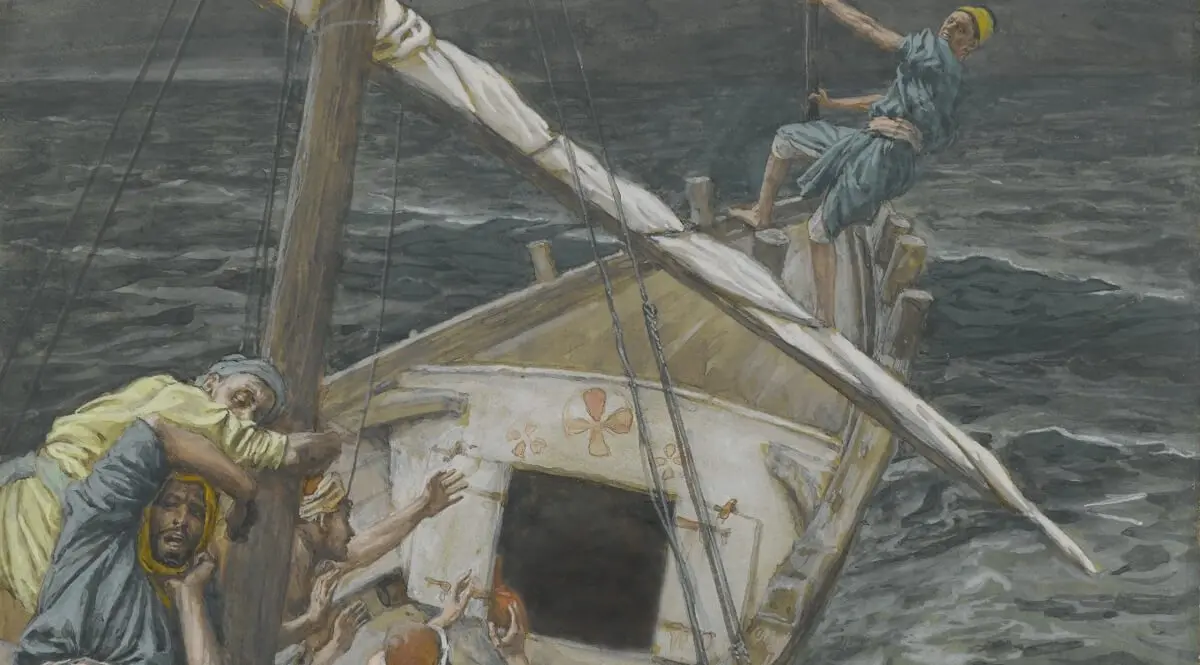

In this riveting episode, we delve into the Gospel of Matthew, exploring how its contents were meticulously curated to reflect the core messages of Jesus. As we traverse through chapters, focusing particularly on chapter 8, we learn of the stringent demands Jesus placed on his disciples. From forsaking personal comforts to understanding the true essence of faith, the journey offers profound insights into the path of spirituality.
SPEAKER 03 :
The CEM Network is pleased to present Ronald L. Dart and Born to Win.
SPEAKER 02 :
If you were one of Jesus’ apostles and you had somehow to distill the ministry of Jesus and put it into, as Matthew did, 28 chapters and so many pages, where would you start? What would you include? How would you decide what to leave out of such an important document? You know, when John wrote his gospel, he confessed, he said, there are so many other things that Jesus did, the which, if they should be written every one, I suppose even the world itself could not contain the books that would be written. And I have no doubt that that is true. I suppose that if I were writing the gospel, I would try to maintain some sense of movement, of narrative. I would want you to have a feeling of the flow of events. But then when the time came to cut, let’s say I had to trim it down to meet some particular deadline or objective. When the time came to cut, I would be thrown into crisis immediately. Now, I use a word processor, and it would be relatively easy for me compared to Matthew, but I would probably go back through and cut out those things that did not seem to be a part of Jesus’ core message. I would cut out the connective tissue. The result would probably be a little choppy, but I’d console myself by saying I had tried to keep all the important stuff. Oddly enough, the impression you get as you read through Matthew’s gospel is that he did something like that. The narrative is broken. The speeches are edited. You can tell that they are as you read them. But the central ideas are still there. in spite of all the cutting and all the hacking. Now, of course, we have no way of knowing what Matthew left out, although there are things in the other Gospels that he did not, for whatever reason, see fit to include. But what a task it must have been trying to make that decision. In the series of broadcasts we’re doing now on Matthew, the Gospel according to Matthew, we’ve come to chapter 8 and verse 18. And Matthew tells us, when Jesus saw great multitudes about him, he gave commandment to depart to the other side. And a certain scribe came and said to him, Master, I will follow you anywhere you go. And Jesus said to him, Hmm, the foxes have holes, the birds of the air have nests, but the Son of Man has nowhere to lay his head. Now, I really don’t think that what Jesus is saying is that never in his lifetime did he ever do so, because I think until he began his ministry, he had a home. He probably had a house, in fact, and a place where he lived. But once he started his ministry, once he hit the road with his disciples, it’s kind of a warning to this fellow who says, I’ll go wherever you go. He said, well, even if foxes have holes, birds have nests, But I don’t have any place to lay my head now. I don’t have any permanent abode. If you say you’re going to follow me wherever I go, you’re going to be on the road a lot, my friend. Then another disciple said, well, Lord, I want to go with you, but I’ll be right back after I go bury my father. And Jesus said to him, follow me. Follow me now. Let the dead bury their dead. Now, That’s kind of a hard thing to say, let the dead bury their dead, especially someone who’s just lost his father. Now, you have these two bits here, one having to do with the scribe who says, I’ll go wherever you go, and the other fellow who says, well, I need to go bury my father. They’re tossed in from outside the narrative because if you read this narrative as it really ought to have been, it would say, now when Jesus saw great multitudes about him, he gave commandment to depart to the other side. That’s verse 18. And it should then skip to verse 23 where it says, And when he entered a ship, his disciples followed him and just go on. But no, right in between these are these two instances of people who make excuses or inquire about following Jesus or inquire about his ministry, and he lays out some very strict standards. For some reason, Matthew felt these were important to include, and so without any connection and without any explanation, any padding around them at all, they’re just stuck in the narrative here. Presumably, they must have taken place about the time that Jesus made the decision to get into a ship and go to the other side of the Sea of Galilee. But what Jesus seems to say here in both encounters with these men say pretty much the same thing. This world is not important. Home is not important. House is not important. Bed is not important. Family is not important. Father and mother are not important. Our work is important. Forget your home and forget your family. The work that I am doing is more important than any of these things. So Jesus, early on with these disciples and these would-be disciples, laid out the very, very stringent requirements that he would have of anyone who was going to follow him in his work. And so they got in the boat, and they started to cross the sea. And Jesus went down in the hold of the ship, made himself comfortable, and went sound asleep. As they crossed, verse 24, it says, there arose a great storm in the sea to the extent that the waves were breaking over the ship. And one translation says the ship was in danger of breaking up. And Jesus still snoring away, I guess, down in the hold. His disciples came down to him and woke him up saying, Lord, save us. We’re going to perish. And he woke up and said, what are you afraid of? Oh, you have little faith. So he sat up, got up, went on deck, looked around and rebuked the winds in the sea. And in a moment, there was a great calm. The sea was flat. The sails were hanging slack. The storm was over. His disciples looked around them with their jaws hanging open and said, What kind of a man is this that even the wind and the sea obey him? You know, the disciples of Jesus must have gone about in a perpetual state of astonishment. They probably had to remind themselves from time to time to close their mouth. Every day must have seen something like this in greater or lesser ways. And this one imprinted on Matthew because he truly thought they were going to drown. He thought the boat was going to break up, was going to roll over, and they’d go to the bottom, and that was the end of all this. He was scared. And so to see Jesus come on deck and look around and say, shut up, wind, be calm, sea, and see them flatten out, it’s hard to imagine what it would have been like to have seen that. Jesus did not seem to think they should even have been afraid. That’s kind of remarkable. He got up from his bunk, came on deck, rebuked the wind and sea, and went back to bed and presumably to sleep. The storm is over. The sea is calm. The disciples’ nerves are a wreck. They were supposed to have faced this storm with equanimity. Jesus expected them to be up there on deck with the waves breaking over the ship, saying, no, don’t worry, it’ll be all right. The Lord’s down below. He’s asleep. Don’t wake him up. Everything will be fine. We’re getting wet, but that’s all that’s going to happen. No, the boat isn’t going to break up. No, it’s not going to turn, turtle, and go to the bottom. No, no, no, just relax. Boy, I tell you, that’s a lot easier said than done. Jesus had no problem with it. He went to sleep. What if they hadn’t wakened him? Well, they would have made it, a little beat up perhaps, but they would have made it because the Son of God was on board. There’s a fascinating little analogy, I think, for you in your life. There are an awful lot of times when you feel like crying out, Lord, save me. We’re going down. This thing’s turning over. Whereas it’s not going to because Jesus is on board with you, and it’s not going to happen. And I suspect that if he were here and could wander over to us and speak to us, he’d say, what are you afraid of? What are you worried about? Why don’t you have faith? Why can’t you just trust it’s going to be all right? But when they came to the other side, into the country of the Gergesenes, there met him two men who were possessed with demons coming out of the tombs, exceeding fierce that no man might pass that way. Two wild and dangerous men, completely crazy and uncontrollable. You can imagine the children would sneak up and look at that from a distance. But the word was out, don’t you go anywhere near that cave because they’ve hurt people. Well, Jesus went that way. And when they saw him, they cried out, saying, What have we to do with you, Jesus, you son of God? Are you come here to torment us before the time? Oh, they knew who he was, these two demonic spirits. And this is not the men speaking, by the way. This is the demons that are speaking. It seems odd, but they seem to know that they only have a finite period of time. They seem to be expecting judgment from God, and they know it’s not time for that. They know who Jesus is. I guess they want to know if he’s come to taunt them. And they seem to have known that Jesus would not leave them in possession of this man, or these two men. because they said, well, there’s a good way off. There was a herd of many swine feeding, and they said, well, if you’re going to cast us out, and Jesus hadn’t said anything about casting them out up to this point, if you’re going to cast us out, well, let us go away into this herd of swine. And he said to them, go. And when they came out, they went into the herd of swine, and behold, the whole herd of swine ran violently down a steep place into the sea and perished in the waters. It’s really a strange occurrence. For one thing, it’s strange that the demons caused the herd of swine to be killed, but there seems to be a dread in a demon of being disembodied, that is, of having nothing to inhabit, no focal point, no place to be, as it were. We don’t know a lot about this, but there’s an encounter described by Luke that helps us just a little bit. I’ll talk about that when I come back in just a moment.
SPEAKER 03 :
What do you do when life has dealt you a bad hand? Where do you turn when everything seems to have turned against you? Write for a free CD of a message entitled Beyond Adversity. Learn what lies on the other side of adversity. Write to Born to Win, Post Office Box 560, White House, Texas 75791. Or call toll free 1-888-BIBLE-44.
SPEAKER 02 :
What we don’t know about demons and demon spirits could fill a library, and that’s probably just as well. I think I know all I really want to know, but still we have questions from time to time about these things. Now, as I said, there’s a little bit of an enlightening encounter in Luke’s gospel. Luke 11, verse 14. Jesus was casting out a devil, and this one was dumb. The man who had the demon couldn’t speak. He lived his life normally, I suppose, but he just couldn’t speak. So when the devil was gone out, all of a sudden the man was talking, and people were really marveling at that. But some of them said, he casts out devils through bales above the prince of the devils. Now, why couldn’t they accept the obvious? Why did they have to explain away what Jesus did? Why say, well, the only reason he can do that is because he’s of the devil himself? I guess it was threatening to them. They would have rather had this poor man suffer on in his misery than have to deal with the truth about Jesus. Let him suffer. Don’t make me think. But Jesus, knowing their thoughts, said to them, Every kingdom divided against itself is brought to desolation, and a house divided against a house falls. If Satan is divided against himself, how is his kingdom going to stand? Because you say that I cast out devils through Beelzebub. Now, if I by Beelzebub cast out devils, tell me, by whom do your sons cast them out? Let them be your judges. So Jesus was not the only one at that time who was casting out demons. Others of this people, their own sons, I guess, had been doing the same thing. Then Jesus said, But if I, with the finger of God, cast out devils, no doubt the kingdom of God has come upon you, and you’re going to have to deal with it. Now, when a strong man, Jesus said, armed, keeps his palace, his goods are in peace. But when a stronger than he comes upon him and overcomes him, he takes from him all his armor wherein he trusted and divides his spoils. He that is not with me is against me, and he that gathers not with me scatters. Now next comes our observation or our question about spirits who dread being disembodied. Jesus says this, “…when the unclean spirit is gone out of a man, he walks through dry places seeking rest and finds none.” In other words, it’s like being in a desert. He’s out there. There’s no water. There’s no rest. There’s no peace for him out there. And so he says, I’ll return to my house once I came out. And when he comes back, he finds it swept and garnished and empty. And he goes and takes seven of the spirits more wicked than himself, and they enter in and dwell there. And the last state of that man is far worse than the first. And I guess Jesus’ warning here is that if you have been cleansed of a demon… then you don’t need to leave it empty. You need to fill that house with the Spirit of God. Put something else into your life, or that demon is very likely to come back. He doesn’t like the idea of being out in the desert. Now, it’s hard to figure how a spirit would find rest in a screaming maniac or a herd of swine, but being without a place, without a focus, without a center of any kind must be worse. So, back to Matthew. They that kept those swine, once they saw them go plunging down in the sea and saw them thrashing around and drowning, went their way into the city and told everyone what had happened to those people who had been possessed by the devils, that the devils were out of them. They’re normal. And behold, the whole city came out to meet Jesus. And when they saw him, ah, when they saw him, now you would have thought, that they would have marveled, they would have congratulated him, they would have patted the fellows on the back that had the demons cast out of them, they’d have congratulated them, everybody would have been happy, they’d have had a feast that night and said, look what’s happened, the power of God has come to our town. No, no. The whole city came out to meet Jesus, and when they saw him, they besought him that he would depart out of their region. Go away. Why? What were they afraid of? An upset to the routine? Were they saying, well, I realize you’ve done good, but you’re more trouble than you’re worth. That costs somebody a whole lot of money when you let those demons go into those swine. Or is this another case of not wanting to have to deal with the truth? The Son of God is here, and we don’t want to think about it. Just go away. There’s a saying, no good deed shall go unpunished. There may be a connection here with what Jesus said earlier. Strict and narrow is the way. And the way of good works can lead, surprisingly or maybe not surprisingly, to opposition. So anyway, Jesus got back into the ship and passed the sea again and came to his own city. The reference is Matthew 9, verse 1. And behold, they brought to him a man who was sick of the palsy, lying on a bed. They actually had to carry this fellow in. And Jesus saw the faith of the people who brought him, and he said to the sick of palsy, Son, be of good cheer. Your sins are forgiven you. Now, there were some scribes standing there, and they said within themselves, This man blasphemes. Well, why blasphemy? Why would they suggest that? Well, they rightly saw that what Jesus was doing was forgiving sins, and only God can forgive sins. He wasn’t just pronouncing them forgiven. He was forgiving them. So when the scribes heard this, they considered it blasphemy. They thought he was putting himself in the place of God. Now remember, when Jesus says this to this man, he says, Son, your sins are forgiven you. that Jesus knows there’s a price that’s going to have to be paid for this forgiveness. Sin cannot be just written off. So when Jesus forgave sins and when Jesus healed, he was taking their sins upon himself, and he would finally pay the price in suffering and humiliation and finally in death. I think about this once in a while when I phone television or somewhere and I see one of these faith healers. kind of prancing across the stage and yelling, be healed, and smacking somebody in the forehead so they fall backwards into the hands of handlers behind them, and they talk about how we’re going to twist the old devil’s tail tonight. I think about that, and then I think about Jesus and his humility and his awareness of the fact that sin is a very serious matter, and sin’s got to be paid for, so that when he healed a person, when he forgave a person, he knew that that he was going to have to pay. And I wonder if I’m a faith healer and I’ve got a bunch of people coming up to the platform to me for me to pray for them to be healed. If I thought that I was going to have to pay for these people, if I thought I was going to have to bear their pain, that I was going to have to bear their sorrows, how would it affect my attitude? How would it affect me as I worked with these people? You know, there are times when these guys who do this type of thing, and I’m not one of them, have actually in the past sort of used, what shall we call them, shills? They’ve used people who actually pretend to be healed, and they do this. Now, before you start condemning people who do this, you need to understand at least a little bit more. You may still want to condemn them for it, but what they think is that if this person can actually see a miracle take place, even though it’s not really one – that it will strengthen their faith. They’ll be less likely to doubt. They’ll be more likely to believe God. And as a result of that believing in God, they too can be healed. And somehow it never crosses their mind that they are basing someone’s faith or causing someone’s faith to be based on a lie. And how can you build faith on a lie? There was an evangelist who was exposed some years ago because he, in his presentations, would stand on the stage and he would look around his audience and he would point at someone out there and he’d say, you, you, right there, yes, you. You’ve got a kidney ailment and it’s been bothering you for some time and the Lord wants to heal you of this kidney ailment. And the person who’d never seen him before in his life, had no idea, was amazed. And they came forward and there were all sorts of questions. miracles apparently performed in these revival campaigns, and people were really fascinated by the fact that he could almost read their minds, that he knew who they were, and he knew what their ailments were, and surely if he knows all that, he has the power of God. And some investigators looked into it and found that an angel was not whispering into this man’s ear about what these people’s names and ailments were. It was his wife. who was in another room with an FM transmitter, and he had a little receiver stuck in his ear. And she’d interviewed these people beforehand, had all this information, so she’d whisper to him and say, that lady back there in the red dress has got a kidney ailment. And so they put on a show and pretended to know things to increase these people’s faith and let them let go of their faith so they could trust God and be healed. It’s a kind of manipulation, and when you think about it, does God need us to manipulate people so they can have faith, so he can heal them? I’m afraid that sort of thing must be repugnant to God. Well, Jesus, who when he said this to this man, he said, Son, your sins be forgiven you. And then these people looked around and said, well, who does he think he is? He’s blaspheming. Jesus, knowing their thoughts, and says, why are you thinking this way? Which is easier to say, your sins be forgiven you, or to say, arise and walk, except for this fact? So you can know that the Son of Man has power on earth to forgive sins. Then he turned to the sick of palsy and said, get up, take up your bed, go home. And he arose and went back to his house. He just faced these people down and said, I don’t understand the way you’re thinking. I don’t understand your attitude. When the multitude saw it, they marveled and glorified God, which had given such power unto men. You know, there’s one thing about this incident that’s inescapable. Healing involves the forgiveness of sin, and therefore sickness and disease are connected to sin. Now, I don’t mean to say that because you have cancer you’ve got some terrible sin in your life. No, no, no. Of course you have sinned. Everyone has sinned. But some disease or illness that you have is not sin-specific. Cancer is in the world because of sin, not necessarily because of yours. Sin destroys lives mentally, spiritually, physically. It destroys one person’s life and another person’s life. I mean, our sins can hurt other people. Jesus Christ bore all our sins in his own body, and now he has the power to forgive and the power to heal. You just got to ask him. Stay with me. I’ll be back in just a moment.
SPEAKER 03 :
And tell us the call letters of this radio station.
SPEAKER 02 :
And it came to pass, as Jesus sat at meat in the house, behold, many publicans and sinners came and sat down with him and his disciples. And when the Pharisees saw it, they said to his disciples, Why is your master eating with publicans and sinners? And when Jesus heard that, he said to them, Well, they that are whole don’t need a physician, but they that are sick. Now, you know, at the time, the whole idea was that, you know, if you’re a righteous person, you just could not be seen with a publican, a sinner. A publican was a tax collector, but they were basically, I think, reputed to be thieves in the name of the government. And I don’t think I better comment any further about that. But he basically makes the point here that, look, it’s not people who are religious and righteous that I need to be with. They don’t need my help. The people that need my help are the people in trouble. And, you know, I’ve heard people say down through years and generations that, well, I just don’t feel good enough to come to church or I just don’t feel good enough to call to God. I just don’t know if God will hear me. Well, friend, you’re sick and your life is sick and your body is broken and your life is in a turmoil. Jesus would come to your house and have supper because he doesn’t have any problem eating with publicans and sinners because the simple reason he says, hey – These are the people that need me. These are the people who need my help. And he said to the Pharisees, You go and learn what this means. I want mercy and not sacrifice. I’m not come to call the righteous but sinners to repentance. Do you know what that means? I will have mercy and not sacrifice. Well, sacrifice is the term that you’d use or he uses here for the systematic, deliberate, rigorous religious observance that went on day in and day out in the temple. Oh, sure, God commanded it, and sure, it was a part of the religious observance, and it was right to do it. There’s nothing there to worry one’s head over. But what he says is what is more important than sacrifice is mercy, just sheer forgiveness, letting a person go, letting them off, not holding them to account. But, of course, as I’ve already said, there’s a price that has to be paid for that. You can’t just write it off. But mercy, that is a quality of withholding punishment from a person even when they richly deserve it. And so if you, you poor old sinner, if you go to God in prayer on your knees and you raise up your face to God and say, Father, have mercy on me. You’re just asking for something that he’s standing there ready to provide, and he’s willing, no problem on God’s part with having mercy. You may have trouble with some religious people having mercy, but you will not have a problem with Jesus. Now, this is the first of two illustrations of the religious life, or perhaps better of what the religious life is not. First, it is not a matter of separating yourself. You don’t have to go off and live in a cave or a convent or what have you with religious people. Second, it is not a matter of spiritual exercises like fasting. Now, that’s not to say that fasting is unimportant, only that it is not the most important thing. Then they came to him, the disciples of John came, saying, Well, now, why do we and the Pharisees fast real often and your disciples don’t fast? And Jesus said, can the children of the bride chamber mourn as long as the bridegroom is with them? Because fasting is a form of mourning. But the days will come when the bridegroom will be taken away from them, and then they’re going to fast. So fasting is okay. It’s right and it’s proper to do in certain circumstances. But the spiritual exercises are not necessarily as important as mercy and faith and closeness to God. No man puts a piece of new cloth into an old garment, for that which is put in to fill up takes away from the garment, and the tear is made worse. Neither do men put new wine in old bottles, or the bottles break and the wine runs out and the bottles perish. They put new wine into new bottles, and both are preserved. What this means is that the old religious system will not hold the new teachings of Christ. Until next time, this is Ronald Dart reminding you, you were born to win.
SPEAKER 03 :
The Born to Win radio program with Ronald L. Dart is sponsored by Christian Educational Ministries and made possible by donations from listeners like you. If you can help, please send your donation to Born to Win, Post Office Box 560, White House, Texas 75791. You may call us at… 1-888-BIBLE44 and visit us online at borntowin.net.
SPEAKER 01 :
Stay in touch with the new Born to Win with Ronald L. Dart app. This app has all of your favorite Ronald L. Dart radio messages, sermons, articles, and it even has a digital Bible. Simply search on the iOS or Android app store to download it for free today.