
St. Patrick’s Day: More Than Leprechauns and Rainbows
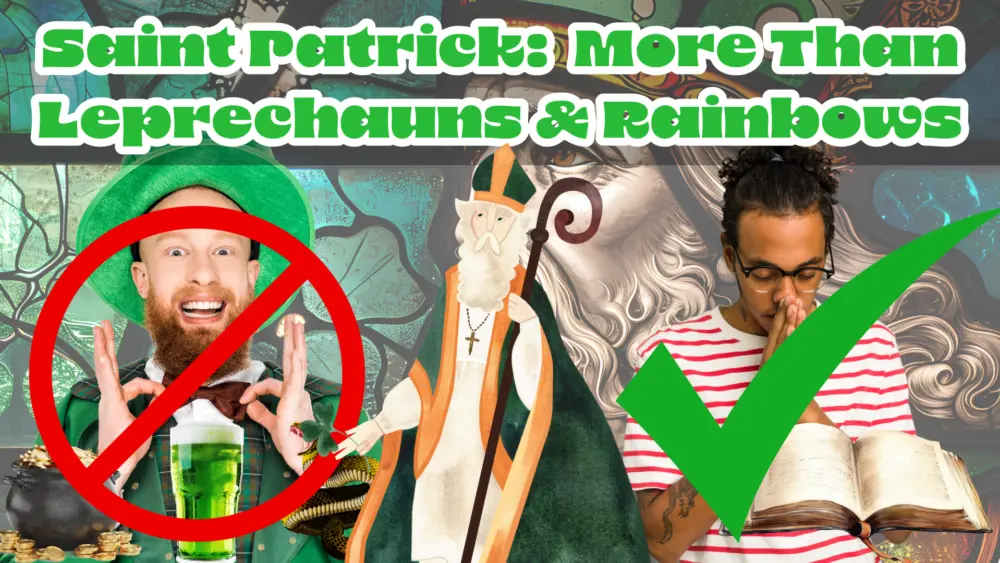
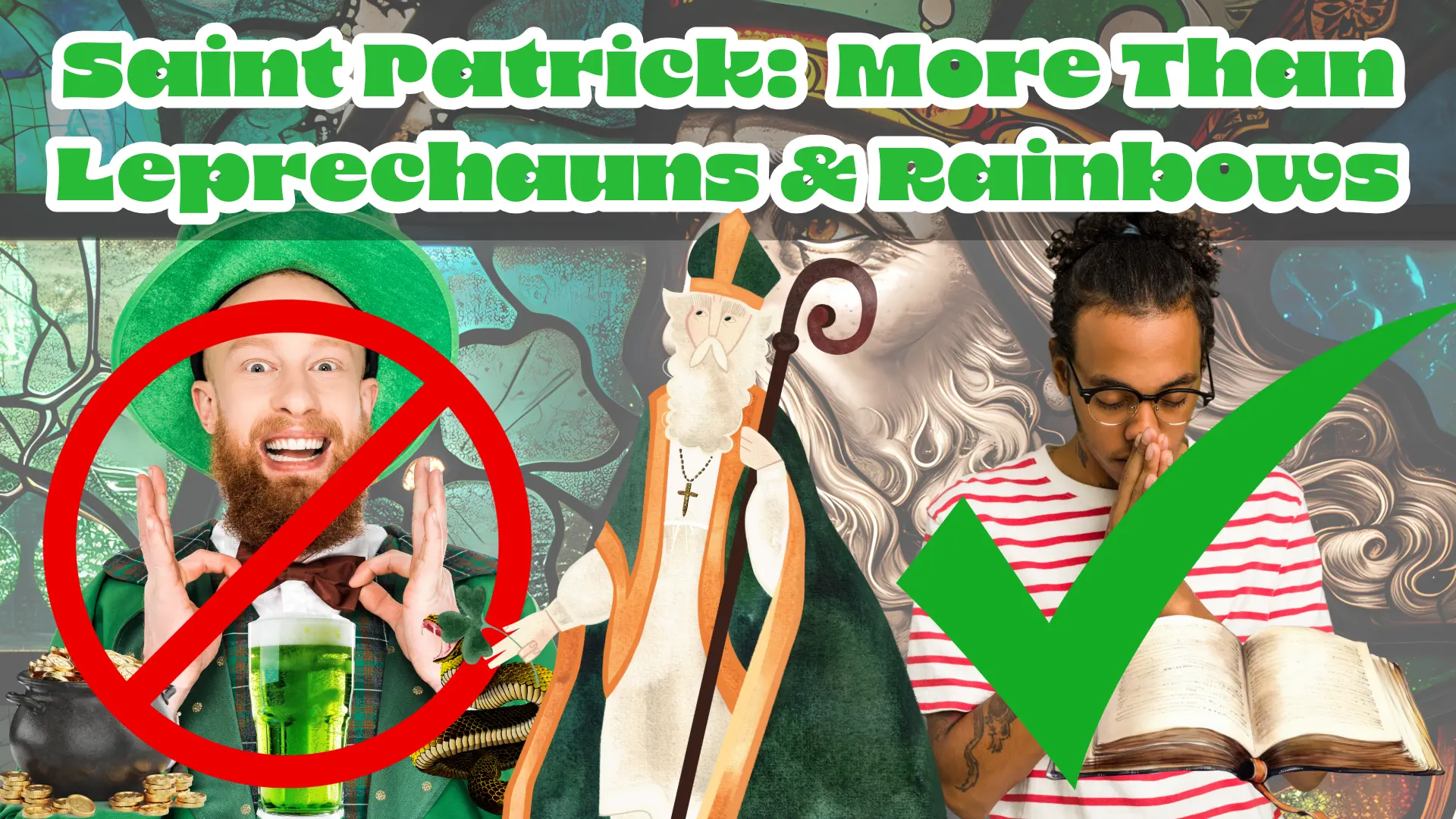
Every March 17th, our culture explodes in a sea of green. There are shamrocks on storefront windows, leprechauns everywhere, and more jokes about pots of gold than anyone can count. For many, St. Patrick’s Day is little more than an excuse for themed parties, green beer, and festive decorations.
But for Christians, St. Patrick’s Day is about something far deeper and far more powerful. It is the story of a man transformed by Christ, sent back into the very land of his suffering, and used by God to change a nation.
Contrary to a very popular belief, Saint Patrick also never chased literal snakes out of Ireland, in fact Ireland’s geography would have prevented snakes from living there at all. The legend came most likely from stories of him banishing figurative snakes out of the island, alluding to the rampant pagan beliefs and savage culture of 4th century Ireland and St Patrick having brought them the good news of the Gospel. So he chased the pagan snakes out, but no slithering creatures.
This day is not ultimately about Irish folklore. It is about the Gospel.
Who Was Patrick?
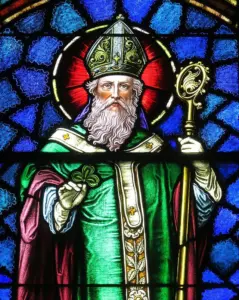
Patrick was not Irish by birth. He was born in the late 4th century, likely in Roman Britain (modern-day England or Wales), into a Christian family. His father was a deacon and his grandfather a priest. Yet despite his religious upbringing, Patrick later admitted that as a young man he did not take his faith seriously.
At the age of sixteen, everything changed.
Irish raiders kidnapped Patrick and carried him across the sea into Ireland, where he was sold into slavery. For six years, he worked as a shepherd, isolated and far from home. It was in those lonely fields that God began to work deeply in his heart.
“The Lord opened my understanding of my unbelief… so that I might remember my sins and be converted with all my heart to the Lord my God.” — from Patrick’s Confession
Patrick began to pray constantly. He later wrote that he would pray up to a hundred times a day and a hundred times at night. In captivity, his nominal faith became real faith. His suffering became the soil in which devotion grew.
From Captive to Missionary
After six years, Patrick had a dream in which he believed God told him to flee. He escaped, traveled nearly 200 miles to the coast, and eventually made his way back home to Britain.
You might think the story would end there. Safe at home. A survivor. A victim who moved on.
But God was not finished.
Patrick later had another dream—this time of the Irish people calling out to him:
“We beg you, holy youth, to come and walk again among us.”
The very land of his captivity became the land of his calling.
Patrick studied for ministry, was ordained as a bishop, and returned to Ireland—not as a slave, but as a missionary.
What Did Patrick Actually Do?
When Patrick arrived in Ireland in the 5th century, it was a pagan land dominated by tribal kings and Druids. Christianity had barely made a foothold. The culture was steeped in spiritual darkness and superstition.
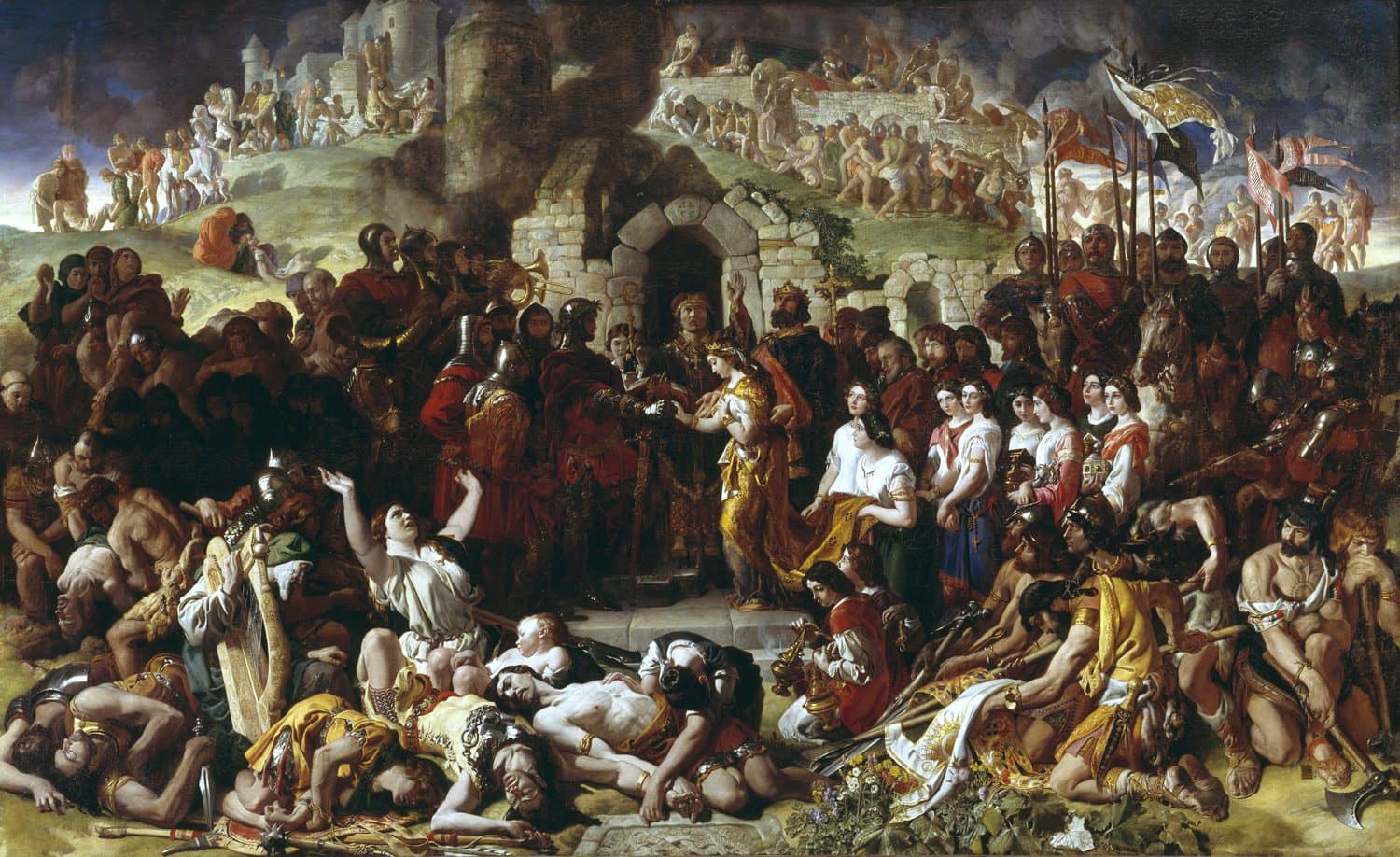
Patrick did not conquer Ireland with political power. He did not reform it through legislation. He preached Christ.
He traveled from tribe to tribe, boldly proclaiming the Gospel. He baptized thousands. He planted churches. He trained leaders. He challenged local rulers. He confronted spiritual strongholds.
And he did it at great personal risk.
Patrick wrote that he faced hostility, threats, and even the possibility of martyrdom. Yet he continued because he believed the Irish people needed the saving grace of Jesus Christ.
“I am greatly a debtor to God, who gave me such great grace that many people were born again to God through me.” — Patrick’s Confession
By the time of his death (traditionally dated March 17, 461), Ireland had been dramatically transformed. Monasteries, churches, and Christian communities were flourishing. Within generations, Ireland would become known as the “land of saints and scholars,” sending missionaries back into Europe during the Dark Ages.
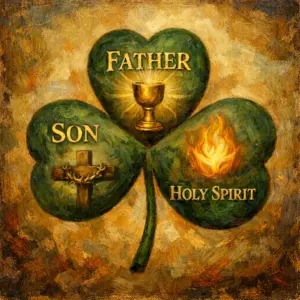 The Shamrock and the Trinity – St. Patrick’s Breastplate
One of the most enduring legends about Patrick is his use of the shamrock to explain the Trinity—Father, Son, and Holy Spirit—three persons in one God.
While historians debate how much of that story is literal, the symbolism remains powerful. Patrick taught a robust, orthodox Christianity centered on the Triune God.
In his famous prayer known as “St. Patrick’s Breastplate,” Patrick writes:
“I arise today
Through a mighty strength, the invocation of the Trinity.
Through belief in the threeness,
Through confession of the oneness
Of the Creator of Creation.I arise today
Through the strength of Christ’s birth with his baptism,
Through the strength of his crucifixion with his burial,
Through the strength of his resurrection with his ascension,
Through the strength of his descent for the judgment of Doom…I arise today
Through God’s strength to pilot me:
God’s might to uphold me,
God’s wisdom to guide me,
God’s eye to look before me,
God’s ear to hear me,
God’s word to speak for me,
God’s hand to guard me,
God’s way to lie before me,
God’s shield to protect me,
God’s host to save me
From snare of devils,
From temptations of vices,
From everyone who shall wish me ill,
Afar and anear,
Alone and in multitude.I summon today all these powers between me and those evils,
Against every cruel and merciless power that may oppose my body and soul
Against incantations of false prophets,
Against black laws of pagandom,
Against false laws of heretics,
Against craft of idolatry,
Against spells of witches and smiths and wizards,
Against every knowledge that corrupts man’s body and soul.Christ to shield me today
Against poison, against burning,
Against drowning, against wounding,
So that there may come to me abundance of reward.
Christ with me, Christ before me, Christ behind me,
Christ in me, Christ beneath me, Christ above me,
Christ on my right, Christ on my left,
Christ when I lie down, Christ when I sit down, Christ when I arise,
Christ in the heart of every man who thinks of me,
Christ in the mouth of everyone who speaks of me,
Christ in every eye that sees me,
Christ in every ear that hears me.I bind unto myself today
The strong Name of the Trinity,
By invocation of the same,
The Three in One and One in Three.”
That is not the language of folklore. That is the language of theological conviction.
What St. Patrick’s Day Is Really About
At its heart, St. Patrick’s Day commemorates:
- The transforming power of the Gospel 📖
- Forgiveness extended toward former enemies ✝️
- Courageous missionary obedience 🤲
- The triumph of Christ over spiritual darkness 👺
Patrick could have resented Ireland. He could have defined himself by his trauma. Instead, he allowed Christ to redefine him by grace.
He returned to the people who enslaved him—not with revenge, but with redemption.
A Challenge for Us Today
In a culture that often reduces Christian history to caricature, St. Patrick’s Day offers an opportunity. We can gently remind our friends and neighbors that the day is not rooted in myths about leprechauns, but in the life of a man who loved Jesus and gave his life to spreading the Gospel.
Patrick’s story challenges us to ask:
- Are we willing to forgive as radically as he did?
- Are we willing to go where God calls—even if it’s uncomfortable?
- Do we take our faith seriously, or only culturally?
Patrick’s faith was not decorative. It was costly. It shaped his decisions, his risks, and his purpose.
From Cultural Holiday to Christian Witness
There is nothing wrong with celebrating Irish heritage. There is nothing wrong with wearing green or enjoying tradition. But as believers, we should remember—and teach our children—why March 17th matters, and what Saint Patrick did for the Gospel message.
It marks the faithfulness of God in raising up a missionary to a pagan land.
It reminds us that no place is too dark for the light of Christ. 🔥
It proves that suffering, when surrendered to God, can become the starting point of revival.
Closing Reflection
This St. Patrick’s Day, before the parades and festivities begin, take a moment to remember the shepherd-turned-missionary who walked the hills of Ireland praying through the night.
Remember the man who went back to his captors with the message of salvation.
Remember that the real treasure of Ireland was never gold at the end of a rainbow.
It was the Gospel of Jesus Christ.