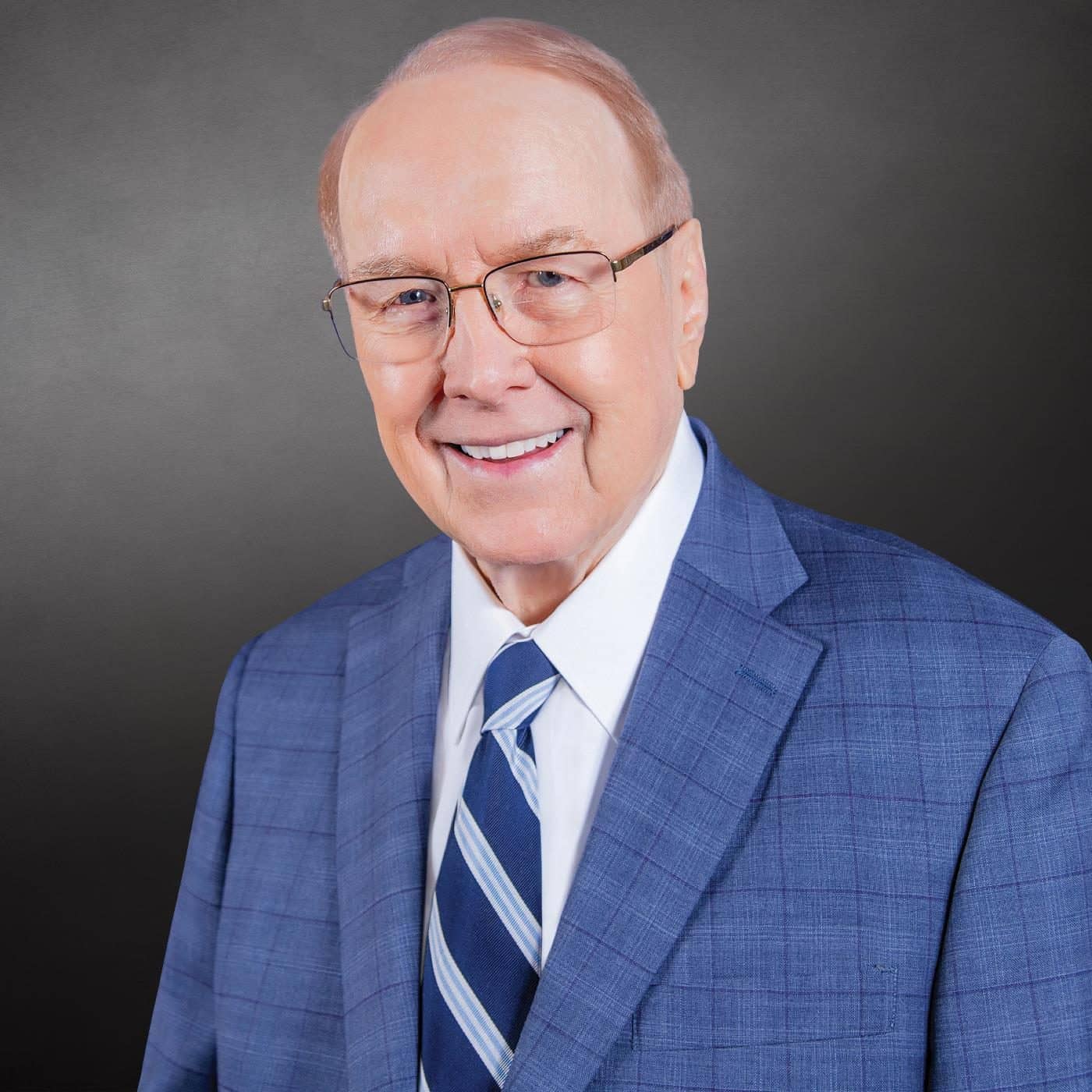
Join us on Family Talk as we delve into the inspiring journey of Rachel Faulkner Brown, a woman who faced unimaginable grief and emerged as a guiding light for widows across the nation. Before reaching her 31st birthday, Rachel had experienced the profound loss of two husbands. Instead of succumbing to despair, she embarked on a path toward healing that led to the creation of Never Alone Widows, the largest Christian ministry in the U.S. dedicated to supporting widows. Discover how faith and the passion for helping others transformed Rachel’s darkest moments into a powerful ministry.
SPEAKER 02 :
Welcome everyone to Family Talk. It’s a ministry of the James Dobson Family Institute supported by listeners just like you. I’m Dr. James Dobson and I’m thrilled that you’ve joined us. Well, welcome to Family Talk, the broadcast division of the Dr. James Dobson Family Institute. I’m Roger Marsh, moving into the co-host seat for today’s broadcast. And our guest today on Family Talk is Rachel Faulkner Brown. Now, Rachel has been on a journey not for the faint of heart, that’s for sure. Before the age of 31, Rachel had lost not one of her husbands, but actually two. She’d been widowed twice. Out of these circumstances and through her healing process, she later founded the ministry called Never Alone Widows. This is the largest Christian ministry in the U.S. dedicated to helping widows find community, comfort, and purpose through healing. Rachel has released a new devotional book called Widow’s Might, 365 Days of Strength for Grief and Loss. And that will be the topic of our conversation today. Rachel and her husband, Rod, live in the Atlanta area with their two children. Rachel Faulkner-Brown, welcome to Dr. James Dobson’s Family Talk. We’re grateful to have you here today.
SPEAKER 03 :
Oh, thank you, Roger. Such an honor. I have been reading Dr. Dobson’s books since my children were born. So it is such an honor.
SPEAKER 02 :
How old are your kids now, if you don’t mind me asking?
SPEAKER 03 :
Well, they are 17 and 19. And my son, when he was two, someone was like, you should really read The Strong-Willed Child. I was like, yes, I should.
SPEAKER 02 :
Timeless principles. That is for sure.
SPEAKER 03 :
Oh, timeless. Absolutely timeless. So grateful. And I did.
SPEAKER 02 :
I’m grateful you’re the mother of two. It’s still the mother of two. Let’s put it that way. I want to get right to the heart of the issue here because I can’t imagine what it’s like for a wife to have to bury her husband in your early 30s, late 20s. But you had to go through that experience twice. Can you kind of give us a 35,000-foot overview of Todd and Blair and what that was like for you as a young widow?
SPEAKER 03 :
Yeah. Well, I was 23 and just living our best life, as the kids say. And we were, you know, dual income. We’d gone to church that day, and Todd went to play a game of pickup basketball. I went to a wedding shower, and he had a massive aneurysm in my best friend’s driveway. And so I was just dumbfounded, left widowed at 23.
SPEAKER 02 :
And how old was he when he passed?
SPEAKER 03 :
He was 27 and he’d run five miles the day before. He was a triathlete, ran cross country in college. To say our city was stunned was an understatement. We both went to church with about a thousand people. So you can imagine the the wave and the ripple effect of grief through our town. It was just, we had really not lost a young person in a long time in our town. And I remarried a couple of years later. Blair was actually a family friend. His parents and my in-laws were best friends. So it was, you know, it was, it was kind of like Jesus set me up for this, you know, beautiful to keep all of my family as my family, my in-laws, you know, they were just, dear, dear people. And I loved my mother and father-in-law. And we just got to add them right on into the fold. Blair and I dated for about seven months, got engaged, got married in a military ceremony. He was a fighter pilot in the Air Force. And we were married five years, got blown out by Hurricane Katrina in New Orleans, had our first baby, had our second baby. And he went to fly on a in 2008, and the cable in the wing broke, and he and his student pilot were killed instantly on the runway. And I was 31 and had, you know, a two-year-old strong-willed child and a five-month-old.
SPEAKER 02 :
Oh, my goodness. So we’re talking with Rachel Faulkner Brown today here on Dr. James Dobson’s Family Talk and her new devotional book, Widows Might, and the work that God—I mean, this is certainly not a ministry you wanted— But you found yourself thrust into not once, but twice. What was your, I mean, you mentioned you were a person of faith, you know, when Todd passed. And then, of course, Blair’s passing. Both of these tragic accidents for these young men who were physically fit and didn’t get, not like it was a long cancer diagnosis or something like that. I mean, two just accidental deaths. What kind of conversations were you having with God at that point? And did you have, I have to ask this question too, did you have some of Job’s friends who showed up and started telling you? You know, offering their counsel when it was going on?
SPEAKER 03 :
I think there’s always a few Job’s friends involved. And yeah, I mean, I think at the end of the day, Roger, I was a Jesus girl. And I think a lot of times when you grow up in the church, you’re like, okay, this is my moment to spread hope and wave the banner of hope in 1 Thessalonians 4. I mean, I was genuinely like, I’m in the Lord’s army, and I’m going to show you what it’s like to grieve with hope. And And I did that from a place of really emotional bankruptcy. And I read Pete Scazzaro’s book, Emotionally Healthy Spirituality, and I realized, wow, I am a mess. And I was trying to be this person that… really needed to amass more knowledge. I thought that was the goal of Christianity. If I can just learn more scripture, if I can just do more Bible studies. And the reality was, is He wanted me to lament and grieve and go through the process. And He wanted to weep with me. And I wasn’t even giving myself time to weep. And You have to feel what needs to be healed. And I wasn’t feeling anything. I was just soldiering on. And I think so many times the antidote for grief for a lot of us is busyness. And that was 100% my story.
SPEAKER 02 :
Yeah, you just wanted to keep busy. And our American brains say, well, if I’m a Christian, I need to keep busy. That means more Bible study. That means more devotionals. That means more doing instead of just being.
SPEAKER 03 :
Helping more people.
SPEAKER 02 :
Yeah.
SPEAKER 03 :
Well, and I also had two babies. So that was enough to keep me busy. Yeah. But I mean, genuinely, this is how broken and honestly religious I was. I mean, two weeks after Blair passes away, I’m hosting a Bible study for 30 women because I felt like I did not know the 66 books of the Bible well enough to teach my children. That is not what grief looks like. And I wish my friends had been a little bit more Job friends and said, hey, this is not okay. You don’t need to be doing this. What is the goal here? You know? And they were joining in with me because they were like, oh, she’s hosting. Let’s go. And honestly, for me, it was like, well, I can’t go to Bible study unless I hire a sitter, so I’ll just invite them here. But it was so much bigger than that. It was such a deep, deep longing of the Lord for me to invite me into a different story that I didn’t even know was possible yet.
SPEAKER 02 :
Mm-hmm. Now, Rachel, you were 23 years old when Todd passed away. You were 31 when Blair passed away. Wow, that’s still so very young to lose not one, but two husbands. And when we think about our 20s and being newly married, there’s so much that you’re discovering about. I mean, you know what it was like during courtship, right? Everybody puts on their best face when you’re dating and that type of stuff. Then you get into real marriage and there’s some bumps and bruises, but then it’s a deeper knowledge of whatever. And the fact that you didn’t have that, not once, but twice, were basically robbed of that opportunity. Talk about how you have used that sense of regret to kind of grow a little bit, or maybe a lot of it, as the case may be.
SPEAKER 03 :
Yeah. Well, I always say, when I get to heaven, I’m going to introduce myself to Blair and Todd, because they really didn’t know me. And I think at the end of the day, grief forces you in a one of two paths. You can either stay stuck, or you can heal. And you can really end up having a better life on the other side of grief than you even had before. And that was for sure me. I had shame from a young age. I’d been abused when I was a younger child, and it was by a distant family member, and I’d kept this secret for 25 years. And I think at the core of who I was, I operated— through that lens. And I think anyone who has a secret on board, that is your filter. Shame is your filter. And so, you know, I’m married to Blair and blaming his job. I was like, you work too much and you’re not here. And the reality is, is anytime you’re blaming, there is shame. There is shame involved in some way. And that was 100% my story. And I ended up getting free, letting go of that secret when I was 32 years old, 33 years old. And that day when I said to my friend, hey, this happened to me, and she was a safe space, and she let me share in total freedom, you know, with no judgment. And I really believe that’s the day that my ministry began. And I didn’t even know what was on the other side of that. But that letting go really let love in.
SPEAKER 02 :
I’m talking with Rachel Faulkner Brown today here on Dr. James Dobson’s Family Talk, and we’re talking about her brand new devotional called Widows Might, 365 Days of Strength for Grief and Loss, and the ministry that she founded, Never Alone Widows, which we’ll get into in just a bit. This is all kind of preamble, if you will, to get to this point where such a young woman is widowed not once but twice. I have to ask you the next question. Where did Rod come into the picture in all of this? Because, I mean, you’re still really still mourning Todd when you met Blair, married Blair. Now you’re mourning Blair. And you’ve got two little kids running around. And if it weren’t for Dr. James Dobson, you probably wouldn’t have kept your sanity raising your kids. Is that safe to say? Amen. Amen. But then Rod comes into the picture and look at what he winds up walking into. How did you meet? How did you know each other? What was your courtship like?
SPEAKER 03 :
Well, we should all give Rod a really big prize. He took a lot. He took one for the team, for sure. I will say, Roger, Rod would have never met me nor married me if I had not gone after my own healing. And that’s what I tell our widows even today. I’m like, go after your own healing and then look to your right and see who is there. And that was Rod. I was Going after my healing, a mutual friend introduced us. He emailed me. He was like, hey, I don’t talk on the phone. I don’t text. I’ll meet you in person. I was like, well, I live in Huntsville. Of course, he was 45 and single. I was like, and that’s why you’re 45 and single. It’s because you don’t talk or text.
SPEAKER 02 :
I’m only laughing because that’s so true, right? I mean, that’s why we find it humorous.
SPEAKER 03 :
Yeah. Oh, it’s so true. It’s so hilarious. And so, you know, I was a little miffed. I was just like, oh my gosh, that’s ridiculous. But at the end of the day, you know, I trusted the process. I really did. And my church had done like a little testimony video. And I said, well, let me send you this. He didn’t know anything about me, which was a little terrifying because… I am not the person who signs up for Match.com and puts Widow twice and anybody’s clicking on it. Like, yeah, I want that. And so I just didn’t date that much. And I sent Rod the video, and he’s like, wow, that’s a lot, but I’d still love to meet you. And fast forward, here we are. And 12 years later, I mean, he signed up for all the good, all the bad, all the beautiful, and all the ugly. And blending a family, you know, Ron Deal is a precious friend of mine. And he said, it takes five to seven years to blend a family. And I didn’t believe him. I was just like, hey, listen, my husbands are in glory. Rod doesn’t have a wife. He didn’t have an ex-wife. He’d never been married. He had no children. I was just like, this is going to be so easy.
SPEAKER 04 :
Yeah.
SPEAKER 03 :
Little, little did I know that it’s a crock pot, you know, and I really did want it to be a blender and it is just not. And I will say, you know, it took every bit of seven years, even in our situation.
SPEAKER 02 :
Well, and it’s funny because I think of Ron Deal often when people talk about the crockpot versus I think it’s microwave. And I realized that, well, microwave, yeah, stuff can get burned up if you try to cook it too quick, you know, really quickly. And I’m sure there are a lot of blended families that run into that situation. You certainly have one of the more unique situations that we’ve ever shared here in Dr. James Dobson’s family talk. But The Ministry of Never Alone Widows. Talk about this because I’ll be honest with you, this is the first I’m hearing of it, and yet it is the largest Christian ministry dedicated to helping widows. I mean, give us some of the statistics, the good, bad, and the ugly. What is the widow situation like in the United States right now?
SPEAKER 03 :
Well, there are over 12 million widows in the United States right now, which is a lot. Yeah, it’s a lot. And over 2,800 new widows a day. And I was just talking to a friend. I’ve been out of town. And while I was gone, there were three new widows that we knew, that we knew, personally knew, our friends who lost their spouses last week. And I just thought, wow, like, God, you’ve positioned people like us to take up this mantle and say, we see you, we hear you. Because I will say, Roger, we don’t wear name tags. And so there are a lot of widows in churches that you don’t even know that they’re widows. And that’s the hard thing about widow’s ministry is you change the oil or you cut her grass. And she needs spiritual, emotional help. And that’s really where Never Alone came in. I was just like, I wanna give something to a widow that can’t be taken away. I mean, I love all the extraneous ministries, fixing the gutters, doing all that. Those are beautiful things, you know, and meals. But three to six months after a husband passes away, widows lose all their support. Their friends changed. Their life changes. It’s so hard to go back to church. You can imagine if that coffin was at the front of your church, it is very difficult to walk back in that church and feel like, oh, this feels like a safe place. It triggers memories and the songs that they played at the funeral. So it is very difficult. And And widows push through, but if you lost your husband during COVID and everything changed, I mean, it is a very difficult time, I will say, to be a widow. But at the end of the day, we just really want to take a widow who’s desperate and let her see that she actually has a destiny on her life. And I believe it is dramatic. It’s important to the kingdom. And we just want her to know that she’s seen. And we do that through three ways. We do that through sharing. Sharing their stories is so powerful. Caring about their, you know, physical, emotional, spiritual needs. And then prayer. Those are the three pillars of the ministry. And we have 70 local groups across the country. We’re adding 20 to 40 a year, which is crazy. We hope to have 500 groups in the next 10 years. It’s unbelievable. Like, you know, if you build it, they will come. What is that? Build your dreams. And we built it. And it’s just what God has done in spite of me. I don’t even know what I’m doing. I just genuinely wanted to reach back my hand and see a widow who was like me, who had nothing available. I didn’t even know any other widows with children. I never met one. And I just wanted to reach my hand back. I was already running a ministry based on stories. And I was like, let’s just do like an outreach for widows. And that really turned into the ministry of Never Alone, which is just crazy. Yeah.
SPEAKER 02 :
I think it’s wonderful. Rachel Faulkner Brown is my guest today here on Dr. James Dobson’s Family Talk. Her brand new devotional is called Widows Might, 365 Days of Strength for Grief and Loss. And we’re talking about the Never Alone Widows Project, which she founded. I don’t want to say kicking and screaming, Lee, but I mean, it’s not. I mean, when you think about it, I mean, Johnny Erickson Tata says this all the time. If I had it my way, I wouldn’t be founding Johnny and Friends because I wouldn’t be in a wheelchair. But I mean, this is where God placed you. Now, you were 23 and 31 when you were widowed twice before you met Rod. When I think about widows, and especially in modern culture, oftentimes when I was younger and didn’t have all the gray that you see in my goatee, those old people, you know, that happened to people. We’re young forever, Roger. Yeah, well, of course. I mean, but I think about my grandmother was widowed at 56 and her counterpart on my dad’s mother was widowed in her 70s. But nowadays, it seems like your story may be more common. Do you have any statistics as to what the average age is for a widow right now?
SPEAKER 03 :
Well, and they say 60 is the new 40, and the average age is 59 and a half for widows. Yeah, and that is really young. I mean, 60-year-olds, you know, 30, 40 years ago, they looked 75 now.
SPEAKER 02 :
Oh, my gosh, 35-year-olds looked old, right? I know.
SPEAKER 03 :
I mean, it’s just you look at pictures and you’re like, oh, my word. I mean, you look at the Golden Girls. They were in their 40s. They look 80. And so it really is just such a different world. And so many of our widows, we host a national conference every year for 400-ish widows. And it’s unreal. It’s two-thirds, 20 to 40, two-thirds, 40 to 60, and then 60 to 80. And we have widows who’ve been widowed 20 years. They’re just like, hey, I’m still healing. I still identify as a widow. And I look at 11 widows in the Scripture, and they did big things. And they’re talked about a lot. And we have a lot to learn from them. We’re actually writing a Bible study right now called Seen on widows in Scripture and how we can feel seen in our desperation. And so there’s a lot, a lot for the church to learn about widows and how to care for them. Yeah.
SPEAKER 02 :
You know, it’s interesting for the church to learn, for widows to learn, you know, for people individually, you know, to kind of figure this out. And I love the title of the devotional, Widows Might, because you spell it M-I-G-H-T. But of course, I think of Mark 12 and the widows might, you know, that Jesus commended, said, hey, look, this woman has nothing. But basically what she put in was the biggest offering ever. Now, this devotional book is really powerful because someone might say, gosh, Rachel, I can’t believe you sat down and wrote 365 different entries. And the reality is your answer would be, no, I didn’t. I didn’t. Talk about what makes this devotional different from other devotionals that might be reaching out to widows.
SPEAKER 03 :
Yeah. Well, to my knowledge, it’s the only devotional in the world written by 200-plus widows, which is amazing because we have so many widows in our community who are not going to be writing books. They’re not going to be on the shelves one day. But I was just like, they have really powerful stories to tell, and they have learned a lot in the dark. And when you mine what you found out in the dark about the revelation of God and you came out saying He’s still good— that is the treasure. And that’s what a widow really needs to read. They really need to hold on to that little nugget every day because they’ve got widow brain. Their brain is so overwhelmed and in grief. And it’s just like somebody in shock. You’re not going to sit down and read a novel in shock. You need a bite-sized nugget that you can hold on to. And that’s what my friends did. And it’s so amazing to read their stories. And honestly, you feel like you know them. You knew them in their pain. in their worst moments, and yet you get the best out of what God has shown them in that dark place.
SPEAKER 02 :
I met a widow probably a decade, maybe 15 years ago now, who had waited. She was in her 40s. She’d been in the military. She’d never married, hadn’t found the right guy. Right before she was retiring from the military in her late 40s, which I guess you can do if you’ve done 20 years of service, she met a guy who was the same situation. And they were so excited. They got engaged. They retired from the military. They started their civilian lives. They got married. And six weeks later, he died of an aneurysm. And she said the devastation at that point was just so awful. She said, one day I was looking at my journal and I just wrote down, here’s what I accomplished today. I got out of bed and brushed my teeth. And then I went back to bed. It was that heavy. Can you talk about the grief process? Because I’m sure widows will all grieve their widowhood differently. You did, obviously had to do it twice. What’s kind of a, is there a standard pro forma? These are the typical things that you see or is it different for every widow?
SPEAKER 03 :
Yeah. Yeah, there’s definitely typical things. Like, I think you go one of two paths. You either distract or you despair, you know? And so those are kind of two paths. And so for me, I definitely went down the distraction path. I went through busyness and I was raising two babies. So I would just, you know, and then… A good friend of mine, Ginger, she ended up in despair. She had five children. Her husband was killed in Iraq. You know, his body was taken as a war prize. I mean, she genuinely had never suffered with depression in her entire life and becomes rabidly depressed. And she could not figure out how to get out of it. And I think widows, we all handle widowhood so differently, and there is no cookie-cutter formula. But I will say— What you don’t feel, you will not heal. And that is just, it’s such a problem. I see so many people, they’re just so emotionally unhealthy. And that was 100% my story. I just genuinely did not feel. I just kind of numbed out and just soldiered on. And I was that good girl who just… did all the right things for God. And I just carried that right on into widowhood. And there is a lot of value in going through the five stages of grief. And what stage you don’t go through, you will go through it at some point if you don’t go through it. And so I just think it’s kind of like going on a bear hunt. There’s no way around it. You just got to go through it. I’m so adamant about the widows going after their own healing. Because at the end of the day, you do not want to bring your baggage into another marriage because you had baggage. And I think at the end, when we’re really talking about finding love again, and I cannot stress to them enough, if you have not been to therapy, if you have not done the work, Don’t expect to find someone who has, you know, because I think God really wants to bless you in that. And at the same time, He really wants you to go after the best version and you to know who you are in Christ and not just let the world tell you who you are.
SPEAKER 02 :
Well, we’ve covered a lot of ground, but we have a bit more to cover and we’re going to need a little more time because we’ve reached the end of today’s edition of Family Talk. But Rachel Faulkner Brown from the founder of Never Alone Widows, thank you for being with us today. Can you join us again next time to continue the conversation?
SPEAKER 03 :
It would be an honor, Roger. Thank you.
SPEAKER 02 :
You know, I walked into this conversation thinking I understood something about loss, but Rachel has really challenged the way I think about grief and what it actually means to heal. You’ve been listening to a special edition of Dr. James Dobson’s Family Talk and my conversation with Rachel Faulkner Brown, founder of Never Alone Widows. Be sure to join us again next time for part two of this important discussion when Rachel shares practical wisdom for how widows can heal well and how the church can better support them. By the way, if you missed any portion of today’s broadcast, or if you’d like to share it with someone who may be struggling, visit jdfi.net. Once you’re there, you’ll also find information about Rachel’s devotional book called Widows Might, 365 Days of Strength for Grief and Loss. We also have information about her ministry, Never Alone Widows, when you click on there as well. Again, you’ll find it all on our webpage at jdfi.net. Thank you so much for joining us. Your gift of any amount helps us continue reaching millions of listeners with messages of real biblical healing and hope. Now, to make a secure donation, visit jdfi.net. If you prefer, you can speak with a member of our constituent care team when you call 877-732-6825. That’s 877-732-6825. Or if you prefer, you can write to us. Our ministry mailing address is Dr. James Dobson’s Family Talk, P.O. Box 39000, Colorado Springs, Colorado, the zip code 80949. Once again, our ministry mailing address is P.O. Box 39000, Colorado Springs, Colorado, the zip code 80949. Well, I’m Roger Marsh, and from all of us here at Family Talk and the JDFI, thanks so much for listening today. Be sure to join us again next time right here for the conclusion of my conversation with Rachel Faulkner Brown of Never Alone Widows. That’s coming up right here on the next edition of Dr. James Dobson’s Family Talk, the voice you trust for the family you love. This has been a presentation of the Dr. James Dobson Family Institute. This is Roger Marsh from Family Talk. The freedoms we enjoy today were hard won by those who came before us and it’s up to all of us to protect them. Here at the Dr. James Dobson Family Institute, we’re committed to defending religious liberty and the timeless values that shaped our nation. Through our broadcasts, articles, and resources, we equip you to stand for godly principles in your own community. So thank you for partnering with us to protect faith, family, and freedom for future generations.