

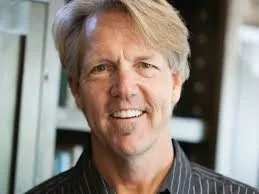

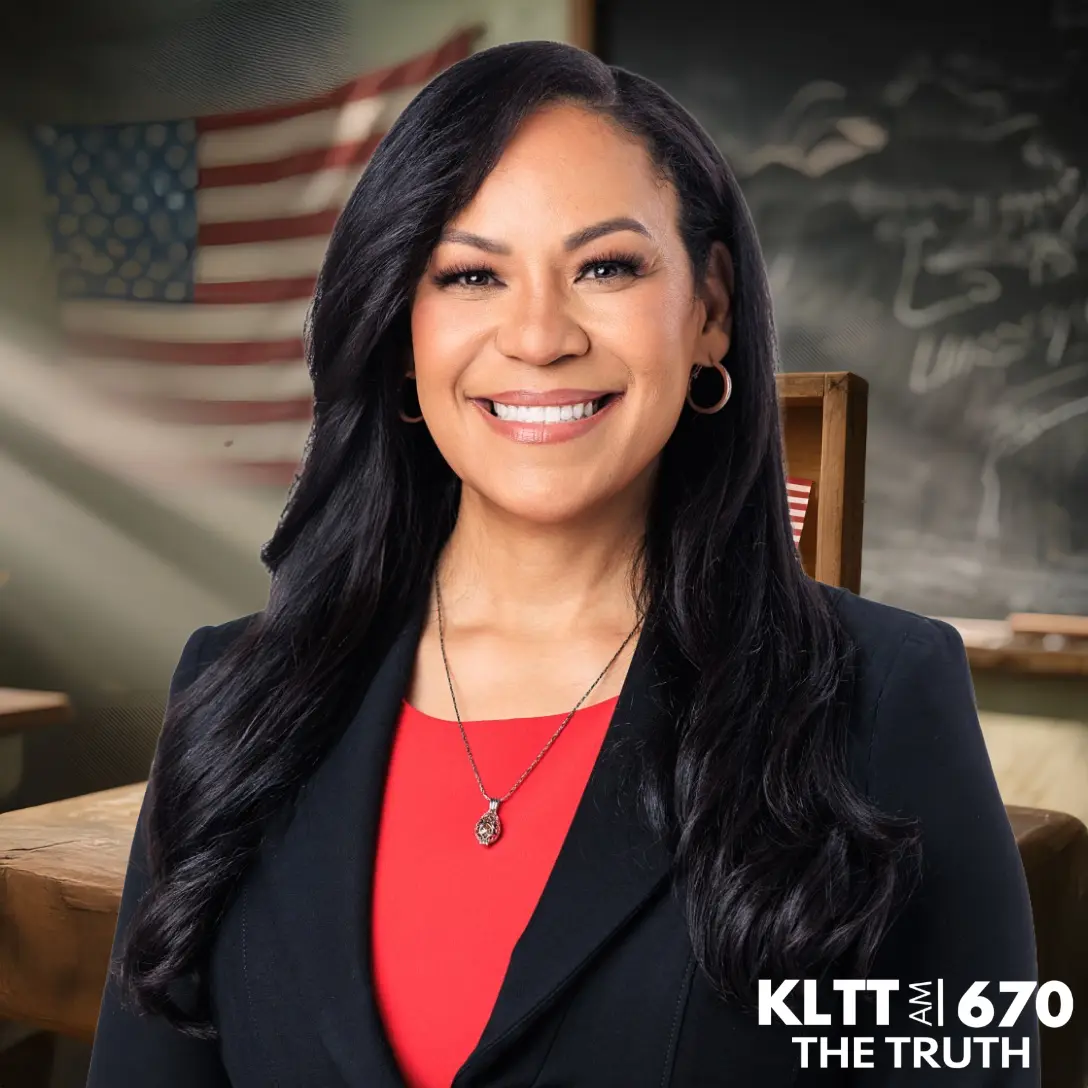
Join host Priscilla Rahn as she engages in a crucial conversation with Sheriff Tony Weekly about the state of education and community safety. The episode dives into the role of School Resource Officers in nurturing positive environments for students, as well as the various initiatives that aim to make schools safer. Sheriff Weekly shares his extensive law enforcement experience, shedding light on effective community partnerships and the need for transparency in law enforcement.
SPEAKER 02 :
Welcome to Restoring Education in America with Priscilla Rahn. She’s a master educator and author leading the conversation to restore the American mind through wisdom, virtue, and truth.
SPEAKER 01 :
Well, hello, everybody. Welcome to Restoring Education in America. I’m your host, Priscilla Rahn, and I’m so excited that you’ve decided to join the conversation today. 2026, America’s 250th birthday. There are celebrations happening all across the nation and especially in schools. But something I want to bring up is there’s a new private classical school opening this fall in Centennial. It’s called Excalibur Classical Academy. And their mission and vision is restoring America’s heritage by developing servant leaders who are keepers and defenders of the principles of freedom for which our founding fathers pledged their lives, fortunes, and sacred honor. So if you’re looking for a great school for your child and they’re starting kindergarten through third grade, please go to Excalibur’s website. It’s ExcaliburClassicalAcademy.org. And something that they are working really hard on is making sure that their school is safe. And I want to bring my special guest to the stage who knows all about public safety and school safety. Welcome, Sheriff Weekly. Hi.
SPEAKER 03 :
Hi, thanks for having me.
SPEAKER 01 :
Well, thanks for carving out some time out of your very busy schedule. I know your team is working diligently to keep our community safe. But before we get into the conversation, I’m going to share a little bit of your bio with our listeners, okay? Okay. So Sheriff Weekly began his career in 1988 as an explorer with the Cherry Hills Police Department and was later hired as a reserve officer after completing the ACC Police Academy. In 1993, he joined the Douglas County Sheriff’s Office, where he quickly took on challenging assignments, including a long-term undercover narcotics operation. Over the years, he served as a training officer, canine handler, SWAT operator, and persons crimes detective, earning multiple major convictions, including in homicide cases. Rising through the ranks as corporal, sergeant, lieutenant, and captain, he led the Professional Standards Division and helped the agency earn the prestigious Triple Crown Award from the National Sheriffs Association. Weakley went on to command the Patrol Detentions and Investigations Division, championing initiatives such as medication assisted treatment for inmates and expanded victim services. A graduate of Northwestern University School of Police Staff and Command and the FBI National Academy, He was elected the 34th sheriff of Douglas County in 2022. And under his leadership, crime has dropped 13%. Community partnerships have strengthened. Mental health resources have expanded. And the agency now operates the largest school resource officer program in Colorado. But your number one job is husband to the amazing Miss Ann and dad. And so all around amazing guy.
SPEAKER 03 :
Well, thank you very much. Yeah, no, I’m very blessed. And I’ve had a great career that I can be proud of. And I’m just honored to serve at the highest level. So I’m blessed to have this job.
SPEAKER 01 :
Well, I was really fortunate to get to know you a little bit more. We were fellow 2023 graduates of leadership program of the Rockies. And I got to hear all of the amazing things that you were doing. And at that time, you were getting ready to go to the FBI training facility. What was that like for you?
SPEAKER 03 :
The FBI, it took me about 10 years to get there. And it’s a grueling process. Only a few people from our region get to go every year. Typically, one person would go from each agency that participates about every three to four years. And so it’s a long process. You truly have to be Among the elite, only 1% of law enforcement executives ever get to go to the FBI Academy. So I actually was in Quantico and you live dorm college dorm style for for almost three months. And it was it was an amazing experience. And, you know, I was ready to go home when it was over. But there’s lifelong friendships that I’ve established and it really helped me grow as a law enforcement executive.
SPEAKER 01 :
Well, you’re my sheriff. I think you’re the number one sheriff in the state of Colorado. You know, I’m a little bit biased. And as a school teacher, I’m really interested in the wonderful work that our SROs are doing. For listeners who may not understand the structure, how does it work if you live in a county and you want to have SROs in your school? What’s the process for getting an SRO?
SPEAKER 03 :
Well, if you’re a private school or charter school, just reach out to us. We’ll let you know what the costs are, the upfront costs, the ongoing costs. And we definitely, it’s a win-win. So we definitely want to be able to provide that deputy sheriff and just have that additional resource, not only at the school, but also within the community. So again, it’s a win-win for both.
SPEAKER 01 :
So I also volunteer on the Denver Police Chiefs Community Advisory Board. We meet every other month and it’s really interesting to hear what’s going on in Denver and to see how that relates to what happens to us as a suburb. It’s really remarkable what our SROs do. And there was a lot of debate in Denver public schools about whether or not to have armed police in our schools. And I’ve been a former principal. And so I always developed a really strong relationship with our law enforcement
SPEAKER 03 :
how does douglas county approach the relationship between sros and students in the schools well we want to ensure it’s a good fit we want to ensure that the deputy sheriff that we have as an sro wants to be an sro for the right reasons i don’t want somebody hey i want nights and weekends off and holidays off so i want to be an sro that’s the wrong candidate so it’s very critical that we pick the right sro The schools are typically involved in that selection process. And not only do we want to ensure it’s a good fit for the school, we want to ensure it’s a good fit for the faculty as well. And we want that SRO to be part of that school’s culture. If you don’t have that, it’s not going to be successful at that individual school. And so the schools, individual schools and school district know that if the SRO, it’s just not a good fit, it’s not working out for whatever reason, I’ll pull them and put somebody new in there. We don’t want to put a cop in the school that’s heavy handed and is trying to jam the kids up. We want to ensure that that that SRO is a resource for those kids as well. You know, make no mistake about it. That SRO is there to protect the kids and protect the staff. But we want to ensure, you know, during most days that they’re in that kind of mentor role or that, you know, to to establish that relationship.
SPEAKER 01 :
Yeah, that’s really critical. And I’ve seen this after almost three decades, more than three decades in public education, that SROs work really hard to build strong relationships with the students, keep them out of the system that could, you know, get them bound up in law and court. And so they do a wonderful job of not only, like you said, protecting students, but building relationships with kids and saying, you know, these are better decisions to make that’ll keep you out of the radar of law enforcement. And I’ve seen such wonderful relationships develop from law enforcement. I know for me, it helps me feel safer. A feel a lot safer. We know it’s not the end all be all. We know just because you have an SRO that your school is Fort Knox and it’s going to keep someone from doing something bad. But talking about that in this day and age, we have to really think about public safety and hardening schools. I’m opening a new private school this fall. What advice would you give to someone like me who wants to be really thoughtful about keeping a school safe?
SPEAKER 03 :
Well, we will come out free of charge. If you’re in Douglas County, we will come out free of charge and do a security assessment for you. And obviously, you’re welcome to do your own private assessment as well. But it’s something that we offer to give you what we think would help harden your school. and make it safer for your students and give you that advice and you know you kind of take it from there but we want to be a partner with you you know obviously we we would want floor plans and everything else what security do you have in place do we have access to your security cameras if there is a critical incident that occurs in your school things like that so When something happens at a school, we don’t want to be behind the curve. We want to be prepared and know exactly what we can do to help address if there’s a school threat.
SPEAKER 01 :
That’s great advice. So making sure we partner with our law enforcement, give you a floor plan, make sure you know what our hours are. If you’re a new school, do we request more patrol in the area? Is that feasible?
SPEAKER 03 :
You will, once your school is established, you’ll be on our sheet as a list of schools. We do that anyway, just to ensure that our kids are safe. So we will be fully aware by the time you’re up and running and ready to go. We’ll already have that relationship established.
SPEAKER 01 :
So Sheriff, there are a lot of misconceptions about law enforcement anyway. We’re living in a time where there’s a lot of student activism. A lot of people look negatively on law enforcement. With it being America’s 250th birthday, I find it as a great opportunity to teach students more about civic engagement, to understand their rights. What would your message be to young people learning about their civic responsibility and how What could that message be to strengthen the relationship between schools and law enforcement?
SPEAKER 03 :
Well, we understand that times are different. Law enforcement, there’s greater scrutiny on law enforcement. And that’s OK. That’s a good thing. If you’re an agency like the Douglas County Sheriff’s Office, we have very high standards. We hold our people to high standards. That triple crown accreditation that you mentioned, that’s not easily obtained. So we follow and have policies that are recognized as the best practices nationwide. Having said that, we understand that a critical component of that is transparency and the relationship that we have with our community. Regardless if you’re a student, if you’re an adult, what your background is, what demographic you are, it doesn’t matter. We have to ensure that we have a relationship with people and that we have conversations with people with whatever their concerns are. in the state of Colorado, the Office of Sheriff is an elected partisan position. I don’t care what your politics are. We’re here to serve and protect you. But in regards to your question, it’s breaking down those barriers or misconceptions of who we are as law enforcement. And I think the SRO program is one of the best ways to do that. Because law enforcement agencies are different across the nation, right? Some states train their law enforcement better than others. And there’s definitely a different culture and expectation of law enforcement in Colorado, which is a good thing. But if somebody has a negative view of law enforcement that we’re just a bunch of thugs and we wanna just arrest people, or we have pre notions of discrimination or whatever, The SRO program is a way to break those down and to show that these kids like, no, my SRO is actually a pretty good guy or pretty good, pretty cool lady. And I like her a lot, you know, whatever it is. So they understand that cops are people too. And once we take off that badge at the end of the shift, we go home to our families just like you do. We have the same problems just like you do. It’s the job that we have chosen, the career that we have chosen to serve and protect. And so I think that’s key to breaking down, again, those barriers. um in whatever way that we can do it just be even beyond the sro program whatever we do in the community to show and that’s why with the douglas county sheriff’s office you may see in social media the things that our s are not sros but the things that our law enforcement officers do day in and day out so our community understands the issues that we’re dealing with douglas county is not immune to to the crime of the big city you know we’re not denver or war but we have Similar types of problems of Denver and Aurora. And so those are the challenges. So when people see those things on social media, they get a better understanding and kind of a behind the scenes view of what we do and how we do it.
SPEAKER 01 :
Yeah, I know. There’s a lot of things that we don’t see in Denver. There’s a dashboard you can see in real time. It’s amazing how much crime and the variety of crime that happens when you look at that dashboard. But I’m surprised at how much we don’t hear about. There’s just so much. And I’m sure it’s the same in Douglas County. We’re protected from knowing everything that happens in Douglas County because you guys do such a great job of handling a lot of these safety issues. But like you said, we’re like any other community. community. We have issues and one of those issues is homelessness. We’ve got a great strategy of how to deal with that. One of those strategies is using the HEART program. And I think it’s beautiful that we have that option where community members could call in if they see someone who’s homeless and out on the street, making sure there’s a hotline that we can call to get them someone to find out what they need. But can you expand a little bit on that partnership with Heart and some of the work that you guys do?
SPEAKER 03 :
Sure. The HART team is the Homeless Engagement Assistance Resource Team. And these are law enforcement officers who are designated HART deputies paired with a homeless navigator who is a civilian expert in connecting homeless folks with services so they don’t have to be homeless. When this program was first implemented, there was a lot of discussion about, well, do we really want the law enforcement officer there? Absolutely you do, because unfortunately, a lot of these folks who are homeless have mental health issues, alcohol issues, drug abuse issues. And some of those drugs include syringes and needles and dangerous things. But the partnership works very well. They work together. They contact homeless individuals and they’re able to if they want services, they’re able to connect them with services. Now, I will tell you that about 90 percent of them that they contact, they don’t want services. They don’t want law enforcement there. They just want us want us to leave them alone. It’s not against the law to be homeless. But if you’re breaking the law and you don’t want to be connected with services, we’re going to enforce the law. That’s one of the big reasons why you don’t see a lot of homelessness or panhandling in Douglas County. If you drive across County Line Road, you will see a marked difference when you come into the Douglas County community. And that’s intentional. If we have somebody that’s pain handling, walking in the street, you won’t see somebody squeegeeing your windshield and trying to rob you for money for squeegeeing your windshield, why? Because we’re gonna enforce the law and if they’re doing that, we’re gonna take them to jail. What we found is it is absolutely the model for the rest of the Denver metro area. I’m going to expand further. We’ve gotten some pushback. All you guys are doing is picking up homeless people and taking them to other areas of the metro area. 100% false. We, again, connect them with services. If they need a ride to somewhere, we’ll give them a ride to somewhere. But we’re not just taking our problem and dumping it off to somebody else. And if somebody goes to the county’s homeless, the HART team, Homeless Engagement Assistance Resource Team meetings, or they can watch them online, you will see the amazing success stories of the contacts we’ve made with individuals connecting with services and getting them back on their feet. It’s pretty amazing.
SPEAKER 01 :
And that hotline, if you see someone in need in the community, is 303-660-7301. I’ll say it again, 303-660-7301. And I have it in my phone because if I see something in real time, especially in the wintertime, if someone’s begging or they have a child out in the elements, you know, it’s really important to be able to get them some assistance quickly. So I would encourage Douglas County folks to put that in their phone, to have that in there. So you and I went through Leadership Program of the Rockies course where we learned all about the Constitution. I don’t know about you. I figure you probably knew a whole lot more than I did when I started. So when we’re talking about the proper role of government, what are some misconceptions that you might have heard about? policing in our communities?
SPEAKER 03 :
Well, when I was first running for office four years ago now, there was a lot of just nonsense about, well, the sheriff has more authority than the president. The sheriff has this authority and that authority. The sheriff doesn’t have to obey. The sheriff, my authority in the state of Colorado is given to me by the statutes within the state of Colorado. If you look up the word sheriff in the United States Constitution, it’s not even in there. And so that’s a lot of big misconceptions about the authority of the sheriff and the power that I have and don’t have. And so there’s some folks that have some really unrealistic ideas about the office of sheriff. So I’m held to the same standards. My powers are given to me by the state of Colorado. And so that’s the biggest misconception.
SPEAKER 01 :
So Sheriff, you’re a dad, and I know fatherhood is such an important role in our community and to build up our schools, because I think fathers are the number one providers and protectors of our community. How has fatherhood impacted the way you approach law enforcement?
SPEAKER 03 :
Well, I often give the example of the STEM school shooting and Kendra Castillo. When the STEM school shooting happened, I was a captain and I was at a meeting in our emergency operations center, just happened to be there. And somebody came running in and they said, we’ve got a shooting at one of the high schools. We’ve got, you know, and they were just in a panic mode. And like, it was just happening just now. And I’m like, what school? Because my daughter was attending Castle View High School at the time. And when you’re in those moments, you were just thinking, my God, is my child okay? As the sheriff, it gives you a perspective that how precious our kids are and how when a parent sends their kids to school, the parent is putting a lot of trust in the school. They’re putting trust in law enforcement that their kid is going to come home to them at the end of the day. John Castillo and Maria Castillo, they sent Kendrick to school. I still have an image burned in my brain of a picture that they showed me. They happened to take Kendrick’s picture in his Jeep as he was going to school that very morning. They had no idea that was the last time they were ever going to see their son again. And I hope I’m not sharing something they didn’t want shared. But when their parents send their kids to school, they assume their kid’s going to come home safe. And it’s incumbent upon me as the sheriff to ensure that happens, right? And so that’s a responsibility that I don’t take lightly. I’m not gonna lie, I lose sleep over a lot of things as the sheriff, but we wanna ensure that we provide the best services that we can to our entire community, but also especially to our kids to make sure that they can just be kids. When I was growing up in the 70s and 80s, I didn’t have to worry about the stuff that kids have to worry about. I didn’t have to worry about active shooter drills and things like that, because that wasn’t a thing when I was growing up. But we do now. And I will tell you that in my agency, we prepare for the worst. We train with fire. We train with the schools to ensure that we When the unthinkable does happen, that we perform at the highest level possible to ensure the best outcome.
SPEAKER 01 :
So, Sheriff, one of my favorite things to talk about are the canines because I just love dogs. And I somewhere I have my oh, I do. I have it right here. My little canine dog. Yes, I got my little canine dog. I know in Denver, they passed a bond to try to fix their facilities, have a better, more updated training facility. And when I was on the planning commission in Douglas County, I know we approved some more training. Where are we in the process of getting Douglas County Sheriff’s a better training facility?
SPEAKER 03 :
We’re actually doing fairly well. Now, the EVOC Center, the Emergency Vehicle Operations, we want to increase that facility and have it be a more robust facility to include canine training out of that facility. So there’s a lot of work yet to be done on that and how we are going to pay for that facility, whether there’s federal dollars available, state dollars available. The financial outlook for the next couple of years for Douglas County government is not great. We’re gonna be very grateful just to get our folks pay raises and to get the equipment that we need to do our job. So there’s gonna be a lot more discussions about maybe do we look for a public private partnership? And again, are there some federal dollars available to increase that facility out there? The thing about it is that that facility is used by all agencies in the South Metro area. And so we’ve got a lot of options on the table about how we can get this done and get a better facility built out there.
SPEAKER 01 :
So Sheriff Weekly, Douglas County residents take our public safety really seriously. We have a lot of concealed carriers, the folks who train like myself, and we just wanna make sure that we’re exercising our constitutional rights to protect our life. There’s a lot of conversation around the relationship between local law enforcement and ICE. I know in Denver, we’ve talked about how it’s been really targeted. We don’t have the same problems like you see in Minnesota. It’s a little bit more contained and targeted where ICE is going. How’s that relationship between federal law enforcement and locally here in Douglas County?
SPEAKER 03 :
We have a great relationship with ICE. The state legislature is doing everything that they can to ensure that we don’t have a relationship with ICE. But within the Colorado law, I do work with them to the extent that I can. But if we have somebody, if we have an illegal immigrant who has been arrested for a crime in Douglas County, the state of Colorado prohibits me from contacting ICE to let them know they’re in our facility. It’s absolutely absurd that we can’t have that communication, but here we are, thanks to the state legislature. And somebody might be saying, well, Sheriff, your loyalty is to the citizens of your community. You need to reach out to them. I’d agree with you, but the moment that I do that, I can be fined $50,000. And not only can I be fined, every single one of my employees that communicated with ICE, they can also be fined $50,000. And so that’s what our state legislature and their infinite wisdom has done. And they have done their best to tie my hands. as the sheriff to protect my community. And again, these are folks that actually have been arrested for a crime. Either they have a warrant for their arrest or we’ve arrested them based on probable cause that’s been signed by a judge. And so, as I told you before, I have a great relationship with ICE. So we do the best that we can to work around state law. I don’t violate state law, but we do the best that we can to work around state law. And it essentially has become incumbent upon ICE to figure out who we have and who we don’t have. That’s public information.
SPEAKER 01 :
Well, thank you for standing up as best as you can for the citizens that you have pledged to protect. In these last few minutes, I know you are running for re-election. I’m so excited to hear that. We need to get behind you and re-elect you. But can you share for our listeners what your website is?
SPEAKER 03 :
Sure. It’s weeklyforsheriff.com. You can learn more about me there if you’d like to. If you’d like to donate, I’d be very grateful. Campaigns are expensive. I do have two opponents that have announced against me. And so we’ll see where it goes. I’m pretty confident that I’ll be okay. I’m pretty confident that regardless of your party affiliation, that people will find that I am the best person to serve as the sheriff. And I’m asking for for one more term i’m term limited but i’ll be honest with you this job is 24 7 365 so i think at the end of my second term i’ll have 37 years on the job and that’s that’s probably good enough and it’s time for me to move on
SPEAKER 01 :
Well, you would deserve to ride off into the sunset and put your toes in the sand or whatever you and Ann decide you want to do. We really appreciate how you have protected Douglas County and how you have treated everybody with dignity and respect. And I think that’s really admirable. And you deserve to be our sheriff for another term. And so I would encourage people to, again, go to your website and and donate because, yes, you need to send out ads and all that kind of good stuff. But thank you, Sheriff Weekly, for your time. Thank you for all of the folks that work in all of the different departments in Douglas County for keeping us safe. And to my listeners, thank you so much for tuning in and catch me next time. And remember, educating the mind without the heart is no education. So seek wisdom, cultivate virtue and speak truth.
SPEAKER 02 :
Thanks for tuning in to Restoring Education in America with Priscilla Rahn. Visit PriscillaRahn.com to connect or learn how you can sponsor future episodes to keep this message of faith, freedom, and education on the air.
