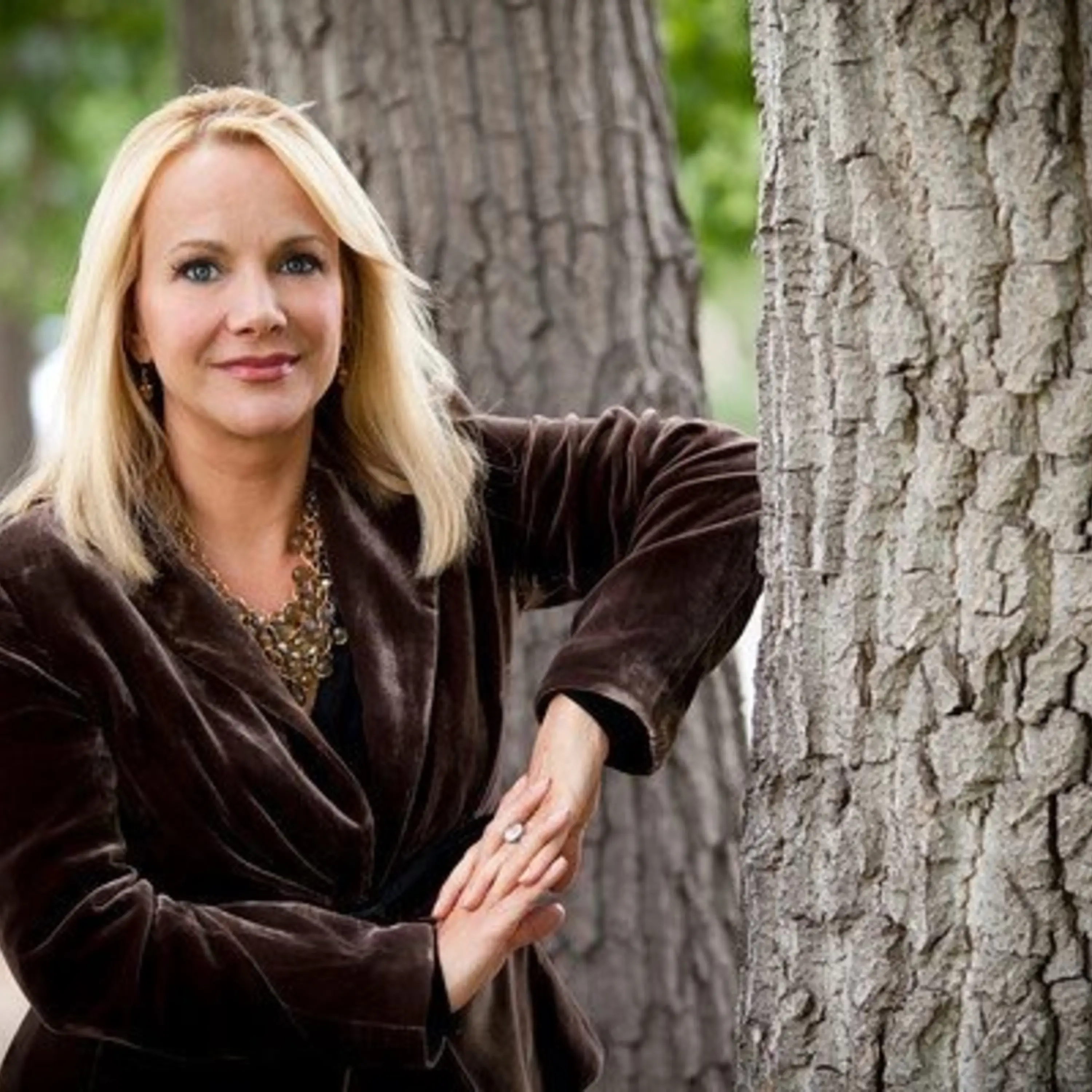
In this episode of The Good News, Angie Austin chats with Scott Montgomery about the invaluable lessons of being present. They delve into the significance of face-to-face interactions in business and personal growth. Scott shares the inspiring story of his son’s venture, Legend Vintage, a testament to youthful determination and the transformative power of presence. Join Angie and Scott as they explore how being present and engaged can shape success, being hands-on leading to authenticity in leadership and business growth.
SPEAKER 06 :
Looking for expert dental care right here in Norwalk? Columbia Dental has you covered. As part of a robust network with 12 locations across Connecticut, we offer comprehensive services from general dentistry to periodontics and oral surgery, all under one trusted name. At Columbia Dental Norwalk, your smile is in great hands. Convenient, connected, and committed to your care. Visit ColumbiaDental.com to book your appointment today or call 203-299-0111. That’s ColumbiaDental.com.
SPEAKER 07 :
Welcome to The Good News with Angie Austin. Now, with The Good News, here’s Angie.
SPEAKER 04 :
Angie Austin here with the good news, along with Scott Montgomery. And we’re talking about his book. How did you get here? Lessons of unconventional success. He also runs a successful business. And we’re going to talk today about being present, showing up and also, you know, giving back to the next generation, helping to teach these younger kids. Welcome back, Scott.
SPEAKER 05 :
Oh, thank you. Thank you. It’s great to be back. And I love our conversations. I hope the audience is finding them beneficial. We’ve got a lot to share, right?
SPEAKER 04 :
Yeah. I, um, you were talking about your own son. He just finished his first year of school along with mine as well. I think his last final is today. And so, uh, you were talking about, um, you know, giving back to him, but showing up and how you have more success in front of your customers than behind an email.
SPEAKER 05 :
Oh, you know, it’s so true today. I had a, I had a staff meeting. We had our quarterly business review from the first quarter with my, uh, the leaders of my team and i invited my son and a few other folks that could benefit from seeing and being aware of what topics are covered and what we go over and all of the folks that that are on my team that we’re client facing have progressive conversations and the thing that i think we called out most is that in those parts of the qbr that we’re going over they’re in front of the customer the partnering and being available to your customers is not done in email and it’s not done over the phone. It’s done in person, believe it or not. And it’s so important for in a business like mine where we consult school districts and we’re helping IT organizations as well as the businesses that our children are going to graduate college from to go into, being present and available in person is really a theme for today because it’s where we’re finding the most success and the most authenticity in growth, leadership, and opportunity. And so I thought, yeah, let’s talk about that today because we’ve watched customers of ours sort of slip and fade away, and we start showing back up and saying, geez, it’s been a couple weeks since I’ve been here. When we show back up, oh, well, let me send more money your way. Let’s get some more help from you, and let’s integrate you into our team, and let’s make sure we’re working as a collective in partnership. Then you are being treated as a vendor and hoping to sell something. And I think it’s really important. that we talk about that as it relates to your son’s business too. Let’s talk a little bit about what he’s doing with that shirt business of his.
SPEAKER 04 :
You know, his business name is Legend Vintage, and he started when he was 12. He’s 19 now, almost 20, so we’re going seven to eight years into this business now. And he got such a nice post on social media. I read it, and I even thanked the people. I don’t know them per se, but I said thank you for what you wrote on my – my son’s Instagram page and it says it showed a picture of my son’s store at sneaker con with all of his vintage because he started with sneakers like reselling high-end Nikes etc and we never bought a pair for him because you know these these shoes are sometimes over a grand and so you know you’re spending at least two or three hundred on a pair and then They go up in price and more than that in some cases. And we didn’t want to spend that much money to start his business. We’re like, we’re not buying you two $300 sneakers. You have to figure out how to do that on your own. So he started making money and using birthday money, Christmas money, and then making his own money. reinvesting and then he got into this vintage thrift so now he’s got this mobile store and he posted a picture of it and he ran into some people he’s been in business with for a while they couldn’t believe he had such a nice store with like flooring and would see a cedar ceiling and lights and music and fans and heating and you know it’s really nice so anyway it says i gotta give kudos and flowers to legend vintage once again i’ve watched riley hustle during his lunch breaks at school to get to every possible event to grow his brand you know brother um super proud of everything you’ve built at such a young age your future is big And so I wrote to them and said that these are other business people that are adults because most of the people he’s done business with since he was 12. Well, they’ve been adults, you know, so a lot of grownups have known him. And so they are really proud of him. A lot of them, they’ll come up and talk to me and be like, I’ve seen your son and these events, you know, he does. They’re so labor intensive when he doesn’t have that, that trailer store, which they just built. He has to load everything up in an SUV or truck, every single cart and really heavy leather jackets and, NASCAR jackets and sweatshirts and we’re talking like maybe eight racks full of clothing. Well, that’s hundreds of pounds of clothing that he has to drive up there. He has to first load it all up at our house and then he’s got to drive to Boulder an hour away and unload and build all the racks, haul all the clothing by himself. sell all day long. He never sits. He stands the entire eight hours that he’s at any event. And then he loads everything back up by himself, then brings it back home. And he has to unload it to leave us our vehicle and then take his car back to school. So they’re good 12 to 14 hour days when he does these events. And he’s done multiple events this month while he’s been in school. And And he’s going to business school. And he has another job at Arc Thrift Stores where he works a few days a week, which, by the way, here’s my really cool update on all of this. So he had multiple events this month. And I’ve known the president and CEO of Arc Thrift Stores for many years. And what they do is they help people with cognitive deficits like Down syndrome, cerebral palsy, et cetera, find work. When he first started at Arc, there were only five ambassadors. I believe they have well over 500 now. of differently abled ambassadors so it’s a huge nonprofit that helps people who are differently abled uh you know seek and find work that really fits their gifts and really their gifts are amazing because there’s such a joy in this organization because of the ambassadors So anyway, my son works there, and he gets to work with ambassadors, and he’s, through the years of working with me, because I work with, you know, I do work with ARC, that he’s gotten to know the ambassadors and really has an affinity for kids who are young people that are, you know, different. And he loves it. He loves the ambassadors. Anyway, he asked the president and CEO if he could meet with him because he wanted to ask him about maybe doing some shadowing, because my… A friend that is the president, CEO, Lloyd Lewis, went to Booth School of Business, the Booth School, University of Chicago, and it’s always in the top five of business schools, sometimes number one. And some of the big mucky mucks in the business world, that’s where they went. And so to make a long story short, He met with him on Monday, and he got hired for an internship with the president and CEO to learn about finance. And he kept him over that day to do the quarterly meeting on their financials. And, you know, Riley knows a lot of the business terms and the financial terms, and he was going over the P&Ls. And he’s like, Mom, this is how much it costs to open a store, and this is how much to give back to the community. And he’s just blown away that he’s getting this opportunity. So it’s Monday through Friday all summer long for four hours a day. He’s thrilled.
SPEAKER 05 :
That’s great news, and I’d like to go back to what you said about his work ethic and how he sets up the trailer, and then he’s on his feet all day. The two things that I wanted to really point out on that that I thought were really commendable is he’s clearly following the right habits and setting the goals high, but he’s also, back to the original opener for me, he’s being present to his customers. He’s on his feet all day, and he’s interacting with them like he is this new internship and those at the arc that need his mentoring and his mentorship. And it’s really important that people stay in relationship and they be present and in the moment, not stuck behind their phones, not hiding behind email, and certainly setting yourself up for those successes, following right habits, setting those goals. But I really love what you’re talking about because it’s about interactive behaviors and being in the moment physically. It’s so important in so many different businesses.
SPEAKER 04 :
know when you said that your your business does better when you’re in front of the customers i think back to his first job that was at 15 and he worked at a christian farm and they did the cherry creek um uh farmer’s market and the guy told riley that he was like doubling and tripling their sales from the prior year because all when you walk by these booths at the farmer’s market people are on their phone reading a book they’re not really engaging And you kind of just want to walk by and not interact with them. But Riley, he never sits. He stands and he’s like, hey, I see you on your bike there. I’ll bet you could use a boost of energy. I’ve got fresh honey over here. Let me get you a sample. Yeah, brother. You’re riding that bike. You’re out of breath. Come on and let me give you a little boost over here. I hear that. Yeah. One guy put a tip in the tip jar because there were tips for like the kids. And he said, I’m putting a 10 in here.
SPEAKER 05 :
You get paid 100 results.
SPEAKER 04 :
Yeah, he goes, I’m putting a $10 in here. I’m not even buying anything. Because he’s like, you are the best salesman at the market.
SPEAKER 05 :
I love it. Well, and it’s not even about salesmen. It’s about the holistic opportunity of partnering with the customer, seeing what needs to be done to fulfill. And you’re there for a reason. So you can satisfy your goals, their goals, meet your objectives. And it all is so satisfying and so much more rewarding than just the transaction of an email or the transaction behind the scenes on the Internet. And I think for me, in what I wrote about and in my How You Go There workbook that’s a companion guide to the How Did You Get Here? Lessons of Confessional Success, it’s about following those exercises and then tracking those results. I have found in my business, my full-time business, you’re talking about your son and his successes, there’s always a better result if you can be present and in person. And Zoom does count, I guess, when there’s certain times, but Just really, really wanted to use that as today’s theme because I think so many people miss that. And as my son comes home from college, he’s actually in the office today, and he’s crafting up introductory emails. And I said, when you get any responses to those, you can rest assured you’re going to be on a plane to go meet with that customer. There’s our investment. Just like your son, hey, I see you on the bike over there. Come over here and get some honey because you clearly need to be recharged. You still have to set the email. You still have to set up the tent. You still have to set up the trailer. But once you’re there, be present and be with those customers. Such an important aspect of leadership and development and growth for the next generation.
SPEAKER 04 :
And when you said show up, you know, in that face-to-face interaction, et cetera, I put more into that. Showing up for me is not just like punching the clock that you are there. I remember when I was in high school, I worked at – Boulder Community Hospital, I went to school in Boulder and then went to CU. And when I went to high school and then went to CU. So I was there, I think, for seven years. And the sweet little old ladies, they figured out that if you punched out at seven minutes until the top of the hour, you’d get paid the full 15 minutes. But if you punched out eight minutes before the top of the hour, you would not get paid for that full 15 minutes because it was every 15 minutes you got paid. Not how you want to do it. They would be lined up at the, you know, to punch their time card right at the, just lined up, you know, and you stick it in and it punches the time. And so they’d want to do seven minutes before the hour, not eight minutes before the hour. And they would wait until that second. And then they’d all, you know, rush the time clock, you know, like click and then do it. It just made me laugh because, yes, and don’t get me wrong. These are all really great ladies. That’s not showing up. No, showing up is like actually doing a really good job to the best of your abilities every single day.
SPEAKER 05 :
Right. And not sitting on your phone at the tent where you’re trying to sell stuff at the local market. It’s actually engaging with the patrons. It’s trying to be progressive. And it’s a rewarding style and approach in any business, whether you’re at a farmer’s market, you’re at a consulting firm, or you’re you and I trying to spread what we’ve experienced to the next generation. It’s really, really important stuff. I love it.
SPEAKER 04 :
I love it too. And I’m just so excited to see our kids. I mean, for your son to be able to get a response and to fly and meet with the client and for my son to work with a financial whiz who’s grown this company. They have over 30 stores in Colorado. And to see how the business is run and how they’ve grown it. And then, but also for it to be a nonprofit where I just saw Charles Barkley the other day saying the big cars and big houses don’t matter. Like, how much can I give back? How can I help change people’s lives? You know, fund scholarships and make a difference. And our good friend Jim Stovall, who’s written over 60 books now, that’s his big thing. He opened the Stovall Center for Entrepreneurship at his alma mater. And it’s just so cool to see people who get a sense of purpose. They’re giving back. He said, every year when we do our scholarships, I ask for the one person, the next on the list who didn’t get a scholarship. And I use that person to fuel me the whole next year because I want to be able to give more scholarships the next years. The next year, yeah.
SPEAKER 05 :
That’s really heartfelt. Yeah, that’s heartfelt, big time. So important.
SPEAKER 04 :
Well, yeah, making the money and the giving back. And so I like it that there’s that added element of the nonprofit and working with people. Ari, I want to make sure people can find you, Scott, and maybe your other business in addition to your books.
SPEAKER 05 :
Oh, thank you. Yeah, so you can find the consulting services firm. is www.WorldGateLLC.com, and we support staffing needs for the SLED markets, state, local education divisions. And my book and the companion guide can be easily found and purchased at HowYouGoThere.com.
SPEAKER 04 :
Excellent. Thank you, friend.
SPEAKER 05 :
Thank you. Thank you.
SPEAKER 03 :
Arc Thrift loves your gently used clothing, furniture, and household items. But did you know they also accept non-perishable food donations year-round? Arc Thrift partners with Volunteers of America to help supply more than 70 food pantries across Colorado, from Pueblo to Northern Colorado and all the way to Grand Junction. So when you head to the store, be intentional. Grab a few high-protein items like peanut butter, canned beans, tuna, chicken, soups, or pasta, and bring them with you when you donate or shop. Instead of cleaning out your closet, clean out your pantry. When shopping at or donating to Arc Thrift, you’ll be helping families in need, supporting people with intellectual and developmental disabilities, and keeping good items out of landfills. Find locations, donation centers, and details at arcthrift.com. Arc Thrift, giving items a second life and giving people real hope.
SPEAKER 02 :
Highlands Ranch is tuned to the mighty 670 KLT Denver.
SPEAKER 04 :
Hello there, friend. Angie Austin and Jim Stovall here, ready for our weekly segment, sometimes a little more than each week. Hey, Jim, how are you?
SPEAKER 01 :
I am wonderful, and it’s always good to talk with you.
SPEAKER 04 :
You and I were talking about one of my producers, Steve Eveling, who had written to you and to me because he really enjoys your segment. And he gets your weekly email as well with your Winner’s Wisdom columns that we talk about every week.
SPEAKER 01 :
Yeah, great guy. And, of course, he is a huge fan of yours.
SPEAKER 04 :
you know so that’s always good that you can work with somebody and they’re still a fan and a friend yes yes it’s been boy a long time since we worked together but we’ve kept in touch and i had his wife on my show because she was at church and she heard someone needed a kidney a total stranger and she just told steve Yeah, I feel led to get tested to see if I can give my kidney to this stranger that needs a kidney. And he’s like, OK. And so she did it. And then the man came in as well that she gave her kidney to. And, of course, now they’re the best. They’re friends. They’re like brother and sister. But at the time, you know, they didn’t even know each other. And she saved his life.
SPEAKER 01 :
Oh, it’s amazing. I had. I’ve mentioned to you I had a guy in Alaska who had got a kidney, and it was anonymously given to him by a stranger because I had a plot in one of my books and movies about a guy giving another guy a kidney. So when he wanted to thank this person, the exchange said, well, he wants to remain anonymous, but he said thank Jim Stovall for writing that. But the most amazing thing I found, I did a little research on it because I’m going to write about it, you know, like Steve’s wife said, Now she has one kidney, and I thought, what if she develops kidney problems in the future? Well, it’s interesting. The people at the organ exchange tell me that everybody in the world gets in line on the exchange, and it’s first come, first served for organs to get donated, except if you have donated a kidney. You are very first in the world for an available kidney if you need one. Wow. It gets you to the top of the list. And, you know, so that’s in. And I think that is more than fair. I mean, you earned your way to the top of the list.
SPEAKER 04 :
Wow. I think that’s really cool. I’d never even heard that before. That’s so cool. All right. So today we’re talking about your winner’s wisdom column titled Consumerism and Capitalism.
SPEAKER 01 :
Yeah, it is a fascinating thing because we seem to have become a society of people that when it comes to our money, we do one thing. We spend all we’ve got and, unfortunately, a little bit more. And our government is leading the way on that, spending more. And every dollar we have, there are only three things you can do. You can spend it. you can save or invest it, and you can give it away. And frankly, a portion of every dollar, you should do all three. You should save some, you should spend some, and you should give some away. And unfortunately, if you’re spending everything, you’re not saving anything for the future, and you’re not able to help anybody else. And being a consumer versus being a capitalist is a fascinating thing, and probably the prime example of When Apple first came out with the iPhone, let’s say you had bought every new iPhone when the new model came out from that day to now. So every time Apple comes out with a new one, you bought it. You’ve spent about $20,000 on iPhones over all those years. Oh, my goodness. Buying every one of those. That’s a consumer.
SPEAKER 04 :
Yeah, and we’ve got six people in our family, so think about how much we’ve spent.
SPEAKER 01 :
Yeah. So if you bought every one, you spent $20,000. If you took that same $20,000 when the first iPhone came out and you’d invested it in Apple stock, you would have $20 million. So… You know, that’s the difference between being a consumer and being a capitalist. Now, I’m not saying you shouldn’t get a phone. We should all have a nice phone. But you don’t have to have the latest model of every phone every time it comes out. And, you know, you want to save and invest some of that because it’s amazing what it will do for you. And I just had a meeting with my investment guy after the first year, and I’m doing the annual convention for Merrill Lynch and Bank of America, and we were talking about it in the I started my portfolio with him 28 years ago, and now it’s a very nice eight-figure thing there. But the fascinating thing about it, five out of every six dollars in my portfolio, I didn’t put there. My money put it there. When you look at the amount of money I have, only one in six dollars did I put in. Five out of six, my money earned it. That’s the difference between being a consumer and spending all your money and being a capitalist. Once you’re a capitalist, you can spend… the return on your money, and you’ll never run out of money. Here in cattle country in Oklahoma where I live, I always tell people it’s like, you know, you can have steak once or milk forever, you know, and you don’t want to kill the cow that’s feeding you. And so I think, you know, people just need to think about it. And I’m not saying you go so far the other direction, but a balance will serve you extremely well.
SPEAKER 04 :
Yeah, I think about that because, you know, I was such a saver for so many years and I, too, make more money on my money than I make, you know, for a living. And not, you know, I’m not in your caliber by any means, but yeah. you know, yeah, it’s nice to actually, your money’s making more money for you than you’re making for yourself. It is a nice place to be. But because I was such a saver, I have to kind of use the scales in my head to like measure out, like I’m taking a trip to Puerto Rico with my youngest daughter. And, you know, of course she wants, you know, like the Virgin Pina Coladas and to stay on the ocean front. And, you know, I kind of, you know, debate, you know, who doesn’t want to stay in the At this point in my life, that’s not really a priority for me. Maybe as I get even older and my kids are through college, I will. But I try to find like a happy medium. And so rather than the top top or the low low, I’m probably, you know, right, probably right in the middle or maybe even slightly below the middle. But I’ll find like I’ll do a lot of research and find the safest, nicest option I can. And I actually found two places on the oceanfront that were a fraction of the neighboring, you know, condos and hotels and hotels. Pick two different locations for us. We could kind of, you know, you know, really get more of a feel for the beach communities in San Juan, Puerto Rico. But I wanted to spend more of my money on some of the tours like in Old Town, San Juan and going to the National Park, the rainforests. And, you know, to do like that bioluminescent, you know, glowing in the dark swim or whatever in the bay. And so that’s kind of where I’m spending the money. But I do know that still some of these vacations that we take as we take so many, they do really add up. And sometimes I think, boy, maybe I should take a little halt on those and, you know, invest more of that money. But it’s that happy medium where, you know, what’s valuable to you. So I’m not buying the Chanel bags or the expensive jewelry and things like that. I’m really just spending money on college for kids and travel, and those are the only extravagant things I do. I do my own hair. I do my own nails. I don’t go for facials. I don’t go for massages. So I guess we just have to weigh things out as I put it on the scales in my brain of what’s important to me and what’s not and still enjoy life but be able to save for the future because I see so many people being fiscally irresponsible. I don’t want to ever go down that avenue either, which to be honest with you, I don’t think there’s a danger of that because I’m so concerned.
SPEAKER 01 :
Yeah, and it’s good. Angie, I don’t care how much money you have. You’ve still got choices. Money is always a choice. Would you rather have A or B? I mean, would you want this or that? And I always tell my clients I advise you can have anything, but you can’t have everything. I don’t care. how much money you’ve got, you still got to make choices. And I find the wealthiest people who have saved and invested the most, they’re still pretty conservative. They, you know, even though they have the money, they don’t want to get ripped off or feel like they wasted their money. And when you’re spending your money and one of your, and my favorite resources is the Harvard study on happiness. It tells us that people long-term are happier when they spend their money on experiences and memories rather I mean, you know, if you can, if you have that vacation, you know, and education is an experience. If you spend it on college, if you spend it on a trip, if you do that, you’re going to be happier long term than if you bought that bag or, you know, the leather sofa or whatever it is. that’s going to wear out and all that stuff. And, you know, the new comes off of a new car really quickly, and you really don’t enjoy it anymore. But the memories and the experiences is what really makes a difference.
SPEAKER 04 :
Yeah, and I have to say, I can’t tell you, like, what joy I get out of, like, looking at my 70,000 pictures on my phone. And I know that sounds insane. I just like to have them, like, at my fingertip because every day memories will pop up. And then if I need to search a memory or, oh, which trip were we on this month? Or if I, you know, even in Facebook, like, you know, especially like Christmas time and summer vacations and spring break and fall break, like all of these trips pop up and you’ll see where we went like year after year after year. But like seeing the kids, you know, like little and then building sandcastles. And I remember our sandcastle class we took in August. Padre Island in Texas. We’d never been there, but during the COVID era, the kids were homeschooled, so we went for around a month and then went to the turtle sanctuary and took the sandcastle class and went to the bird sanctuary. It was really cold. There were hardly any tourists there. It was really a chilly beach time around Christmas Eve. And I just have to say, looking at those memories, like nothing brings me more joy than looking at those travel pictures and remembering the fun that we had and the family bonding and, you know, all of that. And so that to me is priceless. And I agree with you that Harvard Happiness Study that we talked so much about. about the best indicator of happiness is connections, family, relationships, and those family trips when you’re staying in the same cruise cabin that’s 130 square feet or whatever it may be. They’re tiny little cabins. You’re really crammed in there. My son’s literally sleeping on top of us on a bunk, and we’re down below, and the girls are next to us. It doesn’t get any closer than that for a 10-day cruise. And it’s it’s wonderful. It really is. But I mean, of course, there’s disagreements and, you know, you know, the kids pick at each other or whatever. But it’s just it’s fun. And this is the laughter in the middle of the night and the noises. I remember one big, loud bang, you know, one night and our son had pretty much like halfway fallen off the bunk that was like up above us. And I was like, oh. Oh, my gosh, it’s dark. I’m like, what was that? The girls are laughing hysterically because apparently he and his dad had sampled because he’s old enough now on these cruise ships that they’d sampled like a margarita or something like that. And my son lost his balance on the bunk. But, you know, we’re like laughing hysterically because it’s so ridiculous, you know.
SPEAKER 01 :
Oh, but those are the memories you will always have, and that’s really what makes a difference. And I think if we can spend wisely, buy memories, and invest for the future, and give some money to help somebody else, I think we will really be happy.
SPEAKER 04 :
Yeah, and I think, you know, you and Crystal, you know, have really traveled the world and have explained to me some of the really cool memories. And I’m trying to branch out a little bit more now, like, you know, planning a month-long Europe trip next summer that I’m going to do, which obviously is a huge investment. But, you know, I’ve never been, and so you told me about – I think it was using the same tour guide as – oh, who was it, the famous singer?
SPEAKER 01 :
Oh, Elton John, yeah. Yes. Yeah, I felt so bad. I hired this guy to spend the week with us in Paris. And he takes you around and does everything. And he has a different client every week. And I said, so who did you have last week? And he said, the Sultan of Brunei. And I said, who do you got next week? He said, Elton John. I said, this must be a really disappointing week for you. Yeah. He just stuck with us. But we had a lot of fun. And he knows that. And I was talking to a friend the other day who’s a world traveler, really amazing. And he’s got someone coming here, a friend of his, to spend a week. And his friend got all the things you can do in Oklahoma that are really cool. And my friend said, you know, I’ve been going halfway around the world. to see stuff that’s not as cool as some of the stuff I’ve never done right here within 10 miles of my house. And so I would also encourage everybody, before you go to outer Mongolia to experience something, look at what other people are coming to your town to do. And there’s a lot of neat stuff there.
SPEAKER 04 :
Well, I can’t wait. I’m so excited. All right, Jim Stovall, give us your website.
SPEAKER 01 :
Jim Stovall, S-T-O-V-A-L-L, jimstovall.com.
SPEAKER 04 :
And I highly doubt that your tour guide thought it was a boring week to be with you, Jim.
SPEAKER 01 :
Well, we did have a fun time, I will say that.
SPEAKER 04 :
I’m sure you did. Thank you, Jim.
SPEAKER 01 :
Be well.
SPEAKER 07 :
Thank you for listening to The Good News with Angie Austin on AM670 KLTT.