

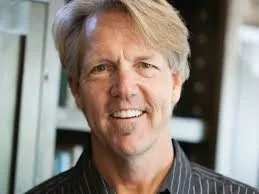

Join us in a compelling episode of The Calling as Dr. Chrysandra Brunson talks with Dr. Scott Stripling, a renowned archaeologist and leader, about the powerful pursuit of dreams and God’s calling on our lives. Through this engaging conversation, Dr. Stripling shares his journey from a reoccurring dream as a child to uncovering ancient artifacts that strengthen the foundations of biblical history. Listen as Dr. Stripling reflects on his leadership journey, operational challenges in the Middle East, and the profound impact of archaeology on his faith and life.
CHRYSANDRA :
Welcome, everyone, to The Calling’s radio show to all the dreamers. I’m your radio host, Dr. Chrysandra Brunson, founder and CEO of The Calling. And it is such an honor to be with all of you today. You know, at The Calling, we have realized that so many people are afraid to go after the dreams that Jesus has put inside each one of our hearts because they are afraid to fail. And that is just plain wrong because if God has given us a dream and we’re not living it out, we are wasting it. And we do not want to die with any regret, you or anyone else. That’s why at The Calling, we love to inspire, empower, and equip people to, after God’s calling on their lives, to reap the best kind of eternal legacy possible to have immediate impact on themselves and their families. We love to do this through so many different avenues, through custom tools, programs, workshops, seminars, but especially through this radio show where we bring on world renowned guests to share how they’re going after God’s calling on their lives and how you can do the same. Today is no exception. We have the world renowned Scott Stripling with us. Scott, welcome to the show.
SCOTT STRIPLING :
Hi, Chrysandra. I’ve been looking forward to being with you.
CHRYSANDRA :
Me too, Scott. And, you know, we just have to give a huge shout out to the one connecting us to be together today. The one and only Dr. Jerry Pattengill. Scott, how do you know Dr. Pattengill?
SCOTT STRIPLING :
We are connected through the Near East Archaeological Society. Dr. Pattengill was a student of the renowned Edwin Yamauchi, who turns 90 next year. Wow. And we’re publishing a festrift publication in honor of his career that I’m one of the editors of. And I involved Jerry in writing the foreword for that to honor his former professor. And so basically through the society is how we’ve been involved. And we’re mutual admirers of Edwin Yamauchi.
CHRYSANDRA :
That is incredible. Well, Scott, that just dives right into who you are. And today people have they’re hearing your name. They know it sounds familiar. But for those that perhaps don’t know your background quite as well, can you just share some of the leadership positions that you’ve held so far?
SCOTT STRIPLING :
Sure. And let me just say, people are always commenting on my energy and how it’s unmatchable. But I think you might be my match. OK, I just love love your introduction in the talk about vision. And I was thinking about what the great missionary William Carey said, expect great things from God, attempt great things for God. And that’s how I live my life is that God has a plan and a purpose for me. And I’m going to I’m going to dream big. And if I fall big, then I’m going to fall big. But I’m but I’m going to live live large. Right. As God tells me to. Now, to your to your question, I have excavated four sites in the land of the Bible currently working at Biblical Shiloh, which was. Israel’s first capital before Jerusalem, and we’re uncovering their amazing evidence of the tabernacle and the sacrificial system, which is just really, really amazing. In the academic world, excuse me, I’m the provost at the Bible Seminary. I’ve done a number of things, like I was the founding president of a chapter of the Make-A-Wish Foundation, chaired a number of boards, and been involved in the community. Crisanda, what I believe is that God wants us to engage in the arena of ideas. So be that as a university professor, be that as an archaeologist. That’s what I want to do. I want to talk about worldview, about purpose and about calling and mix it up out there on the college campus, on the airways and social media and academia. And and kind of have this exchange of ideas that hopefully will bring us into a better dialogue.
CHRYSANDRA :
Oh, well, we’re definitely kindred spirits, Scott. And, you know, I just it’s such an honor to look up to your example and for you to pioneer so much uncharted ground. We really do just honor you. Scott, can you just bring us back to your beginning days and how God just started putting all these threads into your heart to now be doing what you are today today? Take us to those beginning times and where those dreams started being planted.
SCOTT STRIPLING :
Well, that’s a great question. In my childhood, I had a reoccurring dream and I saw myself on what I would now describe as an archaeological site. There were ruins and walls and towers and I was investigating them. Even though I was a child, I saw myself as an adult. And so that would reoccur throughout my life. And so I did have a sense that perhaps there was a bend or a proclivity of my of my life in that direction. I became a passionate Bible reader as a teenager. And it was really my interest in the background of the biblical text that led me into archaeology. Some things were frustrating to me. I felt like answers that I was looking for, I wasn’t finding at church. No one’s fault. Just they didn’t share what they didn’t know.
SCOTT STRIPLING :
But I thought it had to have to do with the background and the material culture. And so that became an obsession for me, a deep dive. I went back to school and earned a Ph.D. in ancient Near Eastern archaeology, worked my way up sort of through the dig hierarchy so that I had both the experience and the academic experience. skills in education, along with perhaps what a lot of people don’t realize, that an archaeologist or a dig director is a PR guy, too. I mean, you’ve got to have people skills and you’ve got to be able to pull together a lot of fundraise and PR stuff to make all of this happen. and in the academic arena. So I would say it was my interest in the Bible that led me into archaeology, and that ultimately now to this point in my life, of course, I can look back and see that many seemingly unconnected things are very, very relevant now. Like, for example, I earned a master’s degree in English along the way. Well, I spend hours a day writing and editing now, and who would have known, you know, that at this point in my career that that would be so important.
CHRYSANDRA :
Right, right. Well, and Scott, we should be saying Dr. Scott Stripling here this whole time. We should be. But, you know, to look at that, can you just share, when it comes to archaeology, what would you say has been your greatest artifact that you have been able to find or the top one that comes to mind that would be relevant to biblical theology?
SCOTT STRIPLING :
Well, it’s hard because we have had a number of important finds, but the tabernacle at Shiloh, the building that we are excavating right now, a lot of people don’t realize that the 10th of the tabernacle was later replaced by a permanent building. And we see that in 1 Samuel 3, then also in the Mishnah and like the Zebaim 14.6 and the Seder Olam, what we would call the Mishnahic literature. And then as we began to excavate there in 2017, that is indeed what we began to uncover was a building that matched the biblical description and orientation full of cultic material. a very large bone deposit nearby, indicating that it was connected with the biblical sacrificial system. So if you can wrap your mind around this right now, if we’re back in the field this summer, which I’m hoping that we will be in the hostilities, we’ll calm down soon. I mean, we’re excavating the Holy of Holies. And I mean, just to where the Ark of the Covenant sat for over three centuries. And so I’m a big dreamer, but even in my sort of expectations, I wasn’t expecting that.
CHRYSANDRA :
Right, right. I mean, and Scott, I think for anyone that is, you know, hearing this, they’ll be able to know even just visiting the Holy Lands, even where you walk is very holy and sacred. But to begin to excavate, you know, the ground, how do you even go about doing that? I mean, it really does seem like you have to be quite the dreamer to see through of to navigate that area.
SCOTT STRIPLING :
Well, I mean, all the world works on relationships, but especially in the Middle East. And so over years, our organization, the Associates for Biblical Research, we have almost 50 years excavating in the land of the Bible. And so that’s a wealth of relationships to draw on. So we had a good track record, had the academic background in our previous digs. We had met deadlines. We had published well. And so this opened up doors. You know, excellence always does that, right?
SCOTT STRIPLING :
When we operate in excellence, like Psalm 8, one says, Oh, Lord, our Lord, how excellent is your name in all the earth? Right. that pleases God and it opens doors with people. And so bigger doors opened for us and we were able to do more things. I was thinking about when you were talking about Psalm 102, 14, which is one of my favorite passages, blessed are those who love your dust and cherish your stones. And for me, for my team, this is a sacred thing that we get to do because we’re talking about high stakes, you know, is the Bible.
SCOTT STRIPLING :
Is the Bible a reliable historical source? I mean, big, big questions that we’re very blessed to be able to lead in this area.
CHRYSANDRA :
Right, right. Well, you can just see the favor and the calling that Jesus has over your life, Scott, and to be able to navigate this. We know also in this journey of going after your God-given dreams, there are so many, there’s mountaintops, but also lots of trials and valleys. Scott, how have you been able to persevere through those different giants that have tried to slay you and knowing deep down that this is what you were meant to do and didn’t let it stop you?
SCOTT STRIPLING :
Well, I think that’s just it. It’s the power of a vision that enables us to press through those times. Hebrews 12, 1 says that Jesus, for the joy that was set before him, he endured the cross. He was able to endure suffering because he had a vision of what was on the other side. And so when I’ve encountered difficulties and trials, and there certainly have been along the way, I mean, from pandemics to wars to, you know, just… personnel situations, it’s really never affected me because I’ve kept my eyes on the vision, on the purpose. And I compartmentalize like I’m able to what I think all leaders have to develop the ability to compartmentalize. Yes, there’s not a day that goes by that someone’s not mad at me about something or there’s some sort of issue. But I’ve got to compartmentalize that because I got to lead big today. We have things to do and super important things to do. And like Nehemiah told Sanballat and Gishom and Tobiah, you know, I can’t come down off this wall and waste time with you guys in the Valley of Ono. The Lord has an important thing for me to do. So I compartmentalize. I don’t procrastinate. I deal with things, even unpleasant things. I deal with them right away because I think if you if you let them fester, then they metastasize. And so when there are problems, deal with them head on, compartmentalize and then leaders lead. No matter what’s going on, leaders have still got to lead. They’ve got to be at their best. People are looking to you. They’re counting on you. And then God gives you commensurate grace. Sometimes people look at someone in a position and think, like, how does he or she do this? Well, it’s because God gives extra responsibility.
CHRYSANDRA :
Couldn’t have said it better, Scott. And we need to go to a short break. But everyone, you are listening to the one and only Dr. Scott Stripling. And we are just so honored to have him on with us. You don’t want to miss a second. We’ll be right back. Twist and shout with Lee & Co. They are the premier oldies band delivering the rock and roll vibes you’ve been missing. Great songs, great memories. Book them at LeeAndCo.com. Liquid Acre is the world’s first crypto to land marketplace, allowing you to own fractional acreage through non-fungible acres. Don’t let the dream of owning a piece of the trillion dollar real estate market slip away. Visit liquidacre.com to invest in real survey land in seconds and start building your real estate legacy.
ADVERTISER :
Continue to grow in the calling God has for you through ORU Online. You can earn your degree without changing your busy schedule. 100% online and 100% on your time. Learn more today, oru.edu slash calling.
CHRYSANDRA :
At Ignite Brilliance Coaching, you will get 34 years of science teaching, a decade of university level instruction and over 10 years of instructional coaching to empower educators with the tools, mindset and confidence to thrive. Contact Ignite Brilliance Coaching on Facebook. We are back. Thank you for listening to All the Dreamers radio show. I’m your host, Dr. Chrysandra Brunson, host of To All the Dreamers and founder of The Calling. So honored, so humbled to have the one and only Dr. Scott Stripling on with us. And Dr. Stripling, you were just sharing before we went to break about what it takes to be a leader, what it takes to be able to persevere, not only huge giants, but the daily giants and knowing that we are, God gives us supernatural grace for us to be able to show up. And, uh, you know, there hasn’t really been anyone this far that has touched on that. So I really appreciate those daily giants that we do need to continue to conquer. Is there one in particular circumstance, circumstance Scott, that you think of and that you were able to overcome by God’s grace?
SCOTT STRIPLING :
Well, when we were planning our Mount Ebal project in December of 2019, it was extremely difficult and sensitive because I laugh when people talk about the difficulty of politics in America. Try coming with me and working in the West Bank of Australia. That’s where I’ve been working for decades. And it gets a lot more complicated there. Yeah. And, you know, the area is divided into A, B, and C, but the most complicated area is B because it’s split jurisdiction between Israeli and Palestinian. And Mount Ebal, this very important biblical site, happens to be there in area B. And so we were planning a project, and in the The process of getting permits and working out the logistics, it was overwhelming, you know, because it wasn’t clear who was in charge and who could get permission and so many little things. And, you know, people just said, oh, this this is never going to happen. It required getting a road paid to get access and just things that were very expensive and very difficult logistically. But, you know, I just really believe that this was supposed to happen. And I think that vision follows vision. provision follows vision and and i just as i as i leaned into this and i cast this vision and you know i kind of had a selected like a seal team six with me for this project it wasn’t open to everyone i just hand-picked a certain number of people that had certain skill sets that i needed and then we just sat back and watched you know one by one this this come together um and not not saying that we accomplished world peace or even peace in the middle east through it but we were able to navigate the roughest waters that you can imagine and still pull off this very important expedition.
CHRYSANDRA :
That is miraculous. I think those components just mix in, especially with that location. It is a Red Sea miracle. And that was a huge giant trying to stop you. Dr. Stripling, would you share what has been maybe your another Red Sea miracle that you didn’t think could happen in the realm of you have a huge base, whether that was Make the Wish Foundation or in archaeology, but to even have you have many items that are that you found that are inside of the Museum of the Bible. Is that correct?
SCOTT STRIPLING :
Well, not in the Museum of the Bible, but we are in a partnership with them. And, of course, Jerry is very connected in that as well. Well, I’ll just tell you, when I was wanting to make this transition in my 30s, and that was a long time ago now for me, into the field of archaeology, I thought I had a unique skill set that I could make a difference in this area. And I could see myself then doing what I’m doing now. And let me tell you, I’m the luckiest guy in the world. I mean, I get to learn something new every day. I get to explore the most incredible things. And then I have my students that I get to empower and pass on with this on to as well. So, you know, president of the Near East Archaeological Society and just the things that I’m able to be a part of are just amazing to me. But I could see it then, but I had no idea how it would happen. I mean, 35 years ago, I mean, no one knew who I was. You know, I didn’t have experience. I didn’t have the terminal degree. But it just one step at a time, it unfolded. And now you kind of arrive at another place in your life and you can look back and say, wow, that all made sense. How these this tapestry, if you will, was woven together. Right.
CHRYSANDRA :
Right, right. And you had mentioned your master’s in English and how that would come to be. I commend you for that. I think that that is a huge, even over a doctorate, a master’s in English.
SCOTT STRIPLING :
No, thank you. I always say that there’s like Old English, there’s Middle English, there’s Modern English, and then there’s Texan. And so I have some expertise at all four.
CHRYSANDRA :
We love it. We love it. And Dr. Stripling, when it comes to archaeology, will you just share for the listeners tuning in that have a little idea about what it takes to be an archaeologist? Sure. Will you just give us a better idea and a summary, a vision of what it really does mean to be a professional doctor of archaeology?
SCOTT STRIPLING :
Well, archaeology is a sub-science of anthropology. So anthropology is the study of human behavior. Archaeology being a sub-science of that, we study human remains. And so we develop with time expertise in those specific human remains because there’s a language that they’re speaking, but we have to know that language. For example, I’m a ceramic typologist or an expert in ancient pottery.
SCOTT STRIPLING :
Or as my wife would say, boring. Who cares about broken dishes from the past? Well, I do because that’s a primary means by which The deeper we go in an archeological tale, the older the material gets. So we as archeologists work from the top down through the strata, and we are able to define those those levels as we go down so that when we do find something important, we can date it accurately because we can never synchronize whether it’s biblical history or or any other type of history. We can’t synchronize the two if we don’t have the chronology right. And so that’s what we do. I mean, we we spend our time slowly, systematically excavating from the top down, like draining water in a in a bathtub. Yeah, it’s not like Indiana Jones. OK, you know, it’s not that I go into the bullwhip and grab the artifact and the girl and then I’m gone.
CHRYSANDRA :
Right. Right. Well, I’m glad that you mentioned it because I think that’s what people first think of.
SCOTT STRIPLING :
Yeah, I mean, not to say there aren’t times that are exciting and that there is a romance of archaeology, but it’s a lot of hard work, slow, systematic hard work. We get up very early in the morning. We work very long days. And when we’re not working, we’re working on publications. We’re sort of obsessive, right? You know, it’s not just about me and my life, but it’s about our understanding of history, you know. Can we recreate this the way that it actually happened? When I’m excavating, I am destroying the evidence and making it inaccessible to other people. You cannot repeat the experiment. You can’t go back and reconstruct this after we’ve excavated it. So there’s a great burden on us to do it right, to do it well, to do it the first time, to ask all the right questions from that data. to bring the hard sciences to bear because we are a soft science. But in the process of doing what we do, we bring the hard sciences to bear, radiocarbon testing and luminescence testing of soil and all this hard science so that we can hopefully retell the story well because you can never go back and repeat the experiment again.
CHRYSANDRA :
Right, right. And Scott, we have to ask real quick, what is behind you? And for those that are listening on radio, you’ll have to go to our social media to see this. But there are some beautiful jars that we were I was asking about before we started.
SCOTT STRIPLING :
Well, this one’s really interesting. I don’t know if you can hear it, but it’s got a rattle on the inside. Yes. And so this would be an oil for oil. And on the table, if you have spices in it and oil, that little rattle, that ball on the inside, the potter put the ball in, then he formed the vessel around that. And this would be from the early Roman period, time of Jesus, New Testament period. But yeah, it’s kind of cool. They make these things really fast. You can go to Hebron today and watch potters in 20 seconds or 30 seconds. They’ll make a vessel like that.
CHRYSANDRA :
Oh, it’s beautiful.
SCOTT STRIPLING :
Well, it is. And then It’s very rare to have glass that’s not broken. This vessel was found in a tomb, and so it was protected. It didn’t break. But normally when we find these, they’re broken, and so we just have a piece of it. From that piece, we can extrapolate out what the whole thing looked like. It’s a type of metaphor called a metonymy where a part represents the whole. So Roman glass, for example, everything that you have in your house, they had in their houses, you know, except for the electronic.
SCOTT STRIPLING :
You know, they get splinters just like you get splinters and they brush their teeth. And, you know, just so I think people find it very fascinating when those utilitarian daily things, when we find them.
CHRYSANDRA :
Right. And Scott, we were coming up towards the end of our show. It goes by way too quick. We would love to have you back sooner than later. Before we do go, Scott, though, we want to know your tip and tool for someone that’s tuning in right now and they are afraid to go after what God’s called them to what you would tell them. And we want to hear the latest and greatest what you’re involved with now and how everyone can get involved. But we would love to first hear that piece of wisdom.
SCOTT STRIPLING :
OK, well, I’ll lean on William Carey, the one I started with, the great missionary. Expect great things from God and attempt great things for God. And so I would just encourage the listeners to do that, to lean on the wisdom of William Carey. I’m involved in the coolest excavation in the world at Biblical Shiloh. People can follow me at digshiloh.org. digshiloh.org is the website. Don’t go to digshiloh.com. That’s my dog’s website. He’s a really cool dog.
CHRYSANDRA :
Oh, I love it.
SCOTT STRIPLING :
Go to digshiloh.org and people can connect with me in social media. My website, scottstripling.net. I’m at thebibleseminary.edu. And our DIG organization is the Associates for Biblical Research. Again, digshiloh.org.
CHRYSANDRA :
Oh, thank you so much, Scott. We are just so honored and we want to come find out how we can be on one of these trips coming up.
SCOTT STRIPLING :
Come on, come on to the dig and we can do some some live stuff from the land of the Bible.
CHRYSANDRA :
That would be fantastic. So everyone, if you are tuning in, challenge you right now, go pull over, go follow Dr. Scott Stripling. You will also be able to see him on all of our social media sites while you’ll be able to get challenged to be able to see the scriptures come to life through the artifacts that Dr. Stripling has found. You will be blown away And we are just, we can’t wait for what’s yet to be found and the mysteries of the Lord. Thank you for everyone tuning in. Be challenged by Paul’s words in Ephesians 4.1. As a prisoner of the Lord, then I urge you to live a life worthy of the calling you have received. Till next time, dreamer, keep dreaming big.

